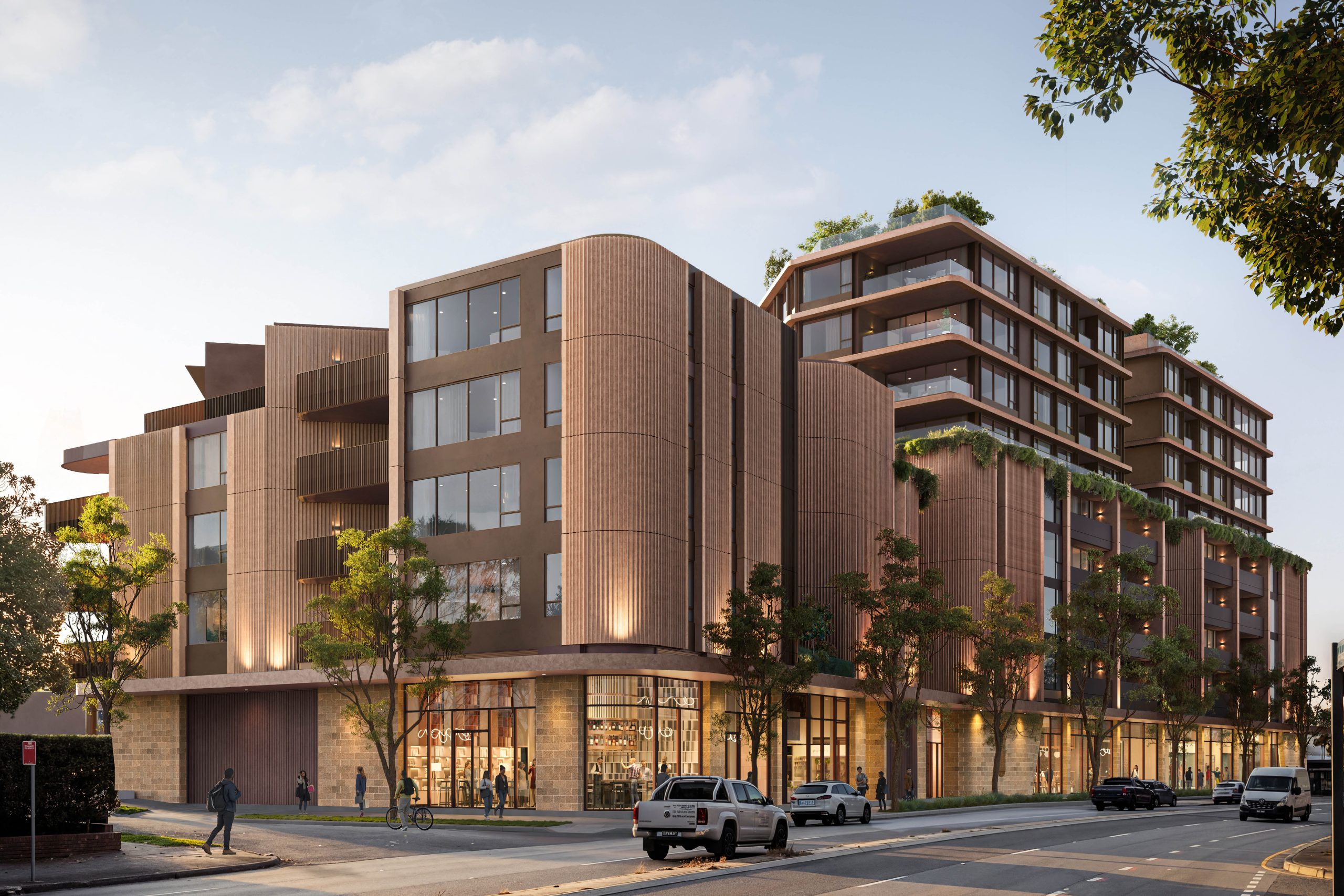
A downsizers’ paradise awaits without leaving the city
There’s no need to choose between the convenience of the city and the appeal of the natural environment in this boutique Sydney development
 3 min
3 min![ProEXR File Description
=Attributes=
cameraAperture (float): 23.76
cameraFarClip (float): 0
cameraFarRange (float): 1e+006
cameraFov (float): 73.7029
cameraNearClip (float): 0
cameraNearRange (float): 0
cameraProjection (int): 0
cameraTargetDistance (float): 35763.2
cameraTransform (m44f): [{-0.72725, 0, -0.686373, -49662.5}, {-0.686373, 0, 0.72725, 22021.2}, {0, 1, -0.0923382, -666.323}, {0, 0, 0, 1}]
channels (chlist)
compression (compression): Zip16
dataWindow (box2i): [0, 0, 2499, 1405]
displayWindow (box2i): [0, 0, 2499, 1405]
gamma (float): 1
lineOrder (lineOrder): Increasing Y
pixelAspectRatio (float): 1
screenWindowCenter (v2f): [0, 0]
screenWindowWidth (float): 1
tiles (tiledesc): [64, 64]
type (string):](https://kanebridgenews.com/application/assets/2023/02/BUI-Bayside-CAM06-BASSETST-FINAL-scaled.jpeg "ProEXR File Description
=Attributes=
cameraAperture (float): 23.76
cameraFarClip (float): 0
cameraFarRange (float): 1e+006
cameraFov (float): 73.7029
cameraNearClip (float): 0
cameraNearRange (float): 0
cameraProjection (int): 0
cameraTargetDistance (float): 35763.2
cameraTransform (m44f): [{-0.72725, 0, -0.686373, -49662.5}, {-0.686373, 0, 0.72725, 22021.2}, {0, 1, -0.0923382, -666.323}, {0, 0, 0, 1}]
channels (chlist)
compression (compression): Zip16
dataWindow (box2i): [0, 0, 2499, 1405]
displayWindow (box2i): [0, 0, 2499, 1405]
gamma (float): 1
lineOrder (lineOrder): Increasing Y
pixelAspectRatio (float): 1
screenWindowCenter (v2f): [0, 0]
screenWindowWidth (float): 1
tiles (tiledesc): [64, 64]
type (string):")
A unique downsizing opportunity combining the best Sydney has to offer is now available on the Northern Beaches, with zero deposit to approved buyers.
Bayside is an exclusive new boutique development on the Northern Beaches offering everything downsizers educated in the market are looking for, Domain Residential’s Nik Vuko said. The luxury apartments are well suited to anyone seeking a lifestyle upgrade in a sought-after parkside location and to ensure buyers don’t miss out, approved customers will be able to purchase with zero deposit, offering the flexibility to buy before they sell their existing home.
Bayside has been designed to deliver the best of both worlds, with the perfect balance between natural assets, such as bushland and waterways, while still staying connected to the best the city has to offer, with cafes, restaurants and amenities within easy reach. Offering views across Winnererremy Bay parklands at Mona Vale, each of the three-bedroom, two-bathroom apartments designed by award-winning architects PopovBass have been individually crafted with natural light, cross ventilation and liveability in mind.
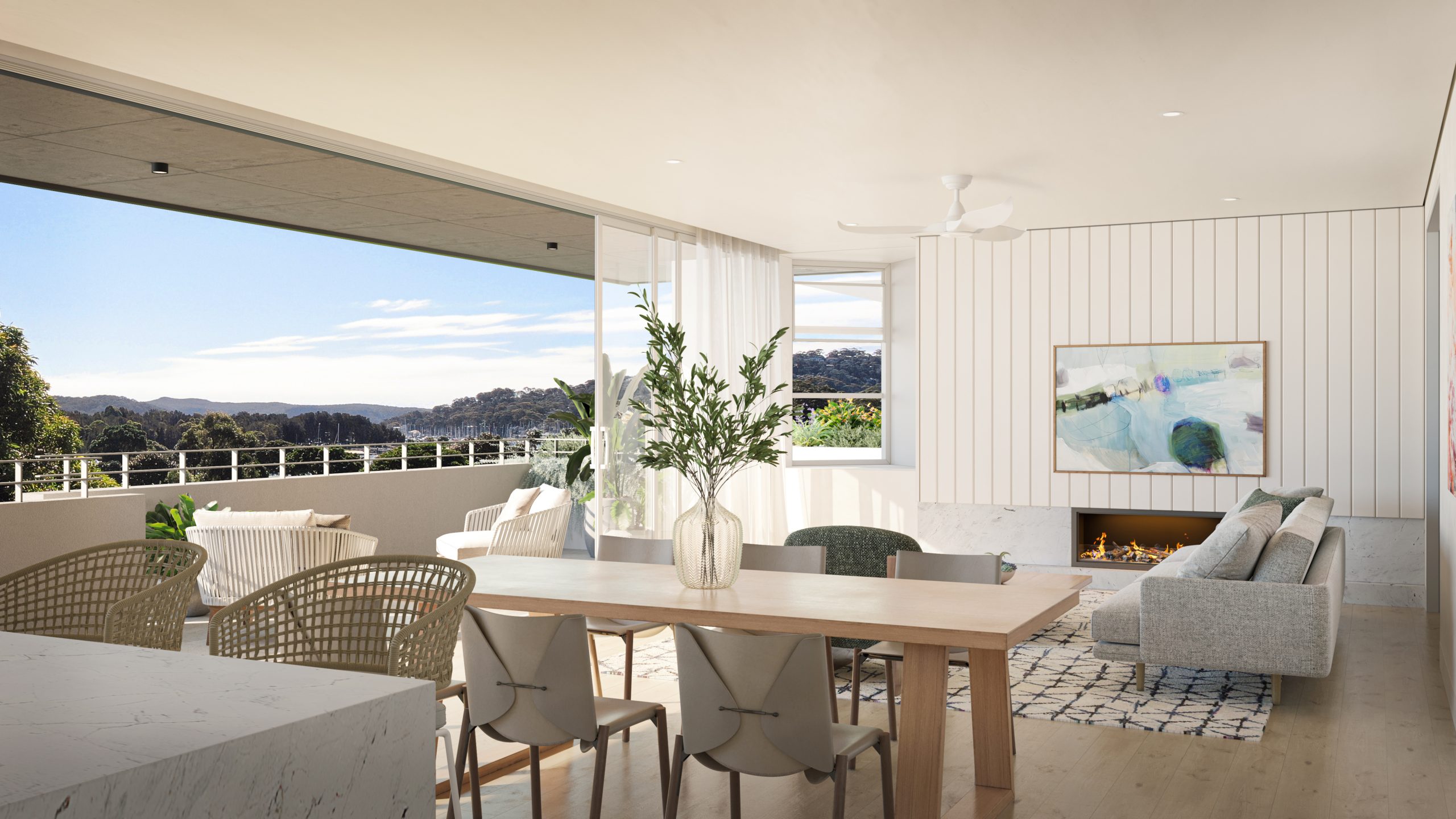
“They’ve been designed to suit the changing needs of active downsizers looking for all the features offered in the finest of luxury residences,” Mr Vuko said.
Interiors have been artfully crafted by Baxter & Co using a neutral palette, with engineered timber flooring in American oak in the living spaces and wool carpet for the bedrooms. Recessed pelmets and sheer curtains create diffused light, while the transition between the interiors and the spacious outdoor spaces is almost seamless. Indeed, every part of this development has been considered, from the inclusion of Miele appliances in the kitchen and feature fireplace in the living area to the freestanding bath in the ensuite. Ideal for everyday living, the residences also allow for easy entertaining when the occasion calls for it.
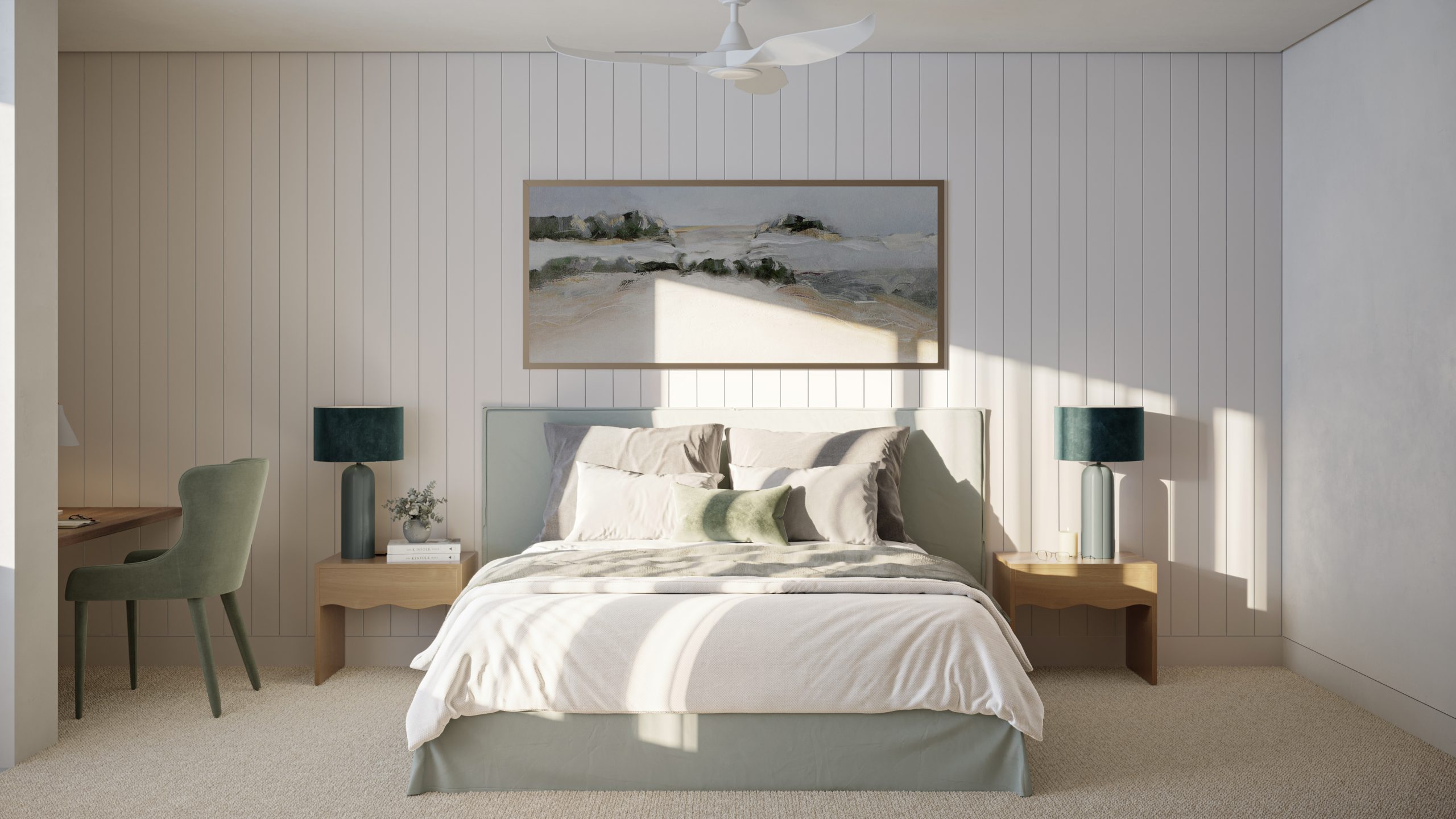
Sustainability has also been front of mind at Bayside. In addition to solar panels on the roof, there’s an EV charging station in the basement and garage. While air conditioning is available for those hot Sydney summers, ceiling fans allow residents to maintain thermal comfort all year round, while also leaving the large sliding doors open, effectively doubling the available living space.
Capped off by a convenient location with access to parks, schools, shopping and cafes, Mr Vuko says it’s a lifestyle offering that is hard to beat in Sydney.
“Bayside’s location delivers residents all the benefits of having the local parklands as an extension of their own backyard” he said. “They’re located across the road from Flying Fox park, which is the perfect place for connecting with kids and grandchildren or grabbing a coffee.
Bayside is now selling off-plan. Enquire through property@kanebridge.com.au for an exclusive developer’s offer where eligible purchaser’s can exchange at no cost via a developer funded deposit bond

From making unpopular decisions to learning when to listen, leaders from five businesses reveal what nobody prepared them for — and how running a company has challenged their expectations.

Technology and semiconductor shares fell sharply as investors questioned the debt financing the AI infrastructure boom and confronted higher rates and Chinese competition.
Mirvac’s 45-level Trielle has topped out at Yarra’s Edge, pairing riverfront apartments with wellness facilities, private dining and resident services.
3 min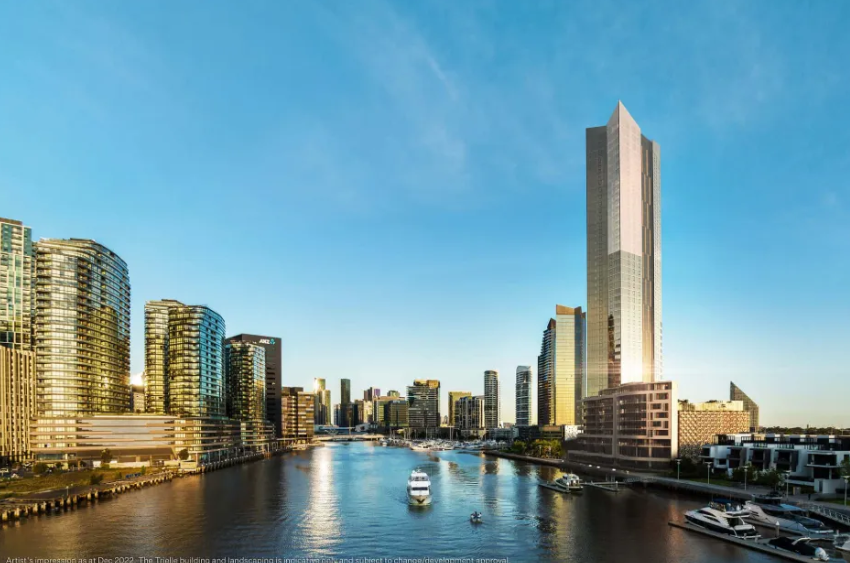
Mirvac has topped out Trielle at Melbourne’s Yarra’s Edge, with more than 70 per cent of the riverfront development sold and approximately 80 per cent of purchasers intending to make their apartment a home.
The figures, released on September 22, point to an owner-occupier audience for one of the precinct’s final residential towers. Mirvac began developing Yarra’s Edge in 2003, and its latest addition occupies one of the remaining absolute riverfront sites.
Mirvac CEO of Development Stuart Penklis said existing residents were among those moving up within the neighbourhood.
“Many purchasers already have a connection to Yarra’s Edge,” Mr Penklis said, describing buyers whose changing needs were encouraging an upgrade within the precinct.
“As one of the final residential towers within Yarra’s Edge, Trielle represents the culmination of more than two decades of creating one of Melbourne’s most established and sought-after waterfront communities,” Penklis said.
“Positioned on the Collins Street axis with absolute river frontage, Trielle offers residents a rare opportunity to enjoy sweeping views across the Yarra River, Melbourne skyline and Port Phillip Bay, while remaining seamlessly connected to the CBD. With Trielle now more than 70 per cent sold, we’re continuing to see strong demand from buyers seeking quality homes in established locations.”
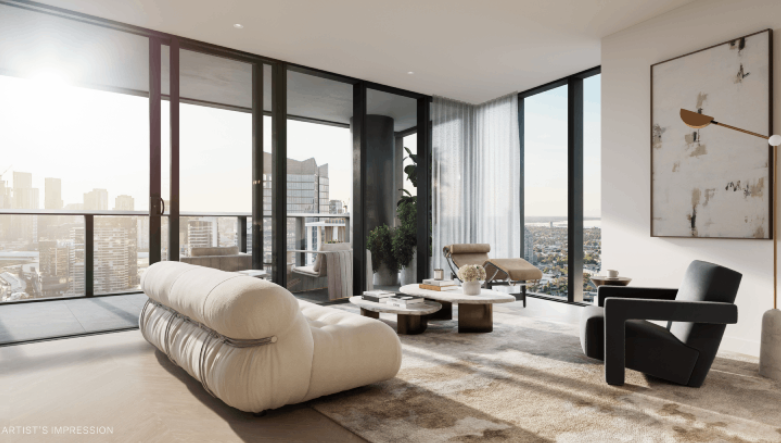
The developer also flagged a penthouse and sub-penthouse collection with larger layouts, premium finishes and broad outlooks. The planned wellness centrepiece, The Oasis, encompasses a 900-square-metre elevated urban rainforest.
Mirvac General Manager Residential Development Victoria Elysa Anderson said Trielle had resonated strongly with buyers seeking a rare lifestyle offering in Melbourne.
“Opportunities to secure a new luxury residence on a riverfront site of this calibre are incredibly rare, particularly within a community like Yarra’s Edge,” Anderson said.
“What makes Trielle unique is the combination of exceptional views, world-class residential facilities and the lifestyle that already exists around it. Residents are buying into a mature waterfront community with parks, promenades, dining, wellness and strong community connections already in place.”
The 45-level tower brings a substantial new presence to that waterfront. Its residential offering spans one-, two-, three- and four-bedroom apartments, with Signature, Prestige and Sub-Penthouse collections accommodating different household sizes. The north-facing position connects the apartments visually to the river and city beyond.
Seven storeys above the promenade, the planned Oasis combines planting and a running stream with a Scandinavian-inspired wellness club developed with spa specialist Naomi Gregory. Facilities include a 25-metre lap pool, hot magnesium pool, sauna, hydrotherapy, a gym, yoga and Pilates room, and treatment spaces.
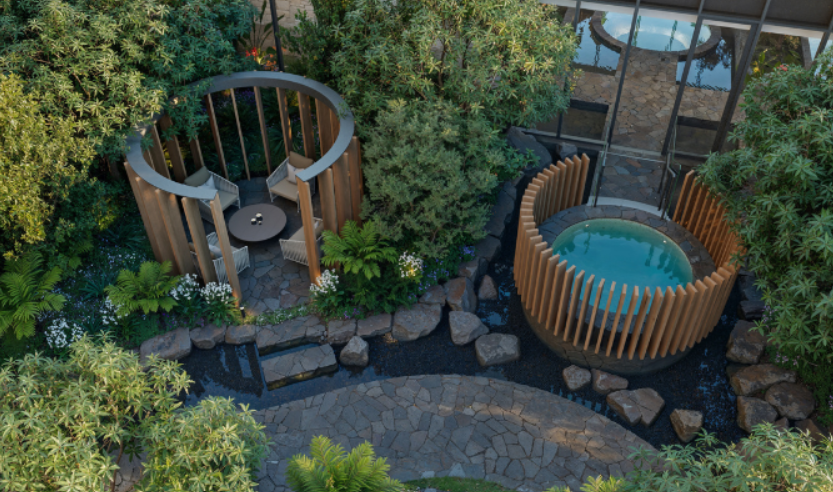
The amenity extends beyond exercise. Residents will have access to The Biblioteca library and workspaces, ground-floor work pods, and The Salone piano lounge. A private Chef’s Table dining room offers a setting for larger gatherings, while a cinema, games room and sports lounge broaden the entertaining options. Concierge services and a dog-wash area support everyday routines.
Trielle comprises a collection of one, two, three and four-bedroom residences. Reflecting strong demand from owner occupiers, approximately 80 per cent of purchasers to date intend to live in their homes, highlighting the project’s appeal to those seeking a long-term waterfront lifestyle.
Mirvac has recently delivered The Albertine, a premium apartment development on the edge of Melbourne’s CBD, and is nearing completion of Prince & Parade in Brunswick, further strengthening its portfolio of thoughtfully designed apartment communities in some of Melbourne’s most sought-after urban locations.
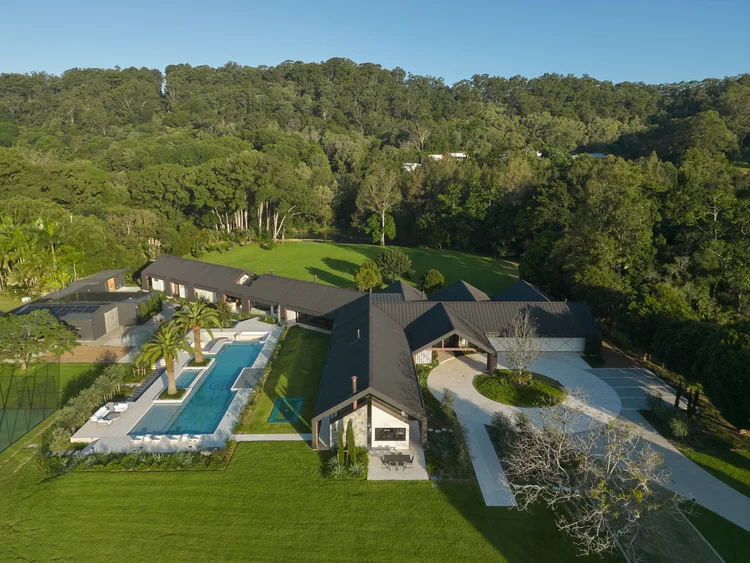
Margot Robbie may have travelled from a Queensland farm to the highest reaches of Hollywood, but a reported $28 million property deal suggests the Gold Coast has never lost its hold on her. The Australian actor and producer is believed to be the mystery buyer of Redwood, a seven-acre Currumbin Valley estate transformed into the …
Continue reading “Margot Robbie Reportedly Behind $28 Million Currumbin Valley Homecoming”
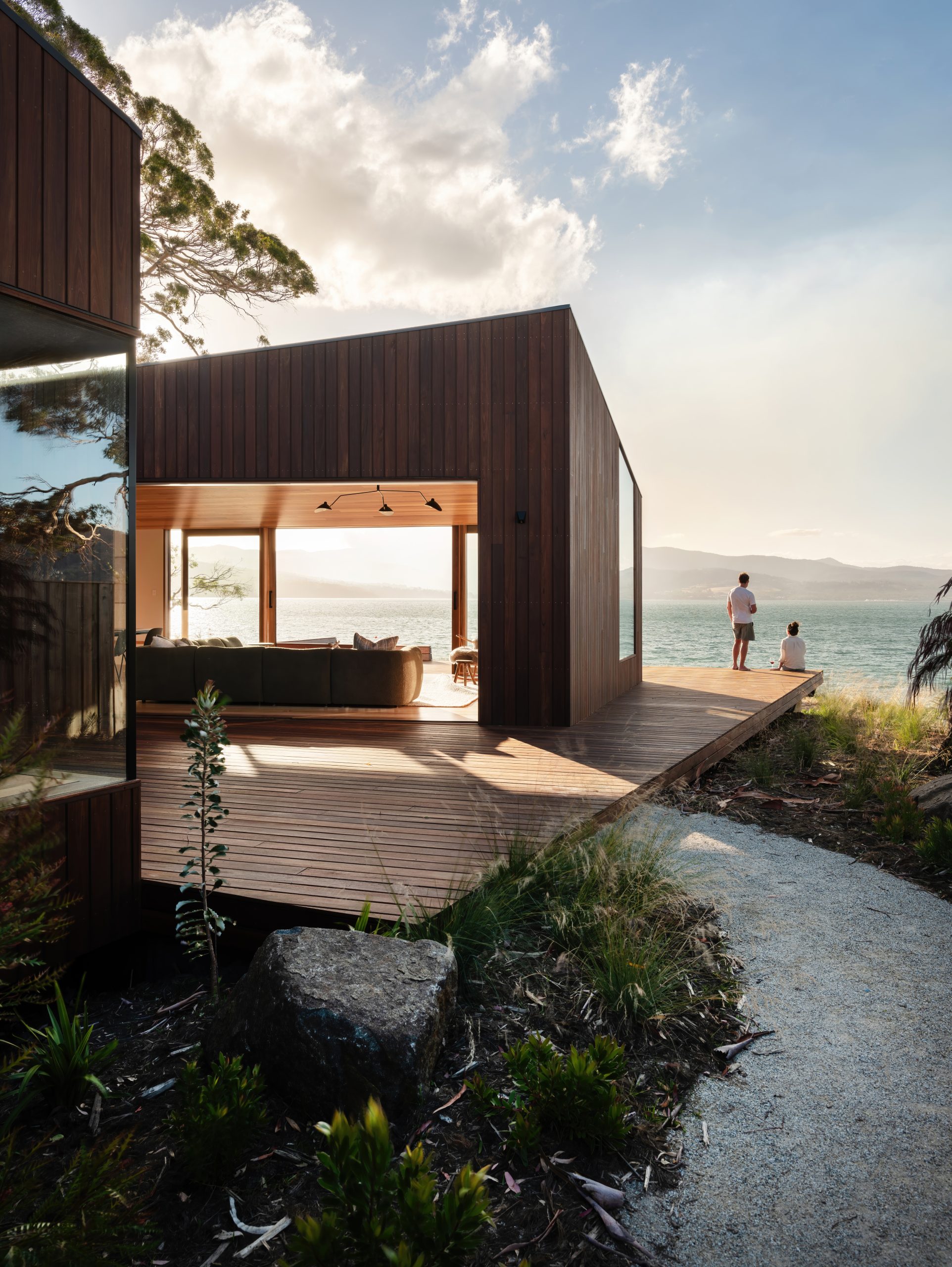
From the shacks of yesterday to the sculptural sanctuaries of today, Australia’s coastal architecture has matured into a global benchmark for design.