Why Stars Are Renting Out Their Homes for Dirt Cheap
A-listers are becoming short-term rental hosts. But you might have to sign an NDA or stay in a celeb’s sneaker closet.

 3 min
3 min
Martha Stewart’s 150-plus-acre property in Bedford, N.Y., includes a farm with horse stables and a chicken coop, a fruit orchard, a peacock pen and seven stately houses.
One of the abodes opened for a night’s stay this month.
The domestic goddess is among the A-listers, including Gwyneth Paltrow and Mariah Carey, putting their estates or penthouses up for short-term stays on rental sites such as Airbnb and Booking.com for nominal fees or no cost at all.
“It is a very pleasant weekend in the country,” Stewart said in an interview.
Why would a celebrity invite strangers to traipse through their home? Rental companies can use the attention to reach new audiences and distract from public criticism over hassles such as rising fees. Luminaries can promote their own brands, and guests get to briefly live like a star, in a highly orchestrated way.
Stewart said she had never used Booking.com or Airbnb for her own travel, and was intrigued by what the experience would be like as the homeowner. She recently announced that one of her farmhouse’s residences—her “tenant house”—in Bedford, would be bookable for two guests for one night starting Nov. 18. The Thanksgiving-themed overnight (Thanksgiving is among her favourite holidays) included a guided tour of the farm, a wreath-making class and a brunch with Stewart herself.
In keeping with the holiday vibe, the getaway was priced at $11.23, as in Nov. 23, this year’s Thanksgiving date.
The two-bedroom cottage where her guests stayed is always prepared for visitors, she said. (Of course it is.) That meant she didn’t have to worry about removing personal items, and she was unfazed about opening her home to people she didn’t know.
But don’t expect to post all over Facebook about your stay at Martha’s. Booking.com said celebrities can ask their guests to sign nondisclosure agreements, something Stewart required for hers. What exactly it is like to spend a night in any of these VIP homes will likely remain rarefied knowledge.
Celebrities are compensated for the home stays; Leslie Cafferty, Booking.com’s chief communications officer, declined to disclose how much.
People have long had a voyeuristic fascination with the lifestyles of the rich and famous. In Los Angeles, companies compete to offer celebrity-home tours, where passengers crane to see mansions behind gates and humongous hedges while sitting in faraway buses. Dwellings with even a patina of historic relevance draw fans. “George Washington slept here!” says a title for one Virginia farmhouse on Airbnb. (Wrote one reviewer: “This is a beautiful old home with wonderfully scenic views. There are horses, donkeys, and the oddest assortment of charismatic dogs.”)
Some can even be enthralled to sleep in a dorm room—if it once housed American royalty-turned-U. S.-president. At Harvard University, visiting politicians and notable figures including actor Alec Baldwin have stayed overnight at John F. Kennedy’s senior-year dorm suite, though it hasn’t been available for personal use for several years.
Companies such as Airbnb have faced scrutiny over soaring cleaning fees and host demands. In September, New York City began cracking down on short-term rentals by requiring hosts to register with the city and meet multiple requirements, such as not renting out an entire property. During a recent travel-industry event, Airbnb’s CEO Brian Chesky acknowledged seeing thousands of complaints on social media about rising rental costs.
The inexpensive and publicity-drawing celebrity home stays are one of several ways short-term rental companies are marketing to new hosts and guests.
Earlier this year, Paltrow invited guests to spend the night at her Montecito, Calif., home free of charge through Airbnb. The sunny, white-marbled rental featured a bathroom filled with products from Goop, Paltrow’s lifestyle company, and activities such as transcendental meditation. Through Airbnb, Ashton Kutcher and Mila Kunis opened up their Santa Barbara beach house. The stars greeted their guests personally, and Kutcher documented part of their stay on his Instagram. Airbnb declined to comment.
Those who walk through the doors of a celebrity-anointed home might wonder: Should they expect to see family photos, or Paltrow’s personal trinkets hanging on the walls? And do they really get the run of the whole house?
That is up to the stars, Cafferty said. The entirety of Stewart’s guesthouse is available for the duration of the guests’ stay. Carey, the queen of Christmas, opened both her New York City penthouse and her rental home in Beverly Hills, Calif., to fans via Booking.com—yet Carey’s penthouse was only available for a cocktail hour; her guests stayed overnight at The Plaza Hotel.
Producer DJ Khaled opened only one room of his Miami house for Airbnb—his sneaker closet. To be fair, his sneaker closet doesn’t look like your sneaker closet. His is the size of a small dorm room, large enough for a bed for two, a shoeshine station and floor-to-ceiling sneakers (which guests weren’t allowed to touch). This was bookable last year for $11.
One of the guests who spent the night with DJ Khaled’s shoes wrote that the stay came with a free sneaker-shopping trip and chauffeurs, deeming it “an experience from start to finish.” No word on how the sneaker closet smelled, though the reviewer called it “immaculate.”
Sarah Jessica Parker invited two guests to her Hamptons home via Booking.com. It came with access to a crystal-blue private beach, a free pair of heels from Parker’s shoe line and reservations at some of her favorite local restaurants (though no appearance from Parker herself). Her rental went up for $19.98—priced for the year “Sex and the City” premiered.
 Copyright 2020, Dow Jones & Company, Inc. All Rights Reserved Worldwide. LEARN MORE





From making unpopular decisions to learning when to listen, leaders from five businesses reveal what nobody prepared them for — and how running a company has challenged their expectations.

Technology and semiconductor shares fell sharply as investors questioned the debt financing the AI infrastructure boom and confronted higher rates and Chinese competition.

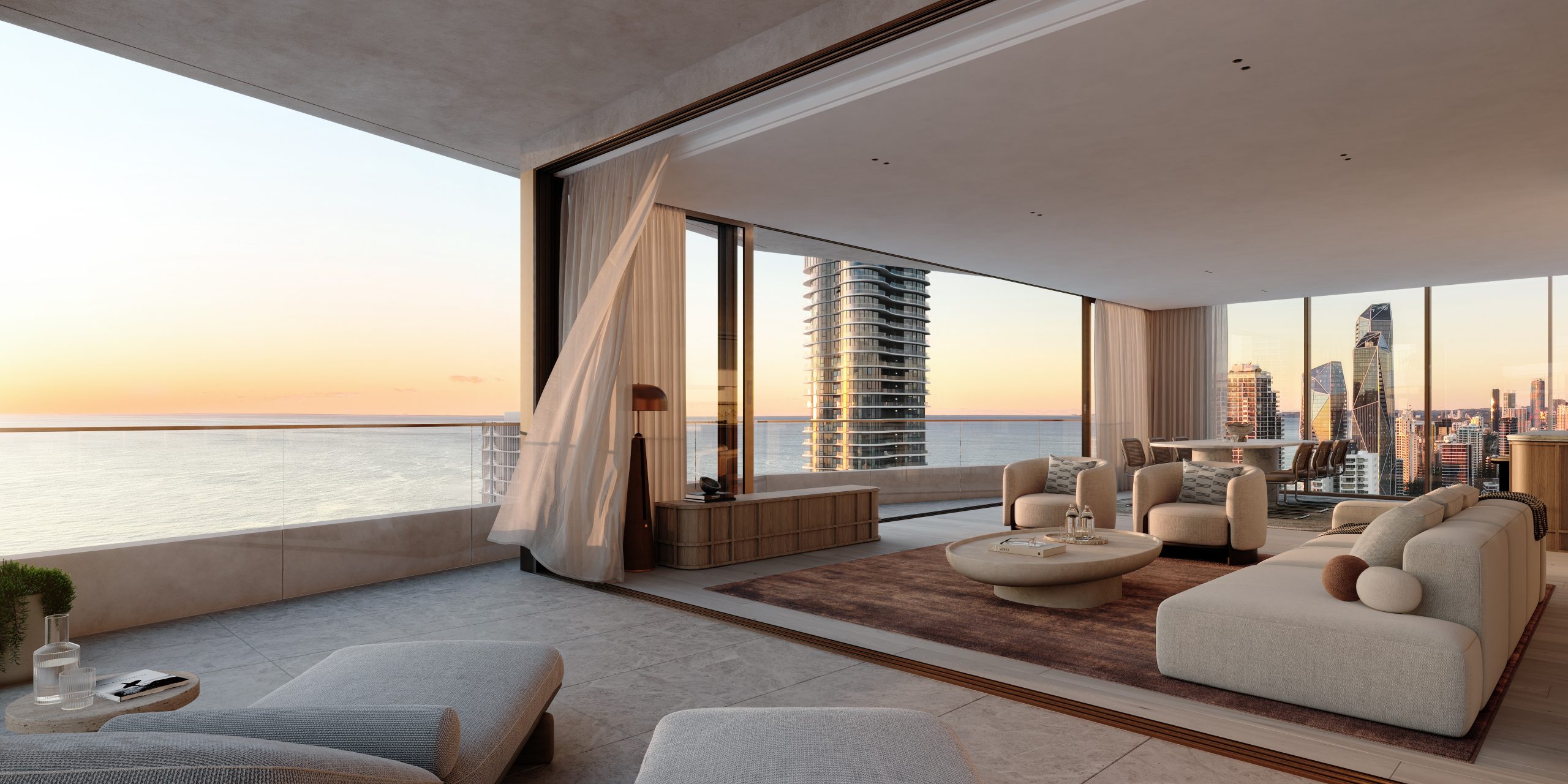
Mirvac’s 45-level Trielle has topped out at Yarra’s Edge, pairing riverfront apartments with wellness facilities, private dining and resident services.
3 min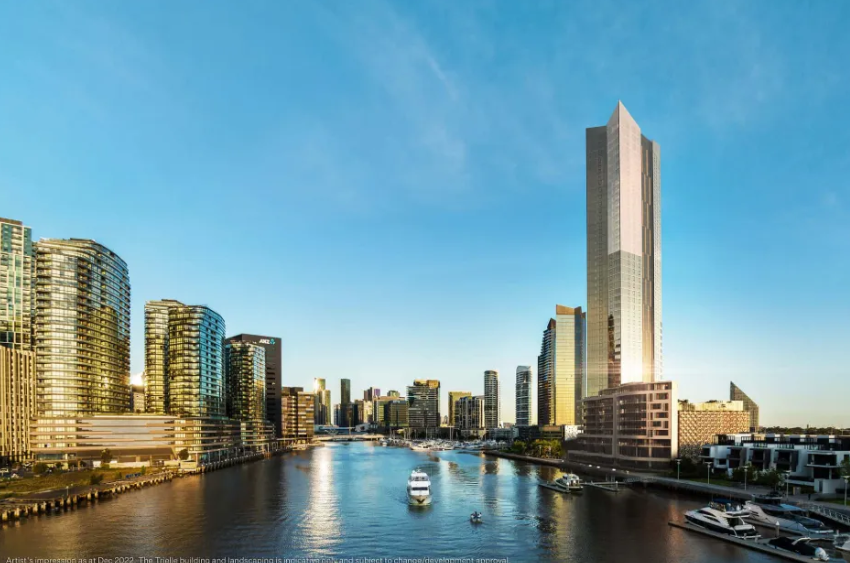
Mirvac has topped out Trielle at Melbourne’s Yarra’s Edge, with more than 70 per cent of the riverfront development sold and approximately 80 per cent of purchasers intending to make their apartment a home.
The figures, released on September 22, point to an owner-occupier audience for one of the precinct’s final residential towers. Mirvac began developing Yarra’s Edge in 2003, and its latest addition occupies one of the remaining absolute riverfront sites.
Mirvac CEO of Development Stuart Penklis said existing residents were among those moving up within the neighbourhood.
“Many purchasers already have a connection to Yarra’s Edge,” Mr Penklis said, describing buyers whose changing needs were encouraging an upgrade within the precinct.
“As one of the final residential towers within Yarra’s Edge, Trielle represents the culmination of more than two decades of creating one of Melbourne’s most established and sought-after waterfront communities,” Penklis said.
“Positioned on the Collins Street axis with absolute river frontage, Trielle offers residents a rare opportunity to enjoy sweeping views across the Yarra River, Melbourne skyline and Port Phillip Bay, while remaining seamlessly connected to the CBD. With Trielle now more than 70 per cent sold, we’re continuing to see strong demand from buyers seeking quality homes in established locations.”
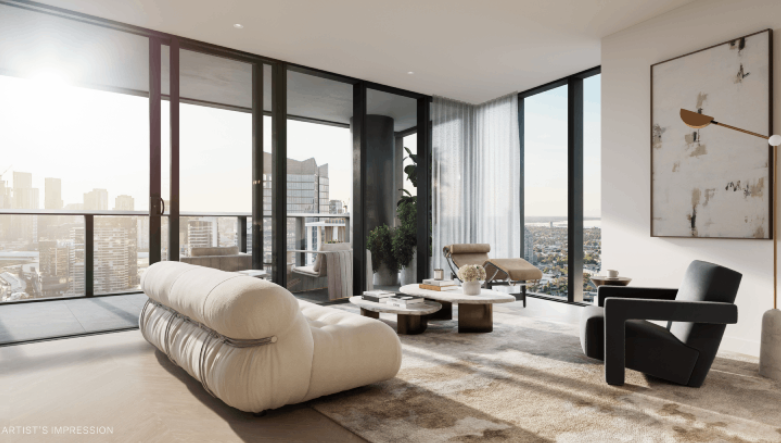
The developer also flagged a penthouse and sub-penthouse collection with larger layouts, premium finishes and broad outlooks. The planned wellness centrepiece, The Oasis, encompasses a 900-square-metre elevated urban rainforest.
Mirvac General Manager Residential Development Victoria Elysa Anderson said Trielle had resonated strongly with buyers seeking a rare lifestyle offering in Melbourne.
“Opportunities to secure a new luxury residence on a riverfront site of this calibre are incredibly rare, particularly within a community like Yarra’s Edge,” Anderson said.
“What makes Trielle unique is the combination of exceptional views, world-class residential facilities and the lifestyle that already exists around it. Residents are buying into a mature waterfront community with parks, promenades, dining, wellness and strong community connections already in place.”
The 45-level tower brings a substantial new presence to that waterfront. Its residential offering spans one-, two-, three- and four-bedroom apartments, with Signature, Prestige and Sub-Penthouse collections accommodating different household sizes. The north-facing position connects the apartments visually to the river and city beyond.
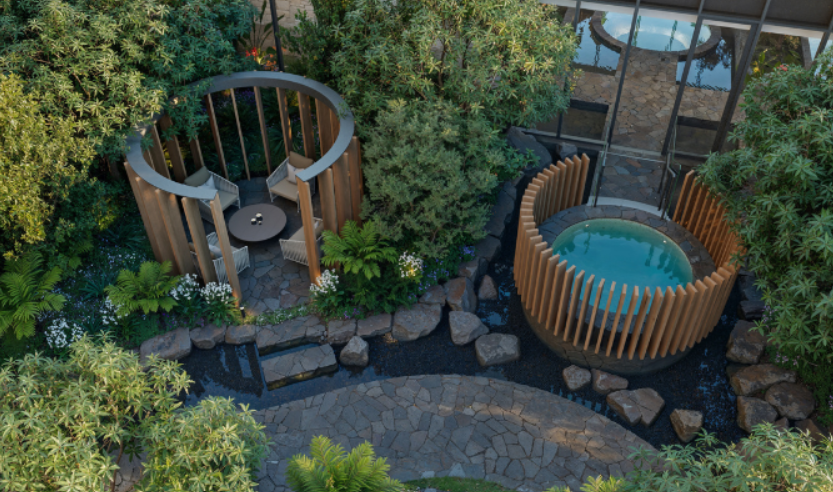
Seven storeys above the promenade, the planned Oasis combines planting and a running stream with a Scandinavian-inspired wellness club developed with spa specialist Naomi Gregory. Facilities include a 25-metre lap pool, hot magnesium pool, sauna, hydrotherapy, a gym, yoga and Pilates room, and treatment spaces.
The amenity extends beyond exercise. Residents will have access to The Biblioteca library and workspaces, ground-floor work pods, and The Salone piano lounge. A private Chef’s Table dining room offers a setting for larger gatherings, while a cinema, games room and sports lounge broaden the entertaining options. Concierge services and a dog-wash area support everyday routines.
Trielle comprises a collection of one, two, three and four-bedroom residences. Reflecting strong demand from owner occupiers, approximately 80 per cent of purchasers to date intend to live in their homes, highlighting the project’s appeal to those seeking a long-term waterfront lifestyle.
Mirvac has recently delivered The Albertine, a premium apartment development on the edge of Melbourne’s CBD, and is nearing completion of Prince & Parade in Brunswick, further strengthening its portfolio of thoughtfully designed apartment communities in some of Melbourne’s most sought-after urban locations.

From farm-to-table Thai to fairy-lit mango trees and Coral Sea vistas, Port Douglas has award-winning dining and plenty of tropical charm on the side.
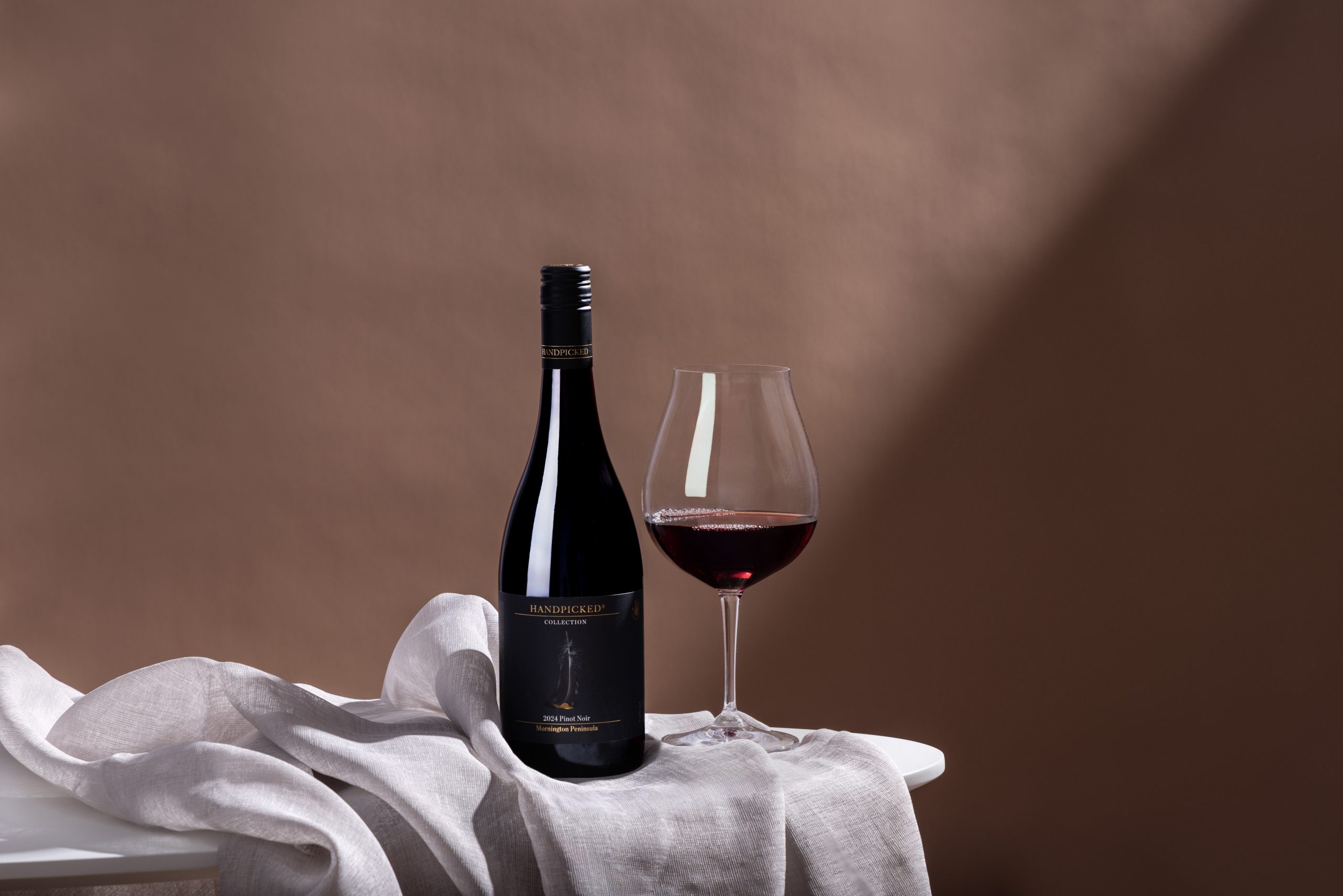
As the season turns, Handpicked Wines’ latest Pinot Noir and Chardonnay releases reveal how subtle shifts in place shape what ends up in the glass.