Studies Suggest Red Meat May Help Prevent Alzheimer’s
At least for people who carry the APOE4 genetic variant, a juicy steak could keep the brain healthy.

 3 min
3 min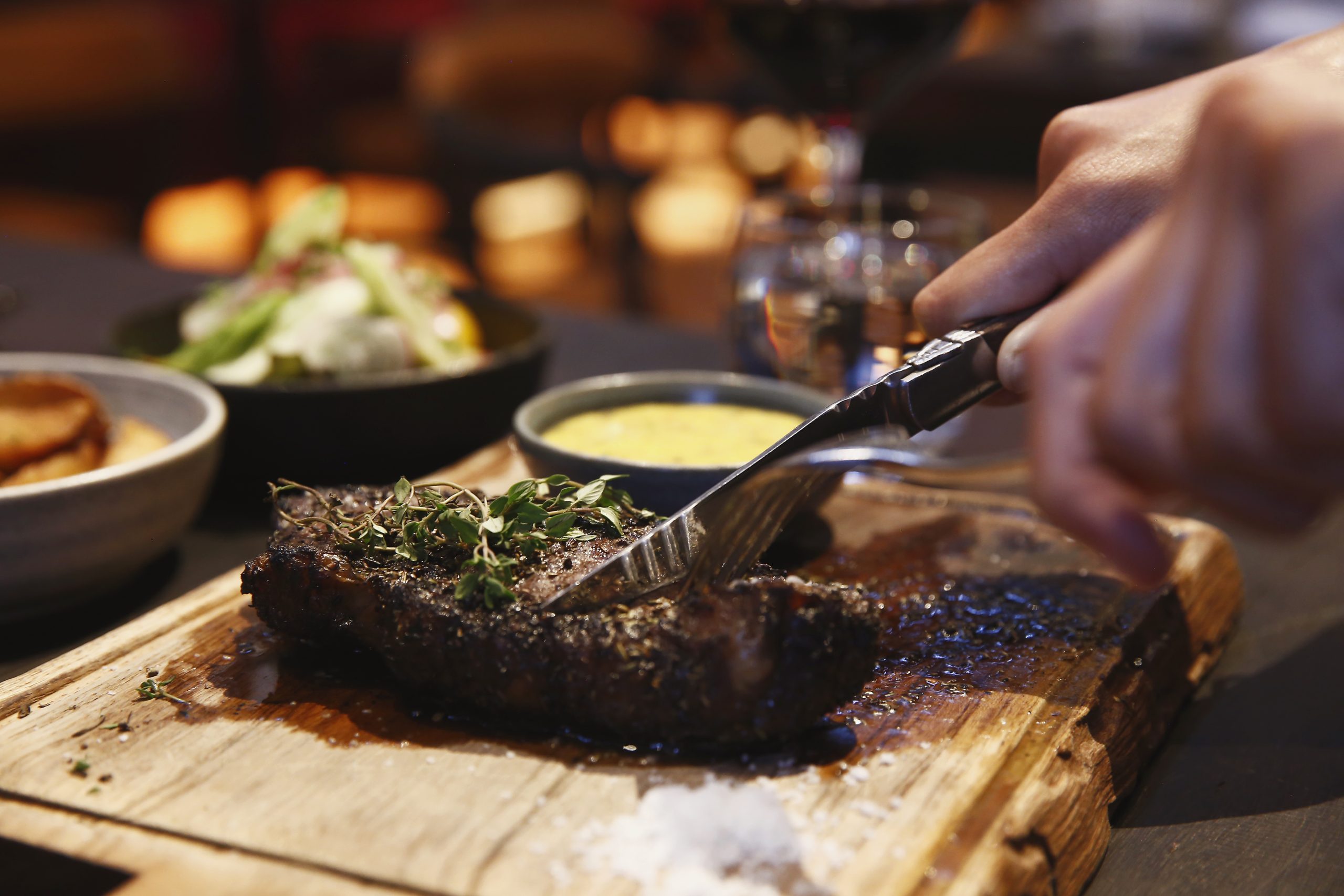
Must even steak be politicised? The American Heart Association recently recommended eating more “plant-based” protein in a move to counter the Health and Human Services Department’s new guidelines calling for more red meat.
Few would argue that eating a Big Mac a day is good for you.
On the other hand, growing evidence, including a study last month in the Journal of the American Medical Association, suggests that eating more meat—particularly unprocessed red meat—can reduce the risk of Alzheimer’s in the quarter or so of people with a particular genetic predisposition.
The APOE4 gene variant is one of the biggest risk factors for Alzheimer’s.
You inherit one copy of the APOE gene from each parent. The most common variant is APOE3; the least is APOE2.
The latter carries a lower risk of Alzheimer’s, while the former is neutral. A quarter of people carry one copy of the APOE4 variant, and about 2% carry two.
APOE4 is more common among people with Northern European and African ancestry. In Europe the variant increases with latitude, and is present in as many as 27% of people in northern countries versus 4% in southern ones. God smiled on the Italians and Greeks.
For unknown reasons, the APOE4 variant increases the risk of Alzheimer’s far more for women than men.
Women’s risk multiplies roughly fourfold if they have one copy and tenfold if they have two. Men with a single copy show little if any higher risk, while those with two face four times the risk.
What makes APOE4 so pernicious? Scientists don’t know exactly, but the variant is also associated with higher cholesterol levels—even among thin people who eat healthily.
Scientists have found that cholesterol builds up in brain cells of APOE4 carriers, which can disrupt communications between neurons and generate amyloid plaque, an Alzheimer’s hallmark.
The Heart Association’s recommendation to eat less red meat may be sound advice for people with high cholesterol caused by indulgent diets.
But a diet high in red meat may be better for the brains of APOE4 carriers.
In the JAMA study, researchers at Sweden’s Karolinska Institute examined how diet, particularly meat consumption, affects dementia risk among seniors with the different APOE variants.
Higher consumption of meat, especially unprocessed red meat, was associated with significantly lower dementia risk for APOE4 carriers.
APOE4 carriers who consumed the most meat—the equivalent of 4.5 ounces a day—were no more likely to develop dementia than noncarriers. (
The study controlled for other variables that are known to affect Alzheimer’s risk including sex, age, physical activity, smoking, alcohol consumption and education.)
APOE4 carriers who ate the most unprocessed meat were at significantly lower risk of dying over the study’s 15-year period and had lower cholesterol than carriers who ate less. Go figure. Noncarriers, however, didn’tenjoy similar benefits from eating more red meat.
The study’s findings are consistent with two large U.K. studies.
One found that each additional 50 grams of red meat (equivalent to half a hamburger patty) that an APOE4 carrier consumed each day was associated with a 36% reduced risk of dementia.
The other found that older women who carried the APOE4 variant and consumed at least one serving a day of unprocessed red meat had a cognitive advantage over carriers who ate less than half a serving, and that this advantage was of roughly equal magnitude to the cognitive disadvantage observed among APOE4 carriers in general.
In all three studies, eating more red meat appeared to negate the increased genetic risk of APOE4.
Perhaps one reason men with the variant are at lower Alzheimer’s risk than women is that men eat more red meat.
These findings might cause chagrin to women who rag their husbands about ordering the rib-eye instead of the heart-healthy salmon.
But remember, the cognitive benefits of eating more red meat appear isolated to APOE4 carriers.
Nutrition is complicated, and categorical recommendations—other than perhaps to avoid nutritionally devoid foods—would best be avoided by governments and health bodies.
Readers can order an at-home test from any number of companies to screen for the APOE4 variant.
The Swedish researchers hypothesize that APOE4 carriers may be evolutionarily adapted to carnivorous diets, since the variant is believed to have emerged between one million and six million years ago during a “hypercarnivorous” period in human history.
The other two APOE variants originated more recently, during eras when humans ate more plants.
APOE4 carriers may absorb more nutrients from meat than plants, the researchers surmise. Vitamin B12—low levels have been associated with cognitive decline—isn’t naturally present in plant-based foods but is abundant in red meat.
Foods high in phytates (such as grains and beans) can interfere with absorption of zinc and iron (also high in red meat), which naturally declines with age. So maybe don’t chuck your steak yet.
 Copyright 2020, Dow Jones & Company, Inc. All Rights Reserved Worldwide. LEARN MORE





Victorian auction buyers will soon receive a piece of information that has traditionally been withheld until bidding reaches it: the vendor’s reserve price. Under new property-sale and underquoting laws, agents must publish the agreed reserve at least seven days before an auction or fixed-date sale. Most changes begin on 1 October 2026 and apply to …
Continue reading “Victoria’s New Auction Rules Will Force Reserve Prices Into the Open”

Four decks, 34.5 metres and a made-to-measure interior: step aboard the new Custom Line Navetta 35, unveiled at Cannes.
Could fears of an AI apocalypse be distracting us from the dangers already here? Experts debate whether regulation should focus on speculative existential threats or present-day harms, including cyberattacks, weapons and unsafe autonomous agents. Read more via the link in bio.
5 min
There is ample and alarming evidence that artificial intelligence can help humans do bad things, such as committing cyberattacks, building weapons and even killing themselves or others. The Hugging Face hacking episode—and a growing list of others by poorly constrained swarms of agents—indicate just how powerful and potentially dangerous AI has quickly become.
Yet many inside the U.S. AI industry insist far worse is coming, on account of the imminent arrival of AI with superhuman and self-improving abilities.
Plenty of experts, including many who study AI harms for a living, are skeptical. The so-called doomers’ assertion that AI might decide to wipe out all of humanity—or even “just” topple human civilization—is contingent on it achieving a pace of development not yet seen.
And if the assumptions behind this global-doomsday scenario are wrong, it could lead us to curb or regulate AI in ways that don’t address its real harms.
At the center of this debate is the claim that current AI systems might take over the job of training their next versions, a process called “recursive self-improvement.” Think of it like evolution on steroids—billions of years happening at light speed within vast AI supercomputers. Anthropic Chief Executive Dario Amodei recently proposed a global agreement to slow down the pace of releasing new AI models, with the goal of delaying the arrival of recursive self-improvement.
“I don’t think we’re anywhere near ‘artificial general intelligence,’” says Melanie Mitchell, a professor at the nonprofit research group Santa Fe Institute who studies AI. She said AI is making impressive strides but thinks claims by engineers that they’ve achieved recursive self-improvement don’t stand up to scrutiny.
She is hardly alone. A recent paper by two dozen academics at Princeton, Stanford and other institutions found that even the most cutting-edge AIs are incapable of doing the original research required to advance the AI frontier.
Two of the authors involved in that paper also threw cold water on the idea that the Hugging Face swarm hack by OpenAI agents occurred because of a breakthrough in intelligence. The attack succeeded primarily because of a lack of basic technical guardrails, not an unmanageable explosion in AI capability, they wrote.
Yann LeCun, former chief AI scientist at Meta, posted that this analysis was “a welcome dose of sanity in an otherwise insane debate.”
OpenAI and Anthropic didn’t respond to several requests for comment.
The people who disagree with the doomers still consider AI to be dangerous, and point out that such systems don’t have to be particularly capable to be powerful. Some argue that AI should undergo regular evaluation by outsiders and that the companies that make it should be held responsible when their systems do harm. AI should also be treated the same as airplanes and elevators, and should be designed to do the least harm possible, they say.
“If you believe that technology is powerful enough to create novel, dangerous viruses, or to essentially take over the whole planet for some reason, then it must also be strong enough to create cures for cancer, to cure aging, to fix socio-economic or political problems,” says Christopher Canal, CEO of EquiStamp, a company that helps companies and governments evaluate AIs.
AI has shown an ability to rapidly advance because it is matching the abilities of humans who are constantly feeding it their knowledge. Sometimes it can recombine that knowledge and exceed what people have been capable of, through a kind of post-training known as reinforcement learning, as we’ve seen in mathematics.
Today’s LLMs are “models of knowledge” rather than actually intelligent, wrote Yi Ma, professor of AI at Hong Kong University.
Researchers at universities and commercial AI research labs in China wrote in a recent paper that autonomous, self-improving AI is likely to be a long way off, due to the sheer number of breakthroughs required. They also argue that humans will probably remain in the loop, supervising that process—and gating how fast it can occur.
Vals AI, a company that evaluates today’s AI models, maintains an RSI Index that benchmarks whether models can “do the research that builds the next model.” So far, no publicly released model is even close.
Yet Rayan Krishnan, CEO of Vals AI, says his team projects models will exceed humans’ ability to improve the next generation of AIs by August 2027, or sooner, and at that point could start building their successors all on their own.
“Once we get to recursive self-improvement, the fear is that all bets are off,” he says. “You could end up with a ‘fast takeoff’ situation, where the models quickly acquire skills and eclipse humans across every possible domain.”
In a reply to the resignation tweet heard round the world from Jacob Coxon, another Anthropic engineer declared his belief that those odds were at least 10% over the next decade. Many others in the industry chimed in to say they thought the percentage was even higher.
Some who argue the end is nigh say they calculate their personal p(doom) based on a chain of conditional probabilities—a bit like the Drake equation for calculating the likelihood of intelligent alien life. Since all those probabilities are based on speculation, estimates range from 0% to nearly 100%. Many land around 10%.
“The weird thing is that if you go back and look at the predictions on this over the last 10 years or more, it’s always been 10%—it’s just a nice round number,” says Mitchell. “I think it’s all vibes, and there’s no actual evidence or calculation.”
One argument against worrying about superintelligent AI is that the world is full of unlikely humanity-ending disasters, and trying to avert them all can make it impossible to prioritize, says Canal.
This has led AI experts and the policymakers who listen to them to propose remedies that don’t get at its real and present dangers.
AI companies’ proposals to “pace the frontier” aren’t addressing the problem in the right way, argues Stuart Russell, a computer-science professor at the University of California, Berkeley, and the president of the International Association for Safe and Ethical Artificial Intelligence.
“It’s like saying we’re driving toward the cliff at 60 miles per hour and we’re going to drive toward it at 40 miles per hour instead, and everything will be OK,” he says.
Russell and his peers have proposed that AI companies should have to meet the same standards that govern other areas of everyday life, from air travel and buildings to food and drugs. They highlight the “behavioral red lines” AI should not be allowed to cross. Breaking into other computer systems, stealing information or advising terrorists on how to build biological weapons are all illegal for a human to do, and should be illegal for companies’ AIs as well, he argues.
The challenge for AI companies in such a proposal, he adds, is that it would be a de facto ban on today’s advanced AI systems, since the companies behind them don’t know how to make them respect such boundaries all of the time.
Others have proposed something like the Food and Drug Administration, but for AI, but setting up a new agency has so far been a nonstarter in Congress. And some prominent voices in tech have said such a structure would give up America’s AI edge to China.
Given the bipartisan groundswell of support for curbing AI companies and their creations, however, that may soon change.
“The tech industry has had this mantra for decades that regulation is bad,” says Russell. “They don’t accept the liability for any harm, and they hide behind free speech. That, I think, has to change.”

A thoughtful timber-led renovation in Byron Bay has reimagined an existing house as a warm, resort-style family sanctuary grounded in natural materials.

High-end homeowners are choosing to upgrade rather than relocate, investing in bespoke design, premium finishes and long-term lifestyle value.