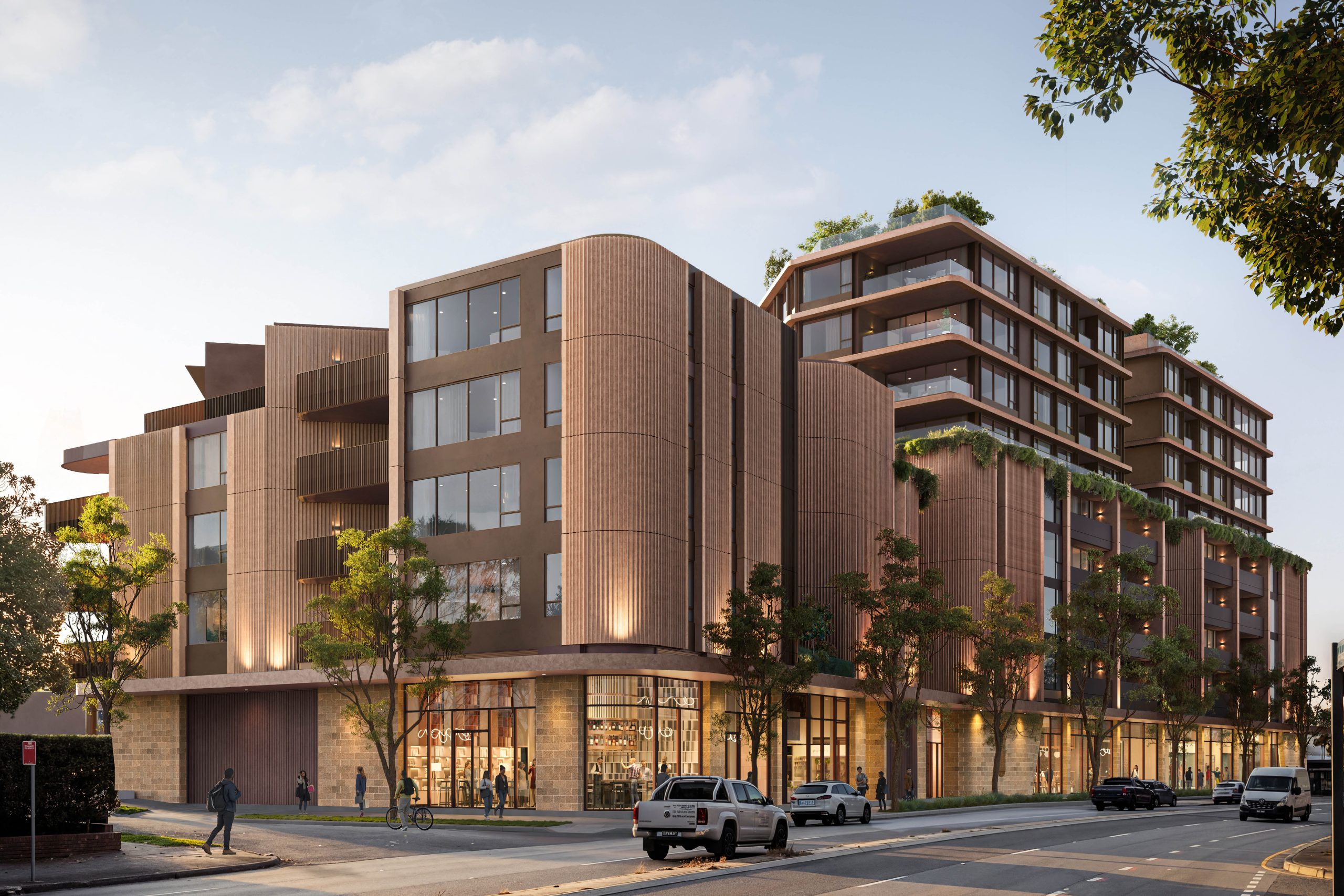
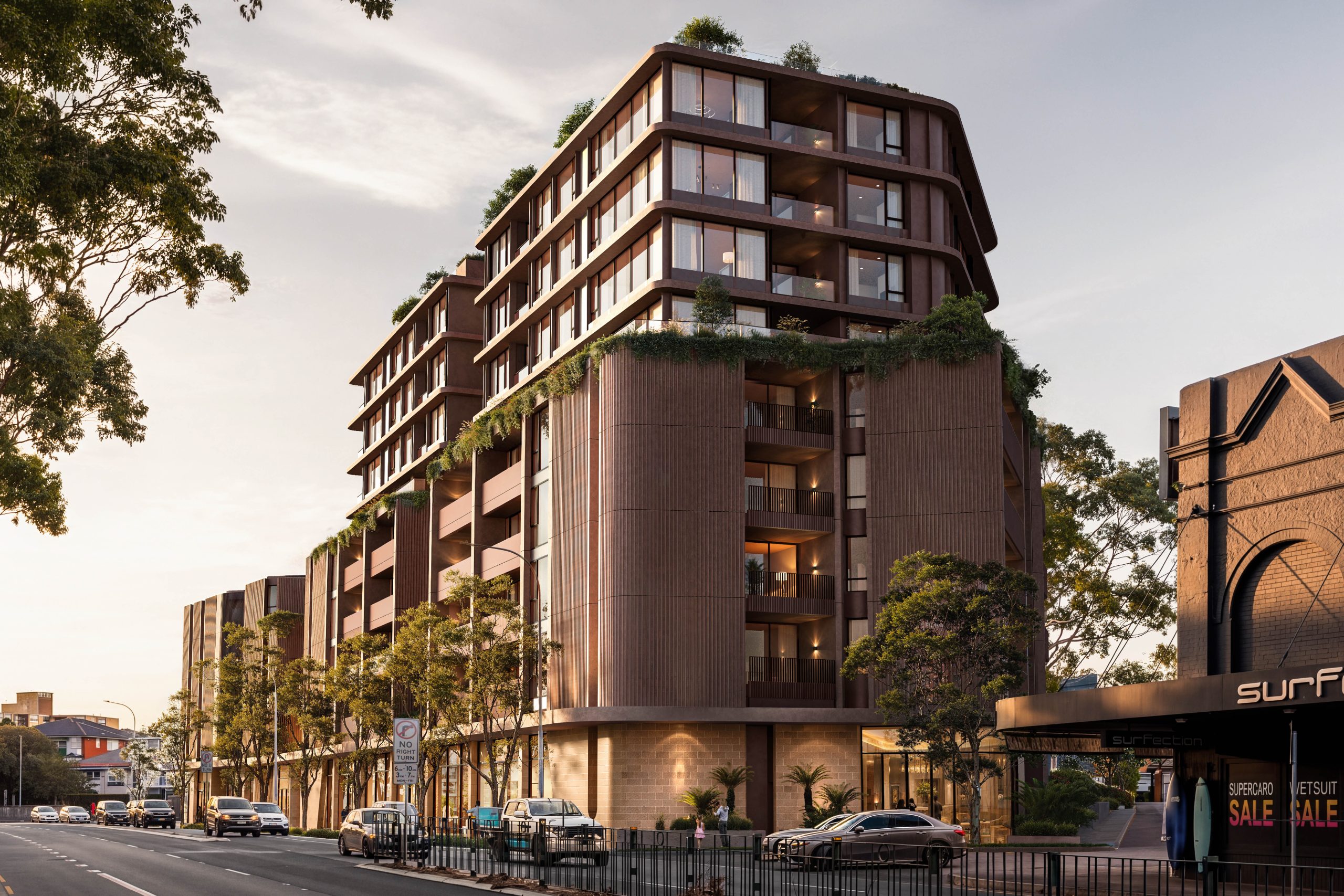
Abadeen, the Lower North Shore’s most active and prominent residential developer, together with investment partner Phoenix Property Investors, has lodged a State Significant Development Application to transform the former Honeysuckle Garden and Midas site on Military Road into 100 premium new homes.
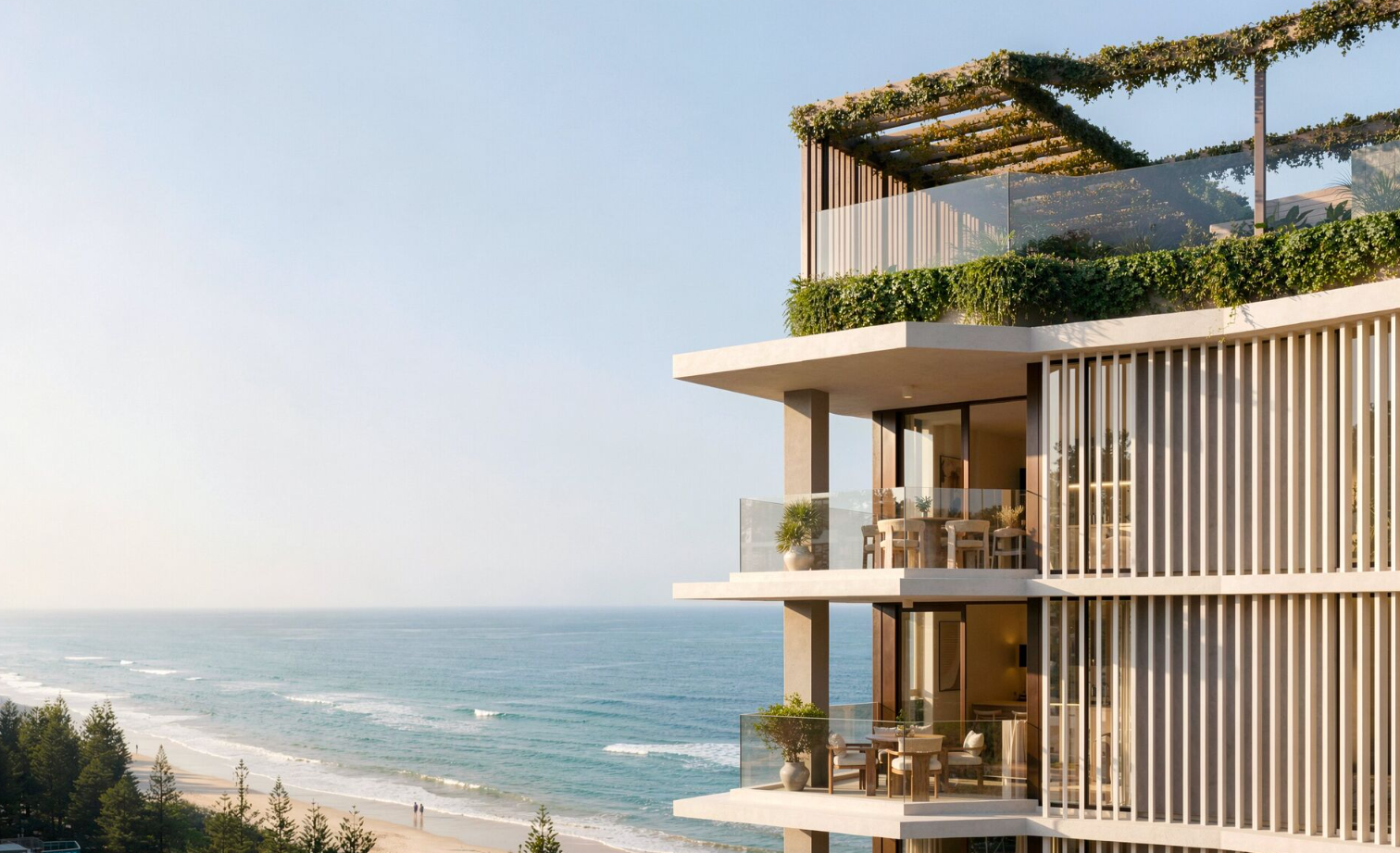
With an estimated completed value of $230 million, the proposed development will transform the former Honeysuckle Garden and Midas site into a landmark mixed-use residential community comprising 100 premium residences, activated ground-floor retail and a resort-style rooftop wellness and recreation precinct designed to become one of the Lower North Shore’s most exceptional resident amenities.
The proposal has been carefully designed to respond to the site’s varied street frontages and surrounding neighbourhood. The building comprises predominantly five and nine storeys, steppingdown towards Hale Road to reduce its visual impact, with the tenth level rooftop
wellness facilities rather than residential apartments. This built form remains below the 12-storey outcome identified through Mosman Council’s recently endorsed Masterplan process, demonstrating a considered approach to delivering much-needed housing while respecting the site’s context and neighbouring properties.
Designed by leading Australian practice DKO Architecture, under the direction of Senior Associate Matthew Ritchard, the proposal has been conceived as a contemporary response to Mosman’s unique landscape, history and community.
Occupying a prominent position on Military Road between Cremorne and Mosman villages, the site is close to boutique retail, acclaimed dining, harbour beaches, leading schools and excellent public transport connections. Upper-level residences would enjoy panoramic views stretching north across Middle Harbour, south to the Sydney CBD skyline, east to Balmoral and Sydney Heads, and west across the Lower North Shore.
Abadeen Executive Chairman Justin Brown said the project represented an opportunity to deliver a new generation of homes for Mosman that responded to changing buyer needs while remaining respectful of the suburb’s established character.
“This is one of the most significant sites to come to market on the Lower North Shore in many years,” Brown says.
“The apartments have been designed as genuine long-term homes, with efficient floor plans that maximise usable living areas, generous internal storage, strong natural light and practical connections between internal and external spaces. A diverse range of apartment sizes and configurations provide greater housing choice for individuals, couples, families and local downsizers.
“The focus has been on creating homes that caters for a broad range of buyers, from young professionals purchasing their first home, to couples establishing themselves, growing families and local downsizers who want to remain in Mosman.”
The 1860s Darlinghurst mansion Stoneleigh could become Sydney’s most expensive home ever sold under the hammer when it goes to auction. Clint Ballard is giving buyers a $28 million guide for the heritage-listed mansion on Darley Street, opposite Iona, the former home of Hollywood royalty Baz Luhrmann. Stoneleigh is being offered for sale for the …
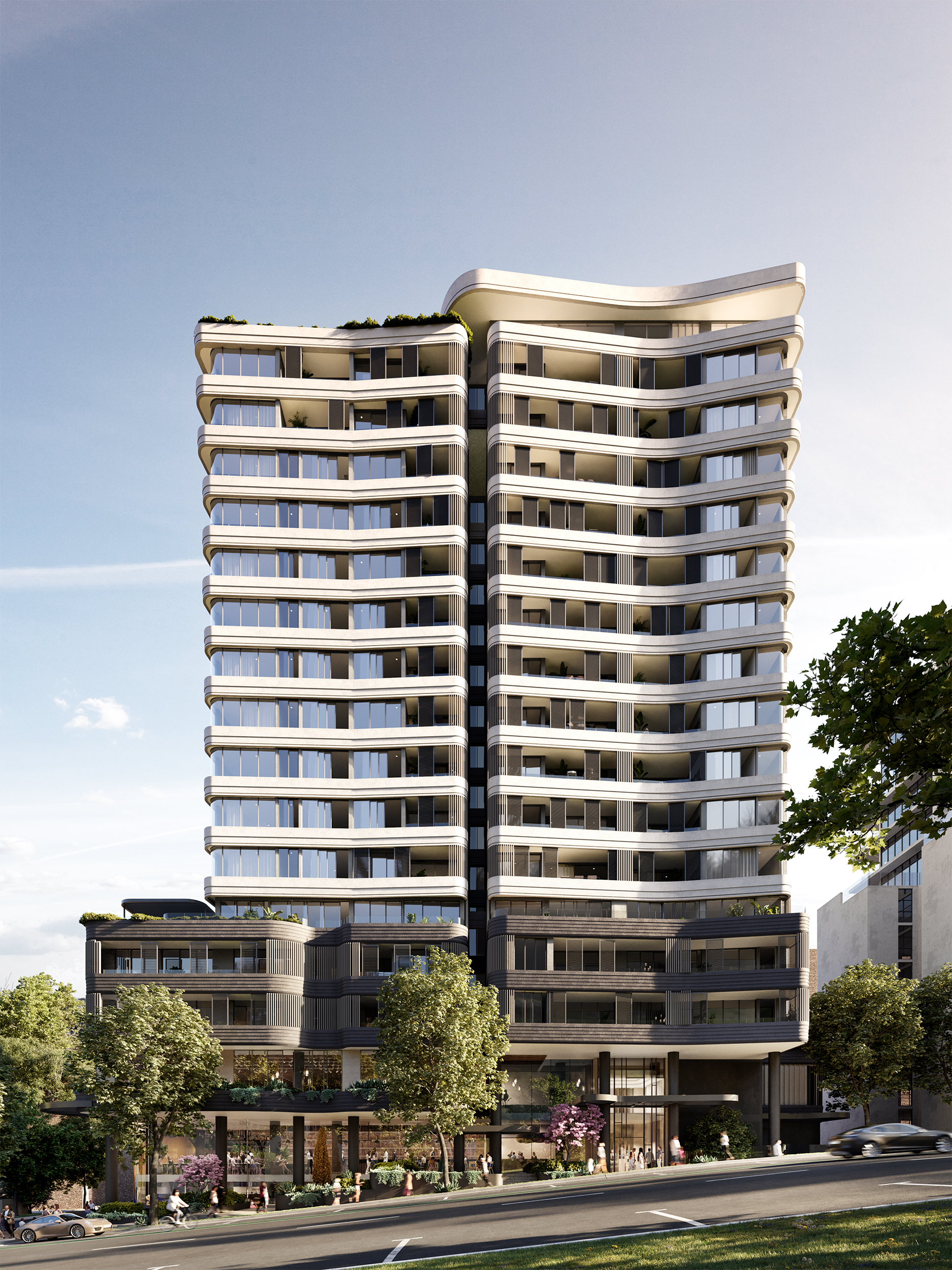
Set on one of the city’s last absolute riverfront sites, The Riversdale by Mosaic combines irreplaceable waterfront ownership with one of Brisbane’s most significant residential opportunities.
A student-run real estate investment fund is proving that hands-on experience can deliver real results. Managing $12 million in equity, the undergraduate team recently achieved a 65% gross return on its first property sale, highlighting the growing role of experiential learning in preparing the next generation of real estate professionals.
On a recent summer Sunday afternoon, Brooks Hiller was hunkered over his laptop at his apartment in Chicago, dialing in to hour three of a marathon series of conference calls on real-estate deals.
The 21-year-old isn’t a professional, and he doesn’t make a dime from this work. He is a rising senior at Indiana University’s Kelley School of Business, where he leads a team of 20 undergraduates who manage about $12 million in equity.
Those students operate their own real-estate investment business, called Sample Gates Management, named for the Gothic-style limestone arches that are the gateway to the Bloomington campus.
Unlike the many student investment clubs that deploy university money or rely on donations, the Indiana group raises funds from third parties and invests in properties across the country, such as apartment developments and industrial parks.
As a high schooler, Hiller was so enamored with the program—by most accounts, the undergraduate-run real-estate investment group that manages the most capital—that he chose to attend Indiana with hopes of being a part of it.
“Students get the experience, the school gets a better education for their students, and the investors are making their money back and get to be a part of the program again,” Hiller said. “I really wanted to be part of that.”
The group’s success is emblematic of changes transforming both higher education and the real-estate industry.
An industry that once revolved around information shared at private clubs or events has become a highly digitized landscape. It’s now flooded with standardized public-market data, so much so that undergraduates can readily peer inside and participate on nearly equal footing.
Meanwhile, colleges in recent decades have championed what is called “experiential learning,” encouraging students to do the hands-on work that will teach them the practical job skills they can’t learn in traditional classroom settings. Plus, dozens of universities now offer real-estate degrees, minors or concentrations for undergraduates.
“At its core, this program wouldn’t have existed 30 years ago,” said Harvard University real-estate professor Avis Devine.
This summer, Sample Gates Management sold its first investment, an industrial warehouse development in Indianapolis. In about 16 months, the fund earned a 65% gross profit on that property.
“That’s a really fantastic return in this environment,” one that would be “good for sort of any professional firm, not just students,” said Tim Morris, a member of the board responsible for approving the students’ investments, who is a founder and co-managing partner of the real-estate firm Proprium Capital Partners.
That property was an “easy yes” investment, Tom Peck, the students’ faculty adviser, recalled. It would diversify the group’s investment portfolio, and a reliable tenant was committed to leasing the building once it was finished, Peck said.
Most of the fund remains tied up in investments, making it difficult to gauge exactly how well it is performing overall.
A decade ago, there were only a few student-managed real-estate funds in the country. Today, there are at least 18, and two more are set to launch this school year, according to Mariya Letdin, a real-estate professor at Florida State University who has researched student-managed investment funds and advises one herself.
And yet, although a program like Sample Gates is an attractive resume line that provides unique experience among undergraduates, it isn’t necessarily a launching pad to help students secure jobs. Because of Wall Street’s summer-internship pipelines and early recruiting timelines, many of the 20 seniors in the group have already secured full-time jobs at global giants before they even touch Sample Gates funds.
In fact, the students’ professional experience—some of them participate in internships all three summers of college—is often a boon for Sample Gates. Students’ stints at institutional shops have left them with a “networking mindset” that “snowballs very quickly into a really, really good Rolodex,” Morris said.
At the Kelley School, where currently 278 students are majoring in real estate, faculty picked only 20 to manage the private-equity fund. The rising seniors were selected from Kelley’s already competitive roughly 60-student commercial real-estate workshop, in which students analyze deals and pitch them to mock committees.
In 2022, for the group’s first round of fundraising, Sample Gates raised $4.2 million from 46 investors, 40% more than their goal of $3 million. Last year’s cohort raised $7.8 million from 74 investors in the second round of fundraising, with one investor forking over $700,000. Some investors put money into both funds.
Many of the investors are Indiana alumni now working in the real-estate industry themselves. They expect the students to return a profit, but they are also enthusiastic about fostering the young program and meeting standout students.
The student managers screen between three and eight deals each week, which could mean they evaluate up to 400 potential investments a year. However, between 2023 and 2025, they selected only 12 investments, ranging in location from Indiana to Arizona.
Once a potential investment passes an initial screening, a team builds financial models and meets with prospective partners to pressure-test the viability of a deal.
For students to move forward with an investment, they must present it to their investment committee, a board of 10 seasoned real-estate executives. The committee has to sign off on all deals, and they reject roughly a third of the ones the undergraduates bring to the table.
And if the students think they can pitch an investment without getting their eyes on the physical property—regardless of where it is located— they would best think again.
Some observers predict that students might be disappointed when they start their full-time jobs because of the shift from doing the highest-level work of managing a fund to being a lowly analyst at a large firm.
“To have all of these skill sets in a short period of time and then to go be an associate for Blackstone would be mentally defeating,” said Rhett Trees, an investor in Sample Gates and Indiana alum who is the chief executive of a Denver-based real-estate private-equity firm.
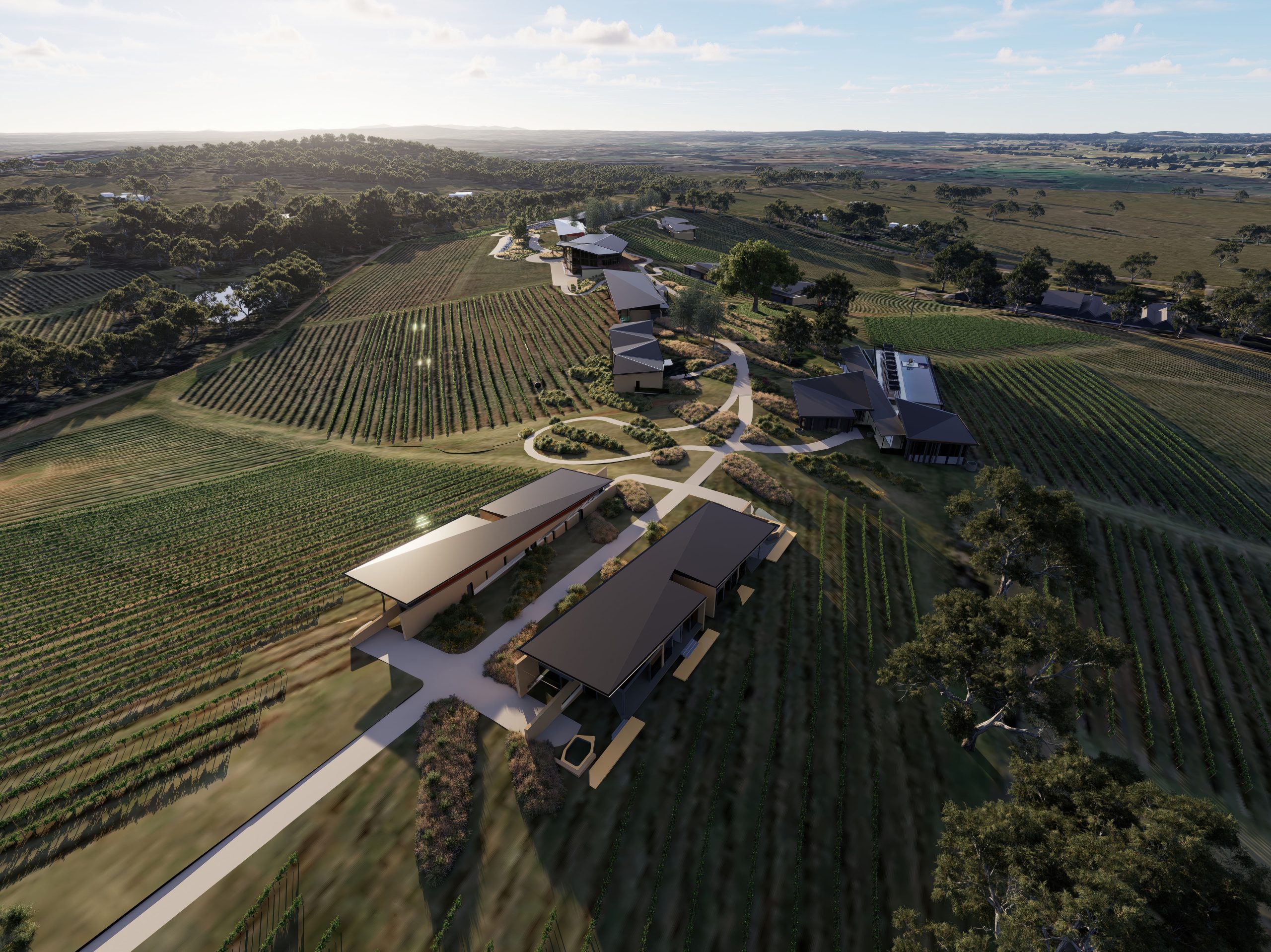
Pure Amazon has begun journeys deep into Peru’s Pacaya-Samiria National Reserve, combining contemporary design, Indigenous craftsmanship and intimate wildlife encounters in one of the richest ecosystems on Earth.
Set on one of the city’s last absolute riverfront sites, The Riversdale by Mosaic combines irreplaceable waterfront ownership with one of Brisbane’s most significant residential opportunities.