The $495,000 Burleigh Apartment Type Developers Stopped Building
Studio apartments have almost disappeared from new Australian developments. Lura is bringing them back to Burleigh Heads from $495,000.
 4 min
4 min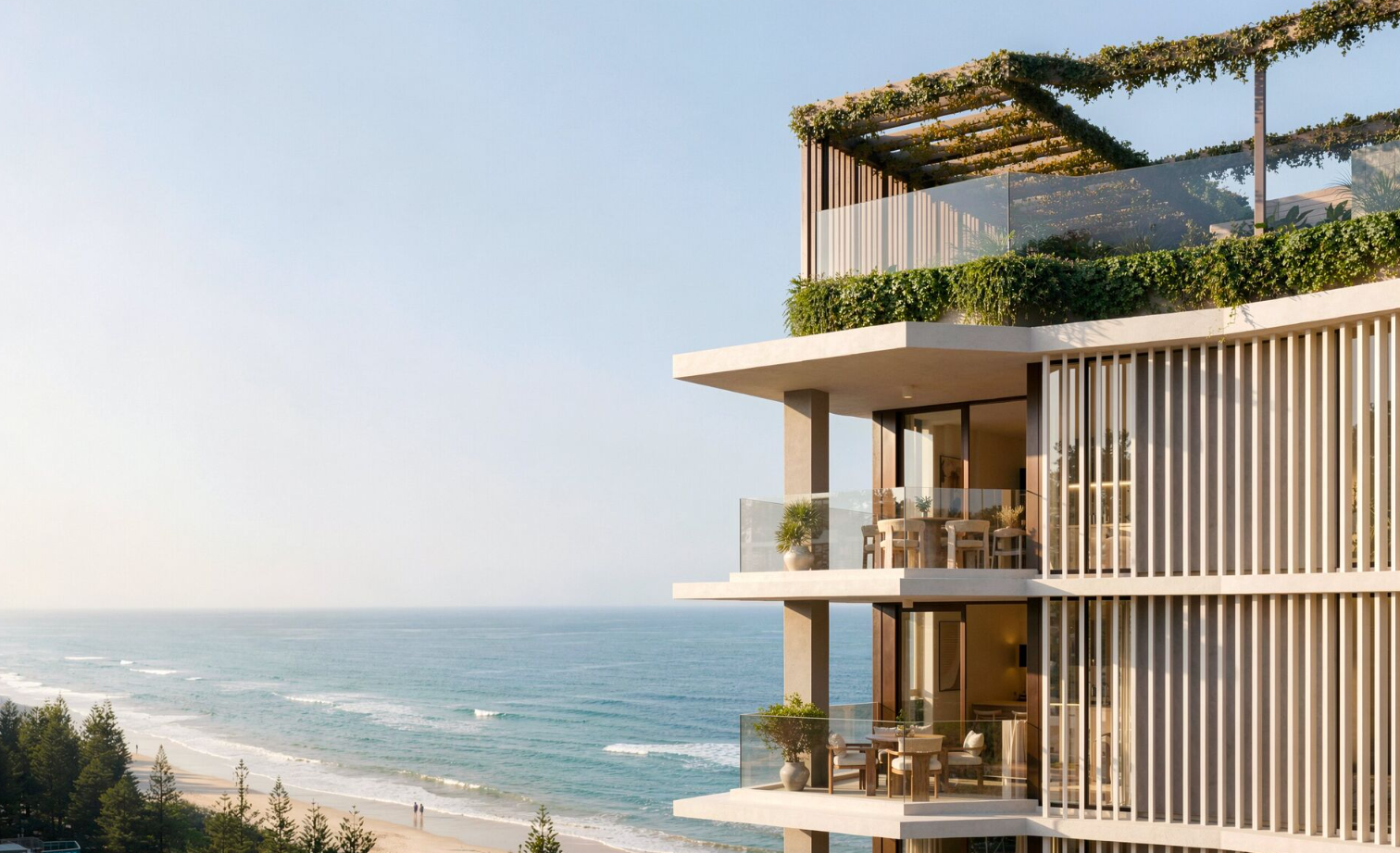
For years, the studio apartment was the first rung on the inner-city property ladder.
It gave a single buyer somewhere attainable to own, offered investors a relatively low-cost entry into desirable neighbourhoods and allowed people to live close to work, transport and lifestyle without paying for rooms they did not need.
Then, quietly, studios began to disappear from new Australian apartment projects.
They have not vanished altogether. Student housing, build-to-rent schemes and some inner-city developments continue to include compact homes. But in the conventional build-to-sell market, the new studio has become increasingly rare — particularly in premium coastal locations.
The reason is not a lack of need. Australia has more single-person households, high rents and a worsening shortage of attainable homes in well-connected neighbourhoods. The problem is that studios have become difficult to make work within the economics of modern apartment development.
A small apartment requires many of the same expensive components as a larger one. It still needs a kitchen, bathroom, ventilation, fire protection, acoustic treatment, electrical services, plumbing connections and access to lifts, corridors and common areas.
Those fixed costs do not fall in proportion with the floor area.
At the same time, developers are carrying more expensive land, finance, labour, materials, consultants and longer approval periods. When the cost of creating each dwelling rises, the commercial incentive shifts towards larger apartments that can command a much higher total sale price.
That has helped produce the luxury bias now visible across many Australian apartment markets. New projects increasingly target downsizers and established owner-occupiers seeking two- and three-bedroom residences with generous living areas, multiple bathrooms and substantial amenity.
The homes may be excellent. But the entry-level end of the new-apartment market is gradually removed from the equation.
Studios can also present financing complications. Lending policies differ, but some banks apply additional restrictions to very small apartments or properties without a separate bedroom. Buyers may need a larger deposit, face a narrower choice of lenders or be required to satisfy minimum internal-area policies.
That can make studios harder to pre-sell. For developers relying on presales to secure construction finance, a dwelling type that is more difficult for buyers to fund can become a project risk.
Apartment-design requirements are another consideration. NSW’s Apartment Design Guide, for example, sets a minimum internal area of 35 square metres for a studio. These standards are designed to protect liveability, but they also limit the micro-apartment model seen in some international cities.
The result is a curious gap in the market: Australia needs smaller, lower-priced homes in good locations, but the development system increasingly rewards larger and more expensive ones.
But what has emerged in the last week is somewhat a welcome return of the studio apartment, in Burleigh Heads no less, one of the most sought-after locations for new property not just on the Gold Coast, but across Australia.
The $120 million project called Lura is offering a handful of studio apartments priced from $495,000. To paint the picture clearer, rarely would a new apartment development have apartments launch for under $1 million on the Gold Coast.
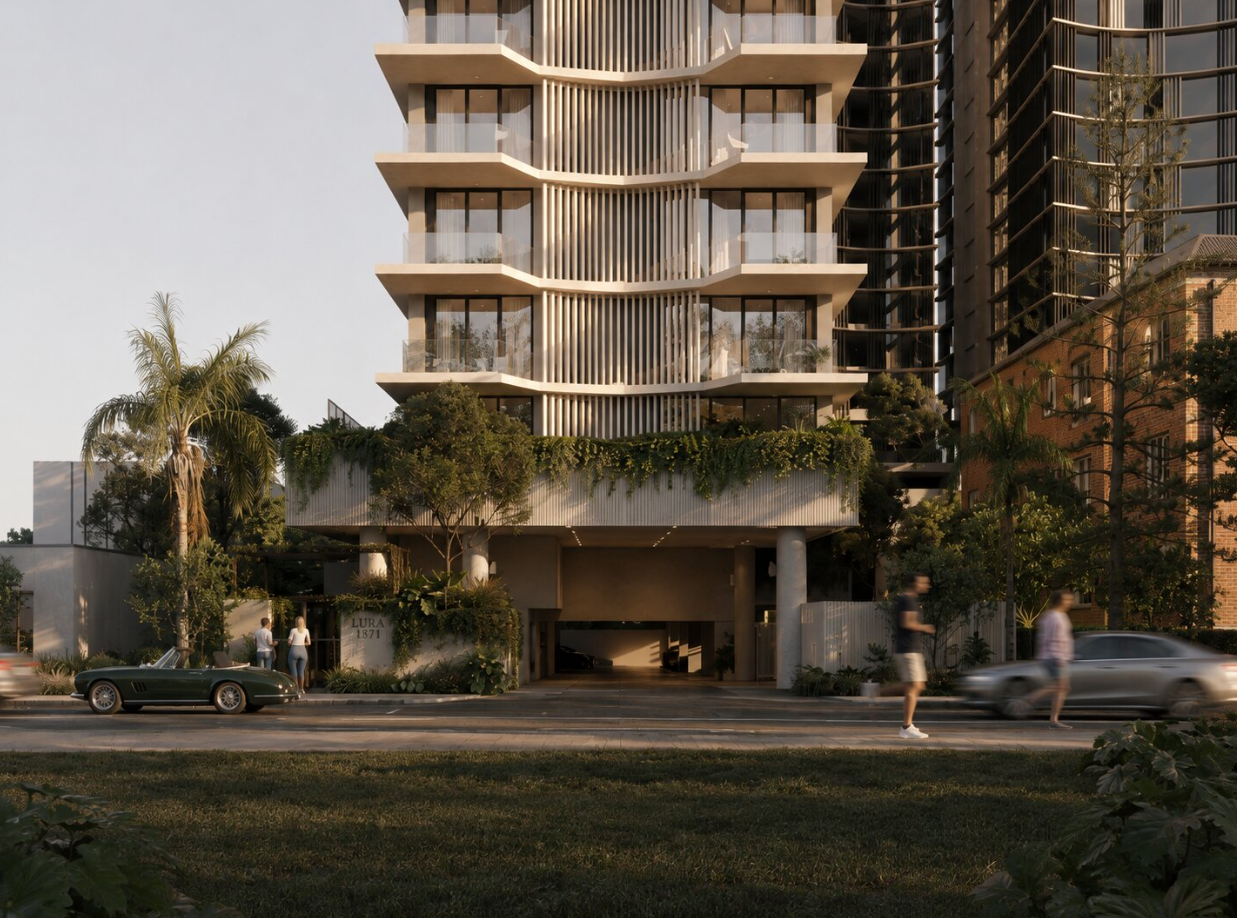
The studios form part of Lura’s wider collection of 96 residences, which also includes one-, two- and three-bedroom apartments and dual-key configurations.
Located at 1871 Gold Coast Highway, the development sits within the emerging Mondrian precinct, approximately 150 metres from Burleigh Heads Beach and around 200 metres from the future G light-rail connection.
The location gives the studios a purpose beyond affordability alone, with James Street’s restaurants, cafés and boutiques all within walking distance. As are Burleigh’s beachfront parks, surf club and national park.
The studios may suit singles seeking a foothold in Burleigh, interstate owners wanting a manageable coastal base or investors attracted to an apartment approved for short-term letting. That approval can allow owners to use the residence personally at selected times and place it into holiday accommodation when away, subject to management arrangements, body-corporate rules and the practical costs of operating a short-stay property.
The interiors have been designed by MODE around natural materials and subdued coastal tones. The stated specification includes engineered timber flooring, stone benchtops, brushed-nickel tapware and feature tiling through kitchens, bathrooms and laundries.
Residents will have access to amenity spread across two levels.

Level two is planned as a health and wellness centre with a gymnasium, sauna, outdoor shower and hot and cold plunge pools. The upper level will contain a rooftop swimming pool, sundeck, barbecue and dining area, with views extending north towards Surfers Paradise and south towards Burleigh Point.
Lura is being developed by TANCA, with BDCM appointed as builder, T-Cubed Consulting as project manager and NPA Projects handling sales and marketing. Construction is underway, with completion currently anticipated in late 2027.
The project’s more expensive residences provide the scale expected of a contemporary coastal tower. But its most interesting offering may be the smallest.
The studio was once an ordinary part of Australia’s apartment market. It was a first home, a city base, a weekender or a straightforward investment. As development economics pushed projects towards larger luxury residences, that modest entry point became increasingly difficult to find.
Lura fact box
Project: Lura
Address: 1871 Gold Coast Highway, Burleigh Heads, Queensland
Studio price: From $495,000
Development: 96 studio, one-, two- and three-bedroom residences, including dual-key configurations
Developer: TANCA
Architecture and interiors: MODE
Builder: BDCM
Project manager: T-Cubed Consulting
Sales and marketing: NPA Projects
Short-term letting: Approved, according to the project campaign
Location: Approximately 150 metres from Burleigh Heads Beach and 200 metres from the planned G connection
Completion: Expected in late 2027; timing remains subject to construction
Studio apartments have almost disappeared from new Australian developments. Lura is bringing them back to Burleigh Heads from $495,000.

Porsche’s Cayenne Turbo Electric produces up to 1,156PS and reaches 100km/h in a claimed 2.5 seconds.
Rising Australian bond yields are putting pressure on listed property and the cost of capital. Here’s why A-REITs can signal changes in property valuations before the direct market moves.
4 min
Most property investors spend considerably more time watching interest rates than bond markets.
That makes sense. The Reserve Bank cash rate has an obvious relationship with mortgage repayments, borrowing capacity and investor sentiment, while government bonds can seem far removed from what someone will pay for an apartment in Sydney or an office building in Melbourne.
But the bond market can provide one of the earliest indications that the price investors are willing to pay for property is changing.
That became evident last Thursday, when Australian shares suffered their worst trading session in months. The S&P/ASX 200 fell almost two per cent, with property among the rate-sensitive sectors caught in the sell-off as government bond yields moved sharply higher.
Australia’s 10-year government bond yield pushed to around 5.4 per cent, close to its highest level in 15 years, against a backdrop of rising global yields and renewed concern about inflation and the direction of interest rates.
For property investors, that matters because the government bond yield is effectively one of the reference prices for money.
An investor buying an Australian government bond is receiving a return while taking comparatively little credit risk. Property comes with tenants, vacancies, maintenance, leasing costs, illiquidity and the possibility that the underlying asset falls in value, so investors generally expect to be compensated for accepting those additional risks.
A property yielding five per cent therefore looks considerably more attractive when a 10-year government bond yields three per cent than when that same bond is yielding more than five per cent.
That does not mean property values automatically fall every time bond yields increase. Rental growth, scarcity, lease structures and the quality of an asset can all outweigh movements in rates, but it changes the return investors require and therefore what they may be prepared to pay.
SG Hiscock & Company made that point in an ASX Investor Update, arguing that real, or inflation-adjusted, bond yields can be particularly relevant to property because real estate is fundamentally a long-duration investment whose value is derived from future income.
The first place investors can often see that repricing is the sharemarket.
A house or commercial building does not have a price that changes every few seconds. An Australian real estate investment trust does.
A-REITs can own billions of dollars of shopping centres, offices, warehouses and other property, but their securities trade continuously on the ASX. When expectations around interest rates and bond yields change, investors can immediately alter what they are willing to pay for those property earnings.
That can create a situation where the value attributed to a portfolio on the sharemarket falls even though the underlying buildings have not changed hands and their independent valuations remain unchanged.
The two markets simply move at different speeds.
Mark Ferguson, Head of Charter Hall Maxim Property Securities, has previously described direct property valuations as lagging the listed market. Writing for Charter Hall during an earlier period of rising interest rates and bond yields, Ferguson noted that listed property was already pricing increases in capitalisation rates and falls in underlying property values before those adjustments had fully emerged in direct-market valuations.
The effect can be substantial.
Consider a commercial property producing $1 million a year in net operating income. At a five per cent capitalisation rate, that income implies a value of $20 million.
If investors subsequently require a 5.5 per cent return while the property’s income remains unchanged, the implied value falls to around $18.18 million. At six per cent, it falls again to roughly $16.67 million.
Nothing necessarily happened to the building. It could have the same tenant paying the same rent under the same lease. What changed was the return required by the person buying it.
That is also why income growth becomes so important.
A well-located property with constrained supply and strong rental growth can increase its earnings quickly enough to absorb some of the pressure from higher required returns. An ageing office building facing vacancies, refurbishment costs and an approaching debt refinancing could instead be hit from several directions at once.
Debt adds another dimension because property is one of the economy’s most capital-intensive asset classes.
Higher market rates can increase the cost of financing an acquisition or refinancing existing debt while simultaneously increasing the return investors expect from the property itself. For developers, the consequences can be even more pronounced because higher construction finance costs can coincide with lower anticipated end values.
If that happens, a project can be squeezed from both directions: it becomes more expensive to deliver at precisely the time investors become less willing to pay yesterday’s price for the finished asset.
The direct property market generally takes longer to reveal that adjustment.
An A-REIT can lose five per cent of its market value in a trading session. An office building may not transact for another year. Owners can reject lower offers, transactions can be withdrawn and valuers must wait for comparable sales to establish new evidence.
That lag is one reason listed property can be useful even for investors who have no intention of buying a REIT.
The same principle eventually extends to residential property, although houses and apartments are generally valued using comparable sales rather than capitalisation rates.
Residential property is particularly sensitive to credit. Higher bond and swap rates can influence bank funding and fixed mortgage pricing, while higher borrowing costs reduce the amount households can service.
If prospective buyers can borrow less, the number of people capable of paying yesterday’s price can shrink. Vendors may initially resist that adjustment, resulting in fewer transactions rather than immediate price falls, before motivated sales eventually establish new comparable values.
For investors, rental growth can provide an important buffer. Rising rents can help offset higher financing costs, just as increasing commercial rents can compensate for some expansion in capitalisation rates. Investors relying primarily on capital growth while accepting a low rental yield have considerably less protection when the cost of money rises.
That is why movements in listed property and bond markets deserve attention beyond the trading floor.
They provide a constantly updating view of how investors are pricing interest rates, debt, future income and property risk, often months before those changes become obvious in direct transactions.
For an A-REIT investor, that means looking at gearing, debt maturity, hedging, interest cover and the discount or premium to net tangible assets rather than simply chasing the highest distribution yield.
For a commercial property investor, it means testing what happens to valuations if capitalisation rates move 25, 50 or 100 basis points higher.
For residential investors, it means understanding mortgage costs, borrowing capacity, realistic rental income and how much of the investment case relies on future capital growth.
The cash rate will continue to attract most of the attention in Australian property. But investors looking for an earlier indication of how the market is repricing risk should also be watching the bond market.
Property prices might take months to respond to a changing financial environment. The price of money moves considerably faster.
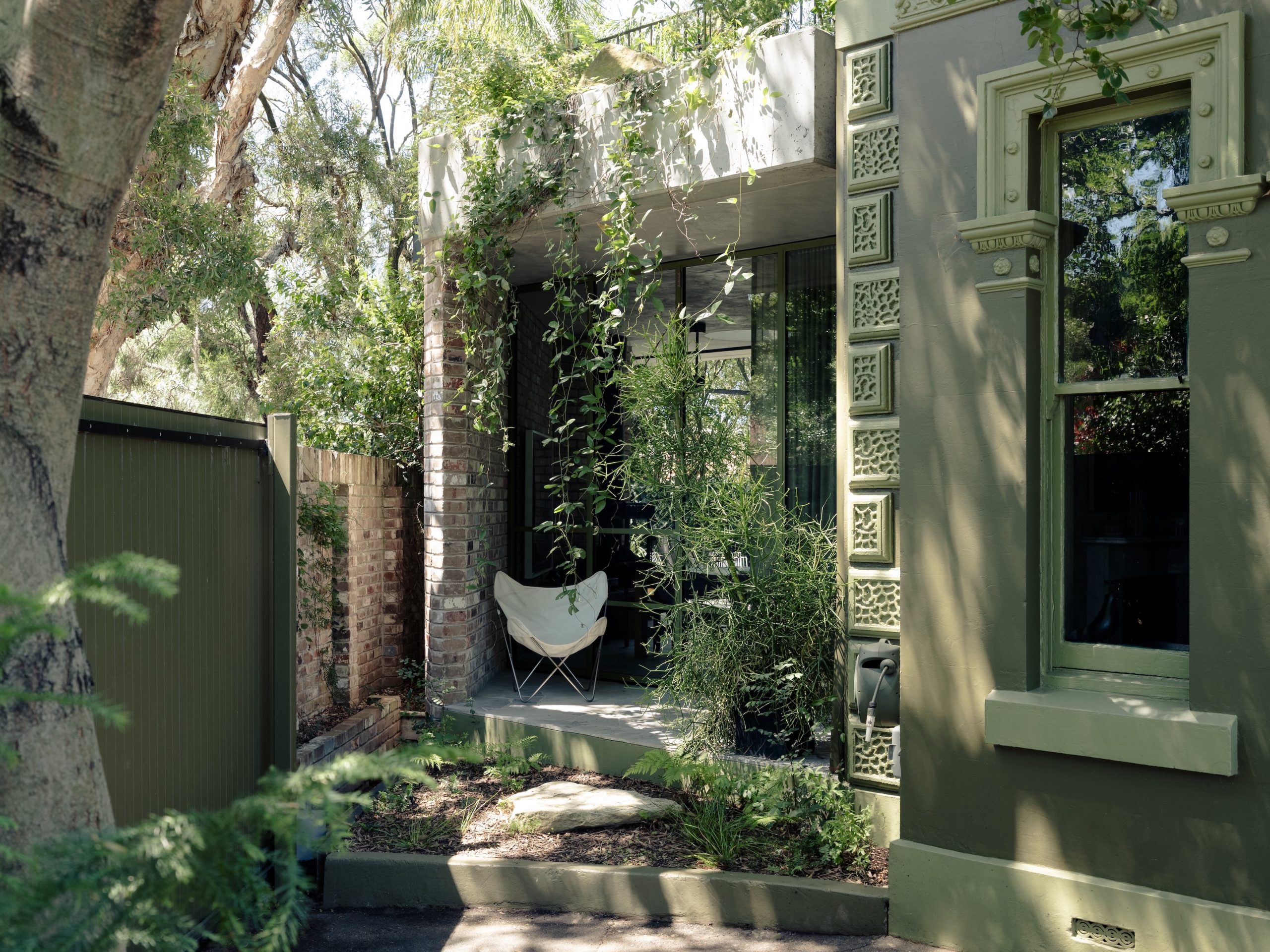
From bushland greens to valley reds, the country’s most awarded designers are proving that the best colour palette was never on a swatch card; it was outside the window all along.

ABC Bullion has launched a pioneering investment product that allows Australians to draw regular cashflow from their precious metal holdings.