


Why rising bond yields can hit property investments before house prices move
Rising Australian bond yields are putting pressure on listed property and the cost of capital. Here’s why A-REITs can signal changes in property valuations before the direct market moves.
 4 min

Most property investors spend considerably more time watching interest rates than bond markets.
That makes sense. The Reserve Bank cash rate has an obvious relationship with mortgage repayments, borrowing capacity and investor sentiment, while government bonds can seem far removed from what someone will pay for an apartment in Sydney or an office building in Melbourne.
But the bond market can provide one of the earliest indications that the price investors are willing to pay for property is changing.
That became evident last Thursday, when Australian shares suffered their worst trading session in months. The S&P/ASX 200 fell almost two per cent, with property among the rate-sensitive sectors caught in the sell-off as government bond yields moved sharply higher.
Australia’s 10-year government bond yield pushed to around 5.4 per cent, close to its highest level in 15 years, against a backdrop of rising global yields and renewed concern about inflation and the direction of interest rates.
For property investors, that matters because the government bond yield is effectively one of the reference prices for money.
An investor buying an Australian government bond is receiving a return while taking comparatively little credit risk. Property comes with tenants, vacancies, maintenance, leasing costs, illiquidity and the possibility that the underlying asset falls in value, so investors generally expect to be compensated for accepting those additional risks.
A property yielding five per cent therefore looks considerably more attractive when a 10-year government bond yields three per cent than when that same bond is yielding more than five per cent.
That does not mean property values automatically fall every time bond yields increase. Rental growth, scarcity, lease structures and the quality of an asset can all outweigh movements in rates, but it changes the return investors require and therefore what they may be prepared to pay.
SG Hiscock & Company made that point in an ASX Investor Update, arguing that real, or inflation-adjusted, bond yields can be particularly relevant to property because real estate is fundamentally a long-duration investment whose value is derived from future income.
The first place investors can often see that repricing is the sharemarket.
A house or commercial building does not have a price that changes every few seconds. An Australian real estate investment trust does.
A-REITs can own billions of dollars of shopping centres, offices, warehouses and other property, but their securities trade continuously on the ASX. When expectations around interest rates and bond yields change, investors can immediately alter what they are willing to pay for those property earnings.
That can create a situation where the value attributed to a portfolio on the sharemarket falls even though the underlying buildings have not changed hands and their independent valuations remain unchanged.
The two markets simply move at different speeds.
Mark Ferguson, Head of Charter Hall Maxim Property Securities, has previously described direct property valuations as lagging the listed market. Writing for Charter Hall during an earlier period of rising interest rates and bond yields, Ferguson noted that listed property was already pricing increases in capitalisation rates and falls in underlying property values before those adjustments had fully emerged in direct-market valuations.
The effect can be substantial.
Consider a commercial property producing $1 million a year in net operating income. At a five per cent capitalisation rate, that income implies a value of $20 million.
If investors subsequently require a 5.5 per cent return while the property’s income remains unchanged, the implied value falls to around $18.18 million. At six per cent, it falls again to roughly $16.67 million.
Nothing necessarily happened to the building. It could have the same tenant paying the same rent under the same lease. What changed was the return required by the person buying it.
That is also why income growth becomes so important.
A well-located property with constrained supply and strong rental growth can increase its earnings quickly enough to absorb some of the pressure from higher required returns. An ageing office building facing vacancies, refurbishment costs and an approaching debt refinancing could instead be hit from several directions at once.
Debt adds another dimension because property is one of the economy’s most capital-intensive asset classes.
Higher market rates can increase the cost of financing an acquisition or refinancing existing debt while simultaneously increasing the return investors expect from the property itself. For developers, the consequences can be even more pronounced because higher construction finance costs can coincide with lower anticipated end values.
If that happens, a project can be squeezed from both directions: it becomes more expensive to deliver at precisely the time investors become less willing to pay yesterday’s price for the finished asset.
The direct property market generally takes longer to reveal that adjustment.
An A-REIT can lose five per cent of its market value in a trading session. An office building may not transact for another year. Owners can reject lower offers, transactions can be withdrawn and valuers must wait for comparable sales to establish new evidence.
That lag is one reason listed property can be useful even for investors who have no intention of buying a REIT.
The same principle eventually extends to residential property, although houses and apartments are generally valued using comparable sales rather than capitalisation rates.
Residential property is particularly sensitive to credit. Higher bond and swap rates can influence bank funding and fixed mortgage pricing, while higher borrowing costs reduce the amount households can service.
If prospective buyers can borrow less, the number of people capable of paying yesterday’s price can shrink. Vendors may initially resist that adjustment, resulting in fewer transactions rather than immediate price falls, before motivated sales eventually establish new comparable values.
For investors, rental growth can provide an important buffer. Rising rents can help offset higher financing costs, just as increasing commercial rents can compensate for some expansion in capitalisation rates. Investors relying primarily on capital growth while accepting a low rental yield have considerably less protection when the cost of money rises.
That is why movements in listed property and bond markets deserve attention beyond the trading floor.
They provide a constantly updating view of how investors are pricing interest rates, debt, future income and property risk, often months before those changes become obvious in direct transactions.
For an A-REIT investor, that means looking at gearing, debt maturity, hedging, interest cover and the discount or premium to net tangible assets rather than simply chasing the highest distribution yield.
For a commercial property investor, it means testing what happens to valuations if capitalisation rates move 25, 50 or 100 basis points higher.
For residential investors, it means understanding mortgage costs, borrowing capacity, realistic rental income and how much of the investment case relies on future capital growth.
The cash rate will continue to attract most of the attention in Australian property. But investors looking for an earlier indication of how the market is repricing risk should also be watching the bond market.
Property prices might take months to respond to a changing financial environment. The price of money moves considerably faster.
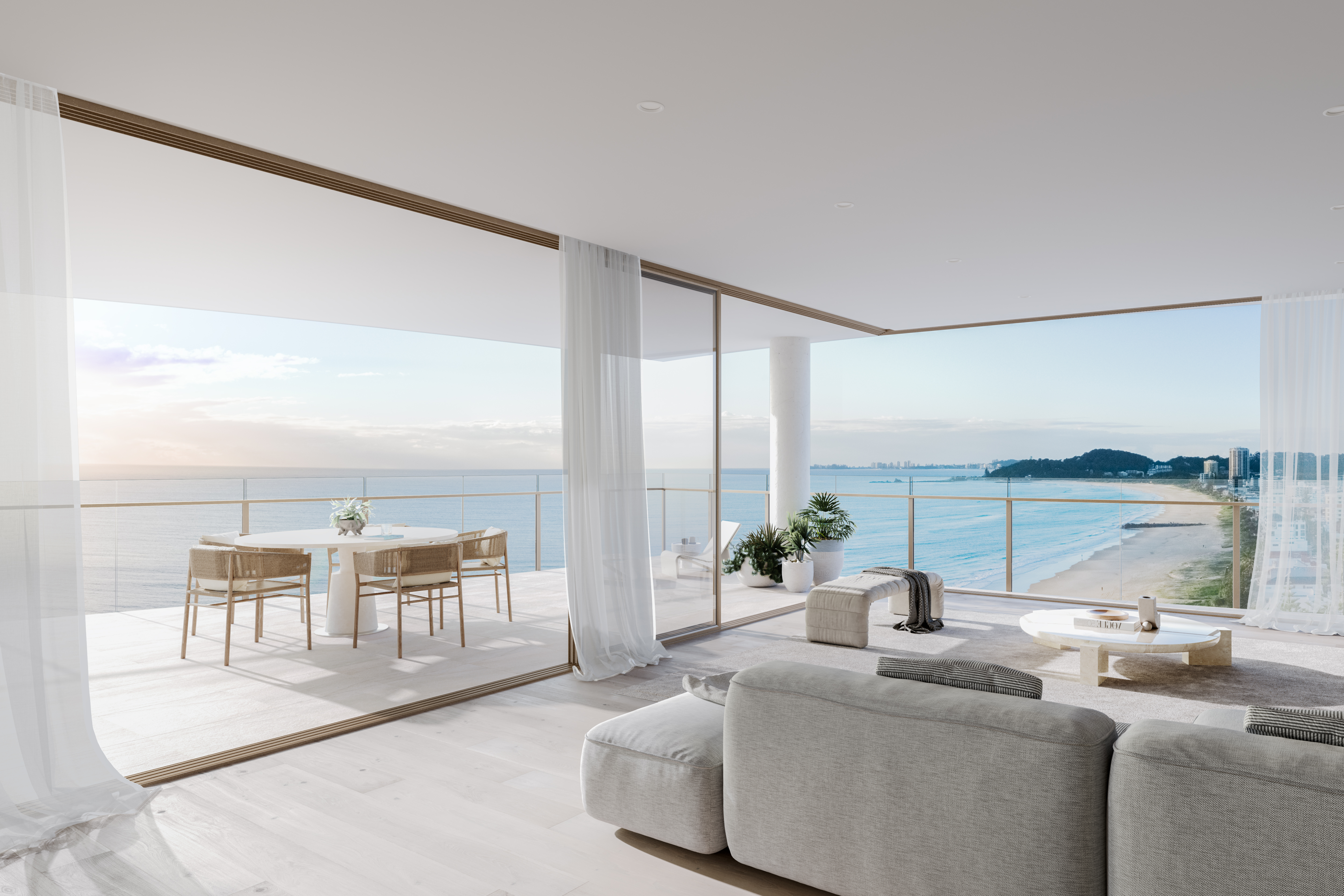
A Sydney couple has paid $15.5 million for the Grand Penthouse at Marquee’s $285 million La Belle Residences beachfront development which is nearing completion at Palm Beach, eclipsing the record for an off-the-plan apartment sale on the southern Gold Coast. The sprawling single level 640 sqm beachfront residence, with sweeping views of the Gold Coast …
Continue reading “$15.5m La Belle Penthouse eclipses southern Gold Coast record”

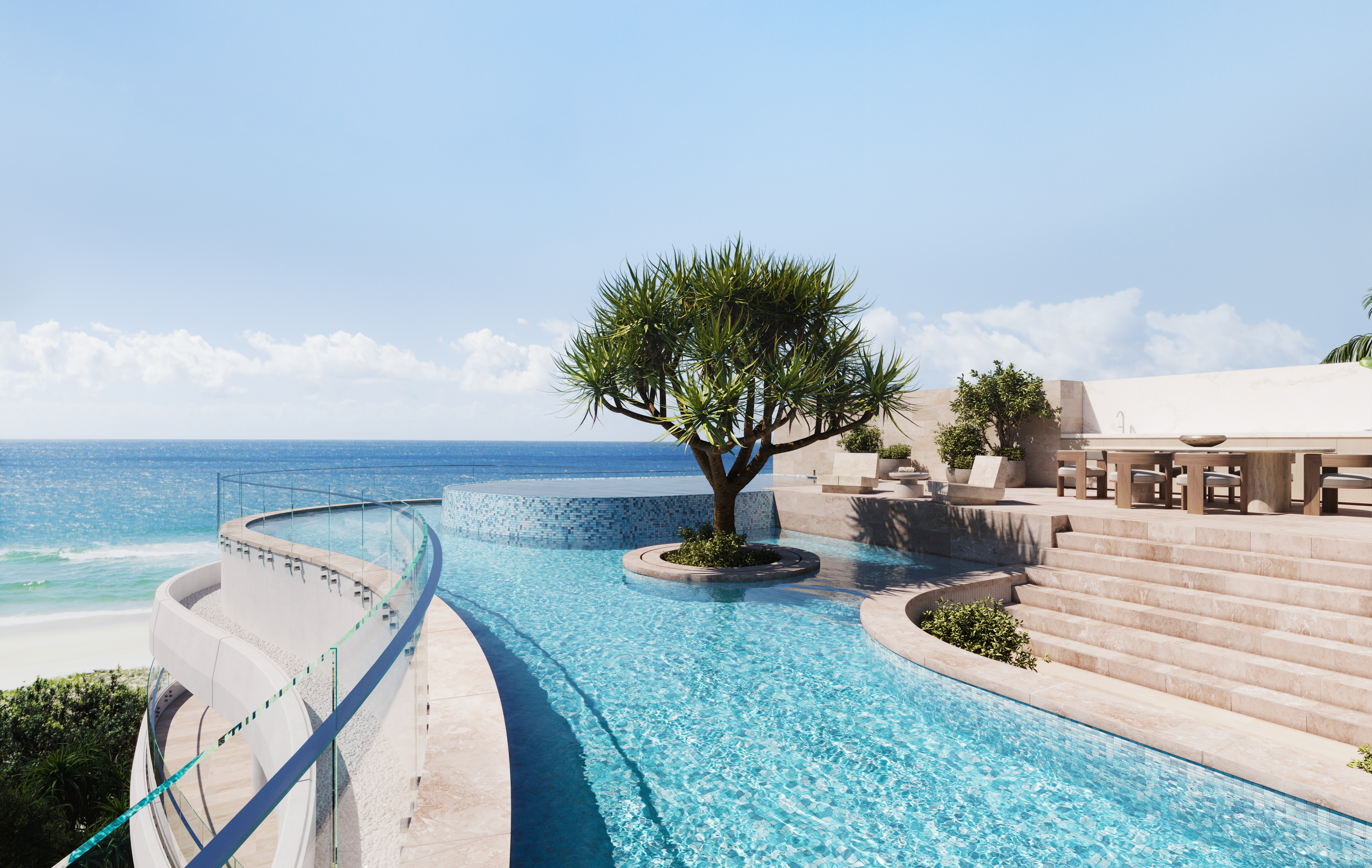
On the owner’s deck, a 20-metre swimming pool incorporates Feadship’s patented ContraWave technology and extends indoors as a suspended, glass-bottomed infinity pool.
 3 min
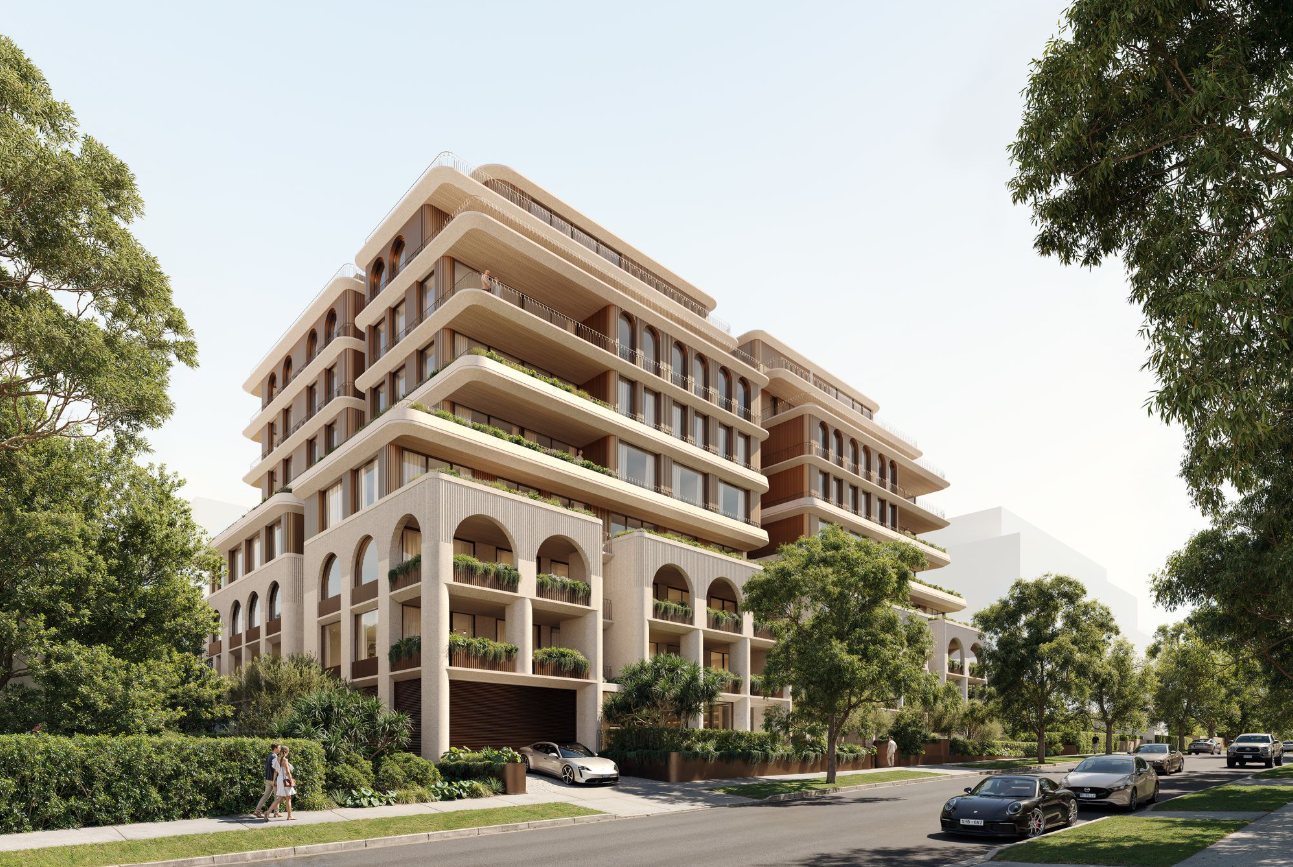
The Sydney developer-builder, which typically retains its projects, is offering 54 residences off the plan on Spencer Street, with prices starting at $3.9 million.
HSN Property Group has launched Maison Jolene in Rose Bay, giving buyers a rare opportunity to purchase off the plan from a developer-builder that has spent more than two decades building a predominantly build-to-hold portfolio in Sydney’s eastern suburbs. HSN values that portfolio at $4 billion.
Located at 2–16 Spencer Street, Maison Jolene comprises 54 residences, including house-sized two- and three-bedroom apartments, sub-penthouses and penthouses. Prices start at $3.9 million, according to HSN, with many residences designed to capture views across Rose Bay, Sydney Harbour and the city skyline.
James Nixon, head of projects at The Rubinstein Group, is handling the sales campaign alongside agency founder Gavin Rubinstein. He says the launch is an unusual opportunity for buyers who have followed the developer’s work.
“HSN is renowned for building entire projects and rarely selling a single apartment to the open market, so Maison Jolene really is a first for potential buyers who have been following the brand across previous projects,” Nixon says.
HSN worked with architecture practice MHN Design Union and interiors studio The Unlisted Collective on the development. A rhythm of arches and deep-set openings gives the building its presence on Spencer Street, while the residences are positioned to make the most of natural light, privacy and outlook. Landscaping frames the arrival and carries through to the shared outdoor spaces.
“Maison Jolene was conceived to bring a touch of European elegance to Rose Bay, drawing on the understated charm of Mayfair and the romance of Paris while remaining grounded in the relaxed character of Sydney’s eastern suburbs,” says Rafi Assouline, founder and director of HSN Property Group.

The apartments were designed with established Rose Bay downsizers in mind. Large kitchens, generous storage and flexible living areas are intended to ease the move from a family home, with layouts that can also accommodate families and professionals looking for more space in an apartment.
The shared amenities are designed as an extension of those homes. Residents will have access to a lounge, private dining room and landscaped alfresco entertaining area. A wellness retreat brings together a magnesium pool, cold plunge, sauna, steam room and heated stone recovery bench, alongside a gym and dedicated space for Pilates and yoga.
Inside the apartments, the curves of the façade recur in the cabinetry and balustrades. Custom wall sconces, tapware and patterned parquetry sit alongside carved marble basins, hammered-glass shower screens and recessed stone niches. Timber veneer wardrobes have leather-clad drawers, while an Art Deco-inspired motif appears in the raised ceiling detail, joinery and built-in velvet bedheads.
“Maison Jolene is at once contemporary and old world, with custom-designed parquetry flooring and an art deco-inspired motif juxtaposing with the curvature of the arched facade, balustrade and internal cabinetry,” Assouline says.
The kitchens bring several of those ideas together in a sculptural, bubble-shaped island. Assouline helped design and engineer the curved form and personally selected the marble, which is bookmatched so the veining mirrors across adjoining pieces.
“With each of our projects, I look for symmetry in design,” he says. “Crafting the apartments is like solving a puzzle of one thousand pieces; one little detail wrong could mean the picture doesn’t translate correctly once it’s finished.”

HSN will develop and build Maison Jolene, overseeing the project from design through to construction. The family-owned company says it has delivered more than 270 homes, has 200 apartments under construction and has a 100 per cent completion record.
“As a private, integrated developer-builder, we maintain close control over every stage of a project,” Assouline says. “We see our projects as collaborative partnerships with our architects, interior designers and specialist trades with whom we have refined a very unique aesthetic, to ensure every detail is considered for those who will live there.”
For Nixon, the developer’s involvement in both design and construction is part of the pitch to buyers. “The attention to design excellence, combined with HSN’s proven track record in delivering ultra-high-end developments, ensures a level of rarity and enduring quality seldom seen in today’s market,” he says.
“To purchase an HSN property is to acquire a property that will not just hold its value but stand the test of time as a timeless piece of Sydney real estate.”
The Spencer Street address puts residents close to Rose Bay’s village cafés and restaurants, foreshore walks and ferry service, with beaches, golf courses and schools nearby. Maison Jolene is now selling off the plan through James Nixon and Gavin Rubinstein.

International AI strategist Justin Kabbani will headline the Kanebridge Property Summit in Sydney on June 18, with tickets selling fast.

A Vaucluse masterpiece by MHNDU with interiors by Poco Designs brings architectural ambition and breathtaking ocean outlook to the auction block.