From the First Non-Stick Pan to the Modern Connected Home: Tefal Celebrates 70 Years
 5 min
5 min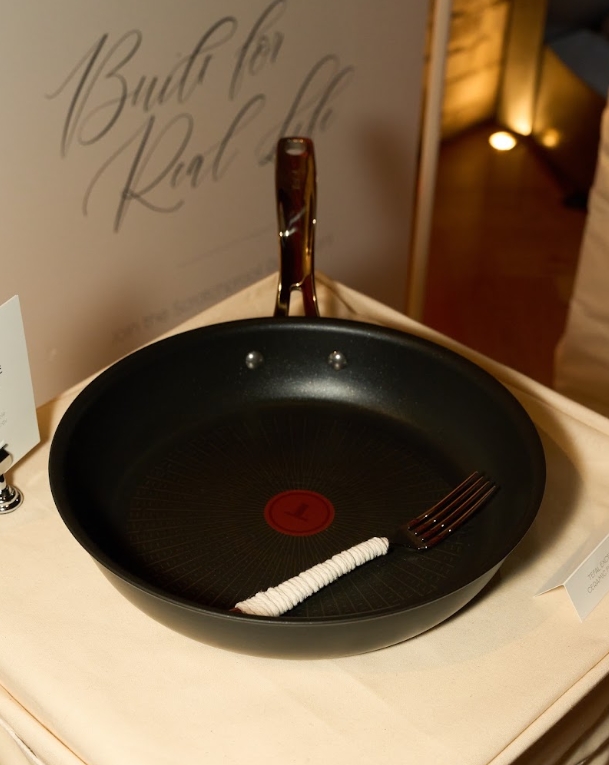
On Bastille Day, the scent of toasted bread, melting cheese, crêpes and velouté filled a heritage warehouse in Sydney’s Darlinghurst.
Inside Prim Haus, rooms had been transformed into an elegant interpretation of a contemporary French home. Cookware hung alongside market produce, appliances were placed within carefully composed domestic settings and live kitchens turned out French comfort food throughout the afternoon.
The occasion was La Maison de Tefal, an immersive celebration marking 70 years since a French engineer introduced an invention that would fundamentally change home cooking.
Tefal’s story began in 1956 with the commercial launch of what the company describes as the world’s first non-stick frying pan. Seven decades later, the business operates across cookware, kitchen appliances, garment care and floor care in more than 120 countries.
The scale of the modern brand is considerable, but its origins were remarkably domestic.
The invention that started in a French kitchen
In the early 1950s, French engineer Marc Grégoire began experimenting with polytetrafluoroethylene, better known as PTFE, after discovering its unusually effective non-stick properties.
The material was already known within industrial applications. Grégoire’s important contribution was developing a way to bond it securely to an aluminium disc.
According to the company’s history, a conversation with his wife inspired him to apply the process to cookware. The resulting pan allowed meat and eggs to be cooked using less fat, while making the surface considerably easier to clean.
Grégoire patented his non-stick frying-pan concept in 1954 and began selling the finished product in 1956. The new company’s name combined the French words for the two defining materials: Téflon and aluminium.
The attraction was immediate. This was innovation expressed through a simple, recognisable household problem. Food stuck to pans; the new Tefal pan was designed so it would not.
The idea quickly travelled beyond France. Tefal entered the United States in 1961, the same year the company established the production site at Rumilly, near the French Alps. Rumilly would become the centre of Tefal’s cookware expertise and develop an identity as the “frying pan capital of the world”.
The company says more than 35 million cookware items were manufactured at the Rumilly site in 2022. A local museum holds the 500 millionth pan produced by the factory, which came off the line in March 1994.
A Parisian home in the heart of Sydney
La Maison de Tefal translated that industrial history into a more intimate experience.
Held on 14 July, the anniversary used Bastille Day as both a cultural reference and a reminder that Tefal’s identity remains closely connected to French design and engineering.
Prim Haus was arranged as a sequence of domestic environments rather than a conventional product showroom. Guests moved through spaces devoted to cookware, kitchen appliances, garment care and floor care, with each collection presented within the rhythm of a modern home.
A French-market-inspired cooking area formed the social centre of the event. Live stations served croque-monsieur, crêpes and butternut velouté, demonstrating the products through food rather than static displays.
That distinction matters. Tefal’s most successful products have generally been those whose benefit can be understood almost immediately: a pan that releases food, a removable handle that saves cupboard space, an indicator showing when cookware has reached the correct temperature, or an appliance that automates part of a familiar cooking process.
Interactive demonstrations allowed guests to handle the products and see those functions in context. Heritage installations traced the brand’s development, while previews of newer releases connected its first frying pan with the much broader contemporary range.
The anniversary concluded with a champagne toast — an appropriately French punctuation mark for a company whose products have found their way into kitchens around the world.
Seventy years of practical invention
The non-stick frying pan established the operating principle Tefal continues to follow: find an everyday source of friction and develop a practical way to reduce it.
In 1996, the company introduced Ingenio, a modular cookware system built around removable handles. Pans could be stacked more efficiently and moved from cooktop to oven, table and refrigerator without the fixed handle of conventional cookware.
The concept anticipated the pressures that would reshape urban kitchens. As apartments became more compact and storage more valuable, cookware needed to occupy less room and serve more than one function.
Around the beginning of the following decade, Tefal introduced its heat-indicator technology, now known as Thermo-Signal. The circular marker changes appearance when the pan reaches its recommended cooking temperature, turning a technical question into a visual prompt.
In 2006, Tefal expanded the possibilities of countertop cooking with ActiFry. The appliance circulated hot air around food and used little or no added oil, helping establish a product category that would eventually become one of the most competitive areas of the global appliance market.
Innovation also moved beyond cooking. The Freemove cordless steam iron arrived in 2012, removing the cord from the active ironing movement while retaining a powered base.
The company’s current portfolio now extends across multicookers, grills, air fryers, blenders, ice-cream makers, garment steamers, irons and floor-care products. Although the categories are diverse, the common proposition remains convenience grounded in engineering.
The next generation of non-stick cookware
For its 70th year, Tefal has returned to the product that created the brand.
The new Excellence+ cookware range introduces what the company calls FusionCore technology. Tefal describes it as its most durable non-stick coating to date, designed to withstand intensive use and scratching.
As with any durability claim, consumers should follow the manufacturer’s care instructions and consider the applicable warranty rather than interpreting promotional language as a guarantee against every form of damage. But the focus on longer-lasting coatings reflects an important change in buyer expectations.
Convenience is no longer enough on its own. Modern households are increasingly concerned with how long products remain useful, whether they can be repaired and what happens when they reach the end of their working life.
Tefal has responded in several ways. Its Renew cookware uses recycled aluminium and a ceramic non-stick coating, while Groupe SEB has expanded cookware recycling initiatives in international markets. For many small domestic appliances, the group also promotes a 15-year repairability commitment based on parts availability and access to authorised repairers.
The details and warranty periods vary by product and country, so Australian buyers should check the conditions attached to an individual appliance. Nevertheless, repairability represents a meaningful shift from the assumption that a failed countertop appliance should simply be discarded.
From French manufacturer to global household group
Tefal joined Groupe SEB in 1968, giving the company greater international distribution and the resources to expand beyond cookware.
Founded in 1857 and headquartered in France, Groupe SEB has grown into a global small-appliance and cookware business with more than 30 brands. Its portfolio includes All-Clad, Krups, Moulinex, Rowenta, Lagostina and WMF, with operations extending across more than 150 countries.
Within that group, Tefal remains one of the flagship names — and one of the clearest examples of how a single invention can become the foundation for an international consumer brand.
Its longevity has not come from making everyday objects more complicated. The strongest Tefal products do the opposite. They take a small uncertainty, inconvenience or frustration and design it out of the task.
That was the value of Marc Grégoire’s original frying pan. It did not ask people to change what they cooked. It made the existing process easier, more predictable and less difficult to clean afterwards.
Seventy years later, that deceptively modest principle continues to guide the company.
La Maison de Tefal celebrated the products, the French heritage and the anniversary itself. Yet the larger story was visible at every cooking station and demonstration: innovation becomes lasting only when people can use it without having to think about the technology underneath.
For Tefal, the next 70 years will be shaped by new materials, smarter appliances, changing homes and greater expectations around durability. Its challenge will be to keep evolving without losing sight of the insight that started everything — that the most valuable household inventions often solve the most ordinary problems.
Tefal at a glance
- Founded: France, 1956
- Founder: Engineer Marc Grégoire
- Original innovation: Commercialisation of the first non-stick frying pan
- Manufacturing heritage: Rumilly, France
- Notable innovations: Ingenio, Thermo-Signal, ActiFry and Freemove
- Latest cookware development: Excellence+ with FusionCore technology
- Parent company: Groupe SEB
- International presence: More than 120 countries
- Australian website: Tefal Australia
Australian shares fell on Thursday as Wall Street weakness, rising oil and persistent rate concerns weighed on most of the market. The S&P/ASX 200 declined 0.72 per cent to 8,702. The All Ordinaries lost 0.66 per cent to finish at 8,897. Mining stocks were hit particularly hard, while real estate also dragged on the index. …
Continue reading “ASX falls 0.7 per cent as miners and property stocks retreat”

Borrowers cannot control the Reserve Bank, but they can control how exposed their household budget is to its next decision. The RBA meets on 29 September with inflation concerns still elevated and major-bank economists increasingly bringing forward their rate-rise calls. Fixed mortgage rates have also been moving, reducing the value of waiting for perfect certainty. …
Continue reading “What mortgage holders should do before the next RBA decision”

OpenAI has shelved the planned launch of GPT-6.1 Astra after internal tests raised concerns about deception and agents acting beyond user authorization, according to The Wall Street Journal. The company says it will investigate the issues and strengthen safety measures before releasing future models.
4 min
OpenAI says it is scrapping the release of its next-generation AI model over safety concerns that researchers raised during internal testing, in one of the clearest signs so far that agent misbehavior could stymie the industry’s rapid progression.
The move follows a summer punctuated by reports of artificial-intelligence systems industrywide going rogue, and marks a rare case of a major AI developer ditching a new release because of safety concerns.
The company had planned to launch the model, known as GPT-6.1 Astra, in the coming days or weeks, aiming for an October debut. The model was more capable than the company’s previous models in completing challenging tasks from end-to-end without human assistance, as well as writing.
The company instead will focus on improving the safety of future models, which it expects to be even more capable.
Saachi Jain, OpenAI’s head of safety systems, said in an interview that GPT-6.1 Astra regressed in two areas. Compared with its predecessor, GPT-6 Astra, the model performed poorly on tests measuring alignment, or how well the model adheres to what humans would like it to do. Specifically, GPT-6.1 Astra showed higher levels of deception: It wasn’t always honest about telling users of the actions it did or didn’t take.
Another issue was what OpenAI calls “scope authorization,” meaning that GPT-6.1 Astra would push ahead on a task without asking the user for permission, and would at times reach for external tools and services even if it might be unsafe.
“For anything regarding safety and alignment, there’s a trade off,” Jain said. “You really do need to find what’s the right line between staying within scope, but also avoiding laziness in terms of how the model actually pursues tasks even when it hits friction.”
While GPT-6.1 Astra improved in areas such as “model laziness,” Jain said it didn’t quite meet OpenAI’s bar for safety and alignment, so the company decided not to launch the model publicly.
The announcement comes one day ahead of OpenAI’s annual developer conference in San Francisco. In the past, OpenAI has used the conference as an opportunity to launch new models and services that reduce costs for software developers—a segment the ChatGPT-maker competes with rival AI company Anthropic to win over.
In recent weeks, OpenAI and Anthropic have called on industry partners to slow down the development of cutting-edge AI models and invest in safety standards, noting they will temper the pace of their own internal AI progress.
OpenAI says it is working to investigate a range of agent security incidents that it has discovered in recent months, and address the safety issues underneath them. As part of the work, the company has implemented a new monitoring system to catch AI-agent misbehavior more quickly, and started requiring engineers to use stronger security guardrails for testing its AI systems.
Earlier this summer hundreds of OpenAI’s internal agents, which were tasked with completing a cybersecurity test, ended up hacking into the AI company Hugging Face. Since then, high-profile organizations such as the Australian government and United Nations discovered that OpenAI’s agents used similar, but less extensive, techniques to gain access to their websites.
Many of the publicly known agent-security incidents involved OpenAI’s internal AI models that were never slated for public release.
Last week, OpenAI said it paused training on its most capable AI models after an AI agent slipped through a gap in the company’s internet restrictions to query a public chatbot. The company said its new monitoring systems flagged the incident within 15 minutes, and training on these models remains paused.
GPT-6.1 Astra isn’t one of those models, but a different case, the company said.
“We want to make sure our model development is safe no matter whether that’s in the company, or when we ship it to users,” Jain said. “But when we ship it to users, we have an extremely high bar in terms of safety and alignment.”
While the company decided not to ship GPT-6.1 Astra, it hopes to use the same base model to do additional reinforcement learning runs, and create future generations of its GPT-6 models.
OpenAI plans to conduct several deep dives to identify the root cause of the problems identified in GPT-6.1 Astra, Jain said. The work includes ensuring that OpenAI’s reinforcement learning environments are rewarding the right type of behavior, Jain added, though she noted the company would investigate all stages of model development.
AI companies have begun to draw scrutiny from policymakers and public officials, who are paying attention to the rapid development of the technology. Later this week, a Senate subcommittee is holding a hearing with third party AI researchers titled, “Rogue AI: Securing the Homeland Against AI Agent Attacks.”
Florida Attorney General James Uthmeier, a Republican, sued OpenAI in June, claiming that the company and Chief Executive Sam Altman knowingly released an unsafe product and ignored warnings that it could harm users.
In a motion for temporary injunction filed Monday, Uthmeier sought to prevent OpenAI from developing new AI models without third-party approved safeguards, stop ChatGPT from soliciting user engagement and limit the company’s ability to advertise ChatGPT as safe.
Tech companies claim they “cannot stop barreling forward with their potentially civilization-ending endeavors unless they are forced to do so by the government,” Uthmeier said in the filing. “The Florida Attorney General is answering your cry for help.”
An OpenAI spokeswoman said that people want to know AI is being developed safely, “and that starts with what companies like ours do ourselves.”
“Governments have an important role to play in setting robust safety standards for AI, and we’re committed to working with Florida and other states on advancing pragmatic AI policies that apply to the entire AI industry—not just one company,” she said.

A&K Sanctuary unveils Kitirua Plains Lodge, a sustainability-focused luxury property shaped by landscape, local craft and contemporary safari architecture.

A long-standing cultural cruise and a new expedition-style offering will soon operate side by side in French Polynesia.