Larry Ellison, Ken Griffin and Other Rich Buyers Kept the Luxury Market ‘Separated From Reality’ in 2022
Rising interest rates and recession jitters didn’t stop a number of deep pocketed-buyers from making deals
 7 min
7 min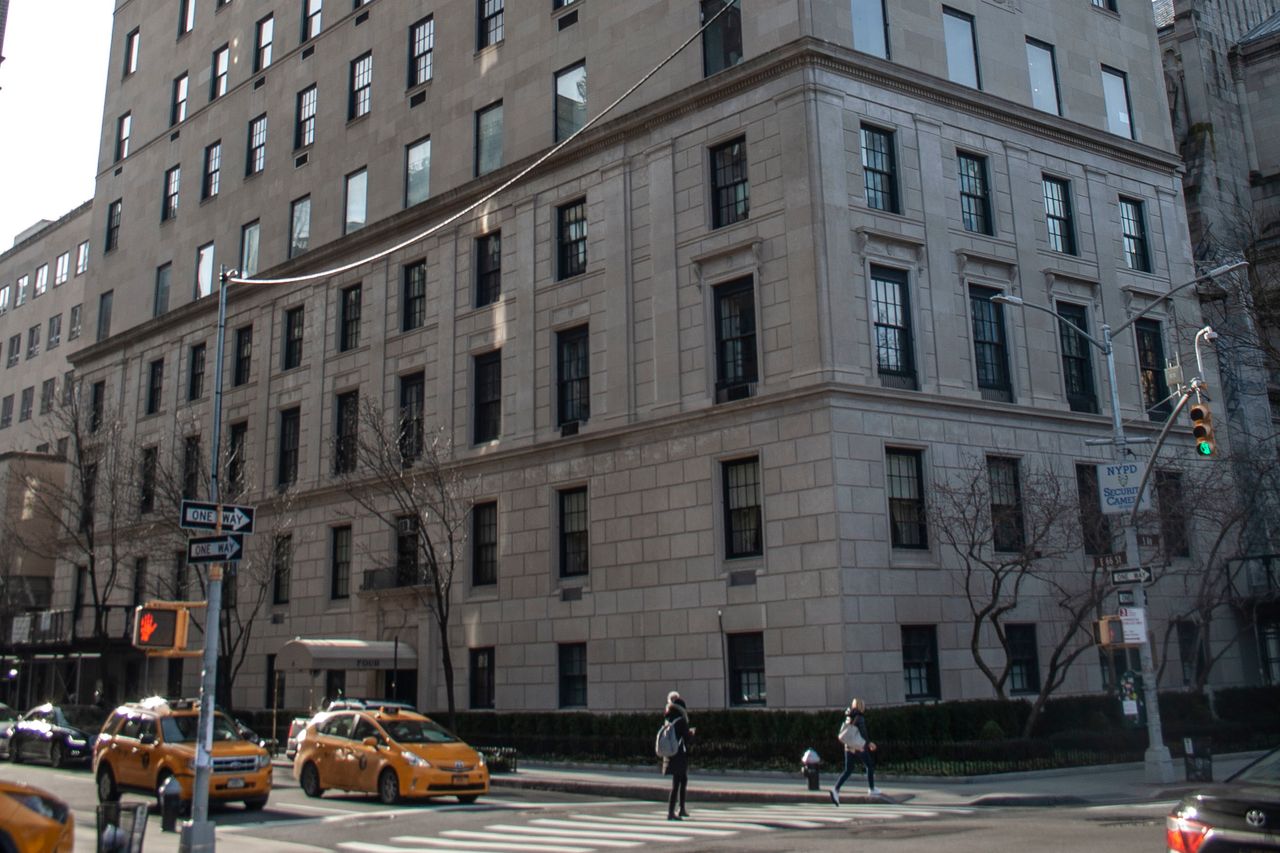
The luxury real-estate market may have returned to earth slightly in 2022 following a whirlwind pandemic-induced free-for-all in 2021. Still, some of the country’s richest buyers managed to log big-ticket deals.
There were at least seven deals closed for $100 million or more in 2022, down from the eight closed the prior year, according to data from appraisal firm Miller Samuel and The Wall Street Journal’s reporting. In total, there were 44 sales across the U.S. closed for $50 million or more. While that’s down from 48 in 2021, it’s still the second highest total on record and a significant uptick from the 23 recorded in pre pandemic 2019, according to Miller Samuel’s Jonathan Miller.
The flurry of major transactions, despite a general normalisation of the broader market, rising interest rates and recession jitters, shows that, at the very highest end, the ultra luxury market “is separated from reality,” Mr. Miller said. “It has nothing to do with the normal housing market.”
Read on for a closer look at some of the year’s biggest deals, which were concentrated in three states, New York, California and Florida.
1. The Gemini estate in Manalapan, Fla.
Buyer: Oracle‘s Larry Ellison
Seller: Netscape’s Jim Clark
Sold: $173 million
Listed: Off-market deal
Oracle co-founder Larry Ellison is known for his expensive taste in real estate, the tech billionaire owns a swath of homes in trophy property markets like Malibu, Lake Tahoe, in Silicon Valley and on the Hawaiian island of Lanai. It was no surprise then that Mr. Ellison topped the list of 2022’s largest residential deals with his record-setting $173 million June purchase of an oceanfront estate near Palm Beach. The deal is the largest ever closed in the state of Florida.
The deal was also evidence of how the Palm Beach ultra luxury market continued to escalate in value, even as pandemic restrictions began to wind down. Mr. Ellison purchased the property from another billionaire, internet entrepreneur and Netscape co-founder Jim Clark, who purchased it for $94.2 million in 2021.
Known as Gemini, the roughly 16-acre property was long owned by the Ziff publishing family. It is on a barrier island in Manalapan and has about 1,200 feet of ocean frontage and around 1,300 feet on the Intracoastal Waterway. There are several structures, including a 62,200-square-foot main residence and a seven-bedroom guesthouse. The structures are connected via tunnels that run underneath a road that cuts through the estate.
Lawrence Moens of Lawrence A. Moens Associates brokered the deal.
2. The One estate in Los Angeles
Buyer: Fashion Nova’s Richard Saghian
Seller: DeveloperNile Niami
Sold: $126 million
Listed: Auctioned off with no reserve; outstanding debts on the property totalled $190 million
The $126 million sale of a Bel-Air estate known as The One in March marked the end of a nearly decade-long saga that had captivated the Los Angeles real-estate community. Once slated to list for an asking price of $500 million, the property eventually sold at a no-reserve auction conducted by the company now known as Sotheby’s Concierge Auctions. (The price including the auction premium was $141 million.)
The property was the brainchild of embattled real-estate developer Nile Niami, who ran afoul of his lenders on the project amid cost overruns and eventually put the property into bankruptcy in October 2021. Outstanding debts on the property totalled around $190 million at the time of the auction, records show. The buyer was Richard Saghian, the chief executive of fast-fashion giant Fashion Nova.
The enormous property spans around 105,000 square feet with 20 bedrooms, a 30-car garage, a bowling alley, five swimming pools and a beauty salon.
Rayni and Branden Williams of The Beverly Hills Estates and Aaron Kirman of Compass represented the seller, while the Williamses also represented Mr. Saghian alongside Stuart Vetterick of Hilton & Hyland.
3. A Holmby Hills assemblage in Los Angeles
Buyer: Snap’s Evan Spiegel
Seller: Developer Ian Livingstone
Sold: $119.868 million
Listed: Off-market deal
In July, a company tied to Evan Spiegel, the co-founder and CEO of Snap, closed on the $119.868 million purchase of a Holmby Hills estate in Los Angeles, according to property records and people familiar with the situation.
The property, which sits behind iron gates at the end of a long drive, includes a European villa-style main house with an Olympic-size indoor pool, a spa and massage rooms, as well as an outdoor pool with a waterfall, according to a listing description on the website of listing agents Stephen Resnick and Jonathan Nash, who were formerly of Hilton & Hyland but have since moved to Carolwood Estates. Inside, there is a two-story entry foyer with fireplaces on each end, a step-down living room, a formal dining room and a library and screening room, according to the listing. The seller was a company tied to British developer Ian Livingstone, who tapped developer Max J. Fowles-Pazdro to oversee the project, according to records and a person familiar with the property. Drew Fenton, then of Hilton & Hyland but now with Carolwood, represented the buyer.
Property records show that Mr. Spiegel’s company paid an additional $25 million for the site next door in 2021. Neither Mr. Spiegel nor Mr. Livingstone could be reached for comment.
4. A compound in Watermill, N.Y.
Buyer: Developer Michael Karp
Seller: Apparel executive Arthur Rabin and his son, apparel executive Jason Rabin
Sold: $118.5 million
Listed: Off-market deal
In January, a large estate comprising two separate homes in Watermill traded for $118.5 million in an off-market transaction, marking the biggest Hamptons deal of the year, records show.
The sellers were Arthur Rabin and his son Jason Rabin, records show. Jason Rabin is the CEO of the apparel company Centric Brands. His father was the founder of Wear Me Apparel, which was purchased by Hong Kong-based global consumer goods exporter Li & Fung Limited in 2009. The buyer is Philadelphia real-estate developer Michael Karp, according to two people familiar with the situation.
Information on the property is scarce since it was never formally listed, but aerial images show that it includes two large residences as well as two pools and multiple sports courts. A few months after the sale, Mr. Karp put a piece of the property back on the market for $72 million; that piece includes a 17,000-square-foot house with 21 bedrooms, according to the listing.
Hedgerow Exclusive Properties brokered the deal. Neither the Rabins nor Mr. Karp responded to requests for comment.
5. A historic estate in Coconut Grove, Fla.
Buyer: Citadel’s Ken Griffin
Seller: Philanthropist Adrienne Arsht
Sold: $106.875 million
Listed: $150 million
If Larry Ellison is among the country’s most active acquirers of trophy homes, one of his primary rivals is hedge-fund billionaire and Citadel founder Ken Griffin, who owns some of the most expensive homes in the world. He added an estate in Miami’s Coconut Grove area to that lineup in September, when he purchased an estate for $106.875 million, a Miami-area record. The seller was businesswoman and philanthropist Adrienne Arsht, who put the property on the market for $150 million in January.
The waterfront estate includes two separate homes, totalling 12 bedrooms and about 25,000 square feet. The main residence was built around 2000 by Ms. Arsht, and has a great room for entertaining as well as a formal dining room with seating for up to 20 guests. The second property dates to 1913, when it was constructed for three-time presidential candidate and onetime U.S. Secretary of State William Jennings Bryan. Since purchasing, Mr. Griffin has proposed a potential relocation of the older home on the property to another location, where the public would have access to it for the first time, according to his spokesman.
Ms. Arsht was represented by Ashley Cusack of Berkshire Hathaway HomeServices EWM Realty. Mr. Griffin was represented by Jill Hertzberg of the Jills Zeder Group at Coldwell Banker Realty.
6. A Penthouse in Manhattan
Buyer: Julia Koch
Seller: Estate of Microsoft co-founder Paul Allen
Sold: $101 million
Listed: Off-market deal
In July, the estate of late Microsoft co-founder Paul Allen sold a pair of apartments for $101 million in an off-market deal at a boutique building in Manhattan’s Lenox Hill neighbourhood. The buyer was Julia Koch, the widow of late Koch Industries billionaire David Koch, according to people familiar with the situation.
The sale included the building’s penthouse as well as a second unit on a lower floor. Records show Mr. Allen purchased the penthouse unit for $25 million in 2011, though it wasn’t clear what he had paid for the second unit.
Betsy Messerschmitt of the Corcoran Group represented Mr. Allen’s estate in the deal. Leighton Candler of Corcoran represented Ms. Koch.
7. A Blufftop Property in Malibu, Calif.
Buyer: Media mogul Byron Allen
Seller: Self-storage billionaire Tammy Hughes Gustavson
Sold: $100 million
Listed: $127.5 million
In October, a roughly 11,000-square-foot compound in Malibu’s tony Paradise Cove enclave sold for $100 million to billionaire media mogul Byron Allen, the latest in a line of major real-estate buys by the entrepreneur. The seller was self-storage billionaire Tammy Hughes Gustavson, who put the property on the market for $127.5 million in May.
The Malibu estate, formerly owned by Ms. Gustavson’s late father, B. Wayne Hughes, includes a large four-bedroom residence as well as two guesthouses. There is also a screening room, a dining room and a winding path leading to the beach.
Ms. Gustavson was represented by Jade Mills of Coldwell Banker Realty. Mr. Allen was represented by Terence Hill of BT Equities, an in-house broker with Mr. Allen’s family office.
8. A trio of homes on Golden Beach in Fla.
Buyer: InterSystems’ Phillip Ragon
Seller: Multiple sellers, including fashion photographer Bruce Weber and his wife Nan Bush
Sold: $93 million
Listed: Off-market deal
In June, Phillip Ragon, founder of the technology company InterSystems, paid $93 million for three separate homes on Florida’s Golden Beach, near Miami. The deal set a record for Golden Beach.
Together, the three properties spanned about 1.7 acres with about 275 feet of ocean frontage. Mr. Ragon plans to tear down all three homes and build a new trophy residence on the site, according to people familiar with the situation. The sellers of the homes included fashion photographer Bruce Weber and his wife and collaborator, Nan Bush, records show.
The agents who worked on the deal include Danny Hertzberg and Jon Mann of the Jills Zeder Group at Coldwell Banker Realty as well as Eloy Carmenate and Mick Duchon of the Corcoran Group.
9. A Malibu estate with minigolf
Buyer: Movie producer Edward H. Hamm, Jr.
Seller: British videogame designer Jonathan Burton and his ex-wife, Helen Musk
Sold: $91 million
Listed: $125 million
A 6.6-acre estate in Malibu’s Paradise Cove enclave sold for $91 million in December, rounding out a year of big-ticket sales in Malibu. The sellers were British video game designer Jonathan Burton and his ex-wife, Helen Musk, who bought the property for $36.5 million in 2012. The estate has direct beach access with roughly 340 feet of ocean frontage and about 17,000 square feet of living space comprising a main house and a separate guest quarters. The property also includes a tennis court, a swimming pool and a 9-hole miniature golf course. The buyer is film producer Edward H. Hamm, Jr., who is known for films like “Get Out.”
The house first came on the market for $125 million in February but the price was later lowered to $110 million.
Kurt Rappaport of Westside Estate Agency and Lisa Laughlin of Sotheby’s International Realty had the listing. The buyer was represented by Paul Lester and Aileen Comora of the Agency.
10. An oceanfront mansion in Palm Beach
Buyer: Could not be determined
Seller: A partnership that included financier Scot French and real-estate agent Lawrence Moens
Sold: $85.977 million
Listed: $115 million
An oceanfront property in Palm Beach sold for $85.977 million in June, records show. It was listed briefly early in the year for $115 million but wasn’t on the market at the time of the sale, according to the local multiple listings service.
The seller was a partnership that included financier Scot French, managing director of HPS Investment Partners, and real-estate agent Lawrence Moens. The partnership paid just over $64 million for the house the prior year, according to a person familiar with the situation. The identity of the buyer couldn’t be determined.
Sitting on just over an acre of land, the estate has roughly 18,000 square feet of living space, including covered outdoor areas, according to the MLS. The seller had the interior completely redesigned by a prominent Los Angeles interior designer following their purchase, according to the person familiar with the situation.
Mr. Moens of Lawrence A. Moens Associates represented the seller. Dana Koch and Paulette Koch of the Corcoran Group represented the buyer.
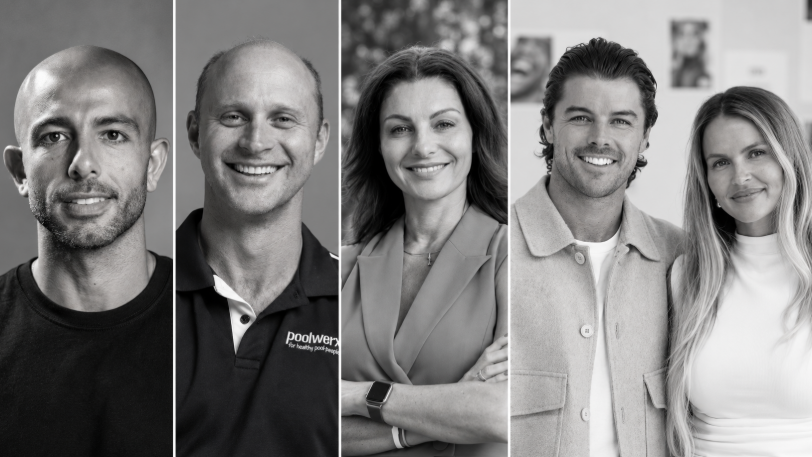
From making unpopular decisions to learning when to listen, leaders from five businesses reveal what nobody prepared them for — and how running a company has challenged their expectations.

Technology and semiconductor shares fell sharply as investors questioned the debt financing the AI infrastructure boom and confronted higher rates and Chinese competition.
Mirvac’s 45-level Trielle has topped out at Yarra’s Edge, pairing riverfront apartments with wellness facilities, private dining and resident services.
3 min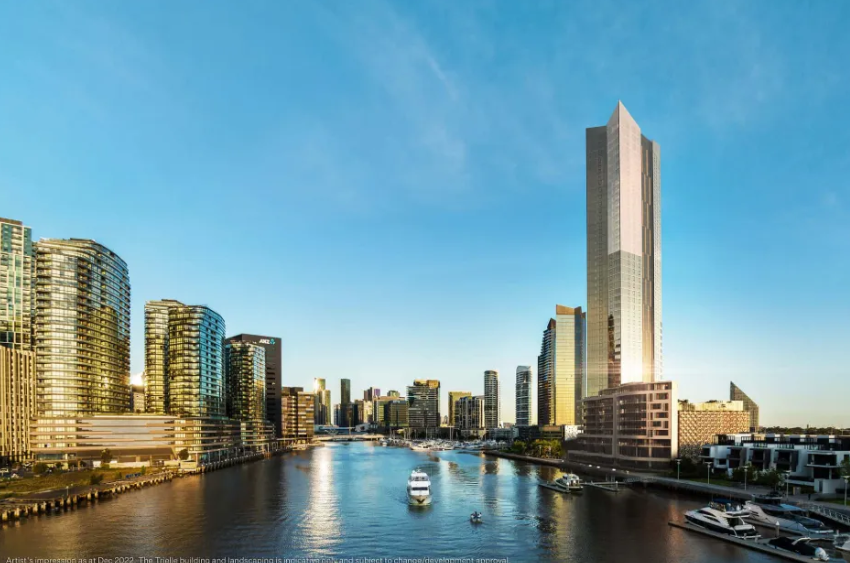
Mirvac has topped out Trielle at Melbourne’s Yarra’s Edge, with more than 70 per cent of the riverfront development sold and approximately 80 per cent of purchasers intending to make their apartment a home.
The figures, released on September 22, point to an owner-occupier audience for one of the precinct’s final residential towers. Mirvac began developing Yarra’s Edge in 2003, and its latest addition occupies one of the remaining absolute riverfront sites.
Mirvac CEO of Development Stuart Penklis said existing residents were among those moving up within the neighbourhood.
“Many purchasers already have a connection to Yarra’s Edge,” Mr Penklis said, describing buyers whose changing needs were encouraging an upgrade within the precinct.
“As one of the final residential towers within Yarra’s Edge, Trielle represents the culmination of more than two decades of creating one of Melbourne’s most established and sought-after waterfront communities,” Penklis said.
“Positioned on the Collins Street axis with absolute river frontage, Trielle offers residents a rare opportunity to enjoy sweeping views across the Yarra River, Melbourne skyline and Port Phillip Bay, while remaining seamlessly connected to the CBD. With Trielle now more than 70 per cent sold, we’re continuing to see strong demand from buyers seeking quality homes in established locations.”
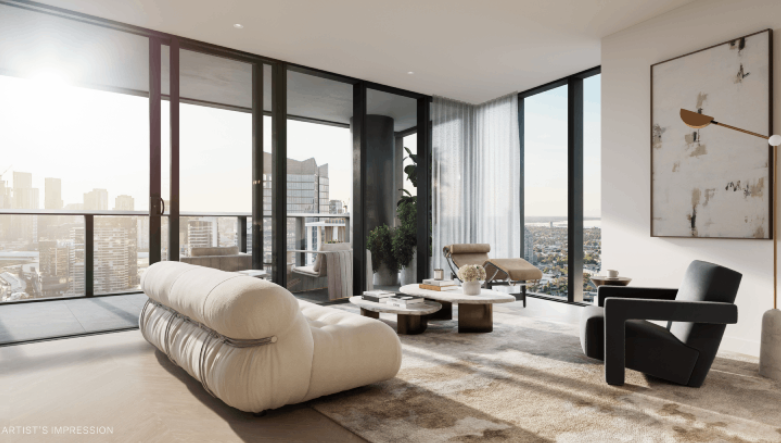
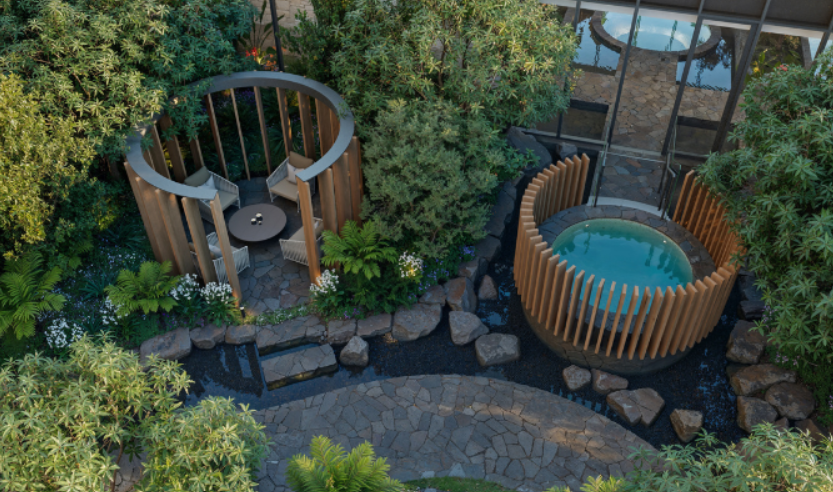
The developer also flagged a penthouse and sub-penthouse collection with larger layouts, premium finishes and broad outlooks. The planned wellness centrepiece, The Oasis, encompasses a 900-square-metre elevated urban rainforest.
Mirvac General Manager Residential Development Victoria Elysa Anderson said Trielle had resonated strongly with buyers seeking a rare lifestyle offering in Melbourne.
“Opportunities to secure a new luxury residence on a riverfront site of this calibre are incredibly rare, particularly within a community like Yarra’s Edge,” Anderson said.
“What makes Trielle unique is the combination of exceptional views, world-class residential facilities and the lifestyle that already exists around it. Residents are buying into a mature waterfront community with parks, promenades, dining, wellness and strong community connections already in place.”
The 45-level tower brings a substantial new presence to that waterfront. Its residential offering spans one-, two-, three- and four-bedroom apartments, with Signature, Prestige and Sub-Penthouse collections accommodating different household sizes. The north-facing position connects the apartments visually to the river and city beyond.
Seven storeys above the promenade, the planned Oasis combines planting and a running stream with a Scandinavian-inspired wellness club developed with spa specialist Naomi Gregory. Facilities include a 25-metre lap pool, hot magnesium pool, sauna, hydrotherapy, a gym, yoga and Pilates room, and treatment spaces.
The amenity extends beyond exercise. Residents will have access to The Biblioteca library and workspaces, ground-floor work pods, and The Salone piano lounge. A private Chef’s Table dining room offers a setting for larger gatherings, while a cinema, games room and sports lounge broaden the entertaining options. Concierge services and a dog-wash area support everyday routines.
Trielle comprises a collection of one, two, three and four-bedroom residences. Reflecting strong demand from owner occupiers, approximately 80 per cent of purchasers to date intend to live in their homes, highlighting the project’s appeal to those seeking a long-term waterfront lifestyle.
Mirvac has recently delivered The Albertine, a premium apartment development on the edge of Melbourne’s CBD, and is nearing completion of Prince & Parade in Brunswick, further strengthening its portfolio of thoughtfully designed apartment communities in some of Melbourne’s most sought-after urban locations.

French luxury-goods giant’s results are a sign that shoppers weren’t splurging on its collections of high-end garments in the run-up to the holiday season.
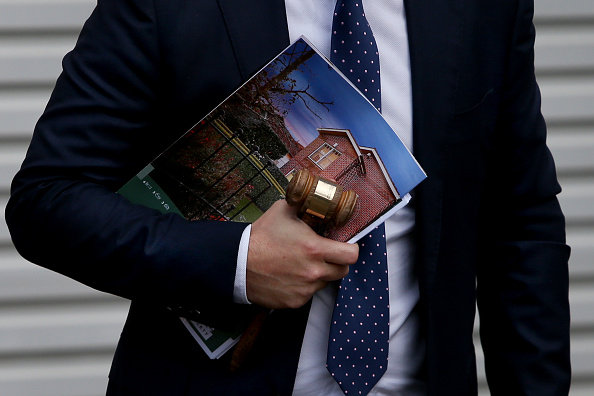
Victorian auction buyers will soon receive a piece of information that has traditionally been withheld until bidding reaches it: the vendor’s reserve price. Under new property-sale and underquoting laws, agents must publish the agreed reserve at least seven days before an auction or fixed-date sale. Most changes begin on 1 October 2026 and apply to …
Continue reading “Victoria’s New Auction Rules Will Force Reserve Prices Into the Open”