New Grads Have No Idea How to Behave in the Office. Help Is on the Way.
As the Class of 2023 enters the workforce, employers are seeing a lack of the skills necessary to navigate the office. The solution: instruction on how to send an email, the right way to buttonhole the boss and what not to wear.

 5 min
5 min
Recent graduates might be great at accounting or coding, but they need a little help when it comes to dinner parties and dress codes.
Many members of the class of 2023 were freshmen in college in the spring of 2020, when campuses shuttered due to the Covid-19 pandemic. They spent the rest of their college years partially in virtual mode with hybrid internships and virtual classes. Students didn’t learn some of the so-called soft skills they might have in the past by osmosis on the job, from mentors and by practicing on campus.
To address deficiencies in everything from elevator chitchat to presentation skills, companies, universities and recruiters are coming up with ways to train new hires and give them clear advice. They are eating it up.
Recent graduate Joslynn Odom had her first hybrid internship after her junior year and found working in person to be draining thanks to wearing professional attire and staying energetic consistently. It made her realise that she needed to sharpen her communication and networking skills.
Programming arranged by her college, Miami University in Ohio, has since helped. Just before graduation she attended an etiquette dinner where she learned to follow the lead of more senior leaders over dinner: Eat at their pace, discuss neutral topics and avoid personal questions. When buttering bread, it is best to put a slab on one’s own bread plate before applying it to a roll, and when cutting food, holding the fork hump-side up is best, she said.
“Knowing that, I feel more confident,” she said.
William Lopez-Gudiel, 23 years old, interned last year for Warner Bros. Discovery and found a presentation on office dynamics especially helpful. It covered dress codes, navigating interpersonal relationships and what working in person is like, he said.
The company said it has offered similar guidance in the past. Some of it felt like common sense to Lopez-Gudiel, who graduated in December from George Mason University and is a self-described extrovert.
But Lopez-Gudiel ultimately appreciated the information, realising that the pandemic may have limited what soft skills he might have learned at past work experiences. He will be working at the company full time as a software developer.
Many soon-to-be graduates are itching to get rid of Zoom and work face-to-face with co-workers where their interpersonal skills will be quickly tested. In an April survey of about 700 Class of 2023 graduates from the virtual student-health company TimelyCare, 53% said they wanted a fully in-person work environment, while 21% said they wanted to be fully remote.
Graduates’ disrupted college experience might mean they struggle with the basics reading colleagues’ cues or navigating a meeting, said Heidi Brooks, a senior lecturer in organizational behavior at Yale University’s School of Management. In class, when students didn’t have cameras on, that was harder to determine.
New hires will need to learn “those nuances of, how do you actually create enough connection, visibility, ability to manoeuvre,” she said.
The missing piece for young professionals who have graduated since 2020, in fact, has been no real proximity to mentorship and leadership, recruiters say.
“This is so much more important today,” said Sandy Torchia, vice chair of talent and culture at KPMG, whose full-time hires this summer and fall will go to the firm’s training facility in Florida where they’ll get new presentation training.
They’ll practice scenarios involving conflict within teams, plus the basics of talking in person—as simple as how to introduce yourself to a client or colleague. Key tips include maintaining eye contact, taking pauses and avoiding jargon. It is also best to listen carefully to others, and to adjust your introduction to highlight pieces of your background that will be most interesting to them.
The company has found that some young professionals are stiff, talk too fast, or rely too much on filler words like “um,” as they presented. Some of the employees said they wanted to feel more comfortable, too.
Allan Rubio, 21 years old was a freshman at Dartmouth College in the spring of 2020. Online classes continued all through his sophomore year, which Rubio completed from his family’s home in Bangkok. Course sessions stretched to 11 p.m. or sometimes 2 a.m. local time, he said.
Professors were far more flexible on deadlines during the pandemic, amenable to extensions if students asked, he said. When Rubio had an in-person internship last summer, he realised his manager, team or client depended on him meeting deadlines.
Presentation skills are also something Rubio needs to learn better, he said. He had presented virtually in academic classes, and often kept a few thoughts and scripted language in a Notes file on screen—or on a separate device nearby. Once on a video call, he said, he blamed an internet delay while he stopped talking mid sentence and collected his thoughts.
None of those aids could help him through presenting in-person on stage at a hackathon on campus. It was more difficult than he expected, he said.
Since then Rubio, who graduated this month, has rehearsed extensively before live presentations. He lays out key points and slims a longer script into bullet points before memorising key areas.
Though new hires are digital natives, today’s graduates’ professional email skills need improvement, said Jialan Wang, an assistant professor of finance at the University of Illinois at Urbana-Champaign.
Many won’t acknowledge important messages but will expect a response from professors immediately, even over holidays, she said.
Michigan State University’s business-school career centre has urged companies to be explicit about what students should expect at work, to over-communicate details about how a first day will play out, what to wear and what people typically do for lunch.
The school last year began requiring many business students to take classes on soft skills in the workplace, after observing that students are more awkward and unsure when they network than they used to be, said Marla McGraw, director of career management.
The program goes step by step through an in-person networking conversation. In one handout, the centre instructs students to introduce themselves by their first and last name. “STOP! Let them tell you their name,” it reads.
Later it urges the students to share that they are interested in hearing about opportunities at the company and share that they follow the company closely, are familiar with its products or services or know someone who interned there, among other options.
“STOP! Pause for only a few seconds to see if they offer any questions or input on your above comments. They may ask you for your resume.”
Students should keep an eye out for signs that a person is trying to end a conversation, McGraw added. Someone might begin to gather their things, or look around the room, signalling they need to talk to another person. Often, one can facilitate a smooth exit by saying, “Well, thanks so much. It’s been a pleasure.”
Professional-services firms PricewaterhouseCoopers and Protiviti have had to tell some young workers what types of clothes are appropriate, including for client-site visits.
Many people are dressing less formally, said Scott Redfearn, Protiviti’s executive vice president of global human resources.
Now the company defines what it means by business casual—including slacks, tailored denim, sport jackets, dresses, skirts, collared shirts, blouses, sweaters and professional footwear—and explains why it’s important to maintain a serious professional image. The company also relays that when it is appropriate to wear bluejeans, darker hues without rips are best, he said.
The company has tried to be proactive when it shares broad guidance about attire, but when a worker shows up in athleisure or flip-flops, that is best handled with a one-on-one conversation.
“Working hybrid brings a lot more decisions to the individual employee,” Redfearn said.
During the pandemic, the firm extended its onboarding process to a series of small-group virtual meetings that took place over a full year. One topic includes making conversation as a social skill, he said. It includes an improv-based public-speaking workshop, where in one prompt, participants need to describe themselves in three words quickly, going with their first impulse. The company said the sessions help workers to find their authentic communication styles.
Protiviti hosts social gatherings around in-person meetings so that workers can practice.
Redfearn said he gives a pep talk to new graduates, urging them to introduce themselves around the office, stick their hand out and smile. Another tip: Have a prepared question ready to ask if needed.
—Ray A. Smith contributed to this article.
 Copyright 2020, Dow Jones & Company, Inc. All Rights Reserved Worldwide. LEARN MORE





The Swiss watchmaker’s first collaboration with Atlassian Williams F1 Team produces two sporting Laureato models inspired by the team’s 2026 racing car.
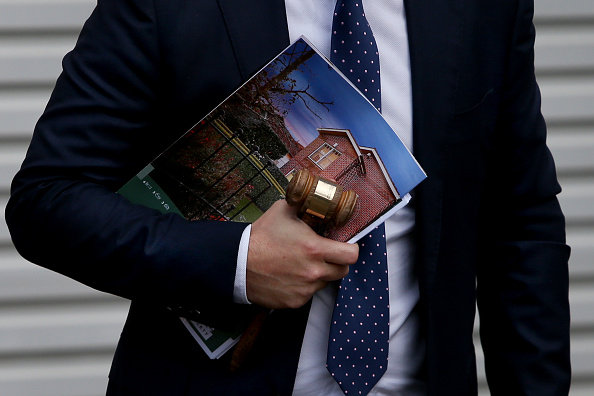
Victorian auction buyers will soon receive a piece of information that has traditionally been withheld until bidding reaches it: the vendor’s reserve price. Under new property-sale and underquoting laws, agents must publish the agreed reserve at least seven days before an auction or fixed-date sale. Most changes begin on 1 October 2026 and apply to …
Continue reading “Victoria’s New Auction Rules Will Force Reserve Prices Into the Open”
Paramount and California’s attorney general are in advanced settlement talks over the company’s proposed $81 billion merger with Warner Bros. Discovery. Potential concessions include investing $1.5 billion in California production, retaining both studio lots and introducing safeguards for CNN’s editorial independence.
3 min
California’s attorney general and Paramount PSKY -3.86%decrease; down pointing triangle have discussed a series of potential concessions as part of advanced settlement negotiations, including a $1.5 billion investment by the company in production in California, according to people familiar with the discussions.
Paramount executives and a coalition of states that sued to block its $81 billion merger with Warner Bros. Discovery WBD -1.56%decrease; down pointing triangle spent the weekend hashing out the details of a possible settlement. Such an agreement would clear the way for a deal that would bring HBO, CBS, CNN, streaming services and famed movie studios under one owner.
Among the concessions the parties have discussed beyond the sizable production investment: a promise not to sell either studio lot and to stay in the state of California, the people said. The company had explored moving out of the state as the deal faced opposition.
The parties have also considered potential penalties if Paramount doesn’t make good on an earlier pledge to make 30 movies a year after the merger, including having to sell its stake in Miramax, known for such classic movies as “No Country for Old Men” and “Pulp Fiction,” the people familiar with the matter said.
Other measures the sides have explored include the sale of some cable channels and the creation of a board to ensure that CNN retains editorial independence, people with knowledge of the talks said. The network has been a political flashpoint throughout Paramount CEO David Ellison’s fight for Warner. Paramount had been discussing creating such an editorial board before the lawsuit.
A final deal hasn’t been reached, and it is unclear what terms the parties may ultimately agree to.
Ellison has spent the past year fighting to buy Warner in a megadeal that would expand his entertainment empire, but that has drawn opposition from some political and Hollywood figures.
A dozen Democratic-led states led by California Attorney General Rob Bonta sued in July to block the deal on antitrust grounds, arguing that the combination of Paramount and Warner would create too much concentration in the markets for theatrical films and cable television channels.
The Writers Guild of America sued over the merger, saying that the deal would eliminate jobs and career opportunities for Hollywood screenwriters.
About two dozen demonstrators gathered in front of the Elihu M. Harris State Office Building in downtown Oakland on Sunday evening to protest a potential settlement. Holding signs reading “Bonta: Don’t You Dare” and “Block the Megamerger,” they took turns giving speeches urging the attorney general to continue pressing the suit.
“Nothing has changed since he filed the case,” said Annie Leonard, co-founder of the nonprofit Committee for the First Amendment, which advocates for free expression. “He needs to stay as strong as he was in filing it.”
The two sides had come under pressure to settle the matter in recent months, including from California Gov. Gavin Newsom, Los Angeles Mayor Karen Bass, gubernatorial candidate Xavier Becerra, movie theater chains and some Hollywood labor unions.
Paramount’s agreement with Warner also included a “ticking fee” with payments to Warner shareholders of roughly $650 million a quarter, or $7 million a day, beginning next month, until the transaction closes.
Paramount had asked a federal judge to require the states and the Writers Guild to put up a nearly $1.9 billion bond for challenging the acquisition, money that would go to the company if it ultimately won the case.

Now complete, Ophora at Tallawong offers luxury finishes, 10-year defect insurance and standout value from $475,000.

From snow-dusted valleys to festival-filled autumns, Bhutan reveals itself as a rare destination where culture, nature and spirituality unfold year-round.