‘How Do I Do That?’ The New Hires of 2023 Are Unprepared for Work
Remote learning during the pandemic left students short of basic skills. Now companies are trying to teach them on the job.
 7 min
7 min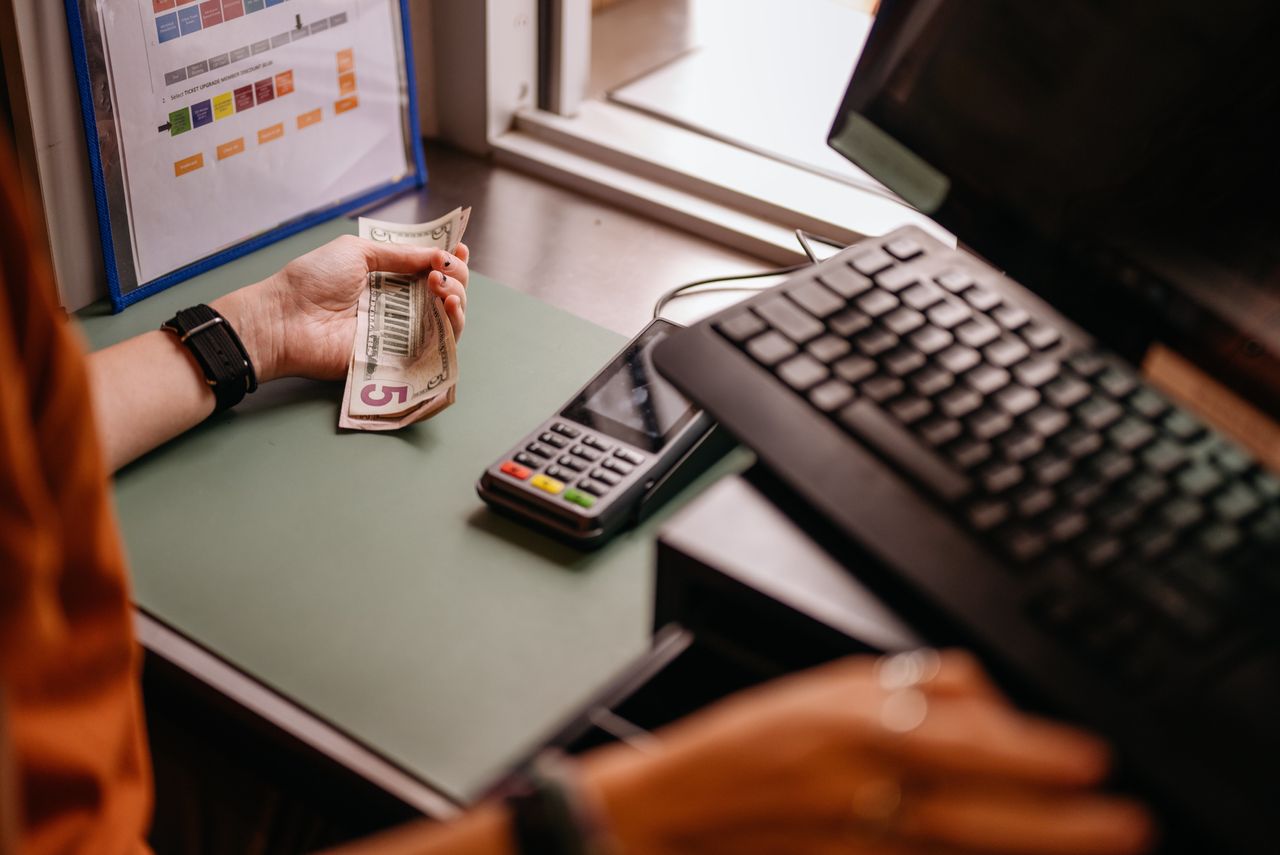
Roman Devengenzo was consulting for a robotics company in Silicon Valley last fall when he asked a newly minted mechanical engineer to design a small aluminum part that could be fabricated on a lathe—a skill normally mastered in the first or second year of college.
“How do I do that?” asked the young man.
So Devengenzo, an engineer who has built technology for NASA and Google, and who charges consulting clients a minimum of $300 an hour, spent the next three hours teaching Lathework 101. “You learn by doing,” he said. “These kids in school during the pandemic, all they’ve done is work on computers.”
The knock-on effect of years of remote learning during the pandemic is gumming up workplaces around the country. It is one reason professional service jobs are going unfilled and goods aren’t making it to market. It also helps explain why national productivity has fallen for the past five quarters, the longest contraction since at least 1948, according to the U.S. Labor Department.
The shortcomings run the gamut from general knowledge, including how to make change at a register, to soft skills such as working with others. Employers are spending more time and resources searching for candidates and often lowering expectations when they hire. Then they are spending millions to fix new employees’ lack of basic skills.
Talent First, a business-led workforce-development organisation in Grand Rapids, Mich., is encouraging employers to stop trying to hire based on skill. Instead, hiring managers should look for a willingness to learn, said President Kevin Stotts.
“Employers are saying, ‘We’re just trying to find some people who could fog the mirror,’ ” Stotts said.
Since 2020, when the pandemic began and remote learning moved students out of schools and into virtual classrooms, the pass rates on national certifications and assessment exams taken by engineers, office workers, soldiers and nurses have all fallen.
Among the approximately 40,000 candidates taking the Fundamentals of Engineering exam for work as professional engineers, scores fell by about 10% during the pandemic, said David Cox, CEO of the National Council of Examiners for Engineering and Surveying.
That means fewer engineers on the job and a lower degree of competency among those who make it, he said.
The sharpest declines in scores came on questions measuring the most specialised knowledge. Structural engineers failed to answer questions about the use of trusses in the construction of bridges and roadways, Cox said.
“These are areas that are very much involved in public safety,” he said.
Students in elementary and middle schools across the nation fell behind by an average of about four months during the pandemic after classes switched to remote learning in 2020 and stayed that way in some cases through 2021. On national standardised tests, the scores of fourth- and eighth-graders fell to 30-year lows.
Students who were in high-school and college when Covid-19 hit and are now entering the workforce didn’t fare much better. Despite lowered standards at many schools during the pandemic, high-school graduation rates fell. Scores for college admissions exams dropped to the lowest level in three decades.
Janet Godwin, chief executive of ACT, the nonprofit organisation which administers the college admission test of the same name, said more high-school graduates today lack the fundamental academic skills needed for college and the workplace, with low-performing students facing the steepest declines.
In Covid-19’s aftermath, many college professors restructured curricula for students who lack basic study skills.
“Reading, writing and critical-thinking skills are not the same as they were in the past,” said Mike Altman, a religion professor at the University of Alabama who said he has narrowed his curriculum to give his students more time to master basics.
During the pandemic more than 100,000 nurses left the field, the largest decline in four decades of available data, a study in the journal Health Affairs showed. That has placed tremendous strain on hospitals and increased demands on programs to graduate more nurses. But students taking entrance exams to study nursing are scoring an average of about 5 percentage points lower than before the pandemic, limiting the number of students eligible to enrol in nursing programs.
More students who do enrol struggle to earn passing grades, said Patty Knecht, Vice President of Ascend Learning Healthcare, a private company which helps train medical professionals. And even if they do graduate, more are struggling to pass a certification exam. By then, they may already be on the payroll but unable to work. The delays cost hospitals an average of $42,000 per student who fails the certification exam, said Knecht.
Last year, Ivy Tech Community College, the largest nursing program in Indiana, embedded tutors in classrooms to assist lagging students with skills they should have mastered in high school. Some of the most basic included the math necessary to figure out correct dosages for medicine.
Joseph Mulumba, who is about to start his sophomore year in the Ivy Tech nursing program, was a high-school sophomore in Indiana when the pandemic arrived. His school was remote for a year.
“I feel like I would have learned a lot more if not for the pandemic,” Mulumba said. “When I got here I realised I wasn’t ready for nursing school. I realised I didn’t know how to study.”
Jerrica Moses, national recruitment manager for Senture, a London, Ky.-based call-centre company, says new workers have problems with soft skills, such as an inability to deal with frustration. Senture, which employs about 4,200 customer-service representatives, has adopted a new set of tests to determine which prospective employees will be able to keep their cool under stress from angry or rude callers.
“Candidates who wash out respond by explaining how aggravated they get with the callers and then focus on the stress,” said Moses. Most of the people who struggle are under 25 years old, she added.
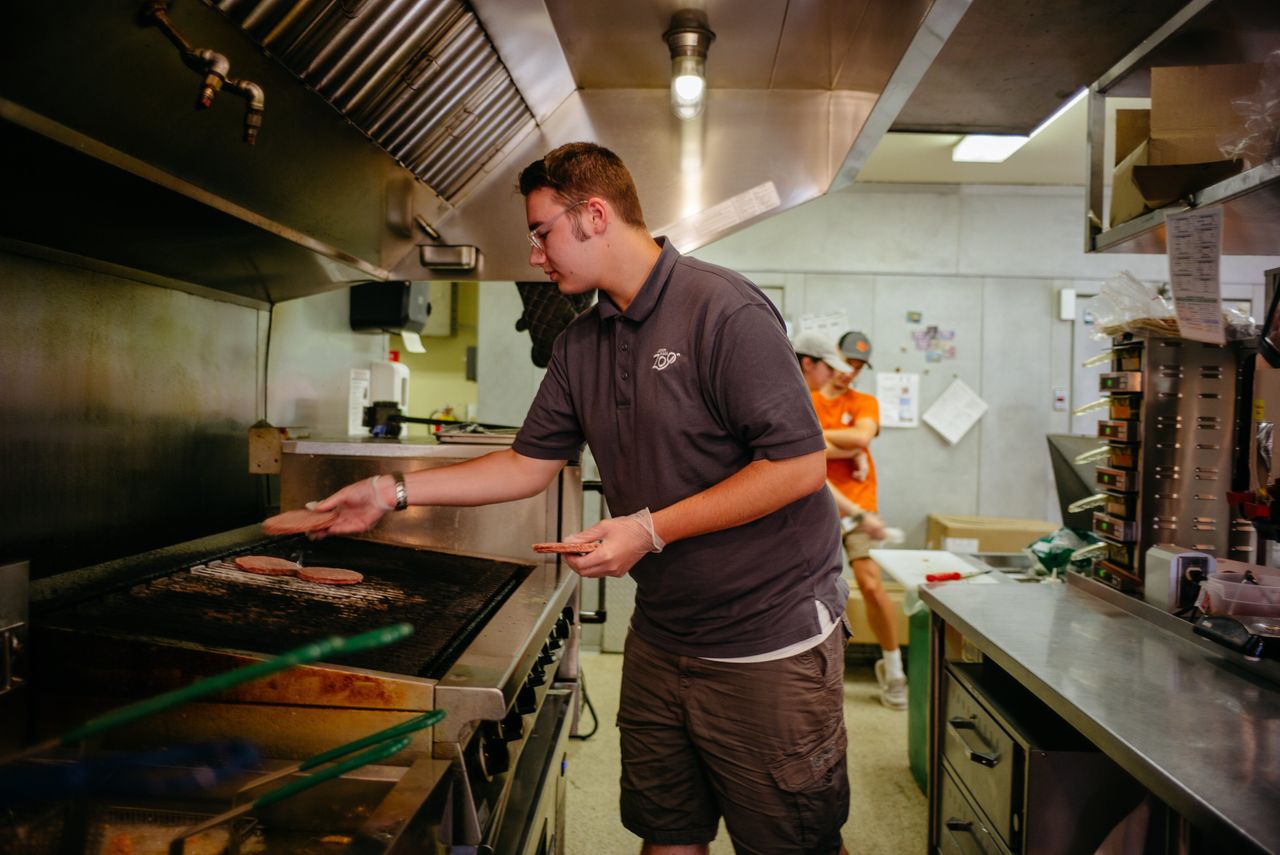
In Grand Rapids, managers at the John Ball Zoo are coaching seasonal workers in their teens and early 20s on basics such as why it’s important to look visitors in the eye, and how to make change at a cash register.
They are also trying to instil a work ethic in their employees that includes taking some initiative, getting off their phones and engaging with visitors, said Laura Davis, the director of strategy and organisational development at the zoo. Her young employees haven’t been held accountable for things like finishing homework assignments, and Davis believes that has led to a decline in motivation.
“They’re not looking to be productive,” Davis said. “If they’re not told what to do, if someone isn’t managing every second and keeping them busy, their inclination is not to self identify what they can do—it’s to do nothing.”
The pandemic arrived when Ivan Schury was in the eighth grade. Now 17 years old and a supervisor in the zoo’s kitchen, he said the isolation he and his peers experienced over the next few years have left many distracted and disengaged.
Last week a teenager working the fry station kept wandering off. “He just kept walking away to talk to his friends at the counter,” Schury said. “I spend a lot of time making sure people stay on task.”
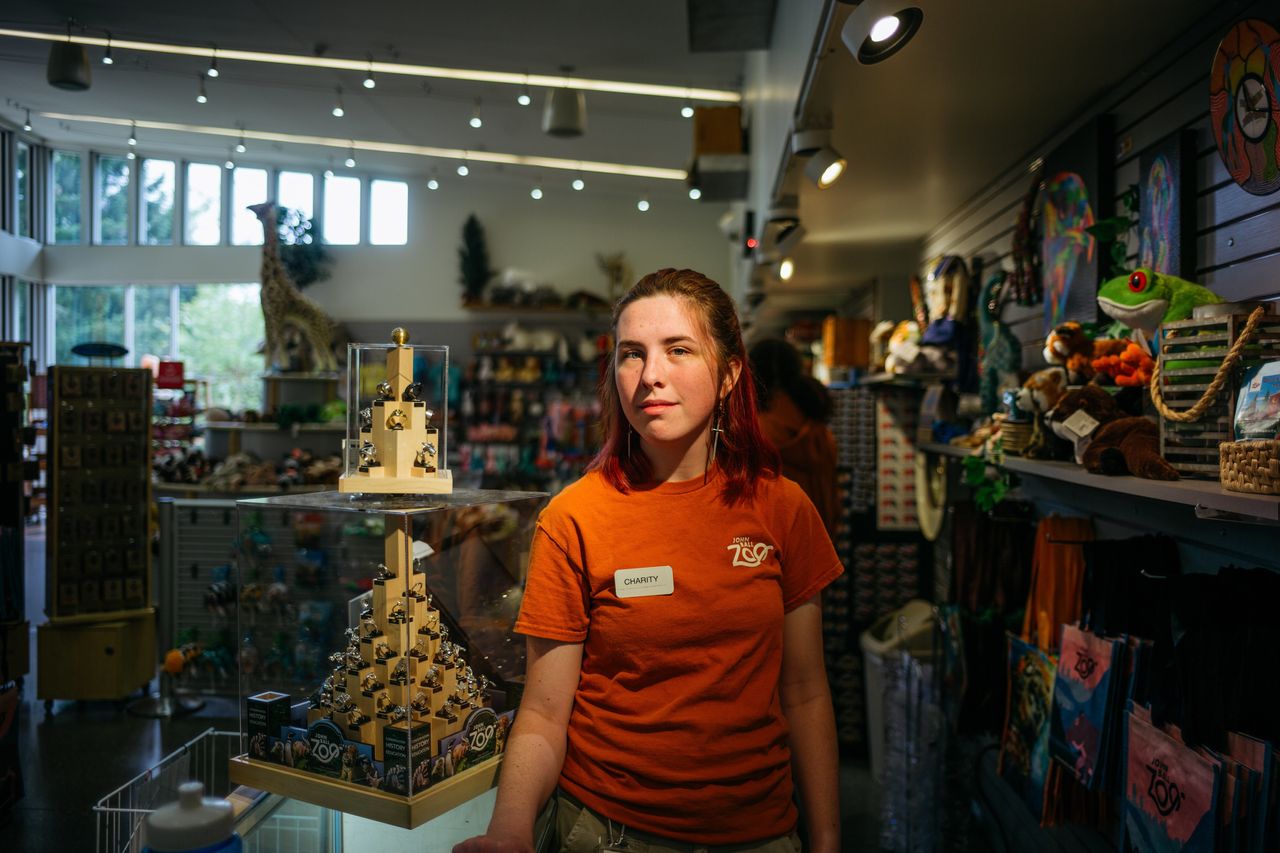
Charity Fields, 19 years old, works in the gift shop and says she is frequently surprised by the lack of motivation of her younger co-workers. A few days ago a 16-year-old fellow sales associate sat in a chair reading a book while customers shopped.
“I told her we weren’t really supposed to do that,” Fields said. The girl got up, stood near the cash register, leaned on the counter and continued to read.
The problem extends to the U.S. military, exacerbating pressures the services face from poor recruiting.
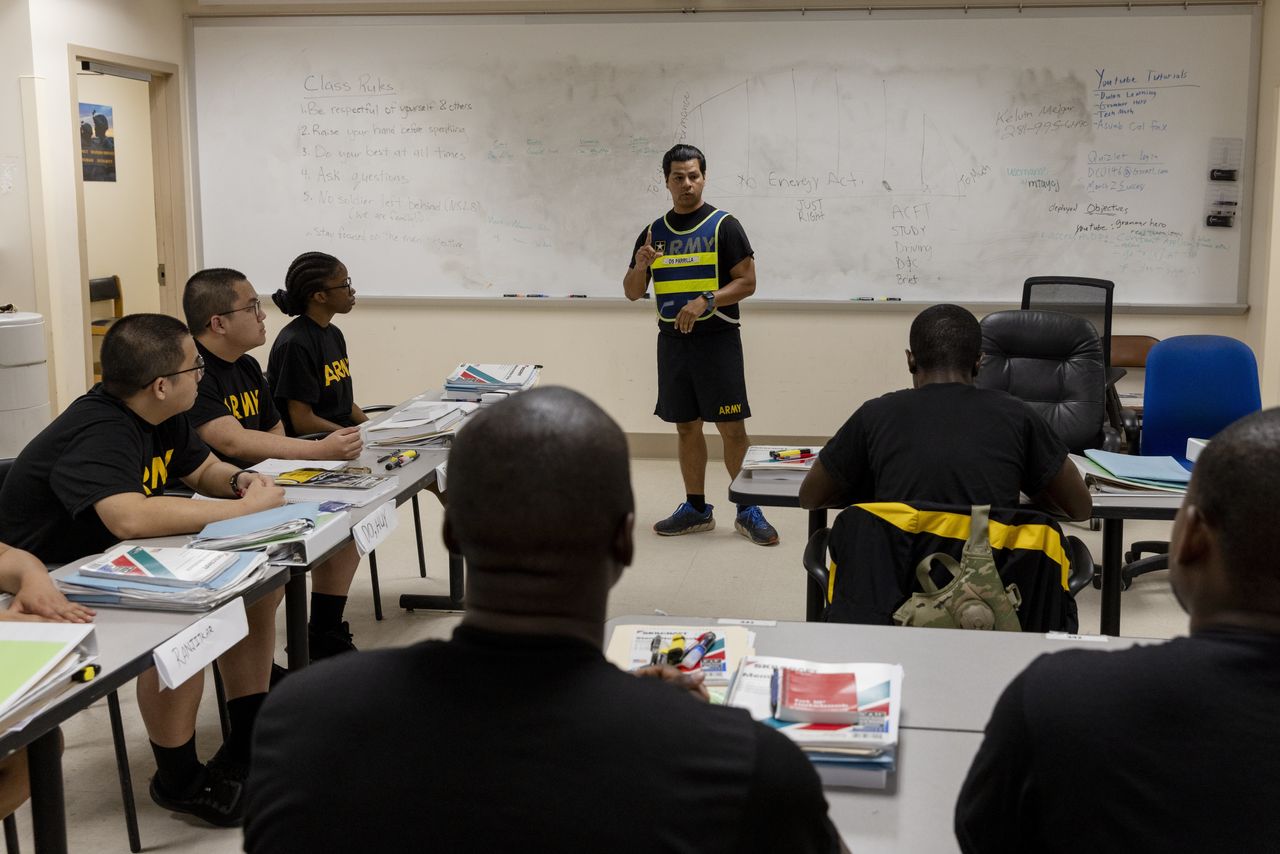
Army recruits aren’t communicating within their squads as well as they did before the pandemic, instructors say. Scores on recruiting exams fell 9% since the pandemic and prompted the Army to create a new testing boot camp to help recruits pass, a requirement for gaining admission to the military.
Army Secretary Christine Wormuth believes a lot of the struggles are tied into isolation that took root when students learned remotely during the pandemic.
“So many young people spent two years in relative isolation and not doing a lot of group projects,” she said.
Young workers’ struggles have become vividly apparent to Criteria Corp, a Los Angeles company that administers about 10 million assessments a year to evaluate prospective employees.
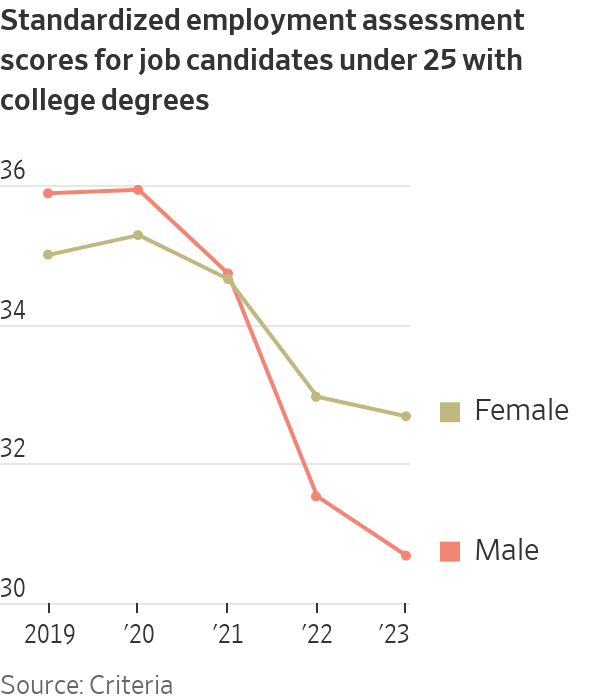
Results for test takers overall have held steady with a notable decline in the scores of men between 18 and 24 and usually with a high-school education, said Josh Millet, co-founder and CEO of the company.
The company’s Criteria Basic Skills Test measures reading comprehension, verbal skills and numeracy. Companies use it to hire for positions such as administrative assistants, customer-service representatives, medical assistants, insurance salespeople and bank tellers.
Verbal scores for men under 25 declined by 11 percentage points over the three years of the pandemic. Scores for women were less dramatically affected. The biggest dips among men were registered in communication skills, reading comprehension, grammar, spelling and attention to detail, said Millet.
“Our customers consistently tell us that finding high-quality candidates is the single greatest challenge to the successful execution of their talent strategies, and it seems that diminished educational outcomes may exacerbate that challenge,” Millet said.
Cindy Neal, owner of Express Employment Professionals in Peoria, Ill., places about 1,500 people in jobs every year. Since the pandemic, she has seen sharp declines in the behaviour of job applicants as well as their performance on employment exams.
The company has long offered courses for people to gain new skills such as QuickBooks. This spring they added new courses to help prospective workers with soft skills. Some of the chapters taught include taking initiative, personal productivity, cellphone etiquette, workplace hygiene, dressing appropriately for work and handling conflict with co-workers.
“This stuff used to be taught in schools,” Neal said. “Now people have to be told not to bring their kids to work.”
Results on the 15-minute employment exam the company administers to clients when they walk in the door are also declining.
Tasks on the quiz include recognising misspellings in words like “availability,” “repetition” and “privilege,” and math questions such as: “If you were asked to load 225 boxes onto a truck and the boxes are crated, with each crate containing nine boxes, how many crates would you need to load?”
The scores in math and spelling are the worst she’s seen in 30 years, she said, adding, “I’m really concerned by the product that’s coming out of the school system currently.”
From making unpopular decisions to learning when to listen, leaders from five businesses reveal what nobody prepared them for — and how running a company has challenged their expectations.

Technology and semiconductor shares fell sharply as investors questioned the debt financing the AI infrastructure boom and confronted higher rates and Chinese competition.

Elon Musk is exploring a potential merger between Tesla and SpaceX, a deal that could reshape the future of AI, robotics, autonomous vehicles and space technology. With a combined valuation potentially reaching $3.5 trillion, the move could bring Musk’s vision of an interconnected technology ecosystem closer to reality, although a deal remains uncertain.
5 min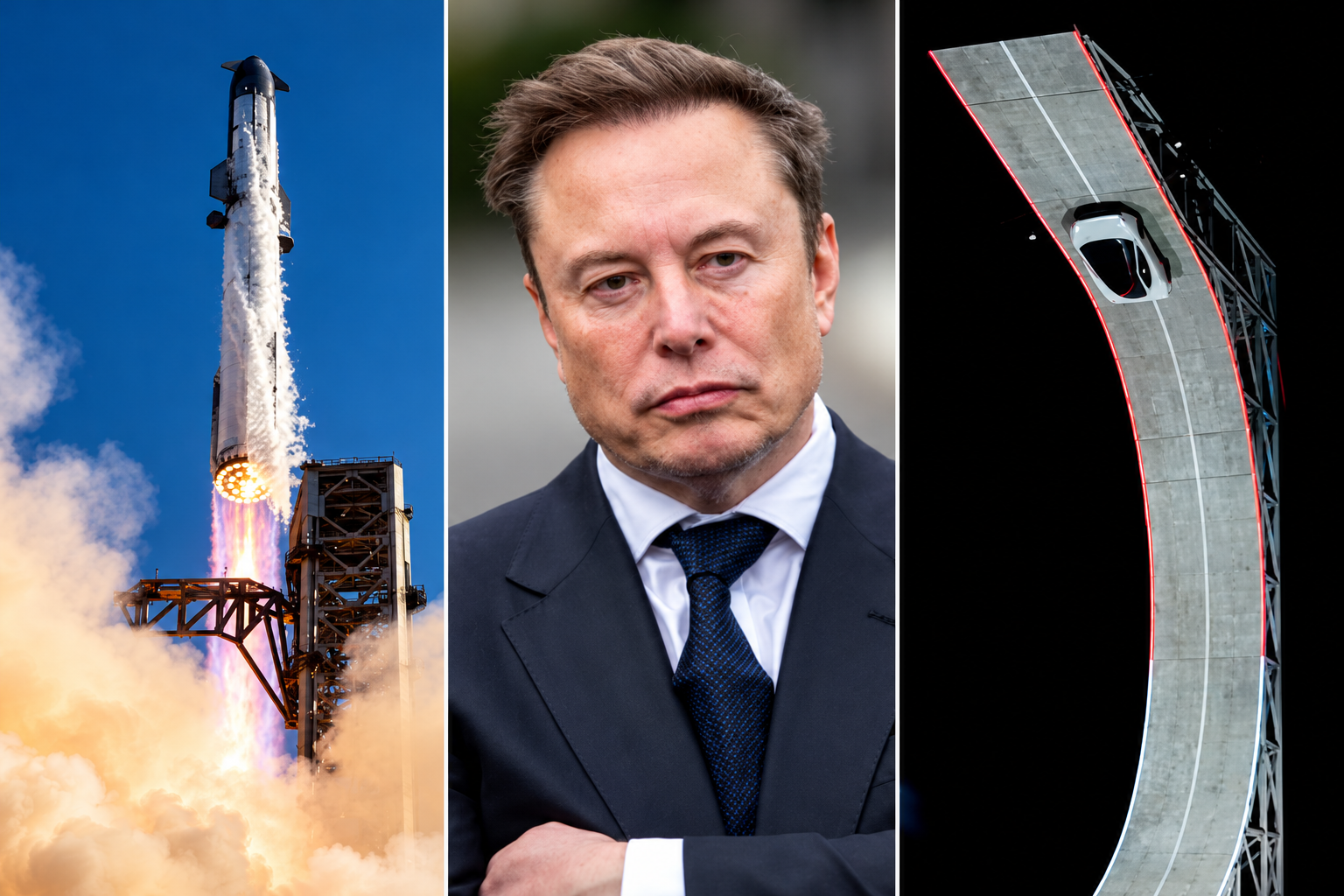
Elon Musk has engineered ties between Tesla TSLA 3.41%increase; up pointing triangle and SpaceX SPCX 7.79%increase; up pointing triangle that are hard to break, and now he wants to fuse them together permanently.
Musk has run both Tesla and SpaceX concurrently over the past two decades, using a schedule that dictated which days he spent focused on each business.
The companies have often shared resources and personnel, signaling their close ties. Last year, SpaceX looked into creating a spacesuit for Tesla’s humanoid robot Optimus, a person familiar with the matter said. Tesla last week showed off its new Roadster, a vehicle featuring SpaceX rocket thrusters that it hopes to soon bring to market.
And in recent months, Musk has repositioned both companies by expanding beyond their core operations toward a shared mission centered on artificial intelligence.
The world’s richest man on Tuesday signaled his interest in tying up SpaceX and Tesla, marking what would be the biggest corporate merger of all time. Because he serves as chief executive of SpaceX and Tesla, Musk said committees of independent directors at both companies are evaluating a possible deal, adding that a transaction might not come to fruition.
The committees will likely evaluate, with lawyers and bankers, how each company would fare in a potential deal and how a deal might best be structured. They then present their conclusions to their respective boards, who typically vote on whether to proceed.
“It’s an odd Kabuki dance where two groups of people are talking and I can’t be in the conversation,” Musk told SpaceX investors on Tuesday in response to an analyst’s question about a potential deal.
For Musk, the merger supports his vision of a world full of autonomous cars, humanoid robots and weekly rocket launches, as well as the data centers and satellites required to keep the whole thing running.
Some investors and analysts said they expect a transaction would be structured as an all-stock deal, with SpaceX potentially paying a modest premium for Tesla shares.
SpaceX, which has a market value of about $2 trillion, said it is seeing sharp growth in revenue across its businesses, which include operating data centers, launching rockets and operating satellite networks such as the internet service Starlink. Tesla is valued at about $1.5 trillion and is expanding its operations beyond its automotive and energy business. Shares in both companies traded higher following the news Tuesday.
Musk’s substantial ownership stakes in both companies, along with voting control at SpaceX, has enabled him to set the deal in motion. Analysts and investors said the deal will probably face regulatory scrutiny internationally, though some see Musk’s close relationship with the Trump administration as an asset to getting approval.
Blurred lines
The companies haven’t said which directors are on the special committees evaluating a potential deal. Several SpaceX and Tesla board members have either personal or business ties to Musk. And like Musk, venture capitalist Ira Ehrenpreis sits on both boards.
In a filing this week, Tesla outlined millions of dollars in business agreements with SpaceX and its subsidiaries last year, including $143 million in car sales to SpaceX, $3.3 million in advertising that it bought on the social-media platform X and $430 million in revenue from the sale of Megapack batteries for SpaceX’s data centers.
The companies also split the cost of resources including the use of Musk’s SpaceX jet and the bill for his personal security, which he runs through a private company.
Employees at both companies routinely move between companies to work on special projects, and some executives have dual roles, including Charles Kuehmann, vice president of materials engineering at both SpaceX and Tesla, and Ashok Elluswamy, the vice president of AI software at Tesla who runs a joint venture with SpaceX called Digital Optimus.
Over the years, Musk has launched new startups within his empire, including brain-implant company Neuralink, underground-tunnel developer the Boring Company and xAI, the AI startup that merged with SpaceX in February.
It is that AI business that Musk thinks can serve a market worth tens of trillions of dollars, justifying the need for a merger.
The business case goes like this: Tesla is developing robotaxis and robots, which it calls “physical AI.” SpaceX is working on the back end of physical AI: the data-center capacity and internet connection required for those robotaxis and robots to operate continuously.
“I don’t see what the value of Tesla is if it’s not merged with SpaceX,” said investment adviser Ross Gerber, a former Tesla bull turned critic invested in both companies. “If they don’t merge, the brains of everything that runs Tesla is owned by another company.”
On top of it all, both companies face constraints on the supply chains they need to make this world a reality, particularly when it comes to chips. To address this, Musk earlier this year announced a joint venture between Tesla, SpaceX and Intel to design and manufacture chips in Texas. “The most epic chip-building exercise by far,” he has said.
Musk at the wheel
For Musk, a merger would also solve two problems: demands on his attention and his lack of control at Tesla.
Tesla for years was Musk’s only public company, a status that came with greater scrutiny. There, Musk reports to a public board, as well as individual investors who make up around 30% of Tesla’s voting power, according to FactSet.
The question of Musk’s attention became a particular focus for investors and the board in recent years after he acquired Twitter in 2022 and launched xAI in 2023, and again in 2025 as he spent time in Washington, D.C., running the Department of Government Efficiency in the early months of President Trump’s second term.
As Tesla’s car business suffered in 2025, Musk threatened to take his AI ambitions outside the company if he wasn’t granted 25% voting control. Last November, Tesla shareholders approved a new pay package for Musk, which created a path for him to vastly expand his stake.
As of Sept. 30, Musk owned a roughly 20% stake in Tesla, according to the company’s proxy filing.
The SpaceX IPO gave Musk a different path. When SpaceX went public in June, the deal’s structure enabled him to have more than 80% voting power at the company—so much that he can’t be fired and decisions can’t be made without his support.
If SpaceX acquires Tesla, he will likely stay in control.

Paine Schwartz joins BERO as a new investor as the year-old company seeks to triple sales.

The 1860s Darlinghurst mansion Stoneleigh could become Sydney’s most expensive home ever sold under the hammer when it goes to auction. Clint Ballard is giving buyers a $28 million guide for the heritage-listed mansion on Darley Street, opposite Iona, the former home of Hollywood royalty Baz Luhrmann. Stoneleigh is being offered for sale for the …