Car of the month: The retro Ferrari still topping the charts 45 years on
The need for speed never gets old as classic sports car lovers race to the finish line in a bid to own a piece of history
 2 min
2 min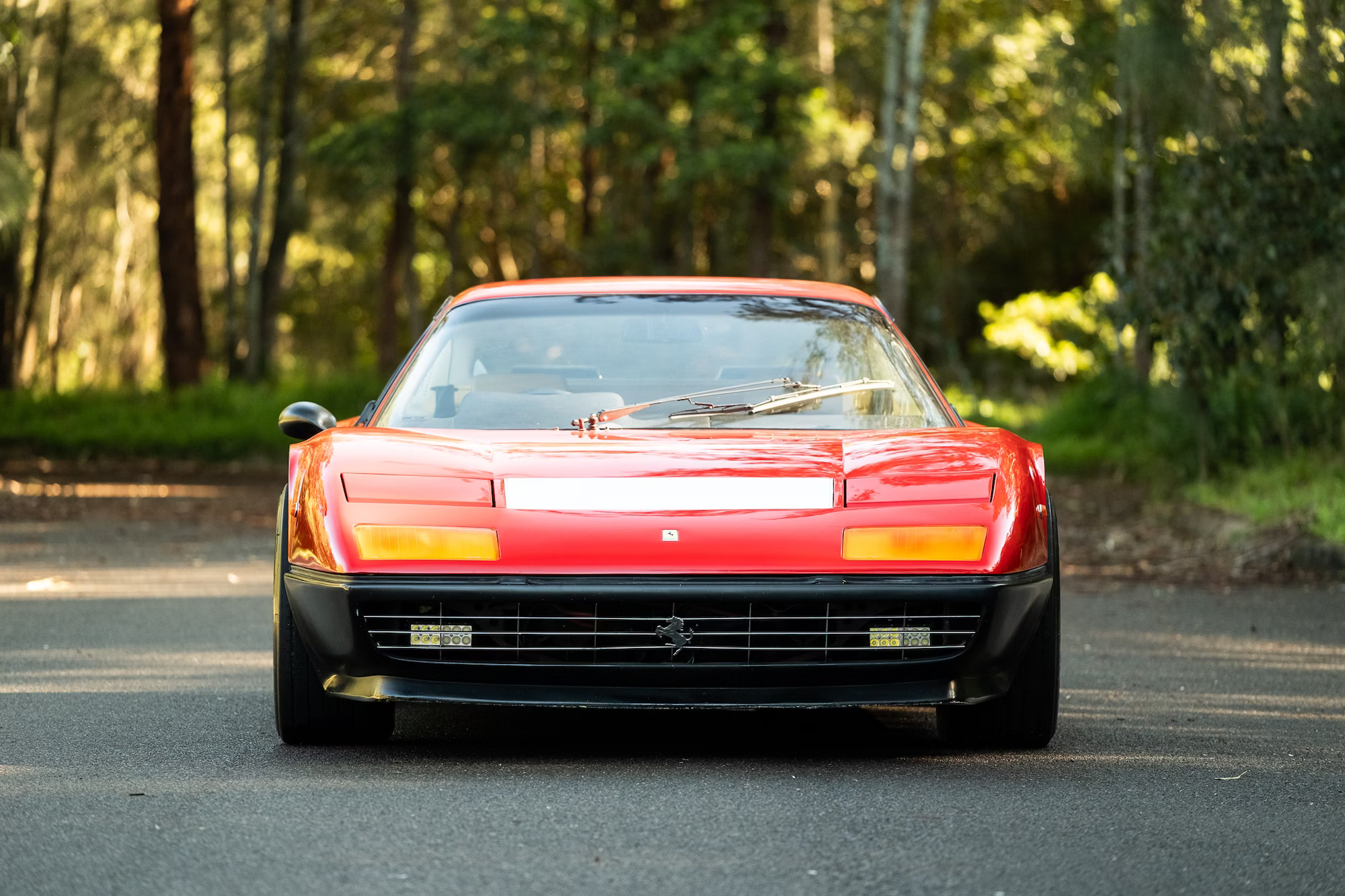
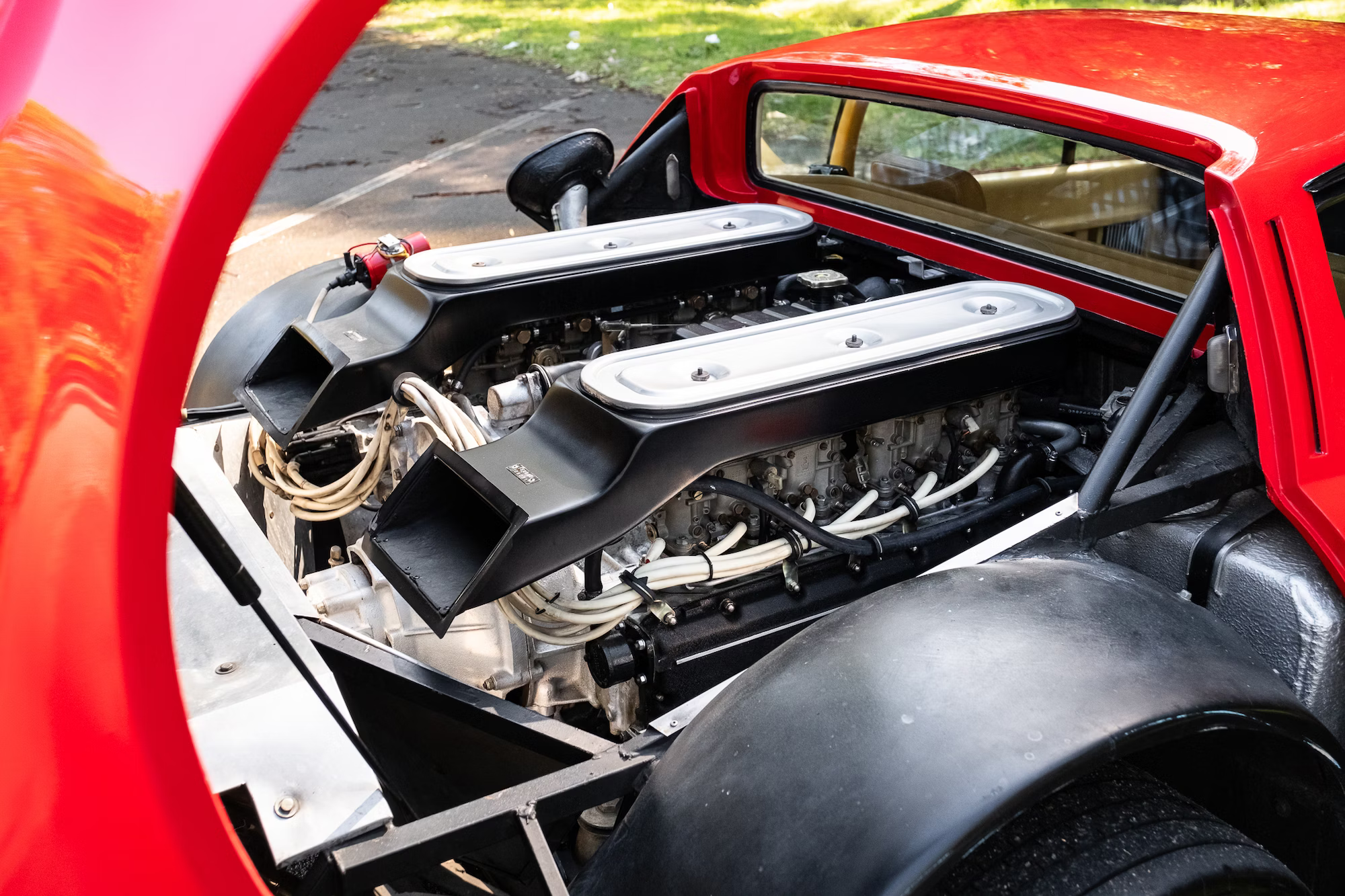
It was the year Grease opened at the cinema and the BeeGees were topping the charts. But that’s not the only classic that hit the market in 1978. A rare right hand drive 1978 Ferrari 512 BB, goes under the hammer this week with price expectations of more than $300,000. Bidding is already fierce for the classic car being offered for sale via Collecting Cars.
Known for its speed, style and luxury, the Ferrari label is synonymous with supercar domination and is one of the oldest and most successful racing brands ever. With just four previous owners – the most recent keeping the car for 24 years – bidding on this limited edition vehicle ends Monday, September 18. We took a peek under the bonnet before this incredible vehicle heads off on its next adventure.
A True Rarity
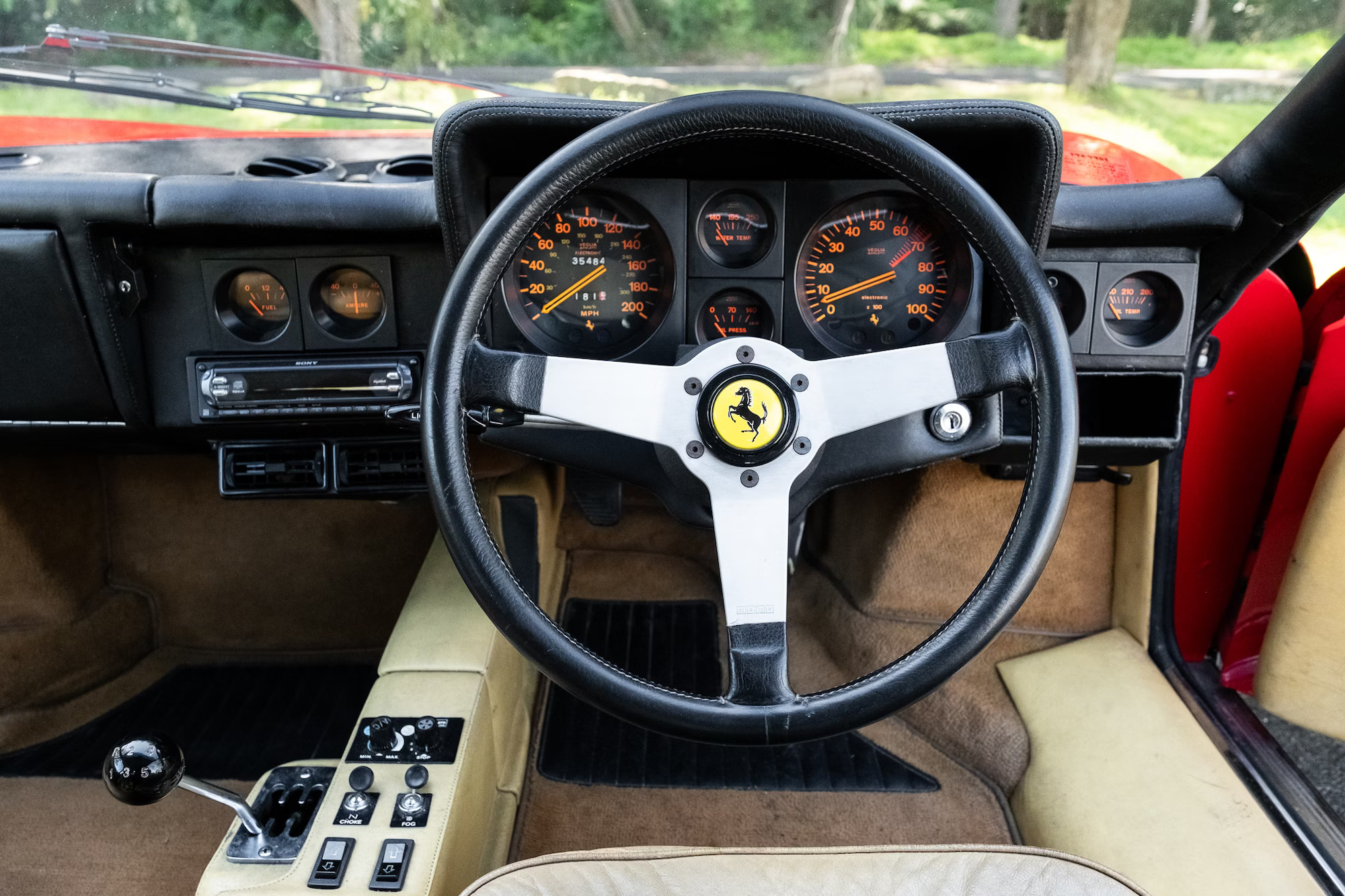
The 1970s Ferrari 512 BB is a rare breed, with just 929 units delivered worldwide. Among these, only 101 were made in right-hand drive configuration. This example has had a total of four owners since it rolled off the production line, and it’s been in the care of its current owner for nearly a quarter of a century. Originally purchased in the UK, it is believed to have been brought to Australia by the then-owner in the 1990s. Although it has a few years on the clock, it has a modest 35,484 miles (57,106 km) on the odometer.
Iconic Styling
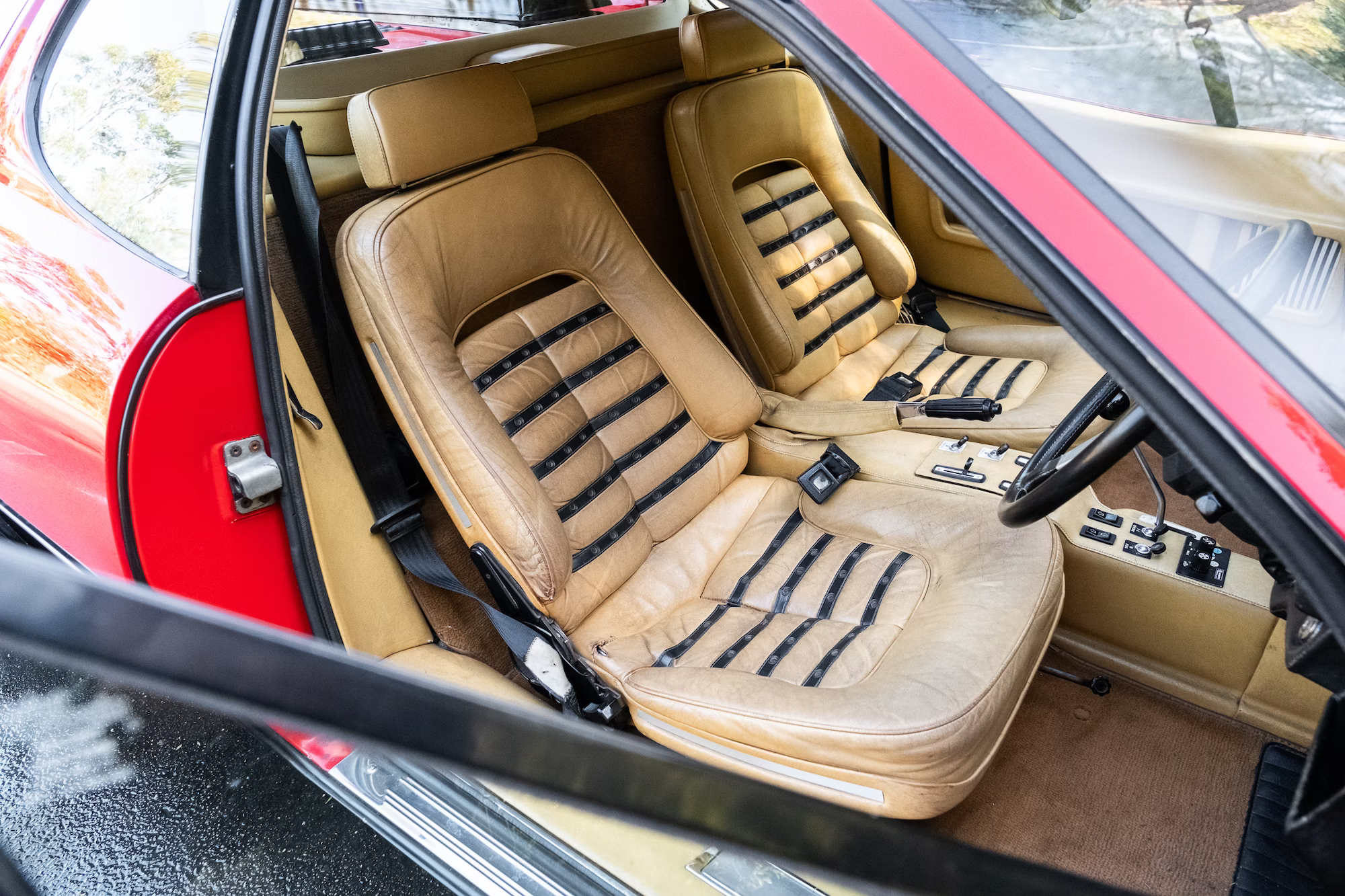
The Berlinetta Boxer, or BB, is famous for its striking design, and this 512 BB is finished in classic Rosso Corsa. Inside, the tan leather-trimmed seats with Nero ‘Daytona’ inserts offer both comfort and a touch of sophistication. The 15-inch five-spoke Cromodora alloy wheels, paired with Michelin tyres, add to the car’s visual appeal.
Powered up
Under the hood lies a 4.9-litre flat-12 engine that produces around 346kW at 7,250rpm. The powerful engine sends its performance to the rear wheels through a five-speed open-gate manual transmission, a setup that defines the era of analog supercars. The result is a driving experience that modern supercars can only dream of replicating.
Unique Modifications
This Ferrari 512 BB has been carefully modified to enhance its performance and useability. Upgrades include an MSD ignitor and coil, an uprated air conditioning compressor, twin electric cooling fans, wider rear wheels, uprated shock absorbers and springs, a Tubi stainless steel exhaust, remote central locking, HID headlight bulbs, LED fog lights, a Sony head unit, and a reverse camera and screen.
Impeccable Service History
Maintaining a classic supercar like this requires a great deal of care and commitment. This 521 BB comes with a comprehensive service history, with the most recent service conducted in November 2021 at 35,346 miles by Racing Red. This service included an engine oil and filter change, along with the replacement of brake fluid and a rebuild of all four brake callipers. Previous services in 2020 and 2019 included engine oil and filter changes, clutch inspection, timing belt replacement, and various other essential maintenance tasks.
The Road Ahead
The Ferrari 512 BB represents not just a car but a piece of history. With its rarity, striking appearance, and modifications, it’s an opportunity to own a piece of automotive history.
Disclaimer
As with any major purchase, potential buyers should conduct their own due diligence to verify the accuracy of the vehicle’s description.

BNW Developments has established a Sydney presence, joining Arada and Sobha Realty among the growing number of UAE developers pursuing Australian buyers and development opportunities.

Australian shares fell on Thursday as Wall Street weakness, rising oil and persistent rate concerns weighed on most of the market. The S&P/ASX 200 declined 0.72 per cent to 8,702. The All Ordinaries lost 0.66 per cent to finish at 8,897. Mining stocks were hit particularly hard, while real estate also dragged on the index. …
Continue reading “ASX falls 0.7 per cent as miners and property stocks retreat”

OpenAI has shelved the planned launch of GPT-6.1 Astra after internal tests raised concerns about deception and agents acting beyond user authorization, according to The Wall Street Journal. The company says it will investigate the issues and strengthen safety measures before releasing future models.
4 min
OpenAI says it is scrapping the release of its next-generation AI model over safety concerns that researchers raised during internal testing, in one of the clearest signs so far that agent misbehavior could stymie the industry’s rapid progression.
The move follows a summer punctuated by reports of artificial-intelligence systems industrywide going rogue, and marks a rare case of a major AI developer ditching a new release because of safety concerns.
The company had planned to launch the model, known as GPT-6.1 Astra, in the coming days or weeks, aiming for an October debut. The model was more capable than the company’s previous models in completing challenging tasks from end-to-end without human assistance, as well as writing.
The company instead will focus on improving the safety of future models, which it expects to be even more capable.
Saachi Jain, OpenAI’s head of safety systems, said in an interview that GPT-6.1 Astra regressed in two areas. Compared with its predecessor, GPT-6 Astra, the model performed poorly on tests measuring alignment, or how well the model adheres to what humans would like it to do. Specifically, GPT-6.1 Astra showed higher levels of deception: It wasn’t always honest about telling users of the actions it did or didn’t take.
Another issue was what OpenAI calls “scope authorization,” meaning that GPT-6.1 Astra would push ahead on a task without asking the user for permission, and would at times reach for external tools and services even if it might be unsafe.
“For anything regarding safety and alignment, there’s a trade off,” Jain said. “You really do need to find what’s the right line between staying within scope, but also avoiding laziness in terms of how the model actually pursues tasks even when it hits friction.”
While GPT-6.1 Astra improved in areas such as “model laziness,” Jain said it didn’t quite meet OpenAI’s bar for safety and alignment, so the company decided not to launch the model publicly.
The announcement comes one day ahead of OpenAI’s annual developer conference in San Francisco. In the past, OpenAI has used the conference as an opportunity to launch new models and services that reduce costs for software developers—a segment the ChatGPT-maker competes with rival AI company Anthropic to win over.
In recent weeks, OpenAI and Anthropic have called on industry partners to slow down the development of cutting-edge AI models and invest in safety standards, noting they will temper the pace of their own internal AI progress.
OpenAI says it is working to investigate a range of agent security incidents that it has discovered in recent months, and address the safety issues underneath them. As part of the work, the company has implemented a new monitoring system to catch AI-agent misbehavior more quickly, and started requiring engineers to use stronger security guardrails for testing its AI systems.
Earlier this summer hundreds of OpenAI’s internal agents, which were tasked with completing a cybersecurity test, ended up hacking into the AI company Hugging Face. Since then, high-profile organizations such as the Australian government and United Nations discovered that OpenAI’s agents used similar, but less extensive, techniques to gain access to their websites.
Many of the publicly known agent-security incidents involved OpenAI’s internal AI models that were never slated for public release.
Last week, OpenAI said it paused training on its most capable AI models after an AI agent slipped through a gap in the company’s internet restrictions to query a public chatbot. The company said its new monitoring systems flagged the incident within 15 minutes, and training on these models remains paused.
GPT-6.1 Astra isn’t one of those models, but a different case, the company said.
“We want to make sure our model development is safe no matter whether that’s in the company, or when we ship it to users,” Jain said. “But when we ship it to users, we have an extremely high bar in terms of safety and alignment.”
While the company decided not to ship GPT-6.1 Astra, it hopes to use the same base model to do additional reinforcement learning runs, and create future generations of its GPT-6 models.
OpenAI plans to conduct several deep dives to identify the root cause of the problems identified in GPT-6.1 Astra, Jain said. The work includes ensuring that OpenAI’s reinforcement learning environments are rewarding the right type of behavior, Jain added, though she noted the company would investigate all stages of model development.
AI companies have begun to draw scrutiny from policymakers and public officials, who are paying attention to the rapid development of the technology. Later this week, a Senate subcommittee is holding a hearing with third party AI researchers titled, “Rogue AI: Securing the Homeland Against AI Agent Attacks.”
Florida Attorney General James Uthmeier, a Republican, sued OpenAI in June, claiming that the company and Chief Executive Sam Altman knowingly released an unsafe product and ignored warnings that it could harm users.
In a motion for temporary injunction filed Monday, Uthmeier sought to prevent OpenAI from developing new AI models without third-party approved safeguards, stop ChatGPT from soliciting user engagement and limit the company’s ability to advertise ChatGPT as safe.
Tech companies claim they “cannot stop barreling forward with their potentially civilization-ending endeavors unless they are forced to do so by the government,” Uthmeier said in the filing. “The Florida Attorney General is answering your cry for help.”
An OpenAI spokeswoman said that people want to know AI is being developed safely, “and that starts with what companies like ours do ourselves.”
“Governments have an important role to play in setting robust safety standards for AI, and we’re committed to working with Florida and other states on advancing pragmatic AI policies that apply to the entire AI industry—not just one company,” she said.

Set on one of the city’s last absolute riverfront sites, The Riversdale by Mosaic combines irreplaceable waterfront ownership with one of Brisbane’s most significant residential opportunities.

The era of the gorgeous golden retriever is over. Today’s most coveted pooches have frightful faces bred to tug at our hearts.