Why Charlie Rizk believes luxury interiors should outlast the trends
Edge Design Consultants has remained a relatively small studio, allowing Rizk to maintain personal involvement across its projects.
 4 min
4 min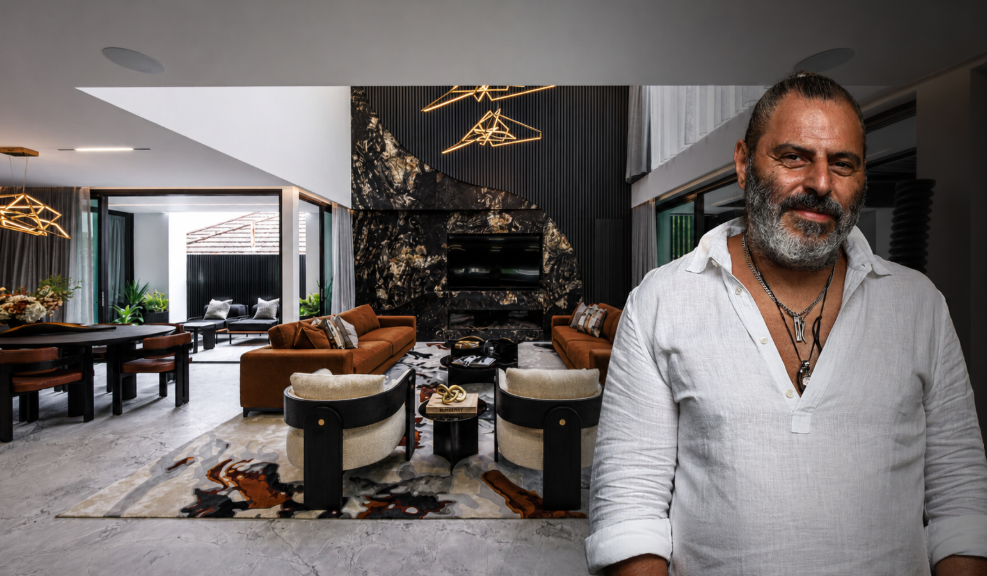
The most convincing luxury interiors rarely need to announce their value.
Their appeal is revealed more gradually: in the weight of a door, the texture of a natural material, the proportion of the furniture or the way lighting changes the mood of a room after dark.
It is this quieter expression of luxury that has shaped the work of Charlie Rizk, founder and design director of Sydney studio Edge Design Consultants.
Established in 2006, the boutique practice works across residential and commercial interiors, offering services that range from architectural interior design and material selection to bespoke furniture, furnishing and final styling.
Its portfolio spans family homes, waterfront retreats, commercial workplaces and apartments within some of Sydney’s most prominent residential buildings. But according to the studio’s philosophy, the common thread is not a readily identifiable aesthetic.
Instead, it is an emphasis on longevity, personalisation and a close relationship between designer and client.
From the salon to the design studio
Rizk’s route into interior design was unconventional.
Before establishing Edge Design Consultants, he founded the Sydney hair salon Escapadehfb. While the two businesses operate in different creative fields, Rizk’s early career gave him experience in interpreting highly personal client briefs.
That ability to listen — and to distinguish between what a client initially requests and how they ultimately want to feel — became central to his work in interiors.
A client may arrive with a collection of reference images, favourite colours or individual pieces of furniture. The designer’s role is not simply to assemble those elements. It is to identify the underlying preference connecting them and translate it into a coherent environment.
That distinction becomes particularly important in bespoke residential design, where the success of a room is determined by more than its appearance in photographs.
The interior must accommodate routines, collections, entertaining, children, pets, privacy and storage. Materials must also be selected according to how they will perform after years of use.
A deliberately boutique model
Edge Design Consultants has remained a relatively small studio, allowing Rizk to maintain personal involvement across its projects.
For clients, that structure offers continuity. Architectural detailing, fixtures, finishes, furniture and styling can be developed as parts of the same design narrative rather than commissioned as disconnected stages.
The studio’s full-service model can begin with spatial planning and architectural interiors before progressing through mood boards, material selections, custom furniture and the final installation.
This continuity is particularly valuable on complex homes involving architects, builders, specialist trades, suppliers and landscape designers. Decisions made at the beginning of a project can affect everything that follows, from the dimensions of a custom sofa to the placement of lighting, power and joinery.
Bringing the interior designer into the process early can help prevent decorative decisions from being imposed on a largely completed building.
It also creates opportunities for furniture, art and objects to inform the architecture itself.
The case against a signature look
Many successful designers become associated with a recognisable palette or recurring visual device. Edge takes a less prescriptive position.
The studio’s work includes warm, layered family interiors as well as more restrained contemporary apartments and sharper commercial spaces. Its stated priorities are durability, considered materials and an understanding of the way each space will be occupied.
This does not mean abandoning a point of view. Rather, the designer’s sensibility is expressed through proportion, editing and consistency instead of a formula repeated from one project to another.
For affluent homeowners, this can be an important distinction. A heavily trend-driven interior may look current when completed but quickly reveal the moment in which it was designed.
An enduring home needs enough character to feel individual without becoming hostage to a short-lived fashion.
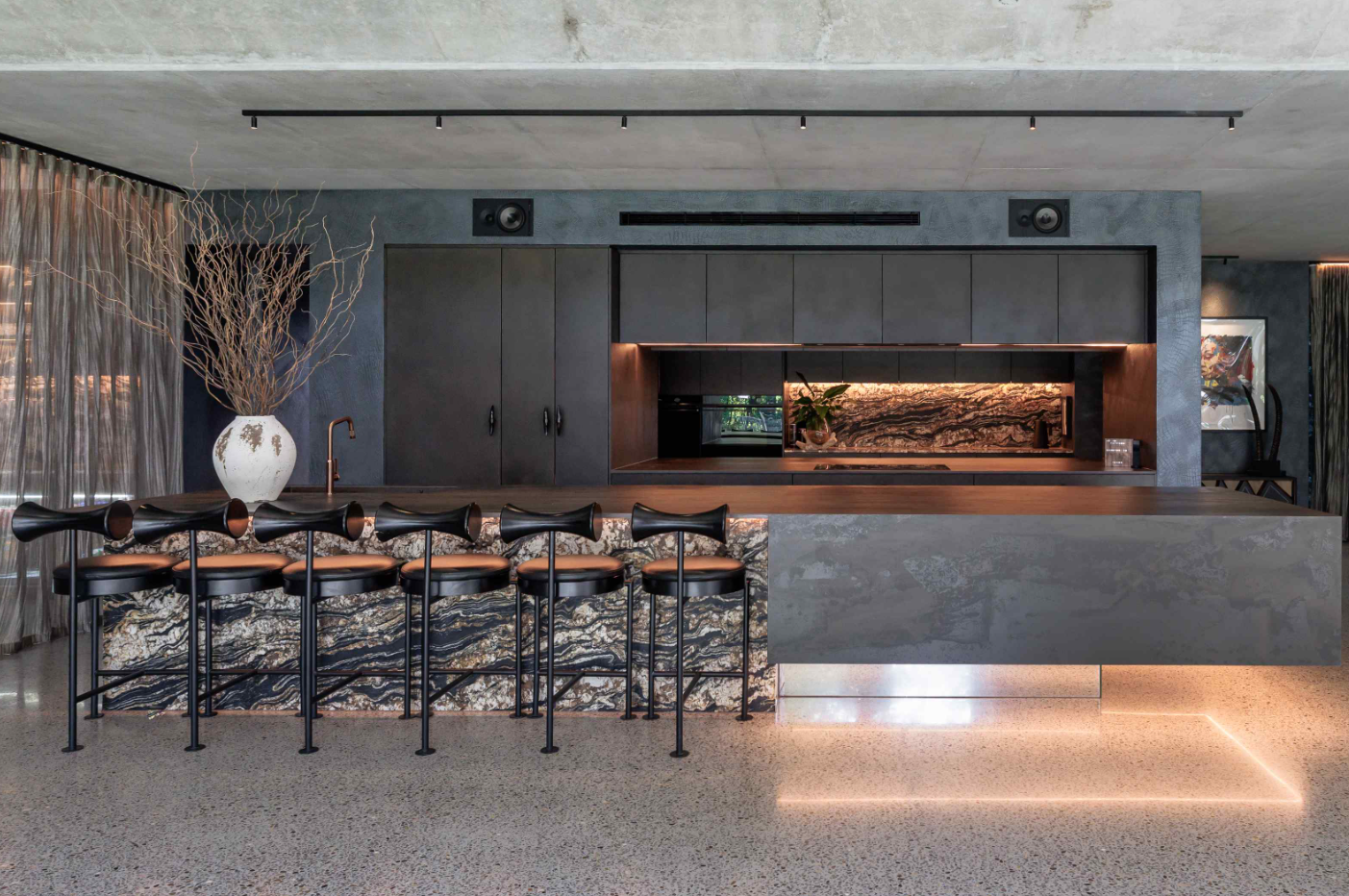
Natural stone, timber, metalwork and well-made furniture can provide that foundation, but material expense alone does not create permanence. The detailing, installation and relationship between the materials matter just as much.
Designing from the building out
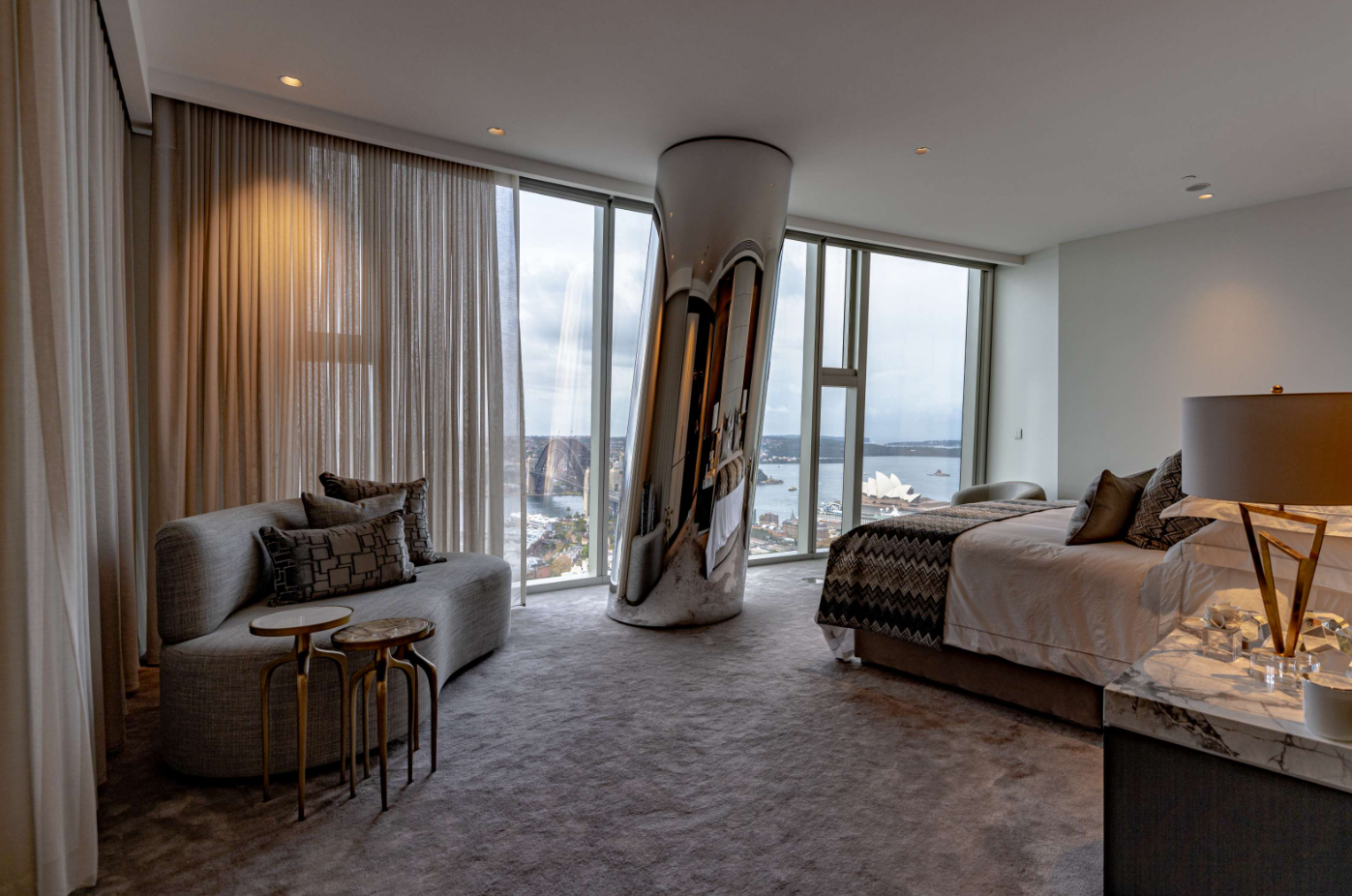
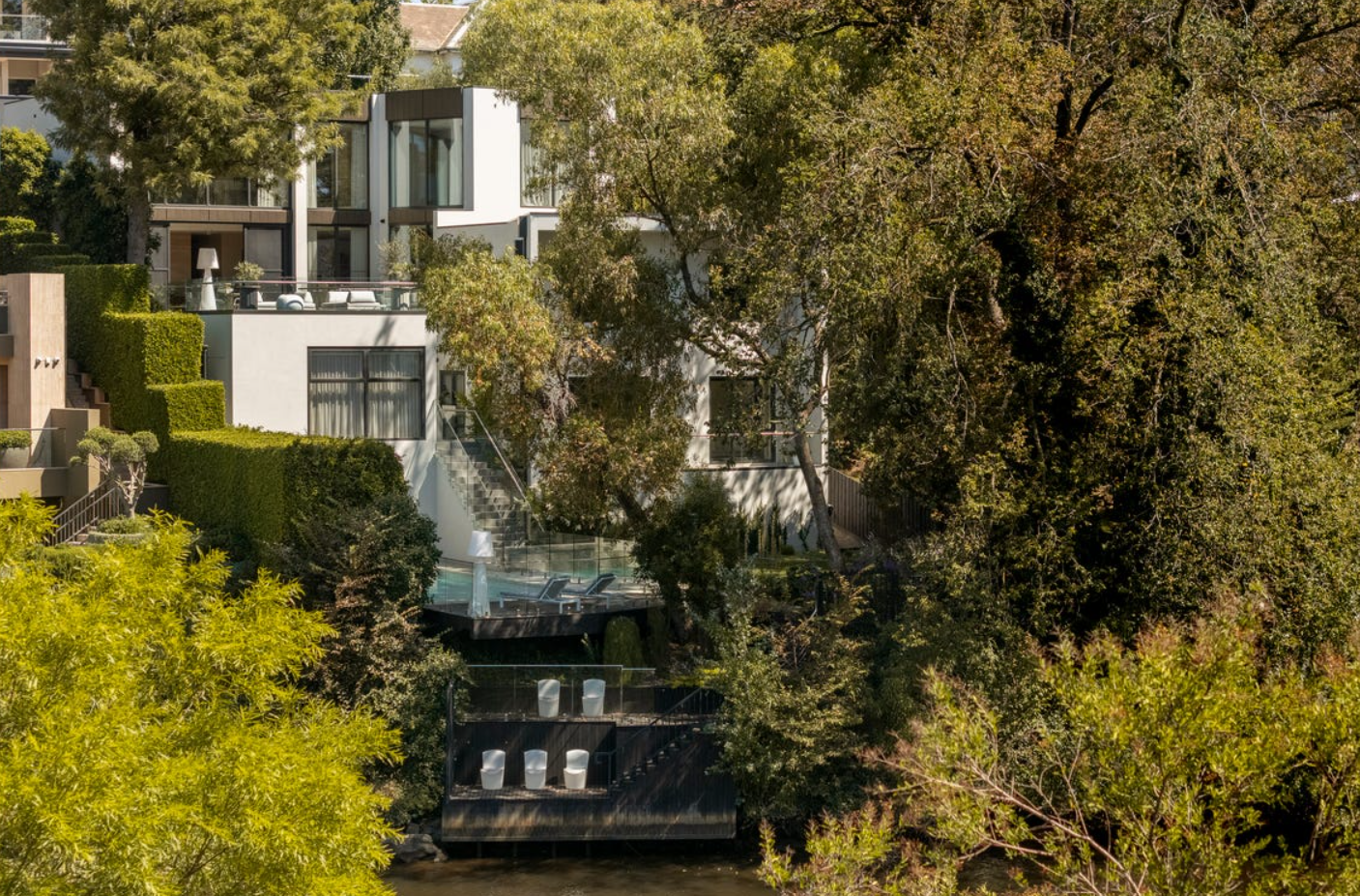
Edge’s published portfolio includes residential projects in Pymble, Epping, North Rocks, Strathfield, Pyrmont and Wagstaffe, along with the furnishing and styling of a residence in Crown Sydney. A Pymble residence (below) was featured on Channel Nine’s Australia’s Best House in 2023.
The scope varies between projects.
Some commissions involve complete architectural interior design, furniture and styling. Others focus on furnishing an existing residence, where the challenge is to introduce identity without altering the underlying architecture.
A penthouse, for example, may already possess exceptional views, finishes and proportions. The designer’s task is then to create intimacy, establish visual rhythm and ensure the furniture remains appropriately scaled to the volume of the rooms.
A freestanding family home presents different considerations. Storage, circulation, durability and the relationship between indoor and outdoor areas may take precedence over creating a formal sense of arrival.
The best result is not necessarily the most dramatic. It is the one in which the architecture, finishes, furniture and objects feel as though they were always intended to coexist.
Luxury as a personal experience
After 20 years, Edge Design Consultants sits within a design market transformed by social media and unprecedented access to international references.
Clients can now identify furniture, stone, lighting and interiors from around the world before their first conversation with a designer. That access can broaden a brief, but it can also produce an overwhelming collection of competing ideas.
The designer’s role is increasingly one of curation: deciding what belongs, what should be removed and which references can be translated convincingly into an Australian home.
For Rizk, the boutique scale of Edge allows that process to remain personal.
The studio’s version of luxury is therefore not defined by a single material, brand or visual signature. It lies in the time spent understanding a client, the care with which each element is selected and the sense that the completed space belongs specifically to the people living within it.
Fact box
- Designer: Charlie Rizk
- Role: Founder and design director
- Studio: Edge Design Consultants
- Established: 2006
- Location: Sydney, NSW
- Services: Architectural interior design, spatial planning, mood boards, fixtures and finishes, bespoke furniture, furnishing and styling
- Project types: Luxury residences, apartments, penthouses and boutique commercial interiors
- Selected locations: Pymble, Epping, North Rocks, Strathfield, Pyrmont, Wagstaffe, Macquarie Park and Crown Sydney
- Selected media: Australia’s Best House, Kanebridge Quarterly and Robb Report Australia
- Website: edgedesignconsultants.com.au
- Instagram: @edge_design_consultants

Technology and semiconductor shares fell sharply as investors questioned the debt financing the AI infrastructure boom and confronted higher rates and Chinese competition.
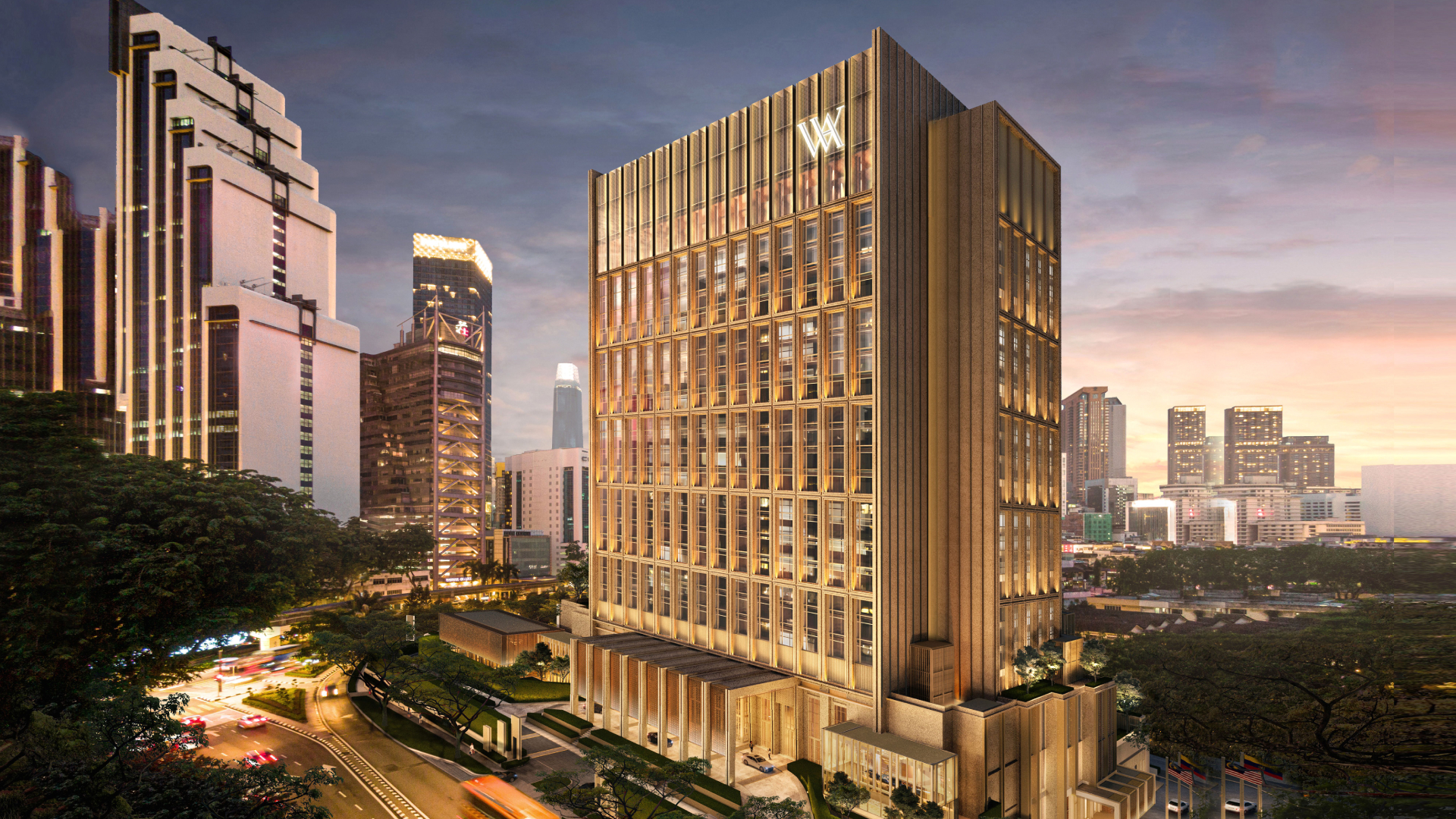
Waldorf Astoria Kuala Lumpur is scheduled to open on 30 October, introducing the Hilton luxury brand to Malaysia with an all-suite hotel in the city’s Golden Triangle.
Employment fell by 39,300 and unemployment held at a revised 4.7 per cent, giving the RBA more room to pause in November.
2 min
Australia’s labour market weakened in September, reducing—but not eliminating—the case for another Reserve Bank rate rise in November.
The seasonally adjusted unemployment rate was 4.7 per cent, according to the Australian Bureau of Statistics. August was revised to the same level, while September employment fell by 39,300 people. The number of unemployed Australians increased by 8,900 to 732,000.
The weakness extended beyond the headline rate. The employment-to-population ratio fell 0.3 percentage points to 63.6 per cent, participation declined 0.2 points to 66.8 per cent and underemployment edged up to 6.3 per cent. Part-time employment fell by 73,700, partly offset by a 34,400 increase in full-time work.
For the RBA, this is a clearer sign that restrictive monetary policy is cooling demand. Higher unemployment and falling employment reduce wage pressure over time and increase the risk that another rate rise would push the economy harder than necessary.
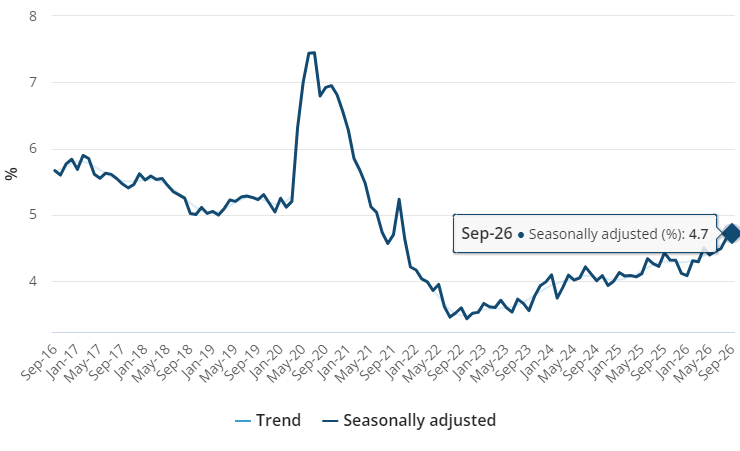
That makes a November increase less certain. It does not make a hold inevitable. The RBA must balance labour-market softness against inflation, and the September-quarter consumer price index due later in October will carry more direct weight in the decision.
For mortgage holders and property investors, the practical conclusion is not to trade one data release. Borrowers should continue testing repayments at higher rates, preserve liquidity and avoid basing a purchase on an assumed near-term reversal. Refinancing decisions should be assessed against total cost, not simply the advertised rate.
Property markets may initially welcome a reduced probability of another increase because borrowing capacity and sentiment are highly rate-sensitive. But a weakening labour market is not unambiguously positive for housing: job security supports mortgage serviceability, rental demand and buyer confidence.
The September numbers have given the RBA a credible reason to wait. Inflation will determine whether it can use it.
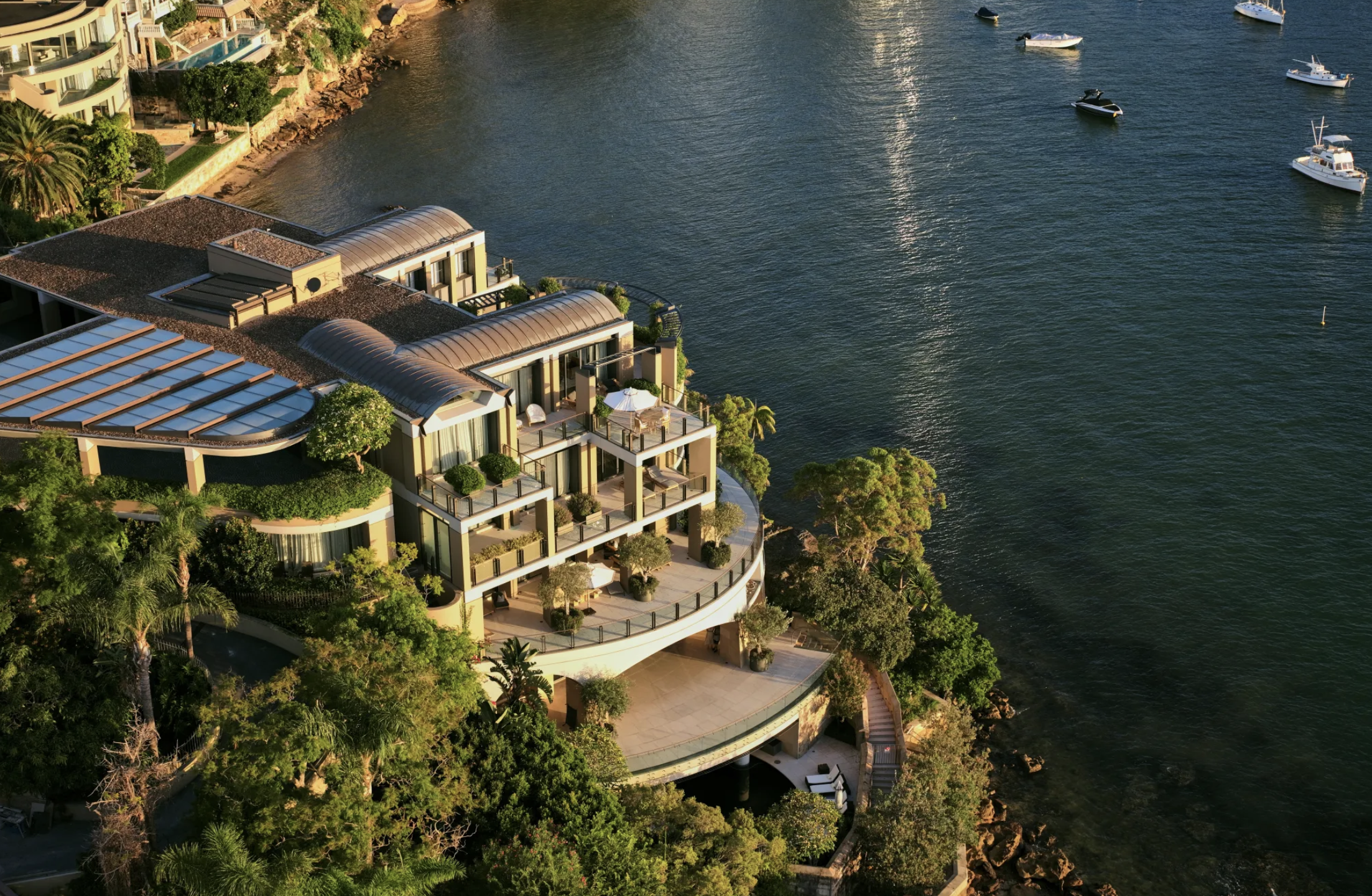
Records keep falling in 2025 as harbourfront, beachfront and blue-chip estates crowd the top of the market.

The pandemic-fuelled love affair with casual footwear is fading, with Bank of America warning the downturn shows no sign of easing.