Dubai’s Top Hotel Concierge Provides an Insider’s Glimpse to the Glitzy City

 6 min
6 min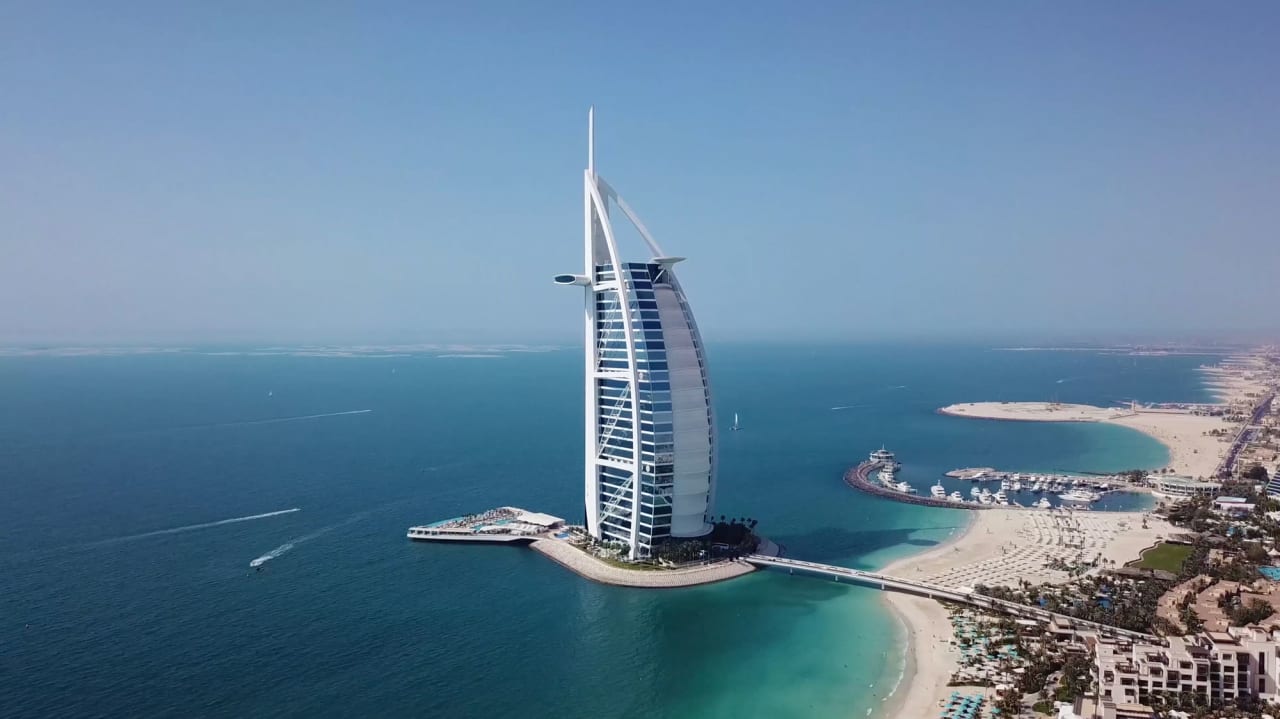
Dubai’s Burj Al Arab hotel is regarded as one of the most extravagant properties in the world, and its sail-shaped architectural design has become an icon of the city and the region. One of the people making the magic happen behind the scenes for such an over-the-top luxurious outpost is its chief concierge, Roger Geadah.
Any hotel concierge must be prepared to cater to and meet the needs of their guests, fostering long-term relationships and turning first-time visitors into repeat clients by delivering memorable moments. But at Burj Al Arab, the bar is perhaps even more difficult to clear than it is elsewhere.
“Delivering on the expectations of our guests at the Burj Al Arab is not just about meeting their high standards—it’s about consistently exceeding them,” Geadah says. “To achieve this, I place myself on the same level as our guests, seeing the world through their eyes. This involves a great deal of emotional intelligence, storytelling, and fun.”
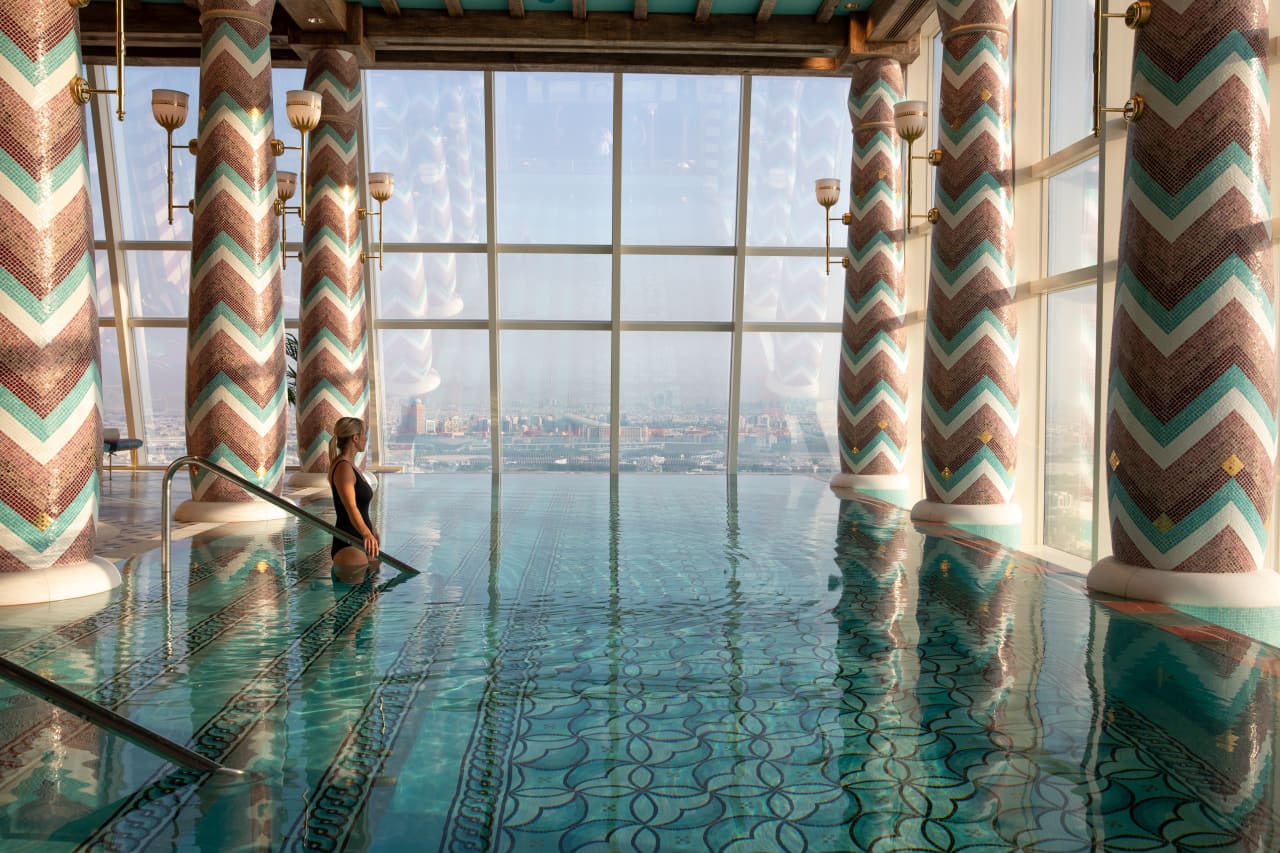
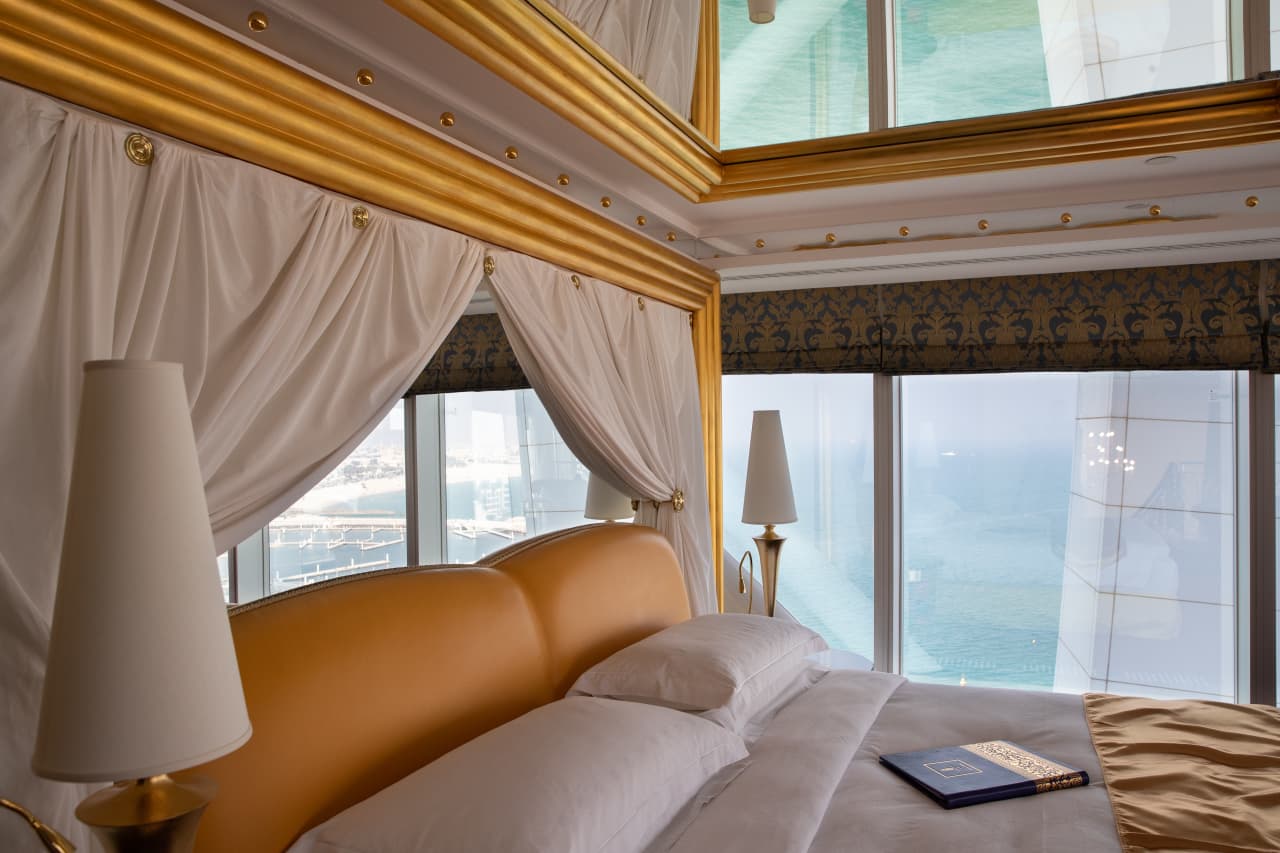
At a hotel regarded as one of the world’s most opulent, Geadah’s tasks are different from those of a concierge at a more typical city hotel. Guests make use of around the clock butler service and stay in gilded two-story suites bedecked in enough marble and gold as to border on the palatial, after entering the property through a world-record, almost 600-foot high atrium. Expectations are even higher.
Geadah, who’s been in Dubai for a decade and with the Jumeirah Burj Al Arab team for the past three years, strives to connect with his guests, think outside the box, and stay up to date with a city amid constant evolution. There may be no better person to offer his handpicked recommendations for what to experience in and around the city.
Geadah, 48, spoke with Penta about his top tips and insider recommendations for a memorable visit to Dubai. undefined
Stay
Beyond the swanky confines of his offices at the Burj Al Arab, Geadah’s top choice elsewhere in town is the XVA Art Hotel in Bur Dubai.
Courtesy of Burj Al Arab
“It’s a true hidden gem that beautifully combines heritage, art, and tranquility,” he says. The property is set within a traditional Emirati house in the heart of the Al Fahidi historical neighborhood, and guests enjoy the area’s charming traditional architecture, heritage sites, and history, along with the artistic touches of its 15 individually designed rooms.
“What I love most about XVA is how it fosters conversations around art, culture, heritage, and creativity,” Geadah says. For those looking to escape the city for a night or two, head to Bab Al Shams Desert Resort.
“It’s a luxurious oasis hidden away in the Arabian desert, just about an hour’s drive from the lively city,” Geadah says. “Bab Al Shams offers breathtaking desert views that make for a truly unique getaway, and the resort beautifully combines traditional Arabian design with modern comforts, and also offers unique activities like camel rides, adding a touch of adventure to your stay.”
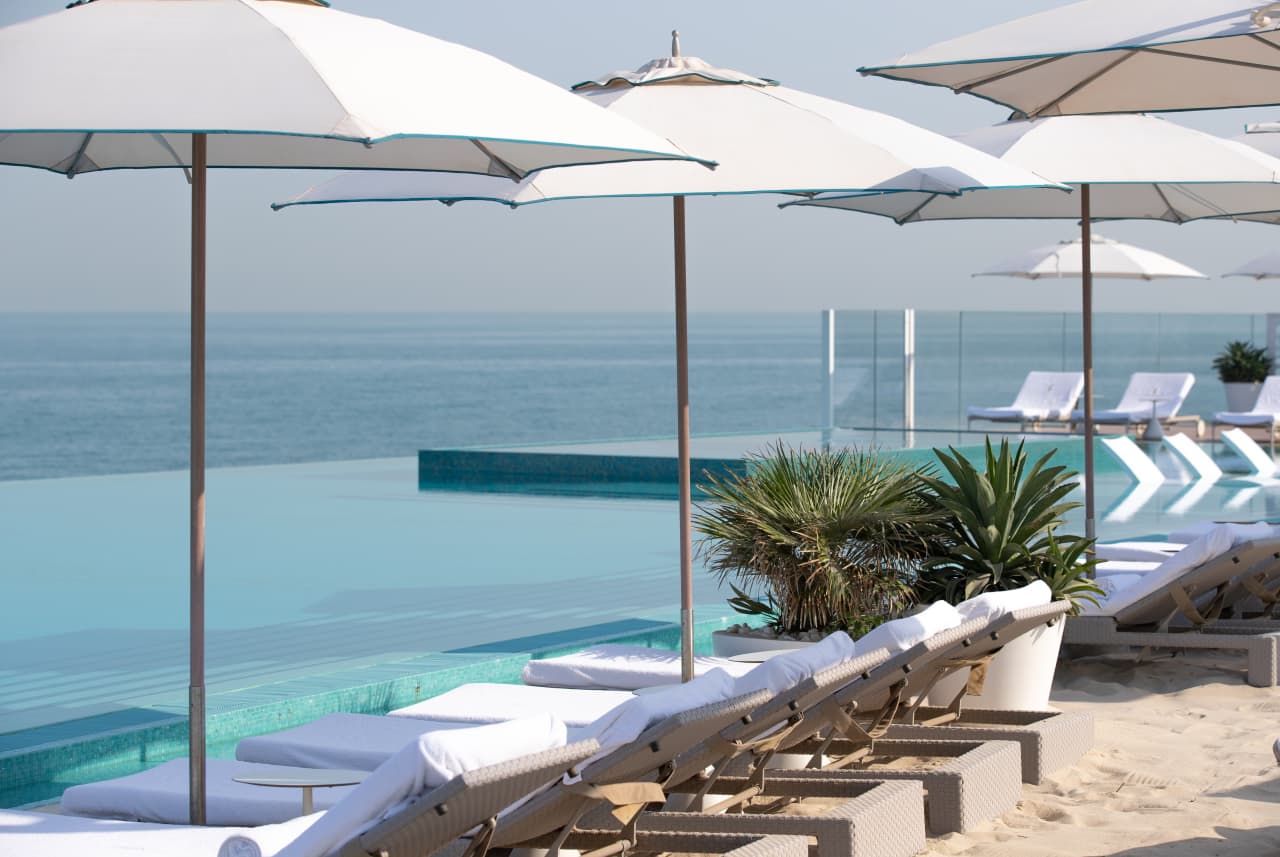
Adjacent to the Burj Al Arab is the Madinat Jumeirah, the largest resort in Dubai at about 100 acres in size. It’s a destination to itself featuring a handful of different hotels and hideaways sharing an expansive property interconnected with walkways and boat canals, including a huge lagoon-style resort pool, a lengthy stretch of private beach, and a staggering lineup of about 50 dining and drinking venues.
Shop
Dubai is home to every luxury brand and retailer on the planet, including at Dubai Mall, one of the largest in the world. Finding smaller, local purveyors for a more authentic shopping experience may be more rewarding. “When it comes to immersing yourself in the vibrant culture and sensory delights of Dubai, the city’s souks [marketplaces] are an absolute must-visit,” Geadah says.
Different souks are focused on different types of goods, and Geadah recommends a few in particular. “First up is the Dubai Spice Souk, nestled in the heritage area; this colorful market is a sensory feast, brimming with aromatic herbs and spices that fill the air with their tantalising scents,” he says.
From there, the Gold Souk is close by, as well as the Perfume Souk, another of his top picks. “It is a fragrant paradise in its own right, and here you will encounter some of the most authentic and enticing scents Dubai has to offer: Oud, a signature fragrance derived from resin is beloved by both Emirati men and women for its earthy allure.”
Explore
The most difficult ticket in Dubai right now is the Museum of the Future.
Courtesy of Burj Al Arab
“It’s quickly become a must-visit destination and it’s easy to see why, as the building itself is an architectural marvel, featuring a stunning torus-shaped structure adorned with Arabic calligraphy across 1,024 stainless steel panels,” Geadah says. Visitors enter an experiential space that transports them to the year 2071. “It is a captivating experience for anyone interested in what the future might hold.”
A more off-the-beaten-path pick is the Al Shindagha Museum in the historical neighbourhood of the same name, which takes people on a journey through time in the other direction. “Visitors explore the meticulously restored heritage houses along the serene Dubai Creek, houses which aren’t just structures, but living museums, each telling its own story of traditional crafts and bustling commercial activities from bygone eras,” he says.
Another choice is the Coffee Museum. “Lose yourself in a treasure trove of antique items that trace the rich history of coffee, from its humble beginnings to its global significance,” Geadah says. “For a dose of authentic culture, head to the Sheikh Mohammed Centre for Cultural Understanding where locals offer hands-on explorations of traditional ways of life while showcasing hospitality and serving a traditional meal. The arts district at Alserkal Avenue, meanwhile, features contemporary galleries, studios, and exhibition spaces.
Visit the Al Farooq Omar Bin Al Khattab Mosque for a glimpse at a splendorous structure inspired by Istanbul’s Blue Mosque. “Beyond its architectural marvel, the mosque embodies a deeper purpose — to foster understanding, harmony, and unity,” Geadah says. “Within its walls, words like moderation, peace, and tolerance reverberate, echoing local values and serving as a bridge between Arabic civilisation and the world beyond. Non-Muslims are welcome to visit the mosque outside of praying times.”
The most popular choice for an excursion outside the city is a desert safari to the Dubai Desert Conservation Reserve. Ride in a heritage vehicle across the dunes and enjoy activities such as falconry, wildlife viewing, and a Bedouin-style barbecue feast. For a different take, Geadah recommends starting the adventure with a sunrise hot air balloon ride.
The terraforming marvels of Palm Jumeirah should be seen and explored by every visitor. There are several viewpoints to consider, and Geadah also suggests taking to the water with a yacht trip or jet ski tour to gain an additional perspective. And of course, the iconic Burj Khalifa remains one of Dubai’s signature sights. The best way to soak it all in is via the At The Top experience, sending visitors to the 152nd floor along with a series of viewing points and lounges on different floors.
Eat & Drink
“Dubai’s culinary scene is incredibly diverse, offering everything from Michelin-starred restaurants to authentic street food,” Geadah says. Many of the world’s most well known culinary fixtures have locations in the city, from Massimo Bottura and Gordon Ramsay to Daniel Boulud , Nobu Matsuhisa, Jamie Oliver, and scores of others. When possible, though, Geadah prefers arranging for a more unique experience, once putting together a secret culinary tour for a food-loving family with the help of a local historian and guide.
“The older part of town boasts a rich culinary heritage, with influences from India, Persia, and the Arab world, and it’s home to some of the most unique and charming eateries,” Geadah says.
Geadah has no shortage of restaurant recommendations, though, many of which come with particular vantage points. He suggests Shimmers for an on-the-beach taste of Greek fare with a view of the Burj Al Arab; Coucou offers “festive French” from atop Palm Tower, offering a 360 degree view of Palm Jumeirah; and in downtown Dubai, Urla offers Aegean dining with a view of The Dubai Fountain Show and Burj Khalifa.
At Burj Al Arab, consider L’Olivo at al Mahara, an outpost of Capri’s only two Michelin-starred restaurant. The restaurant is immersed within an enormous coral reef aquarium providing a captivating scene.
Always one to look for a local touch, Geadah also suggests Orfali Bros. “Three brothers, Mohammad, Wassim, and Omar Orfali, bring culinary magic to life, blending tradition and innovation inspired by their cultural roots and adventurous spirit,” he says. “Their small bistro offers a sensory experience where flavours dance and ingredients shine, reflecting their culinary journey.”
 Copyright 2020, Dow Jones & Company, Inc. All Rights Reserved Worldwide. LEARN MORE




From making unpopular decisions to learning when to listen, leaders from five businesses reveal what nobody prepared them for — and how running a company has challenged their expectations.

Technology and semiconductor shares fell sharply as investors questioned the debt financing the AI infrastructure boom and confronted higher rates and Chinese competition.
Elon Musk is exploring a potential merger between Tesla and SpaceX, a deal that could reshape the future of AI, robotics, autonomous vehicles and space technology. With a combined valuation potentially reaching $3.5 trillion, the move could bring Musk’s vision of an interconnected technology ecosystem closer to reality, although a deal remains uncertain.
5 min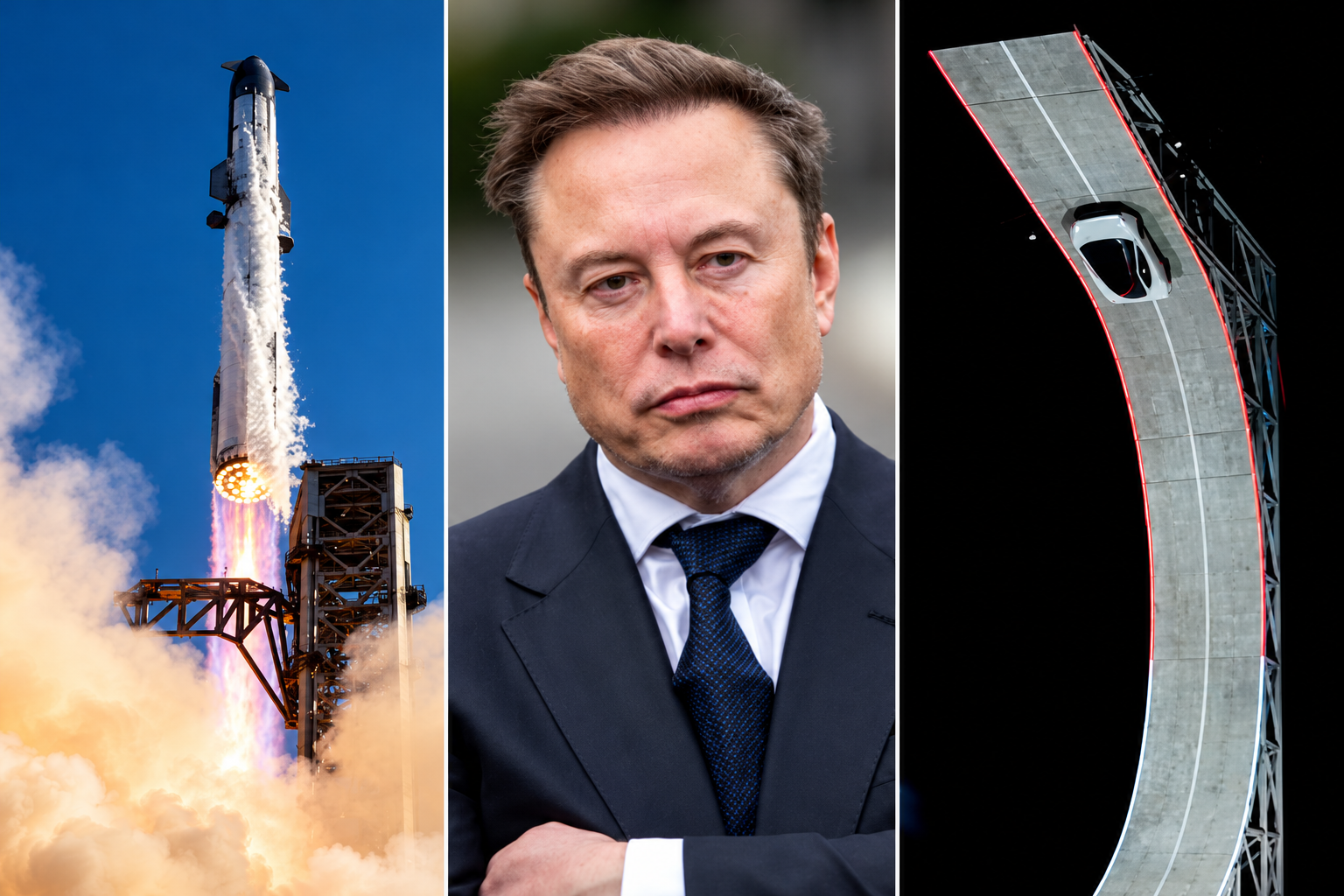
Elon Musk has engineered ties between Tesla TSLA 3.41%increase; up pointing triangle and SpaceX SPCX 7.79%increase; up pointing triangle that are hard to break, and now he wants to fuse them together permanently.
Musk has run both Tesla and SpaceX concurrently over the past two decades, using a schedule that dictated which days he spent focused on each business.
The companies have often shared resources and personnel, signaling their close ties. Last year, SpaceX looked into creating a spacesuit for Tesla’s humanoid robot Optimus, a person familiar with the matter said. Tesla last week showed off its new Roadster, a vehicle featuring SpaceX rocket thrusters that it hopes to soon bring to market.
And in recent months, Musk has repositioned both companies by expanding beyond their core operations toward a shared mission centered on artificial intelligence.
The world’s richest man on Tuesday signaled his interest in tying up SpaceX and Tesla, marking what would be the biggest corporate merger of all time. Because he serves as chief executive of SpaceX and Tesla, Musk said committees of independent directors at both companies are evaluating a possible deal, adding that a transaction might not come to fruition.
The committees will likely evaluate, with lawyers and bankers, how each company would fare in a potential deal and how a deal might best be structured. They then present their conclusions to their respective boards, who typically vote on whether to proceed.
“It’s an odd Kabuki dance where two groups of people are talking and I can’t be in the conversation,” Musk told SpaceX investors on Tuesday in response to an analyst’s question about a potential deal.
For Musk, the merger supports his vision of a world full of autonomous cars, humanoid robots and weekly rocket launches, as well as the data centers and satellites required to keep the whole thing running.
Some investors and analysts said they expect a transaction would be structured as an all-stock deal, with SpaceX potentially paying a modest premium for Tesla shares.
SpaceX, which has a market value of about $2 trillion, said it is seeing sharp growth in revenue across its businesses, which include operating data centers, launching rockets and operating satellite networks such as the internet service Starlink. Tesla is valued at about $1.5 trillion and is expanding its operations beyond its automotive and energy business. Shares in both companies traded higher following the news Tuesday.
Musk’s substantial ownership stakes in both companies, along with voting control at SpaceX, has enabled him to set the deal in motion. Analysts and investors said the deal will probably face regulatory scrutiny internationally, though some see Musk’s close relationship with the Trump administration as an asset to getting approval.
Blurred lines
The companies haven’t said which directors are on the special committees evaluating a potential deal. Several SpaceX and Tesla board members have either personal or business ties to Musk. And like Musk, venture capitalist Ira Ehrenpreis sits on both boards.
In a filing this week, Tesla outlined millions of dollars in business agreements with SpaceX and its subsidiaries last year, including $143 million in car sales to SpaceX, $3.3 million in advertising that it bought on the social-media platform X and $430 million in revenue from the sale of Megapack batteries for SpaceX’s data centers.
The companies also split the cost of resources including the use of Musk’s SpaceX jet and the bill for his personal security, which he runs through a private company.
Employees at both companies routinely move between companies to work on special projects, and some executives have dual roles, including Charles Kuehmann, vice president of materials engineering at both SpaceX and Tesla, and Ashok Elluswamy, the vice president of AI software at Tesla who runs a joint venture with SpaceX called Digital Optimus.
Over the years, Musk has launched new startups within his empire, including brain-implant company Neuralink, underground-tunnel developer the Boring Company and xAI, the AI startup that merged with SpaceX in February.
It is that AI business that Musk thinks can serve a market worth tens of trillions of dollars, justifying the need for a merger.
The business case goes like this: Tesla is developing robotaxis and robots, which it calls “physical AI.” SpaceX is working on the back end of physical AI: the data-center capacity and internet connection required for those robotaxis and robots to operate continuously.
“I don’t see what the value of Tesla is if it’s not merged with SpaceX,” said investment adviser Ross Gerber, a former Tesla bull turned critic invested in both companies. “If they don’t merge, the brains of everything that runs Tesla is owned by another company.”
On top of it all, both companies face constraints on the supply chains they need to make this world a reality, particularly when it comes to chips. To address this, Musk earlier this year announced a joint venture between Tesla, SpaceX and Intel to design and manufacture chips in Texas. “The most epic chip-building exercise by far,” he has said.
Musk at the wheel
For Musk, a merger would also solve two problems: demands on his attention and his lack of control at Tesla.
Tesla for years was Musk’s only public company, a status that came with greater scrutiny. There, Musk reports to a public board, as well as individual investors who make up around 30% of Tesla’s voting power, according to FactSet.
The question of Musk’s attention became a particular focus for investors and the board in recent years after he acquired Twitter in 2022 and launched xAI in 2023, and again in 2025 as he spent time in Washington, D.C., running the Department of Government Efficiency in the early months of President Trump’s second term.
As Tesla’s car business suffered in 2025, Musk threatened to take his AI ambitions outside the company if he wasn’t granted 25% voting control. Last November, Tesla shareholders approved a new pay package for Musk, which created a path for him to vastly expand his stake.
As of Sept. 30, Musk owned a roughly 20% stake in Tesla, according to the company’s proxy filing.
The SpaceX IPO gave Musk a different path. When SpaceX went public in June, the deal’s structure enabled him to have more than 80% voting power at the company—so much that he can’t be fired and decisions can’t be made without his support.
If SpaceX acquires Tesla, he will likely stay in control.
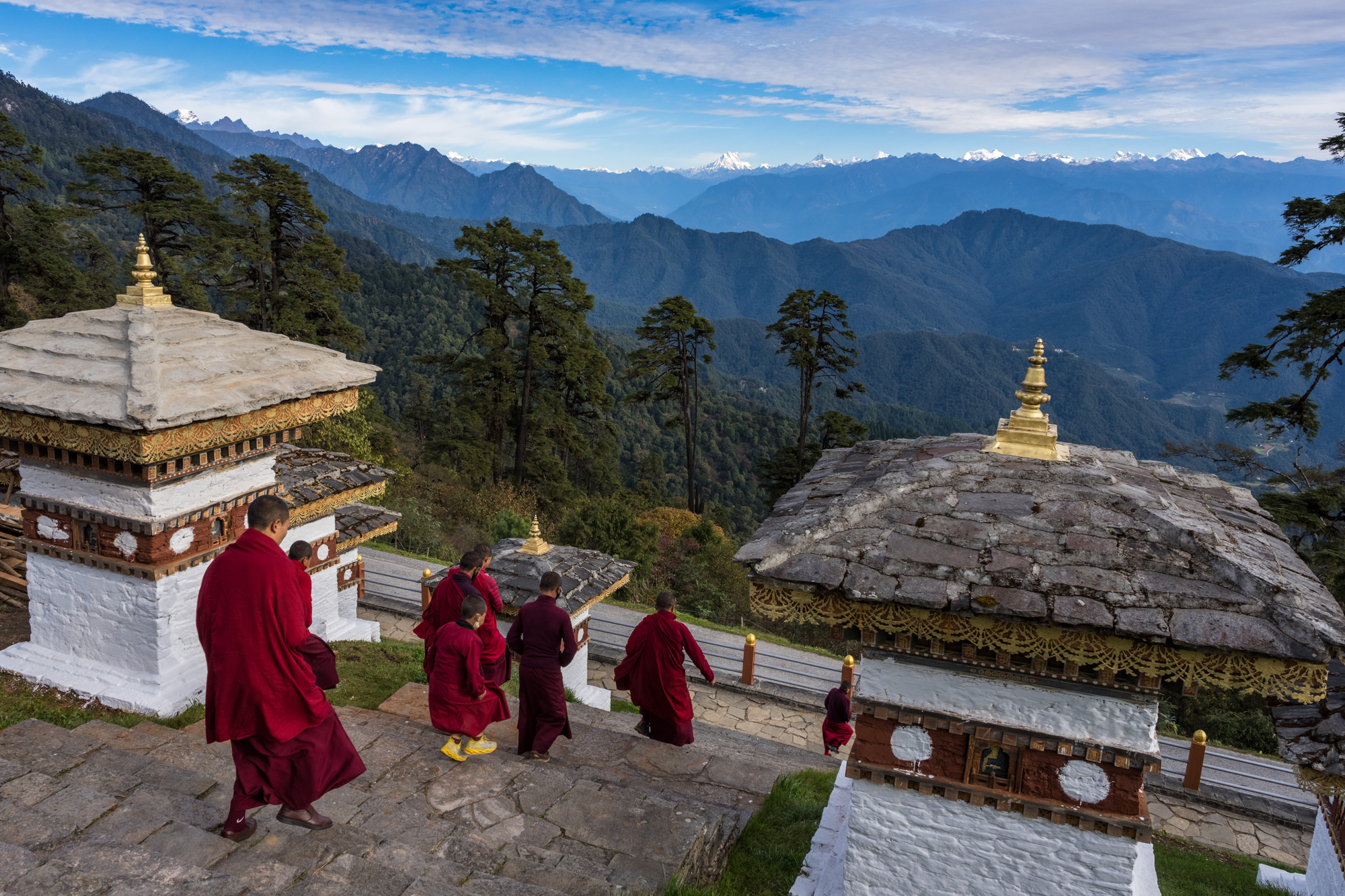
From snow-dusted valleys to festival-filled autumns, Bhutan reveals itself as a rare destination where culture, nature and spirituality unfold year-round.

Wealthy Aussies are swapping large family homes for high-end apartments, with sales of prestige units tripling over the past decade.