Lamborghini’s Urus SUV Plug-In Hybrid Will Be Available Early Next Year

 4 min
4 min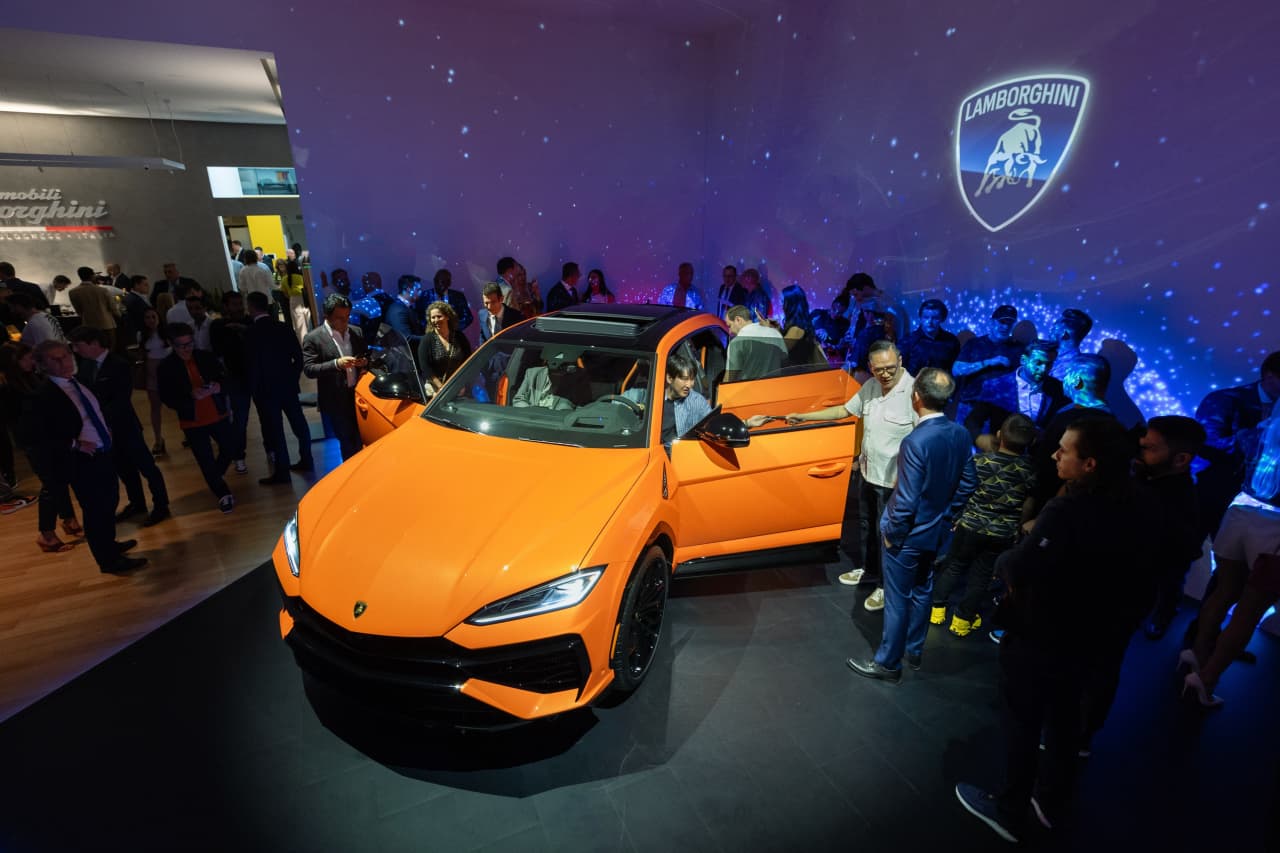
The marketplace has spoken and, at least for now, it’s showing preference for hybrids and plug-in hybrids (PHEVs) over battery electrics. That makes Toyota’s foot dragging on EVs (and full speed ahead on hybrids) look fairly wise, though the timeline along a bumpy road still gets us to full electrification by 2035.
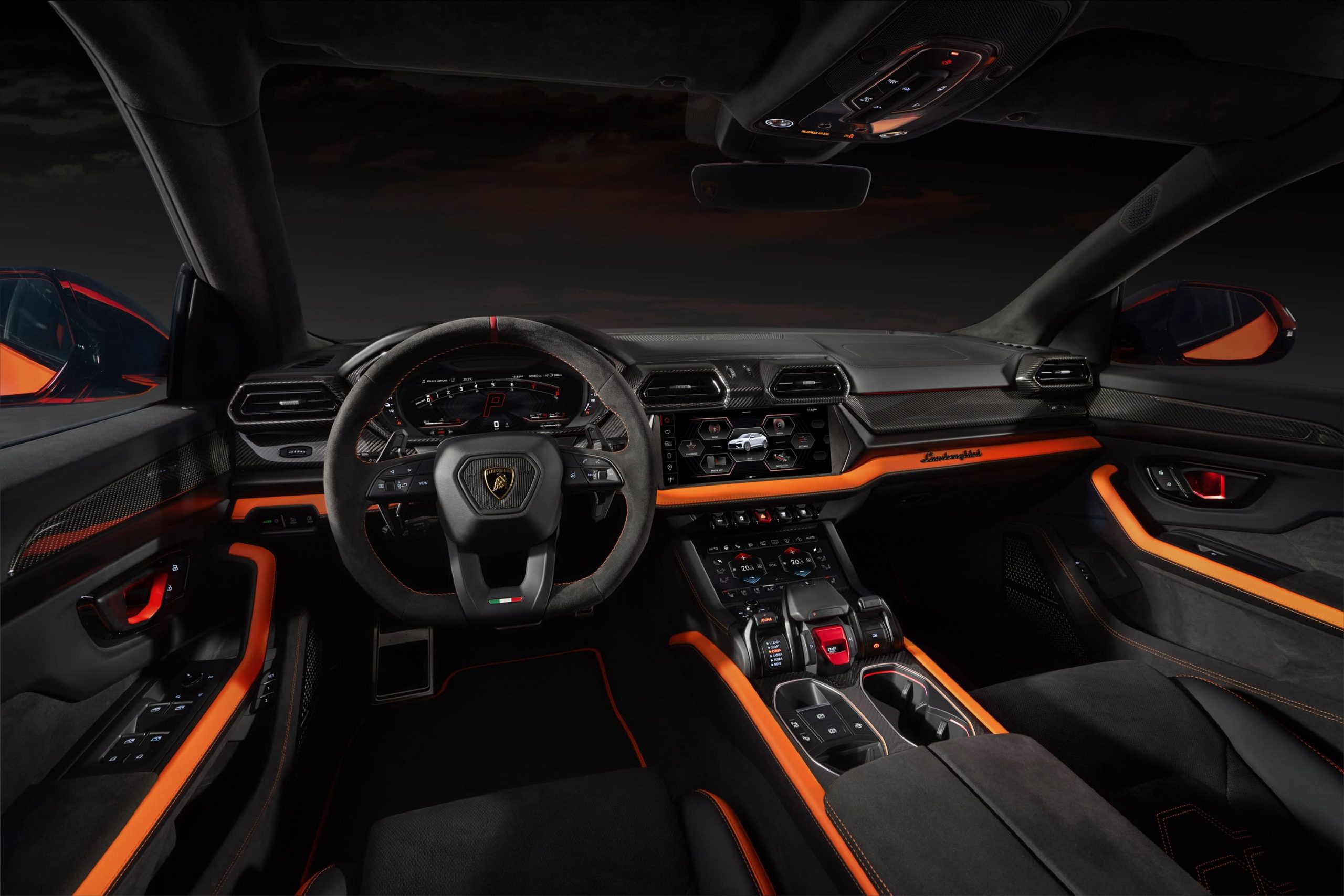
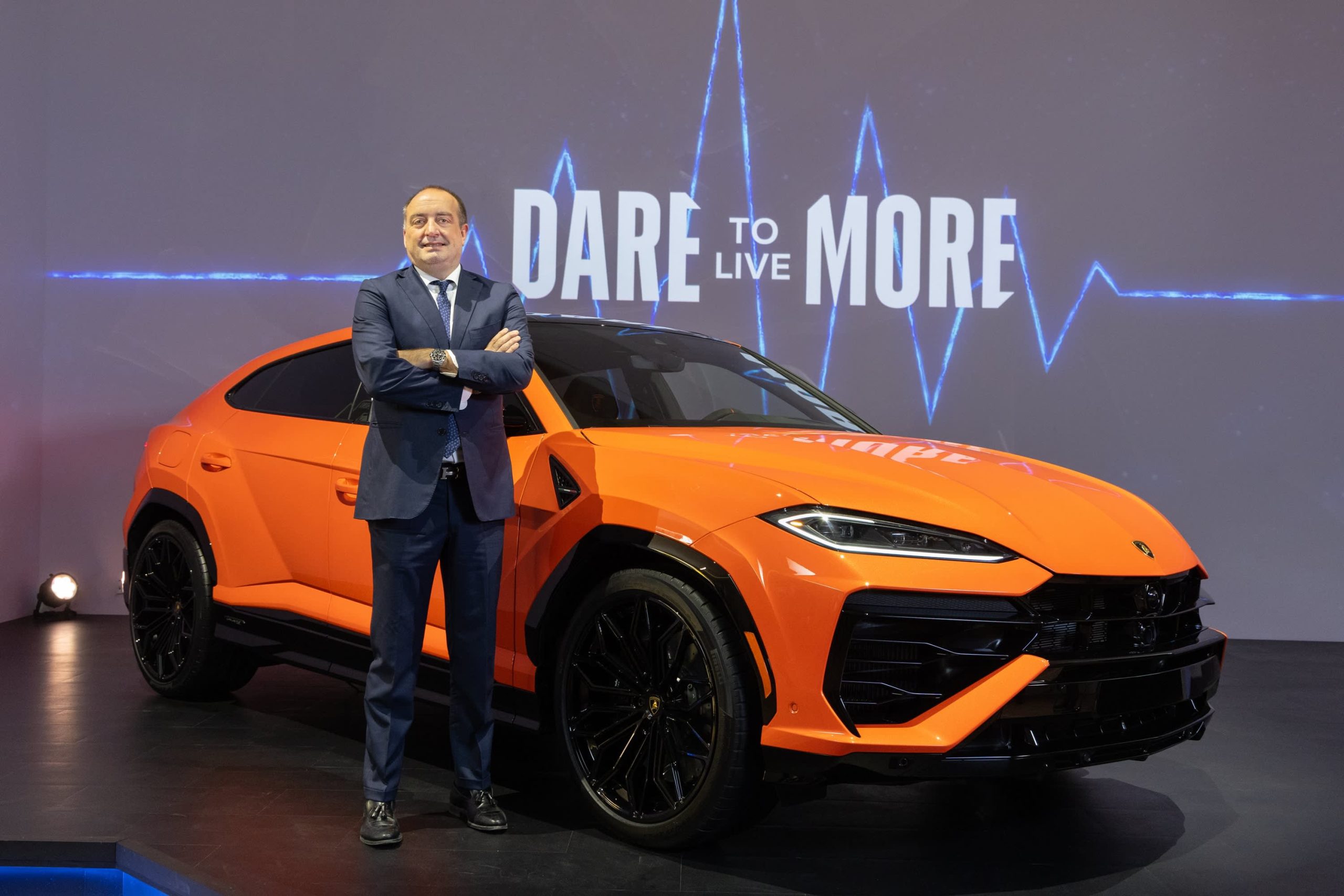
Italian supercar producer Lamborghini, in business since 1963, is also proceeding, incrementally, toward battery power. In an interview, Federico Foschini , Lamborghini’s chief global marketing and sales officer, talked about the new Urus SE plug-in hybrid the company showed at its lounge in New York on Monday.
Lamborghini
The Urus SE SUV will sell for US$258,000 in the U.S. (the company’s biggest market) when it goes on sale internationally in the first quarter of 2025, Foschini says.
“We’re using the contribution from the electric motor and battery to not only lower emissions but also to boost performance,” he says. “Next year, all three of our models [the others are the Revuelto, a PHEV from launch, and the continuation of the Huracán] will be available as PHEVs.”
The Euro-spec Urus SE will have a stated 37 miles of electric-only range, thanks to a 192-horsepower electric motor and a 25.9-kilowatt-hour battery, but that distance will probably be less in stricter U.S. federal testing. In electric mode, the SE can reach 81 miles per hour. With the 4-litre 620-horsepower twin-turbo V8 engine engaged, the picture is quite different. With 789 horsepower and 701 pound-feet of torque on tap, the SE—as big as it is—can reach 62 mph in 3.4 seconds and attain 193 mph. It’s marginally faster than the Urus S, but also slightly under the cutting-edge Urus Performante model. Lamborghini says the SE reduces emissions by 80% compared to a standard Urus.
Lamborghini’s Urus plans are a little complicated. The company’s order books are full through 2025, but after that it plans to ditch the S and Performante models and produce only the SE. That’s only for a year, however, because the all-electric Urus should arrive by 2029.
Lamborghini
Thanks to the electric motor, the Urus SE offers all-wheel drive. The motor is situated inside the eight-speed automatic transmission, and it acts as a booster for the V8 but it can also drive the wheels on its own. The electric torque-vectoring system distributes power to the wheels that need it for improved cornering. The Urus SE has six driving modes, with variations that give a total of 11 performance options. There are carbon ceramic brakes front and rear.
To distinguish it, the Urus SE gets a new “floating” hood design and a new grille, headlights with matrix LED technology and a new lighting signature, and a redesigned bumper. There are more than 100 bodywork styling options, and 47 interior color combinations, with four embroidery types. The rear liftgate has also been restyled, with lights that connect the tail light clusters. The rear diffuser was redesigned to give 35% more downforce (compared to the Urus S) and keep the car on the road.
The Urus represents about 60% of U.S. Lamborghini sales, Foschini says, and in the early years 80% of buyers were new to the brand. Now it’s down to 70%because, as Foschini says, some happy Urus owners have upgraded to the Performante model. Lamborghini sold 3,000 cars last year in the U.S., where it has 44 dealers. Global sales were 10,112, the first time the marque went into five figures.
The average Urus buyer is 45 years old, though it’s 10 years younger in China and 10 years older in Japan. Only 10% are women, though that percentage is increasing.
“The customer base is widening, thanks to the broad appeal of the Urus—it’s a very usable car,” Foschini says. “The new buyers are successful in business, appreciate the technology, the performance, the unconventional design, and the fun-to-drive nature of the Urus.”
Maserati has two SUVs in its lineup, the Levante and the smaller Grecale. But Foschini says Lamborghini has no such plans. “A smaller SUV is not consistent with the positioning of our brand,” he says. “It’s not what we need in our portfolio now.”
It’s unclear exactly when Lamborghini will become an all-battery-electric brand. Foschini says that the Italian automaker is working with Volkswagen Group partner Porsche on e-fuel, synthetic and renewably made gasoline that could presumably extend the brand’s internal-combustion identity. But now, e-fuel is very expensive to make as it relies on wind power and captured carbon dioxide.
During Monterey Car Week in 2023, Lamborghini showed the Lanzador , a 2+2 electric concept car with high ground clearance that is headed for production. “This is the right electric vehicle for us,” Foschini says. “And the production version will look better than the concept.” The Lanzador, Lamborghini’s fourth model, should arrive in 2028.
 Copyright 2020, Dow Jones & Company, Inc. All Rights Reserved Worldwide. LEARN MORE




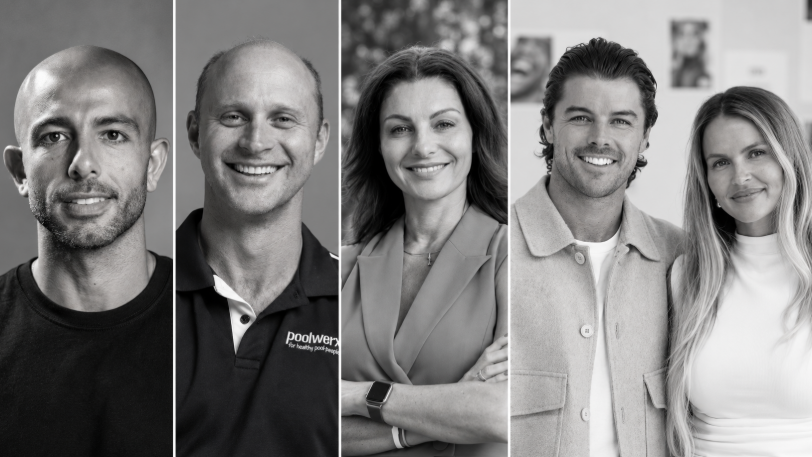
From making unpopular decisions to learning when to listen, leaders from five businesses reveal what nobody prepared them for — and how running a company has challenged their expectations.

Technology and semiconductor shares fell sharply as investors questioned the debt financing the AI infrastructure boom and confronted higher rates and Chinese competition.
Elon Musk is exploring a potential merger between Tesla and SpaceX, a deal that could reshape the future of AI, robotics, autonomous vehicles and space technology. With a combined valuation potentially reaching $3.5 trillion, the move could bring Musk’s vision of an interconnected technology ecosystem closer to reality, although a deal remains uncertain.
5 min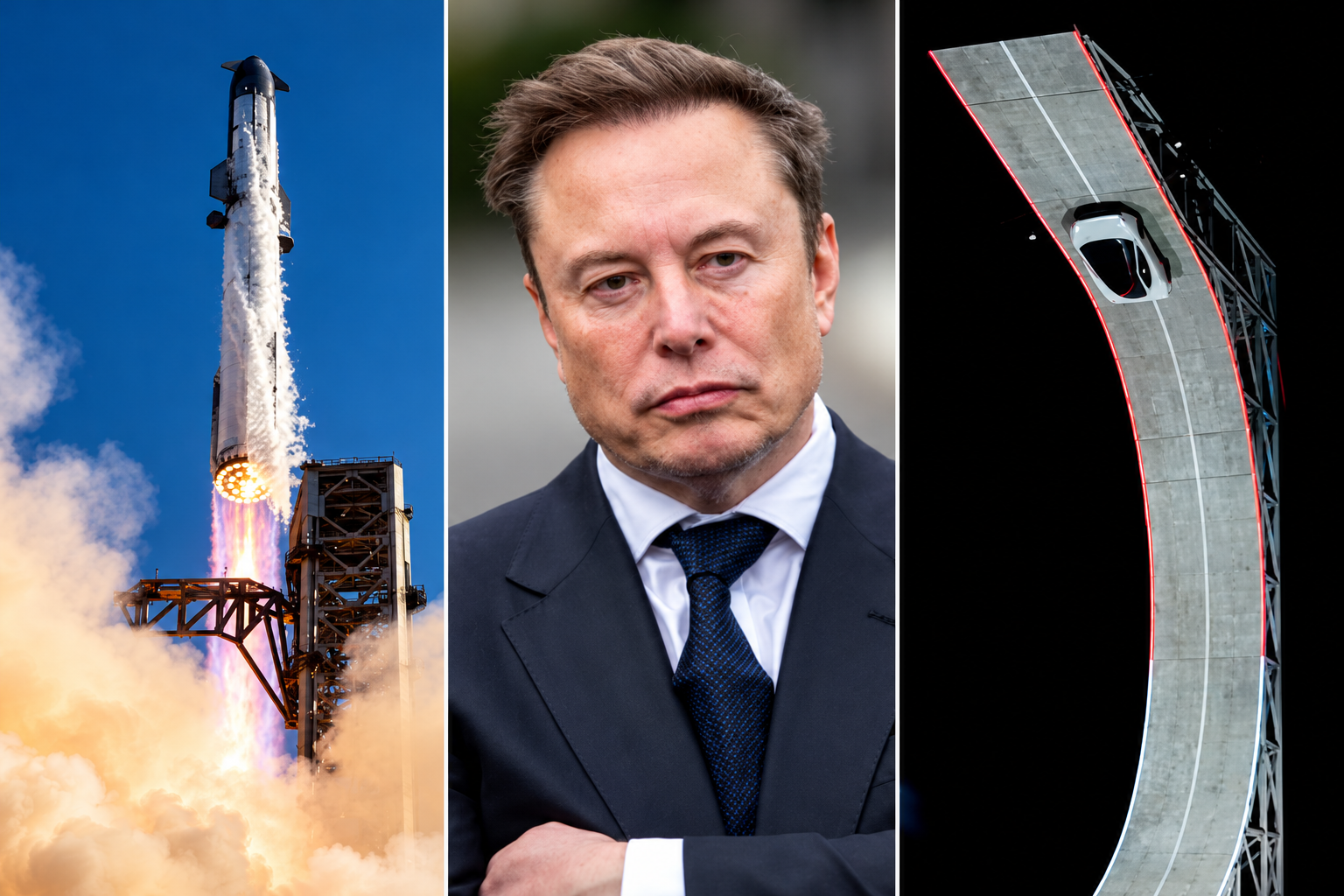
Elon Musk has engineered ties between Tesla TSLA 3.41%increase; up pointing triangle and SpaceX SPCX 7.79%increase; up pointing triangle that are hard to break, and now he wants to fuse them together permanently.
Musk has run both Tesla and SpaceX concurrently over the past two decades, using a schedule that dictated which days he spent focused on each business.
The companies have often shared resources and personnel, signaling their close ties. Last year, SpaceX looked into creating a spacesuit for Tesla’s humanoid robot Optimus, a person familiar with the matter said. Tesla last week showed off its new Roadster, a vehicle featuring SpaceX rocket thrusters that it hopes to soon bring to market.
And in recent months, Musk has repositioned both companies by expanding beyond their core operations toward a shared mission centered on artificial intelligence.
The world’s richest man on Tuesday signaled his interest in tying up SpaceX and Tesla, marking what would be the biggest corporate merger of all time. Because he serves as chief executive of SpaceX and Tesla, Musk said committees of independent directors at both companies are evaluating a possible deal, adding that a transaction might not come to fruition.
The committees will likely evaluate, with lawyers and bankers, how each company would fare in a potential deal and how a deal might best be structured. They then present their conclusions to their respective boards, who typically vote on whether to proceed.
“It’s an odd Kabuki dance where two groups of people are talking and I can’t be in the conversation,” Musk told SpaceX investors on Tuesday in response to an analyst’s question about a potential deal.
For Musk, the merger supports his vision of a world full of autonomous cars, humanoid robots and weekly rocket launches, as well as the data centers and satellites required to keep the whole thing running.
Some investors and analysts said they expect a transaction would be structured as an all-stock deal, with SpaceX potentially paying a modest premium for Tesla shares.
SpaceX, which has a market value of about $2 trillion, said it is seeing sharp growth in revenue across its businesses, which include operating data centers, launching rockets and operating satellite networks such as the internet service Starlink. Tesla is valued at about $1.5 trillion and is expanding its operations beyond its automotive and energy business. Shares in both companies traded higher following the news Tuesday.
Musk’s substantial ownership stakes in both companies, along with voting control at SpaceX, has enabled him to set the deal in motion. Analysts and investors said the deal will probably face regulatory scrutiny internationally, though some see Musk’s close relationship with the Trump administration as an asset to getting approval.
Blurred lines
The companies haven’t said which directors are on the special committees evaluating a potential deal. Several SpaceX and Tesla board members have either personal or business ties to Musk. And like Musk, venture capitalist Ira Ehrenpreis sits on both boards.
In a filing this week, Tesla outlined millions of dollars in business agreements with SpaceX and its subsidiaries last year, including $143 million in car sales to SpaceX, $3.3 million in advertising that it bought on the social-media platform X and $430 million in revenue from the sale of Megapack batteries for SpaceX’s data centers.
The companies also split the cost of resources including the use of Musk’s SpaceX jet and the bill for his personal security, which he runs through a private company.
Employees at both companies routinely move between companies to work on special projects, and some executives have dual roles, including Charles Kuehmann, vice president of materials engineering at both SpaceX and Tesla, and Ashok Elluswamy, the vice president of AI software at Tesla who runs a joint venture with SpaceX called Digital Optimus.
Over the years, Musk has launched new startups within his empire, including brain-implant company Neuralink, underground-tunnel developer the Boring Company and xAI, the AI startup that merged with SpaceX in February.
It is that AI business that Musk thinks can serve a market worth tens of trillions of dollars, justifying the need for a merger.
The business case goes like this: Tesla is developing robotaxis and robots, which it calls “physical AI.” SpaceX is working on the back end of physical AI: the data-center capacity and internet connection required for those robotaxis and robots to operate continuously.
“I don’t see what the value of Tesla is if it’s not merged with SpaceX,” said investment adviser Ross Gerber, a former Tesla bull turned critic invested in both companies. “If they don’t merge, the brains of everything that runs Tesla is owned by another company.”
On top of it all, both companies face constraints on the supply chains they need to make this world a reality, particularly when it comes to chips. To address this, Musk earlier this year announced a joint venture between Tesla, SpaceX and Intel to design and manufacture chips in Texas. “The most epic chip-building exercise by far,” he has said.
Musk at the wheel
For Musk, a merger would also solve two problems: demands on his attention and his lack of control at Tesla.
Tesla for years was Musk’s only public company, a status that came with greater scrutiny. There, Musk reports to a public board, as well as individual investors who make up around 30% of Tesla’s voting power, according to FactSet.
The question of Musk’s attention became a particular focus for investors and the board in recent years after he acquired Twitter in 2022 and launched xAI in 2023, and again in 2025 as he spent time in Washington, D.C., running the Department of Government Efficiency in the early months of President Trump’s second term.
As Tesla’s car business suffered in 2025, Musk threatened to take his AI ambitions outside the company if he wasn’t granted 25% voting control. Last November, Tesla shareholders approved a new pay package for Musk, which created a path for him to vastly expand his stake.
As of Sept. 30, Musk owned a roughly 20% stake in Tesla, according to the company’s proxy filing.
The SpaceX IPO gave Musk a different path. When SpaceX went public in June, the deal’s structure enabled him to have more than 80% voting power at the company—so much that he can’t be fired and decisions can’t be made without his support.
If SpaceX acquires Tesla, he will likely stay in control.

Micro-needling promises glow and firmness, but timing can make all the difference.

A bold new era for Australian luxury: MAISON de SABRÉ launches The Palais, a flagship handbag eight years in the making.