Love Patterns? Try This Design Trick to Pull Any Room Together
Decorating experts achieve cohesion by repeating a pattern—say, on the wallpaper and then on a chair cushion. But how much repetition is too much or not enough? Interior designers share their secrets.

 2 min
2 min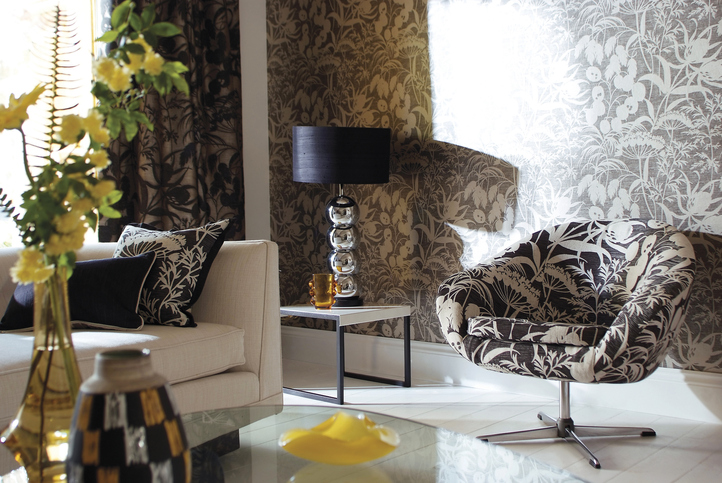
THE HUMAN BRAIN loves a good pattern. Evolutionarily speaking, we’re hard-wired to recognize repetitive shapes. They organize the world around us. From a design standpoint, patterns can also help our homes feel harmonic. Applying the same one to multiple elements in a room pulls your décor together. We asked design pros for some tips on nailing the technique.
The Appeal
The right motif in the right places brings order and structure to an interior scheme, said Barrie Benson. In the library of one Charlotte, N.C., home, the local designer used a tartan print in small doses as roman shades and the upholstery of a settee. “There was a lot going on—textures and patterns, books, oriental rugs. The plaid worked because it added straight lines and a kind of framework,” she said.
A bolder repetition of pattern across multiple surfaces can engender a sense of snugness. Elizabeth Hay, a designer who splits her time between Singapore and the U.K., clad the walls and a big sofa in a TV room in the same motif. “It creates an enveloping, cozy feel,” she said.
The Tips
Such pattern echoes work best when deployed in understated ways—on just seat covers and window shades, say—or taken intentionally over-the-top, explained Benson. “One more place would have been too much—unless I did the entire room in plaid,” she said of her limited use of tartan in the library. “You do it completely, or you pick two places.” Treatments that occupy the middle ground tend to look cloyingly matchy-matchy.
But beware: Heavy-handed repetition can skew old-fashioned if the pattern is too fussy or traditional, says Hay. “You used to see rooms with chintz on everything—the walls, the curtains, the bed, the bed skirt—with lots of ruffles and gathers,” she said. “That can feel a bit claustrophobic.”
“What works very well is what we call in French ‘décalé,’” said Paris designer Laura Gonzalez by way of pattern guidance. The translation: offbeat, like the unusual boho geometric she chose for the wall and sofa shown in the photo below.
The Caveats
Patterns are often available as both wallpaper and fabric, but the two renderings are likely printed at different mills, warned Benson. “Make sure you’re getting samples, because often the colors are a little off. They should be very, very close.”
Just as the brain is built for pattern recognition, it instantly detects disruptions. Take care with seaming and matching. The smallest offset can spoil allover patterning. “When you match the lines perfectly, it can look like a sofa is growing from the wall,” Gonzalez said. “There is an infinity illusion,” which can make even a tiny room seem much bigger.
While liberal use of bold patterns calls for courage, Hay cautions against the wishy-washy accent wall. “Your room will feel much busier with just one patterned wall, because it’s not balanced,” she said. If you paper the whole room and carry the pattern to the headboard or the curtains, “it’ll actually be softer on the eye.”
 Copyright 2020, Dow Jones & Company, Inc. All Rights Reserved Worldwide. LEARN MORE





From making unpopular decisions to learning when to listen, leaders from five businesses reveal what nobody prepared them for — and how running a company has challenged their expectations.

Technology and semiconductor shares fell sharply as investors questioned the debt financing the AI infrastructure boom and confronted higher rates and Chinese competition.
Mirvac’s 45-level Trielle has topped out at Yarra’s Edge, pairing riverfront apartments with wellness facilities, private dining and resident services.
3 min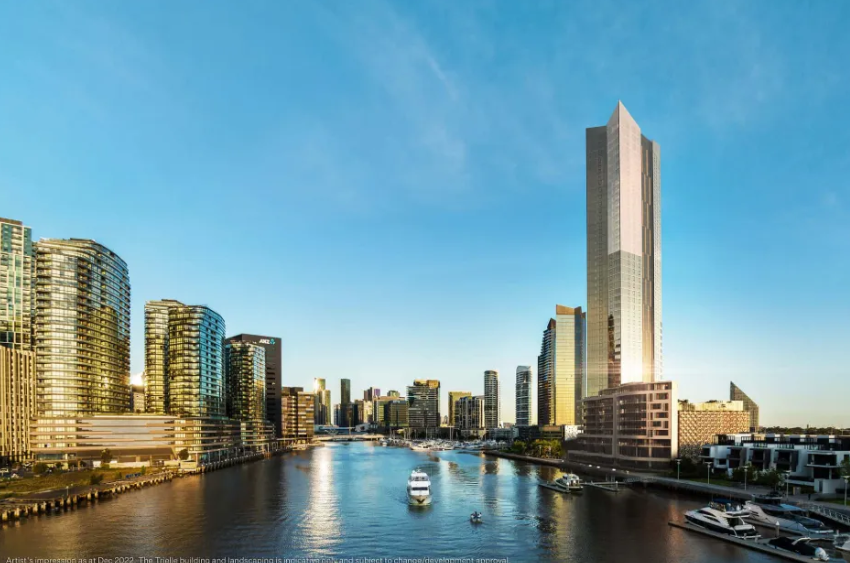
Mirvac has topped out Trielle at Melbourne’s Yarra’s Edge, with more than 70 per cent of the riverfront development sold and approximately 80 per cent of purchasers intending to make their apartment a home.
The figures, released on September 22, point to an owner-occupier audience for one of the precinct’s final residential towers. Mirvac began developing Yarra’s Edge in 2003, and its latest addition occupies one of the remaining absolute riverfront sites.
Mirvac CEO of Development Stuart Penklis said existing residents were among those moving up within the neighbourhood.
“Many purchasers already have a connection to Yarra’s Edge,” Mr Penklis said, describing buyers whose changing needs were encouraging an upgrade within the precinct.
“As one of the final residential towers within Yarra’s Edge, Trielle represents the culmination of more than two decades of creating one of Melbourne’s most established and sought-after waterfront communities,” Penklis said.
“Positioned on the Collins Street axis with absolute river frontage, Trielle offers residents a rare opportunity to enjoy sweeping views across the Yarra River, Melbourne skyline and Port Phillip Bay, while remaining seamlessly connected to the CBD. With Trielle now more than 70 per cent sold, we’re continuing to see strong demand from buyers seeking quality homes in established locations.”
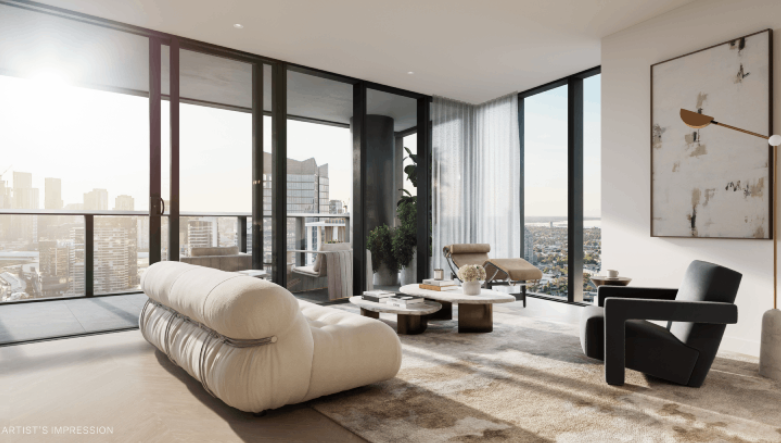
The developer also flagged a penthouse and sub-penthouse collection with larger layouts, premium finishes and broad outlooks. The planned wellness centrepiece, The Oasis, encompasses a 900-square-metre elevated urban rainforest.
Mirvac General Manager Residential Development Victoria Elysa Anderson said Trielle had resonated strongly with buyers seeking a rare lifestyle offering in Melbourne.
“Opportunities to secure a new luxury residence on a riverfront site of this calibre are incredibly rare, particularly within a community like Yarra’s Edge,” Anderson said.
“What makes Trielle unique is the combination of exceptional views, world-class residential facilities and the lifestyle that already exists around it. Residents are buying into a mature waterfront community with parks, promenades, dining, wellness and strong community connections already in place.”
The 45-level tower brings a substantial new presence to that waterfront. Its residential offering spans one-, two-, three- and four-bedroom apartments, with Signature, Prestige and Sub-Penthouse collections accommodating different household sizes. The north-facing position connects the apartments visually to the river and city beyond.
Seven storeys above the promenade, the planned Oasis combines planting and a running stream with a Scandinavian-inspired wellness club developed with spa specialist Naomi Gregory. Facilities include a 25-metre lap pool, hot magnesium pool, sauna, hydrotherapy, a gym, yoga and Pilates room, and treatment spaces.
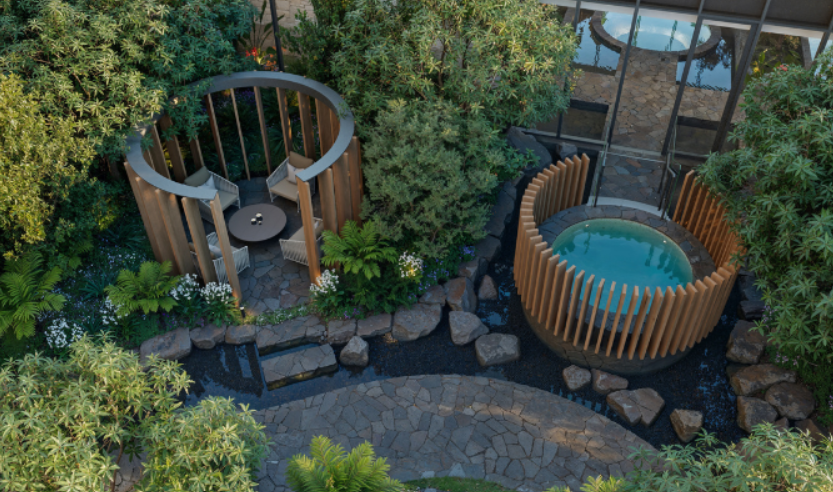
The amenity extends beyond exercise. Residents will have access to The Biblioteca library and workspaces, ground-floor work pods, and The Salone piano lounge. A private Chef’s Table dining room offers a setting for larger gatherings, while a cinema, games room and sports lounge broaden the entertaining options. Concierge services and a dog-wash area support everyday routines.
Trielle comprises a collection of one, two, three and four-bedroom residences. Reflecting strong demand from owner occupiers, approximately 80 per cent of purchasers to date intend to live in their homes, highlighting the project’s appeal to those seeking a long-term waterfront lifestyle.
Mirvac has recently delivered The Albertine, a premium apartment development on the edge of Melbourne’s CBD, and is nearing completion of Prince & Parade in Brunswick, further strengthening its portfolio of thoughtfully designed apartment communities in some of Melbourne’s most sought-after urban locations.
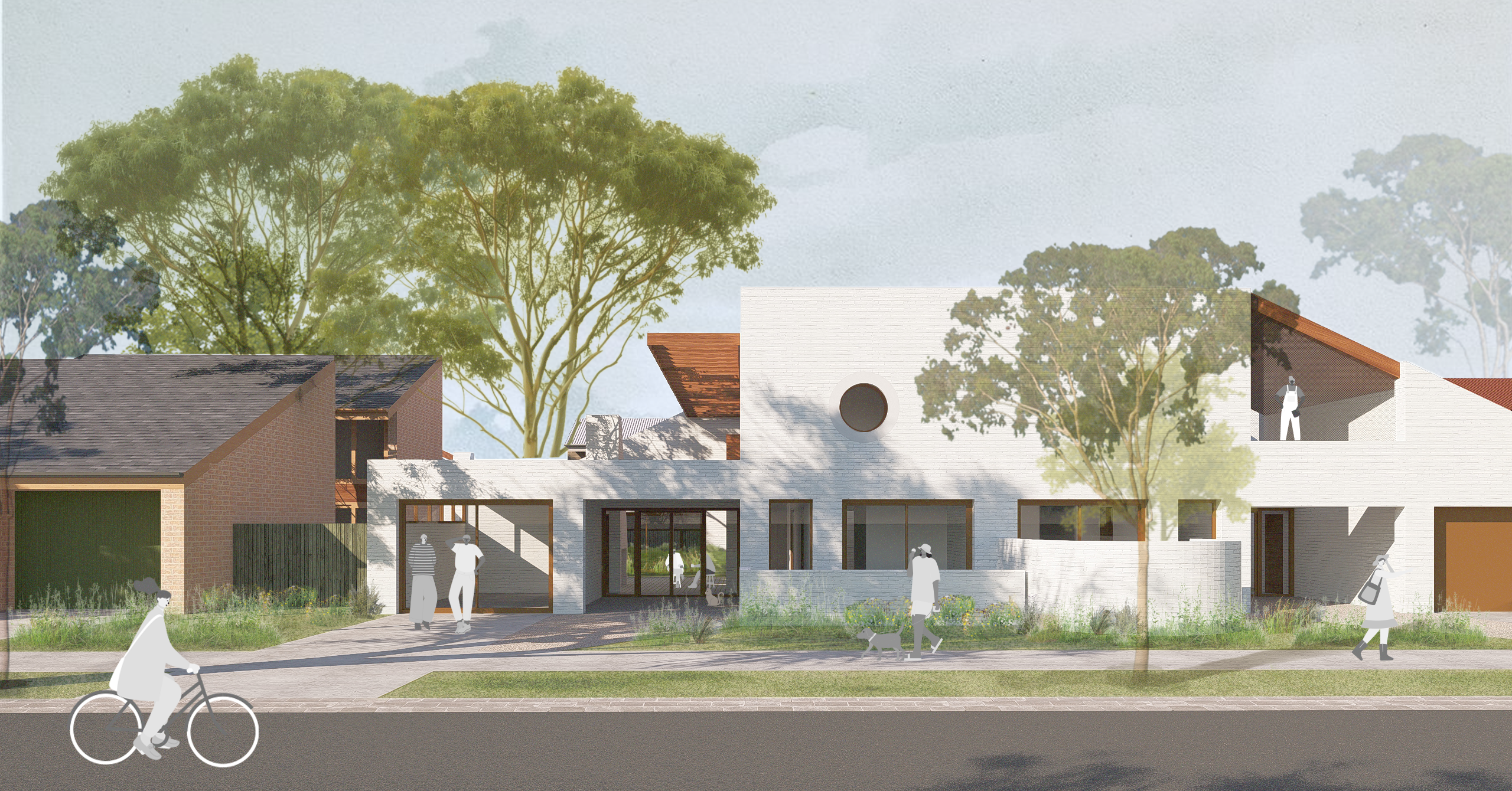
Brickworks has enlisted acclaimed architecture studio Kennedy Nolan to explore how homes could become more adaptable, energy-efficient and connected to community.

A resurgence in high-end travel to Egypt is being driven by museum openings, private river journeys and renewed long-term investment along the Nile.