Smart Saunas Are Picking Up Steam Around the U.S.
Ski-area homeowners in particular are installing high-tech versions that can be controlled by a smartphone app

 6 min
6 min
Skiing and saunas go together for Colorado’s Brian and Tucker Humphrey.
The Boulder-based private-equity manager and his wife, a retired banker, first got into the sauna habit in 2017, when they joined her family in setting up a sauna-equipped ski property in the Rocky Mountain resort of Crested Butte. Later, when they built a primary home on a 3/4-acre lot back in Boulder, the couple included a larger, more upscale, high-tech sauna.
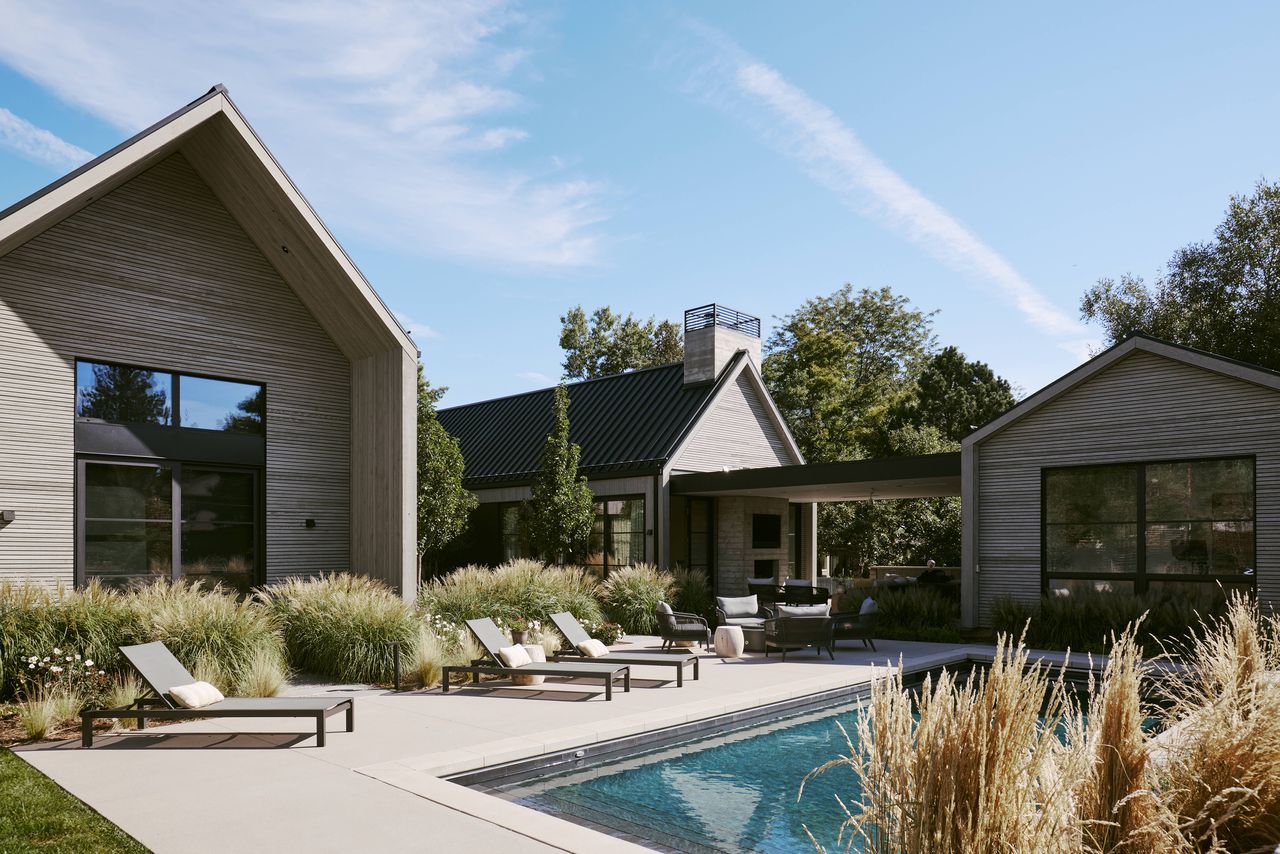
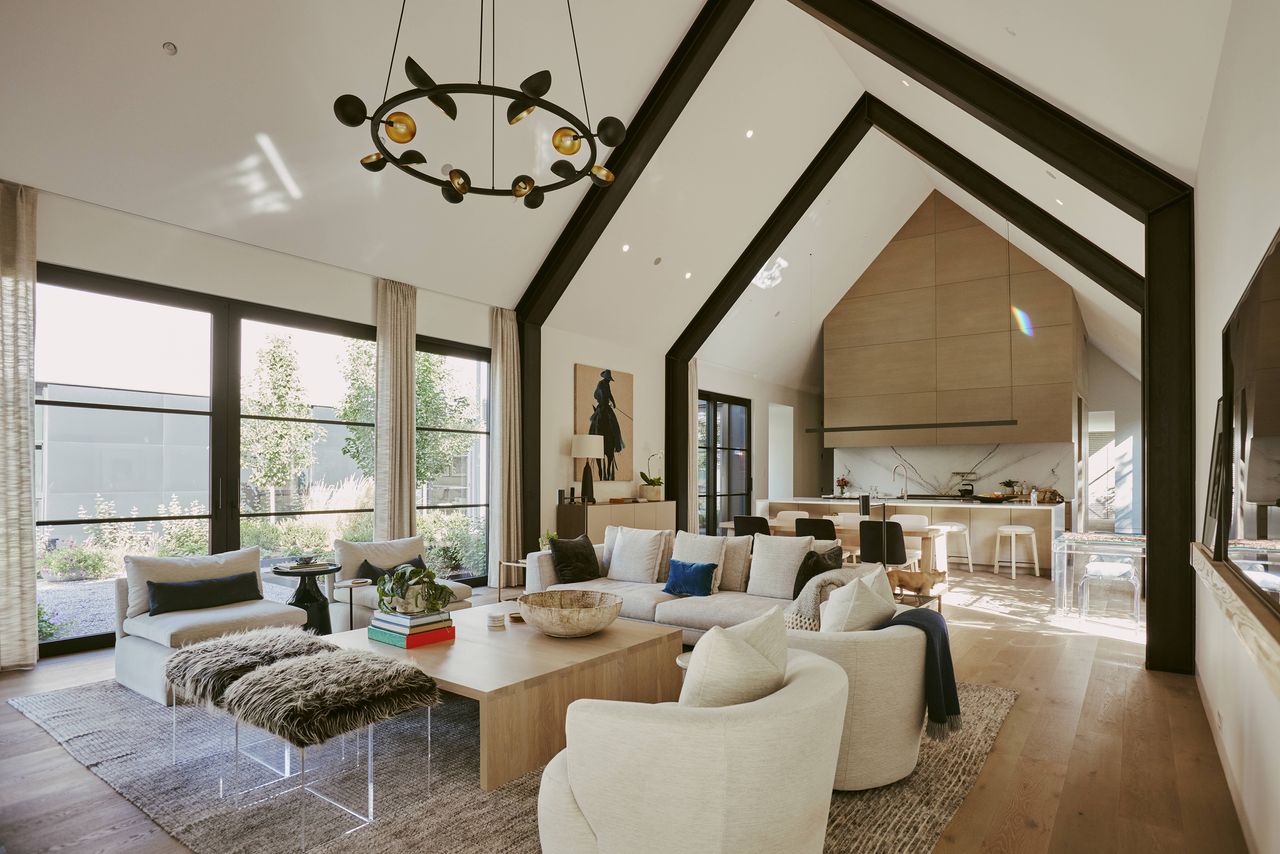
The two, working with Studio B, an architecture practice with offices in Boulder and Aspen, spent about $20,000 to create a glass-front sauna cabin. It had an app-ready heater from Finland’s Harvia and a digital control panel. Their architect, Mike Piché, placed the sauna cabin in a separate building, reachable from their new 7,000-square-foot home via a covered section of patio. The Humphreys moved into the finished home in late 2021.
“I like the clean look,” says Tucker Humphrey about the way the cabin fits in with the property’s Nordic feel. More important, she says the digital option is easier to use than the manual version she and her family have in Crested Butte.
Until the past few years, home sauna heaters were little more than variations on mid-20th-century electrical appliances. Sauna enthusiasts used manual controls to turn them on, then had to wait around until the sauna was the correct temperature.
Today, smart controls offer users remote on-and-off options and precise temperature measures, and can even track usage over time. In the wake of such technological advances, the U.S. is emerging as the world’s breakout home-sauna market.
Estonia’s Huum, the sauna maker that pioneered smart-control heaters a decade ago, now counts the U.S. as its top-selling market. Finland’s Harvia, which helped launch the first modern home-sauna heater in the 1950s, also places the U.S. among its leading markets. It introduced its smart saunas in 2021.
Saunum, another breakout Estonian brand, began to distribute in the U.S. this year. Its digitally controlled sauna heaters offer the added advantage of more efficiently circulating heat to prevent cooler pockets of air from forming near the bottom of sauna cabins.
Don Genders, founder and CEO of Design for Leisure, a U.K.-based wellness company with a strong presence in the U.S., says home-sauna sales in the States reached $100 million in 2022 and are expected to grow as people focus more on their well-being.
Back in the sauna homelands of Finland and Estonia, smart controls are catching on in the cities, where users have indoor saunas. But vacation homeowners still tend to prefer wood-burning stoves in separate structures when in rustic settings.
In the U.S., smart controls are making saunas particularly popular in ski resorts and mountain communities, says Wes McMahon, owner of Idaho’s Sun Valley Saunas, a local retailer specialising in online sales to Mountain West clientele.
“When you’re driving home, you can turn your sauna on with an app on your phone,” he says. This ability, he adds, has done away with hours spent starting the heater and then waiting for the temperature to rise.
Makers are also reimagining the design of sauna heaters, which hadn’t changed much in decades. Instead of grill-top boxes with some rocks to radiate heat, homeowners can now opt for something sculptural, like Huum’s rock-filled, wire-basket heater called Drop, or something futuristic, like the zigzagging spider legs of the Structure heater from EOS, a Germany-based luxury sauna maker. Or they can just go for something fun, like Huum’s toylike, rock-tower heater called Cliff.
Retired tech executive Alan Saldich, 59, and his wife, Nancy Saldich, 61, a professional gardener, had aesthetics in mind when they added a free-standing sauna to their 5-acre Idaho vacation property in late 2022. The couple, who divide their time between the San Francisco Bay Area and Sun Valley, worked on the sauna cabin themselves, careful to make it blend in with their four-bedroom log house and metal-roof guesthouse. They were mindful of the look of the heater that would go inside.
Alan Saldich says he likes his sculptural wire basket filled with smooth irregular rocks, compared with the plain rectangles of the typical heater. He chose a Huum Hive Mini for $1,410 and included a digital-control feature at a cost of about $875. The add-on smart features were a no-brainer, he says. The couple can turn on their sauna while skiing and save time on the once-mandatory heating-up phase.
Unusual sauna-heater design is a signature of EOS. The company is now distributing in the U.S., following its acquisition in 2020 by the Harvia Group, which is seen as the worldwide powerhouse in saunas. EOS offers spiky, sculptural heaters that can cost more than $10,000. Rainer Kunz, EOS’s chief executive, says the company is planning to add voice-control options to its digital package.
Finland and Estonia trace their Baltic sauna traditions back thousands of years, but it wasn’t until the 1920s that the dry-heat ritual really caught on elsewhere, says Lassi A. Liikkanen, a Helsinki author and sauna consultant. Liikkanen says the breakthrough came when Finnish champion runner Paavo Nurmi credited his gold medals at three consecutive Olympics to his sauna habit.
Some still stick with tradition. Jay Verkler, 59, a Silicon Valley executive who started his career at Oracle in the 1980s, built a simple $7,700 sauna with his five sons in 2020 for their family’s Sierra Nevada vacation home. Verkler and his wife, Tamiko Verkler, 57, have plenty of gadgets, especially in their automated primary home near Palo Alto, Calif. For their sauna, they opted for a basic Harvia wood-burning stove. The couple also keep alive one East European tradition: donning old-fashioned peaked hats during saunas to keep their heads cool.
The standard sauna session entails splashing water on hot sauna stones to create waves of heat. Fifteen or 20 minutes of sitting in temperatures of around 180 degrees is then followed by a rapid cool-down. The whole process is often repeated several times.
During Sun Valley’s long ski season, the Saldiches prefer to cool off by lying in the snow drifts on their property. Down in Boulder, the Humphreys tend to jump into their new outdoor pool.
Wyoming’s Zane Aukee, 33, an attorney based near the Jackson Hole ski area, designed his own sauna cabin. It matches the rustic home he and his wife, Alexandra Eastman, who works remotely with an opera company, bought in 2018. He estimates he spent about $12,000 on his new sauna package.
The free-standing, cedar-clad cabin has a low-tech look, reminiscent of the saunas still popular at Finnish summer houses. But Aukee, who is of Finnish descent, is all in on controlling his heater, installed earlier this year, with his smartphone. “I’m not a huge tech guy,” says Aukee, who uses his sauna up to five times a week. “But I love this combination of technology and sauna culture.”
Budgets for a luxury sauna system can reach six figures. Effe, an Italian company that sells designer sauna systems, offers an app-controlled BodyLove collection–combining a sauna, a steam room and a shower—that starts at $100,000. CEO Marco Borghetti says America is now the brand’s second market after Italy.
Klafs, the German luxury wellness company, is readying its American clientele for a soon-to-be-launched, limited-edition sauna system designed by Studio F.A. Porsche, affiliated with the carmaker. The Klafs S11 sauna, with atmospheric sound and lighting elements, and featuring a Japanese-paper backdrop, is set to have a starting price of $120,000.
Elsewhere on the luxury front, Sarah Broughton, an Aspen-based architect with an upscale residential practice, says her clients are placing more saunas in primary bathrooms, instead of in separate wellness areas. Her clients typically spend $10 million dollars or more on their Aspen homes, and about $20,000 on their bathroom saunas.
In New York’s Catskill Mountains, Brooklyn architect Chad Murphy and his wife, healthcare executive Kristin Ohnstad, both in their 40s, decided to include $15,000 for a ground-floor sauna in a $500,000 gut renovation. The couple paid $140,000 in May 2020 for a 5-acre property in Sullivan County, two hours north of New York City, that came with a derelict 1,800-square-foot home. The sauna is connected to the home’s new gym.
The snowy conditions of the area led to the decision to add the sauna. Murphy designed it himself after consulting online sources. Parents of a newborn, the couple opted for a conventional electric sauna heater, but they make use of contemporary technology with a digital baby monitor, allowing them to take a sauna while keeping an eye on their sleeping child.
 Copyright 2020, Dow Jones & Company, Inc. All Rights Reserved Worldwide. LEARN MORE





From making unpopular decisions to learning when to listen, leaders from five businesses reveal what nobody prepared them for — and how running a company has challenged their expectations.

Technology and semiconductor shares fell sharply as investors questioned the debt financing the AI infrastructure boom and confronted higher rates and Chinese competition.

Elon Musk is exploring a potential merger between Tesla and SpaceX, a deal that could reshape the future of AI, robotics, autonomous vehicles and space technology. With a combined valuation potentially reaching $3.5 trillion, the move could bring Musk’s vision of an interconnected technology ecosystem closer to reality, although a deal remains uncertain.
5 min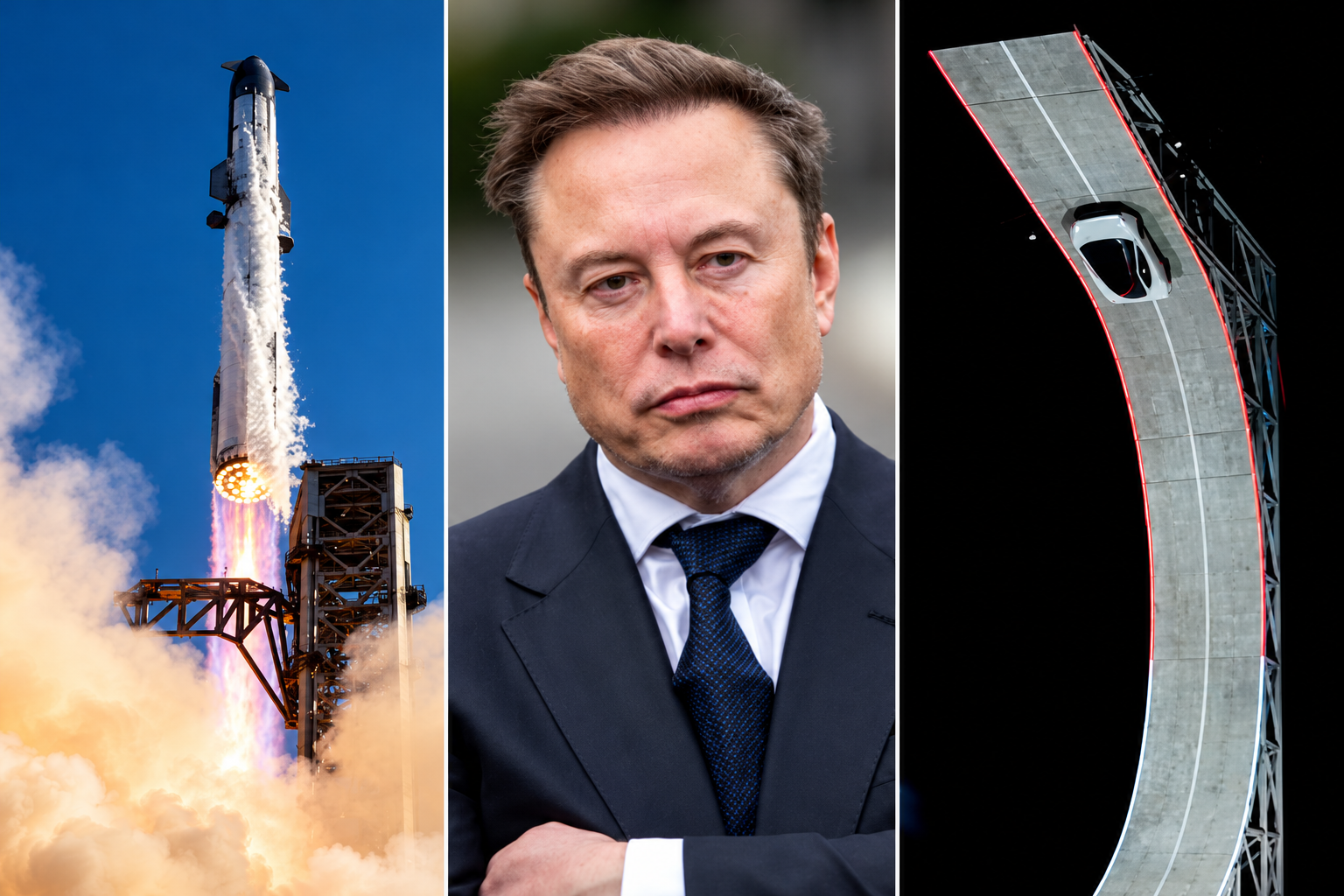
Elon Musk has engineered ties between Tesla TSLA 3.41%increase; up pointing triangle and SpaceX SPCX 7.79%increase; up pointing triangle that are hard to break, and now he wants to fuse them together permanently.
Musk has run both Tesla and SpaceX concurrently over the past two decades, using a schedule that dictated which days he spent focused on each business.
The companies have often shared resources and personnel, signaling their close ties. Last year, SpaceX looked into creating a spacesuit for Tesla’s humanoid robot Optimus, a person familiar with the matter said. Tesla last week showed off its new Roadster, a vehicle featuring SpaceX rocket thrusters that it hopes to soon bring to market.
And in recent months, Musk has repositioned both companies by expanding beyond their core operations toward a shared mission centered on artificial intelligence.
The world’s richest man on Tuesday signaled his interest in tying up SpaceX and Tesla, marking what would be the biggest corporate merger of all time. Because he serves as chief executive of SpaceX and Tesla, Musk said committees of independent directors at both companies are evaluating a possible deal, adding that a transaction might not come to fruition.
The committees will likely evaluate, with lawyers and bankers, how each company would fare in a potential deal and how a deal might best be structured. They then present their conclusions to their respective boards, who typically vote on whether to proceed.
“It’s an odd Kabuki dance where two groups of people are talking and I can’t be in the conversation,” Musk told SpaceX investors on Tuesday in response to an analyst’s question about a potential deal.
For Musk, the merger supports his vision of a world full of autonomous cars, humanoid robots and weekly rocket launches, as well as the data centers and satellites required to keep the whole thing running.
Some investors and analysts said they expect a transaction would be structured as an all-stock deal, with SpaceX potentially paying a modest premium for Tesla shares.
SpaceX, which has a market value of about $2 trillion, said it is seeing sharp growth in revenue across its businesses, which include operating data centers, launching rockets and operating satellite networks such as the internet service Starlink. Tesla is valued at about $1.5 trillion and is expanding its operations beyond its automotive and energy business. Shares in both companies traded higher following the news Tuesday.
Musk’s substantial ownership stakes in both companies, along with voting control at SpaceX, has enabled him to set the deal in motion. Analysts and investors said the deal will probably face regulatory scrutiny internationally, though some see Musk’s close relationship with the Trump administration as an asset to getting approval.
Blurred lines
The companies haven’t said which directors are on the special committees evaluating a potential deal. Several SpaceX and Tesla board members have either personal or business ties to Musk. And like Musk, venture capitalist Ira Ehrenpreis sits on both boards.
In a filing this week, Tesla outlined millions of dollars in business agreements with SpaceX and its subsidiaries last year, including $143 million in car sales to SpaceX, $3.3 million in advertising that it bought on the social-media platform X and $430 million in revenue from the sale of Megapack batteries for SpaceX’s data centers.
The companies also split the cost of resources including the use of Musk’s SpaceX jet and the bill for his personal security, which he runs through a private company.
Employees at both companies routinely move between companies to work on special projects, and some executives have dual roles, including Charles Kuehmann, vice president of materials engineering at both SpaceX and Tesla, and Ashok Elluswamy, the vice president of AI software at Tesla who runs a joint venture with SpaceX called Digital Optimus.
Over the years, Musk has launched new startups within his empire, including brain-implant company Neuralink, underground-tunnel developer the Boring Company and xAI, the AI startup that merged with SpaceX in February.
It is that AI business that Musk thinks can serve a market worth tens of trillions of dollars, justifying the need for a merger.
The business case goes like this: Tesla is developing robotaxis and robots, which it calls “physical AI.” SpaceX is working on the back end of physical AI: the data-center capacity and internet connection required for those robotaxis and robots to operate continuously.
“I don’t see what the value of Tesla is if it’s not merged with SpaceX,” said investment adviser Ross Gerber, a former Tesla bull turned critic invested in both companies. “If they don’t merge, the brains of everything that runs Tesla is owned by another company.”
On top of it all, both companies face constraints on the supply chains they need to make this world a reality, particularly when it comes to chips. To address this, Musk earlier this year announced a joint venture between Tesla, SpaceX and Intel to design and manufacture chips in Texas. “The most epic chip-building exercise by far,” he has said.
Musk at the wheel
For Musk, a merger would also solve two problems: demands on his attention and his lack of control at Tesla.
Tesla for years was Musk’s only public company, a status that came with greater scrutiny. There, Musk reports to a public board, as well as individual investors who make up around 30% of Tesla’s voting power, according to FactSet.
The question of Musk’s attention became a particular focus for investors and the board in recent years after he acquired Twitter in 2022 and launched xAI in 2023, and again in 2025 as he spent time in Washington, D.C., running the Department of Government Efficiency in the early months of President Trump’s second term.
As Tesla’s car business suffered in 2025, Musk threatened to take his AI ambitions outside the company if he wasn’t granted 25% voting control. Last November, Tesla shareholders approved a new pay package for Musk, which created a path for him to vastly expand his stake.
As of Sept. 30, Musk owned a roughly 20% stake in Tesla, according to the company’s proxy filing.
The SpaceX IPO gave Musk a different path. When SpaceX went public in June, the deal’s structure enabled him to have more than 80% voting power at the company—so much that he can’t be fired and decisions can’t be made without his support.
If SpaceX acquires Tesla, he will likely stay in control.

A thoughtful timber-led renovation in Byron Bay has reimagined an existing house as a warm, resort-style family sanctuary grounded in natural materials.

Pure Amazon has begun journeys deep into Peru’s Pacaya-Samiria National Reserve, combining contemporary design, Indigenous craftsmanship and intimate wildlife encounters in one of the richest ecosystems on Earth.