

The best (and worst) performing regional areas for property around Australia
While home values and rents have reached record highs across the regions, recovery has been slower compared with city property markets
 4 min
Home values and rents continued to rise across most of Australia’s 50 largest regional markets over the past three months, with median prices and weekly rents at record levels in many areas. Dwelling values across regional Australia as a whole rose by 2.1 percent over the three months to April, according to CoreLogic’s latest quarterly regional market update. This was the fastest rate of growth in nearly two years and outpaced the capital cities, which rose by 1.7 percent.
“After falling 5.8 percent between May 2022 and January 2023, regional home values have seen a slower recovery compared to capital city values but have now regained the losses from the downturn to reach a new record high,” said CoreLogic economist, Kaytlin Ezzy. Many regional markets experienced runaway price growth during the pandemic as thousands of people left the cities. Many of the markets that experienced the greatest growth went on to experience the largest corrections.
While regional values and rents overall are at a record high, only 19 of the 50 regions analysed have returned or surpassed their record medians at this point in the recovery. The best performing areas were mostly in Western Australia and Queensland, while the worst performers were on the NSW coast and southern highlands, and in Victoria. In terms of weekly rents, 37 of the 50 regions are at record highs and 47 recorded increases in rents over the past three months.
“Housing affordability has continued to deteriorate through the start of 2024 for tenants and prospective home buyers alike. The outlook for regional housing markets will heavily depend on demographic trends, housing supply, localised economic drivers and the outlook for interest rates,” Ms Ezzy said.
Here is a summary of 10 regional markets, incorporating some of the strongest and weakest areas.
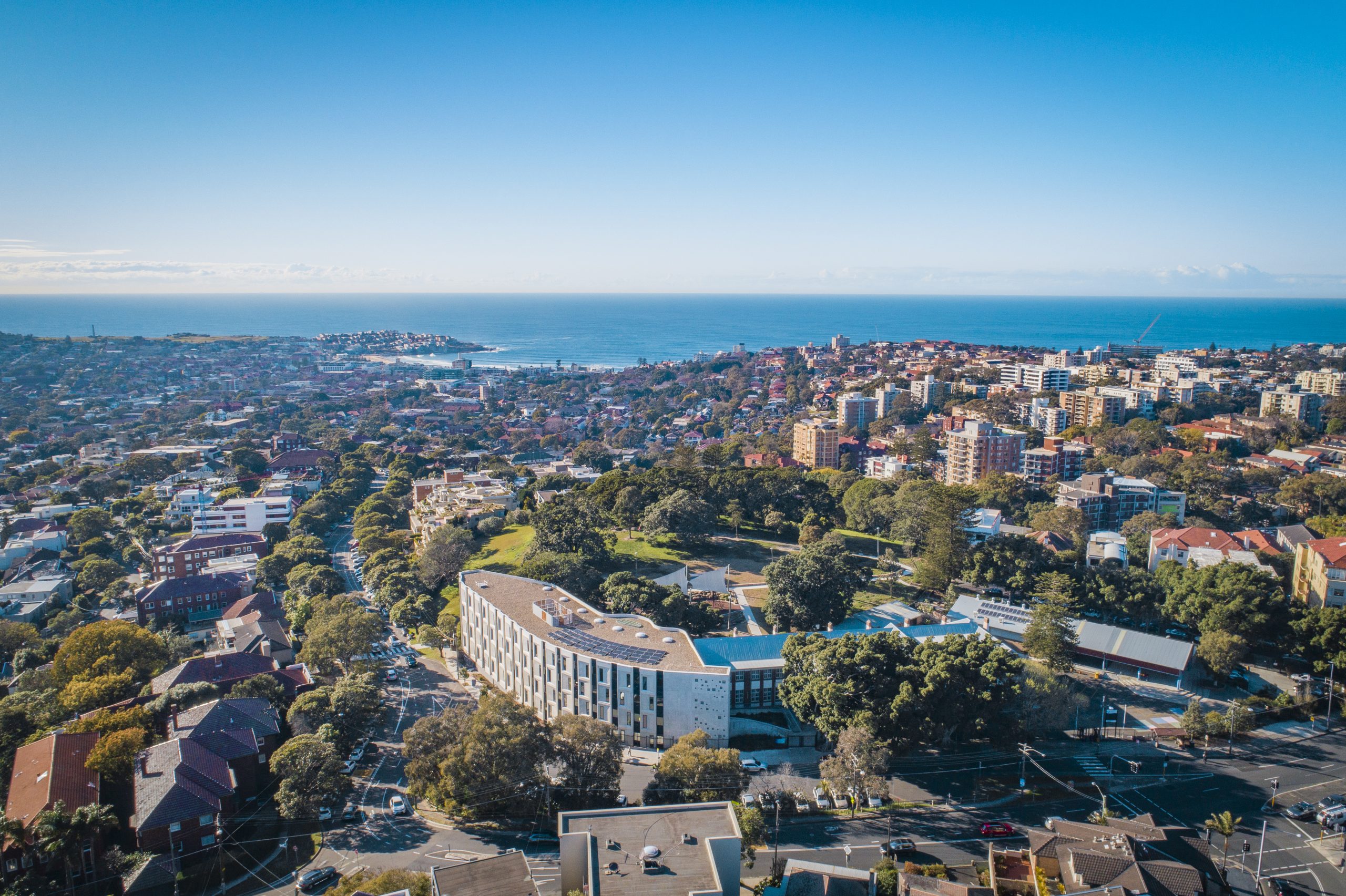
Batemans Bay, NSW
The south coast town recorded the highest increase in weekly rents over the quarter. Rents rose 6 percent to a median $570 per week. Home values rose 0.4 percent over the quarter to $743,712. Vendors are being forced to discount their original selling prices in Batemans Bay more than any other regional area. The average rate of discounting is 6.5 percent. Over the past five years, home values have risen 47.4 percent and rents have increased by 34.8 percent.
Ballina, NSW
Home values remain 15.9 percent below their April 2022 peak, which is the largest decline among the 50 regional markets at present. The median home value rose 1.1 percent over the quarter to $957,767. Weekly rents increased by 1.7 percent to a median $740 per week. Over the past five years, the median home price has soared 53.9 percent and weekly rents have lifted 35.5 percent.
Ballarat, VIC
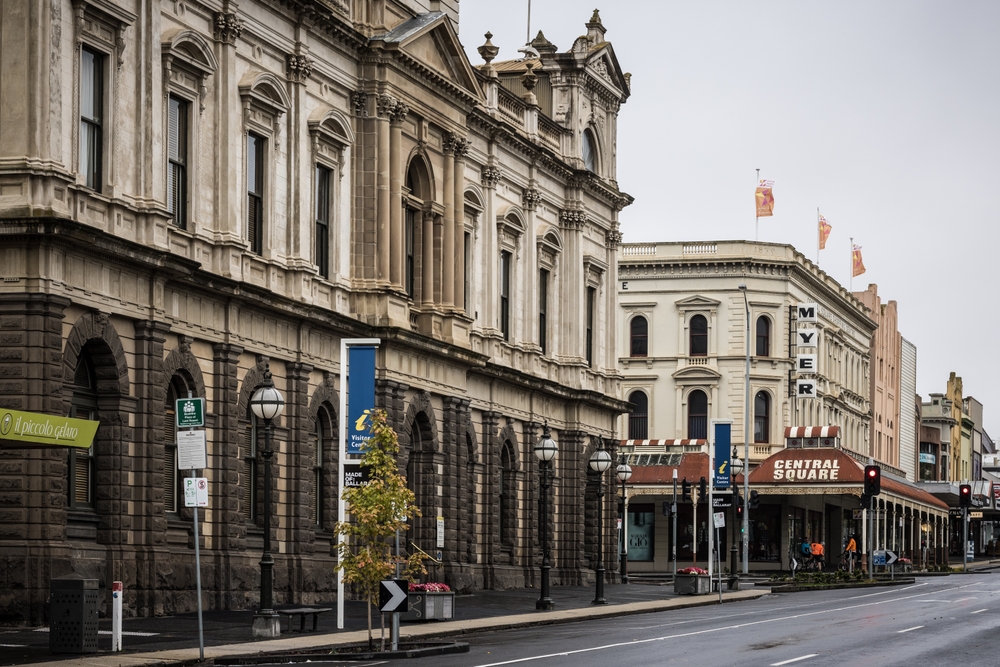
Ballarat experienced the largest decline in home values over the three months to April. The median home price fell 2 percent to $541,815. Weekly rents increased by 0.4 percent to a median $425 per week. Over the past five years, the median home price has increased 30.9 percent and weekly rents have risen 22.3 percent.
Shepparton – Mooroopna, VIC
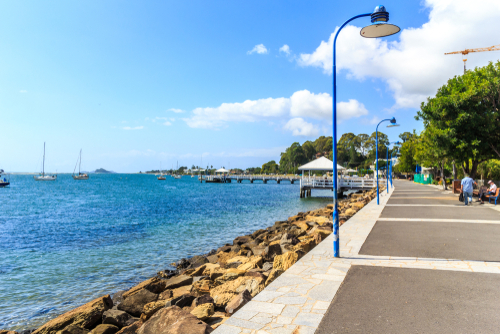
Home values rose 1.3 percent over the quarter to $456,331. Weekly rents increased by 1.2 percent to a median $472 per week. Over the past five years, the median home price has lifted 49.5 percent and weekly rents have accelerated 39 percent.
Geraldton, WA
Geraldton recorded the highest quarterly growth in home values of all 50 regions, up 8.8 percent to $394,251. Weekly rents increased by 3.6 percent to a median $475 per week. The rental yield is among the highest of the 50 regions at 6.2 percent. Over the past five years, the median home price has risen 61.4 percent and weekly rents have increased 54.6 percent.
Bunbury, WA
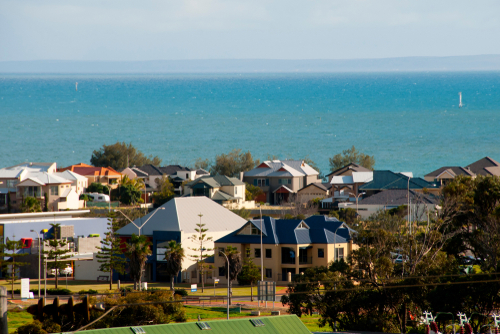
Bunbury recorded the fastest average selling time over the quarter at 14 days. It also had the second highest growth in weekly rents at 4.7% to a median $627 per week. Rents have been rising strongly for an extended period, with Bunbury recording the largest annual rise in rents at 16.4%. Home values rose 6.4 percent over the quarter to $576,979. Over the past five years, the median home price has leapt 68.3 percent and weekly rents have increased by 65.3 percent.
Busselton, WA
Busselton had the second-highest quarterly growth in home values of all 50 regions, up 7.7 percent to a median $812,050. It also recorded the second fastest selling times of the 50 regions at an average 16 days. Weekly rents increased by 2.8 percent to a median $723 per week. Over the past five years, the median home price has leapt 68 percent and weekly rents have soared 60.3 percent.
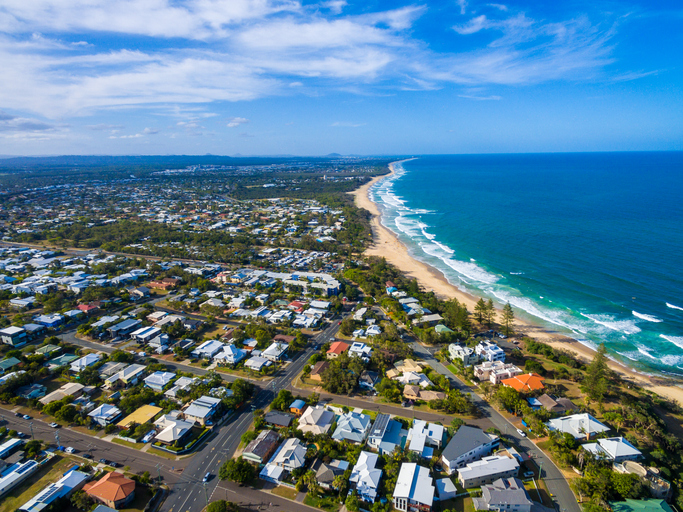
Sunshine Coast, QLD
Home values rose 3.2 percent over the quarter to $1,019,013. Weekly rents increased by 4.4 percent to a median $766 per week. Over the past five years, the median home price has grown strongly by 69.1 percent and weekly rents have lifted 46.8 percent.
Rockhampton, QLD
Rockhampton is a very affordable market but strong demand amid high interest rates is seeing home values lift at a rapid rate. Home values rose 5.1 percent over the quarter to a median $442,962. Weekly rents rose by 2.4 percent to a median $498 per week. Over the past five years, the median home price has skyrocketed 60.1 percent and weekly rents have charged 48 percent higher.
Launceston, TAS
Home values in Launceston rose 3.6 percent over the quarter to $534,227. Weekly rents increased by 2 percent to a median $491 per week. Over the past five years, the median home price has risen 56.7 percent and weekly rents have accelerated 33.5 percent.
From making unpopular decisions to learning when to listen, leaders from five businesses reveal what nobody prepared them for — and how running a company has challenged their expectations.

Technology and semiconductor shares fell sharply as investors questioned the debt financing the AI infrastructure boom and confronted higher rates and Chinese competition.

Elon Musk is exploring a potential merger between Tesla and SpaceX, a deal that could reshape the future of AI, robotics, autonomous vehicles and space technology. With a combined valuation potentially reaching $3.5 trillion, the move could bring Musk’s vision of an interconnected technology ecosystem closer to reality, although a deal remains uncertain.
5 min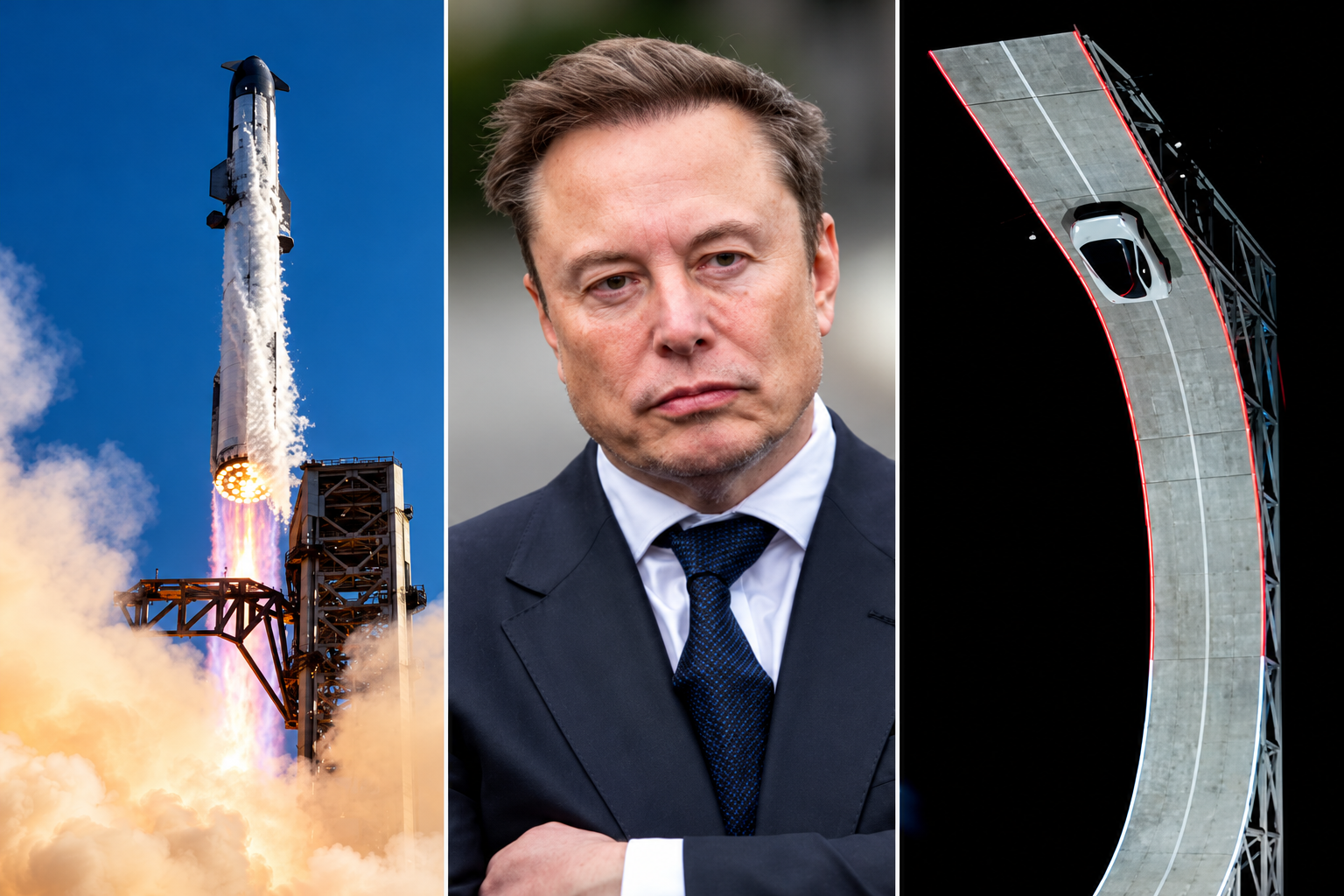
Elon Musk has engineered ties between Tesla TSLA 3.41%increase; up pointing triangle and SpaceX SPCX 7.79%increase; up pointing triangle that are hard to break, and now he wants to fuse them together permanently.
Musk has run both Tesla and SpaceX concurrently over the past two decades, using a schedule that dictated which days he spent focused on each business.
The companies have often shared resources and personnel, signaling their close ties. Last year, SpaceX looked into creating a spacesuit for Tesla’s humanoid robot Optimus, a person familiar with the matter said. Tesla last week showed off its new Roadster, a vehicle featuring SpaceX rocket thrusters that it hopes to soon bring to market.
And in recent months, Musk has repositioned both companies by expanding beyond their core operations toward a shared mission centered on artificial intelligence.
The world’s richest man on Tuesday signaled his interest in tying up SpaceX and Tesla, marking what would be the biggest corporate merger of all time. Because he serves as chief executive of SpaceX and Tesla, Musk said committees of independent directors at both companies are evaluating a possible deal, adding that a transaction might not come to fruition.
The committees will likely evaluate, with lawyers and bankers, how each company would fare in a potential deal and how a deal might best be structured. They then present their conclusions to their respective boards, who typically vote on whether to proceed.
“It’s an odd Kabuki dance where two groups of people are talking and I can’t be in the conversation,” Musk told SpaceX investors on Tuesday in response to an analyst’s question about a potential deal.
For Musk, the merger supports his vision of a world full of autonomous cars, humanoid robots and weekly rocket launches, as well as the data centers and satellites required to keep the whole thing running.
Some investors and analysts said they expect a transaction would be structured as an all-stock deal, with SpaceX potentially paying a modest premium for Tesla shares.
SpaceX, which has a market value of about $2 trillion, said it is seeing sharp growth in revenue across its businesses, which include operating data centers, launching rockets and operating satellite networks such as the internet service Starlink. Tesla is valued at about $1.5 trillion and is expanding its operations beyond its automotive and energy business. Shares in both companies traded higher following the news Tuesday.
Musk’s substantial ownership stakes in both companies, along with voting control at SpaceX, has enabled him to set the deal in motion. Analysts and investors said the deal will probably face regulatory scrutiny internationally, though some see Musk’s close relationship with the Trump administration as an asset to getting approval.
Blurred lines
The companies haven’t said which directors are on the special committees evaluating a potential deal. Several SpaceX and Tesla board members have either personal or business ties to Musk. And like Musk, venture capitalist Ira Ehrenpreis sits on both boards.
In a filing this week, Tesla outlined millions of dollars in business agreements with SpaceX and its subsidiaries last year, including $143 million in car sales to SpaceX, $3.3 million in advertising that it bought on the social-media platform X and $430 million in revenue from the sale of Megapack batteries for SpaceX’s data centers.
The companies also split the cost of resources including the use of Musk’s SpaceX jet and the bill for his personal security, which he runs through a private company.
Employees at both companies routinely move between companies to work on special projects, and some executives have dual roles, including Charles Kuehmann, vice president of materials engineering at both SpaceX and Tesla, and Ashok Elluswamy, the vice president of AI software at Tesla who runs a joint venture with SpaceX called Digital Optimus.
Over the years, Musk has launched new startups within his empire, including brain-implant company Neuralink, underground-tunnel developer the Boring Company and xAI, the AI startup that merged with SpaceX in February.
It is that AI business that Musk thinks can serve a market worth tens of trillions of dollars, justifying the need for a merger.
The business case goes like this: Tesla is developing robotaxis and robots, which it calls “physical AI.” SpaceX is working on the back end of physical AI: the data-center capacity and internet connection required for those robotaxis and robots to operate continuously.
“I don’t see what the value of Tesla is if it’s not merged with SpaceX,” said investment adviser Ross Gerber, a former Tesla bull turned critic invested in both companies. “If they don’t merge, the brains of everything that runs Tesla is owned by another company.”
On top of it all, both companies face constraints on the supply chains they need to make this world a reality, particularly when it comes to chips. To address this, Musk earlier this year announced a joint venture between Tesla, SpaceX and Intel to design and manufacture chips in Texas. “The most epic chip-building exercise by far,” he has said.
Musk at the wheel
For Musk, a merger would also solve two problems: demands on his attention and his lack of control at Tesla.
Tesla for years was Musk’s only public company, a status that came with greater scrutiny. There, Musk reports to a public board, as well as individual investors who make up around 30% of Tesla’s voting power, according to FactSet.
The question of Musk’s attention became a particular focus for investors and the board in recent years after he acquired Twitter in 2022 and launched xAI in 2023, and again in 2025 as he spent time in Washington, D.C., running the Department of Government Efficiency in the early months of President Trump’s second term.
As Tesla’s car business suffered in 2025, Musk threatened to take his AI ambitions outside the company if he wasn’t granted 25% voting control. Last November, Tesla shareholders approved a new pay package for Musk, which created a path for him to vastly expand his stake.
As of Sept. 30, Musk owned a roughly 20% stake in Tesla, according to the company’s proxy filing.
The SpaceX IPO gave Musk a different path. When SpaceX went public in June, the deal’s structure enabled him to have more than 80% voting power at the company—so much that he can’t be fired and decisions can’t be made without his support.
If SpaceX acquires Tesla, he will likely stay in control.

Two coming 2027 models – the first of the “Neue Klasse” cars coming to the U.S. early next year – have been revealed.

Travellers are swapping traditional sightseeing for immersive experiences, with Africa emerging as a must-visit destination.