The Super Rich Have Turned the Tiny Florida Town of Manalapan Into the Next Palm Beach
Can its real-estate market continue to rise amid stock-market turmoil?

 7 min
7 min


MANALAPAN, FLA.— The Deal-Closer. That’s what real-estate agent Jack Elkins jokingly calls the Hinckley picnic boat he docks on the Intracoastal Waterway in the Florida community of Manalapan.
From the road, many of Manalapan’s mansions are shrouded by plantings and foliage, but they are clearly visible from the water, Elkins explained. A boat ride is often the best way to show properties to the wealthy buyers now flocking to the tiny town.
On a recent afternoon, Elkins cruised down the Intracoastal in the The Deal-Closer, passing mansion after mansion, most with their own docks. “When I was a little kid, almost all of this was jungle,” said Elkins, 46, who spent much of his childhood in the area. “There were foxes and parrots and all these wild animals.”
Manalapan, a roughly 2.4-square-mile town with a population of about 400, is just south of glitzier Palm Beach.
While Manalapan has long drawn moneyed residents such as the singer Billy Joel, it has historically lacked the prestige—and price tags—of Palm Beach. That has changed dramatically over the past five years, however, thanks to a series of major home sales.
In 2022, for example, Oracle billionaire Larry Ellison paid $173 million for a historic Manalapan estate. And David MacNeil, the founder of the automotive-accessories manufacturer WeatherTech, has spent a combined $94 million over the past year on a pair of neighboring sites, with plans to build a megamansion there.
“People like Larry Ellison and David MacNeil, these individuals can afford to buy real estate anywhere in the world,” said local real-estate agent Nick Malinosky of Douglas Elliman . “Manalapan is not a second choice for them. It’s their first choice.”
On South Ocean Boulevard, Manalapan’s most affluent corridor, about 21 homes have traded for more than $20 million each since 2020. At least six have sold for $40 million or more, up from only one in that price range during the previous five years.
In 2021, eBay billionaire Jeffrey Skoll bought an ocean-to-Intracoastal estate for $89.93 million, while Joel’s longtime home sold last year for $42.6 million.
Now, however, it is unclear whether Manalapan’s hot streak can continue. Like luxury markets across the country, the town is contending with stock-market turmoil and the fallout from President Trump’s tariffs.
Like many Manalapan residents, local developer Stewart Satter, who is listing a yet-to-be-built spec home for $285 million, is a Trump supporter. During the 2024 election, Satter flew a giant Trump flag above the site.
But tariffs have “created a tremendous amount of uncertainty at the minimum, and that is not good for business,” Satter said. “It’s not good for real estate. People say, ‘Let’s wait. We’re not going to buy a house, we’re not going to build a house.’”
Hitting the big time
Elkins’ cuddly Native American Indian Dog, Bear, lounged on The Deal-Closer’s blue-and-white-striped seats as the boat zipped along the Intracoastal, passing glassy modern mansions and traditional Mediterranean estates.
To catch a glimpse of Ellison’s roughly 16-acre oceanfront estate, Elkins guided the Hinckley through the Boynton Inlet into the choppy Atlantic, where the sandy beach in front of Ellison’s property was visible.
Known as Gemini, the gargantuan mansion was once owned by the late publishing magnate William B. Ziff Jr., who brought in large plantings and trees from South America for the landscaping.
“When I was a little kid, barges were going by our house with these huge trees,” Elkins recalled.
Ellison has approved plans to add more homes to the estate. He also paid about $277 million last year for Manalapan’s Eau Palm Beach Resort & Spa, home to the members-only La Coquille Club, and talk is rife about how Ellison might upgrade the property. Ellison didn’t respond to requests for comment.
It’s a strange feeling, Elkins said, to see Manalapan hit the big time.
Before Covid, the town was often confused with its namesake: Manalapan, N.J. Tiny compared with Palm Beach, Manalapan developed much more slowly than its famous neighbour. It lacks the commercial infrastructure of Palm Beach, and its low-density zoning has kept it largely free of major condos or resorts.
When Satter, the developer, bought four empty lots in Manalapan in 2005, parts of the town looked like “just a mess of woods,” said his wife, Susan Satter. “I said, ‘Is this really how we want to invest our money?’”
Over the next decade, her husband built spec homes on three of the lots and sold them for a significant profit. He kept one, building a mansion there for himself and his wife.
“I thought I’d discovered a really special place,” said Stewart, who tested products for Walmart before turning to spec-home development. “If I had known what was going to happen, obviously, in the rear view mirror, I would have bought the whole town.”
The buyers of Satter’s projects include Ron and Cindy McMackin, who paid roughly $39 million in 2020 for a roughly 15,500-square-foot waterfront house with six bedrooms, then expanded it.
The couple, founders of the mechanical subcontracting company Pan-Pacific Mechanical, had relocated from Hawaii to South Florida during COVID.
“We knew nothing about Manalapan when we moved here,” said Ron, 78. He and Cindy were in the process of moving into a Palm Beach property they owned when their real-estate agent, Lawrence Moens , called. The actor Sylvester Stallone was searching for a home amid the Covid-induced real-estate frenzy, and wanted to see their house.
Before they knew it, they had agreed to sell to the “Rocky” star for $35.375 million, 33% more than the $26.65 million they had paid two years earlier.
This left them without a house. It was slim pickings in Palm Beach, and with five children, they needed plenty of space. Moens suggested Manalapan. At the time, the less-flashy choice was surprising to some of their Palm Beach friends. “I did hear a couple of times from people after that, ‘Why would Lawrence take the McMackins to Manalapan?’” said Ron.
But the McMackins love that it is quieter than Palm Beach, with less traffic. The couple have Sunday dinners with their neighbours, and Cindy has a small group of girlfriends who call themselves the “Manalapan mafia.” The McMackins like it so much that they are building a new, larger home along the same stretch.
Food-service entrepreneur Bob Carlucci and his wife, Aileen Carlucci, paid $11.63 million in 2020 for a roughly 13,000-square-foot Manalapan mansion on the Intracoastal, with a small beach house on the ocean. They are happy to have “discovered Manalapan early, ” Bob said.
Many buyers are tearing down older homes to build new mansions, Malinosky said. Before COVID, Manalapan was seen as more of a vacation destination, so buyers weren’t as choosy. Now that many are seeking full-time homes, however, “they want to make sure that it has the spa, it’s got the 12-car garage, it’s got the fitness centre, it’s got the wellness centre.”
Another prized amenity is a tunnel that runs underneath Highway A1A. Portions of the town are on a barrier island, and some homes sit on the ocean, requiring residents to cross the busy road to reach their docks on the Intracoastal.
Other estates are on the Intracoastal but have small beachhouses on the ocean. A tunnel allows residents to easily go from one side to the other.
Construction of these tunnels has become a rare point of contention between residents. In January, one couple asked the town commission to stop their neighbors from digging under the highway during the tourist season, claiming it was causing traffic to back up.
Building on the coast comes with challenges. Florida building code now requires roofs, windows and doors in high-risk areas to withstand winds of up to 170 miles an hour, according to builder Robert Burrage, who is building MacNeil’s home and four others in Manalapan.
Satter said the property insurance on his personal residence in Manalapan doesn’t include coverage for hurricane damage because it was too expensive. In addition to the annual premium, which was about $150,000 a year, he would have faced a deductible on hurricane damage of about 10% of the assessed value of the house.
He isn’t concerned with rising sea-levels, however. “When I bought my first oceanfront lot, my late father-in-law said, ‘What the hell are you doing? Don’t you know about global warming?’” Satter said. “I sold it at a huge number [in 2016] and made a lot of money. It’s been sold again and again and again—and the water hasn’t done anything.”
Stock market slide
Manalapan’s proximity to Mar-a-Lago has added to its popularity since Trump’s election to a second term, Malinosky said. Many residents support Trump. In the McMackins’ home, a bedazzled MAGA purse hangs in Cindy’s closet and a photo book in the living room shows her attending a Trump event at Mar-a-Lago, where they are members.
But the trade war and stock-market volatility have injected uncertainty into the real-estate market.
Until recently, Hamptons home builder Joe Farrell was considering paying more than $30 million for a building site in Manalapan, he said. He has decided to hold off on any acquisitions for now, however, because of the tariffs and resulting stock-market fallout.
“The market seems to still be pretty good, but people are maybe a little more cautious about parting ways with liquidity,” Farrell said. “I want to see things stabilize before I commit to that kind of capital outlay.”
Elkins said one of his clients considered backing out of a $10 million deal over the last few weeks on Point Manalapan, but decided to move ahead to avoid forfeiting the deposit.
Malinosky said he still sees significant demand for big-ticket properties in Manalapan, especially since many wealthy people are taking money out of the stock market. He said he has closed more than $150 million in deals in the greater Palm Beach area over the past two weeks.
Even with the uncertainty, “there is no shortage of buyers that will spend $100 million right now in Manalapan,” he said.
Shelly Newman, an agent with the Corcoran Group, said she recently sold a piece of land to a spec-home developer for $25 million. And the McMackins are moving ahead with plans to complete their new house, though tariffs have been “the talk of the town,” Ron said.
“I do have a stock portfolio and it is down,” he said. “But I don’t let that affect what I’m doing. We’re very fortunate with resources.”
While Satter agrees with efforts to bring manufacturing back to the U.S., he said he has been blindsided by the extent of the trade war. “I’m not sure about how they’re rolling it out,” he said.
A handful of potential buyers have expressed interest in his $285 million listing, he said, but he realizes the prospective buyer pool is tiny. “There are going to be three or four people who ultimately show real interest and have the capacity to pull the trigger,” he said.
Ultimately, he said he isn’t too worried about the prospects for sale, since he can afford to sit on the property long-term.
Still, real-estate agents said Satter’s property and others may be priced too aggressively, even without tariffs.
British hedge-fund billionaire Chris Rokos is listing his 3-acre Manalapan estate for $150 million, more than triple what he paid for it in 2017. And real-estate investor Vivian Dimond recently cut the price of a Manalapan home by $14.5 million, to $64.5 million. It’s been on the market since September 2024.
For some Manalapan residents, home values are beside the point. Bob and Aileen Carlucci, for example, have no intention of moving.
“We look at each other and we say. ‘This is it,’” Bob said. “You can’t get anything better, we don’t believe—in this country, at least.”
 Copyright 2020, Dow Jones & Company, Inc. All Rights Reserved Worldwide. LEARN MORE




From making unpopular decisions to learning when to listen, leaders from five businesses reveal what nobody prepared them for — and how running a company has challenged their expectations.

Technology and semiconductor shares fell sharply as investors questioned the debt financing the AI infrastructure boom and confronted higher rates and Chinese competition.

Elon Musk is exploring a potential merger between Tesla and SpaceX, a deal that could reshape the future of AI, robotics, autonomous vehicles and space technology. With a combined valuation potentially reaching $3.5 trillion, the move could bring Musk’s vision of an interconnected technology ecosystem closer to reality, although a deal remains uncertain.
5 min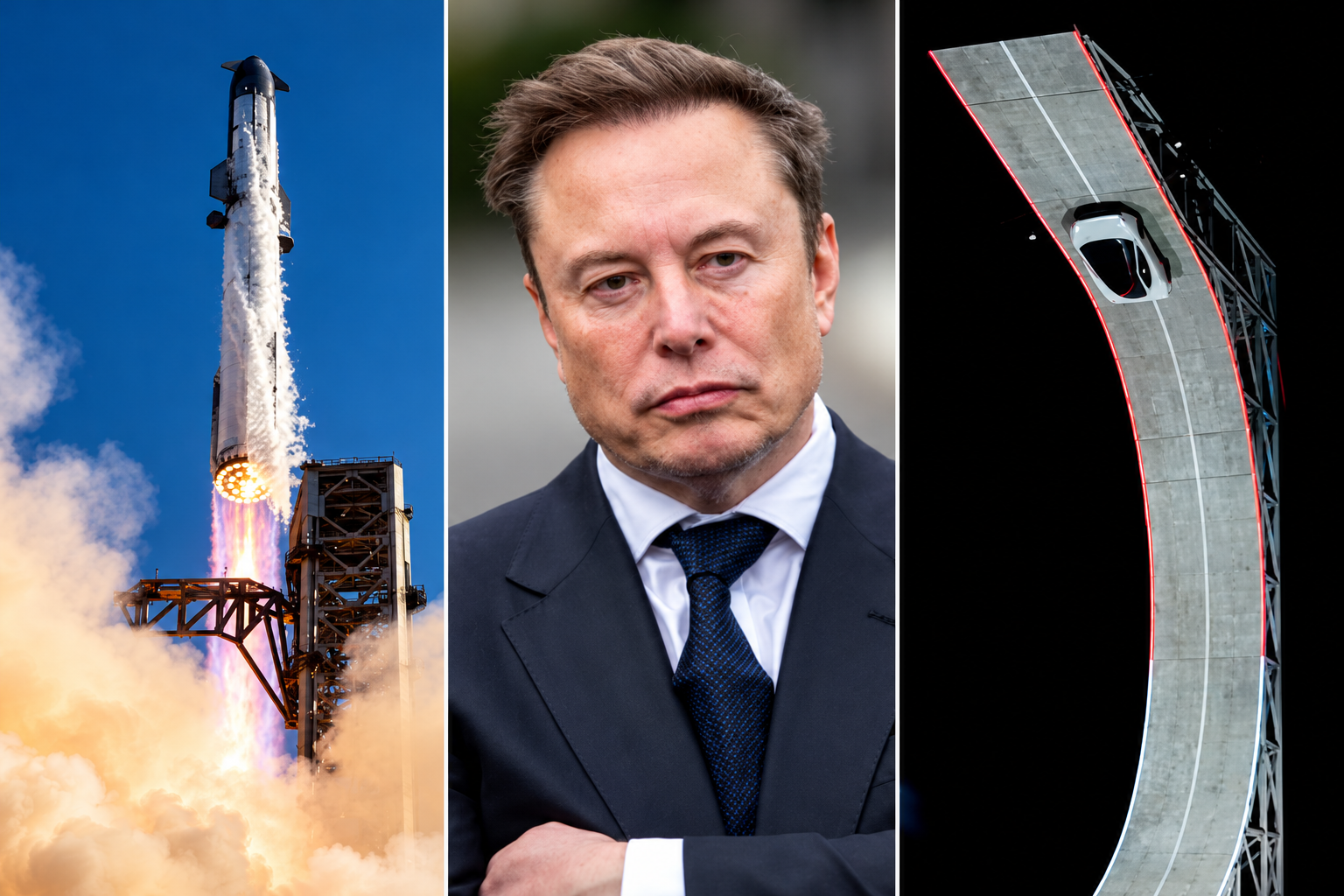
Elon Musk has engineered ties between Tesla TSLA 3.41%increase; up pointing triangle and SpaceX SPCX 7.79%increase; up pointing triangle that are hard to break, and now he wants to fuse them together permanently.
Musk has run both Tesla and SpaceX concurrently over the past two decades, using a schedule that dictated which days he spent focused on each business.
The companies have often shared resources and personnel, signaling their close ties. Last year, SpaceX looked into creating a spacesuit for Tesla’s humanoid robot Optimus, a person familiar with the matter said. Tesla last week showed off its new Roadster, a vehicle featuring SpaceX rocket thrusters that it hopes to soon bring to market.
And in recent months, Musk has repositioned both companies by expanding beyond their core operations toward a shared mission centered on artificial intelligence.
The world’s richest man on Tuesday signaled his interest in tying up SpaceX and Tesla, marking what would be the biggest corporate merger of all time. Because he serves as chief executive of SpaceX and Tesla, Musk said committees of independent directors at both companies are evaluating a possible deal, adding that a transaction might not come to fruition.
The committees will likely evaluate, with lawyers and bankers, how each company would fare in a potential deal and how a deal might best be structured. They then present their conclusions to their respective boards, who typically vote on whether to proceed.
“It’s an odd Kabuki dance where two groups of people are talking and I can’t be in the conversation,” Musk told SpaceX investors on Tuesday in response to an analyst’s question about a potential deal.
For Musk, the merger supports his vision of a world full of autonomous cars, humanoid robots and weekly rocket launches, as well as the data centers and satellites required to keep the whole thing running.
Some investors and analysts said they expect a transaction would be structured as an all-stock deal, with SpaceX potentially paying a modest premium for Tesla shares.
SpaceX, which has a market value of about $2 trillion, said it is seeing sharp growth in revenue across its businesses, which include operating data centers, launching rockets and operating satellite networks such as the internet service Starlink. Tesla is valued at about $1.5 trillion and is expanding its operations beyond its automotive and energy business. Shares in both companies traded higher following the news Tuesday.
Musk’s substantial ownership stakes in both companies, along with voting control at SpaceX, has enabled him to set the deal in motion. Analysts and investors said the deal will probably face regulatory scrutiny internationally, though some see Musk’s close relationship with the Trump administration as an asset to getting approval.
Blurred lines
The companies haven’t said which directors are on the special committees evaluating a potential deal. Several SpaceX and Tesla board members have either personal or business ties to Musk. And like Musk, venture capitalist Ira Ehrenpreis sits on both boards.
In a filing this week, Tesla outlined millions of dollars in business agreements with SpaceX and its subsidiaries last year, including $143 million in car sales to SpaceX, $3.3 million in advertising that it bought on the social-media platform X and $430 million in revenue from the sale of Megapack batteries for SpaceX’s data centers.
The companies also split the cost of resources including the use of Musk’s SpaceX jet and the bill for his personal security, which he runs through a private company.
Employees at both companies routinely move between companies to work on special projects, and some executives have dual roles, including Charles Kuehmann, vice president of materials engineering at both SpaceX and Tesla, and Ashok Elluswamy, the vice president of AI software at Tesla who runs a joint venture with SpaceX called Digital Optimus.
Over the years, Musk has launched new startups within his empire, including brain-implant company Neuralink, underground-tunnel developer the Boring Company and xAI, the AI startup that merged with SpaceX in February.
It is that AI business that Musk thinks can serve a market worth tens of trillions of dollars, justifying the need for a merger.
The business case goes like this: Tesla is developing robotaxis and robots, which it calls “physical AI.” SpaceX is working on the back end of physical AI: the data-center capacity and internet connection required for those robotaxis and robots to operate continuously.
“I don’t see what the value of Tesla is if it’s not merged with SpaceX,” said investment adviser Ross Gerber, a former Tesla bull turned critic invested in both companies. “If they don’t merge, the brains of everything that runs Tesla is owned by another company.”
On top of it all, both companies face constraints on the supply chains they need to make this world a reality, particularly when it comes to chips. To address this, Musk earlier this year announced a joint venture between Tesla, SpaceX and Intel to design and manufacture chips in Texas. “The most epic chip-building exercise by far,” he has said.
Musk at the wheel
For Musk, a merger would also solve two problems: demands on his attention and his lack of control at Tesla.
Tesla for years was Musk’s only public company, a status that came with greater scrutiny. There, Musk reports to a public board, as well as individual investors who make up around 30% of Tesla’s voting power, according to FactSet.
The question of Musk’s attention became a particular focus for investors and the board in recent years after he acquired Twitter in 2022 and launched xAI in 2023, and again in 2025 as he spent time in Washington, D.C., running the Department of Government Efficiency in the early months of President Trump’s second term.
As Tesla’s car business suffered in 2025, Musk threatened to take his AI ambitions outside the company if he wasn’t granted 25% voting control. Last November, Tesla shareholders approved a new pay package for Musk, which created a path for him to vastly expand his stake.
As of Sept. 30, Musk owned a roughly 20% stake in Tesla, according to the company’s proxy filing.
The SpaceX IPO gave Musk a different path. When SpaceX went public in June, the deal’s structure enabled him to have more than 80% voting power at the company—so much that he can’t be fired and decisions can’t be made without his support.
If SpaceX acquires Tesla, he will likely stay in control.
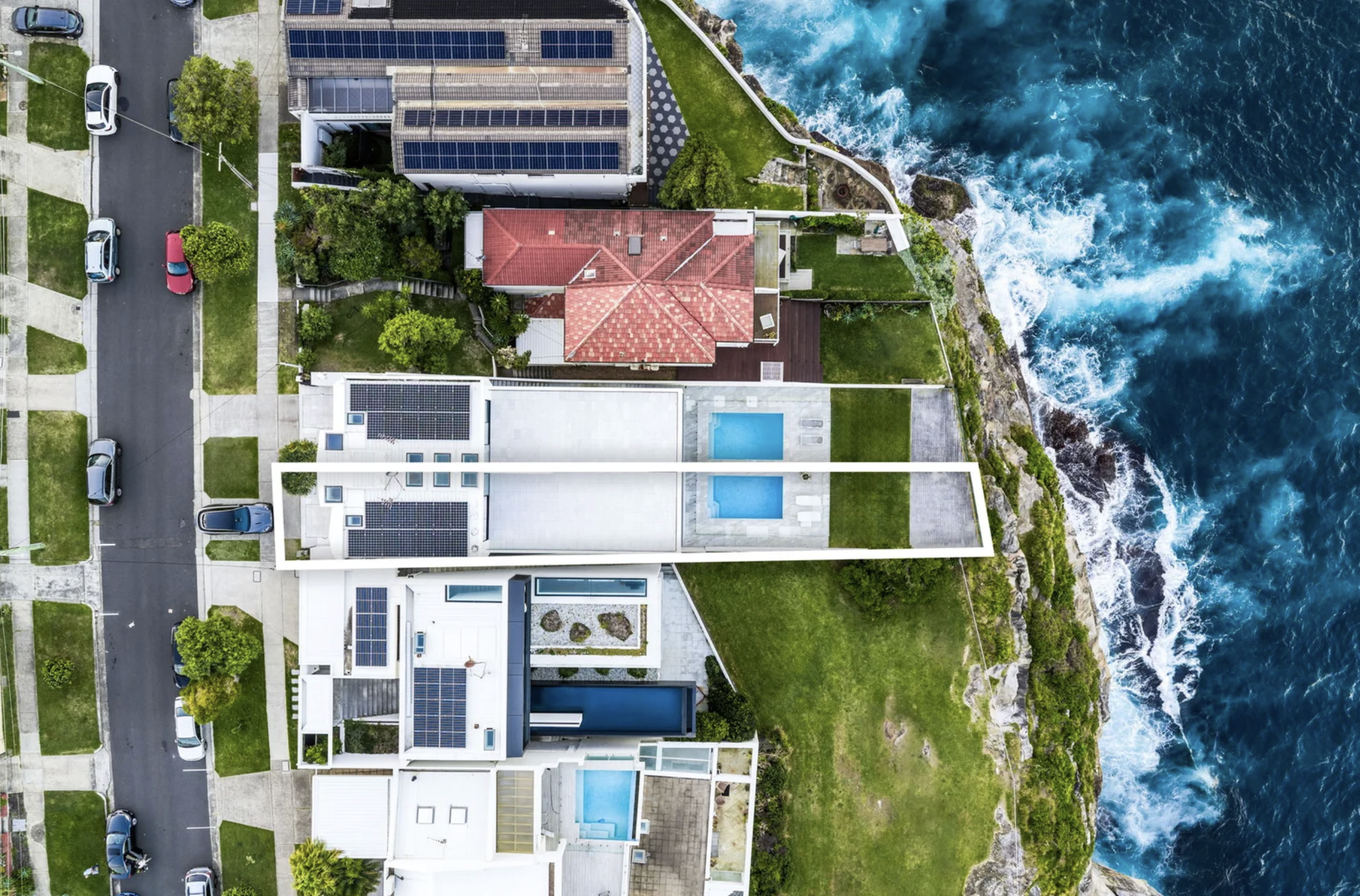
A Vaucluse masterpiece by MHNDU with interiors by Poco Designs brings architectural ambition and breathtaking ocean outlook to the auction block.

Here’s how they are looking at artificial intelligence, interest rates and economic pressures.