


Top strategies for winning at auction
Buying a property on your 2023 to-do list? Make sure the keys to that dream home are yours with these winning ways
 3 min

Always part of the crowd but never the winning bidder? It can be frustrating to keep missing out on securing your slice of Sydney.
When you have your heart set on a property, you’re buying not just a home but a lifestyle that will champion your dreams and ambitions. So no wonder auctions are a nerve-racking affair. Put yourself on the front foot with these winning strategies.
Read more stories like this in the latest issue of Kanebridge Quarterly magazine. Order your copy here.
1
Put in a pre-auction offer
Actually, there may be no need to go to auction at all. In today’s market, you have a good chance of calmly negotiating a winning deal ahead of time. Of all properties intended for auction, the proportion sold prior has roughly doubled since last year, now accounting for about half of all sales. So if you’ve done your research and don’t want to wait it out, make a solid pre-auction offer that reflects current market values.Conversely, in a strong market, you may be better advised to wait it out. Vendors are unlikely to take an early offer if they know there are other buyers waiting in the wings.

2
Own it to win it
Show up at the auction dressed to impress and stand in a prominent position where you can eyeball other bidders. When people bid against you, respond quickly and decisively. Play your cards right and you’ll give your competitors the impression that you’re not going to stop – which may be enough to convince them to give up.
3
Bidding anonymously
Bidding remotely via a live auction app could be the solution to staying calm and clear-headed. The future-forward UrbaneLIVE app enables you to participate in live-streamed auctions from wherever you feel most comfortable. If you’d rather be on site, but feel uneasy about bidding publicly, you could use the app to bid anonymously. The app will also ensure you don’t miss out on the chance to bid if you’re out of town on auction day.
4
Use the professionals
Your agent is there to help. They offer advice and support as well as practical information about the auction, so take advantage of their expertise and ask as many questions as you can. Worried you might get caught up in the emotion on the day? Asking a seasoned auction goer to bid on your behalf will make you less vulnerable to auction day pressure. (If you’ve recently sold and have a good relationship with your agent, you could ask them to help you bid for your next home, provided the property is listed with another agency.) Alternatively, a buyer’s agent will bid on your behalf for a fee and help research the market and work with you to determine a reasonable limit.
5
Top-and-tail approach
Beyond the comical awkwardness, there’s little benefit in holding out on an opening bid. Before the crickets chirp and tumbleweed rolls, make your presence known with a reasonable low-end bid. You can then hang back and get a feel for your competitors, before boldly re-joining the bidding at the pointy end of the auction. If nobody else bids after your opening offer, even better. You’ll be first in line to negotiate a deal.
6
Hit them with your best shot
When bidding slows, hopeful purchasers often settle in for a lengthy back-and-forth of $1000 increments. With amounts this small, it’s tempting for bidders to keep pushing that little bit further. If you still have some room in your budget, try knocking them out with an offer of $15,000 or $20,000 more. In the context of Sydney or Melbourne property, it’s a small price to pay to secure a purchase. There’s no better place to pick up tips than at an auction. Onlookers are always welcome so check out our auction listings and drop by to watch the show.
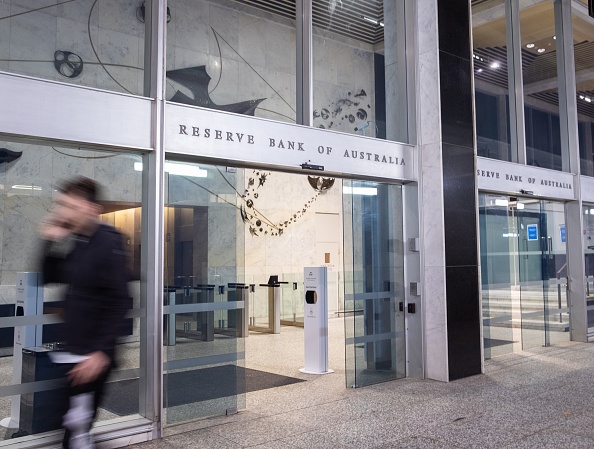
Unemployment hit 4.9% in October, but with inflation at 4.3% the big four aren’t tipping a February RBA cut. Here’s what CBA, Westpac and NAB say.

Dutch studio Vripack took cues from a Shirley Temple song for Lollipop, a 37.4-metre Moonen superyacht built for long-range cruising.
Unemployment hit 4.9% in October, but with inflation at 4.3% the big four aren’t tipping a February RBA cut. Here’s what CBA, Westpac and NAB say.
3 minUnemployment is at a five-year high and the talk has turned from hikes to cuts. But with inflation still well above target, the big banks aren’t ready to promise relief by February.
Three weeks ago the Reserve Bank lifted the cash rate for the fifth time this year. The conversation has now flipped.
Last Thursday the Australian Bureau of Statistics reported that the seasonally adjusted unemployment rate rose to 4.9 per cent in October, up from 4.7 per cent. That is the highest reading since October 2021. Economists had expected about 25,000 new jobs and an unchanged jobless rate.
“In October, there were 44,000 less employed people and 18,000 more unemployed people,” said Sean Crick, the ABS head of labour statistics. Youth unemployment rose to 11.3 per cent. October was also the second straight monthly fall in employment, following a drop of more than 36,000 in September.
Ahead of the RBA’s forecasts
The timing is awkward for the RBA. On 3 November its Monetary Policy Board raised the cash rate by 25 basis points to 4.85 per cent, the highest level since 2008. The vote was 6–3, with three members preferring to hold at 4.60 per cent.
The November Statement on Monetary Policy had forecast unemployment averaging 4.7 per cent in the December quarter, and reaching 4.9 per cent only at the end of 2027. October’s figure got there more than a year early.
Unemployment is also now above the RBA’s own estimate of full employment. Westpac economist Ryan Wells said in the bank’s labour force note that “slower hiring is now being compounded by more firing.” Westpac now expects unemployment to peak at 5.2 per cent by mid-2027, up from its earlier forecast of 4.8 per cent.
Markets moved quickly. Before the data, interest rate swaps had priced a 28 per cent chance of a rate rise by February. Afterwards they implied a roughly 20 per cent chance of a cut by March, with one cut fully priced by November 2027.
The inflation problem
So why isn’t anyone calling a February cut? Inflation hasn’t eased.
Headline CPI rose 4.3 per cent in the year to September, up from 4.0 per cent in August. Housing was the biggest contributor, up 5.2 per cent. Trimmed mean inflation, the RBA’s preferred underlying measure, was 3.6 per cent.
The RBA expects headline inflation to peak at 4.5 per cent this quarter. It sees both headline and underlying inflation staying above 3 per cent until the end of 2027, and not returning to the 2.5 per cent midpoint until mid-2028. The Board also flagged “the increasing risk that higher inflation expectations will become embedded.”
Wages add to the caution. The Wage Price Index rose 1.1 per cent in the September quarter, the strongest quarterly gain since late 2023, taking annual growth to 3.5 per cent. That is still below inflation, so real wages are falling, but the quarterly pace is not what a central bank trying to cool prices wants to see.
Where the banks stand
None of the big four is forecasting a cut at the February meeting. What has changed is the consensus that hikes are over.
- NAB: “We think the RBA are done,” chief economist Sally Auld said on 9 November. She pointed to weaker growth in the first half of 2026, business conditions below their long-run average and fading momentum in household spending. After the jobs data, NAB senior economist Taylor Nugent said unemployment was already well above where the RBA expected it to be this year, which supports the view that the tightening cycle is finished.
- CommBank: in its 2 November forecast update, CBA warned of a “sharper, longer slowdown”. It now expects GDP growth to fall to 1 per cent by mid-2027 and unemployment to peak at 5.1 per cent at the end of 2027. It still has two cuts pencilled in for August and November 2027, though it says the timing is uncertain.
- Westpac: sees November’s increase as the peak of the cycle and expects the Board to pause in December. It said a February move could not be ruled out but looked increasingly unlikely. That comment referred to a further hike, not a cut.
What it means for property
For borrowers, the change is that a sixth hike now looks unlikely. Relief, though, still looks like a story for the second half of 2027.
The housing market is already feeling the strain. NAB’s November Housing Monitor shows combined capital city dwelling prices fell 1.4 per cent in October, the seventh straight monthly fall. Prices are now 8.1 per cent below their March 2026 peak. Westpac cited a deeper-than-expected housing downturn as one reason it lifted its unemployment forecast.
What to watch
October CPI is released on Wednesday 25 November, and November jobs figures follow on 17 December. Both land before or around the RBA’s final meeting of the year next month. The December-quarter inflation figures in late January will then set up the February decision.
If unemployment keeps rising and underlying inflation falls faster than the RBA expects, February could become a real possibility. For now, the banks expect the RBA to hold rates where they are.

Technology and semiconductor shares fell sharply as investors questioned the debt financing the AI infrastructure boom and confronted higher rates and Chinese competition.

An opulent Ryde home, packed with cinema, pool, sauna and more, is hitting the auction block with a $1 reserve.