





World’s Biggest Construction Project Gets a Reality Check
Saudi Arabia’s plans for twin 105-mile-long skyscrapers have lost momentum amid spiralling costs and construction glitches

 8 min
8 min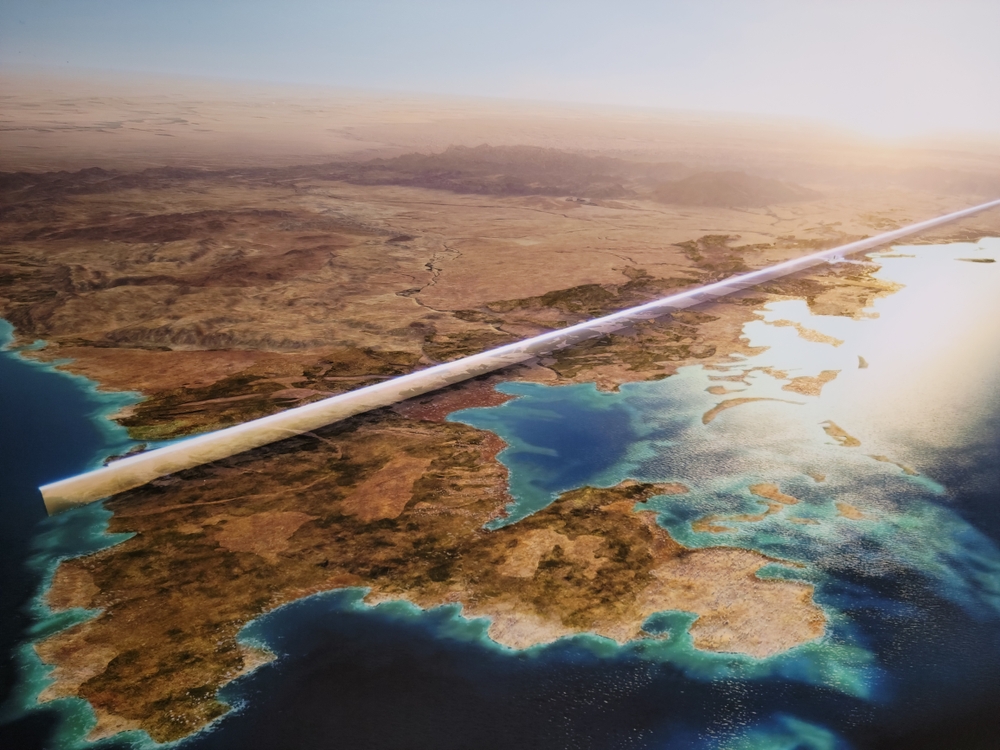
The engineers saw a mountain-sized problem.
For weeks, thousands of trucks and diggers had worked 24 hours every day, scooping millions of cubic feet of sand at the world’s biggest construction project known as Neom in Saudi Arabia. But the workers had dumped the massive pile of dirt—now hundreds of feet wide—in the very spot where architects planned to dig a waterway out to the Red Sea.
So, the trucks and diggers went back to work, picking it all back up and making a new mountain of sand nearby in a costly hiccup that epitomises the Saudi project’s turbulent journey from an audacious concept to a sprawling operation that has faltered in its execution.
Defying skeptics, Saudi Arabia is barreling ahead with hundreds of billions of dollars in projects at Neom, a built-from-scratch region the size of Massachusetts, typified by sci-fi architecture, an arid ski resort and a laundry list of flashy projects meant to attract a population larger than New York City’s.
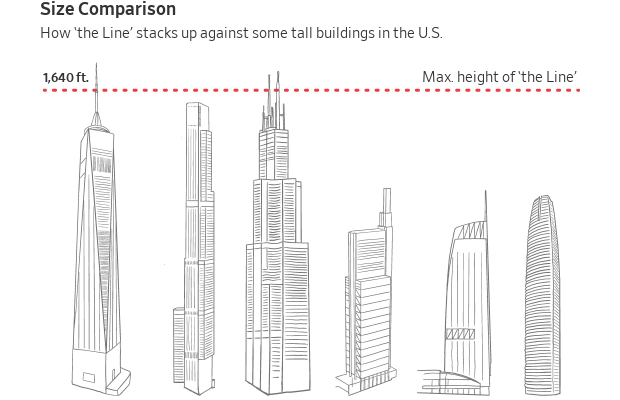
None is more brazen than a multi trillion-dollar pair of skyscrapers taller than the Empire State Building designed to run 105 miles long and house nine million people, the flagship development dubbed “The Line.” Its champion, Saudi Crown Prince and de facto ruler Mohammed bin Salman , has likened the project to Egypt’s Great Pyramids.
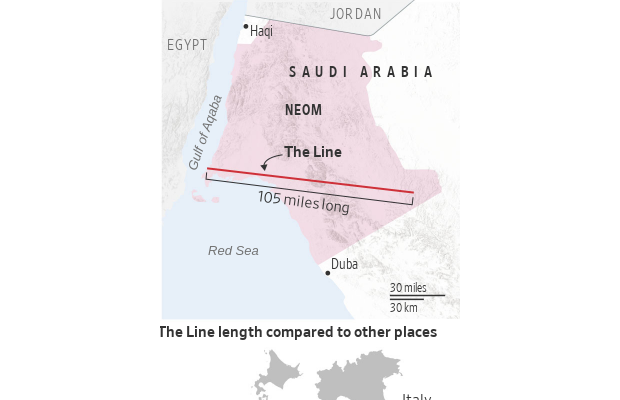
The kingdom in recent months downsized the Line’s first phase, facing the reality of costs at a time the country is spending far more than it is taking in. Now organisers plan to initially build around 1.5 miles of the structure by 2030, rather than the roughly 10-mile first chunk that had previously been envisioned, multiple people briefed on the plans said. Still, even that truncated section would be by far the world’s largest building, the equivalent of more than 60 Empire State Buildings of square footage.
Asked in a CNBC interview last month about a Bloomberg report on the scaled-back first phase, Saudi Minister of Economy and Planning Faisal Al Ibrahim signalled the long-term ambitions for the Line remain the same.
“There is no change in scale—it is a long-term project that is modular in design,” he said, adding that “today, the economy in the kingdom is growing faster, but we don’t want to overheat it.”
The stakes for Saudi Arabia are as outsized as Mohammed’s ambition. Neom is the ultimate symbol of his plans to transform the kingdom’s economy, reduce its dependence on oil revenue, and make it a magnet for money and talent from around the world. But he risks squandering much of the country’s cash on an unprecedented experiment in city building that could prove too difficult to deliver.
“Mohammed bin Salman is gambling here,” said Madawi al-Rasheed, a visiting fellow at the London School of Economics and a member of a group calling for democratic reform in Saudi Arabia, an absolute monarchy.
“Spending so much money should in theory generate a tangible leap in the Saudi economy,” she said, but much of the cash so far was spent on foreign consultants and architects.
A mountain of challenges lies ahead. More than 100,000 additional construction workers must be housed in a barren corner of the kingdom’s vast desert, two hour’s drive from any sizeable city. Neom’s needs for steel, exterior glass and other materials are so massive they may push up global prices and be difficult to source. Planners worry the unique central concept of the Line, a vertical city housed in twin skyscrapers the length of Delaware, could prove to be an unappealing place to live.
At the same time, the scaled-back plans for the Line put a spotlight on Neom’s enormous bill for what is now poised to be a midsize city. Neom executives now expect fewer than 200,000 residents in the project’s first phase—the population of Knoxville, Tenn.—a current and former employee familiar with the plans said. Yet Neom is spending on vast infrastructure intended for millions of people, including a giant airport, a high-speed train running through a 20-mile mountain tunnel, massive desalination plants and large civic features in the Line such as an opera house, the former executive said.
The price tag keeps rising. The projected cost of a ski resort in the region’s arid mountains has more than doubled over two years to $38 billion as of October, according to Neom documents reviewed by The Wall Street Journal. Real estate advisory Knight Frank estimates more than $237 billion of construction contracts have already been commissioned at Neom.
Even for one of the world’s largest exporters of crude oil, Neom might just be too expensive. Its official cost estimate is $500 billion, 50% more than the country’s entire federal budget for the year and more than half the value of its sovereign-wealth fund.
Executives working on the project dismiss that number as unrealistically low. The first 1.5 miles of the Line alone is estimated internally to cost more than $100 billion, two people familiar with the plans said.
If it were fully built, Neom employees expect the true price of the Line would be well in excess of $2 trillion. Construction costs per square foot are more than double what is standard on other Middle East towers, they said.
This makes it unlikely Neom will attract significant private investment to fund future phases of the Line, they say. It has been funded thus far by the Saudi government.
Neom is the centrepiece of an overhaul of Saudi Arabia’s economy and identity that Mohammed began in 2015 when his father ascended the throne. Then 29 years old, the son of King Salman outmanoeuvred potential heirs and rapidly consolidated power.
Hungry for change, Mohammed allowed more Western cultural norms and eliminated restrictions that forbade mixing of sexes, women drivers and cinemas. He also put even tighter limits on speech, crushing dissent over the rapid change.
The plan, Vision 2030, called for an array of new non-oil industries such as entertainment and technology and building mega-sized real-estate developments to help it become a global tourism hub.
Mohammed’s team sought proposals from the world’s top architects for ideas to design Neom. The avant-garde Los Angeles designer, Morphosis Architects, headed by Pritzker prize winner Thom Mayne, pitched a city that was 100 miles long and 1.2 miles—or two kilometers—wide, with buildings spread across the ground.
The prince had a different idea.
“I told the team, how about if we take that two kilo and we flip it to two towers to the whole line,” he said in a Discovery Channel documentary last year, clapping his hands together vertically like someone closing a book.
The idea of the skyscraper city was born.
Architects got to work designing a pair of parallel towers 650 feet apart, shrouded in a shimmering mirror glass coat that reflects red desert sand and azure blue sea. At their highest, the towers are slated to rise 1,640 feet above the desert floor, although they will be less tall in spots depending on the terrain they are traversing.
Internal documents from 2021 call for more than seven billion square feet of floor space—29% larger than all of the buildings in New York City put together and the size of more than 2,000 Empire State Buildings. Apartments, offices, schools, police stations, museums and a royal palace would be peppered inside.
Stunning—and costly—architecture is a priority. Mohammed told Neom executives he wants a sense of “zero gravity” with features appearing to defy physics and float, former executives said.
A linear city has long captivated urban planners. In 1882, Spanish architect Arturo Soria y Mata proposed an elongated urban development that inspired the “Ciudad Lineal” district of Madrid. The Line has been compared internally to Epcot Center, a former Neom executive said, the 1960s-era complex at Disney World that was intended to be a futuristic city dependent on high-speed rail. It was abandoned after Walt Disney ’s death. Epcot later became a theme park.
A linear city as big as the Line is at odds with how humans have developed cities for millennia: naturally building outward in a circular manner, typically around a core.
“It’s battling against the entire history of the way cities are founded and grow,” said John E. Fernandez, professor in the department of architecture at the Massachusetts Institute of Technology.
Even supporters say it is an experiment that could easily fail in practice.
In a planning document under a heading of “Key Concerns,” an employee said four different times that by fixating on building miles-long skyscrapers, Neom had turned the normal design process inside out. “USE would usually drive DESIGN. We are using DESIGN to drive USE,” the anonymous comment said.
The shape has added to challenges.
In 2020, before Mohammed unveiled the project, he asked employees to move the Line’s western end a few miles because he preferred the terrain, said people familiar with the request. Designs had to shift slightly across the entire 105 miles, causing months of extra work.
Architects have struggled to find the best ways to mix sunlight and open space in the interior. Internal documents show they wrestled with how to differentiate neighborhoods so as not to create a monolithic block—opting to build distinct half-mile sections with a different look and feel. They worried about drab living conditions at the base of the interior, given that the height of the towers would allow little light down low.
According to planning documents, designers proposed leaving gaps atop the modules to “bend” the structures around the curvature of the earth, which arches about 8 inches per mile.
Planners fretted over the billions of birds that fly on a migration route—a less-than-ideal location for a 1,600-foot-tall glass mirror.
“It is inevitable that a significant number of birds will perish,” designers wrote, with an illustration of a dead northern flicker, a woodpecker.
Looming over Neom is an inauspicious history of city-building projects, which typically die on the drawing board. Those that are built are usually scaled down, and often considered sterile.
One of modern history’s largest is Brasília, the Brazilian capital that strained the country’s finances when it was constructed in the late 1950s. After opening, residents complained of lifeless streets and a lack of neighbourhood feel in the curated modernist centre, which today holds less than half its expected population of 500,000. Instead, far more residents live in and around satellite towns initially built for its construction workers.
Scant progress
Seven years after launch, little has been completed other than Neom’s film studios and a sprawling new royal complex that boasts giant palaces, a golf course and at least 10 helipads, satellite images show.
Beyond the Line, Neom has a bevy of superlative-packed projects, all of them complex.
Neom is so big it has its own large-scale construction projects simply to prepare for bigger projects. A port is needed to receive materials, and Neom is spending more than $5 billion to build housing for construction workers, according to the Middle East business-trade publication MEED, which tracks Neom contracts.
Engineers and administrative workers live in a handful of Neom-built communities with schools, basketball courts, a Burger King, a Starbucks and a Hampton Inn where rooms run above $400. The first such camp already needs to be partially demolished: After a design change, the Line is now due to run right through the community, where housing is already at capacity, former employees said.
Despite being billed as zero emissions, Neom recently sought contractors to build two gas power plants totalling 800 megawatts to power the region until greener energy is sourced.
To demonstrate progress to the crown prince, engineers started putting in the foundations for the Line a couple of years ago even before architects had figured out what would go above—an unusual way to build such a massive development, engineering experts said.
Architects soon decided the first phase should be built somewhere else, leaving the Line’s initial foundations abandoned for now, said people familiar with the matter.
For over a year, the bulk of the work has been a digging operation—the world’s largest, Neom says. Four-lane makeshift construction roads are clogged with lines of dump trucks; diesel fumes from trucks and generators permeate the air.
Significant digging work has gone into swaths that even before the recent pullback weren’t scheduled to be completed for decades. Satellite images show a 60 mile gash through the desert.
The current focus is a seaside middle section, where Prince Mohammed wanted the building constructed atop a new marina that could hold the world’s biggest cruise ships. Workers are digging a hole 50 feet below sea level, over 450 acres in size. It was there that workers had excavated a small mountain of dirt, only to find it was in the wrong place.
Once foundations are laid, a key test will be if and when Neom awards the costly contracts to start vertical construction—a crucial milestone that makes it difficult to turn back.
Another question is height. Numerous executives working on Neom have questioned the need for a 1,600-foot-tall building—which carries extra engineering challenges, higher costs and makes evacuation difficult in an emergency.
Renowned British architect Peter Cook , who is involved in the Line, called the project’s height “a bit stupid and unreasonable,” according to comments published in the U.K.-based Architect’s Journal. In a later documentary, Cook, who is overall praiseful of the project, called the Line “puzzling even to those who are involved in designing it.”
 Copyright 2020, Dow Jones & Company, Inc. All Rights Reserved Worldwide. LEARN MORE




On the owner’s deck, a 20-metre swimming pool incorporates Feadship’s patented ContraWave technology and extends indoors as a suspended, glass-bottomed infinity pool.
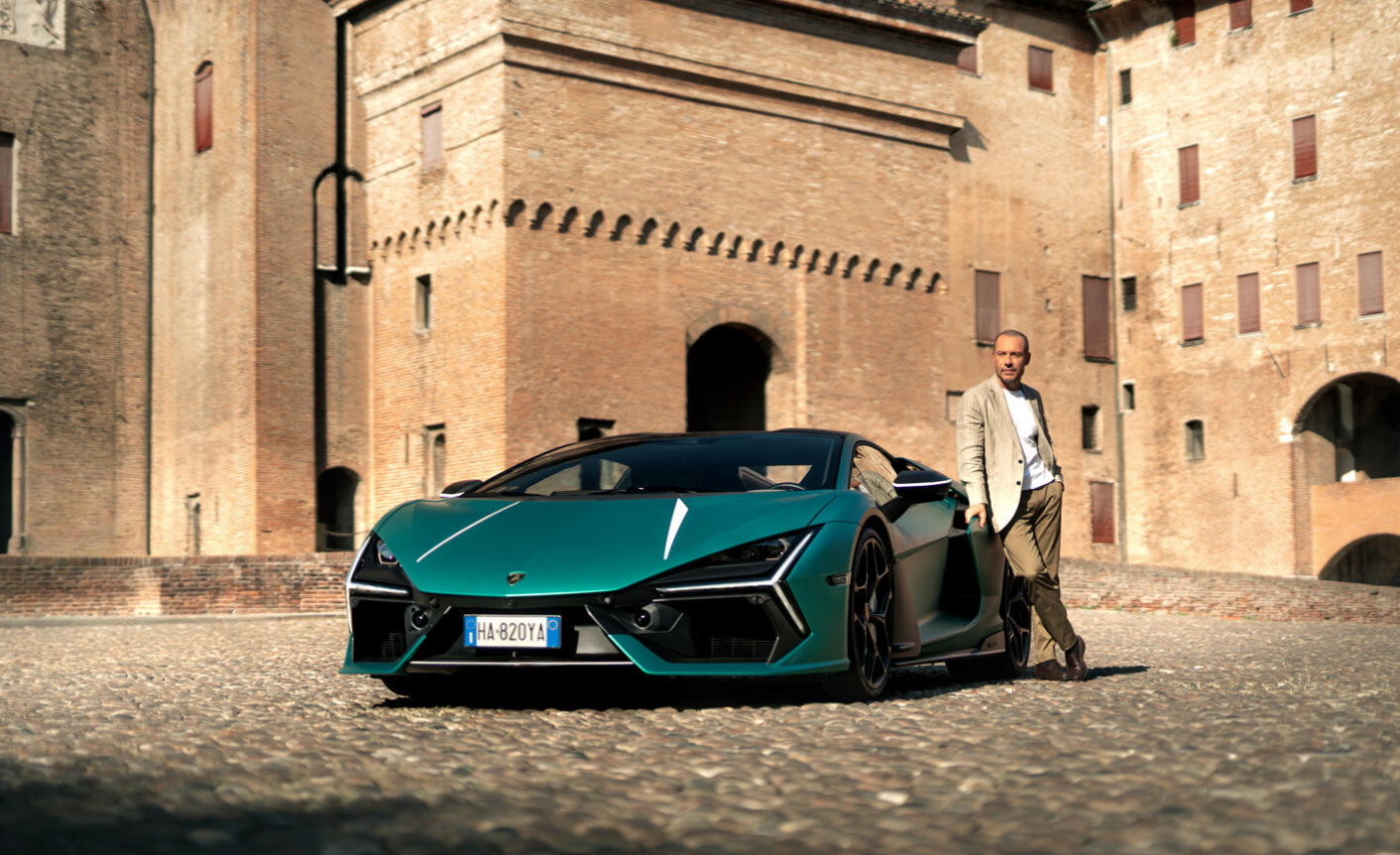
Automobili Lamborghini is turning its attention to something considerably more difficult to define: what makes Italian excellence uniquely Italian?
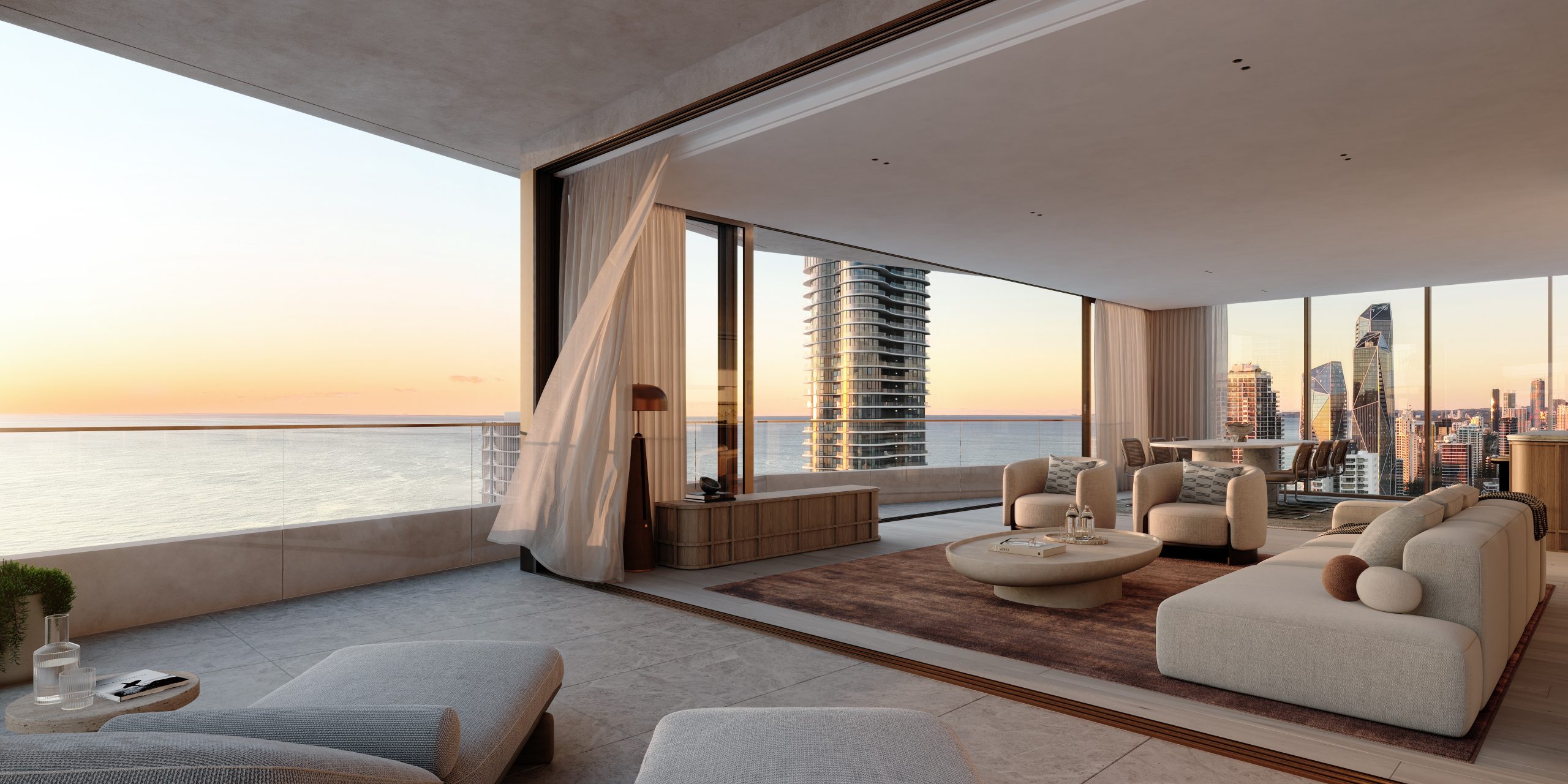
Mirvac’s 45-level Trielle has topped out at Yarra’s Edge, pairing riverfront apartments with wellness facilities, private dining and resident services.
3 min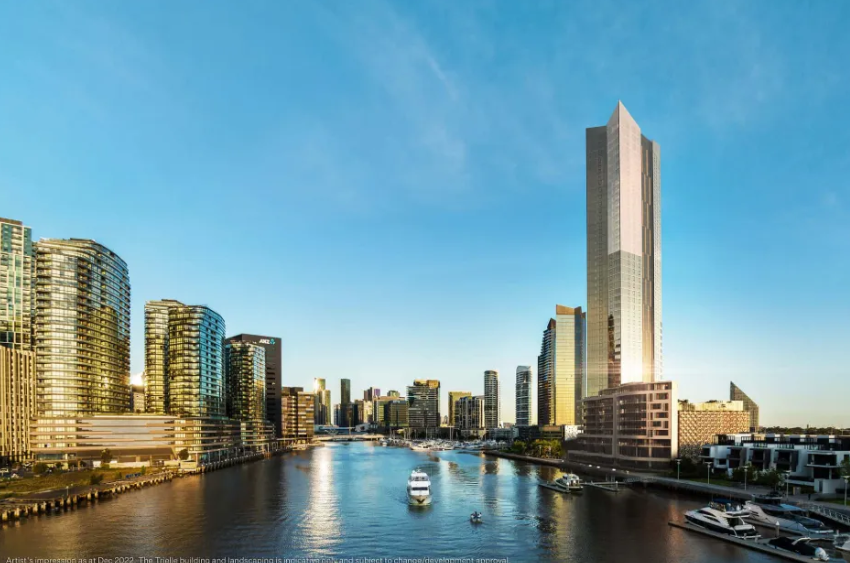
Mirvac has topped out Trielle at Melbourne’s Yarra’s Edge, with more than 70 per cent of the riverfront development sold and approximately 80 per cent of purchasers intending to make their apartment a home.
The figures, released on September 22, point to an owner-occupier audience for one of the precinct’s final residential towers. Mirvac began developing Yarra’s Edge in 2003, and its latest addition occupies one of the remaining absolute riverfront sites.
Mirvac CEO of Development Stuart Penklis said existing residents were among those moving up within the neighbourhood.
“Many purchasers already have a connection to Yarra’s Edge,” Mr Penklis said, describing buyers whose changing needs were encouraging an upgrade within the precinct.
“As one of the final residential towers within Yarra’s Edge, Trielle represents the culmination of more than two decades of creating one of Melbourne’s most established and sought-after waterfront communities,” Penklis said.
“Positioned on the Collins Street axis with absolute river frontage, Trielle offers residents a rare opportunity to enjoy sweeping views across the Yarra River, Melbourne skyline and Port Phillip Bay, while remaining seamlessly connected to the CBD. With Trielle now more than 70 per cent sold, we’re continuing to see strong demand from buyers seeking quality homes in established locations.”
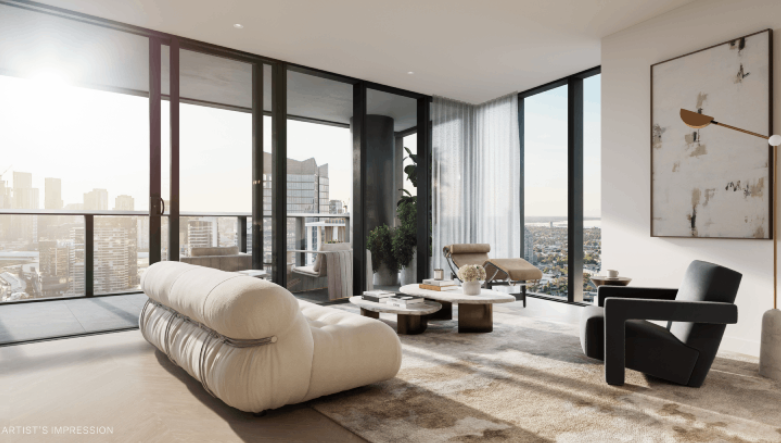
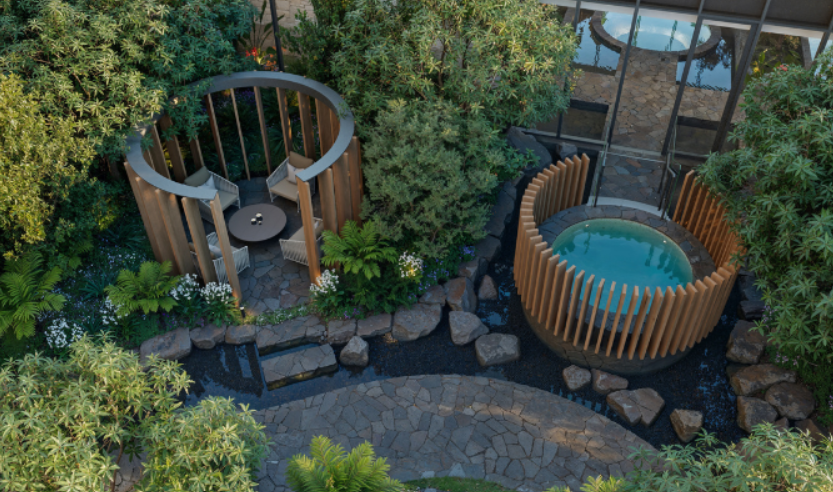
The developer also flagged a penthouse and sub-penthouse collection with larger layouts, premium finishes and broad outlooks. The planned wellness centrepiece, The Oasis, encompasses a 900-square-metre elevated urban rainforest.
Mirvac General Manager Residential Development Victoria Elysa Anderson said Trielle had resonated strongly with buyers seeking a rare lifestyle offering in Melbourne.
“Opportunities to secure a new luxury residence on a riverfront site of this calibre are incredibly rare, particularly within a community like Yarra’s Edge,” Anderson said.
“What makes Trielle unique is the combination of exceptional views, world-class residential facilities and the lifestyle that already exists around it. Residents are buying into a mature waterfront community with parks, promenades, dining, wellness and strong community connections already in place.”
The 45-level tower brings a substantial new presence to that waterfront. Its residential offering spans one-, two-, three- and four-bedroom apartments, with Signature, Prestige and Sub-Penthouse collections accommodating different household sizes. The north-facing position connects the apartments visually to the river and city beyond.
Seven storeys above the promenade, the planned Oasis combines planting and a running stream with a Scandinavian-inspired wellness club developed with spa specialist Naomi Gregory. Facilities include a 25-metre lap pool, hot magnesium pool, sauna, hydrotherapy, a gym, yoga and Pilates room, and treatment spaces.
The amenity extends beyond exercise. Residents will have access to The Biblioteca library and workspaces, ground-floor work pods, and The Salone piano lounge. A private Chef’s Table dining room offers a setting for larger gatherings, while a cinema, games room and sports lounge broaden the entertaining options. Concierge services and a dog-wash area support everyday routines.
Trielle comprises a collection of one, two, three and four-bedroom residences. Reflecting strong demand from owner occupiers, approximately 80 per cent of purchasers to date intend to live in their homes, highlighting the project’s appeal to those seeking a long-term waterfront lifestyle.
Mirvac has recently delivered The Albertine, a premium apartment development on the edge of Melbourne’s CBD, and is nearing completion of Prince & Parade in Brunswick, further strengthening its portfolio of thoughtfully designed apartment communities in some of Melbourne’s most sought-after urban locations.
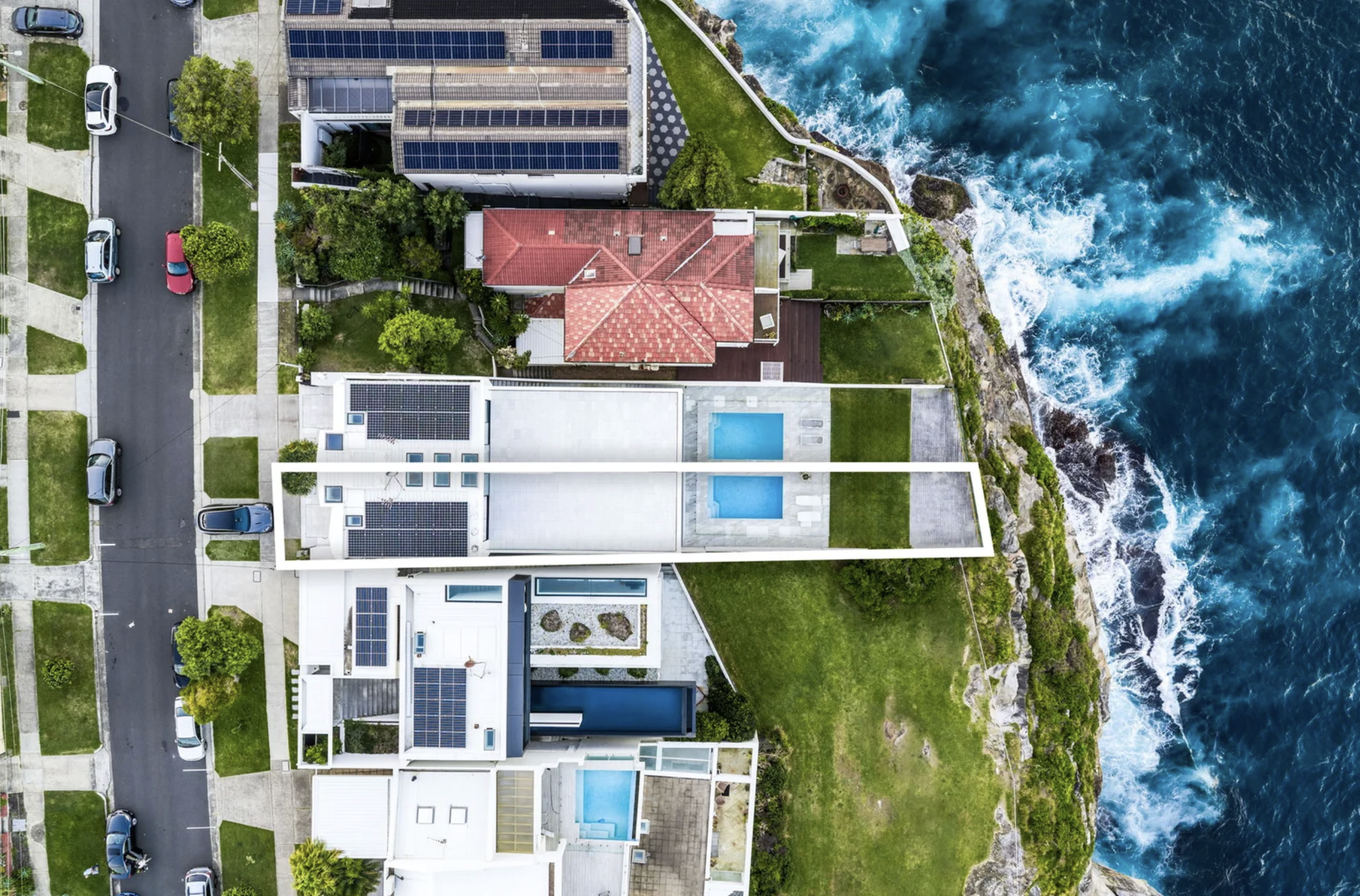
A Vaucluse masterpiece by MHNDU with interiors by Poco Designs brings architectural ambition and breathtaking ocean outlook to the auction block.
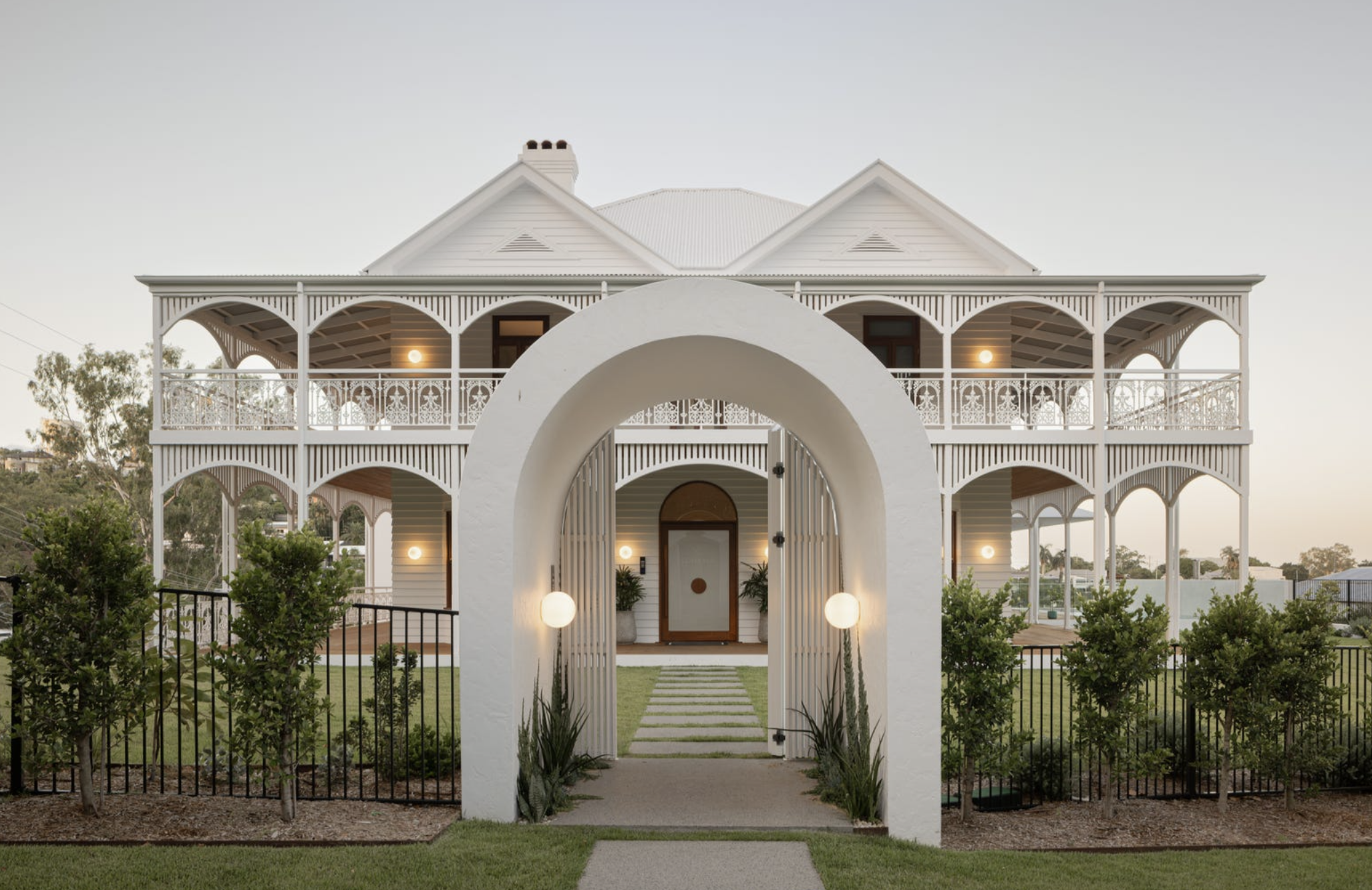
A restored 1860s Brisbane residence transformed by GRAYA has smashed Paddington’s house price record, selling for more than $12 million.


