The Pricey-Yet-Chill Resort Town of Sitges Is Luring American Buyers
Interest in the coastal Spanish town is booming, thanks to the rise of remote work, the area’s LGBTQ-friendly atmosphere and its proximity to Barcelona

 6 min
6 min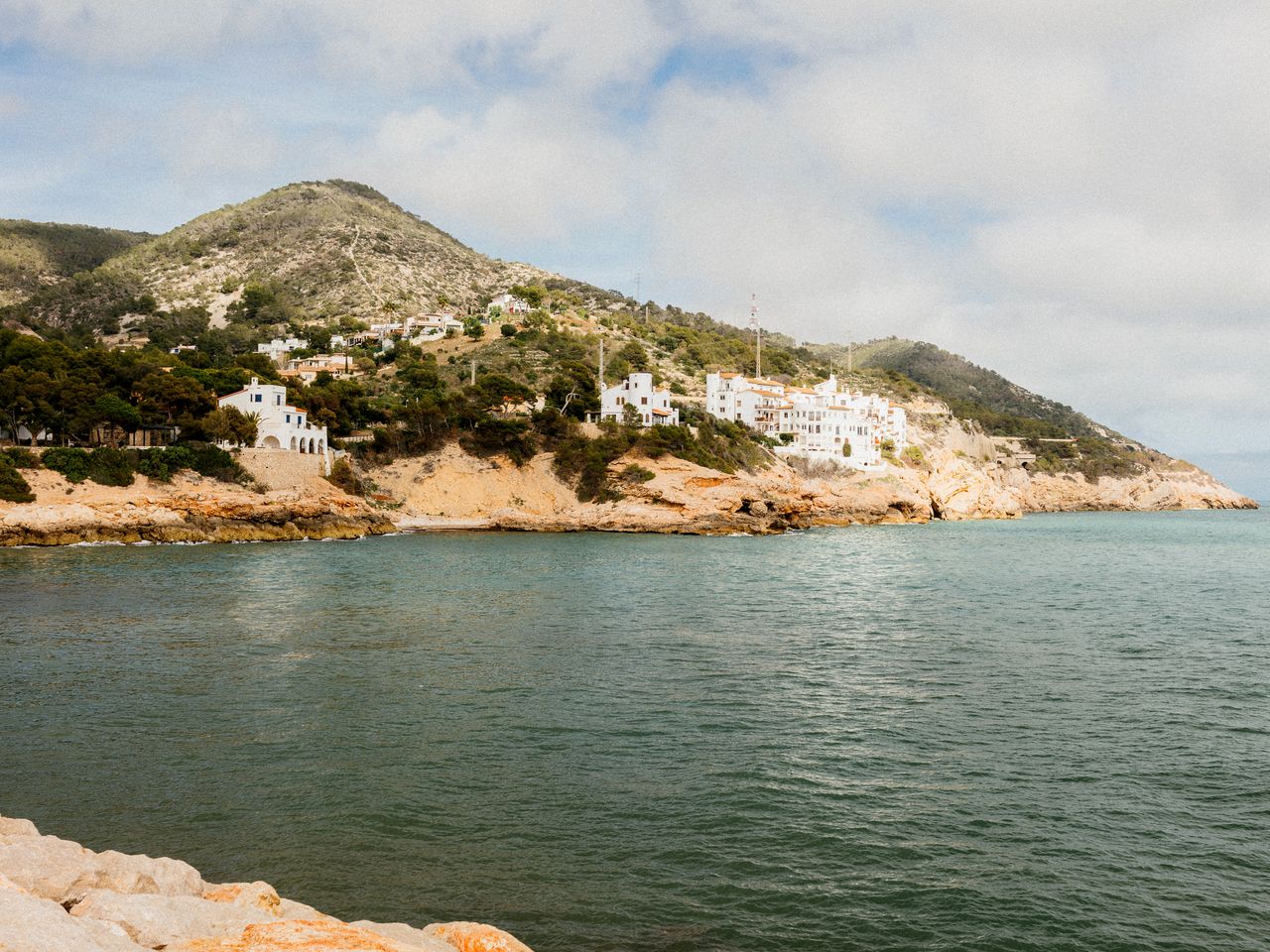
In their post pandemic search for a European second home, Florida’s Martin and Patricia Tantow had a lot of boxes to tick.
The couple, who confined their search to the mainland Mediterranean coast, wanted sea views, walkable beach and town access, and a unit that was easy to renovate—or, as they call it, a “liveable fixer-upper.”
They found what they were looking for in Sitges, a Spanish resort town that had been under the radar for U.S. buyers and vacationers.
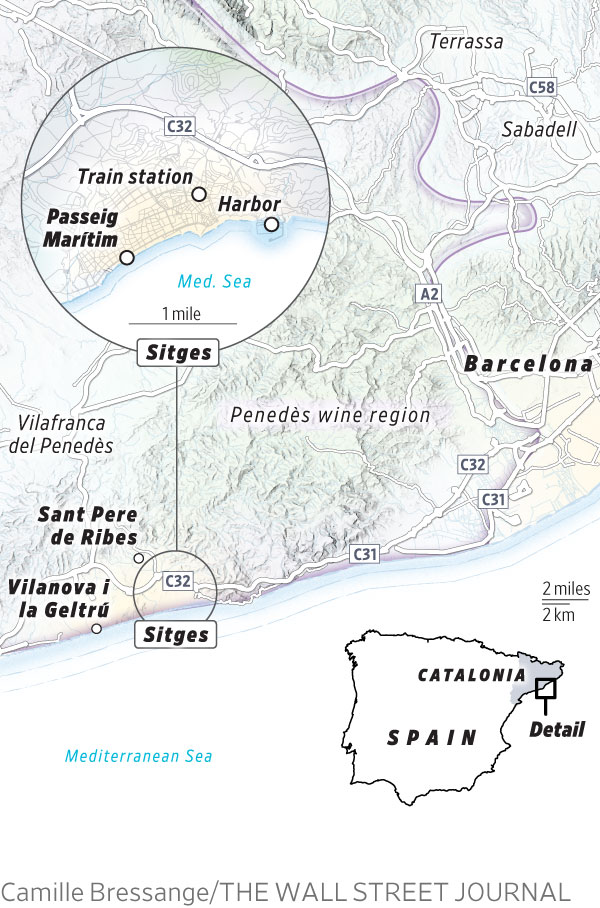
Sitges, with around 30,000 year-round residents, is known for its sandy beaches, 19th-century villas, 21st-century mansions, quaint historic centre and thriving residential real-estate market. Only a 25-minute drive from Barcelona’s international airport, the community is one of three select resorts that compete for the title of mainland Spain’s most expensive.
Home prices in Sitges average $457 per square foot, up 7.3% in the past year and 21% in the past five years, according to Idealista, a Spanish real estate website. Jesús Encinar, CEO and chairman of Idealista, says that Cadaqués, up the Catalan coast from Sitges and near France, is now at the top, with average prices in March reaching $575 per square foot. Málaga in the south of Spain is now at $458 per square foot, edging past Sitges.
Of the three, Sitges is the most convenient for trans-Atlantic air connections—and, local homeowners say, year-round charm. Smaller and less glitzy than Marbella, Sitges has temperate winters and hot summers, and it’s bigger and more accessible than remote whitewashed Cadaqués, where life dies down in the chillier offseason.
JOURNAL
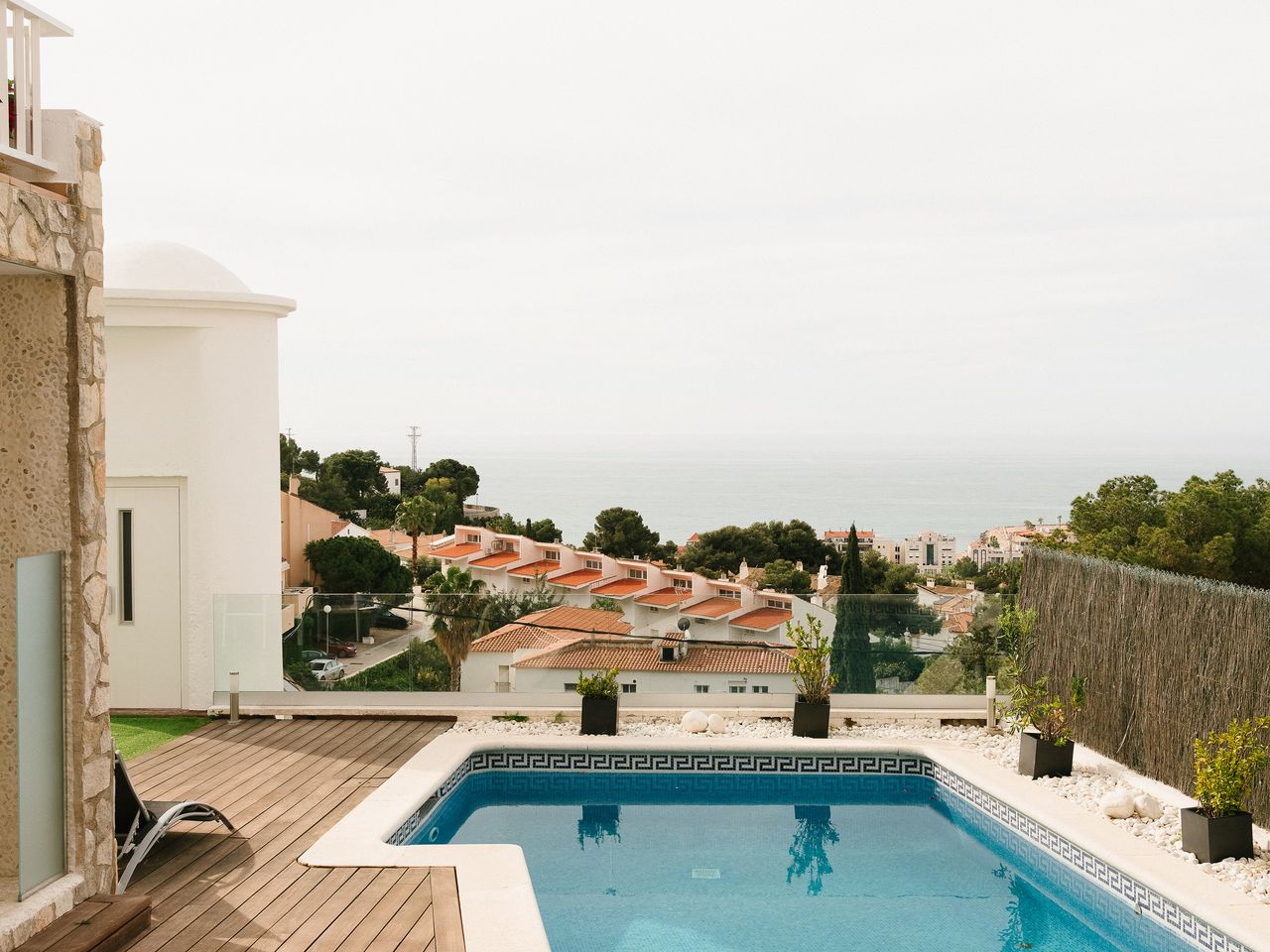
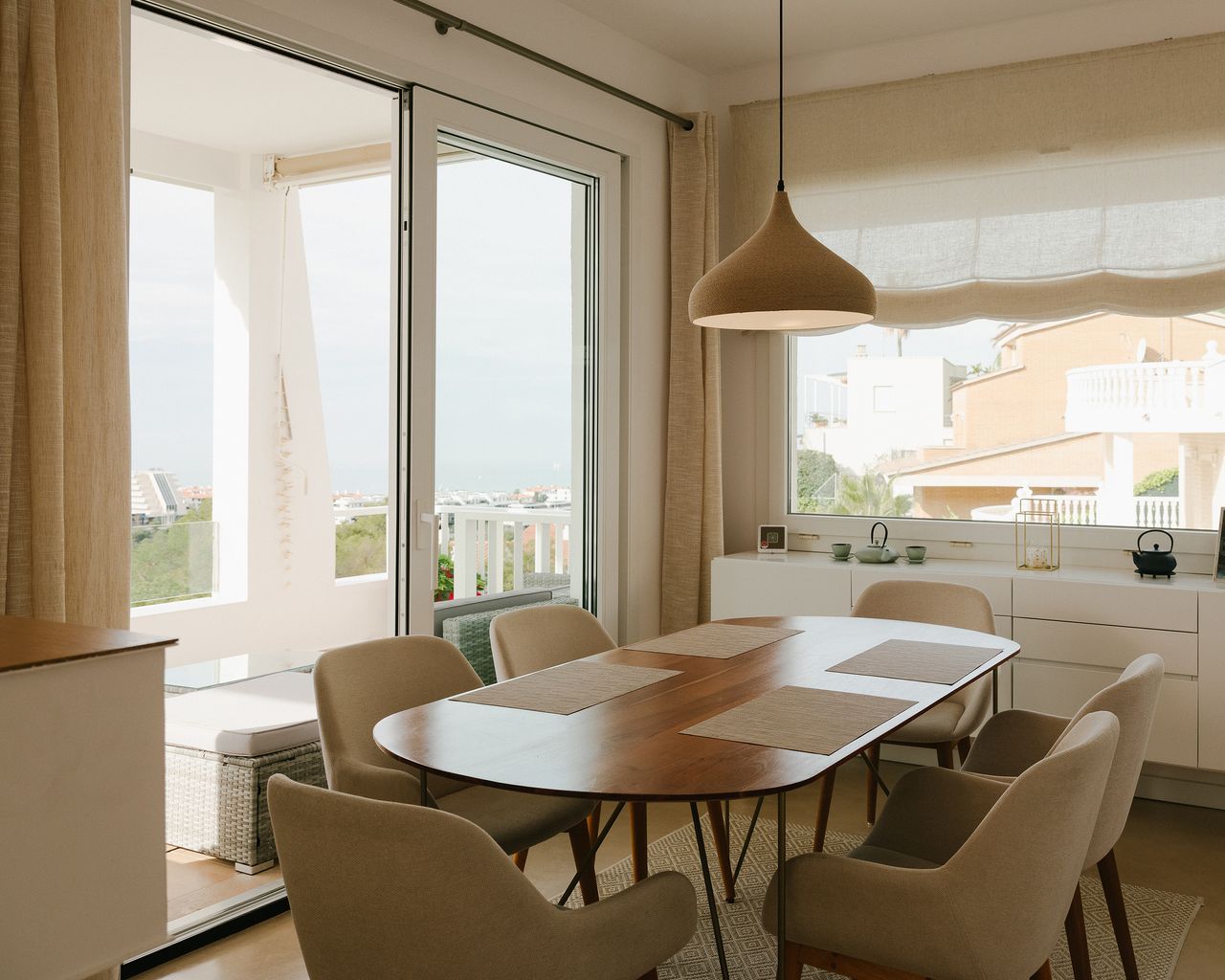
The Tantows paid 1.3 million euros (about $1.39 million) in July 2023 for a compact 2,300-square-foot Sitges home on a steep 1/5th-acre lot, offering prized southern exposures and expansive sea views. They plan to divide their time about equally between their primary Sarasota, Fla., home and Spain, where they can work remotely.
Able to live in the 1990s property while wrapping up the renovation, the couple has spent about $270,000 on refurbishments, and they plan to spend around $50,000 more on the four-bedroom home before they’re done.
“We painted inside and outside, and we opened things up a bit by breaking down some walls,” says Patricia Tantow, a marketing executive at an IT company. Other structural improvements included new solar panels, energy-efficient doors and windows, and insulation upgrades. They also decided to convert a lower-level gym into a home office and gaming area.
The couple, both 50, view the investment as a vacation home for now and a potential retirement home later. Patricia Tantow still seems a bit surprised at where they ended up.
“My dream was to buy in the south of France,” she recalls. “But then I came to Sitges and there was something special here. It’s very cute, but very diverse as well—you feel like you belong here. So I changed my mind about France and said, ‘Let’s try to make this happen.’”
Long popular with the LGBTQ community, Sitges traditionally attracts second-home buyers from Northern Europe, as well as elsewhere in Spain. Now the number of American buyers is rising, says the Tantows’ agency, Lucas Fox, where in-house sales to Americans doubled in 2023 compared with the year before. The rise of remote work and LGBTQ word-of-mouth are each helping to fuel interest, says the agency.
American visitors to the town are also increasing. Marina Norwell, of Oliver’s Travels, the U.K.-based villa-rental specialists, says inquiries from the U.S. quadrupled in 2023 from the year before.
Norwell says a top choice for villa-minded Americans is a 10-bedroom country house with a saltwater swimming pool, about 15 minutes from the centre of Sitges, with a high-season weekly rate of about $18,500. Norwell says it’s popular with larger groups.
Sitges is something of a paradox, say residents. Known for its freewheeling nightlife in high season, it becomes a quieter, family-friendly community the rest of the year. The Tantows, who relocated during the pandemic from San Francisco to Florida, said they have no qualms about letting their two children, 9 and 11, explore on their own—something they couldn’t imagine back in San Francisco.
A desirable setting to raise children was also on the minds of full-time Dutch residents Ben Aquina and his wife, Carmen Aquina. The couple moved to Sitges in 2015 from the Netherlands to give their two sons, then 12 and 13, an international experience, he says.
The family rented for two years “to make sure that everything would go well with the kids,” says Aquina, a 63-year-old retired businessman. Then he and his wife, now 57, paid about $2.8 million in 2017 for a 7,000-square-foot, four-bedroom house on a ½-acre lot in a gated community near the city’s premier golf course, Club de Golf Terramar.
They spent more than $3 million on a gut renovation of the three-level property, originally built in 2004, adding everything from a new kitchen and upstairs terrace to a new outdoor pool.
“We love Sitges,” says Ben Aquina. “Life is so nice; the climate is perfect.”
Now that their sons are attending universities in Amsterdam and Rotterdam, the couple has listed the home for $5.79 million, with Rachel Haslam of Lucas Fox handling the sale. They plan to downsize locally to an apartment, as well as spend more time back in Holland.
At their current asking price, the Aquinas would just about break even, but many Sitges lovers are willing to take a loss, says Jordi Carbonell, sales director for Barcelona’s surrounding areas at Engel & Völkers Spain.

Catalonia led the way in the industrialisation of Spain in the 19th century, and Sitges became a spot for Catalan magnates to build lavish summer villas, often in a style associated with architect Antoni Gaudí up the coast in Barcelona. Still expensive to buy, and often very expensive to modernise, they typically need a new kitchen and new air-conditioning system, and even a new roof, requiring a total investment of almost $10 million to $11 million, says Carbonell. New owners may never resell for that price, he adds, “but some people just love these properties.”
Carbonell says the highest square-foot prices can now be found on Passeig Maritim, the palm-lined boulevard bordering the beach. In 2023, Lucas Fox sold a 1,930-square-foot contemporary apartment on the boulevard’s continuation, Passeig de la Ribera, for $1.6 million, or $831 per square foot, far exceeding the resort’s average.
Both the Tantows and the Aquinas were drawn to the community’s proximity to Barcelona—“Sitges wouldn’t be Sitges without Barcelona,” says venture capitalist Martin Tantow, who says the family relies on direct flights from Miami and California. But they also use it as a getaway to the nearby Penedès wine region, home to Catalonia’s sparkling Cava wines.
Carbonell says Sitges-bound buyers who want more land often head up to Penedès, where luxury properties can come with stables and tennis courts. Meanwhile, budget-minded international buyers who want access to Sitges but more space for their euro are increasingly heading a 15-minute drive away to nearby communities, Sant Pere de Ribes, closer to the vineyards, and Vilanova i la Geltrú, a small city down the coast, where “you can spend 450,000 euros on a home but still enjoy Sitges on the weekends,” he says.
Mary Anne Gibbons and Michael Healy, a couple in their early 70s from Washington, D.C., recently capped off an Iberian holiday with a first-time visit to Sitges, opting for an Oliver’s Travels villa near Sant Pere de Ribes, where they paid around $1,400 in total for four nights in a three-bedroom renovated stone house.
Intending to use the setting as a base for discovering Barcelona, Gibbons says they opted most days to hang out in Sitges instead.
“It’s a really cute town with a very relaxed atmosphere,” says the attorney, who enjoyed the seafront promenade and quaint shops and cafes. “Very chill.”
 Copyright 2020, Dow Jones & Company, Inc. All Rights Reserved Worldwide. LEARN MORE




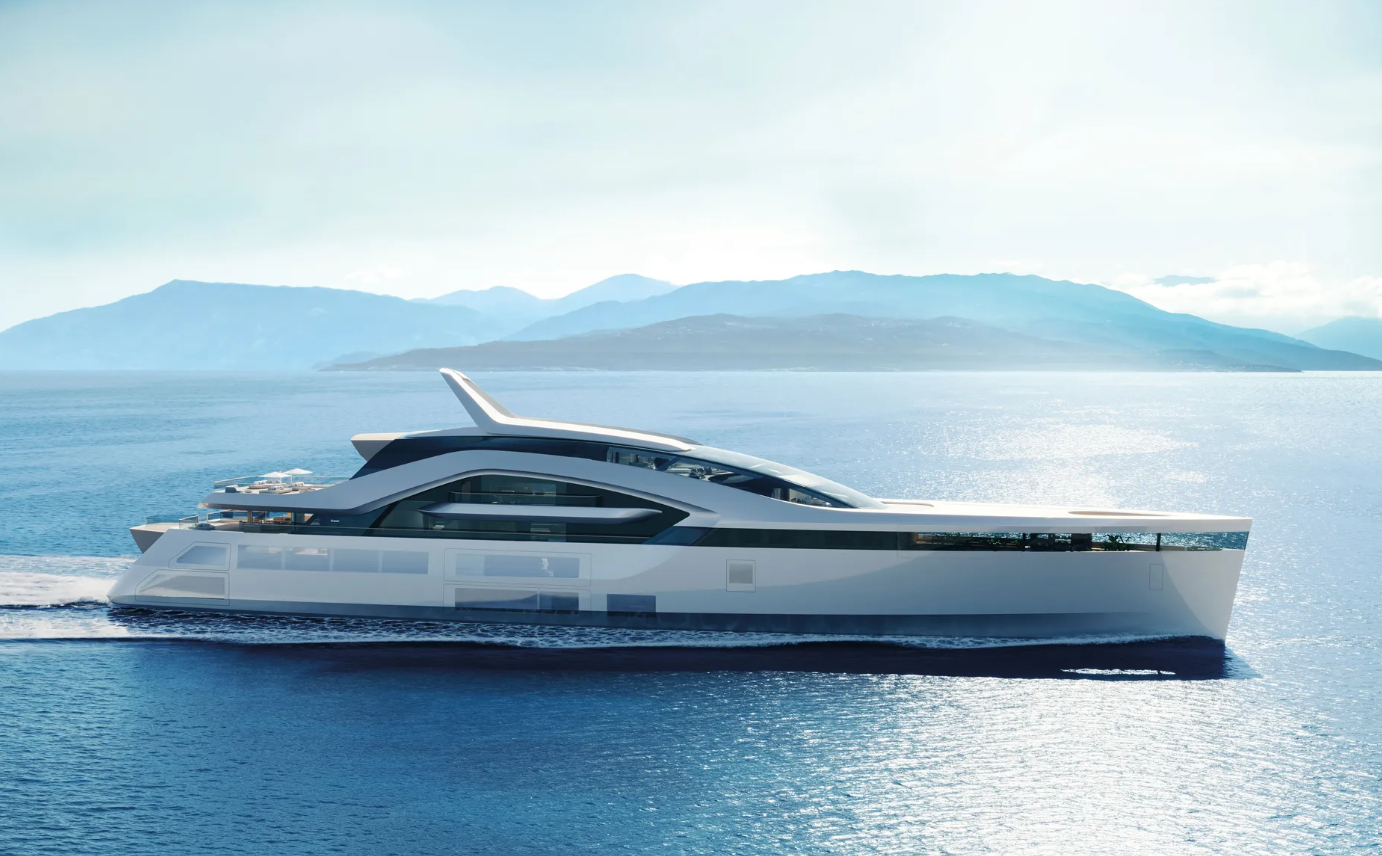
On the owner’s deck, a 20-metre swimming pool incorporates Feadship’s patented ContraWave technology and extends indoors as a suspended, glass-bottomed infinity pool.

Automobili Lamborghini is turning its attention to something considerably more difficult to define: what makes Italian excellence uniquely Italian?

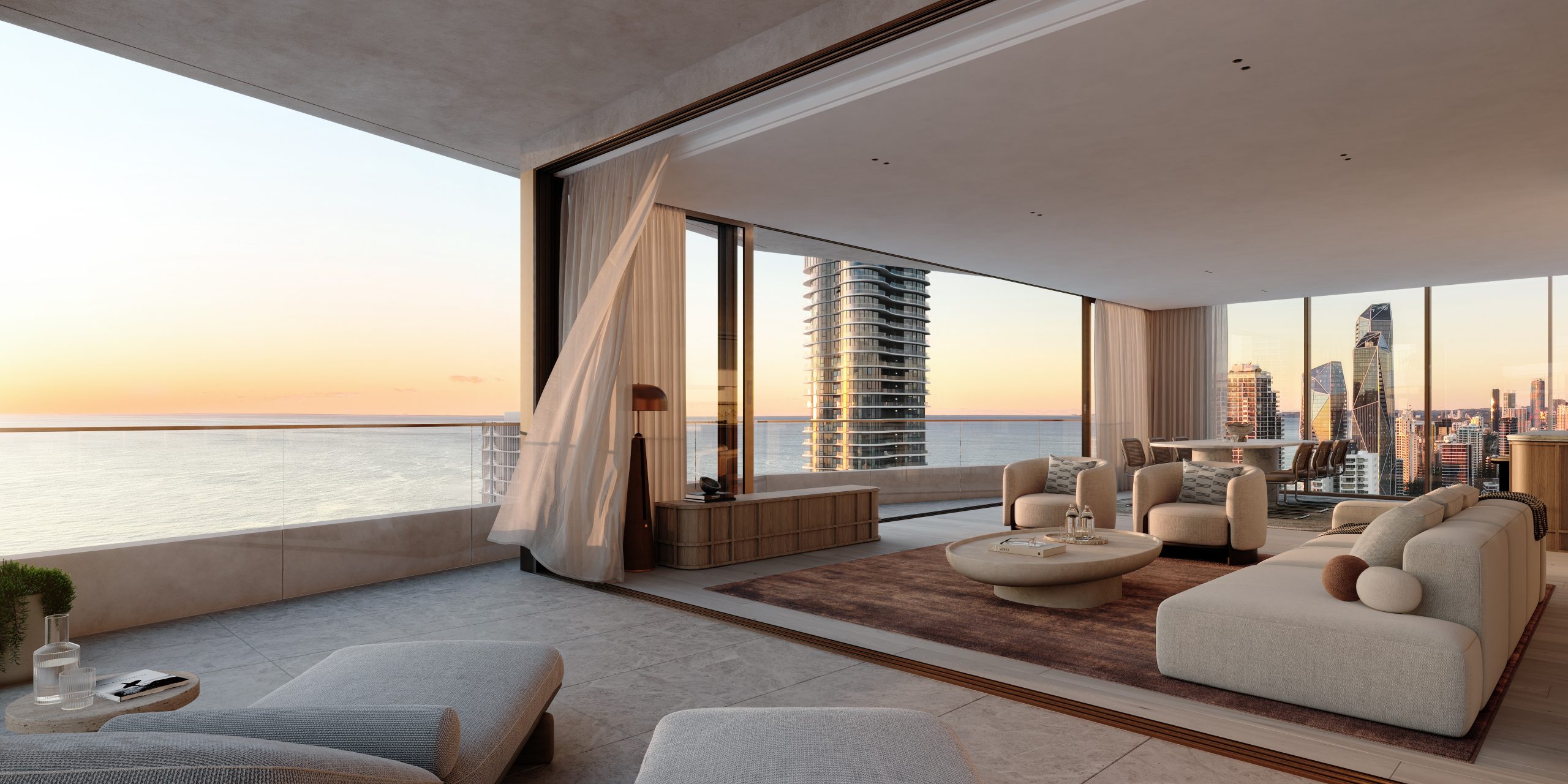
Mirvac’s 45-level Trielle has topped out at Yarra’s Edge, pairing riverfront apartments with wellness facilities, private dining and resident services.
3 min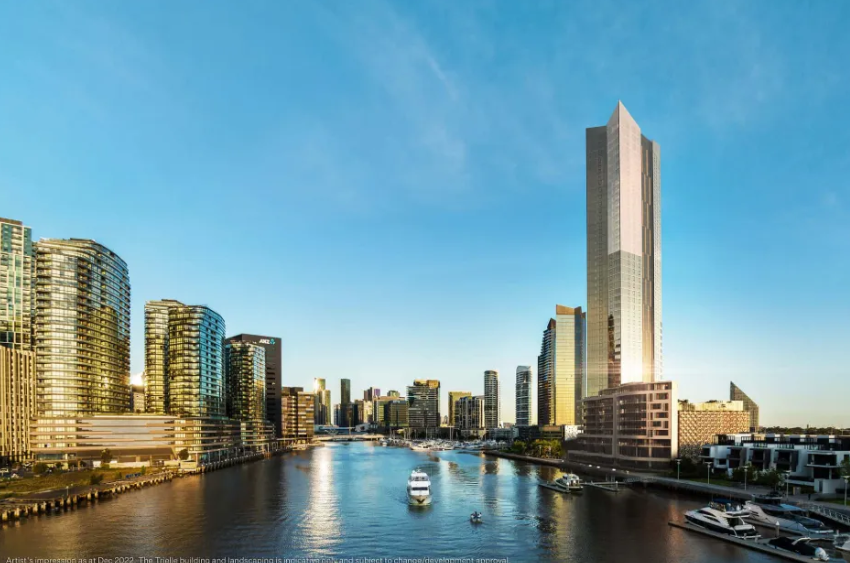
Mirvac has topped out Trielle at Melbourne’s Yarra’s Edge, with more than 70 per cent of the riverfront development sold and approximately 80 per cent of purchasers intending to make their apartment a home.
The figures, released on September 22, point to an owner-occupier audience for one of the precinct’s final residential towers. Mirvac began developing Yarra’s Edge in 2003, and its latest addition occupies one of the remaining absolute riverfront sites.
Mirvac CEO of Development Stuart Penklis said existing residents were among those moving up within the neighbourhood.
“Many purchasers already have a connection to Yarra’s Edge,” Mr Penklis said, describing buyers whose changing needs were encouraging an upgrade within the precinct.
“As one of the final residential towers within Yarra’s Edge, Trielle represents the culmination of more than two decades of creating one of Melbourne’s most established and sought-after waterfront communities,” Penklis said.
“Positioned on the Collins Street axis with absolute river frontage, Trielle offers residents a rare opportunity to enjoy sweeping views across the Yarra River, Melbourne skyline and Port Phillip Bay, while remaining seamlessly connected to the CBD. With Trielle now more than 70 per cent sold, we’re continuing to see strong demand from buyers seeking quality homes in established locations.”
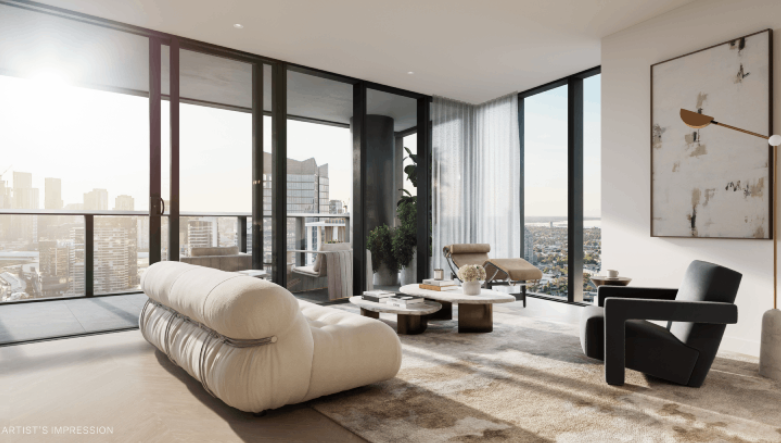
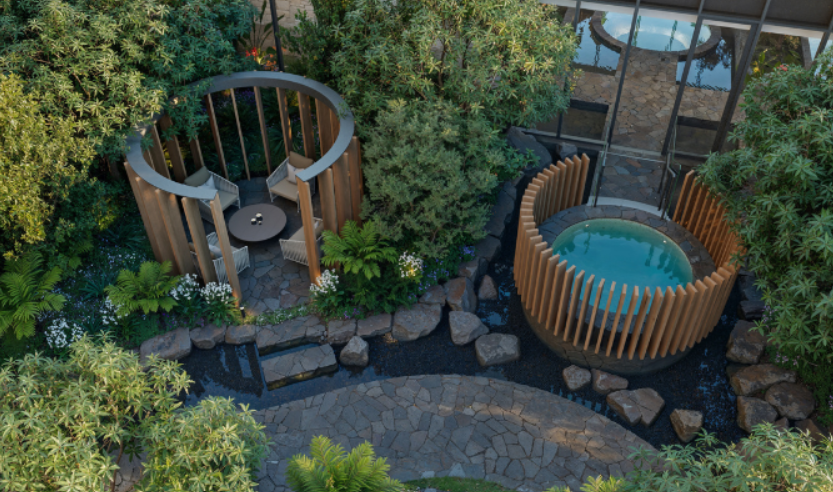
The developer also flagged a penthouse and sub-penthouse collection with larger layouts, premium finishes and broad outlooks. The planned wellness centrepiece, The Oasis, encompasses a 900-square-metre elevated urban rainforest.
Mirvac General Manager Residential Development Victoria Elysa Anderson said Trielle had resonated strongly with buyers seeking a rare lifestyle offering in Melbourne.
“Opportunities to secure a new luxury residence on a riverfront site of this calibre are incredibly rare, particularly within a community like Yarra’s Edge,” Anderson said.
“What makes Trielle unique is the combination of exceptional views, world-class residential facilities and the lifestyle that already exists around it. Residents are buying into a mature waterfront community with parks, promenades, dining, wellness and strong community connections already in place.”
The 45-level tower brings a substantial new presence to that waterfront. Its residential offering spans one-, two-, three- and four-bedroom apartments, with Signature, Prestige and Sub-Penthouse collections accommodating different household sizes. The north-facing position connects the apartments visually to the river and city beyond.
Seven storeys above the promenade, the planned Oasis combines planting and a running stream with a Scandinavian-inspired wellness club developed with spa specialist Naomi Gregory. Facilities include a 25-metre lap pool, hot magnesium pool, sauna, hydrotherapy, a gym, yoga and Pilates room, and treatment spaces.
The amenity extends beyond exercise. Residents will have access to The Biblioteca library and workspaces, ground-floor work pods, and The Salone piano lounge. A private Chef’s Table dining room offers a setting for larger gatherings, while a cinema, games room and sports lounge broaden the entertaining options. Concierge services and a dog-wash area support everyday routines.
Trielle comprises a collection of one, two, three and four-bedroom residences. Reflecting strong demand from owner occupiers, approximately 80 per cent of purchasers to date intend to live in their homes, highlighting the project’s appeal to those seeking a long-term waterfront lifestyle.
Mirvac has recently delivered The Albertine, a premium apartment development on the edge of Melbourne’s CBD, and is nearing completion of Prince & Parade in Brunswick, further strengthening its portfolio of thoughtfully designed apartment communities in some of Melbourne’s most sought-after urban locations.

As interest rates, inflation and market sentiment fluctuate, investors are being urged to focus on data, not panic.

Pure Amazon has begun journeys deep into Peru’s Pacaya-Samiria National Reserve, combining contemporary design, Indigenous craftsmanship and intimate wildlife encounters in one of the richest ecosystems on Earth.