American Airlines Busts Travellers Who Cut the Boarding Line
Audible alerts at the gate call out travellers trying to board earlier than they should

 4 min
4 min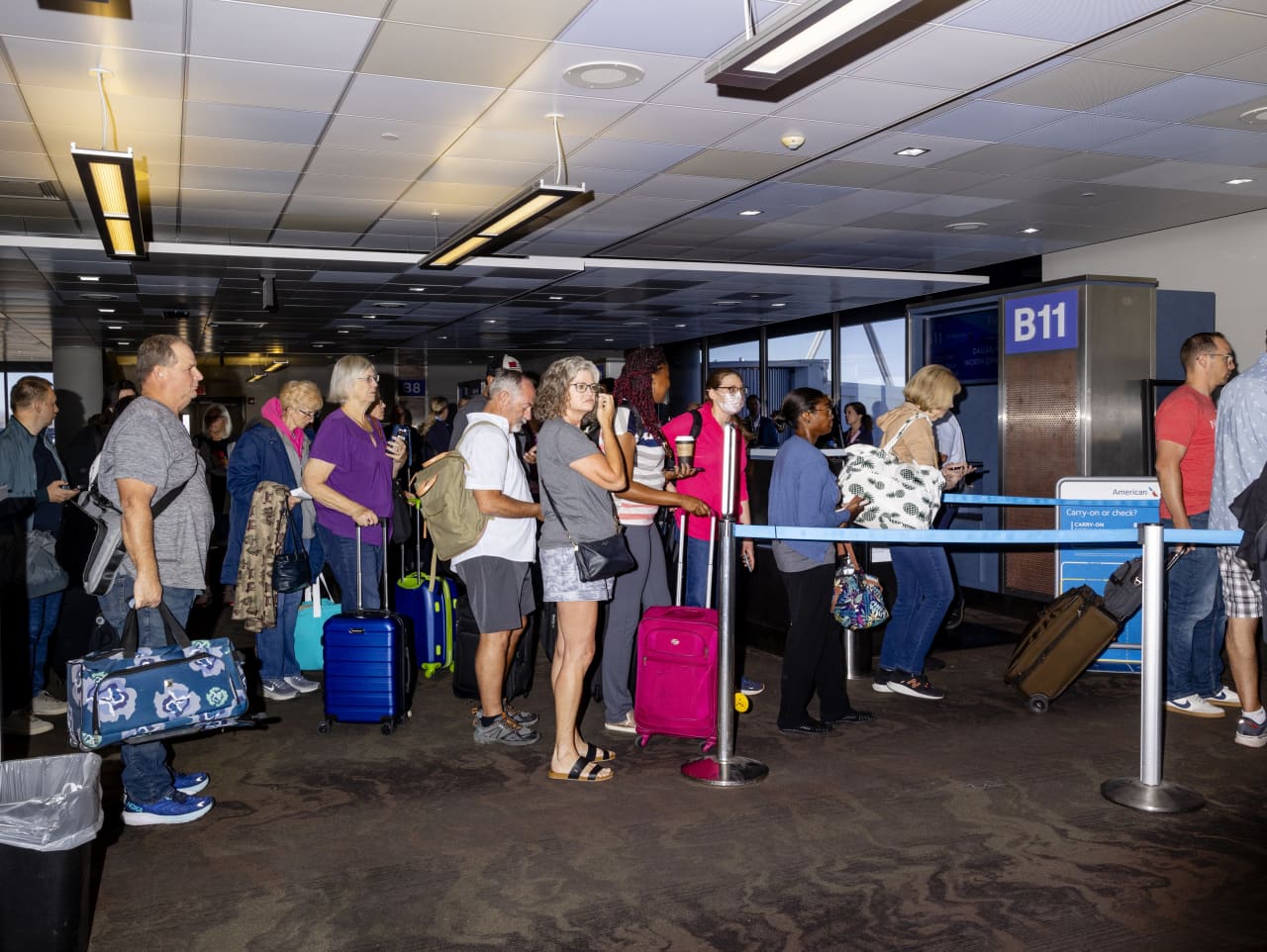
TUCSON, Ariz.—Passengers in Boarding Group 1 were filing onto American Airlines Flight 2721 to Dallas Friday when an ominous sound went off at Gate B11: dip-dip-dip-DOOP. The gate agent delivered the bad news. The passenger was in Group 4. She asked him to wait his turn.
The same sound—the last-gasp sound from AirPods running out of juice, or sad “Game Over” music for an old videogame—went off minutes later. Dip-dip-dip-DOOP.
“You’ll be boarding with Group 5, sir,” the agent said. Five more passengers were turned back before Group 2 was called.
American Airlines is cracking down on line jumpers. All major U.S. airlines do their best to maintain boarding order since priority boarding is a perk for frequent fliers , credit-card holders and big spenders, and is often available for purchase. But American is the first to develop an automated system that instantly flags offenders.
The airline is experimenting at gates in Tucson, Albuquerque, N.M., and Washington, D.C., as part of a broader upgrade to American’s boarding technology. The airline has tested the alerts on more than 4,500 flights this month and will expand to several more cities this year, with an eye to taking it systemwide if no major issues, such as slower boarding, arise at larger airports. The airline says early feedback from fliers and gate agents has been encouraging.
The idea for automated policing grew out of complaints from travellers fed up with line jumpers and the employees who feel their wrath. In particular, top-tier frequent fliers gripe about too many passengers in the first boarding group, says Preston Peterson, American’s managing director of customer experience.
Group 1 is reserved for travellers in first class, certain business-class tickets and American’s executive platinum status. Active duty military members with military I.D. are also allowed. Groups 2 and 3 are similarly elite.
“They’ve earned that [priority] boarding group and they want access to it,” Peterson says.
The biggest perks, of course: plenty of overhead bin space and no worries about the dreaded threat of gate-checking your bag.
A clear difference
The new system promises smoother boarding for passengers and gate agents. I flew to Tucson International Airport to try it out. I put the airline’s traditional boarding to the test at my departure gate in Phoenix. Could I slither into an earlier boarding group? I was in Group 4 but breezed right through with Group 2.
Gate agents tell me it’s hard to monitor passengers’ group numbers manually, big plane or small, especially with boarding-pass readers where travellers plunk their phones face down.
American isn’t telling passengers about the test before their flights, and that’s on purpose. It doesn’t want them to change their behaviour simply because they’re being watched.
Chad Vossen, a 46-year-old chief creative officer for a video-marketing company in Virginia, knew nothing of the test until he and a colleague tried to board in Group 6 instead of Group 8 for a flight to Phoenix. They had done it on other American flights and others, in hopes of avoiding gate-checking their camera equipment.
His first thought when the dip-dip-dip-DOOP went off: “Wow, that doesn’t sound good.”
Vossen says it triggered the sounds losers hear on “Hollywood Squares” or “ The Price is Right .” (American says the sound effects are generic videogame clips and is still testing different sounds.)
He stepped out of line and laughed about getting caught. Vossen says he sees the change mainly as a way to get travellers to pay up for priority boarding. He’s unlikely to pay, but says he will probably finally sign up for American’s loyalty program. Members get complimentary Group 6 boarding regardless of status. That’s one group ahead of regular Main Cabin customers without status.
Peterson, the American customer-experience executive, believes most passengers aren’t out to game the system.
“I think most people just see a line and go, ‘Oh, we’re boarding,’” he says.
Toot toot, hey, beep beep
About one in 10 passengers on American’s test flights have boarded out of order, the airline says. Not all want to cheat the system. Some are travel companions of those with better boarding positions. American’s policy allows them to board together if they’re on the same reservation but didn’t assign the same boarding group. (The alert still goes off, but the agent can easily override it.) And the airline says its system doesn’t flag pre-boarders, like those with wheelchairs.
Exceptions excluded, I counted as many as seven passengers on one flight boarding in the wrong group; on another, it was zero. That math no doubt changes at a busy hub like Chicago or Dallas. So does the potential for tension.
The passengers I saw seemed to take the ejection in stride, moving aside and waiting for their group. One even apologised to the gate agent.
The test is already having an impact beyond the walk of shame. Peterson says the airline has noticed some passengers jumping out of line after seeing fellow fliers turned away. He says he witnessed the same thing at a non-U.S. airline that began policing boarding groups.
Peterson’s ultimate goal: zero boarding group alerts. “I don’t want anyone to be dinged,” he says.
For now, passengers should expect a cacophony at American gates employing the new tech. Not all alerts will send you to the back of the line. Hear a slot-machine-like sound when you scan your boarding pass? You’re probably seated in an exit row.
Even if you get the dreaded you’re-in-the wrong-boarding-group alert, it could be a mistake. A passenger in Group 8 was taken aback Friday afternoon when it sounded on her flight to Phoenix.
“That did not sound good at all,” she said to the flight attendant.
“You failed at ‘Pac-Man,’” the agent joked.
She was in the right place. The agent hadn’t yet flipped the switch in the app to her group.
 Copyright 2020, Dow Jones & Company, Inc. All Rights Reserved Worldwide. LEARN MORE





Australian shares fell on Thursday as Wall Street weakness, rising oil and persistent rate concerns weighed on most of the market. The S&P/ASX 200 declined 0.72 per cent to 8,702. The All Ordinaries lost 0.66 per cent to finish at 8,897. Mining stocks were hit particularly hard, while real estate also dragged on the index. …
Continue reading “ASX falls 0.7 per cent as miners and property stocks retreat”

Borrowers cannot control the Reserve Bank, but they can control how exposed their household budget is to its next decision. The RBA meets on 29 September with inflation concerns still elevated and major-bank economists increasingly bringing forward their rate-rise calls. Fixed mortgage rates have also been moving, reducing the value of waiting for perfect certainty. …
Continue reading “What mortgage holders should do before the next RBA decision”
2 min
A property portfolio can look comfortable until several small pressures arrive together: a rate increase, a vacancy, higher insurance and an unexpected repair. The correct time to model that combination is before it occurs.
Start by recalculating every loan at 0.25, 0.50 and one percentage point above its current rate. Include principal-and-interest repayments even where a loan is temporarily interest-only, because the eventual step-up may be larger than the next RBA move.
Then calculate true net rent. Deduct management, council and water charges, strata, insurance, maintenance, land tax where applicable and a vacancy allowance. A property advertised with an attractive gross yield can produce a very different result after these costs.
Third, review the portfolio’s liquidity. An offset account can reduce interest while keeping cash accessible, but investors should obtain tax advice before moving funds between loans. The distinction between investment and private debt affects deductibility, and poorly structured redraws can create lasting complexity.
Fourth, examine refinancing risk rather than just today’s rate. A highly leveraged investor may be unable to refinance on the same terms because the new lender tests total debt at a higher assessment rate. Credit-card limits, owner-occupied debt and shaded rental income can all reduce capacity.
Fifth, rank properties by resilience. Consider net yield, vacancy risk, near-term capital expenditure, tenant demand, debt attached and the cost of selling. This is not an instruction to sell the weakest performer automatically; transaction costs and tax consequences matter. It is a way to identify where pressure would emerge first.
Investors should also review fixed-rate and interest-only expiry dates. A portfolio with several facilities resetting in the same quarter carries concentration risk even when each loan appears manageable individually.
The goal is not to predict the RBA perfectly. It is to ensure that one policy decision does not force a rushed refinancing, sale or reduction in essential maintenance. A portfolio that can absorb higher rates and temporary income interruptions gives its owner time to make deliberate decisions.
Read more: What mortgage holders should do before the next RBA decision
Portfolio checklist
Stress test: Current rate plus 0.25, 0.50 and one percentage point.
Model: Net rent after every recurring cost and vacancy.
Check: Fixed-rate expiries, interest-only expiries and loan maturity.
Preserve: An accessible emergency buffer.
Review: Insurance, land tax, strata works and major maintenance.
Seek advice: Licensed credit, financial and tax advice before restructuring.
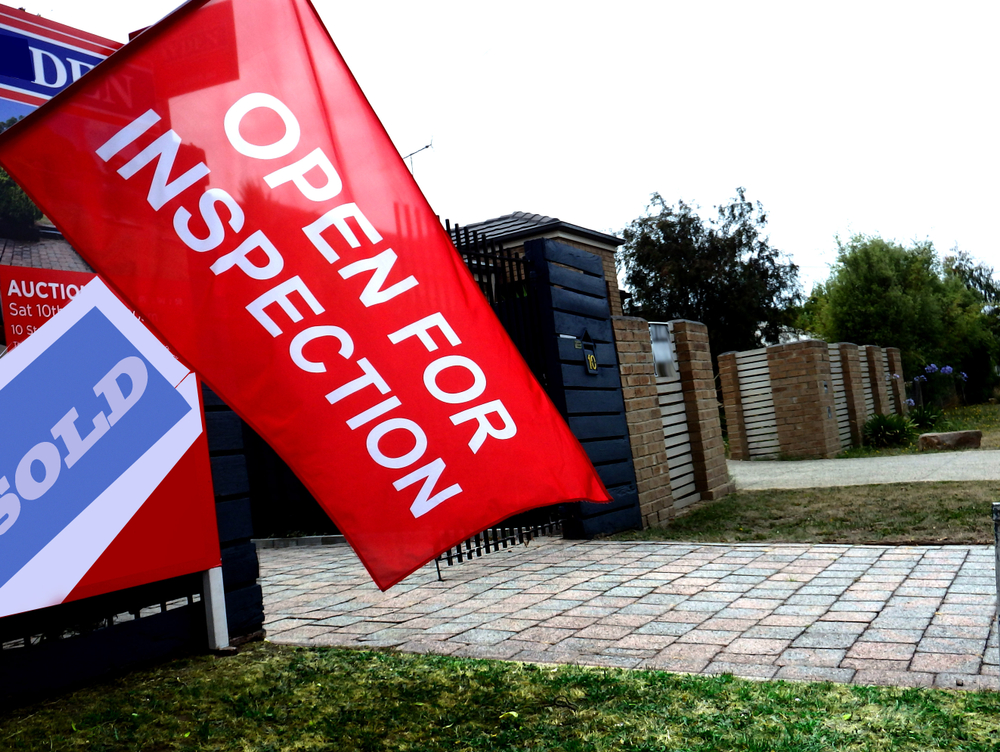
Australia’s housing market rebounded sharply in 2025, with lower-value suburbs and resource regions driving growth as rate cuts, tight supply and renewed competition reshaped the year.

From gorilla encounters in Uganda to a reimagined Okavango retreat, Abercrombie & Kent elevates its African journeys with two spectacular lodge transformations.