ROBIN HOOD POLITICS RISKS MAKING AUSTRALIA’S HOUSING CRISIS WORSE
The Federal Budget has created a supply freeze that could push rents higher, reduce investment and hand more of Australia’s housing stock to offshore institutions.
 4 min
4 min
For months, I have been one of the few commentators openly stating what the data was already showing: property prices had begun to fall.
The latest figures confirm it. Cotality’s June 1 Home Value Index showed Sydney values down 0.9 per cent in May and Melbourne down 0.8 per cent. ANZ has cut its national capital city forecast to 2.8 per cent growth this year, down from 4.8 per cent in April. CBA has also downgraded its outlook.
So the Federal Budget arrived at the worst possible time, with the wrong prescription, to treat a problem it fundamentally misunderstands.
Treasurer Jim Chalmers has suggested that making it easier for first-home buyers to get a fair crack at auctions is a good thing. The reality is more complicated.
Driving property prices down does not simply hand a discount to first-home buyers. It affects the 1.4 million Australians employed by the property sector, the 67 per cent of household wealth tied to housing, and the state government revenues that fund schools, hospitals and roads.
The government had a choice: tackle supply constraints, link migration growth to housing completions and reduce spending, or increase taxes on property investors. It chose the latter.
Property is an economic pillar
Property is not simply another investment class. It contributes about 10.6 per cent of GDP directly, up to 15 per cent when flow-on effects are included, and employs more than 1.4 million Australians. It also generates more tax revenue than mining and underpins consumer confidence through the wealth effect.
Against that backdrop, the Budget removed negative gearing from established residential properties purchased after Budget night and replaced the 50 per cent capital gains tax discount with cost-base indexation and a 30 per cent minimum tax from July 1, 2027.
The government calls this fairness. I call it a misdiagnosis.
The grandfathering trap
The policy is also internally contradictory.
Properties purchased before Budget night are grandfathered, allowing existing investors to retain full negative gearing and capital gains tax benefits until they sell. The logical response is simple: hold.
That means fewer properties coming onto the market, fewer rental listings and reduced transaction volumes.
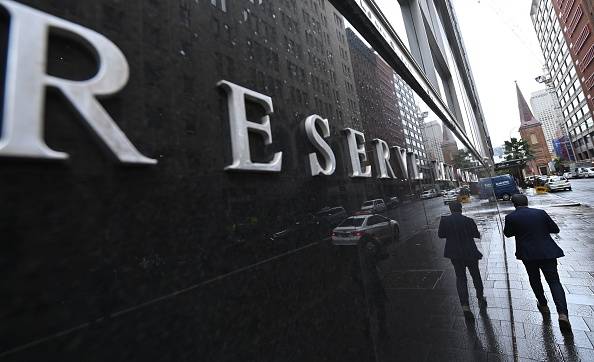
The result is likely to be higher rents, reduced stamp duty revenue and further inflationary pressure at a time when the Reserve Bank remains focused on bringing inflation under control.
The government is attempting to fight inflation with one hand while fuelling it with the other.
Who really owns investment properties?
What is often lost in this debate is who Australia’s property investors actually are.
According to ATO data, 71 per cent of investors own just one investment property. They are not wealthy property moguls.
They are teachers, nurses, police officers and small business owners who have purchased an investment property as part of their retirement strategy.
For many Australians, property remains the most tangible and trusted pathway to building long-term wealth.
Removing the incentives that supported that investment does not hurt a billionaire developer. It hurts ordinary Australians trying to secure their financial future.
Investors aren’t the affordability problem
It is true that housing affordability has deteriorated significantly over the past two decades. However, negative gearing is not the primary cause.
Research by economists Ross Kendall and Peter Tulip found planning and zoning restrictions significantly increase housing costs.
Their work showed zoning lifted detached house prices well above marginal construction costs in Sydney, Melbourne, Brisbane and Perth.
Low interest rates, strong population growth, chronic under-supply and restricted access to development-ready land have all played a much larger role in pushing prices higher.
Punishing private investors does nothing to address these structural issues.
The Build-to-Rent advantage
At the same time the government is reducing incentives for Australian investors, it has created a more attractive tax environment for foreign institutional capital through Build-to-Rent projects.
Under current arrangements, foreign institutional investors can access a 15 per cent withholding tax rate through Managed Investment Trusts, accelerated depreciation benefits and exemptions from the new negative gearing restrictions.
State governments have added further concessions, including land tax reductions and exemptions from foreign investor surcharges.
Australian mum-and-dad investors receive none of these advantages.
The cumulative effect is striking. Foreign institutions can access a range of tax benefits unavailable to Australian private investors, while local investors lose concessions they have relied upon for decades.
This is not solving the housing crisis. It risks transferring ownership of Australia’s rental housing stock from local investors to offshore institutions.
Why state governments should worry
There are already signs these changes are affecting the credit cycle.
Major banks are removing negative gearing benefits from serviceability calculations for investment loans.
As market conditions soften, lenders become more cautious and investors find it harder to secure finance.
That matters because property transactions are a major source of state government revenue.
In NSW alone, transfer duty generates more than $12 billion annually. If transaction volumes fall significantly, the impact on state budgets will be substantial.
The consequences extend beyond stamp duty to GST collections, payroll tax receipts and land tax revenue.
The 95 per cent loan trap
There is another aspect of the Budget that concerns me.
The government has expanded first-home buyer deposit guarantee schemes, allowing eligible purchasers to buy with a five per cent deposit backed by the Commonwealth.
The intention is admirable. The timing may not be.
If prices in Sydney and Melbourne fall further, buyers entering the market with 95 per cent loan-to-value mortgages could quickly find themselves in negative equity.
They become trapped. They cannot sell without crystallising a loss, while the taxpayer guarantees the loan and the bank remains protected.
That is not wealth creation. It is a debt obligation.
After three decades working with debt and investment, I would never encourage my own children to borrow at a 95 per cent loan-to-value ratio.
A policy built on politics
The government had an opportunity to address the housing crisis by encouraging supply, reforming planning systems and reducing development costs.
Instead, it chose Robin Hood politics.
The optics may be appealing, but the economics are not.
Australians may ultimately pay the price through higher rents, weaker investment and a future in which an increasing share of the nation’s housing stock is owned by offshore institutions rather than local investors.
Paul Miron is the Co-Founder & Fund Manager of Msquared Capital.

From making unpopular decisions to learning when to listen, leaders from five businesses reveal what nobody prepared them for — and how running a company has challenged their expectations.

Technology and semiconductor shares fell sharply as investors questioned the debt financing the AI infrastructure boom and confronted higher rates and Chinese competition.
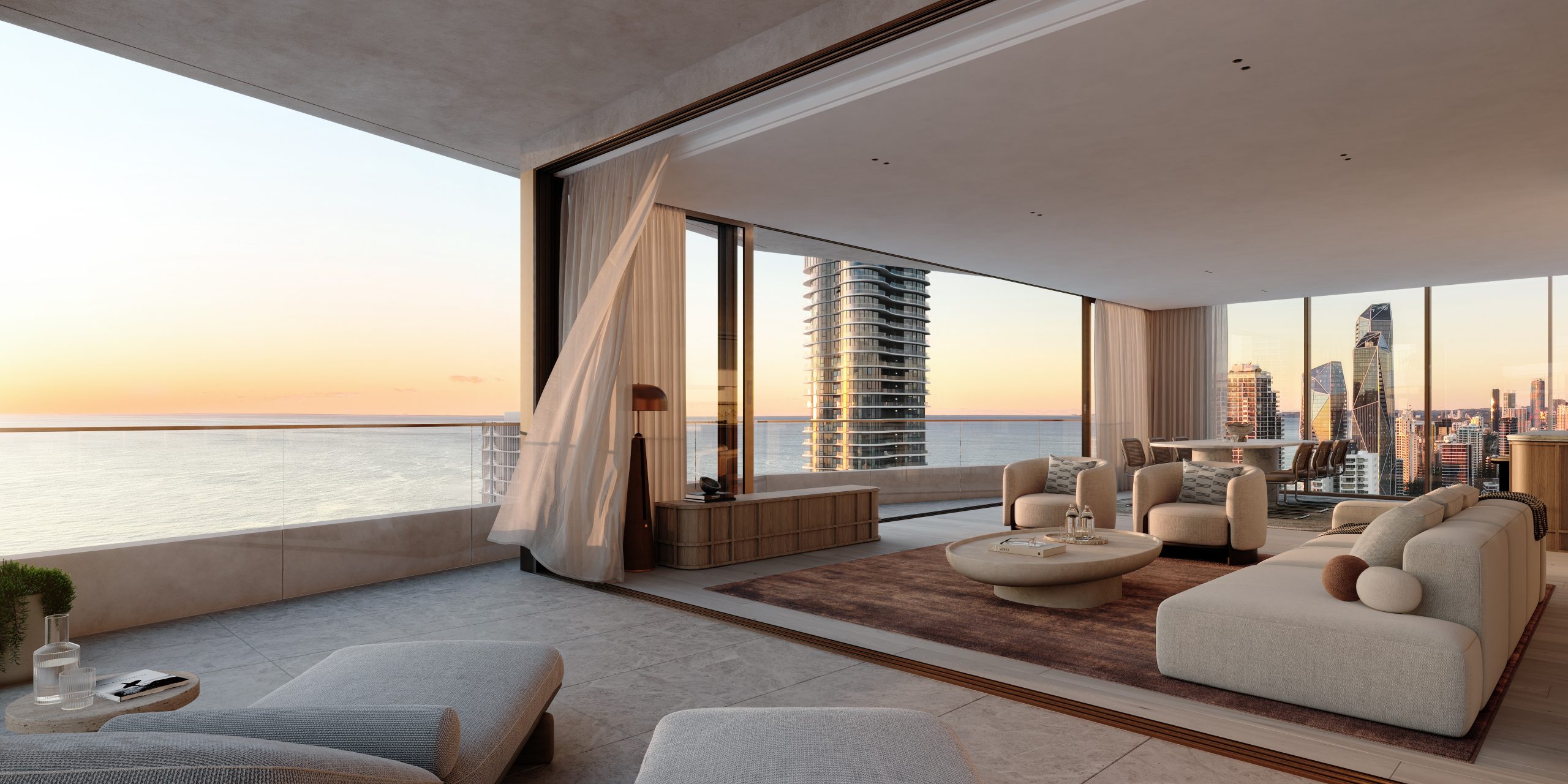
Mirvac’s 45-level Trielle has topped out at Yarra’s Edge, pairing riverfront apartments with wellness facilities, private dining and resident services.
3 min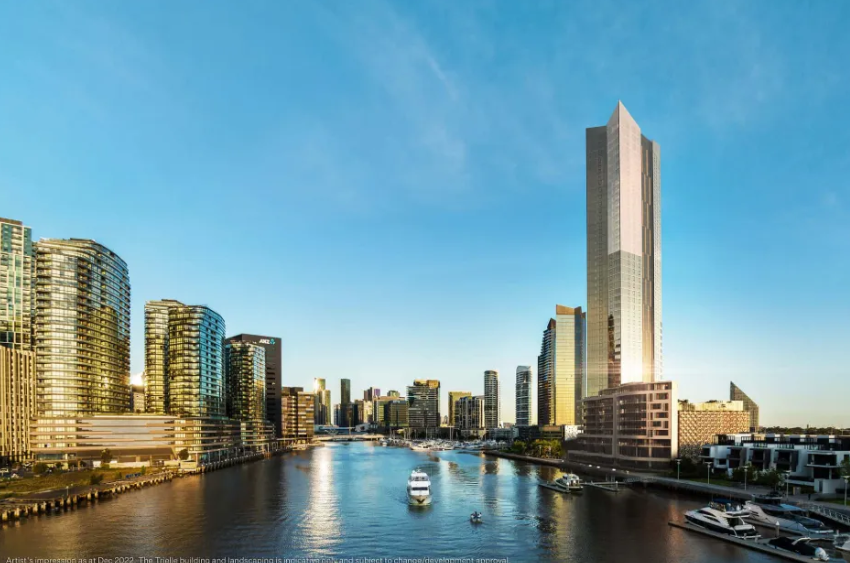
Mirvac has topped out Trielle at Melbourne’s Yarra’s Edge, with more than 70 per cent of the riverfront development sold and approximately 80 per cent of purchasers intending to make their apartment a home.
The figures, released on September 22, point to an owner-occupier audience for one of the precinct’s final residential towers. Mirvac began developing Yarra’s Edge in 2003, and its latest addition occupies one of the remaining absolute riverfront sites.
Mirvac CEO of Development Stuart Penklis said existing residents were among those moving up within the neighbourhood.
“Many purchasers already have a connection to Yarra’s Edge,” Mr Penklis said, describing buyers whose changing needs were encouraging an upgrade within the precinct.
“As one of the final residential towers within Yarra’s Edge, Trielle represents the culmination of more than two decades of creating one of Melbourne’s most established and sought-after waterfront communities,” Penklis said.
“Positioned on the Collins Street axis with absolute river frontage, Trielle offers residents a rare opportunity to enjoy sweeping views across the Yarra River, Melbourne skyline and Port Phillip Bay, while remaining seamlessly connected to the CBD. With Trielle now more than 70 per cent sold, we’re continuing to see strong demand from buyers seeking quality homes in established locations.”
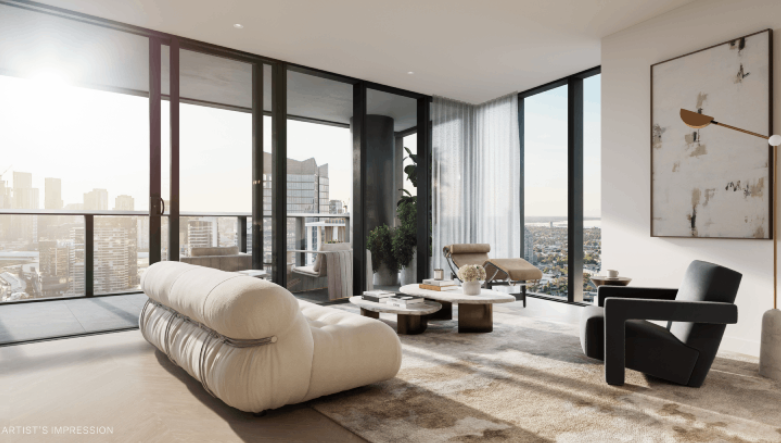
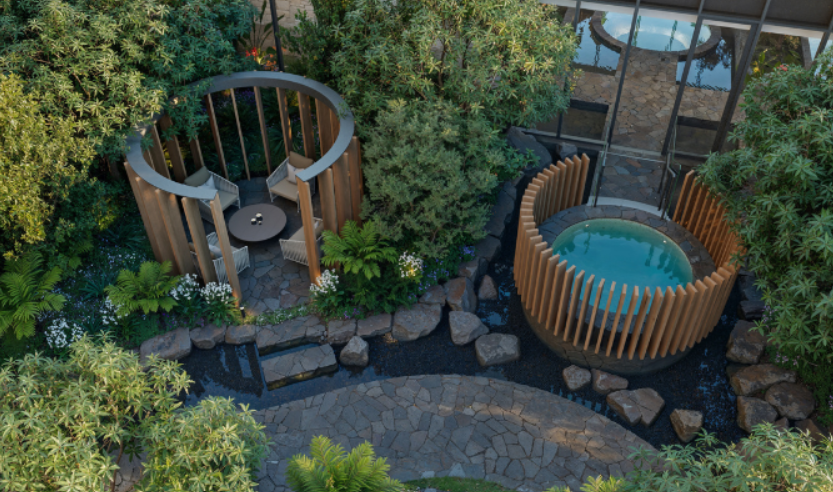
The developer also flagged a penthouse and sub-penthouse collection with larger layouts, premium finishes and broad outlooks. The planned wellness centrepiece, The Oasis, encompasses a 900-square-metre elevated urban rainforest.
Mirvac General Manager Residential Development Victoria Elysa Anderson said Trielle had resonated strongly with buyers seeking a rare lifestyle offering in Melbourne.
“Opportunities to secure a new luxury residence on a riverfront site of this calibre are incredibly rare, particularly within a community like Yarra’s Edge,” Anderson said.
“What makes Trielle unique is the combination of exceptional views, world-class residential facilities and the lifestyle that already exists around it. Residents are buying into a mature waterfront community with parks, promenades, dining, wellness and strong community connections already in place.”
The 45-level tower brings a substantial new presence to that waterfront. Its residential offering spans one-, two-, three- and four-bedroom apartments, with Signature, Prestige and Sub-Penthouse collections accommodating different household sizes. The north-facing position connects the apartments visually to the river and city beyond.
Seven storeys above the promenade, the planned Oasis combines planting and a running stream with a Scandinavian-inspired wellness club developed with spa specialist Naomi Gregory. Facilities include a 25-metre lap pool, hot magnesium pool, sauna, hydrotherapy, a gym, yoga and Pilates room, and treatment spaces.
The amenity extends beyond exercise. Residents will have access to The Biblioteca library and workspaces, ground-floor work pods, and The Salone piano lounge. A private Chef’s Table dining room offers a setting for larger gatherings, while a cinema, games room and sports lounge broaden the entertaining options. Concierge services and a dog-wash area support everyday routines.
Trielle comprises a collection of one, two, three and four-bedroom residences. Reflecting strong demand from owner occupiers, approximately 80 per cent of purchasers to date intend to live in their homes, highlighting the project’s appeal to those seeking a long-term waterfront lifestyle.
Mirvac has recently delivered The Albertine, a premium apartment development on the edge of Melbourne’s CBD, and is nearing completion of Prince & Parade in Brunswick, further strengthening its portfolio of thoughtfully designed apartment communities in some of Melbourne’s most sought-after urban locations.
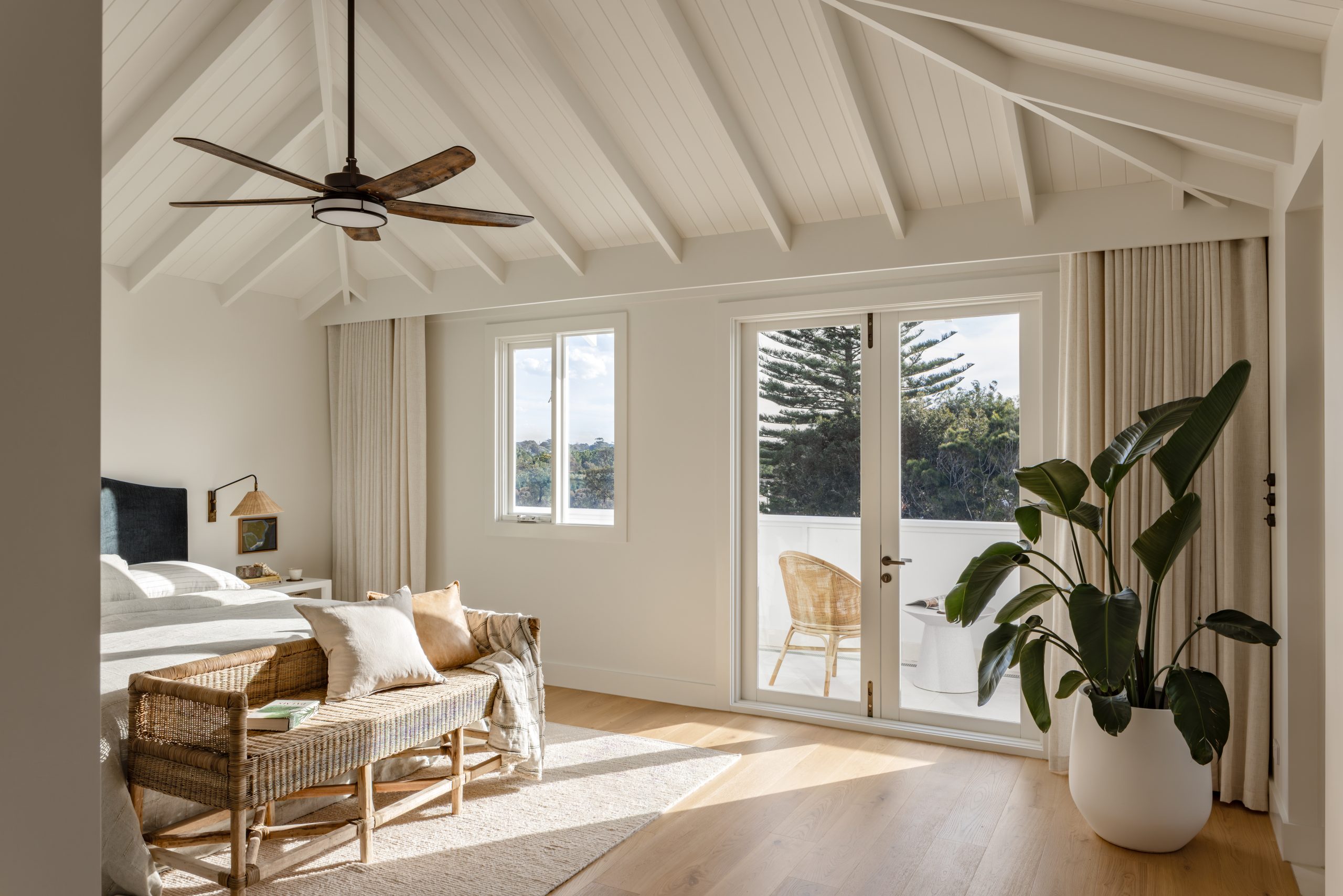
From warmer neutrals to tactile finishes, Australian homes are moving away from stark minimalism and towards spaces that feel more human.
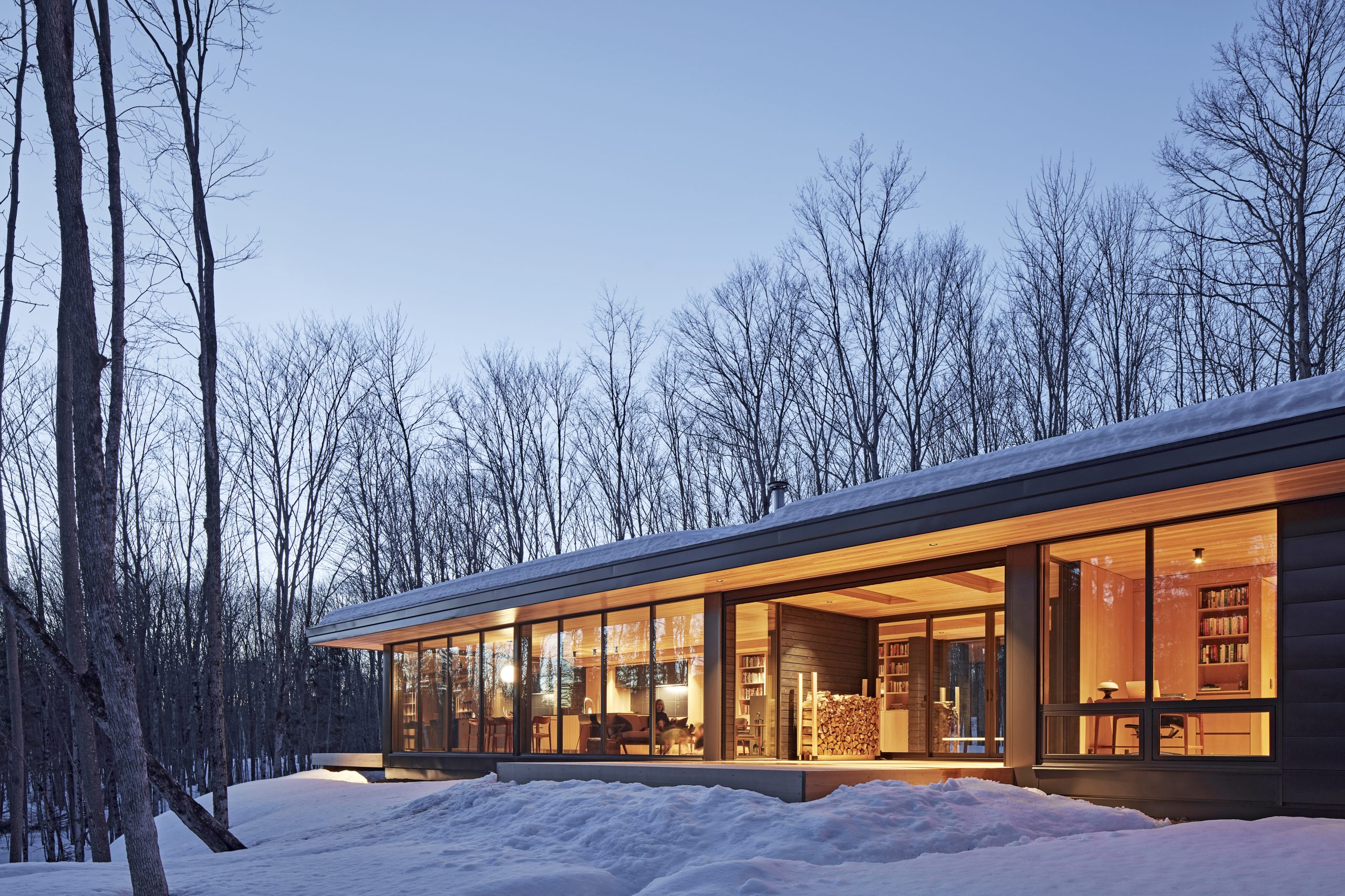
From reworked homes to remote retreats, designers are prioritising warmth and a deeper connection to landscape.