Missiles and Commercial Jets Are Sharing the Skies in One of the World’s Busiest Flight Corridors
Scores of airlines have stumbled into a war zone in the Middle East; ‘we were lucky’

 6 min
6 min
“Are those fireworks or something?” asked a passenger on Emirates flight EK146 from Amsterdam to Dubai last month, in a video posted to social media. In fact, what she was watching through her cabin window was a barrage of Iranian missiles headed to Israel.
Her flight was one of scores that shared the skies with Iranian missiles on Oct. 1, an example of how the escalating conflict in the Middle East is endangering commercial aircraft in some of the world’s busiest skies.
The number of missiles crisscrossing the region has surged since the start of Israel’s war with Hamas: An average of 162 missiles have been fired each month so far this year, up from 10 a month in 2023, according to aviation security firm Osprey Flight Solutions. This has led to warnings from airlines, crews, security experts and families of air crash victims that an airliner could inadvertently be shot out of the sky.
Missiles have been spotted in-flight by pilots and passengers, struck near airports, and been fired by militaries and militias without warning to airlines. Governments and aviation regulators have meanwhile failed or been slow to close or restrict airspace.
There is precedent for the concern. Two commercial aircraft have been shot down in recent conflicts. Malaysia Airlines flight MH17 was downed over eastern Ukraine by Russian-backed militants in 2014, and Ukrainian Airlines flight PS752 was mistaken for an incoming missile by Iranian forces shortly after takeoff from Tehran in 2020.
For passengers flying on Oct. 1, the threat felt real. Madalina Birca, 24, was flying with Emirates from Nice, France, to Dubai when the captain announced, with a slight tremble in her voice, that “due to the war situation” the flight was being diverted.
Passengers quickly switched their screens to news channels to find that Iran had started its attack on Israel. Birca followed on the live flight map as the aircraft made an abrupt turn just before crossing into Iranian airspace. She used the in-flight Wi-Fi to try to calculate the missiles’ trajectories and how close her flight had come to catastrophe.
“We were very lucky that we didn’t cross already into the airspace,” Birca said.
Birca’s was one of more than 80 flights that were diverted on Oct. 1 because of the attack. Many other flights continued uninterrupted over Iraq, Jordan, Syria and northern Saudi Arabia, with dozens passing close to launch sites in the north and south of Iran.
Radio messages from air-traffic control towers in Iraq, Kuwait and Bahrain captured some of the tumult in the skies, with pilots declaring emergencies and diversions, and in some cases exclaiming that they could see the projectiles themselves.
“Missiles over Baghdad, over Najaf, over everywhere,” one pilot radioed to Baghdad air traffic controllers, according to a feed from live radio specialist, Broadcastify.
“We noticed some missiles,” a Kuwait Airways pilot said.
“Lights, rockets, I don’t know, now they’re not visible anymore,” someone radioed to pilots on Air France flight 662 to Dubai. Air France has opened a probe into why the flight was caught in the affected airspace.
While ballistic missiles reach an apex far above the altitude of a commercial jet, they pose a major risk during their ascent and descent. About 10% of Iran’s ballistics are also estimated to fail midflight, which, along with their ejected boosters, leads to falling debris. Cruise missiles typically fly at lower altitudes, endangering aircraft as they take off and land. At times, the biggest risk is posed by air-defence systems misidentifying a commercial aircraft as incoming fire.
The tally of projectiles, tracked by Osprey, accounts only for ballistic and cruise missiles. Its figures don’t include unguided rockets, mortars, artillery fire and drone attacks, each of which can also endanger flights.
The risk is ongoing. Iran has briefed regional officials that it’s preparing a response to Israel’s latest retaliatory strike that will utilise more powerful warheads. Osprey has warned airline customers that the next attack could be coordinated with Iranian-backed militias in Iraq, Syria, Yemen and Lebanon, widening the areas of airspace at risk.
Meanwhile, strikes exchanged between Israel and Hezbollah have regularly targeted or struck areas near airports, including a missile that landed in a parking lot at Tel Aviv Airport this month and an Israeli airstrike that caused an explosion near Beirut Airport’s runways a day later.
Israel’s strike against Iranian sites on Oct. 26 was also launched without official notice to airlines, though the early morning timing—around 2:15 am in Iran—meant fewer aircraft were operating. The Israeli Air Force typically consults air-traffic controllers before any strike to try to minimise risk, according to an official.
“It’s a huge concern to civil aviation. We know what happened with the Ukrainian airliner that was shot down in Iran mistakenly,” said Hassan Shahidi , president of the Flight Safety Foundation, a global, nonprofit advocacy group, calling the incident “absolutely preventable.”
Despite the surge in military activity, Middle Eastern airspace has largely remained open over the past year. The region’s already busy skies have become more important after Russia’s invasion of Ukraine locked out carriers from swaths of airspace over both countries.
Aviation safety experts have criticised the inconsistent way in which the skies have been managed by governments, including issuing late or no airspace closures.
“National security and foreign policy trump aviation security, and it happens over and over again in conflict zones,” Osprey’s Chief Intelligence Officer Matt Borie said in an interview.
The U.S. Federal Aviation Administration and others have long imposed bans and restrictions on flights over North Korea because of the country’s tendency to conduct a handful of unannounced ballistic missile tests each year. Last year North Korea launched 37 missiles; this year so far, 52.
Days after Iran’s Oct. 1 launch, the FAA extended its ban on U.S. carriers crossing into Iranian airspace by three years until October 2027, a prohibition it first put in place after the downing of Ukrainian Airlines flight PS752 in 2020. A separate restriction that prevents flights over Syria is also in effect until 2028.
U.S. carriers aren’t restricted from flying over Iraq as long as the aircraft is traveling at a minimum altitude of 32,000 feet, according to the FAA’s latest advisory. There are no explicit warnings against operations over Jordan, Lebanon or Israel, though the agency maintains a 2021 notice that airlines “exercise caution” in those areas because of the proximity to the military situation in Syria.
A push at the United Nations to standardise rules for commercial flights over conflict zones that began after the downing of MH17 in 2014 has largely stalled, security experts say.
The U.N.’s International Civil Aviation Organization disputed that characterisation, citing an updated manual due this year, a meeting of its “Safer Skies” committee next year and the possible hosting of a third workshop on the subject. The measures demonstrate “the international community’s ongoing dedication to preventing future tragedies in conflict zones,” a spokesman said.
Outside of official bans, airlines typically make their own decisions about whether to fly over a conflict zone on any given day. They rely on a patchwork of advisories from regulators, intelligence from government agencies and advice from private security companies. Rerouting a flight can be a major operational challenge that adds additional fuel costs, can require additional staffing, and which disrupts preassigned takeoff and landing slots.
Even before Oct. 1, most Western carriers, including U.S. airlines, had withdrawn flights to Israel, Iran and Jordan. Many have also opted to reroute flights crossing that corridor to now fly via Egypt and Saudi Arabia.
Carriers are also taking other measures. Emirates is carrying additional fuel in case a flight is required to make an emergency diversion, while European discounter Wizz Air says it will only fly in certain airspace during daytime hours when the risk of an attack is lower. Israel’s flag carrier El Al, meanwhile, has long equipped its aircraft with antimissile defence systems.
Airlines say that safety is their top priority and that any flight path is carefully considered before being allowed to depart. But they’ve also criticized governments, including after Iran’s Oct. 1 attack, for not taking adequate care to protect commercial aviation.
“It’s quite volatile,” Emirates Chief Commercial Officer Adnan Kazim said in a recent interview, adding that his airline has regularly been holding multiple security meetings a day, in addition to its daily security briefing. “Some of these kinds of situations, unfortunately they don’t come with any alert, or any pre-information and you need to manage the situation as you go.”
Israel has rerouted standard flight paths in and out of the Tel Aviv airport away from danger zones since the start of the conflict, according to Libby Bahat, head of aerial infrastructure at the Civil Aviation Authority of Israel. When it learns of potential incoming attacks, it reduces the number of flights in the airspace to make it easier for air-traffic controllers to quickly scatter aircraft to safety, Bahat said.
A spokeswoman for the Israeli Defense Force declined to comment. Aviation regulators in Iran, Iraq, Jordan and Lebanon didn’t respond to requests for comment.
Pilots have expressed concerns. The European Cockpit Association has complained that some airlines are forcing pilots to fly routes even if they disagree with their airline’s safety assessment. The union also wants airlines to update life insurance policies, which typically don’t pay out in the case of a downing over a conflict zone.
“At any moment another disaster could happen that can take the life of innocent people again,” said Kourosh Doustshenas, whose partner died along with 175 others when Iran inadvertently shot down Ukrainian Airlines flight PS752. “We have gone through this, and this can happen any time.”
The U.S. had cautioned that morning of an increased risk of misidentification in Iranian airspace, but with most of its security team off work for Orthodox Christmas, Ukrainian Airlines failed to heed the warning.
Doustshenas has called for governments to be held legally accountable for failing to protect civilian airliners from becoming collateral damage. He also wants passengers to be informed if their flight is routed to fly over a conflict zone.
“Regular people going to the airport to catch their flight have no idea,” Doustshenas said.
 Copyright 2020, Dow Jones & Company, Inc. All Rights Reserved Worldwide. LEARN MORE





For Central Element, the start of work at Pearl represents another step in the company’s growing eastern suburbs pipeline.

All three vehicles will form part of a broader charitable initiative benefiting Big Brothers Big Sisters of America, the American Red Cross and Starlight Children’s Foundation


Randy Boyagoda’s new novel, “Lords of Serendipity,” delivers a biting satire of cheating, politics and dysfunction across modern universities.
5 min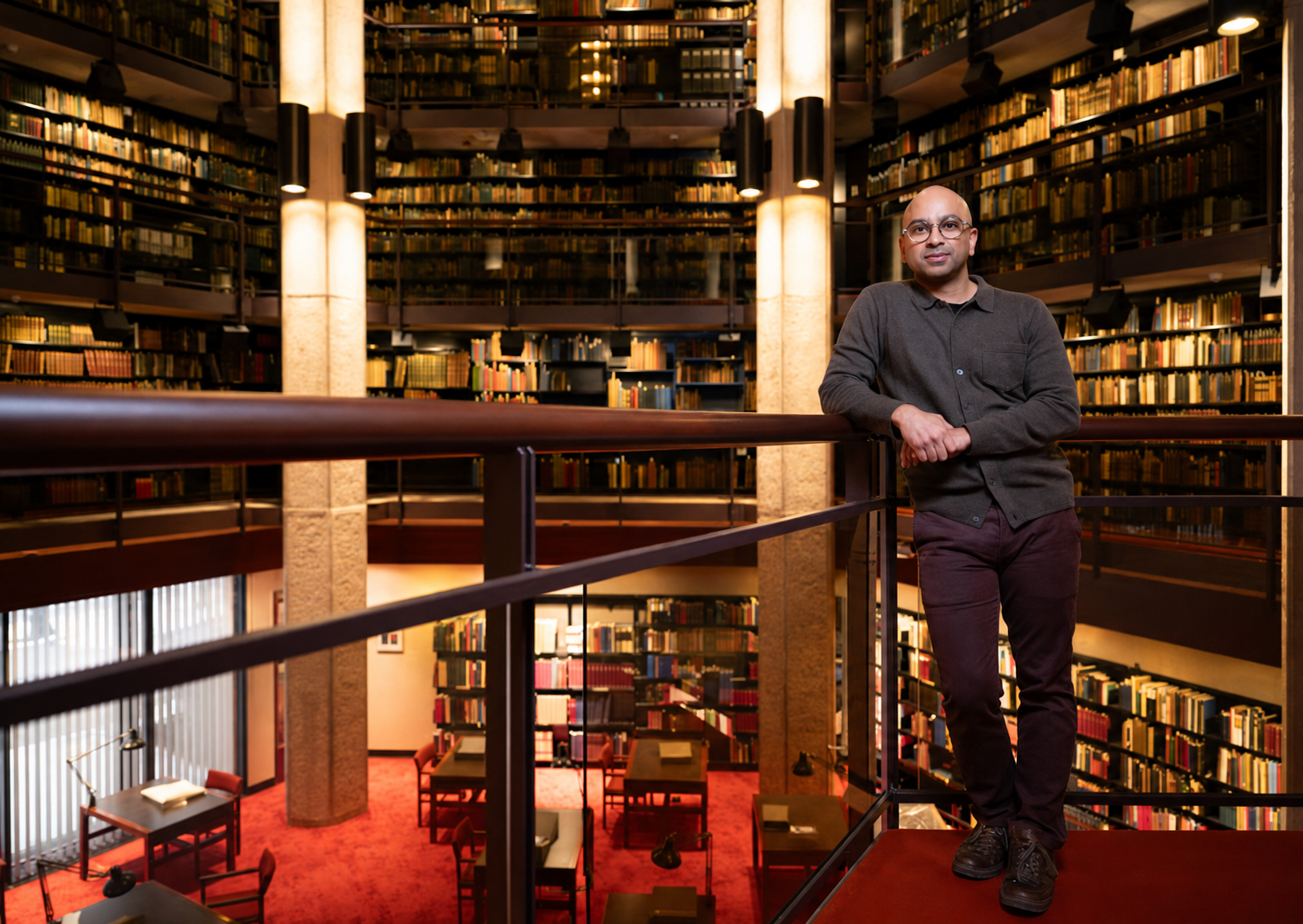
Administrative cowardice. Rampant cheating. The soaking and scamming of undergrads and grad students. Performative wokeism. Intensifying competition for international tuition dollars from an expansive China.
These are either the latest dire headlines about American higher ed or the myriad subplots of “Lords of Serendipity,” an ambitious new novel by Randy Boyagoda. Unlike most campus fiction, its scope extends well beyond the cloister of the liberal arts classroom to whammy the entire university system, from its financial model to its function within a globalized economy. Along the way, it skewers its lightning-rod targets with a precision too sharp to be considered entirely fictional.
That its author is not only well-versed in satire, having written four other novels in the genre, but is also a professor of English at the University of Toronto and an experienced college administrator, further blurs the lines between comic fiction and brutal fact. It’s the kind of no-holds-barred book only a consummate insider would know to write—but only one who is also conveniently outside the American university system could get away with writing.
“This is someone who’s got the inside dope on what can go on at universities, especially with international students, and what kind of con games are going on,” said Margaret Atwood, a friend and fellow Torontonian.
The novel, like Boyagoda himself, is often very funny—even as the dilemmas its characters face read as tragedy. Its cast includes the bickering members of a Sri Lankan hotel cleaner’s family, insecure American freshmen, dead-end third-tier college professors and their highflying Ivy League counterparts and dispirited university functionaries. An old-fashioned Dickensian tale, it sweeps across continents and campuses, from a classic liberal-arts college to a stand-in for Harvard University to an urban technical school to the dilapidated buildings of a state-run university in Sri Lanka.
“I’m a joyful person,” Boyagoda said in an interview, though he prefers to see his outlook on academia as “hopeful” rather than optimistic. He smiles and laughs frequently. He bikes everywhere. He derives energy from his students and from his four daughters, ages 14 to 20. They help him and his American wife, Anna, also an educator, care for Boyagoda’s father, an immigrant from Sri Lanka who has dementia and lives with the family.
The germ of the novel came to Boyagoda during the pandemic, when he was serving as a vice-dean. An urban legend was circulating about a statistics grad student selling passing grades to international students. The cheating scheme itself may well have been apocryphal, but it felt tantalizingly plausible.
“As a novelist, it stayed with me,” Boyagoda said. “Who would sell grades for a stats course? Why would someone buy grades? What’s motivating them? Why wouldn’t the university be doing something about it?” What he didn’t want to do, he explained, was write “another novel about a creative writing professor and his drama with students.”
In addition to writing novels—the first of which was a finalist for Canada’s prestigious Giller Prize; he’s written eight books in total—Boyagoda teaches literature full-time. For his students next semester, kids raised in a purportedly “post-literature era,” he’s assigning three 700-page novels, he noted mischievously, books by George Eliot, Ralph Ellison and Kiran Desai.
On RateMyProfessors, students remark on Boyagoda’s heavy assignments, tough grading and distaste for cellphones, but also hail his “comedy.” When alerted to these reviews, Boyagoda laughed. “Guilty as charged,” he said.
“Randy’s one of those people in academia who is very well educated but doesn’t have an ounce of superiority about him,” said John Irving, who frequently guest lectures in Boyagoda’s classroom. “It’s amazing to see how willing students are to talk in his classrooms, how little afraid they feel of being mocked or put down—he gets complete candor out of them.”
Negotiating competing interests seems to come naturally to him. Like many college campuses, after the Oct. 7 Hamas attack on Israel, the University of Toronto was embroiled in protests, encampments and discord; part of the school’s response was to convene a working group on civil discourse. Boyagoda was put in charge, serving for two years. It’s the kind of thankless task many professors would flee from, but Boyagoda relished the prospect and thinks the group, which is ongoing, made progress.
He has since pivoted to another formidable academic concern: the waning prestige of the humanities. In July, Boyagoda became the director of the Jackman Humanities Institute and special advisor on the humanities to the dean of arts and science. This fall, he is starting a series of gatherings he calls the Dead Book Club. (Dead writers feature heavily among his favorites: St. Augustine, Dante, William Faulkner, Evelyn Waugh, Saul Bellow.)
“The goal is to encourage students to read for its own sake and have conversation for its own sake,” Boyagoda said. “The importance of the humanities will be revealed to those who participate.”
“Lords of Serendipity,” which publishes next week, reflects Boyagoda’s commitment to the pursuit of knowledge: “I’m supposed to say I learn more from my students than they do from me, but no,” Boyagoda said. “I enjoy sharing my excitement and joy about literature and ideas. There are these moments when you are teaching and you can see someone’s face change because they didn’t know something and then they did. That moment when you’re actually watch someone enlarge themselves is deeply satisfying.”
In literary circles, Boyagoda is often referred to as a Catholic novelist, a description he embraces. “A novelist willing to give shape and voice to contemporary religious experience is needed,” Boyagoda said. “I understand myself as a Catholic novelist, provided that I’m not only a Catholic novelist, I’m also a South Asian novelist and I’m a Canadian novelist. I don’t want to be captive to one label.”
His characters, he said, are subjected to what he calls “Graham Greene character situations.”
“They are trying to do good in a fallen world and realize the most they can do is less harm than someone else would do in that same role,” he explained. “They have to accept they are complicit in something that provides some good thing to others. It’s a very Graham Greene way of thinking about sacrifice.”
The campus green they inhabit is a febrile zone in which lofty ideals and cynicism regularly collide. It’s a place where a traditional holiday college celebration is now an occasion for political protest. Kids freely police one another inside and out of the classroom with social media their constant, ready weapon of choice. International students, knowing their family’s financial futures hinge on their degrees, operate in terror of failure and deportation.
Early readers of the book include Gary Shteyngart and Junot Diaz, both of whom have taught at universities and written comic novels. They each contacted Boyagoda midway through to say, in essence, “You nailed it.”
As biting as “Lords of Serendipity” can be, Boyagoda’s faith in higher education remains undaunted.
“It’s absurd that we live in societies that make the decision to take people between the ages of 18 and 22, when they are most physically capable of contributing to our nations and communities, and tell them, ‘Go away for four years, and read and learn and have conversations,’” he said. “I want students to be aware of what an incredible privilege that is.”
Corrections & Amplifications
Randy Boyagoda is a special advisor on the humanities to the dean of arts and science at the University of Toronto. An earlier version of this article incorrectly said he is a special adviser to the dean of humanities. (Corrected on Sept. 2)

Chinese carmaker GAC will expand its Australian electric vehicle line-up with the city-focused AION UT hatchback.
All three vehicles will form part of a broader charitable initiative benefiting Big Brothers Big Sisters of America, the American Red Cross and Starlight Children’s Foundation