Shein Had 4.4 Billion Reasons to Speed Its IPO Along
SHEIN’s Hong Kong IPO wiped a $4.4 billion obligation from its books, but the fast-fashion giant still faces a payout of up to $3.5 billion to early investors.

 3 min
3 min
Companies typically go public to raise money to supercharge growth. Fast-fashion giant Shein has another motivation.
The company’s initial public offering in Hong Kong this week is allowing it to avoid paying out billions to early investors.
If Shein hadn’t sold shares by the end of the year, the company would have been required to fork out nearly $4.4 billion in cash to holders of its convertible redeemable preferred shares. With the IPO, the $17.3 billion in preferred shares was converted to ordinary equity, and that obligation was wiped off the books.
But Shein was still on the hook for another payment. Holders of those preferred shares were entitled to a payout of billions more, in part because the company’s valuation has fallen from its peak. That payout came to nearly $3.5 billion in cash, according to regulatory filings.
The retailer on Monday priced its shares at 48.56 Hong Kong dollars each, equivalent to about $6.20 and near the middle of the range of HK$47.60 and HK$49.50 it provided last week.
The company pressed ahead with its IPO despite slowing growth and regulatory headwinds in the U.S. and European Union. Shein priced its IPO at a valuation of around $26 billion, roughly a quarter of the $98.2 billion valuation it achieved in a funding round in 2022.
Shein started selling its wares in the U.S. around 2012 and shot to popularity during the pandemic when more people shopped online. Its supply-chain prowess and vast range of styles at affordable prices made the brand a favorite among many U.S. consumers. It showed other retailers, including Amazon.com, that consumers were willing to wait more than a week for their online purchases to be delivered—if the price was right. But rivals soon emerged, such as Temu, which sells more products apart from apparel.
Shein’s business model of selling massive amounts of cheap goods lost some of its shine as more countries started imposing tariffs on small packages. The U.S. removed a trade exemption that allowed packages valued at or below $800 to enter the country duty-free, and the EU has introduced a €3 (about $3.50) customs duty on imports of low-value parcels.
Shein has worked toward its IPO for years, and the looming $4.4 billion obligation wasn’t the only reason it went public. But the threat of the big payout on Dec. 31 was certainly a part of its reason to press ahead, said Jianggan Li, founder and chief executive of Momentum Works, a research advisory firm based in Singapore.
“Complete the listing before then,” said Li, “and a very large liability comes off the balance sheet.”
While that liability will now be off its books with a successful IPO, Shein said it was saddled with another bill: the roughly $3.5 billion it owed its early investors upon going public.
That amount includes $1.3 billion that Shein had to pay several late-stage pre-IPO investors who had been guaranteed a cash payout at an 8% or 12% annual return, and up to $2.2 billion in compensation for the fall in the company’s valuation in the period after they made their investments. The $2.2 billion was a projection based on the lower end of the offer price range, or HK$47.60 per share, so the total bill will likely be smaller than $3.5 billion. The exact amount has yet to be disclosed by the company.
Notably, the amount it owes investors is more than the roughly $1.7 billion the company raised in the IPO. The company said it was paying the funds to its investors out of cash it has on hand.
The investors entitled to the payments include entities linked to HSG, formerly known as Sequoia China, Boyu Capital, Tiger Global, General Atlantic, Thrive Capital and others.
“What the IPO really does here is resolve the capital-structure overhang,” Li said. “It gives investors liquidity, terminates those preferred-share rights and cleans up obligations created when Shein raised money at much higher valuations.”
Shein could have kicked the can down the road by renegotiating terms with its investors, he said: “Shein is not taking the cheapest way out of its old financing obligations. It is taking the cleaner way out.”
 Copyright 2020, Dow Jones & Company, Inc. All Rights Reserved Worldwide. LEARN MORE





Technology and semiconductor shares fell sharply as investors questioned the debt financing the AI infrastructure boom and confronted higher rates and Chinese competition.

Waldorf Astoria Kuala Lumpur is scheduled to open on 30 October, introducing the Hilton luxury brand to Malaysia with an all-suite hotel in the city’s Golden Triangle.

LEGO is expanding beyond its traditional audience by tapping into people’s passions, from flowers and gaming to music and Formula One, through creative products, immersive experiences and social-first marketing. The strategy is paying off, with revenue rising 21% in the first half of the year to a record DKK 41.9 billion.
5 min
Lego’s core audience was once young boys. But in recent years the world’s largest toy maker has expanded its reach, attracting more adults, teenagers and girls.
At the center of this expansion has been a strategy to tap in to people’s interests and hobbies—the Danish toy-brick maker calls them “passions”—many of which cross demographic boundaries. These include personal preoccupations like bonsai trees and golden retrievers, celebrities such as pop star Olivia Rodrigo and mega events like Formula One and the World Cup.
That has led to new types of building sets, including more sophisticated models that adults can display on their coffee tables, and a shift in marketing strategy, with Lego pouring money into experiences and social-media skits aimed at fans.
For Formula One watchers, Lego built life-size, drivable replicas of the teams’ race cars, which drivers took around the circuit at last year’s Miami Grand Prix. To reach gaming fans, Lego in August showed up at the Gamescom trade event in Cologne, Germany, with a giant Minecraft Lego chicken that visitors could sit on.
“We go not just for the people who are there, but because the types of things that we create become big social-media engagement,” says Julia Goldin, Lego’s chief product and marketing officer.
The strategy has helped spur growth. In the first half of this year, privately held Lego’s revenue rose 21% from the year-earlier period to a record 41.9 billion Danish kroner ($6.27 billion), while net profit climbed 32% to 8.6 billion kroner.
The Wall Street Journal spoke to Goldin about how the company researches people’s passions and turns these into products and marketing campaigns.
Edited excerpts follow:
Beyond demographics
WSJ: Adults have become a big focus for Lego—what’s behind that?
JULIA GOLDIN: Over the past eight years, we said there was a bigger opportunity with adults—not just people who are super-high-affinity fans, but people who maybe built a long time ago or had never built with bricks before—by giving them the things they would love to build now.
We approached adults from a passion-point perspective from the very beginning. We said we need to understand what they’re into. So, we looked at men, we looked at women, we looked at what their big interests were, what types of things they like to collect, what types of things they wanted to display in their rooms, etc. Now you can put Gustav Klimt’s “The Kiss” on your wall, or if you’re into animals, some cute floating sea otters. And then gamers who love a bit of ’80s or ’90s nostalgia can build and display the Game Boy.
We are now seeing strong growth with both adults and kids.
WSJ: How do you find out about people’s interests?
GOLDIN: We do a lot of trend-seeking and social listening. We look at viewership of various programs, behaviors, what’s trending socially. Then we dive quite deeply into these interests through primary research, ethnographic research and interviews.
AI has helped us ramp this up. There are tools where you can ask, with the right prompts: “People who are passionate about F1, what are they talking about? What are the latest conversations on Reddit?”
WSJ: Lego flower bouquets and trees are among the company’s most popular sets. How and when did that come about?
GOLDIN: When we started to talk seriously about adults, we could see that some people were into gardening and flowers. We launched the first flower bouquet in 2021 and completely underestimated how successful it would be. We started with the 18-plus age group because we thought that’s where the sweet spot is. But we realized that younger girls, especially teens, really love to build Lego flowers so we expanded the range.
You might think botanicals are women and F1 cars are men. But that’s why we talk about interests and not just gender and demographics. Yes, botanicals have a huge following among women and teenage girls, but bonsai trees are one of the top 10 products for men and teen boys. Speed Champions F1 cars show up in the top 10 for teen girls. I thought most of Olivia Rodrigo’s following would be girls, but my 16-year-old son asked me for two sets because his friends are massively into her.
That’s why we don’t market to a demographic. You can never be assumptive about how that breaks down in terms of gender.
WSJ: How has this shift in thinking changed your products and marketing?
GOLDIN: F1 is a great example. In the past, we might have started with a partnership with a team and a great Lego car for people to build. But we understand that it’s a multigenerational passion and different people are in it for different things. Some people love the cars, some collect, some follow the actual sport of racing, and some have tremendous passion for the drivers and their teams. That is why our F1 portfolio spans everything from Duplo [bricks] for toddlers to detailed display models and driver helmets for older fans.
But then we ask ourselves: What can we do to go beyond the products, to give fans Lego brand experiences that they would never expect? That’s why in Miami last year we built 10 full-size Lego Formula One cars, with nearly 400,000 bricks in each, and put all 20 drivers in them for the driver’s parade. Everyone assumed they were static models, until the drivers started lapping the circuit and we saw a tremendous amount of excitement and social media buzz. We generated something like two, three billion views.
WSJ: Do social-media views of a marketing event translate into significant sales of Lego sets tied to these campaigns?
GOLDIN: Yeah, of course. We don’t share data, but I can tell you they’re some of our most successful products.
‘She Built That’
WSJ: You say Lego is growing particularly strongly with girls. What is driving that?
GOLDIN: We used to have only Lego Friends as the one big line for girls, and some Disney products like “Frozen.” But rather than looking at toy categories that were selling to girls, like dolls, and trying to replicate that, we really worked to understand what girls are into.
We realized girls are super into pets and creatures, nature and flowers, socializing and music. We expanded significantly around those areas with botanicals, animals, K-pop and Olivia Rodrigo.
We also did the “She Built That” campaign, very strongly saying girls can build just as well as boys. I’ve heard for a long time that “girls don’t like to build because moms don’t,” but that’s just not true. We’re showing them things they really love to build, and that’s why it works.
WSJ: Why do you think adults, teens and others are turning to Lego more nowadays?
GOLDIN: There’s an overriding sense of lack of purposefulness and this drowning in content that you’re constantly being fed. Three hours have gone by and you’ve just been scrolling through feeds of reels. People are getting really tired. They want to actively do something that’s more purposeful and lasting.
When they build with Lego sets, they say they feel creative. They want to do something they can be proud of—where they can say, “Wow, I did this.”

A Vaucluse masterpiece by MHNDU with interiors by Poco Designs brings architectural ambition and breathtaking ocean outlook to the auction block.
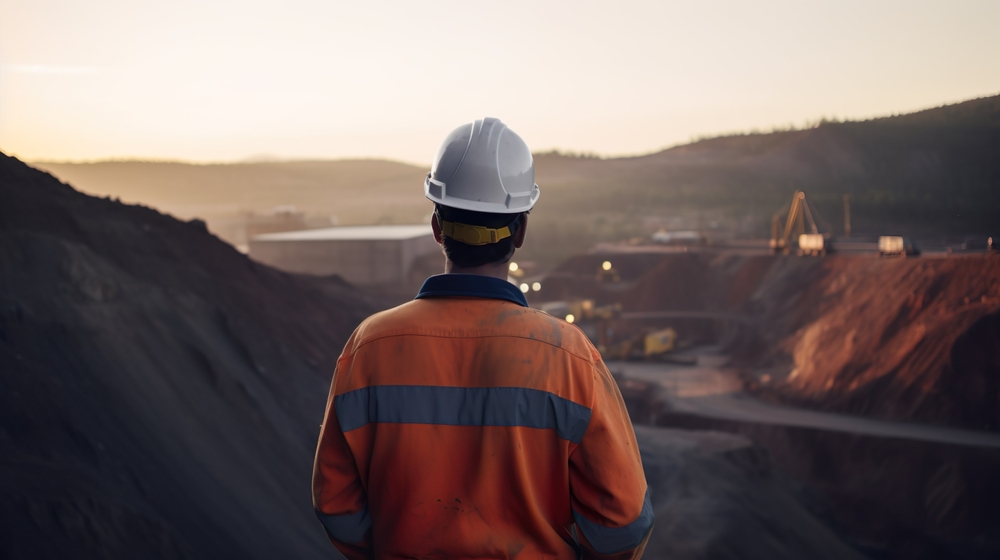
Australian shares fell on Thursday as Wall Street weakness, rising oil and persistent rate concerns weighed on most of the market. The S&P/ASX 200 declined 0.72 per cent to 8,702. The All Ordinaries lost 0.66 per cent to finish at 8,897. Mining stocks were hit particularly hard, while real estate also dragged on the index. …
Continue reading “ASX falls 0.7 per cent as miners and property stocks retreat”