Why U.S. Steel Stock Is Down Even Though Everyone Wants a Piece of It
 2 min
2 min
United States Steel has become an unlikely darling, with many parties vying for control of the century-old-plus American icon.
The interest hasn’t translated into significant gains for existing shareholders, though. Investors appear confused , and no one knows exactly how the U.S. Steel drama will end .
On Wednesday, Ancora , a Cleveland-based activist investor with about $10 billion in assets under management, held a conference call outlining its plan for the steel maker.
Ancora nominated a majority slate of directors on Jan. 27, making a play for control of the company. The call outlined a “multi-billion dollar capital investment plan to revitalize U.S. Steel,” led by Alan Kestenbaum, former CEO of Canadian steel maker Stelco.
Kestenbaum reflected on his success in turning around Stelco, which was sold to Cleveland-Cliffs in 2024 , adding he has a history of improving labor relations. Many U.S. Steel workers are represented by the United Steel Workers. U.S. Steel has a labor negotiation coming up in 2026.
Ancora, of course, wants U.S. Steel to abandon a proposed deal with Nippon Steel , which values U.S. Steel at $55 per share.
That deal faced stiff opposition from both sides of the political aisle. President Donald Trump said it was psychologically important for U.S. Steel to remain American-owned.
Control concessions by Nippon Steel and plans to invest billions didn’t sway American politicians. Trump did appear to soften his stance recently, saying at a press conference with Japanese Prime Minister Shigeru Ishiba that Nippon Steel would invest in U.S. Steel.
Nippon Steel and U.S. Steel declined multiple requests for comments about investment details.
The Nippon Steel deal emerged in late 2023 after Cleveland-Cliffs offered to buy U.S. Steel for about $35 a share in August 2023. Cleveland-Cliffs CEO Lourenco Goncalves hosted a combative January press conference where he indicated consolidation among large U.S. players could help restore consistent profitability to the sector.
Cleveland-Cliffs and America’s largest steel producer, Nucor , are reportedly interested in some U.S. Steel assets. Nucor would be interested in U.S. Steel’s electric arc furnace assets, which use electricity to melt scrap steel and other metallics.
Keeping track of things on the table: U.S. Steel could be sold to Nippon Steel, get an investment from Nippon Steel, be broken up into pieces, merge with Cleveland-Cliffs, or make a go of it as a standalone company investing in existing operations.
Investors are just waiting. U.S. Steel is down about 15% over the past 12 months, and the share price has bounced between roughly $30 and $40 since President Joe Biden indicated he would block the deal in early 2024.
Ancora’s main message was that U.S. Steel doesn’t need external capital to turn around operations. “It’s about brain power,” said Kestenbaum. Time will tell if that’s correct.
U.S. Steel looks like it could use capital. It’s America’s third-largest steel producer, and a relatively high-cost producer. Since 2021, U.S. Steel has made roughly $150 in per ton operating profit annually. Cleveland-Cliffs has made roughly $100 per ton over the same span. Nucor earned closer to $300 per ton. Nippon Steel is the world’s fourth-largest steel producer, and about three times the size of U.S. Steel, but its per-ton profit is closer to Cleveland-Cliffs and U.S. Steel than to Nucor.
U.S. Steel shares might have got a small Ancora boost on Wednesday. The stock closed up 2% at $39.04, while the S&P 500 and Dow Jones Industrial Average rose about 0.2%.
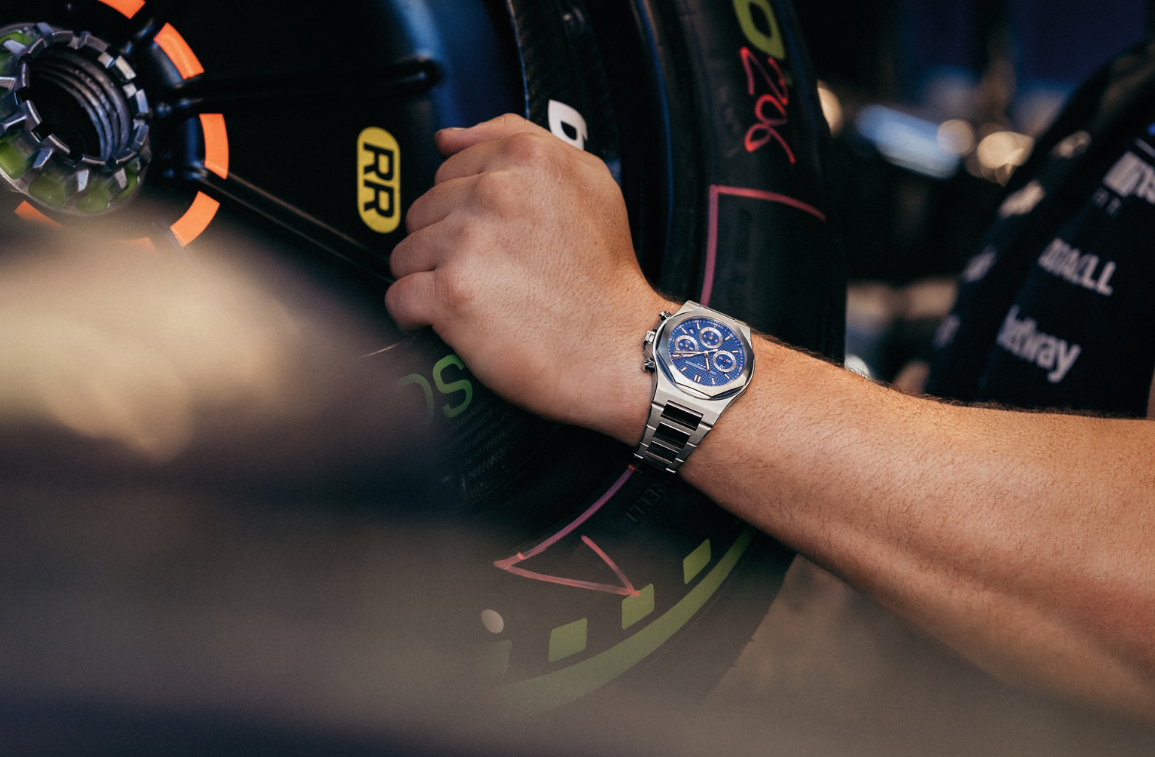
The Swiss watchmaker’s first collaboration with Atlassian Williams F1 Team produces two sporting Laureato models inspired by the team’s 2026 racing car.
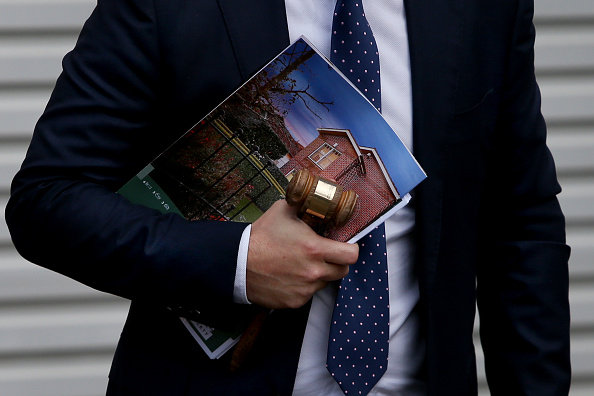
Victorian auction buyers will soon receive a piece of information that has traditionally been withheld until bidding reaches it: the vendor’s reserve price. Under new property-sale and underquoting laws, agents must publish the agreed reserve at least seven days before an auction or fixed-date sale. Most changes begin on 1 October 2026 and apply to …
Continue reading “Victoria’s New Auction Rules Will Force Reserve Prices Into the Open”
Paramount and California’s attorney general are in advanced settlement talks over the company’s proposed $81 billion merger with Warner Bros. Discovery. Potential concessions include investing $1.5 billion in California production, retaining both studio lots and introducing safeguards for CNN’s editorial independence.
3 min
California’s attorney general and Paramount PSKY -3.86%decrease; down pointing triangle have discussed a series of potential concessions as part of advanced settlement negotiations, including a $1.5 billion investment by the company in production in California, according to people familiar with the discussions.
Paramount executives and a coalition of states that sued to block its $81 billion merger with Warner Bros. Discovery WBD -1.56%decrease; down pointing triangle spent the weekend hashing out the details of a possible settlement. Such an agreement would clear the way for a deal that would bring HBO, CBS, CNN, streaming services and famed movie studios under one owner.
Among the concessions the parties have discussed beyond the sizable production investment: a promise not to sell either studio lot and to stay in the state of California, the people said. The company had explored moving out of the state as the deal faced opposition.
The parties have also considered potential penalties if Paramount doesn’t make good on an earlier pledge to make 30 movies a year after the merger, including having to sell its stake in Miramax, known for such classic movies as “No Country for Old Men” and “Pulp Fiction,” the people familiar with the matter said.
Other measures the sides have explored include the sale of some cable channels and the creation of a board to ensure that CNN retains editorial independence, people with knowledge of the talks said. The network has been a political flashpoint throughout Paramount CEO David Ellison’s fight for Warner. Paramount had been discussing creating such an editorial board before the lawsuit.
A final deal hasn’t been reached, and it is unclear what terms the parties may ultimately agree to.
Ellison has spent the past year fighting to buy Warner in a megadeal that would expand his entertainment empire, but that has drawn opposition from some political and Hollywood figures.
A dozen Democratic-led states led by California Attorney General Rob Bonta sued in July to block the deal on antitrust grounds, arguing that the combination of Paramount and Warner would create too much concentration in the markets for theatrical films and cable television channels.
The Writers Guild of America sued over the merger, saying that the deal would eliminate jobs and career opportunities for Hollywood screenwriters.
About two dozen demonstrators gathered in front of the Elihu M. Harris State Office Building in downtown Oakland on Sunday evening to protest a potential settlement. Holding signs reading “Bonta: Don’t You Dare” and “Block the Megamerger,” they took turns giving speeches urging the attorney general to continue pressing the suit.
“Nothing has changed since he filed the case,” said Annie Leonard, co-founder of the nonprofit Committee for the First Amendment, which advocates for free expression. “He needs to stay as strong as he was in filing it.”
The two sides had come under pressure to settle the matter in recent months, including from California Gov. Gavin Newsom, Los Angeles Mayor Karen Bass, gubernatorial candidate Xavier Becerra, movie theater chains and some Hollywood labor unions.
Paramount’s agreement with Warner also included a “ticking fee” with payments to Warner shareholders of roughly $650 million a quarter, or $7 million a day, beginning next month, until the transaction closes.
Paramount had asked a federal judge to require the states and the Writers Guild to put up a nearly $1.9 billion bond for challenging the acquisition, money that would go to the company if it ultimately won the case.

Margot Robbie and Jacob Elordi star in an adaptation of the classic novel that respects the romance’s slow burn.

From office parties to NYE fireworks, here are the bottles that deserve pride of place in the ice bucket this season.