My First Impressions of the New Folding iPhone Duo
Apple’s first foldable, the $1,999 iPhone Duo, combines an iPhone and iPad Mini experience—but its size, weight and price come with compromises.

 4 min
4 min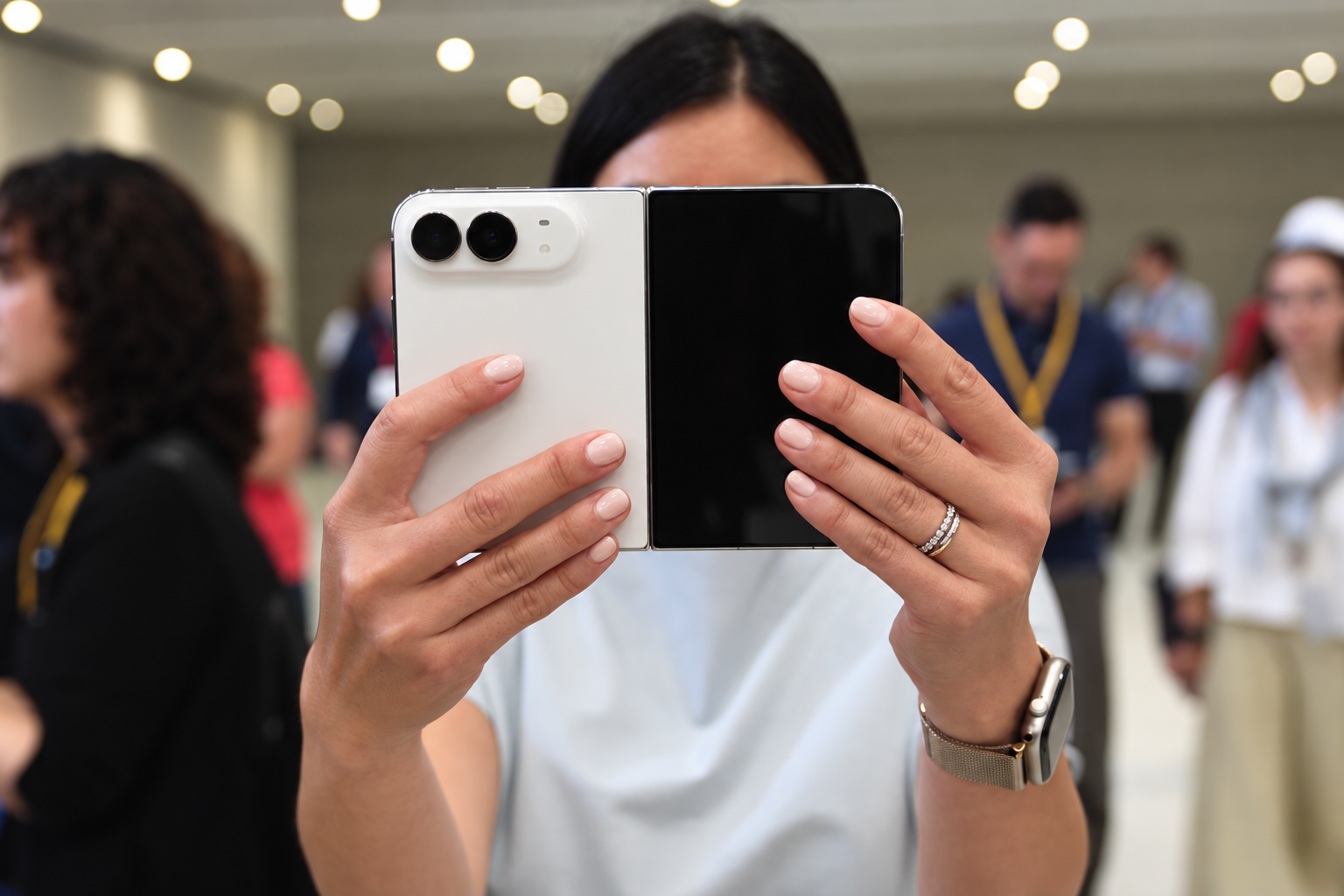
As I watched a Netflix show on Apple’s first foldable, the iPhone Duo, I had two surprising thoughts.
The first: Maybe I don’t need my iPad Mini anymore.
The second: Uh oh, am I about to spend $1,999 on a phone?
I didn’t think folding phones were for me. I’ve been testing Android versions from Samsung and Google since 2019, and those early editions came with too much screen and too many compromises.
Fast forward seven years, and the technology has come a long way. Apple—in its very Apple way—has also come up with some hardware and software trickery to make up for some shortcomings of the basic design. My desire for a folding phone before today was zero. After today, it’s a lot more than zero.
I’m not ready to recommend the Duo, which ships on Oct. 23, just yet. Not until I am able to test it more fully, so be on the lookout for that review in a few weeks. But from what I experienced at Apple Park on Wednesday, I could actually picture myself using this new half-phone, half-tablet hybrid.
Crease camouflage
For months, I’ve been using Samsung’s Galaxy Z Fold 8, a similarly squat, passport-shaped foldable that opens up to a larger screen. It’s impressively thin and can easily fit into the infuriatingly tiny pockets in women’s pants and dresses. Samsung did a lot of work to minimize the crease—the dip between the two halves of the big interior display—but it’s still clearly there.
When I held the iPhone Duo open, the crease was barely visible. As I slid my finger across the display, I could feel it, but it’s more subtle than Samsung’s. Most of the time, the screen looked as flat and smooth as the one on an iPad.
Apple employed both software and hardware techniques to camouflage the crease. The matte surface of the interior 7.6-inch screen minimizes reflections to hide it. (Samsung’s Fold 8 screen is shiny.)
And as you begin to open or close the iPhone Duo, the interface shifts the controls and content away from the center crease. If, say, you’re watching a video on the outer screen, you can open the Duo to switch to the bigger display within. A black fade marks the transition. You don’t see the video full screen until the phone is completely flat.
Heavy handed
My second observation was that, when the Duo is closed, in phone mode, it was harder to use one-handed than I expected.
In the keynote trailer and press release, Apple touted how thin the Duo is. It’s marketed as the thinnest iPhone ever—when open.
But it’s actually thicker and heavier than most of its Android competitors. The Duo weighs 254 grams, and is 11.3 millimeters thick when closed. The Samsung Galaxy Fold 8 is just 201 grams, with a thickness of 9.7 millimeters. Google’s Pixel 11 Pro Fold is 239 grams and 10.1 millimeters.
Because the Duo is also wider than a standard iPhone, I found it quite a challenge to type.
I admit, I do have smaller-than-average hands. So I consulted my colleague Rolfe Winkler, who has a larger grip. He agreed the Duo feels big.
Apple rearranged the interface on the outer screen so it looks different than traditional iPhones. The dock and control center are off to the right to be more reachable. Committing to the Duo as your main device will require adjustments in your handling. You will have to learn a new way to use and type.
Work and play
My most surprising takeaway? I feel a pull toward this device.
I always thought that combining an iPhone and an iPad would mean bigger compromises. The battery life is about the same as the 18 Pro (up to 24 hours of “regular use” on a single charge), though I’ll need to verify that in my real-world testing. And it’s also as durable, with the same IP68 dust- and water-resistance rating as the rest of the iPhone lineup.
There are trade-offs, for sure. Trying out the camera, I immediately missed the 8X zoom in my Pro model. The Duo has just 2X zoom, which wouldn’t cut it for the dozens of pictures I take of my kid every day.
But the dual screens unlock new photo functionality. You can see what your shot looks like from the outside screen. As someone who has tried tirelessly to self-direct a family photo—or a spouse—I am very eager to try this out more.
Foldables, I initially thought, were for classic mobile-warrior jet-setter types, who never sit at a desk and are always on calls. For that crowd, the Duo can run two apps side-by-side.
Me, I’m more of a bed binge-watcher and ebook reader. That’s what my beloved iPad Mini is for.
Watching videos on the Duo is a nice experience—nice enough that you forget the screen is 0.7 inches smaller than the iPad Mini’s. The main screen is also a 4:3 aspect ratio. Very similar, by the way, to the IMAX edition of the Odyssey.
Because I wasn’t able to snag a ticket to one of the sold-out screenings, I will be watching Christopher Nolan’s version of Homer’s epic on the Duo, just as the director intended. (Just kidding! Sort of.)
The Duo costs $800 more than an iPhone 18 Pro, and I’m not sure I want to spend that premium on a first-generation Apple device. But I’m not ruling out the idea that a Duo might one day be in my future. Stay tuned for my full review.
 Copyright 2020, Dow Jones & Company, Inc. All Rights Reserved Worldwide. LEARN MORE




From making unpopular decisions to learning when to listen, leaders from five businesses reveal what nobody prepared them for — and how running a company has challenged their expectations.
Technology and semiconductor shares fell sharply as investors questioned the debt financing the AI infrastructure boom and confronted higher rates and Chinese competition.
Elon Musk is exploring a potential merger between Tesla and SpaceX, a deal that could reshape the future of AI, robotics, autonomous vehicles and space technology. With a combined valuation potentially reaching $3.5 trillion, the move could bring Musk’s vision of an interconnected technology ecosystem closer to reality, although a deal remains uncertain.
5 min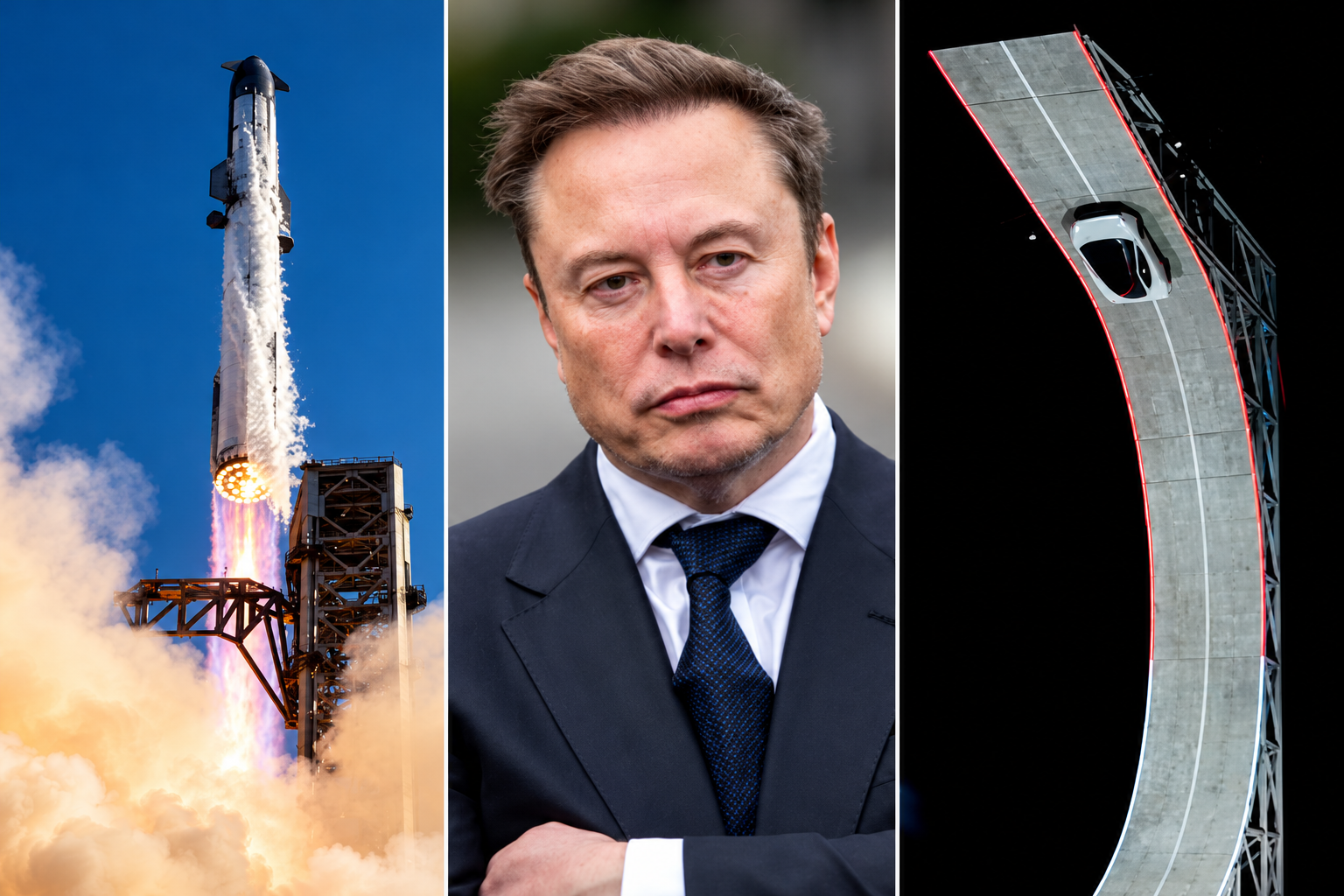
Elon Musk has engineered ties between Tesla TSLA 3.41%increase; up pointing triangle and SpaceX SPCX 7.79%increase; up pointing triangle that are hard to break, and now he wants to fuse them together permanently.
Musk has run both Tesla and SpaceX concurrently over the past two decades, using a schedule that dictated which days he spent focused on each business.
The companies have often shared resources and personnel, signaling their close ties. Last year, SpaceX looked into creating a spacesuit for Tesla’s humanoid robot Optimus, a person familiar with the matter said. Tesla last week showed off its new Roadster, a vehicle featuring SpaceX rocket thrusters that it hopes to soon bring to market.
And in recent months, Musk has repositioned both companies by expanding beyond their core operations toward a shared mission centered on artificial intelligence.
The world’s richest man on Tuesday signaled his interest in tying up SpaceX and Tesla, marking what would be the biggest corporate merger of all time. Because he serves as chief executive of SpaceX and Tesla, Musk said committees of independent directors at both companies are evaluating a possible deal, adding that a transaction might not come to fruition.
The committees will likely evaluate, with lawyers and bankers, how each company would fare in a potential deal and how a deal might best be structured. They then present their conclusions to their respective boards, who typically vote on whether to proceed.
“It’s an odd Kabuki dance where two groups of people are talking and I can’t be in the conversation,” Musk told SpaceX investors on Tuesday in response to an analyst’s question about a potential deal.
For Musk, the merger supports his vision of a world full of autonomous cars, humanoid robots and weekly rocket launches, as well as the data centers and satellites required to keep the whole thing running.
Some investors and analysts said they expect a transaction would be structured as an all-stock deal, with SpaceX potentially paying a modest premium for Tesla shares.
SpaceX, which has a market value of about $2 trillion, said it is seeing sharp growth in revenue across its businesses, which include operating data centers, launching rockets and operating satellite networks such as the internet service Starlink. Tesla is valued at about $1.5 trillion and is expanding its operations beyond its automotive and energy business. Shares in both companies traded higher following the news Tuesday.
Musk’s substantial ownership stakes in both companies, along with voting control at SpaceX, has enabled him to set the deal in motion. Analysts and investors said the deal will probably face regulatory scrutiny internationally, though some see Musk’s close relationship with the Trump administration as an asset to getting approval.
Blurred lines
The companies haven’t said which directors are on the special committees evaluating a potential deal. Several SpaceX and Tesla board members have either personal or business ties to Musk. And like Musk, venture capitalist Ira Ehrenpreis sits on both boards.
In a filing this week, Tesla outlined millions of dollars in business agreements with SpaceX and its subsidiaries last year, including $143 million in car sales to SpaceX, $3.3 million in advertising that it bought on the social-media platform X and $430 million in revenue from the sale of Megapack batteries for SpaceX’s data centers.
The companies also split the cost of resources including the use of Musk’s SpaceX jet and the bill for his personal security, which he runs through a private company.
Employees at both companies routinely move between companies to work on special projects, and some executives have dual roles, including Charles Kuehmann, vice president of materials engineering at both SpaceX and Tesla, and Ashok Elluswamy, the vice president of AI software at Tesla who runs a joint venture with SpaceX called Digital Optimus.
Over the years, Musk has launched new startups within his empire, including brain-implant company Neuralink, underground-tunnel developer the Boring Company and xAI, the AI startup that merged with SpaceX in February.
It is that AI business that Musk thinks can serve a market worth tens of trillions of dollars, justifying the need for a merger.
The business case goes like this: Tesla is developing robotaxis and robots, which it calls “physical AI.” SpaceX is working on the back end of physical AI: the data-center capacity and internet connection required for those robotaxis and robots to operate continuously.
“I don’t see what the value of Tesla is if it’s not merged with SpaceX,” said investment adviser Ross Gerber, a former Tesla bull turned critic invested in both companies. “If they don’t merge, the brains of everything that runs Tesla is owned by another company.”
On top of it all, both companies face constraints on the supply chains they need to make this world a reality, particularly when it comes to chips. To address this, Musk earlier this year announced a joint venture between Tesla, SpaceX and Intel to design and manufacture chips in Texas. “The most epic chip-building exercise by far,” he has said.
Musk at the wheel
For Musk, a merger would also solve two problems: demands on his attention and his lack of control at Tesla.
Tesla for years was Musk’s only public company, a status that came with greater scrutiny. There, Musk reports to a public board, as well as individual investors who make up around 30% of Tesla’s voting power, according to FactSet.
The question of Musk’s attention became a particular focus for investors and the board in recent years after he acquired Twitter in 2022 and launched xAI in 2023, and again in 2025 as he spent time in Washington, D.C., running the Department of Government Efficiency in the early months of President Trump’s second term.
As Tesla’s car business suffered in 2025, Musk threatened to take his AI ambitions outside the company if he wasn’t granted 25% voting control. Last November, Tesla shareholders approved a new pay package for Musk, which created a path for him to vastly expand his stake.
As of Sept. 30, Musk owned a roughly 20% stake in Tesla, according to the company’s proxy filing.
The SpaceX IPO gave Musk a different path. When SpaceX went public in June, the deal’s structure enabled him to have more than 80% voting power at the company—so much that he can’t be fired and decisions can’t be made without his support.
If SpaceX acquires Tesla, he will likely stay in control.

A thoughtful timber-led renovation in Byron Bay has reimagined an existing house as a warm, resort-style family sanctuary grounded in natural materials.

Wealthy Aussies are swapping large family homes for high-end apartments, with sales of prestige units tripling over the past decade.