The modern beach shack that almost turned its back on the view
This unassuming house emerges from the sand dunes to punch above its weight
 4 min
4 min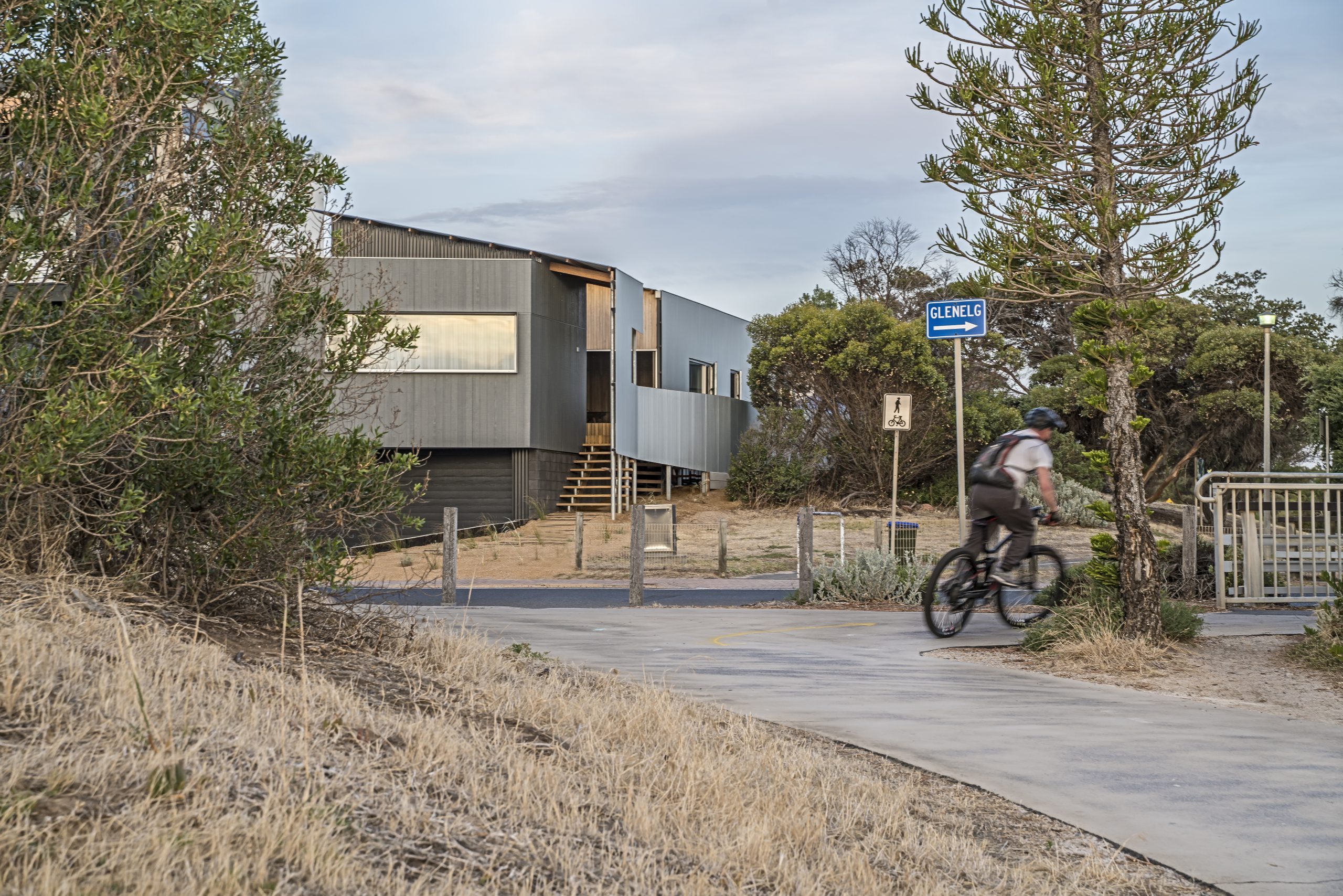
When architect Kirsty Hewitt first looked along the street where this award-winning Adelaide property is now situated, one thing stood out.
“There’s just unending empty balconies on this frontage,” she says.
While outdoor spaces are understandable inclusions for properties that enjoy an exceptional view, these had failed to hit the mark in terms of useability.
Because, while the view — the point of convergence for the River Torrens (also known as Karrawirra Parri) and the ocean — is indeed a drawcard, it is also to the west where the sun is strongest.
“It was finding a balance between opening to that view, which was west south west, and managing the weather,” she says. “The sunsets are amazing but in summer, the western coastal frontage is hammered, right where you want the view.
“It’s also where all the cold weather comes across the ocean, as well as the wind and rain.”
Solving this design puzzle was one of several challenges this block presented for KHAB Architects, which was part of a subdivision.
For more stories like this, order the latest issue of Kanebridge Quarterly magazine here
“The clients bought the skinny portion that had been cleared and someone else had built a large house on the northern side,” she says.
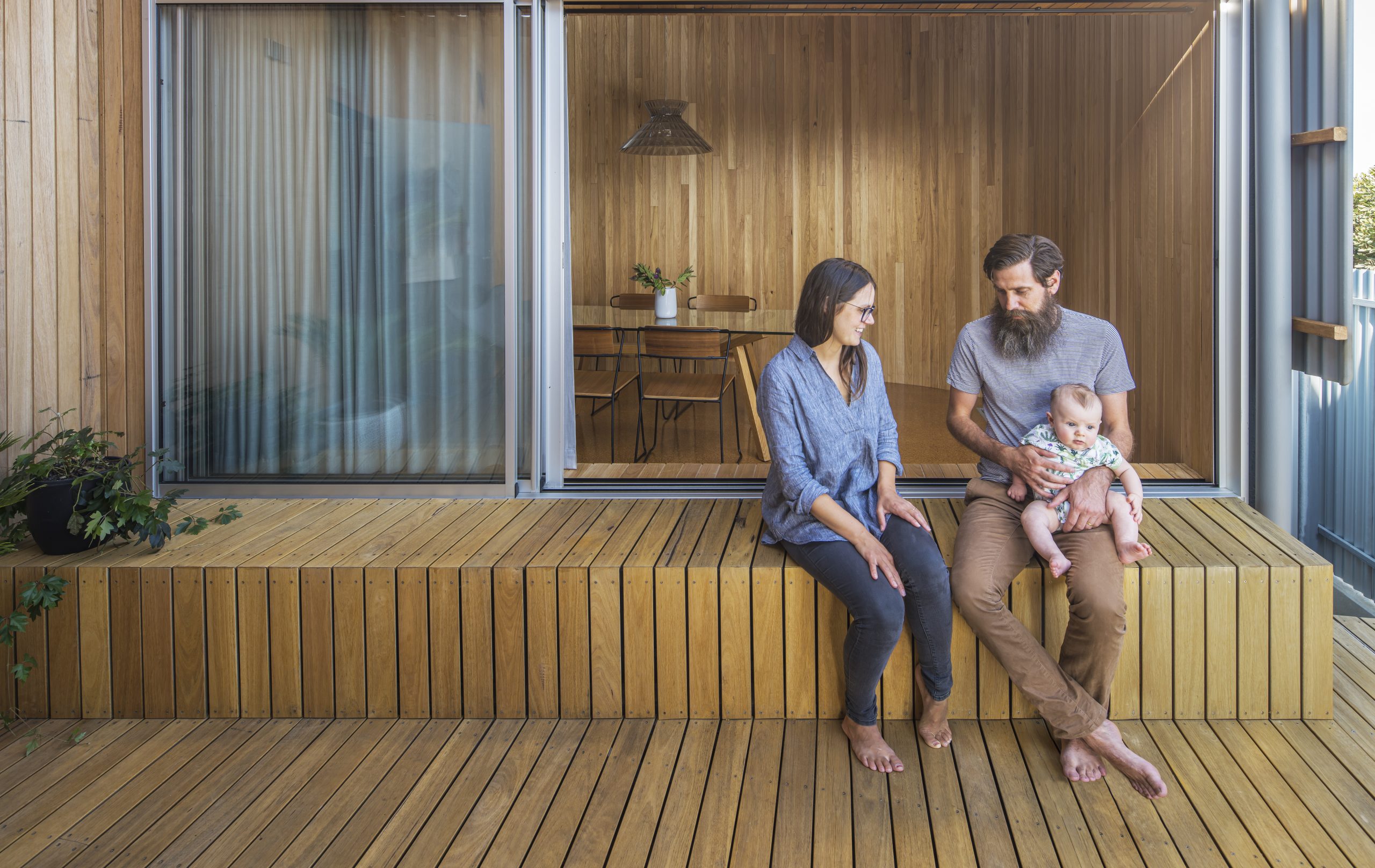
After some discussion, and considering the planning regulations which limited the height of the property, and the noise from the traffic along the busy street between their block and the water, the clients decided on a design that would be about one third of the size of their neighbour’s home.
“The big draw was the amazing ocean view across this opening where the river enters the ocean,” Hewitt says. “It was on the south side adjoining the reserve along that river, with native vegetation. But it was a 8.5m site and in Adelaide, we’re not used to something that narrow so it was a very skinny site to achieve all the things the clients wanted.”
Instead of excavating into the site as some other properties along the row had done, Hewitt designed a house that looked as though it had emerged out of the sand dune. Working on the Indigenous principle popularised by legendary architect Glenn Murcutt of touching the earth lightly, Hewitt sought to resolve the tension between the desire for the view and the need for privacy with a lightweight building that still delivered the functionality the owners required.
The idea of a balcony facing onto the water was the first thing to go. Instead, Hewitt proposed placing a slightly raised, enclosed living room at the front of the house and positioning a double glazed window to frame the view and minimise noise. The owners took some convincing.
“The clients wanted floor-to-ceiling windows but if we did that, they would see the traffic, and the house next door and it would not emphasise the ocean in the way they imagined,” Hewitt says. “We experimented with masking tape and worked out ways to emphasise the horizon from the living room when you’re seated, and then from the kitchen when you’re standing.”
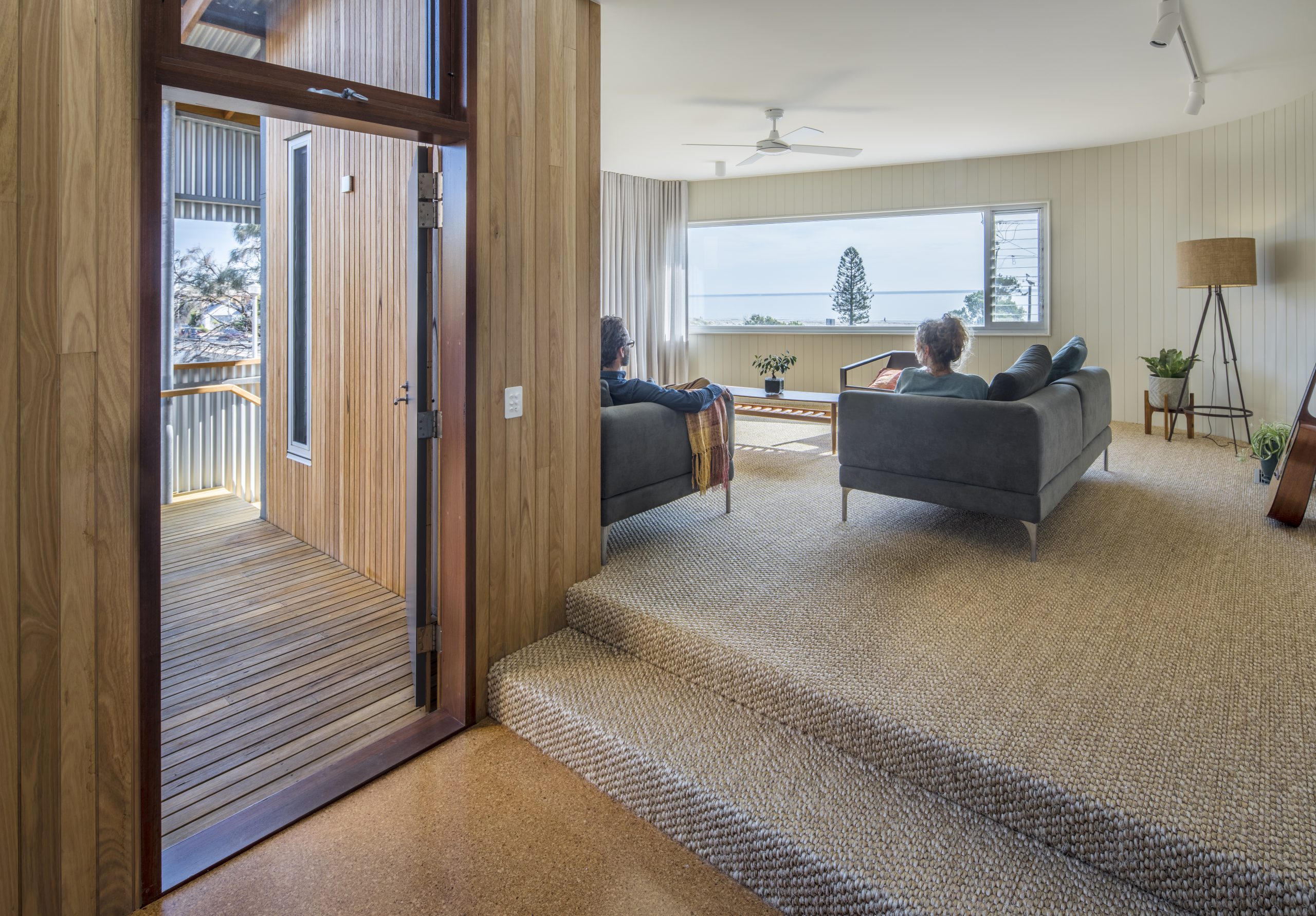
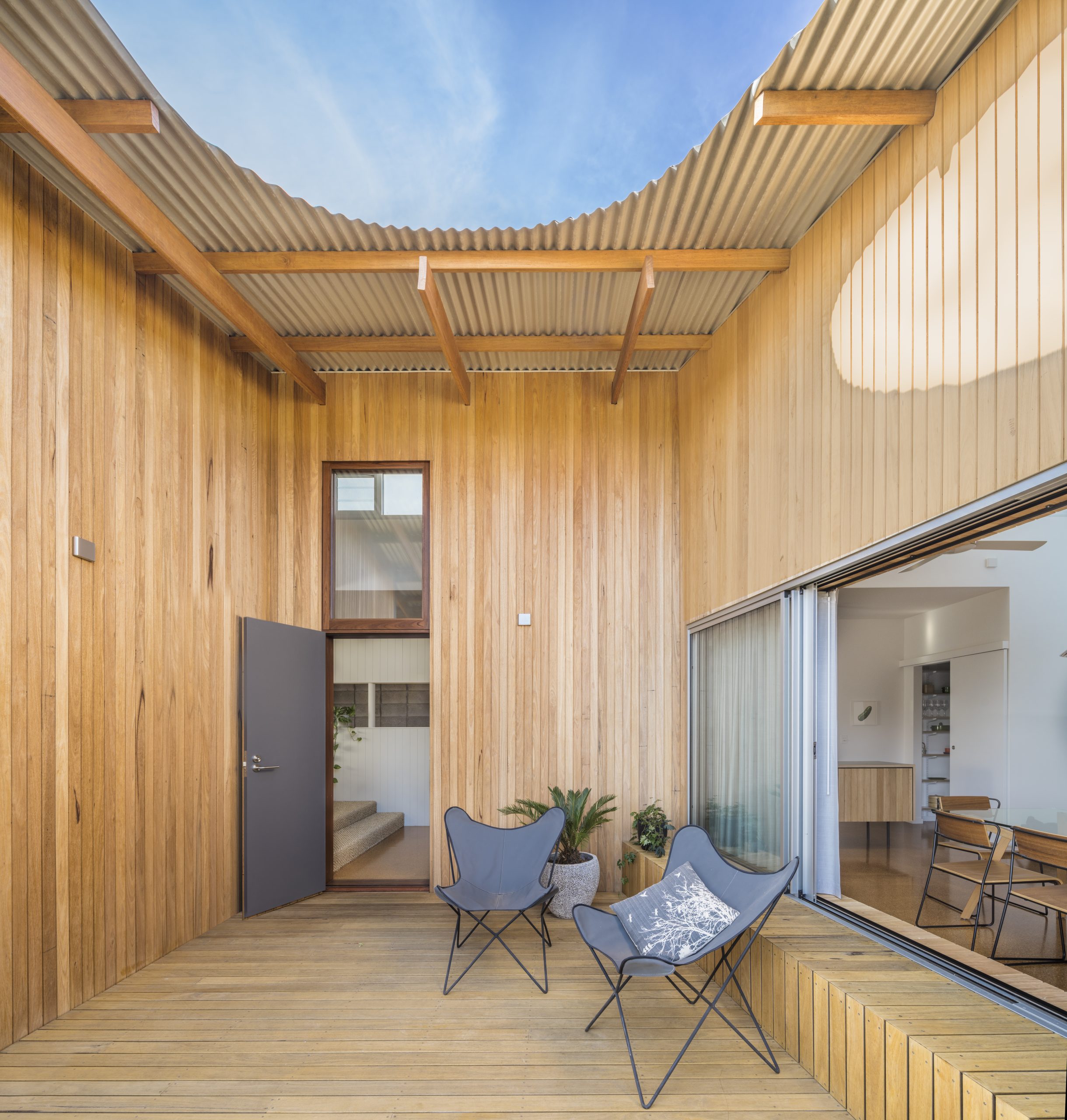
To create some outdoor living space, Hewitt cut out an internal timber deck with a curved opening above down the southern side of the house that was protected from the wind while acting as a sun trap and providing views of the ocean.
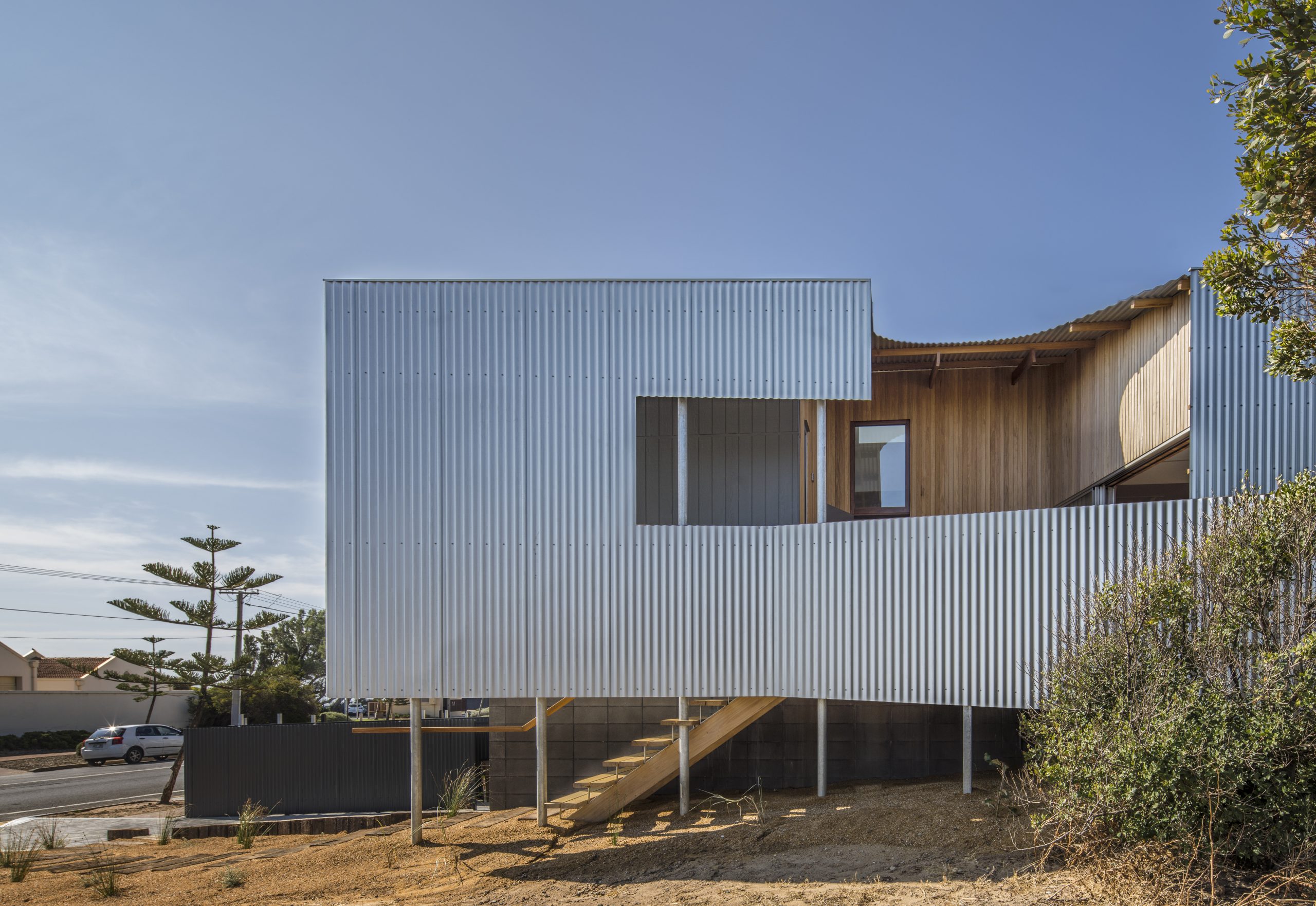
Corrugated steel has been used extensively to reference the old beach shacks once common along the Australian coastline, as well as to allow for a considerable amount of design flexibility.
“We wanted to create a shell over the parts of the house that needed to be protected,” Hewitt says. “We wanted to use the corrugated material to morph from roof to wall, and then parts of it to peel off to become the fence to the south.
“In some places it has this strategic ‘bite of the apple’ where it reveals the inner material, which is the timber on the deck inside, like the flesh of the apple.”
The house has been heavily insulated for thermal comfort all year round, while the spaces have been designed to be flexible now, and into the future.
“We wanted to create different qualities with the living spaces. One has the view and the other is the only room in the house that sits on slab with a connection to the rear yard,” she says. “The clients didn’t have children when they came to us but they now have two babies. The kids’ rooms both have lofts, which they can’t use yet, but they will grow into them.”
Hewitt thinks of the house as the new kid on the block that can hold its own against its bolder and brasher neighbours.
“We were so thankful that our clients were on board with the concept of a smaller footprint,” she says. “The budget was not enormous and we wanted the money we had to go into quality rather than quantity. We wanted to be as clever as we could.”
Images: Peter Barnes

From making unpopular decisions to learning when to listen, leaders from five businesses reveal what nobody prepared them for — and how running a company has challenged their expectations.

Technology and semiconductor shares fell sharply as investors questioned the debt financing the AI infrastructure boom and confronted higher rates and Chinese competition.

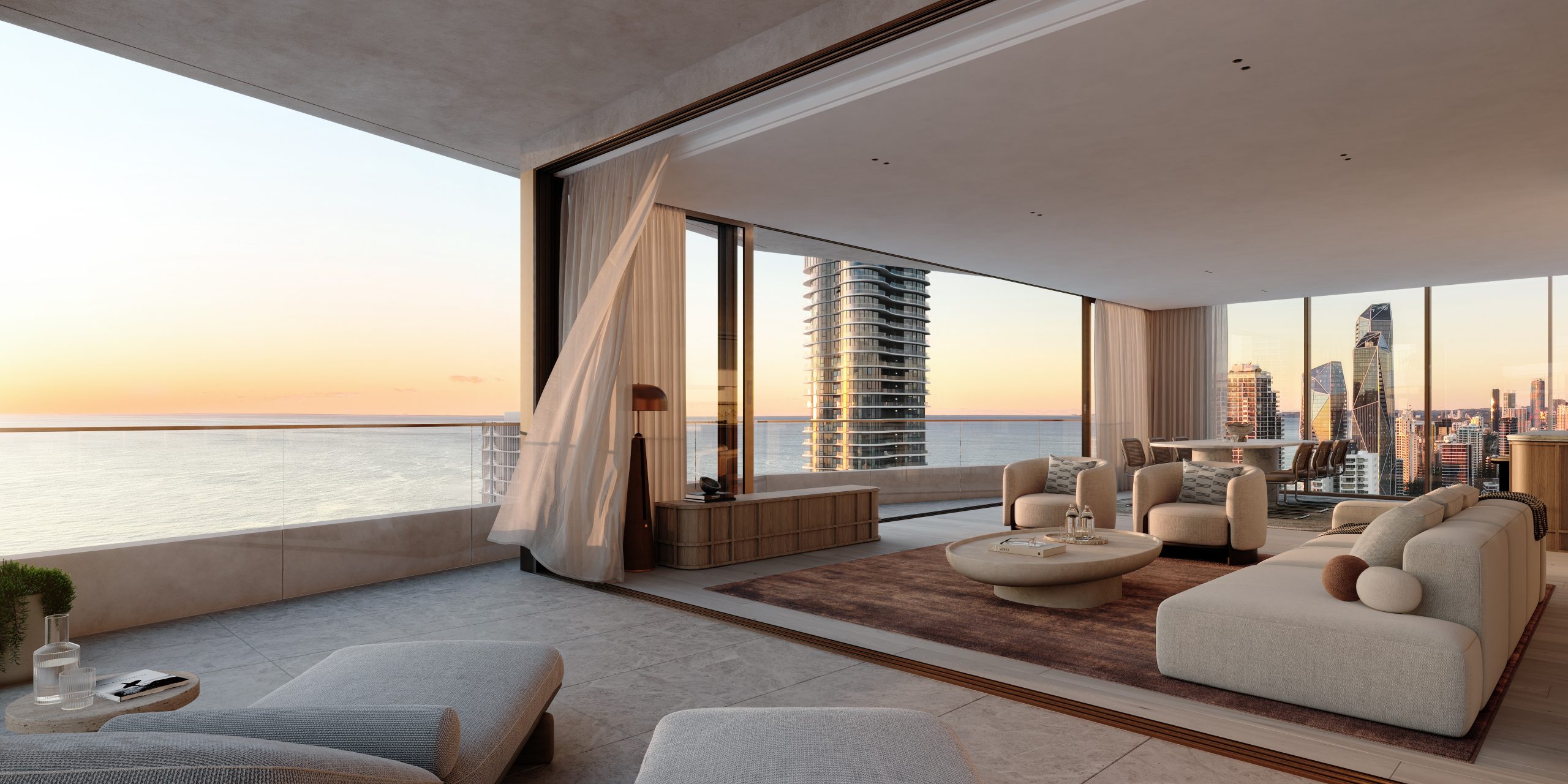
Mirvac’s 45-level Trielle has topped out at Yarra’s Edge, pairing riverfront apartments with wellness facilities, private dining and resident services.
3 min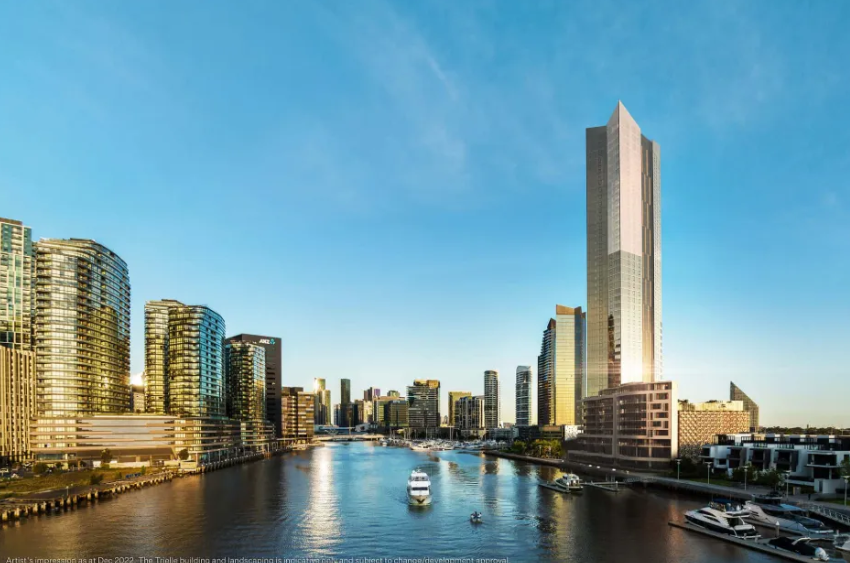
Mirvac has topped out Trielle at Melbourne’s Yarra’s Edge, with more than 70 per cent of the riverfront development sold and approximately 80 per cent of purchasers intending to make their apartment a home.
The figures, released on September 22, point to an owner-occupier audience for one of the precinct’s final residential towers. Mirvac began developing Yarra’s Edge in 2003, and its latest addition occupies one of the remaining absolute riverfront sites.
Mirvac CEO of Development Stuart Penklis said existing residents were among those moving up within the neighbourhood.
“Many purchasers already have a connection to Yarra’s Edge,” Mr Penklis said, describing buyers whose changing needs were encouraging an upgrade within the precinct.
“As one of the final residential towers within Yarra’s Edge, Trielle represents the culmination of more than two decades of creating one of Melbourne’s most established and sought-after waterfront communities,” Penklis said.
“Positioned on the Collins Street axis with absolute river frontage, Trielle offers residents a rare opportunity to enjoy sweeping views across the Yarra River, Melbourne skyline and Port Phillip Bay, while remaining seamlessly connected to the CBD. With Trielle now more than 70 per cent sold, we’re continuing to see strong demand from buyers seeking quality homes in established locations.”
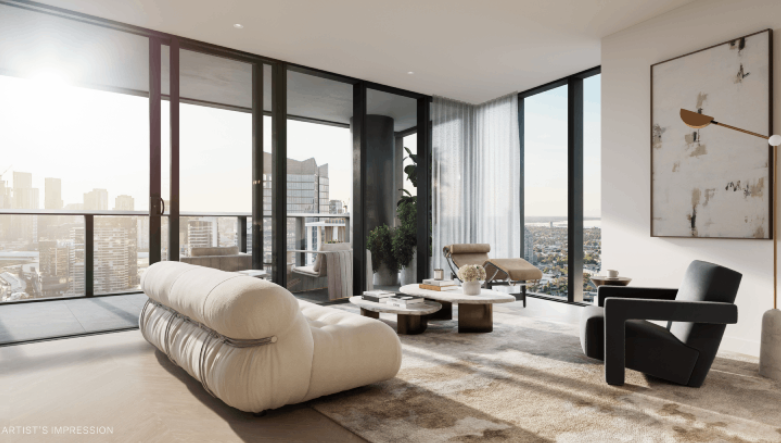
The developer also flagged a penthouse and sub-penthouse collection with larger layouts, premium finishes and broad outlooks. The planned wellness centrepiece, The Oasis, encompasses a 900-square-metre elevated urban rainforest.
Mirvac General Manager Residential Development Victoria Elysa Anderson said Trielle had resonated strongly with buyers seeking a rare lifestyle offering in Melbourne.
“Opportunities to secure a new luxury residence on a riverfront site of this calibre are incredibly rare, particularly within a community like Yarra’s Edge,” Anderson said.
“What makes Trielle unique is the combination of exceptional views, world-class residential facilities and the lifestyle that already exists around it. Residents are buying into a mature waterfront community with parks, promenades, dining, wellness and strong community connections already in place.”
The 45-level tower brings a substantial new presence to that waterfront. Its residential offering spans one-, two-, three- and four-bedroom apartments, with Signature, Prestige and Sub-Penthouse collections accommodating different household sizes. The north-facing position connects the apartments visually to the river and city beyond.
Seven storeys above the promenade, the planned Oasis combines planting and a running stream with a Scandinavian-inspired wellness club developed with spa specialist Naomi Gregory. Facilities include a 25-metre lap pool, hot magnesium pool, sauna, hydrotherapy, a gym, yoga and Pilates room, and treatment spaces.
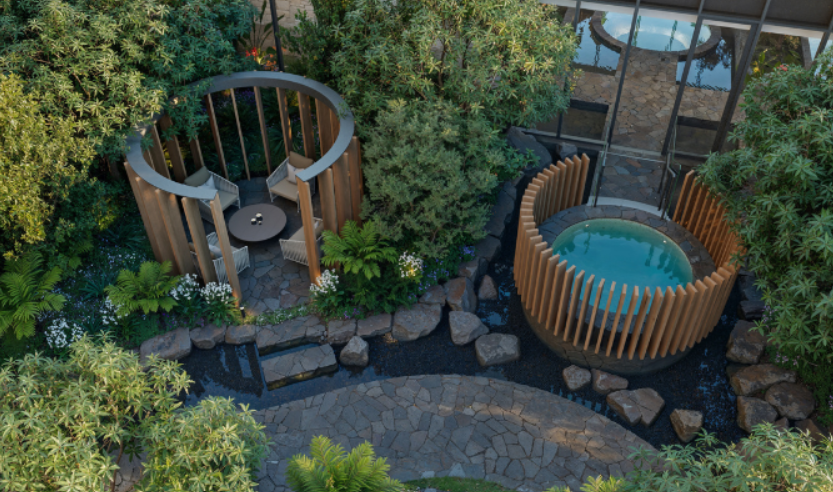
The amenity extends beyond exercise. Residents will have access to The Biblioteca library and workspaces, ground-floor work pods, and The Salone piano lounge. A private Chef’s Table dining room offers a setting for larger gatherings, while a cinema, games room and sports lounge broaden the entertaining options. Concierge services and a dog-wash area support everyday routines.
Trielle comprises a collection of one, two, three and four-bedroom residences. Reflecting strong demand from owner occupiers, approximately 80 per cent of purchasers to date intend to live in their homes, highlighting the project’s appeal to those seeking a long-term waterfront lifestyle.
Mirvac has recently delivered The Albertine, a premium apartment development on the edge of Melbourne’s CBD, and is nearing completion of Prince & Parade in Brunswick, further strengthening its portfolio of thoughtfully designed apartment communities in some of Melbourne’s most sought-after urban locations.

Chinese carmaker GAC will expand its Australian electric vehicle line-up with the city-focused AION UT hatchback.

Powerhouse real estate couple Avi Khan and Kaylea Sayer welcome their daughter while balancing record-breaking careers, proving success and family can grow side by side.