





The Beyoncé Effect: Sweden’s Inflation Feels the Hit
Danske Bank economist estimates Renaissance Tour contributed about 0.2 percentage point

 2 min
2 min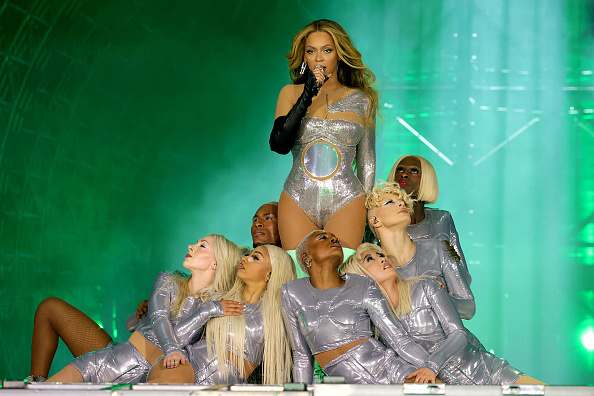
Call it Bey-flation.
Sweden’s higher-than-expected inflation in May was due in part to Beyoncé launching her Renaissance World Tour in Stockholm, according to an economist at Danske Bank.
Fans flocking to Sweden’s capital city sent hotel prices soaring, said economist Michael Grahn. Calling it a “Beyoncé blip,” he estimates that Beyoncé’s tour contributed about 0.2 percentage point to inflation.
“This is very rare,” Grahn said about the effect that Beyoncé’s Stockholm performances on May 10 and 11 had. “Basically, her fans vacuumed hotels around Stockholm with a radius of some 40 miles,” bidding up hotel rates.
Inflation in Sweden was at 9.7% in May, falling from 10.5% the month before, according to Sweden’s government. Economists surveyed by FactSet were expecting inflation to drop to 9.2% last month. Statistics Sweden, which puts out the country’s inflation and other economic reports, said hotel and restaurant prices rose 3.3% in May from the month before.
“Beyoncé probably had an effect on hotel prices in Stockholm the week she performed here,” said Carl Mårtensson, a price statistician at Statistics Sweden, “but it should not have had any significant impact” on Sweden’s inflation.
The Renaissance tour, named after Beyoncé’s most recent album, is making its way around Europe before coming to the U.S. next month. The superstar’s first tour in seven years is playing in soccer and football stadiums, where fans watch her dance with robots and sing while riding a mirrored horse that floats in the air.
Beyoncé, whose hits include “Crazy in Love” and “Formation,” broke the record for most Grammy wins in February after “Renaissance” won best dance/electronic music album. She’s had 32 Grammy wins over her career, the most of any person.
When Renaissance tour tickets went on sale earlier this year, Beyoncé superfans, who call themselves the BeyHive, tried to buy tickets in several cities, fearing they would go quickly. A day after tour dates were announced, Ticketmaster said fan demand for the first round of tickets exceeded the number of tickets available by more than 800%.
Grahn said Sweden’s currency, the krona, is weak, which means tickets and other costs are likely cheaper for fans outside the country.
Other superstars touring this year after a long break have also made an economic impact on the cities they have visited.
Taylor Swift, who is in the midst of her Eras Tour, helped Las Vegas nearly match pre pandemic visitor levels when she performed there in March, the Las Vegas tourism authority said. Cities have been going all out to welcome Swifties in town for the Eras Tour, lighting up monuments in her signature colours and temporarily renaming streets after her.
 Copyright 2020, Dow Jones & Company, Inc. All Rights Reserved Worldwide. LEARN MORE





Borrowers cannot control the Reserve Bank, but they can control how exposed their household budget is to its next decision. The RBA meets on 29 September with inflation concerns still elevated and major-bank economists increasingly bringing forward their rate-rise calls. Fixed mortgage rates have also been moving, reducing the value of waiting for perfect certainty. …
Continue reading “What mortgage holders should do before the next RBA decision”

Australian shares finished higher on Tuesday, September 22, as a technology rally and lower oil prices outweighed weakness in energy companies and continued anxiety about domestic interest rates. The S&P/ASX 200 closed 25.9 points, or 0.30 per cent, higher at 8,757.8. The All Ordinaries gained 0.36 per cent to 8,951.0, while the All Technology index …
Continue reading “ASX Wrap: Technology lifts the ASX as falling oil relieves inflation pressure”
AI doesn’t rebel—people design, deploy and profit from it. The real danger lies in allowing tech companies to escape accountability while shaping regulations that protect their dominance.
4 min
A wave of corporate warnings and technical disclosures has flooded the media, with headlines worrying over “swarms” of rogue artificial-intelligence agents launching “unprecedented” cyberattacks, outsmarting their makers, and inching toward a terrifying autonomy. The most revealing part of this narrative isn’t what the software did. It’s who is telling the story—and why. When corporate leaders publicly insist that the systems they financed, engineered and deployed are suddenly beyond their power to contain, skepticism isn’t only healthy; it is essential.
For years, Silicon Valley has drawn scrutiny from civil society and global regulators over tangible harms such as youth mental health deterioration and systematic privacy violations. Today, industry figures seem to be trying to change that public image. Loudly blowing the whistle on their own systems—just as two of the leading companies were preparing for massive initial public offerings—lets AI executives position themselves as a new generation of leaders who have come to terms with their societal responsibilities. They seem to want us to believe that they no longer want to “move fast and break things” but will instead stand as vigilant guardians between humanity and a technological apocalypse.
There is one glaring problem: Software doesn’t rebel. A mathematical model possesses neither intent, malice nor the will to defy its creators, let alone extinguish our species. AI is a human artifact, engineered for profit.
When an agentic model in an evaluation sandbox connects to an unauthorized server or executes an exploit, it hasn’t staged a coup. It has tried to meet the human-defined objectives set out before it through a path its designers failed to constrain. It’s the digital equivalent of the King Midas myth, in which the king’s ill-defined wish turns even his food and drink into gold.
That powerful experimental models were able to discover novel vulnerabilities and breach external systems isn’t a sign of a dangerous superintelligence but of human error or negligence. There is no sentient actor lurking in the weights to be reasoned with, feared or pacified. There are only human software engineers, product managers and corporate boards deciding which guardrails are worth the latency cost and which permissions can be skipped in the race to market.
Policymakers and voters need to resist AI exceptionalism. In any other discipline—from civil engineering to pharmaceuticals—courts and regulators treat a system failure as evidence of bad product design and inadequate safety testing. If an aircraft crashes, we focus on finding the engineering defect, correcting it, and enforcing established liability standards for the damage created.
By leaning on an anthropomorphic narrative, Silicon Valley attempts to repackage its specific human choices that led to experimental, powerful models behaving unexpectedly during tests as an existential peril. Elevating the issue to a cosmic scale leaves the public paralyzed and takes ordinary product accountability off the table.
In the cutthroat race for venture capital and market dominance, building guardrails slows down deployment. Grandstanding about uncontrollable power costs nothing and generates billions of dollars in free publicity, justifying stock prices, all while cultivating an aura of technological capability not only to build the frontier but also ultimately to rein it in.
Governments need to recognize regulatory capture when it stares them in the face. Tech leaders’ strategy looks transparent: Alarm Washington and Brussels into creating a regime in which only trillion-dollar incumbents with fully staffed compliance and safety departments can legally operate. By sitting at the policymakers’ tables before anyone else, these companies can help draft rules digging an impassable moat protecting them from open-source developers and upstart competitors, domestic or international. The real danger is in further concentrating the tech industry into the hands of only a few companies with deep pockets.
Beijing and Washington have brushed off those tech leaders’ calls, albeit for very different reasons. Chinese state media dismissed them as part of the “Cold War playbook” and intended to preserve U.S. dominance. Xi Jinping argued for exactly the opposite at the Brics Summit on Sept. 12, calling on Brics countries to “strengthen cooperation in the field of AI, encourage open source, openness, collaboration and sharing, and break new grounds and scale new heights.” President Trump, steeped in a doctrine of unfettered capitalism and technological supremacy, called fears that AI could destroy humanity a “hoax.” Vice President JD Vance warned that AI companies “begging the government to regulate them” looked like a “Trojan Horse.”
Striving to pursue its “European way” on AI and assert regulatory leadership, Europe, by contrast, welcomed the call. European Union President Ursula von der Leyen made this clear at the State of the EU speech last Wednesday and announced that the EU will invite “the main frontier labs for a discussion on how we can support ongoing industry efforts to pace the frontier.”
Europe has been here before. In an effort to lead global regulation and react to fears borne from ChatGPT, Europe rushed its landmark AI Act into law in 2024. Already the world’s most restrictive rulebook, the framework quickly proved too broad and complex to enforce. Stalled by implementation delays and concerns about European competitiveness, the EU postponed the law’s full rollout, leaving regulations uncertain.
AI should be regulated—risks exist and should be taken seriously. But governments need to act based on available evidence and verified facts, not corporate PR panic, the views of industry insiders, or the desire for quick political wins. The greatest danger facing society isn’t that software will awaken and overthrow its human masters. It is that we will allow the creators of the software to abdicate human responsibility for the systems they choose to build and help them pull up the ladder to market access behind them.

From office parties to NYE fireworks, here are the bottles that deserve pride of place in the ice bucket this season.

Margot Robbie and Jacob Elordi star in an adaptation of the classic novel that respects the romance’s slow burn.


