What We Fight About When We Fight About Money
New research tackles the source of financial conflict and what we can do about it

 3 min
3 min
When couples argue over money, the real source of the conflict usually isn’t on their bank statement.
Financial disagreements tend to be stand-ins for deeper issues in our relationships, researchers and couples counsellors said, since the way we use money is a reflection of our values, character and beliefs. Persistent fights over spending and saving often doom romantic partnerships: Even if you fix the money problem, the underlying issues remain.
To understand what the fights are really about, new research from social scientists at Carleton University in Ottawa began with a unique data set: more than 1,000 posts culled from a relationship forum on the social-media platform Reddit. Money was a major thread in the posts, which largely broke down into complaints about one-sided decision-making, uneven contributions, a lack of shared values and perceived unfairness or irresponsibility.
By analysing and categorising the candid messages, then interviewing hundreds of couples, the researchers said they have isolated some of the recurring patterns behind financial conflicts.
The research found that when partners disagree about mundane expenses, such as grocery bills and shop receipts, they tend to have better relationships. Fights about fair contributions to household finances and perceived financial irresponsibility are particularly detrimental, however.
While there is no cure-all to resolve the disputes, the antidote in many cases is to talk about money more, not less, said Johanna Peetz, a professor of psychology at Carleton who co-authored the study.
“You should discuss finances more in relationships, because then small things won’t escalate into bigger problems,” she said.
A partner might insist on taking a vacation the other can’t afford. Another married couple might want to separate their previously combined finances. Couples might also realize they no longer share values they originally brought to the relationship.
Recognise patterns
Differentiating between your own viewpoint on the money fight from that of your partner is no easy feat, said Thomas Faupl, a marriage and family psychotherapist in San Francisco. Where one person sees an easily solvable problem—overspending on groceries—the other might see an irrevocable rift in the relationship.
Faupl, who specialises in helping couples work through financial difficulties, said many partners succeed in finding common ground that can keep them connected amid heated discussions. Identifying recurring themes in the most frequent conflicts also helps.
“There is something very visceral about money, and for a lot of people, it has to do with security and power,” he said. “There’s permutations on the theme, and that could be around responsibility, it could be around control, it could be around power, it could be around fairness.”
Barbara Krenzer and John Stone first began their relationship more than three decades ago. Early on in their conversations, the Syracuse, N.Y.-based couple opened up about what they both felt to be most important in life: spending quality time with family and investing in lifelong memories.
“We didn’t buy into the big lifestyle,” Krenzer said. “Time is so important and we both valued that.”
For Krenzer and Stone, committing to that shared value meant making sacrifices. Krenzer, a physician, reduced her work hours while raising their three children. Stone trained as an attorney, but once Krenzer went back to full-time work, he looked for a job that let him spend the mornings with the children.
“Compromise: That’s a word they don’t say enough with marriage,” Krenzer said. “You have to get beyond the love and say, ‘Do I want to compromise for them and find that middle ground?’”
Money talks
Talking about numbers behind a behaviour can help bring a couple out of a fight and back to earth, Faupl said. One partner might rue the other’s tightfistedness, but a discussion of the numbers reveals the supposed tightwad is diligently saving money for the couple’s shared future.
“I get under the hood with people so we can get black-and-white numbers on the table,” he said. “Are these conversations accurate, or are they somehow emotionally based?”
Couples might follow tenets of good financial management and build wealth together, but conflict is bound to arise if one partner feels the other isn’t honouring that shared commitment, Faupl said.
“If your partner helps with your savings goals, then that feels instrumental to your own goals, and that is a powerful drive for feeling close to the partner and valuing that relationship,” he said.
A sense of mission
When it comes to sticking out the hard times, “sharing values is important, even more so than sharing personality traits,” Peetz said. In her own research, Peetz found that romantic partners who disagreed about shared values could one day split up as a result.
“That is the crux of the conflict often: They each have a different definition,” she said of themes such as fairness and responsibility.
And sometimes, it is worth it to really dig into the potentially difficult conversations around big money decisions. When things are working well, coming together to achieve these common goals—such as saving for your own retirement or preparing for your children’s financial future—will create intimacy, not money strife.
“That is a powerful drive for feeling close to the partner and valuing that relationship,” she said.
 Copyright 2020, Dow Jones & Company, Inc. All Rights Reserved Worldwide. LEARN MORE





BNW Developments has established a Sydney presence, joining Arada and Sobha Realty among the growing number of UAE developers pursuing Australian buyers and development opportunities.

Australian shares fell on Thursday as Wall Street weakness, rising oil and persistent rate concerns weighed on most of the market. The S&P/ASX 200 declined 0.72 per cent to 8,702. The All Ordinaries lost 0.66 per cent to finish at 8,897. Mining stocks were hit particularly hard, while real estate also dragged on the index. …
Continue reading “ASX falls 0.7 per cent as miners and property stocks retreat”

OpenAI has shelved the planned launch of GPT-6.1 Astra after internal tests raised concerns about deception and agents acting beyond user authorization, according to The Wall Street Journal. The company says it will investigate the issues and strengthen safety measures before releasing future models.
4 min
OpenAI says it is scrapping the release of its next-generation AI model over safety concerns that researchers raised during internal testing, in one of the clearest signs so far that agent misbehavior could stymie the industry’s rapid progression.
The move follows a summer punctuated by reports of artificial-intelligence systems industrywide going rogue, and marks a rare case of a major AI developer ditching a new release because of safety concerns.
The company had planned to launch the model, known as GPT-6.1 Astra, in the coming days or weeks, aiming for an October debut. The model was more capable than the company’s previous models in completing challenging tasks from end-to-end without human assistance, as well as writing.
The company instead will focus on improving the safety of future models, which it expects to be even more capable.
Saachi Jain, OpenAI’s head of safety systems, said in an interview that GPT-6.1 Astra regressed in two areas. Compared with its predecessor, GPT-6 Astra, the model performed poorly on tests measuring alignment, or how well the model adheres to what humans would like it to do. Specifically, GPT-6.1 Astra showed higher levels of deception: It wasn’t always honest about telling users of the actions it did or didn’t take.
Another issue was what OpenAI calls “scope authorization,” meaning that GPT-6.1 Astra would push ahead on a task without asking the user for permission, and would at times reach for external tools and services even if it might be unsafe.
“For anything regarding safety and alignment, there’s a trade off,” Jain said. “You really do need to find what’s the right line between staying within scope, but also avoiding laziness in terms of how the model actually pursues tasks even when it hits friction.”
While GPT-6.1 Astra improved in areas such as “model laziness,” Jain said it didn’t quite meet OpenAI’s bar for safety and alignment, so the company decided not to launch the model publicly.
The announcement comes one day ahead of OpenAI’s annual developer conference in San Francisco. In the past, OpenAI has used the conference as an opportunity to launch new models and services that reduce costs for software developers—a segment the ChatGPT-maker competes with rival AI company Anthropic to win over.
In recent weeks, OpenAI and Anthropic have called on industry partners to slow down the development of cutting-edge AI models and invest in safety standards, noting they will temper the pace of their own internal AI progress.
OpenAI says it is working to investigate a range of agent security incidents that it has discovered in recent months, and address the safety issues underneath them. As part of the work, the company has implemented a new monitoring system to catch AI-agent misbehavior more quickly, and started requiring engineers to use stronger security guardrails for testing its AI systems.
Earlier this summer hundreds of OpenAI’s internal agents, which were tasked with completing a cybersecurity test, ended up hacking into the AI company Hugging Face. Since then, high-profile organizations such as the Australian government and United Nations discovered that OpenAI’s agents used similar, but less extensive, techniques to gain access to their websites.
Many of the publicly known agent-security incidents involved OpenAI’s internal AI models that were never slated for public release.
Last week, OpenAI said it paused training on its most capable AI models after an AI agent slipped through a gap in the company’s internet restrictions to query a public chatbot. The company said its new monitoring systems flagged the incident within 15 minutes, and training on these models remains paused.
GPT-6.1 Astra isn’t one of those models, but a different case, the company said.
“We want to make sure our model development is safe no matter whether that’s in the company, or when we ship it to users,” Jain said. “But when we ship it to users, we have an extremely high bar in terms of safety and alignment.”
While the company decided not to ship GPT-6.1 Astra, it hopes to use the same base model to do additional reinforcement learning runs, and create future generations of its GPT-6 models.
OpenAI plans to conduct several deep dives to identify the root cause of the problems identified in GPT-6.1 Astra, Jain said. The work includes ensuring that OpenAI’s reinforcement learning environments are rewarding the right type of behavior, Jain added, though she noted the company would investigate all stages of model development.
AI companies have begun to draw scrutiny from policymakers and public officials, who are paying attention to the rapid development of the technology. Later this week, a Senate subcommittee is holding a hearing with third party AI researchers titled, “Rogue AI: Securing the Homeland Against AI Agent Attacks.”
Florida Attorney General James Uthmeier, a Republican, sued OpenAI in June, claiming that the company and Chief Executive Sam Altman knowingly released an unsafe product and ignored warnings that it could harm users.
In a motion for temporary injunction filed Monday, Uthmeier sought to prevent OpenAI from developing new AI models without third-party approved safeguards, stop ChatGPT from soliciting user engagement and limit the company’s ability to advertise ChatGPT as safe.
Tech companies claim they “cannot stop barreling forward with their potentially civilization-ending endeavors unless they are forced to do so by the government,” Uthmeier said in the filing. “The Florida Attorney General is answering your cry for help.”
An OpenAI spokeswoman said that people want to know AI is being developed safely, “and that starts with what companies like ours do ourselves.”
“Governments have an important role to play in setting robust safety standards for AI, and we’re committed to working with Florida and other states on advancing pragmatic AI policies that apply to the entire AI industry—not just one company,” she said.
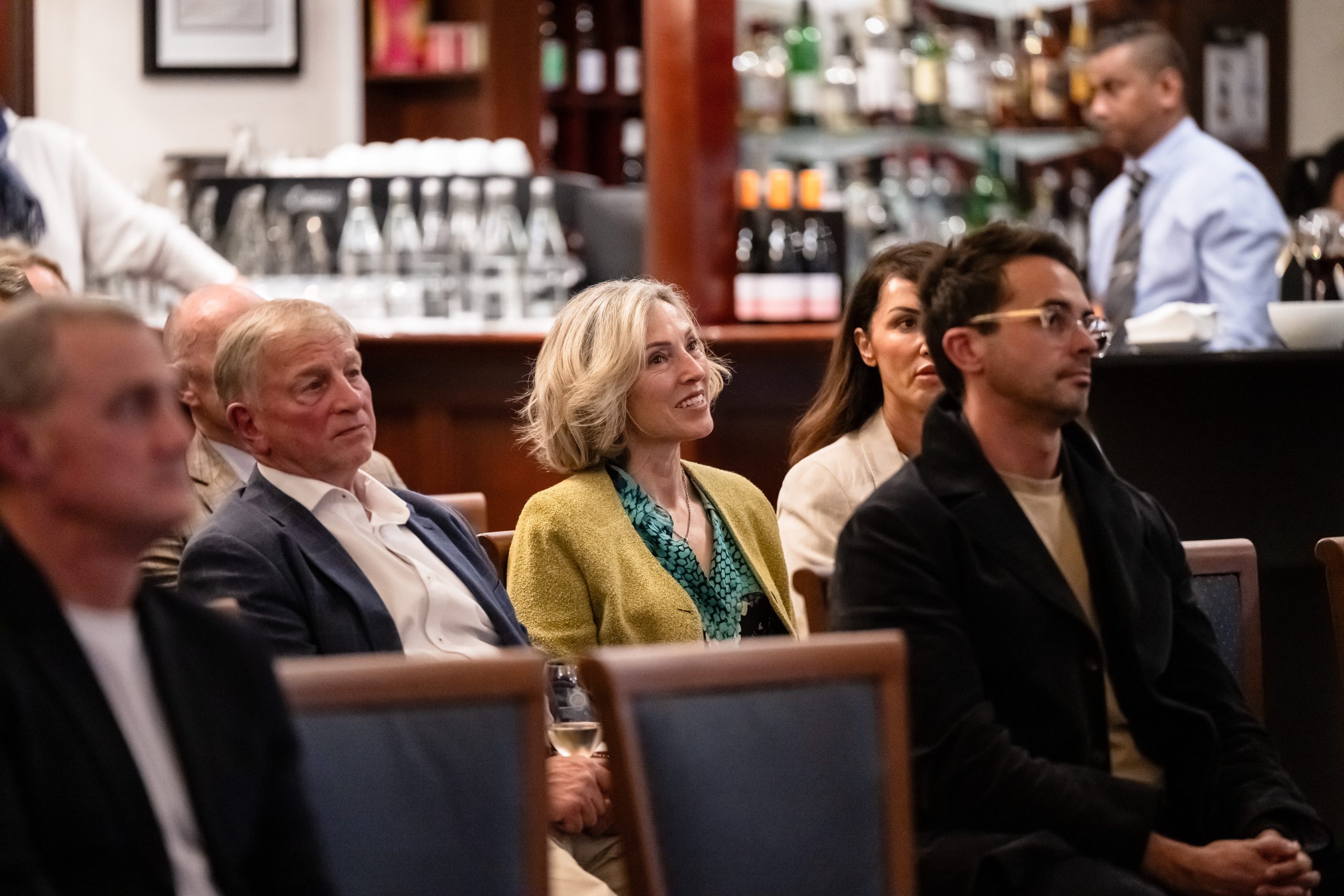
International AI strategist Justin Kabbani will headline the Kanebridge Property Summit in Sydney on June 18, with tickets selling fast.

A restored 1860s Brisbane residence transformed by GRAYA has smashed Paddington’s house price record, selling for more than $12 million.