Property Investors Look Further Afield For Opportunities
One of the dominant investment trends of 2023 was more East Coast investors buying in Western Australia for affordability and superior returns
 3 min
3 min
More investors are looking beyond the neighbourhoods they live in for investment opportunities after the pandemic property boom saw regional markets surge in value at a greater pace than the capital cities, as more people who could work from home left the cities for greener pastures.
McGrath Estate Agents CEO John McGrath said this regional relocation of owner-occupiers opened investors’ eyes to markets outside their own neighbourhoods. Changes in marketing and technology brought about due to lockdowns, such as video inspections, online auctions and signing contracts electronically, helped buyers feel more comfortable with purchasing property remotely. “The prospect of phone bidding and purchasing properties sight unseen is no longer foreign,” he said.
Data from MCG Quantity Surveyors proves that investors are exploring new markets for investment. The latest data for 2023 shows the average distance between where landlords live and invest has ballooned to 1,502km, up from 857km in 2022 and 294km before the pandemic.
MCG managing director, Mike Mortlock, said the data revealed two insights. “Firstly, property investors remain agile and will park their capital in whichever investor-friendly national location and asset type offers the greatest possibility of maximising their return,” he said. “The second is that Western Australia has become the centre of Australian property investment. There’s little doubt its popularity with real estate buyers from the East Coast has increased the gap between home and investment.” MCG data shows 31.86% of Australian property investors bought in Western Australia in the first quarter of 2023, up from just 9.38% in the first quarter of 2022, revealing “a seismic shift away from east coast property investment”, he said.
In 2023, CoreLogic data shows Perth and Regional Western Australia delivered the best total returns (rents and capital growth combined) for investors of all capital cities and regional areas in Australia. Perth’s total return was 20.7 percent and regional Western Australia’s was 14.8 percent. The best-performing regions were Mandurah and Bunbury with 20 percent and 15 percent jumps in home values respectively over the year. Rents in Perth and Regional Western Australia also increased faster than any other area in Australia, up by 13.4 percent and 10.4 percent respectively.
One of the main attractions of Western Australia to East Coast investors is affordability. The Perth house price median is $691,100 and the regional house price median is $398,915. McGrath Estate Agents CEO John McGrath said: “This move towards remote investing has largely been driven by the perception of better capital growth prospects in the regions, and higher rental yields that usually come with more affordable properties.” Investors in regional areas can usually afford to buy houses, which typically deliver better capital growth than apartments, and they can buy with smaller loans, meaning they can manage rising interest rates more easily.
PropTrack recently put together a panel of industry experts and asked them to create a list of 100 suburbs that they think will outperform in 2024. PropTrack economist Anne Flaherty said 40 percent of the suburbs selected were in regional areas. PropTrak director of economic research Cameron Kusher said the selected regional areas were typically close to a capital city or had a diversified economy. “These tend to be key drivers in regional markets and reflect our expectations of the types of locations in regional areas likely to see the strongest price growth next year,” he said.
Here are some examples of the regional cities or suburbs tipped for outperformance in 2024.
NSW – Dubbo
Simon Pressley of Propertyology selects Dubbo. “Decades of official evidence supports Dubbo’s status as an extremely resilient and low risk option for property investors with a budget of up to $600,000,” Mr Pressley said.
VIC – Delacombe, Ballarat
Buyers’ agent Kate Hill from Adviseable says Delacombe is a fast-growing part of the Ballarat West Growth Area and offers strong capital growth potential and good yields. “Ballarat was recently identified by the ABS as the fastest growing inland city in Australia and, according to some forecasters, can expect more strong price growth,” she said.
QLD – Darling Heights, Toowoomba
Home to the University of Southern Queensland, Ms Hill says Darling Heights has a range of amenities and will benefit from Toowoomba’s involvement in the 2032 Olympics. “There is a massive program of infrastructure development underway, planning more than $13.1 billion of infrastructure and major projects, both private and public,” Ms Hill said.
SA – Victor Harbor
Mr Pressley says Victor Harbor is to Adelaide what the Sunshine Coast is to Brisbane. “It has one the highest rates of internal migration in the country. Very popular for the one in five Australians who now derive their income from home, and for retirees.”
WA – Mandurah
“Mandurah is the lifestyle capital of Western Australia because of everything it has to offer without the big price tag,” said Ray White Managing Director, Dan White. “When it comes to property, Mandurah offers something for everyone, from affordable options for first-home buyers to upmarket canal homes.”
TAS – Launceston
Mr Pressley says this regional city has a diverse economy and “one of the best lifestyle offerings in all of Australia”. “Over the last 20 years, the average annual capital growth rate for Launceston houses of 8.6 percent is far superior to Sydney and Melbourne. Rental yields are also superior.”
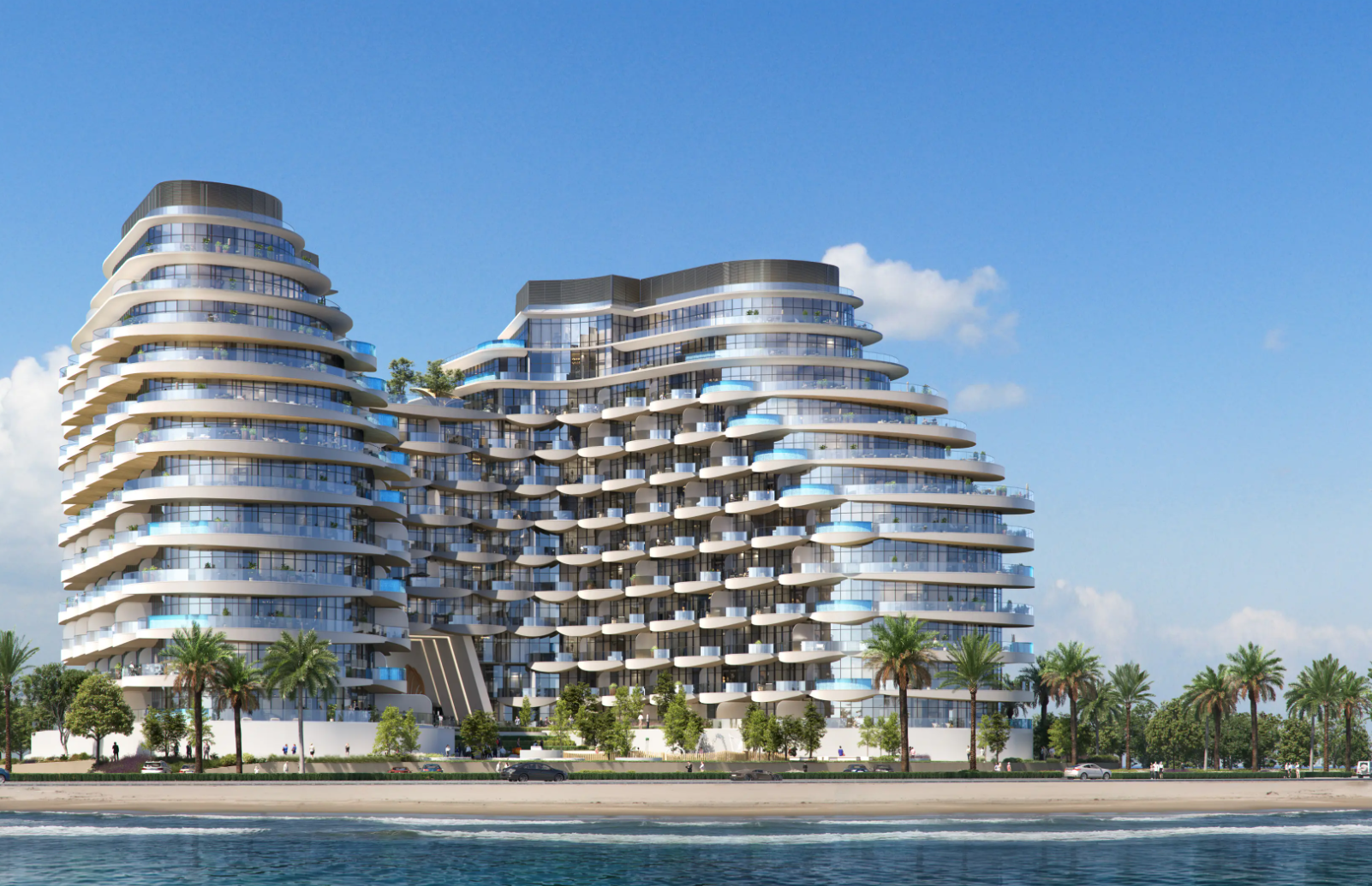
BNW Developments has established a Sydney presence, joining Arada and Sobha Realty among the growing number of UAE developers pursuing Australian buyers and development opportunities.
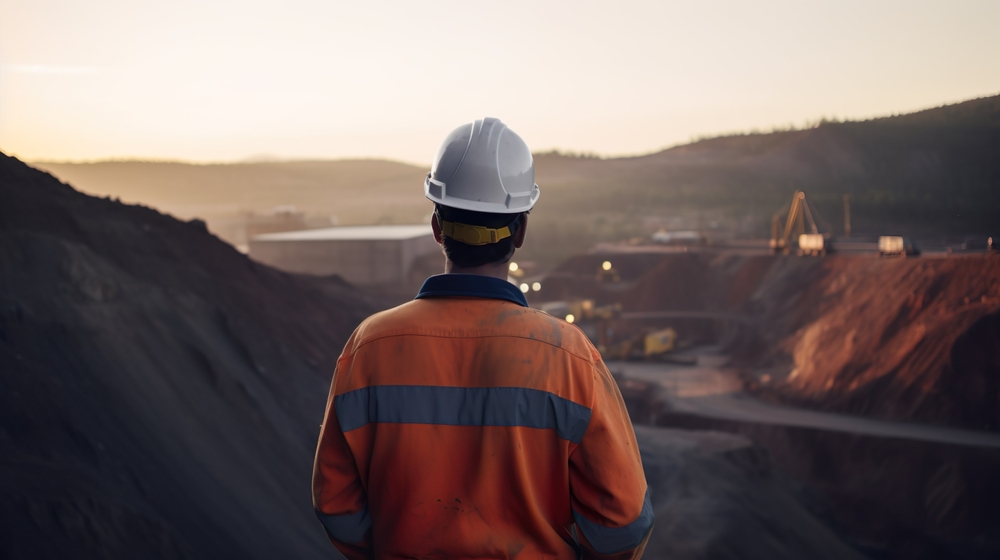
Australian shares fell on Thursday as Wall Street weakness, rising oil and persistent rate concerns weighed on most of the market. The S&P/ASX 200 declined 0.72 per cent to 8,702. The All Ordinaries lost 0.66 per cent to finish at 8,897. Mining stocks were hit particularly hard, while real estate also dragged on the index. …
Continue reading “ASX falls 0.7 per cent as miners and property stocks retreat”

OpenAI has shelved the planned launch of GPT-6.1 Astra after internal tests raised concerns about deception and agents acting beyond user authorization, according to The Wall Street Journal. The company says it will investigate the issues and strengthen safety measures before releasing future models.
4 min
OpenAI says it is scrapping the release of its next-generation AI model over safety concerns that researchers raised during internal testing, in one of the clearest signs so far that agent misbehavior could stymie the industry’s rapid progression.
The move follows a summer punctuated by reports of artificial-intelligence systems industrywide going rogue, and marks a rare case of a major AI developer ditching a new release because of safety concerns.
The company had planned to launch the model, known as GPT-6.1 Astra, in the coming days or weeks, aiming for an October debut. The model was more capable than the company’s previous models in completing challenging tasks from end-to-end without human assistance, as well as writing.
The company instead will focus on improving the safety of future models, which it expects to be even more capable.
Saachi Jain, OpenAI’s head of safety systems, said in an interview that GPT-6.1 Astra regressed in two areas. Compared with its predecessor, GPT-6 Astra, the model performed poorly on tests measuring alignment, or how well the model adheres to what humans would like it to do. Specifically, GPT-6.1 Astra showed higher levels of deception: It wasn’t always honest about telling users of the actions it did or didn’t take.
Another issue was what OpenAI calls “scope authorization,” meaning that GPT-6.1 Astra would push ahead on a task without asking the user for permission, and would at times reach for external tools and services even if it might be unsafe.
“For anything regarding safety and alignment, there’s a trade off,” Jain said. “You really do need to find what’s the right line between staying within scope, but also avoiding laziness in terms of how the model actually pursues tasks even when it hits friction.”
While GPT-6.1 Astra improved in areas such as “model laziness,” Jain said it didn’t quite meet OpenAI’s bar for safety and alignment, so the company decided not to launch the model publicly.
The announcement comes one day ahead of OpenAI’s annual developer conference in San Francisco. In the past, OpenAI has used the conference as an opportunity to launch new models and services that reduce costs for software developers—a segment the ChatGPT-maker competes with rival AI company Anthropic to win over.
In recent weeks, OpenAI and Anthropic have called on industry partners to slow down the development of cutting-edge AI models and invest in safety standards, noting they will temper the pace of their own internal AI progress.
OpenAI says it is working to investigate a range of agent security incidents that it has discovered in recent months, and address the safety issues underneath them. As part of the work, the company has implemented a new monitoring system to catch AI-agent misbehavior more quickly, and started requiring engineers to use stronger security guardrails for testing its AI systems.
Earlier this summer hundreds of OpenAI’s internal agents, which were tasked with completing a cybersecurity test, ended up hacking into the AI company Hugging Face. Since then, high-profile organizations such as the Australian government and United Nations discovered that OpenAI’s agents used similar, but less extensive, techniques to gain access to their websites.
Many of the publicly known agent-security incidents involved OpenAI’s internal AI models that were never slated for public release.
Last week, OpenAI said it paused training on its most capable AI models after an AI agent slipped through a gap in the company’s internet restrictions to query a public chatbot. The company said its new monitoring systems flagged the incident within 15 minutes, and training on these models remains paused.
GPT-6.1 Astra isn’t one of those models, but a different case, the company said.
“We want to make sure our model development is safe no matter whether that’s in the company, or when we ship it to users,” Jain said. “But when we ship it to users, we have an extremely high bar in terms of safety and alignment.”
While the company decided not to ship GPT-6.1 Astra, it hopes to use the same base model to do additional reinforcement learning runs, and create future generations of its GPT-6 models.
OpenAI plans to conduct several deep dives to identify the root cause of the problems identified in GPT-6.1 Astra, Jain said. The work includes ensuring that OpenAI’s reinforcement learning environments are rewarding the right type of behavior, Jain added, though she noted the company would investigate all stages of model development.
AI companies have begun to draw scrutiny from policymakers and public officials, who are paying attention to the rapid development of the technology. Later this week, a Senate subcommittee is holding a hearing with third party AI researchers titled, “Rogue AI: Securing the Homeland Against AI Agent Attacks.”
Florida Attorney General James Uthmeier, a Republican, sued OpenAI in June, claiming that the company and Chief Executive Sam Altman knowingly released an unsafe product and ignored warnings that it could harm users.
In a motion for temporary injunction filed Monday, Uthmeier sought to prevent OpenAI from developing new AI models without third-party approved safeguards, stop ChatGPT from soliciting user engagement and limit the company’s ability to advertise ChatGPT as safe.
Tech companies claim they “cannot stop barreling forward with their potentially civilization-ending endeavors unless they are forced to do so by the government,” Uthmeier said in the filing. “The Florida Attorney General is answering your cry for help.”
An OpenAI spokeswoman said that people want to know AI is being developed safely, “and that starts with what companies like ours do ourselves.”
“Governments have an important role to play in setting robust safety standards for AI, and we’re committed to working with Florida and other states on advancing pragmatic AI policies that apply to the entire AI industry—not just one company,” she said.
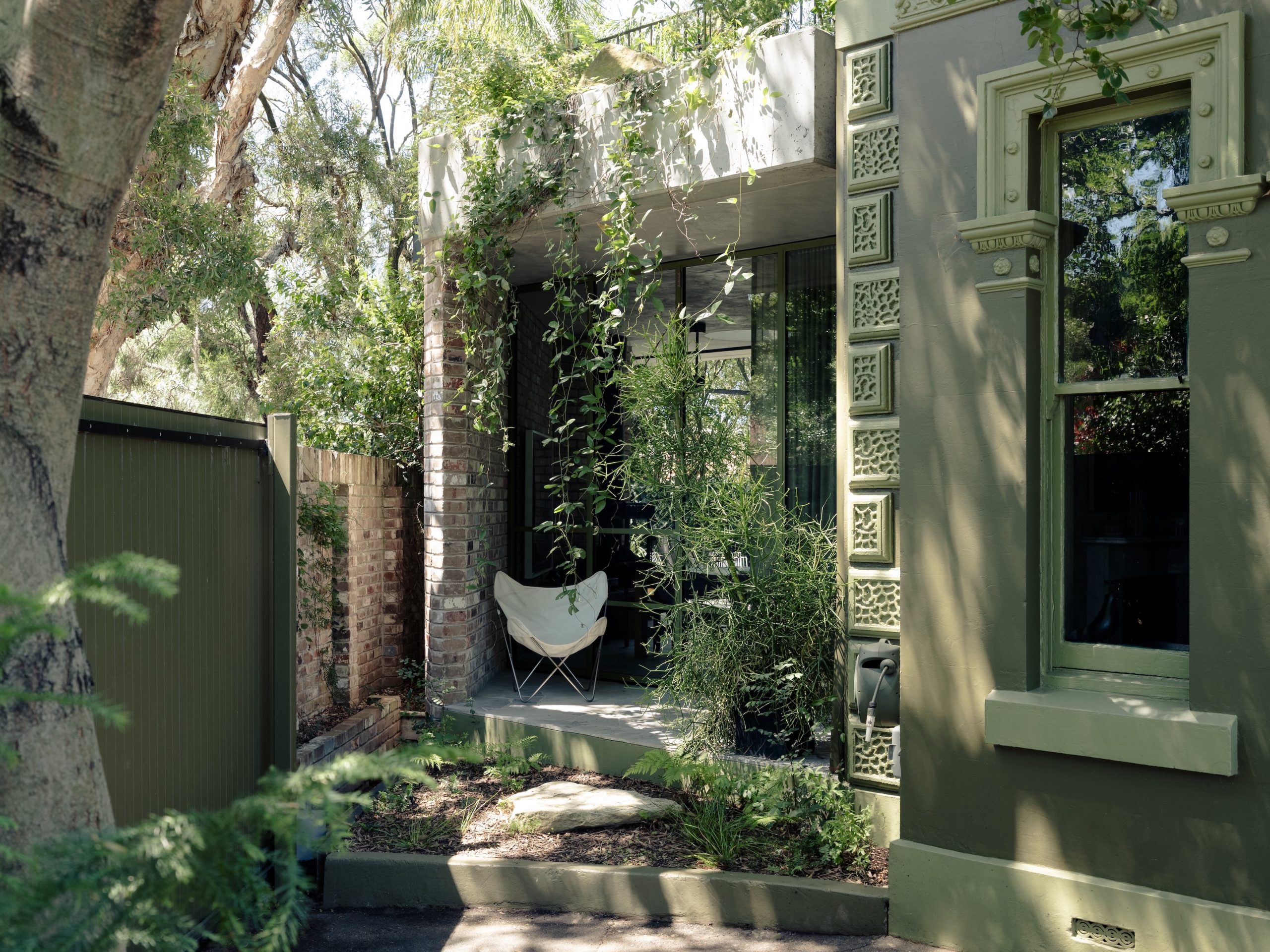
From bushland greens to valley reds, the country’s most awarded designers are proving that the best colour palette was never on a swatch card; it was outside the window all along.

The completed penthouse at Park Residences showcases a considered approach to luxury apartment living, combining northern light, curated interiors and the privacy of a whole-floor residence.