The Real-Estate Downturn Comes for America’s Premier Office Towers
Rents at highest-end buildings fall and rate of leasing slows

 3 min
3 min
The highest quality office buildings have had much better success navigating the industry’s turmoil. Now, even premier towers are starting to wobble.
Rents at the highest-end buildings have been falling, while the rate of leasing has been slowing. Tenants have become more sensitive to costs in a world of higher interest rates and lingering concerns about a possible economic slowdown, market participants say.
Owners of the most elite buildings escaped this fate for a while by convincing the market they had created a new class of office tower—one that surpassed the traditional Class A building at the top of the pecking order.
These landlords persuaded blue-chip tenants that reluctant workers would return if only their offices sparkled with lush roof decks, fully loaded gyms and food prepared by Michelin-starred chefs. Owners invested heavily in these properties, which were usually new developments with the best locations, views, air quality and modern designs.
But that strategy is losing steam as more companies have accepted the reality of hybrid work schedules and, for the most part, have given up on compelling workers to be in five days a week.

“The ship has sailed on full return to the office for most companies,” said Rob Sadow, chief executive of Scoop Technologies, a software firm that developed an index that tracks workplace strategies. “They’re not going to go from three days a week to five days a week by making their space nicer.”
That is one reason why few office developers are considering new ground breakings. Current rents don’t pencil out for building expensive space. The U.S. had only 31 million square feet in office construction starts last year, the lowest level since 2010. New buildings will represent only 1% of inventory by 2027, the lowest in at least 25 years, according to CoStar.
“New starts have essentially ground to a halt,” said Dylan Burzinski, analyst at real-estate analytics firm Green Street.
Premium, amenity-rich office space has outperformed in terms of rent and occupancy throughout the pandemic. In New York, SL Green Realty opened a new office tower called One Vanderbilt across the street from Grand Central Terminal in the fall of 2020. It boasted a 4,000-square-foot terrace and cafe and a menu overseen by star chef Daniel Boulud. The 93-story building quickly filled up even though its top asking rents were near record levels at more than $300 a square foot.
That sort of exceptionalism is beginning to wane. Asking rents for prime space in 16 U.S. markets declined in the third quarter after increasing on average from about $61 a square foot in mid-2021 to close to about $70 in the second quarter of last year, according to CBRE Econometric Advisors. They were just under $69 in the fourth quarter, CBRE said.
The share of leasing activity is also falling among the premier towers. The office properties that data firm CoStar Group defines as five-star buildings accounted for 8% of the market in 2022 and 2023, down from 10% in 2019. Meanwhile, new leases in five-star buildings were on average 43% smaller than 2019, CoStar said, reflecting how companies are becoming more efficient in their space use and tolerating some degree of work from home.
In the fourth quarter, 62% of companies offered some form of remote work, up from 51% one year ago, according to Scoop. On average, those companies with hybrid strategies required workers in the office 2.5 days a week in October, Scoop said. In 2021 and 2022, many companies still expected to bring workers back five days a week and were leasing space with that in mind.
Office buildings that have opened recently have done well, but not by One Vanderbilt’s standards. In Boston, for example, Millennium Partners has leased about 60% of the 812,000 square feet of office space that hit the market last year in the new Winthrop Center project with such tenants as Cambridge Associates and consulting giant McKinsey. But rents are about 10% less than what Millennium originally forecast, said Joe Larkin, principal of MP Boston, the developer’s local arm.
Larkin said that Millennium expects to achieve its goal of taking three years to lease the building. “What we lost in the last couple of years is the hope to exceed how we planned this building,” he said.
High interest rates and concerns about a possible recession are also giving companies second thoughts about trading up to higher quality spaces. Moves are expensive especially when borrowing costs are higher than they’ve been in decades.
Cost-conscious companies are noticing that the gap between asking rents in top buildings and lower quality buildings is widening. The result: Renewals were 42% of the leasing volume last year, compared with 31% in 2018 and 2019 combined, according to CBRE.
“If companies aren’t going to have people in the office full time, maybe taking the lower-grade space might be a better economic decision,” Sadow said.
 Copyright 2020, Dow Jones & Company, Inc. All Rights Reserved Worldwide. LEARN MORE





From making unpopular decisions to learning when to listen, leaders from five businesses reveal what nobody prepared them for — and how running a company has challenged their expectations.

Technology and semiconductor shares fell sharply as investors questioned the debt financing the AI infrastructure boom and confronted higher rates and Chinese competition.
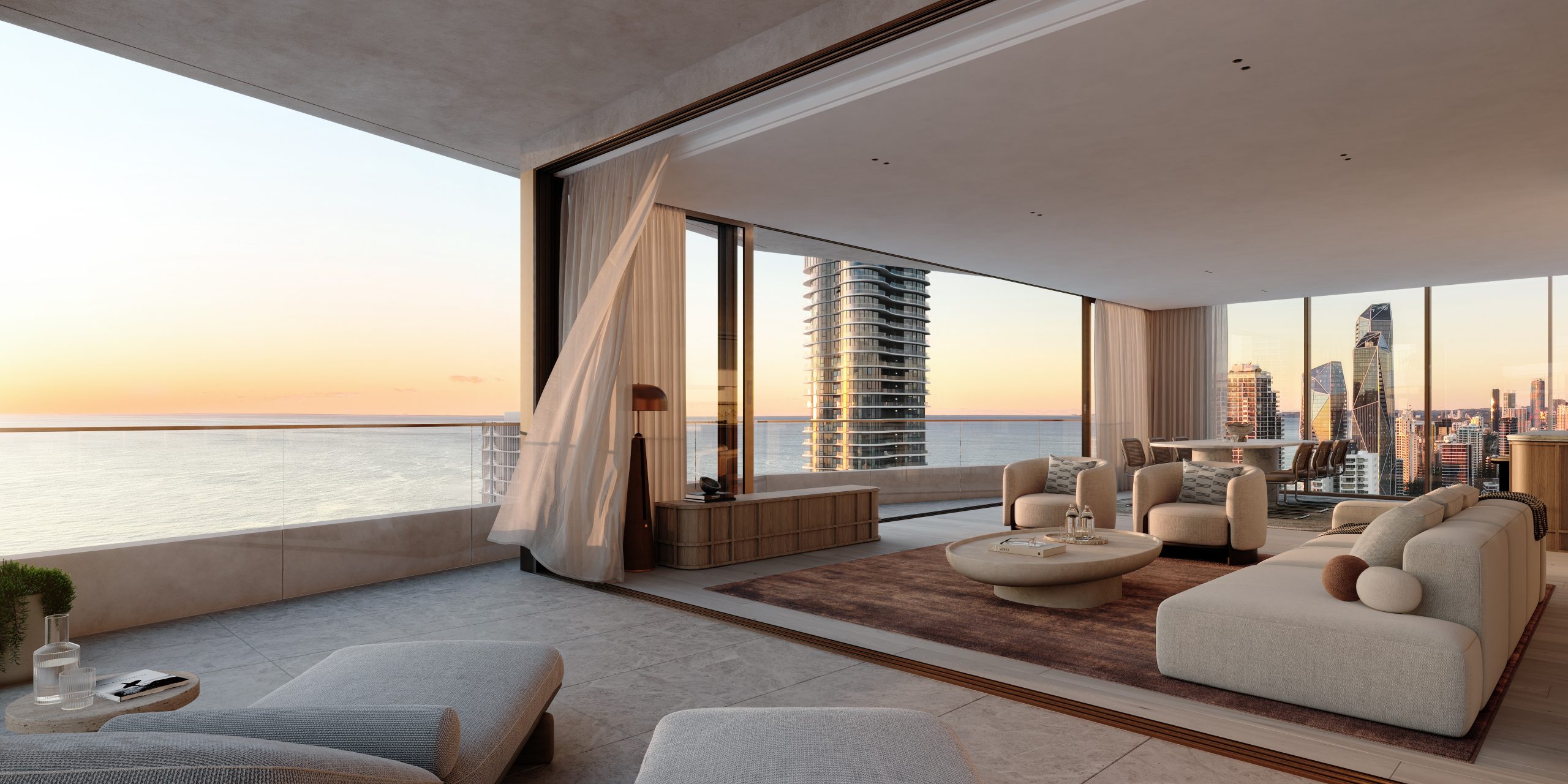
Mirvac’s 45-level Trielle has topped out at Yarra’s Edge, pairing riverfront apartments with wellness facilities, private dining and resident services.
3 min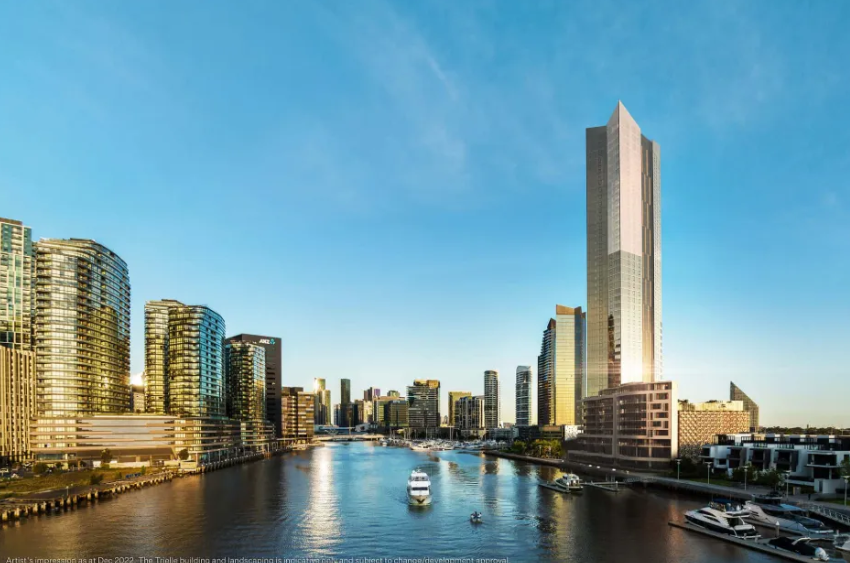
Mirvac has topped out Trielle at Melbourne’s Yarra’s Edge, with more than 70 per cent of the riverfront development sold and approximately 80 per cent of purchasers intending to make their apartment a home.
The figures, released on September 22, point to an owner-occupier audience for one of the precinct’s final residential towers. Mirvac began developing Yarra’s Edge in 2003, and its latest addition occupies one of the remaining absolute riverfront sites.
Mirvac CEO of Development Stuart Penklis said existing residents were among those moving up within the neighbourhood.
“Many purchasers already have a connection to Yarra’s Edge,” Mr Penklis said, describing buyers whose changing needs were encouraging an upgrade within the precinct.
“As one of the final residential towers within Yarra’s Edge, Trielle represents the culmination of more than two decades of creating one of Melbourne’s most established and sought-after waterfront communities,” Penklis said.
“Positioned on the Collins Street axis with absolute river frontage, Trielle offers residents a rare opportunity to enjoy sweeping views across the Yarra River, Melbourne skyline and Port Phillip Bay, while remaining seamlessly connected to the CBD. With Trielle now more than 70 per cent sold, we’re continuing to see strong demand from buyers seeking quality homes in established locations.”
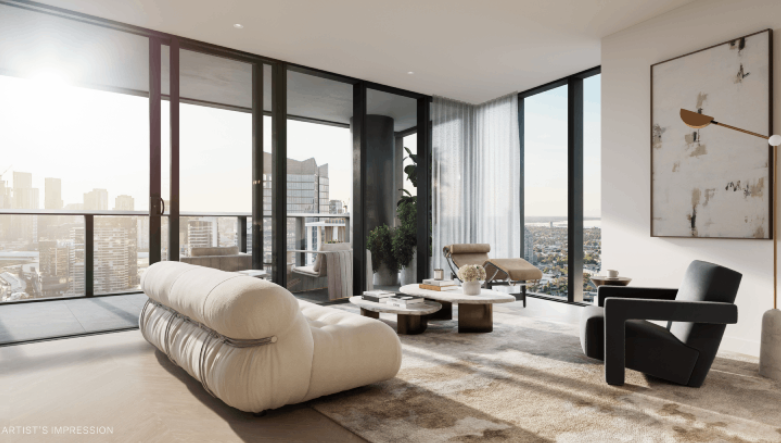
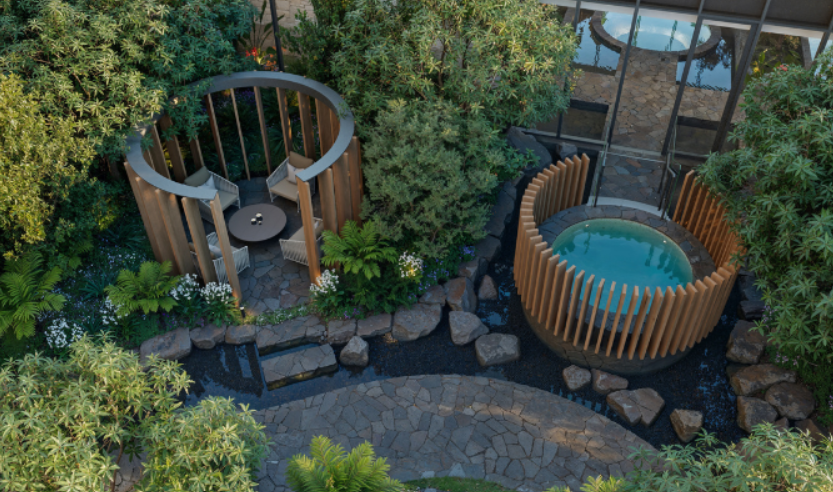
The developer also flagged a penthouse and sub-penthouse collection with larger layouts, premium finishes and broad outlooks. The planned wellness centrepiece, The Oasis, encompasses a 900-square-metre elevated urban rainforest.
Mirvac General Manager Residential Development Victoria Elysa Anderson said Trielle had resonated strongly with buyers seeking a rare lifestyle offering in Melbourne.
“Opportunities to secure a new luxury residence on a riverfront site of this calibre are incredibly rare, particularly within a community like Yarra’s Edge,” Anderson said.
“What makes Trielle unique is the combination of exceptional views, world-class residential facilities and the lifestyle that already exists around it. Residents are buying into a mature waterfront community with parks, promenades, dining, wellness and strong community connections already in place.”
The 45-level tower brings a substantial new presence to that waterfront. Its residential offering spans one-, two-, three- and four-bedroom apartments, with Signature, Prestige and Sub-Penthouse collections accommodating different household sizes. The north-facing position connects the apartments visually to the river and city beyond.
Seven storeys above the promenade, the planned Oasis combines planting and a running stream with a Scandinavian-inspired wellness club developed with spa specialist Naomi Gregory. Facilities include a 25-metre lap pool, hot magnesium pool, sauna, hydrotherapy, a gym, yoga and Pilates room, and treatment spaces.
The amenity extends beyond exercise. Residents will have access to The Biblioteca library and workspaces, ground-floor work pods, and The Salone piano lounge. A private Chef’s Table dining room offers a setting for larger gatherings, while a cinema, games room and sports lounge broaden the entertaining options. Concierge services and a dog-wash area support everyday routines.
Trielle comprises a collection of one, two, three and four-bedroom residences. Reflecting strong demand from owner occupiers, approximately 80 per cent of purchasers to date intend to live in their homes, highlighting the project’s appeal to those seeking a long-term waterfront lifestyle.
Mirvac has recently delivered The Albertine, a premium apartment development on the edge of Melbourne’s CBD, and is nearing completion of Prince & Parade in Brunswick, further strengthening its portfolio of thoughtfully designed apartment communities in some of Melbourne’s most sought-after urban locations.

From citrus oils to warming spices, the classic G&T is being reimagined at home as a more thoughtful, seasonal ritual for modern entertaining.

In the remote waters of Indonesia’s Anambas Islands, Bawah Reserve is redefining what it means to blend barefoot luxury with environmental stewardship.