A Family Feud Is Rocking One of the World’s Richest Hotel Dynasties
Kwek Leng Beng, shown here in April, oversees a family fortune that Forbes estimated last year to be worth $11.5 billion. Photo: Lionel Ng/Bloomberg News

 9 min
9 min
SINGAPORE: The gala felt straight out of the movie “Crazy Rich Asians.” In this tropical-island nation famously dense with millionaires, 600 guests gathered in September 2023 to fete one of Singapore’s most prominent success stories: the property empire that owns the global Millennium hotel chain and the Biltmore Los Angeles.
The politicians, business leaders and foreign envoys in attendance heaped praise on the company’s octogenarian executive chairman, Kwek Leng Beng , who built a family fortune estimated at $11.5 billion and made deals with the likes of Donald Trump. Guests at the black-tie dinner savoured abalone, bird’s nest soup and lobster, while dancers and musicians performed on a stage.
At the head table, the tycoon, clad in a blue tuxedo, reigned with his wife, Cecilia.
But there was another woman in the ballroom, wearing a red dress, whose presence wasn’t welcome to some in the family.
Catherine Wu, a Juilliard-trained pianist and former television host in her native Taiwan, was well-known to company executives for her close relationship with the chairman. Senior executives had long bristled at what they saw as her interference in the hotel business, according to people familiar with the matter. But until this moment, she had largely shunned the limelight and avoided public company events. The internal complaints about her outsize influence remained unknown to the public.
Now Wu was thrusting herself into the spotlight, introducing herself to the dignitaries—including Singapore’s prime minister-in-waiting—and posing for photos with them. Onlookers blanched. People sympathetic to Cecilia Kwek and concerned about Wu’s influence at the company thought Wu, by attending the gala, had crossed a line.
Earlier this year, the tensions that seethed at the event burst into the open.
The chairman’s elder son and chosen successor, Sherman Kwek, 49, and his allies moved to add new directors to the board, a manoeuvre he later said was meant to eliminate Wu’s influence at the family business, called City Developments Ltd., or CDL for short.

“She has been interfering in matters going well beyond her scope, and she wields and exercises enormous influence,” Sherman Kwek said in a statement on behalf of the majority of the board, issued in February after the feud erupted into public view. “Due to her long relationship with the chairman, efforts that were made to manage the situation were done sensitively, but to no avail.”
Kwek Leng Beng fought back by trying to dismiss his son as chief executive and suing him for allegedly trying to usurp power—something that Sherman denies. The elder Kwek later said Wu had contributed to the business’s success and decried his son’s “unproven insinuations.”
Wu, in her first public comments on the matter, told The Wall Street Journal in an email this month that her relationship to the chairman was “purely professional.” She said the elder Kwek had “asked for and considered my feedback on business ideas,” adding that she had “had no role in the decision-making process” at CDL. She said the dispute was between board members and “has nothing to do with me, although some parties have used my name to stoke the flames.”
Weeks after the clash, the sides agreed to a truce. The public warring had done no good for a company dealing with high debt and a lacklustre share price.
In March, the elder Kwek announced Wu’s resignation as an adviser at CDL’s hotel subsidiary and dropped his lawsuit. His son remains CEO, backed by additional allies on the board and a company resolution declaring that Wu has no power to influence or direct management and staff at CDL and its hotel business.
But Wu is still in contact with one person at CDL: the 84-year-old chairman. People at the company say the elder Kwek and Wu, who turns 66 this month, have recently been seen meeting at CDL-owned properties. It means, the people say, that the saga is far from over.
Strictly business
Just north of the equator, six million people swelter in a city-state about a quarter of Rhode Island’s size. A disproportionate many are millionaires, and some of Singapore’s richest residents are members of family businesses that predate the nation’s 60 years of independence.
As Singapore transformed from a colonial outpost into a hub of prosperity, the Kwek clan was there to help build it every step of the way.
Kwek Leng Beng’s father, Kwek Hong Png, started a construction-materials store in 1941, when Singapore was a British colony. Kwek Leng Beng joined the business in 1963 and was given stern training by his father, as he and Cecilia recounted in an authorised biography, “Strictly Business.”
When the couple were dating, Kwek Leng Beng’s father imposed a curfew. “The old man wanted him to be in bed by 9 p.m.,” Cecilia said in the biography.
Kwek Leng Beng and Cecilia, both London-trained lawyers, wed in 1970. They spent much of the next few years in Singapore in the lobby of the company’s first hotel, where she’d drink hot chocolate while he quizzed staff about occupancy rates and mingled with guests for feedback, the biography said.
By the 1990s, Kwek was in charge of a flourishing family business that would eventually expand to more than 150 hotels worldwide, including Millennium hotels in New York and London. It controlled so much real estate in Singapore at one point that he was dubbed “Kwek Land Bank.”
As part of a venture with a Saudi prince, CDL bought New York City’s Plaza Hotel, the iconic establishment next to Central Park that’s played host to royalty, presidents and the fictional Kevin McCallister in the 1992 movie “Home Alone 2.” They paid $325 million to buy it from Trump in 1995, and then sold it nine years later for $675 million. In the mid-2000s, Kwek advised Las Vegas casino magnate Sheldon Adelson on building the Marina Bay Sands casino resort in Singapore. Today, it is a symbol of the island nation’s skyline.
Eyes and ears
As the years went by, an adviser by Kwek’s side became impossible for insiders to ignore. Catherine Wu, who holds a doctorate in music from New York University, was in her early 30s when she met Kwek in 1992 at a dinner party. She was well-known in Taiwan as a TV host and pianist, having released albums under the name Ingrid Wu with tracks such as “His Lover” and “I’ll Decide Before Dawn Whether I Love You.”
At the dinner, Kwek quizzed Wu about politics, economics and music “to see if my mind was flexible and if my answers were consistent,” Wu told a Singaporean newspaper last year. “Fortunately, I answered articulately.”

Wu decided to move to Singapore that same year, she told the newspaper, saying she wanted to escape attention by relocating to a place where she wasn’t well-known, and that the city-state’s East-meets-West vibes suited her. In her email to the Journal, Wu described music as her former career and said she had spent 30 years in business amassing professional achievements.
Kwek invited her to hotel-management meetings and events. “The chairman would scold me from time to time, but I wouldn’t take it to heart,” Wu said in the newspaper interview. “If a successful person is willing to put in the thought and energy to scold you, it means you are teachable.”
Paid not by the company but by Kwek himself, Wu acted as the chairman’s “eyes and ears” and often accompanied him to visit properties around the world, according to a 2018 U.K. labor tribunal ruling. The tribunal was investigating a dispute involving a former employee who accused a CDL subsidiary of unfair dismissal and other wrongdoing, a case the tribunal dismissed.
Some executives and employees—including people who later left the company—bristled at Wu’s conduct, filing complaints against her both internally and to a Singapore government-backed agency, according to people familiar with the matter. These complaints included allegations that Wu berated staff, meddled in business matters beyond her remit and used the elder Kwek’s name to rubber-stamp her decisions, the people said.
Sometimes, executives believed that business decisions they thought had been approved by the chairman were later overruled by Wu. In one instance cited in the complaints, the people said, Wu got the company to halt planned renovations to a hotel in London near the Harrods luxury department store, even though management believed the project would boost revenue and had spent years preparing for it.
Many employees came to believe that Wu was sometimes using one of the elder Kwek’s corporate email accounts to send instructions in his name, people close to CDL said. They said these employees learned to recognise what they believed to be Wu’s imprint on such emails—a more formal and detailed writing style, compared with the elder Kwek’s curt approach, and the signature “Sent from my iPad,” which was notable because the chairman wasn’t known to use an iPad. Kwek declined to comment, while Wu didn’t respond to requests for comment about this matter.
According to the people, some executives expressed unease when one of Wu’s six brothers, a former journalist for a Taiwanese television network, became general manager of the Biltmore Los Angeles in 2018. He had little experience in the hospitality industry, apart from a short stint as a business-development executive in CDL’s hotel subsidiary.
During the brother’s stint as general manager, he, the hotel and a company affiliated with CDL’s hotel subsidiary faced lawsuits from former Biltmore employees over allegations that included discrimination, harassment and wrongful termination, according to court papers. These cases have generally been settled out of court, according to court documents and people close to CDL, and the company didn’t make any public admission of wrongdoing. The brother has stepped aside as general manager and remains an owner’s representative—a supervisory role that oversees the hotel’s operations and liaises between its owner and management.
The brother didn’t respond to requests for comment.
The heir
Senior executives tried for years to persuade Sherman Kwek, the designated successor to the elder Kwek, to directly address the tensions over Wu, say insiders.
Sherman Kwek didn’t see much of his father as a child, as he recounted in his dad’s biography. After studying business at Boston University, he worked in venture capital and investment banking in New York before his father brought him to the family business.
Sherman Kwek had his own issues to deal with. After becoming CDL’s CEO, he had spearheaded a 2019 investment in a Chinese developer that went sour and led to a $1.4 billion write-down. “I wanted to hide my face in the sand” and came close to resigning, he recounted in a speech last year. “I went from hero to zero overnight.”
The younger Kwek retained his father’s support then and went on to strike profitable deals divesting some commercial properties, but he still faced scepticism from investors.
Sherman Kwek and his allies thought they had eased Wu out of the picture when she resigned as a director of CDL’s hotel subsidiary in January 2024, people close to the company say. But in August that year, Wu rejoined the subsidiary as an unpaid board adviser and the Singaporean newspaper published its interview with a headline that called her the elder Kwek’s “grand chamberlain.”
Wu’s return stunned some senior CDL figures and board members, who had to try again to remove her from the business, people close to the company say. They first appealed to the elder Kwek to act, and then—after seeing no results—initiated a move in late January to add new independent directors to the CDL board, the people say.
These efforts eventually led to the public feuding, which drew breathless coverage from local media that documented the boardroom spat blow-by-blow.
Following the truce earlier this year, after which Sherman Kwek continued as chief executive and his father as chairman, Wu now has no official title at the company.
Sherman Kwek remains in the hot seat, facing market pressure to execute plans to pare back CDL’s debt and lift its share price, which still languishes below prepandemic levels.

Watching over him is his father, who remains a revered figure at CDL overseeing a family fortune that Forbes estimated last year to be worth $11.5 billion. The elder Kwek has maintained his contacts with Wu, whose protégés still hold positions in the hotel business, according to people close to CDL. One of these people says the company is looking into past complaints against Wu. This week, CDL said a long-serving board member, who sided with the chairman during the feud, will retire from the board at the end of July.
A CDL spokesman said Kwek Leng Beng, Sherman Kwek and the company declined to comment.
Both father and son continue to go into CDL’s headquarters at Republic Plaza, a soaring 66-story skyscraper in Singapore’s business district.
At a public space there, a holographic painting that Sherman Kwek presented to the elder Kwek at the 2023 gala—depicting either the grandfather Kwek, the father or the son depending on the viewing angle—remains on display. Next to it stands a piece of Chinese calligraphy penned by one of Wu’s brothers, which says, “Three generations of blood and sweat, six decades of honour and glory.”
 Copyright 2020, Dow Jones & Company, Inc. All Rights Reserved Worldwide. LEARN MORE





Technology and semiconductor shares fell sharply as investors questioned the debt financing the AI infrastructure boom and confronted higher rates and Chinese competition.

Waldorf Astoria Kuala Lumpur is scheduled to open on 30 October, introducing the Hilton luxury brand to Malaysia with an all-suite hotel in the city’s Golden Triangle.

LEGO is expanding beyond its traditional audience by tapping into people’s passions, from flowers and gaming to music and Formula One, through creative products, immersive experiences and social-first marketing. The strategy is paying off, with revenue rising 21% in the first half of the year to a record DKK 41.9 billion.
5 min
Lego’s core audience was once young boys. But in recent years the world’s largest toy maker has expanded its reach, attracting more adults, teenagers and girls.
At the center of this expansion has been a strategy to tap in to people’s interests and hobbies—the Danish toy-brick maker calls them “passions”—many of which cross demographic boundaries. These include personal preoccupations like bonsai trees and golden retrievers, celebrities such as pop star Olivia Rodrigo and mega events like Formula One and the World Cup.
That has led to new types of building sets, including more sophisticated models that adults can display on their coffee tables, and a shift in marketing strategy, with Lego pouring money into experiences and social-media skits aimed at fans.
For Formula One watchers, Lego built life-size, drivable replicas of the teams’ race cars, which drivers took around the circuit at last year’s Miami Grand Prix. To reach gaming fans, Lego in August showed up at the Gamescom trade event in Cologne, Germany, with a giant Minecraft Lego chicken that visitors could sit on.
“We go not just for the people who are there, but because the types of things that we create become big social-media engagement,” says Julia Goldin, Lego’s chief product and marketing officer.
The strategy has helped spur growth. In the first half of this year, privately held Lego’s revenue rose 21% from the year-earlier period to a record 41.9 billion Danish kroner ($6.27 billion), while net profit climbed 32% to 8.6 billion kroner.
The Wall Street Journal spoke to Goldin about how the company researches people’s passions and turns these into products and marketing campaigns.
Edited excerpts follow:
Beyond demographics
WSJ: Adults have become a big focus for Lego—what’s behind that?
JULIA GOLDIN: Over the past eight years, we said there was a bigger opportunity with adults—not just people who are super-high-affinity fans, but people who maybe built a long time ago or had never built with bricks before—by giving them the things they would love to build now.
We approached adults from a passion-point perspective from the very beginning. We said we need to understand what they’re into. So, we looked at men, we looked at women, we looked at what their big interests were, what types of things they like to collect, what types of things they wanted to display in their rooms, etc. Now you can put Gustav Klimt’s “The Kiss” on your wall, or if you’re into animals, some cute floating sea otters. And then gamers who love a bit of ’80s or ’90s nostalgia can build and display the Game Boy.
We are now seeing strong growth with both adults and kids.
WSJ: How do you find out about people’s interests?
GOLDIN: We do a lot of trend-seeking and social listening. We look at viewership of various programs, behaviors, what’s trending socially. Then we dive quite deeply into these interests through primary research, ethnographic research and interviews.
AI has helped us ramp this up. There are tools where you can ask, with the right prompts: “People who are passionate about F1, what are they talking about? What are the latest conversations on Reddit?”
WSJ: Lego flower bouquets and trees are among the company’s most popular sets. How and when did that come about?
GOLDIN: When we started to talk seriously about adults, we could see that some people were into gardening and flowers. We launched the first flower bouquet in 2021 and completely underestimated how successful it would be. We started with the 18-plus age group because we thought that’s where the sweet spot is. But we realized that younger girls, especially teens, really love to build Lego flowers so we expanded the range.
You might think botanicals are women and F1 cars are men. But that’s why we talk about interests and not just gender and demographics. Yes, botanicals have a huge following among women and teenage girls, but bonsai trees are one of the top 10 products for men and teen boys. Speed Champions F1 cars show up in the top 10 for teen girls. I thought most of Olivia Rodrigo’s following would be girls, but my 16-year-old son asked me for two sets because his friends are massively into her.
That’s why we don’t market to a demographic. You can never be assumptive about how that breaks down in terms of gender.
WSJ: How has this shift in thinking changed your products and marketing?
GOLDIN: F1 is a great example. In the past, we might have started with a partnership with a team and a great Lego car for people to build. But we understand that it’s a multigenerational passion and different people are in it for different things. Some people love the cars, some collect, some follow the actual sport of racing, and some have tremendous passion for the drivers and their teams. That is why our F1 portfolio spans everything from Duplo [bricks] for toddlers to detailed display models and driver helmets for older fans.
But then we ask ourselves: What can we do to go beyond the products, to give fans Lego brand experiences that they would never expect? That’s why in Miami last year we built 10 full-size Lego Formula One cars, with nearly 400,000 bricks in each, and put all 20 drivers in them for the driver’s parade. Everyone assumed they were static models, until the drivers started lapping the circuit and we saw a tremendous amount of excitement and social media buzz. We generated something like two, three billion views.
WSJ: Do social-media views of a marketing event translate into significant sales of Lego sets tied to these campaigns?
GOLDIN: Yeah, of course. We don’t share data, but I can tell you they’re some of our most successful products.
‘She Built That’
WSJ: You say Lego is growing particularly strongly with girls. What is driving that?
GOLDIN: We used to have only Lego Friends as the one big line for girls, and some Disney products like “Frozen.” But rather than looking at toy categories that were selling to girls, like dolls, and trying to replicate that, we really worked to understand what girls are into.
We realized girls are super into pets and creatures, nature and flowers, socializing and music. We expanded significantly around those areas with botanicals, animals, K-pop and Olivia Rodrigo.
We also did the “She Built That” campaign, very strongly saying girls can build just as well as boys. I’ve heard for a long time that “girls don’t like to build because moms don’t,” but that’s just not true. We’re showing them things they really love to build, and that’s why it works.
WSJ: Why do you think adults, teens and others are turning to Lego more nowadays?
GOLDIN: There’s an overriding sense of lack of purposefulness and this drowning in content that you’re constantly being fed. Three hours have gone by and you’ve just been scrolling through feeds of reels. People are getting really tired. They want to actively do something that’s more purposeful and lasting.
When they build with Lego sets, they say they feel creative. They want to do something they can be proud of—where they can say, “Wow, I did this.”
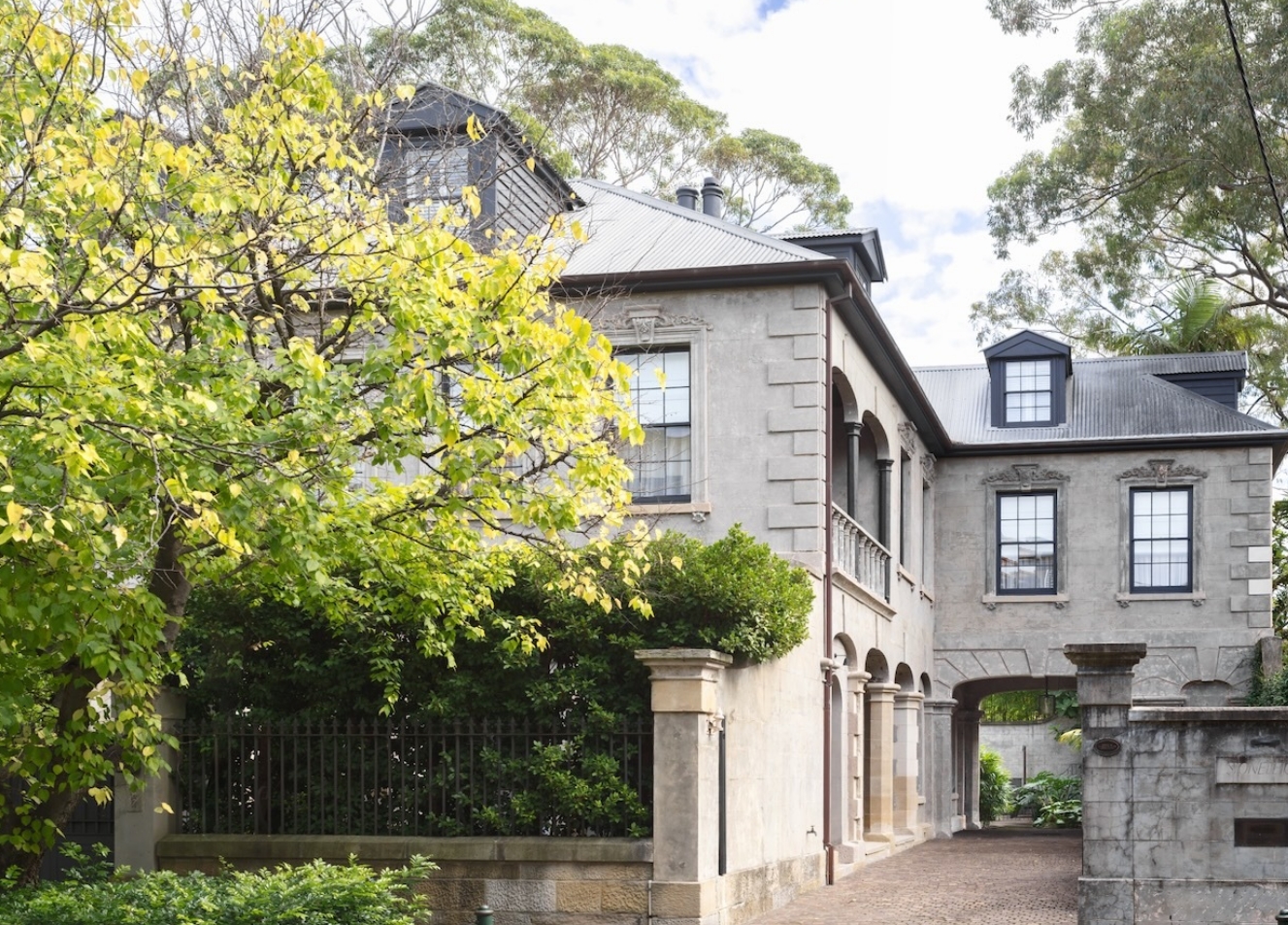
The 1860s Darlinghurst mansion Stoneleigh could become Sydney’s most expensive home ever sold under the hammer when it goes to auction. Clint Ballard is giving buyers a $28 million guide for the heritage-listed mansion on Darley Street, opposite Iona, the former home of Hollywood royalty Baz Luhrmann. Stoneleigh is being offered for sale for the …

Two coming 2027 models – the first of the “Neue Klasse” cars coming to the U.S. early next year – have been revealed.