BYRON BAY RENOVATION TRANSFORMS COASTAL HOME INTO MULTI-GENERATIONAL RETREAT
A thoughtful timber-led renovation in Byron Bay has reimagined an existing house as a warm, resort-style family sanctuary grounded in natural materials.
 3 min
3 min
A coastal Byron Bay home has undergone a carefully considered transformation, emerging as a relaxed, multi-generational retreat designed for connection, privacy and year-round liveability.
Rather than demolishing and rebuilding, the Dylan Lane project focused on renewal, enhancing the existing structure through natural timber finishes, refined planning and seamless indoor-outdoor integration.
Designed by Oceanarc Architects and delivered by Well Grounded Building, the renovation reflects a growing shift among prestige homeowners towards adapting and future-proofing existing properties.
The result is a contemporary coastal residence that balances architectural restraint with warmth, durability and a deep connection to its subtropical surroundings.
Timber defines warmth and longevity
Central to the project is a carefully curated timber palette that brings both performance and visual cohesion. Vertical Accoya timber cladding defines the exterior, chosen for its durability in coastal conditions and its ability to weather gracefully over time.
“Using timber cladding for the exterior and decking gave us confidence from a performance point of view, especially so close to the coast,” said Guy de Vos, Construction Manager at Well Grounded Building.
“But it also delivers aesthetically, it will weather off to a beautiful soft grey that really suits the Byron Bay environment.”
Inside, Tasmanian Oak flooring runs throughout the main living spaces, complemented by matching doors and mouldings. The natural material introduces softness and warmth while reinforcing continuity across the home’s interior zones.
“Timber was key to getting the feel right,” de Vos said. “The Tasmanian Oak floors, doors and mouldings introduce a softness that makes the spaces feel welcoming and lived-in, rather than overly polished.”
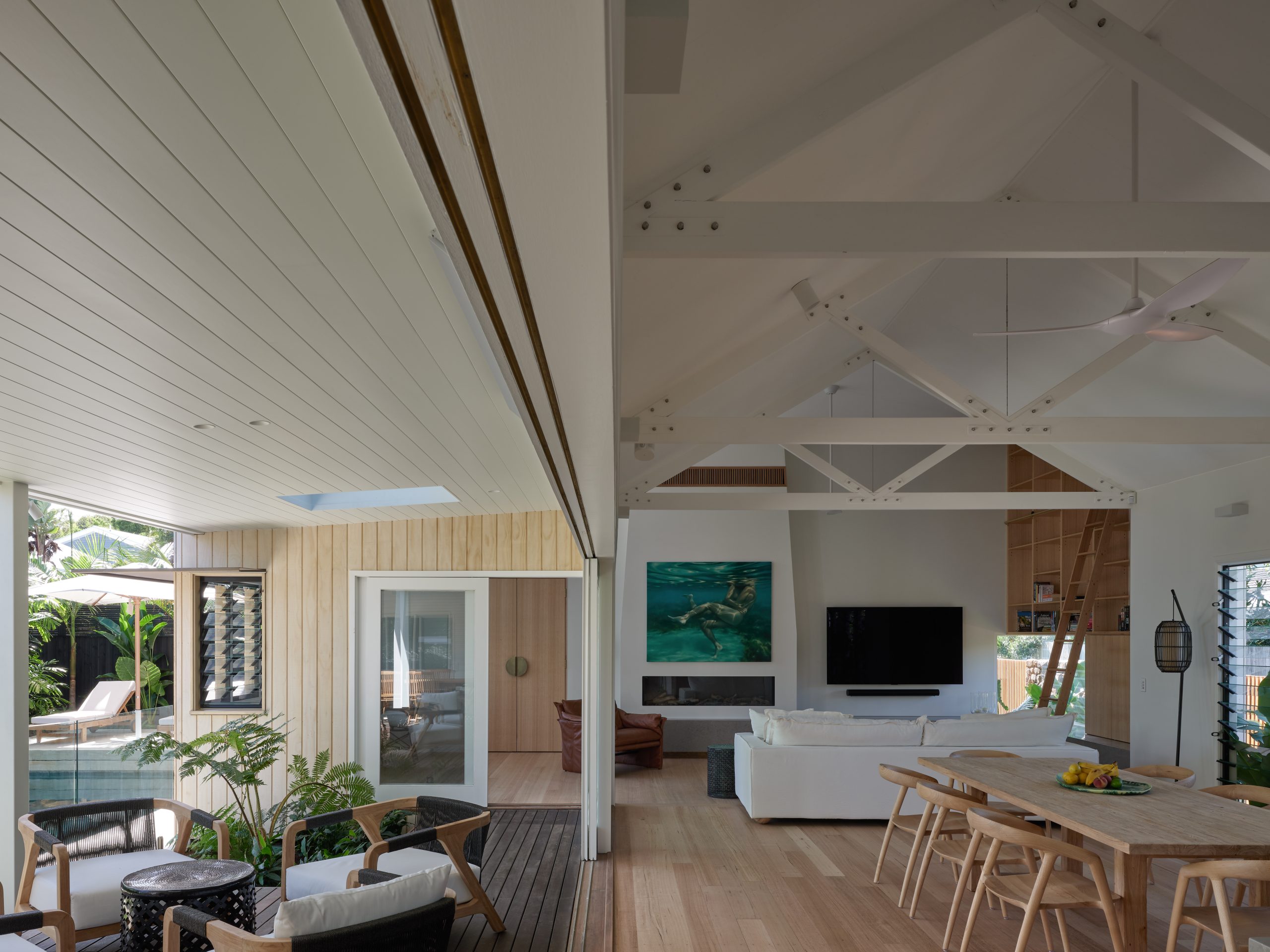
Tropical pool becomes the heart of the home
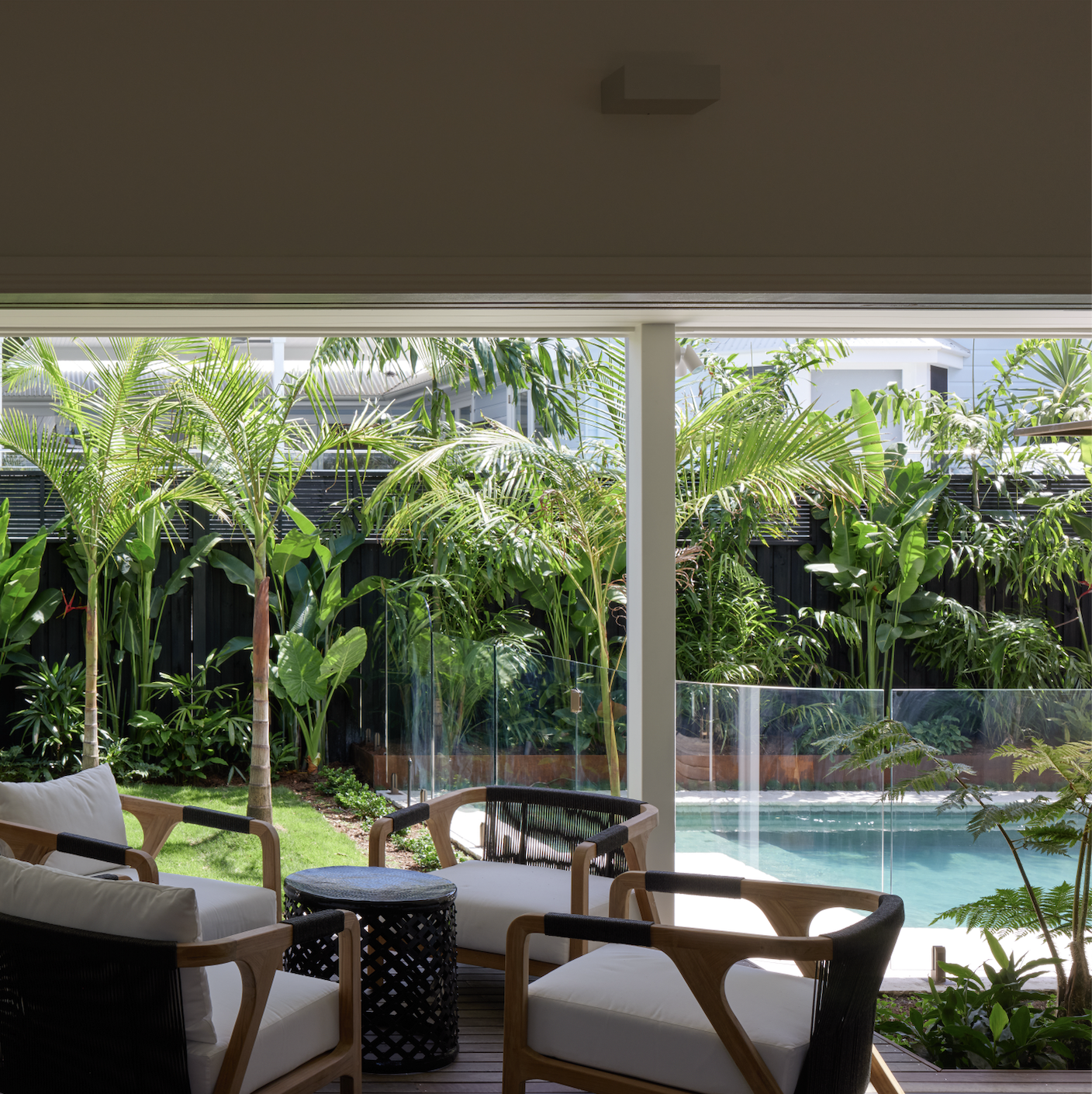
At the centre of the redesigned layout is a tropical swimming pool oasis, anchoring the home and creating a resort-like focal point without overwhelming the site.
Surrounded by lush planting and layered privacy elements, the pool connects seamlessly with both indoor and outdoor living areas.
“The pool and garden area really became the heart of the project,” de Vos said. “It’s where the family naturally gravitates, whether that’s kids in the water, long lunches outdoors or just quiet moments in the shade.”
The landscaping and spatial planning allow the home to maintain privacy while remaining open to its subtropical environment, reinforcing Byron Bay’s signature indoor-outdoor lifestyle.
Designed for modern family living
The renovation was guided by the need to accommodate extended family while preserving a sense of retreat and independence for individual occupants. Existing spaces were refreshed and subtly expanded, ensuring the home retained its original character while improving functionality.
“The vision was always about creating a place where extended family could come together without feeling on top of each other,” de Vos said. “We wanted the home to feel open and relaxed, but still give everyone their own sense of space and privacy.”
This flexible approach reflects broader trends across Australia’s prestige property market, where homeowners are increasingly prioritising adaptability, longevity and connection to place.
A blueprint for coastal renewal
More than a cosmetic update, the Dylan Lane project demonstrates how thoughtful material selection and restrained design can elevate an existing home into a contemporary coastal sanctuary. By combining high-performance timber, resort-style outdoor spaces and flexible living zones, the renovation delivers both immediate lifestyle benefits and long-term resilience.
Set within Byron Bay’s lush landscape, it offers a blueprint for coastal renovation that prioritises warmth, durability and enduring liveability.

From making unpopular decisions to learning when to listen, leaders from five businesses reveal what nobody prepared them for — and how running a company has challenged their expectations.

Technology and semiconductor shares fell sharply as investors questioned the debt financing the AI infrastructure boom and confronted higher rates and Chinese competition.

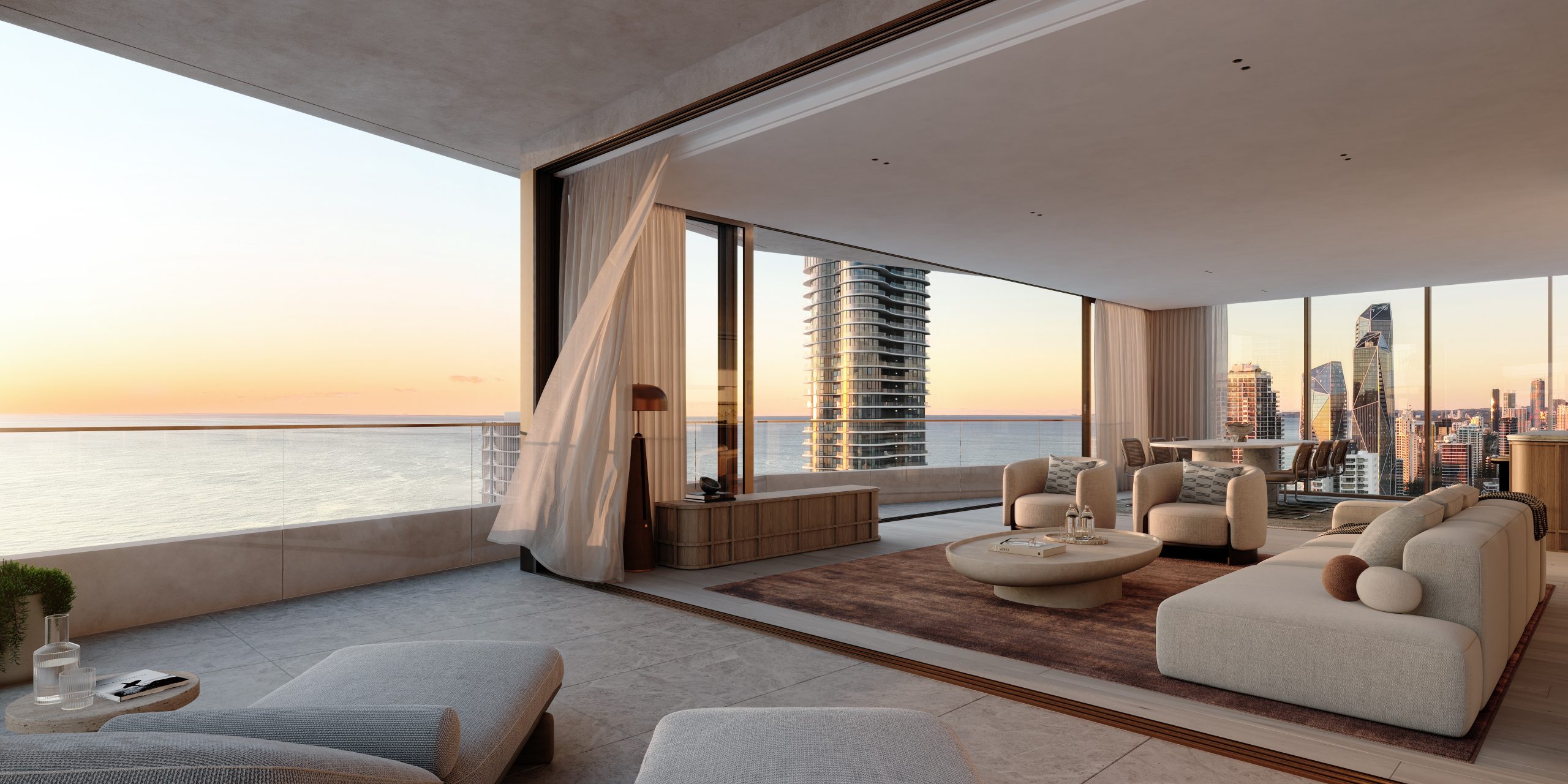
Mirvac’s 45-level Trielle has topped out at Yarra’s Edge, pairing riverfront apartments with wellness facilities, private dining and resident services.
3 min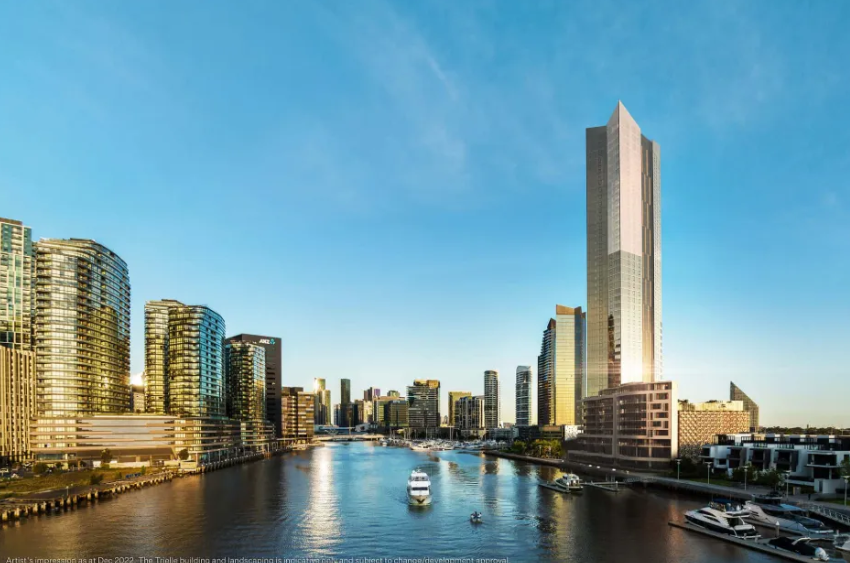
Mirvac has topped out Trielle at Melbourne’s Yarra’s Edge, with more than 70 per cent of the riverfront development sold and approximately 80 per cent of purchasers intending to make their apartment a home.
The figures, released on September 22, point to an owner-occupier audience for one of the precinct’s final residential towers. Mirvac began developing Yarra’s Edge in 2003, and its latest addition occupies one of the remaining absolute riverfront sites.
Mirvac CEO of Development Stuart Penklis said existing residents were among those moving up within the neighbourhood.
“Many purchasers already have a connection to Yarra’s Edge,” Mr Penklis said, describing buyers whose changing needs were encouraging an upgrade within the precinct.
“As one of the final residential towers within Yarra’s Edge, Trielle represents the culmination of more than two decades of creating one of Melbourne’s most established and sought-after waterfront communities,” Penklis said.
“Positioned on the Collins Street axis with absolute river frontage, Trielle offers residents a rare opportunity to enjoy sweeping views across the Yarra River, Melbourne skyline and Port Phillip Bay, while remaining seamlessly connected to the CBD. With Trielle now more than 70 per cent sold, we’re continuing to see strong demand from buyers seeking quality homes in established locations.”
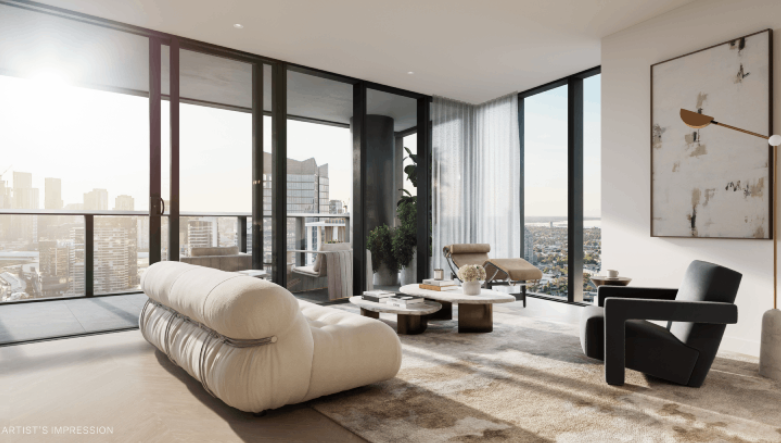
The developer also flagged a penthouse and sub-penthouse collection with larger layouts, premium finishes and broad outlooks. The planned wellness centrepiece, The Oasis, encompasses a 900-square-metre elevated urban rainforest.
Mirvac General Manager Residential Development Victoria Elysa Anderson said Trielle had resonated strongly with buyers seeking a rare lifestyle offering in Melbourne.
“Opportunities to secure a new luxury residence on a riverfront site of this calibre are incredibly rare, particularly within a community like Yarra’s Edge,” Anderson said.
“What makes Trielle unique is the combination of exceptional views, world-class residential facilities and the lifestyle that already exists around it. Residents are buying into a mature waterfront community with parks, promenades, dining, wellness and strong community connections already in place.”
The 45-level tower brings a substantial new presence to that waterfront. Its residential offering spans one-, two-, three- and four-bedroom apartments, with Signature, Prestige and Sub-Penthouse collections accommodating different household sizes. The north-facing position connects the apartments visually to the river and city beyond.
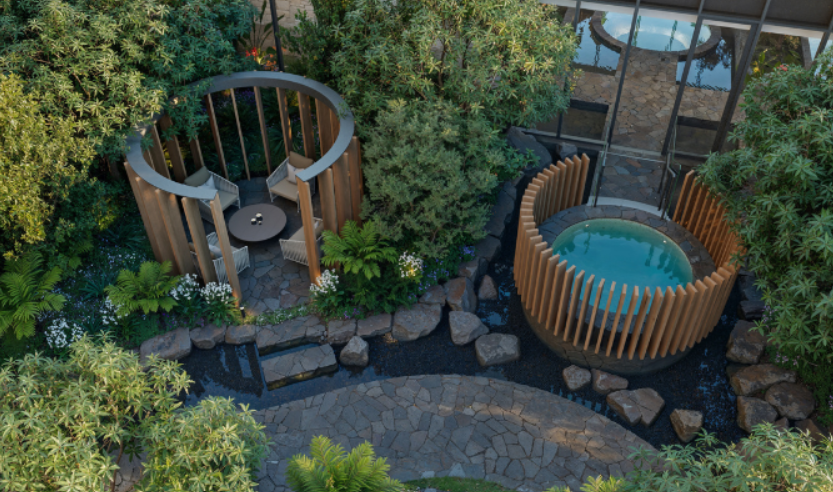
Seven storeys above the promenade, the planned Oasis combines planting and a running stream with a Scandinavian-inspired wellness club developed with spa specialist Naomi Gregory. Facilities include a 25-metre lap pool, hot magnesium pool, sauna, hydrotherapy, a gym, yoga and Pilates room, and treatment spaces.
The amenity extends beyond exercise. Residents will have access to The Biblioteca library and workspaces, ground-floor work pods, and The Salone piano lounge. A private Chef’s Table dining room offers a setting for larger gatherings, while a cinema, games room and sports lounge broaden the entertaining options. Concierge services and a dog-wash area support everyday routines.
Trielle comprises a collection of one, two, three and four-bedroom residences. Reflecting strong demand from owner occupiers, approximately 80 per cent of purchasers to date intend to live in their homes, highlighting the project’s appeal to those seeking a long-term waterfront lifestyle.
Mirvac has recently delivered The Albertine, a premium apartment development on the edge of Melbourne’s CBD, and is nearing completion of Prince & Parade in Brunswick, further strengthening its portfolio of thoughtfully designed apartment communities in some of Melbourne’s most sought-after urban locations.

From farm-to-table Thai to fairy-lit mango trees and Coral Sea vistas, Port Douglas has award-winning dining and plenty of tropical charm on the side.

The PG rating has become the king of the box office. The entertainment business now relies on kids dragging their parents to theatres.