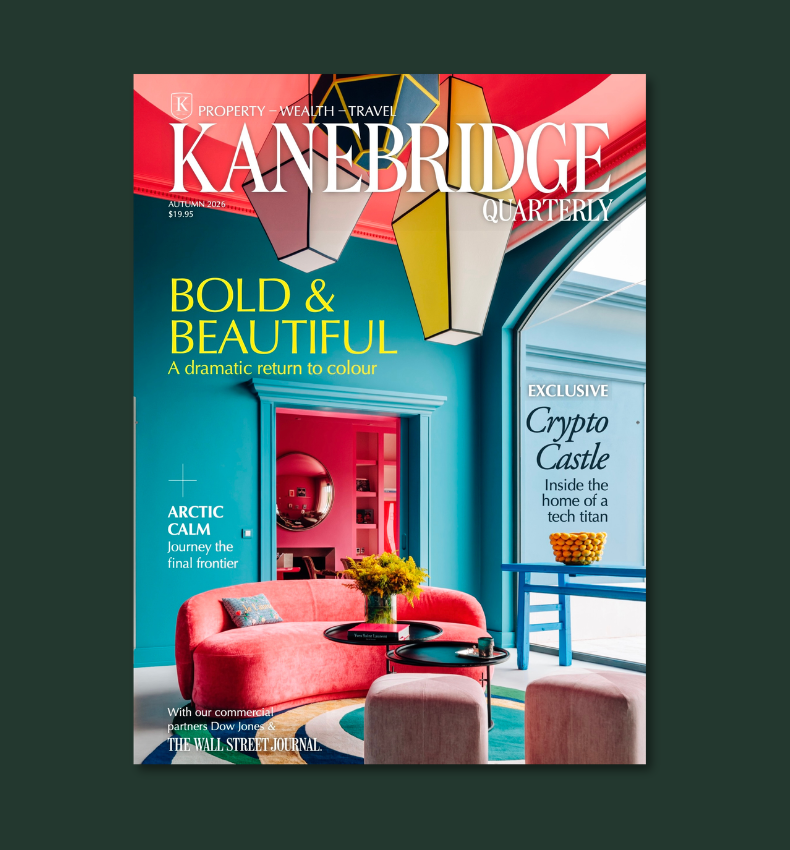


10 Best Sofas That Will Elevate Your Living Room
 5 min

Think of home, and think of…the couch. Family is important, sure, but a couch? That spells relax with a capital Lax. Sometimes outrageously expensive, sometimes surprisingly affordable. Check out are our top 10 sofas where you are sure to find the one that speaks your lounging language.
Atelier Sofa

The gorgeous, curvaceous Atelier from Coco Republic is coolly romantic in the way it wraps around you. Curves are so relaxing, and when they look this chic you’d expect to find it in an apartment on Haussman. The textures on offer are very on trend, and the optional pillows elevate the designer concept to true European elegance.
Barret Leather
Putting your feet up is never easier than with a little electrical assistance – take the Barret Leather sofa from Freedom Furniture. A strong piece from a design point of view, with leather stitched to perfection, and available in an amazing range of colours. It just needs a little extra space to lay on down.
Wilkes Modular

For a home that salutes colour and energy, you could not miss trying out the Wilkes Modular by Herman Miller. A mid-century style that is at once light on its legs, while packing a huge post-modern punch. Walking in the door and seeing this in your apartment, well, you’d be so happy to be home.
Horizonte

Described as a ‘floating island with square lines’ the Horizonte from Marcio Kogan/Studio mk27 is a sophisticated take on lounge furniture. It really does appear to float, the idea extending to the sympatico customisation of a built-in coffee table extension. This is James Bond suave. You could see it fitting like a glove into an ultra-modern minimalist, or eccentric maximalist décor.
Jasper
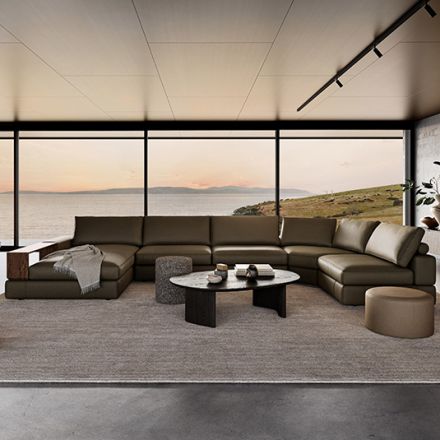
The flagship design of the King Furniture line, the Jasper is perhaps the father of all modular design. In a range of sizes, the familiar timber armrest-tables look as clever as ever, and now they offer even more ‘add ons’ such as a wireless charging table. Cool. Very deep, very springy, they have lasted this long because they fit into every lifestyle from beach house to townhouse.
Finlay
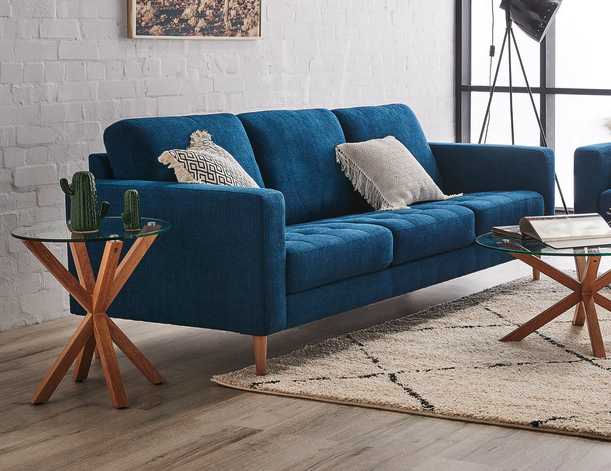
Not everyone can afford the moon when it comes to sofas – but do not be discouraged. Fantastic Furniture has a really smart looking three seater with chaise that has ‘pulled in’ seat stitching, which adds interest, and a choice of timber or metal legs. Easy on the eye and the pocket, it is a non-precious, relaxed sofa solution.
Mateo

Rarely does one want to see something ageing – but the simple, dramatic lines of the leather Mateo sofa from Coco Republic are only going to look more beautiful in 10 years’ time. This is a confident design, with generous stuffing – especially on the arms – it would be a perfect one to fall asleep on while bingeing on Netflix. Pewter or Taupe colours – both richly rewarding.
Lexington
Ultra-modern is the best way to describe the angular, unique silhouette of the Lounge Life’s Lexington. One of the few sofas available that uses its mass to advantage, making a rather monumental statement. It has windswept arm rests too – perfect for lying back doing Wordle while the news is on. Combined with the adjustable headrests, this is multi-option sofa available in fabric or leather.
Lucia Cane
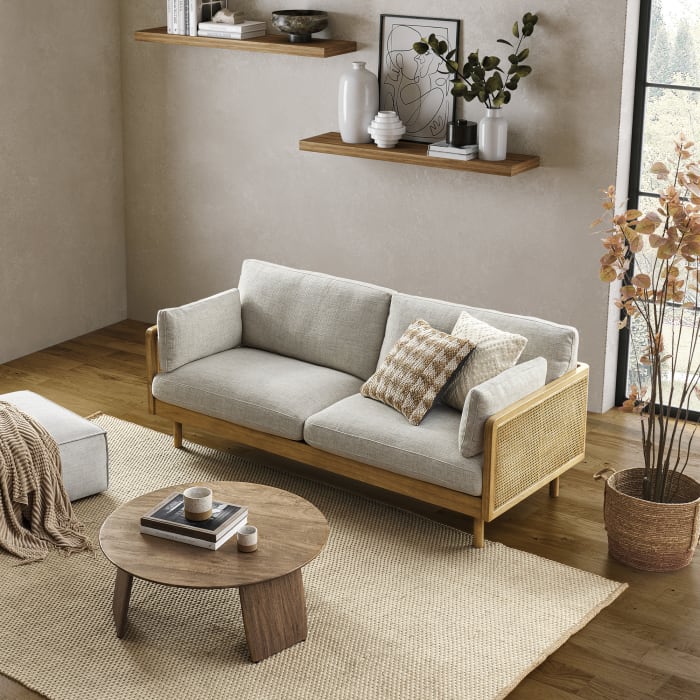
The cane detailing (which wraps around the entire piece) in the Castlery Lucia Cane sofa adds so much character that the piece just has to become a focal point in any room. The combination of the cane with the black detailing gives it an organic, breezy kind of vibe; with the potential to enhance an Asian themed or beach house décor. If you’re looking for something different, yet stylish, it’s a definite go-to.
Getaway Sofa

Here’s a sofa that says family, friends, dogs and cats. In short, it says relax and have fun. From Aussie brand Koala, the five to seven seater looks at its absolute best in gum tree green, as the timber feature panels (which are actually storage drawers) and matching feet just work so well with the forest theme. Big robust fluffy cushions, and a huge ottoman on offer, this is the one for those who just love to plonk down and chill out.
How can you tell if a sofa is good quality?
In a word: framing. A good quality frame will ensure your sofa will not only provide comfort but will last for 10 years or more. While solid timber framing is standard, there is also steel framing available. Don’t be afraid to ask to lift the sofa to give you an idea of weight, which is an indication of the quality of the framing.
What is the average price for a good quality sofa?
Everyone’s budget is different and you can certainly get excellent value for money in the secondhand sofa market. For new sofas, expect to pay upwards of $4000 to $5000 for a good quality modular sofa and $2,000+ for a two or three-seater that is made to last.
What sofas are the most durable?
If you’re talking about upholstery, it’s leather all the way. Easy to wipe down and able to take the hard knocks, leather sofas tend to age better than fabric sofas, making them ideal for family environments. For framing, solid timber or steel frames last extremely well. When purchasing, talk to your retailer about reupholstery services when the time comes. It’s a good indication of whether they are prepared to stand behind their product over time.
What are the best quality sofas to buy?
This is totally subjective and will depend on what you value, and how much you can budget for. Perhaps the easiest way to seek high quality is to ask about warranties. Look for sofas that have at least a 10-year warranty. In terms of coverings, genuine leather and natural fabrics such as linen and cotton offer a superior look and feel.
What should you look for when choosing a sofa?
Beyond choosing the right framing and fabrics for your sofa, shape and being fit for purpose is everything. If you have a family living space to fill, a modular sofa where everyone can spread out is ideal. For smaller apartment spaces, a pair of two-seater sofas might be a better option. Make sure you measure carefully, including the entranceways, before you buy.

Located steps from Crows Nest Metro, the near-complete development brings luxury living to Sydney’s Lower North Shore.

Studio apartments have almost disappeared from new Australian developments. Lura is bringing them back to Burleigh Heads from $495,000.

AI-powered travel agents are challenging online booking platforms, but Airbnb’s exclusive listings and direct customer relationships could give it an edge. Its next challenge: turning repeat guests into loyal customers through stronger rewards and innovation.
3 min
AI agents like Muse can already find you the cheapest hotel room in Paris. But they can’t locate a cheaper version of that Catskills cabin you’ve been eyeing, because it might only be available on Airbnb ABNB -1.43%decrease.
Investors should pay attention to that distinction. When Meta Platforms META 3.38%increase launched its Muse agent last month, travel stocks including Booking Holdings BKNG -1.19%decrease, Expedia and Airbnb all fell sharply.
Airbnb, though, has a real chance to emerge as a winner from the upheaval. The catch: Its stock already reflects above-industry growth. To justify its valuation, Airbnb will need to turn repeat customers into loyal ones.
Online travel companies make much of their money by simplifying search and collecting fees on bookings. AI agents threaten that model.
But not all travel marketplaces are equally exposed. Booking and Expedia largely sell hotel rooms that travelers can also book directly or through competing sites. If an agent can find the same room elsewhere, it has little reason to favor either Booking or Expedia.
Booking and Expedia also sell sponsored listings that steer travelers toward particular properties. Wells Fargo estimates those will account for about 8% of Expedia’s revenue and a much higher percentage of profit next year.
Airbnb has more ways to adapt. More than half its listings are available only on its platform, and more than 90% of its traffic comes directly to its app or website.
The customer relationship doesn’t end after booking, either. Bernstein analyst Richard Clarke notes that 90% of Airbnb guests go on to message their hosts about arrival times, keys or local taxes, giving Airbnb a connection to both sides of the transaction.
How the companies have responded to the possible agentic future is telling.
Expedia quickly signed on as a Muse partner. Airbnb hasn’t, and Chief Executive Brian Chesky says AI chatbots have so far been a boon, sending customers to Airbnb’s website.
Chatbots might work for buying paper towels, he quipped at a Skift conference last month, but people enjoy planning trips. He argued that browsing dozens of homes isn’t something a text-based chatbot is well suited for.
Still, the AI jitters arrived just as Airbnb was persuading investors it deserved its pricey multiple. For years after its 2020 initial public offering, the stock—which trades around 25 to 30 times forward earnings—went nowhere. Investors saw a mature operator trading at a growth premium.
This year, Airbnb growth seems to be accelerating. The stock jumped in August after the company raised its full-year revenue-growth guidance with its second-quarter results. Wells Fargo analyst Ken Gawrelski credits a run of product improvements under a revamped leadership team.
Among the changes: letting guests reserve now and pay later, adding hotels, and a redesigned home page and app. Investors were also betting on what comes next, including thousands more hotels, car rentals and, eventually, advertising.
The irony is that some of those growth drivers push Airbnb closer to the kind of business Booking and Expedia run—the kind of business AI agents could threaten. Even if AI agents capture a large share of travel planning and booking, Airbnb would capture the demand. But it and others would slowly lose control over how customers find and choose properties.
That would undermine the advertising opportunity investors are counting on. The bigger point for Airbnb and other marketplaces is that losing control of customer acquisition could mean surrendering some of their pricing power and margins.
To bulletproof itself, Airbnb might look to another e-commerce giant that has so far kept AI agents at arm’s length: Amazon.
Like Amazon, Airbnb has a loyal customer base and hard-to-match supply. But it has nothing like Prime membership to make customers think twice before taking their business elsewhere.
That is where loyalty comes in. Business travelers stick with Hilton or Marriott because enough nights earn them perks. Leisure travelers rarely accumulate stays with one chain. Airbnb has millions of listings and plenty of repeat customers, but no broad rewards program. It has begun experimenting with credits on hotel stays, but it should make loyalty a priority, not just a promotion.
Airbnb also plans to launch its own AI agent next year. But travelers using an agent might still want it to search Airbnb, Vrbo, Booking and hotel websites alike, rather than limit itself to one company’s inventory.
Eventually, Airbnb might have to strike deals with agent makers, using its unique homes as leverage to negotiate favorable terms, says Gawrelski. Such deals, along with rewards for loyal guests, could over the long term eat into the company’s roughly 13% take rate, he adds. But if they bring in enough additional bookings, the trade-off could be worthwhile.
History offers a reason not to panic. The shift from desktop to mobile unsettled investors in Alphabet and Amazon, but both emerged as major beneficiaries. Companies with valuable assets can come out of a platform shift stronger, if they adapt quickly enough.
Airbnb has homes the bots can’t easily replace. Now it needs to give guests a reason to insist on booking them there.

Powerhouse real estate couple Avi Khan and Kaylea Sayer welcome their daughter while balancing record-breaking careers, proving success and family can grow side by side.

Sydney Children’s Hospitals Foundation CEO Kristina Keneally says Australia’s culture of large-scale philanthropy is becoming more sophisticated as Gold Dinner raises $75.5 million for children’s health, research and innovation.