Helicopter Parents Are Co-Piloting Their Adult Children’s Careers
A growing number of employers say Gen Z job seekers are bringing their parents into the hiring process, from attending interviews and negotiating offers to questioning performance reviews. Recruiters warn the trend may raise concerns about independence, even as some families see it as support in a challenging job market.

 4 min
4 min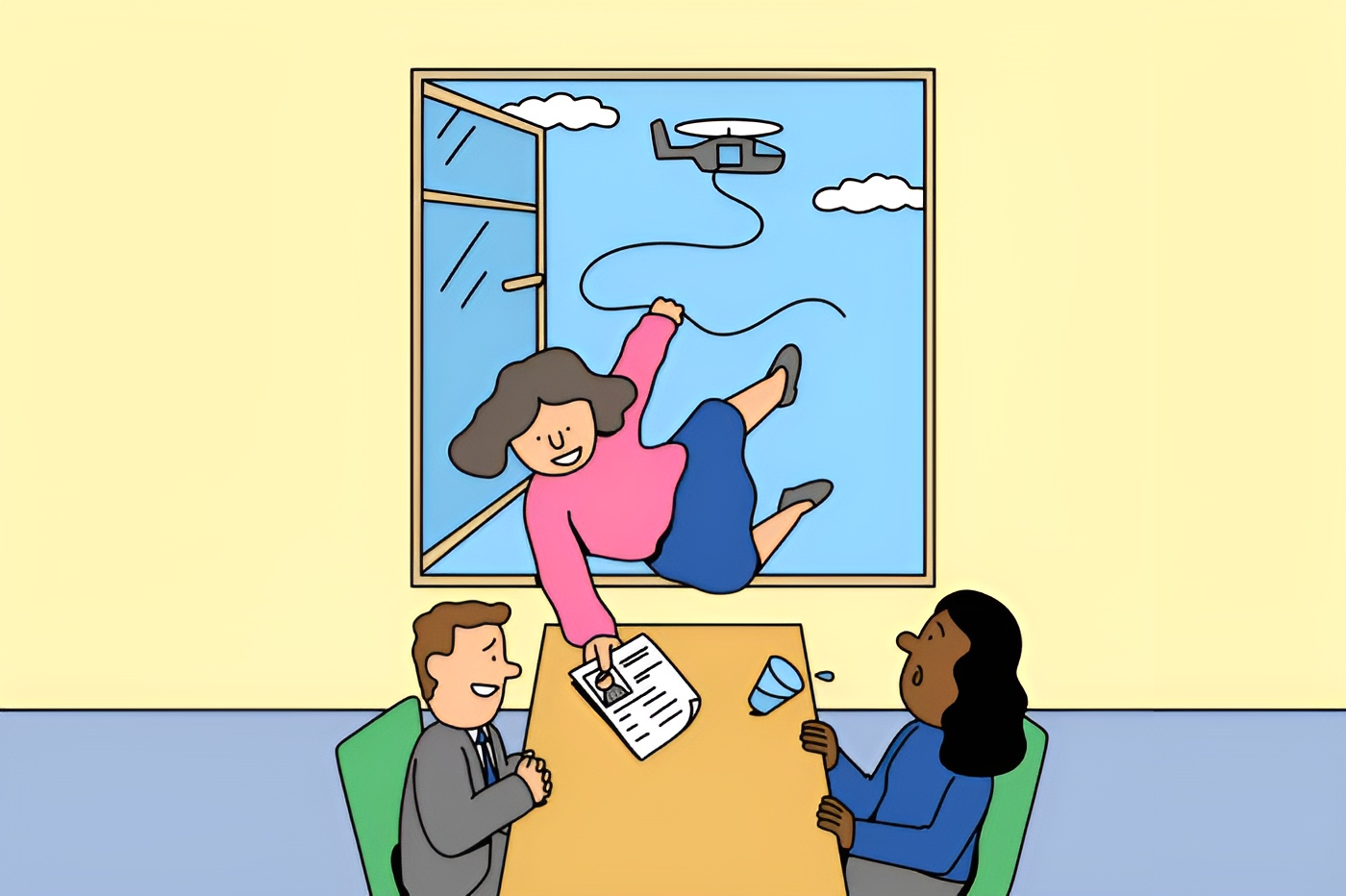
Steven Clark had the unpleasant task of firing a 24-year-old—twice. Once was in a brief conversation with the new hire, who’d showed up late or not at all four times in his first week at a construction job.
Then Clark had to do it all over again, this time with the guy’s mother.
She called him a few hours later, pleading to give her son another chance. When Clark told her no, things got heated before he ended the call.
“I said, ‘Look, you know, this is between us and your son. He’s the employee,’” says Clark, who is chief operating officer of a Fairbanks, Alaska-based staffing firm.
Gen Zers make up nearly one-fifth of the adult workforce, and bosses and recruiters say it often feels like the nervous parents who hovered over them through childhood and college are right alongside them. What began as the occasional parent ride-along to a job interview coming out of the Covid era is now full-on career “co-piloting,” said Jasmine Escalera, head career coach at résumé templates service Zety.
More parents are calling up hiring managers, applying for jobs on their adult child’s behalf, and even showing up—or lurking just off-screen—on Zoom calls to help navigate difficult conversations or go over benefits packages.
“The first time it happened, I was appalled,” says Clark, who has fielded calls from parents asking why their child didn’t get a job. “Since then it’s become more of a here-we-go-again reaction.”
Human resource professionals have expressed outrage on social media.
“Parents should not be calling employers to check on their application status or ask questions on behalf of their child,” says Lynne Alba, a director of talent acquisition and physician recruitment at a large health system on Long Island, who vented about the phenomenon in a Tik Tok video she reposted on LinkedIn.
At a recent job fair, a mother approached Alba with her daughter’s résumé, explaining that she wanted to work as a nurse. “While I appreciated that she was trying to help, I intentionally shifted my attention to her daughter. No matter what Mom said, I wanted to hear directly from the candidate,” says Alba.
Some parents who step in say it’s a challenging job market for young people, and that they would only intervene in extreme circumstances—social anxiety, a toxic boss, unfair treatment. There’s also a gray area of intervention that some see as an extension of the parental advice and networking help that’s been happening for generations.
Rick Wainschel last year published a post on LinkedIn asking his network to help his daughter, a recent college graduate, find a corporate entry-level position.
Wainschel, a vice president at an automotive marketing technology company, says he doesn’t think his outreach qualifies as helicoptering. “Well, maybe a little,” he said, before quickly adding he was being half tongue-in-cheek. “It was really merely just to help her get a network established. I just think the work world is a challenging place.”
Wainschel’s post, which was OK’d by his daughter on the condition he didn’t embarrass her, didn’t lead to a job but did result in productive conversations, he said. She found a job with a credit union on her own shortly after.
Recruiters and other HR types say aggressive parental involvement signals a lack of independence and raises fears that mom and dad will be checking in regularly if their kid gets hired.
What’s more, they say, such interference rarely, if ever, works.
The phenomenon is becoming so commonplace it made the agenda of human resources organization SHRM’s national conference in June. When James Harrell asked a room of 250 professionals if they ever had a parent calling on behalf of a young employee or coming to an interview, more than half raised their hands.
“The first time it happened to me, I got high up on my soapbox and I shook my fist,” Harrell says. “The 15th time I said, ‘OK, well, I gotta figure out how to do something differently.’”
Harrell helped run an apprenticeship program for high-school students while he was the human capital management chief for the San Antonio Independent School District. To run interference, the district introduced a “signing day” when parents could come and ask questions.
After a Gen Z employee at Nation’s Best Holdings, a chain of hardware and home goods stores, didn’t get an “exceeds expectations” designation on his performance review last year, HR chief Amber Little got a call asking why.
It was one of a number of calls from parents her office has picked up recently about issues ranging from negative feedback to understanding which health insurance plan to choose. Little has even noticed parents are now calling in sick for their adult kids.
“Instead of coaching them, they do it for them,” Little says. When it happens, she adds, “we encourage them to tell their child to come talk to us and we will walk them through it.”
A Zety survey of more than 1,000 Gen Zers found 20% had a parent attend a job interview with them.
“You get a sense it’s all hands on deck for some families,” says Keith Wolf, managing partner of recruiting firm Murray Resources in Houston. His office has received emails from parents seeking jobs for their children, and Wolf says he’s always wondered if the kids even knew.
Paul “PB” Branson, who graduated from the University of Missouri-Columbia in May, bristles at the thought. The 22-year-old says while he understands their anxiety, parents shouldn’t be joining their children’s job interviews or contacting employees on their behalf.
“That trend,” he says, “has really hurt my generation by creating this kind of stereotype that we need our hands held.”
 Copyright 2020, Dow Jones & Company, Inc. All Rights Reserved Worldwide. LEARN MORE





From making unpopular decisions to learning when to listen, leaders from five businesses reveal what nobody prepared them for — and how running a company has challenged their expectations.

Technology and semiconductor shares fell sharply as investors questioned the debt financing the AI infrastructure boom and confronted higher rates and Chinese competition.

Elon Musk is exploring a potential merger between Tesla and SpaceX, a deal that could reshape the future of AI, robotics, autonomous vehicles and space technology. With a combined valuation potentially reaching $3.5 trillion, the move could bring Musk’s vision of an interconnected technology ecosystem closer to reality, although a deal remains uncertain.
5 min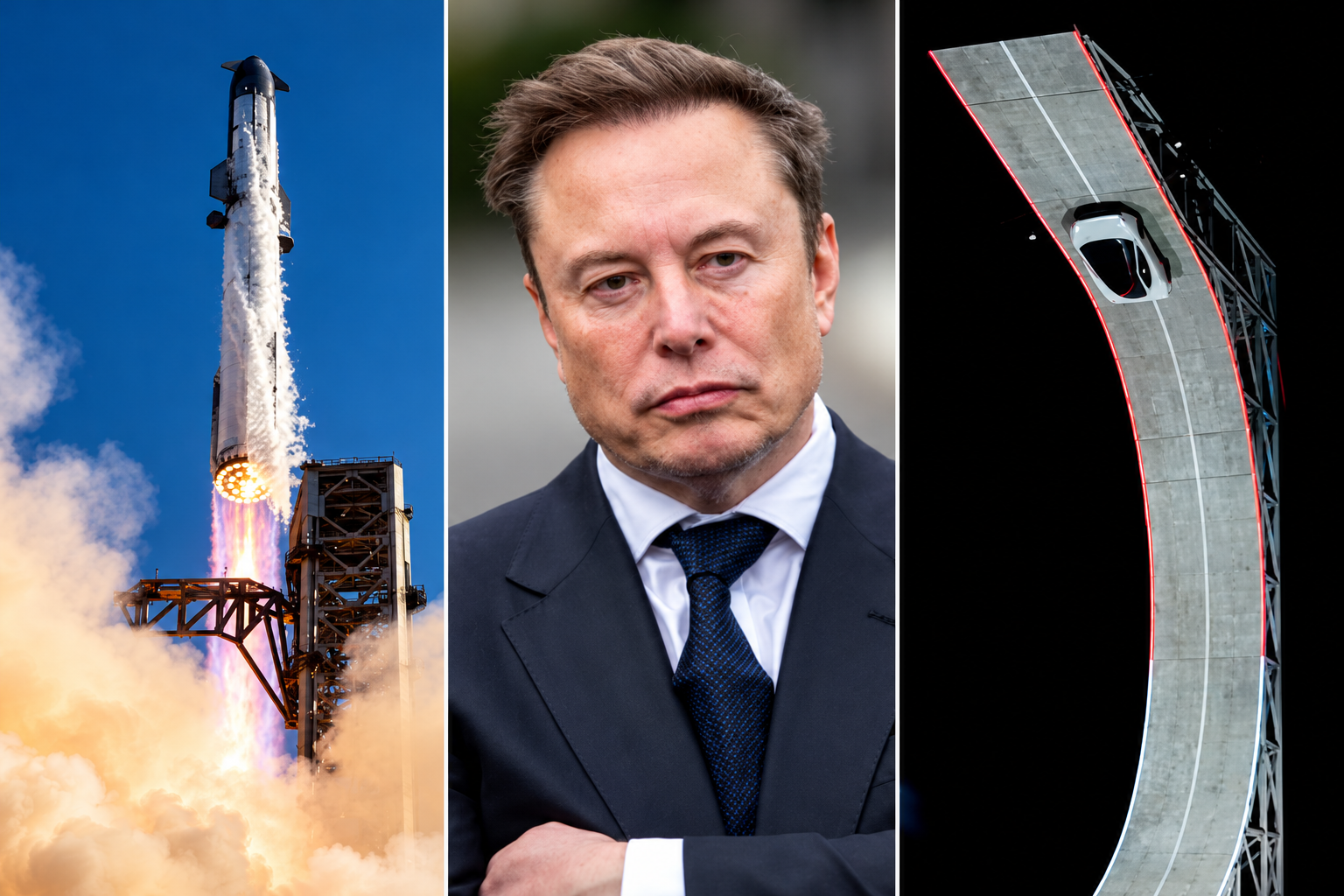
Elon Musk has engineered ties between Tesla TSLA 3.41%increase; up pointing triangle and SpaceX SPCX 7.79%increase; up pointing triangle that are hard to break, and now he wants to fuse them together permanently.
Musk has run both Tesla and SpaceX concurrently over the past two decades, using a schedule that dictated which days he spent focused on each business.
The companies have often shared resources and personnel, signaling their close ties. Last year, SpaceX looked into creating a spacesuit for Tesla’s humanoid robot Optimus, a person familiar with the matter said. Tesla last week showed off its new Roadster, a vehicle featuring SpaceX rocket thrusters that it hopes to soon bring to market.
And in recent months, Musk has repositioned both companies by expanding beyond their core operations toward a shared mission centered on artificial intelligence.
The world’s richest man on Tuesday signaled his interest in tying up SpaceX and Tesla, marking what would be the biggest corporate merger of all time. Because he serves as chief executive of SpaceX and Tesla, Musk said committees of independent directors at both companies are evaluating a possible deal, adding that a transaction might not come to fruition.
The committees will likely evaluate, with lawyers and bankers, how each company would fare in a potential deal and how a deal might best be structured. They then present their conclusions to their respective boards, who typically vote on whether to proceed.
“It’s an odd Kabuki dance where two groups of people are talking and I can’t be in the conversation,” Musk told SpaceX investors on Tuesday in response to an analyst’s question about a potential deal.
For Musk, the merger supports his vision of a world full of autonomous cars, humanoid robots and weekly rocket launches, as well as the data centers and satellites required to keep the whole thing running.
Some investors and analysts said they expect a transaction would be structured as an all-stock deal, with SpaceX potentially paying a modest premium for Tesla shares.
SpaceX, which has a market value of about $2 trillion, said it is seeing sharp growth in revenue across its businesses, which include operating data centers, launching rockets and operating satellite networks such as the internet service Starlink. Tesla is valued at about $1.5 trillion and is expanding its operations beyond its automotive and energy business. Shares in both companies traded higher following the news Tuesday.
Musk’s substantial ownership stakes in both companies, along with voting control at SpaceX, has enabled him to set the deal in motion. Analysts and investors said the deal will probably face regulatory scrutiny internationally, though some see Musk’s close relationship with the Trump administration as an asset to getting approval.
Blurred lines
The companies haven’t said which directors are on the special committees evaluating a potential deal. Several SpaceX and Tesla board members have either personal or business ties to Musk. And like Musk, venture capitalist Ira Ehrenpreis sits on both boards.
In a filing this week, Tesla outlined millions of dollars in business agreements with SpaceX and its subsidiaries last year, including $143 million in car sales to SpaceX, $3.3 million in advertising that it bought on the social-media platform X and $430 million in revenue from the sale of Megapack batteries for SpaceX’s data centers.
The companies also split the cost of resources including the use of Musk’s SpaceX jet and the bill for his personal security, which he runs through a private company.
Employees at both companies routinely move between companies to work on special projects, and some executives have dual roles, including Charles Kuehmann, vice president of materials engineering at both SpaceX and Tesla, and Ashok Elluswamy, the vice president of AI software at Tesla who runs a joint venture with SpaceX called Digital Optimus.
Over the years, Musk has launched new startups within his empire, including brain-implant company Neuralink, underground-tunnel developer the Boring Company and xAI, the AI startup that merged with SpaceX in February.
It is that AI business that Musk thinks can serve a market worth tens of trillions of dollars, justifying the need for a merger.
The business case goes like this: Tesla is developing robotaxis and robots, which it calls “physical AI.” SpaceX is working on the back end of physical AI: the data-center capacity and internet connection required for those robotaxis and robots to operate continuously.
“I don’t see what the value of Tesla is if it’s not merged with SpaceX,” said investment adviser Ross Gerber, a former Tesla bull turned critic invested in both companies. “If they don’t merge, the brains of everything that runs Tesla is owned by another company.”
On top of it all, both companies face constraints on the supply chains they need to make this world a reality, particularly when it comes to chips. To address this, Musk earlier this year announced a joint venture between Tesla, SpaceX and Intel to design and manufacture chips in Texas. “The most epic chip-building exercise by far,” he has said.
Musk at the wheel
For Musk, a merger would also solve two problems: demands on his attention and his lack of control at Tesla.
Tesla for years was Musk’s only public company, a status that came with greater scrutiny. There, Musk reports to a public board, as well as individual investors who make up around 30% of Tesla’s voting power, according to FactSet.
The question of Musk’s attention became a particular focus for investors and the board in recent years after he acquired Twitter in 2022 and launched xAI in 2023, and again in 2025 as he spent time in Washington, D.C., running the Department of Government Efficiency in the early months of President Trump’s second term.
As Tesla’s car business suffered in 2025, Musk threatened to take his AI ambitions outside the company if he wasn’t granted 25% voting control. Last November, Tesla shareholders approved a new pay package for Musk, which created a path for him to vastly expand his stake.
As of Sept. 30, Musk owned a roughly 20% stake in Tesla, according to the company’s proxy filing.
The SpaceX IPO gave Musk a different path. When SpaceX went public in June, the deal’s structure enabled him to have more than 80% voting power at the company—so much that he can’t be fired and decisions can’t be made without his support.
If SpaceX acquires Tesla, he will likely stay in control.

Barnet, in North London, lays claim to two of the country’s most expensive roads to own a home.

A long-standing cultural cruise and a new expedition-style offering will soon operate side by side in French Polynesia.