Charming 1840s Berrima Residence Lists in the Highlands’ Most Sought-After Village
This secluded Berrima estate with sweeping country views offers a rare mix of privacy, craftsmanship and Southern Highlands calm.
 2 min
2 min

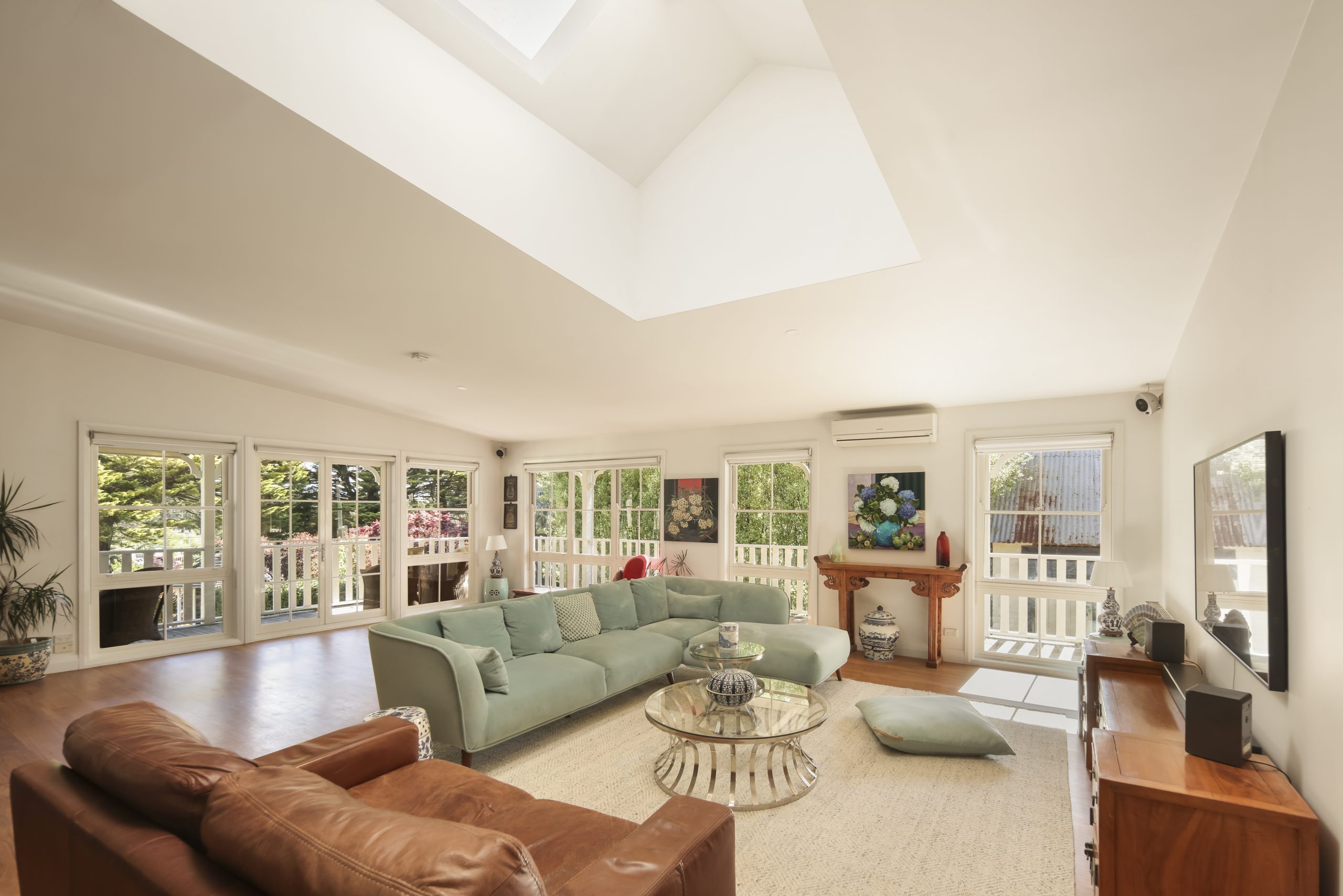

Known for its historic jail, bucolic rolling hills, beautifully preserved Georgian-era architecture and nearby wine country, Berrima is a drawcard for buyers seeking a stylish tree change with all the bells and whistles.
Whether it’s a grand agricultural estate or a charming period cottage, Berrima in the NSW Southern Highlands is home to a thriving property market buoyed by city slickers coveting a slower – and greener – lifestyle.
So popular as a weekend getaway location, the region has been coined “The Hamptons” of Sydney.
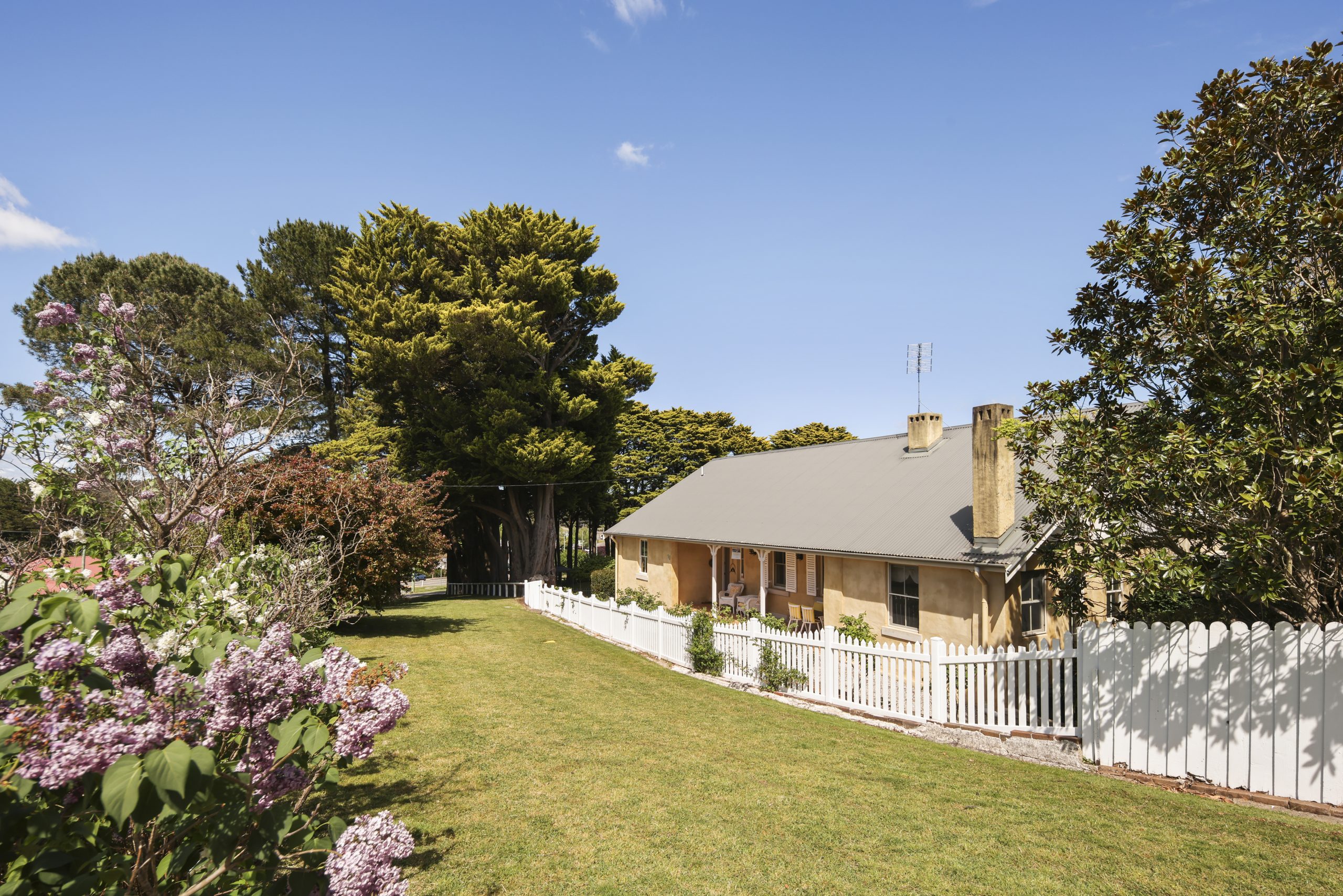
Hillside, on a grand 2462sq m land parcel in the heritage heart of Berrima, dates back to the 1840s. Sitting only minutes from the centre of town, the period property is surrounded by local history.
The Wilkinson St residence is opposite the landmark Harper’s Mansion estate, a National Trust heritage property and popular tourist attraction that is home to one of the largest hedge mazes in Australia.
Couple its prime position in Berrima with its Georgian charm – and a separate cottage on site – Hillside is filled with opportunity, said selling agent James Hall of Savills.
“It’s got the whole village on its doorstep, which makes it so appealing. And the bonus is that as a short-term rental, it’s always in demand because you’ve got the very popular Bendooley Estate wedding venue just down the road,” Hall said.
“Berrima has really come into its own because it’s retained its old school charm and hasn’t become commercialised while still appealing to visitors.”
The property is within close walking distance of Berrima’s quaint boutiques, cafés, and noted restaurants such as Eschalot, as well as Australia’s oldest continuously licensed pub with a beer garden, the Surveyor General Inn.
Last sold in 2015 for $1.45 million, Hillside is now coming to market with a price guide “in the high $3 millions” according to Hall.
The traditional home paints a pretty picture with its fairytale facade framed by meticulously landscaped grounds reminiscent of a stately English homestead.
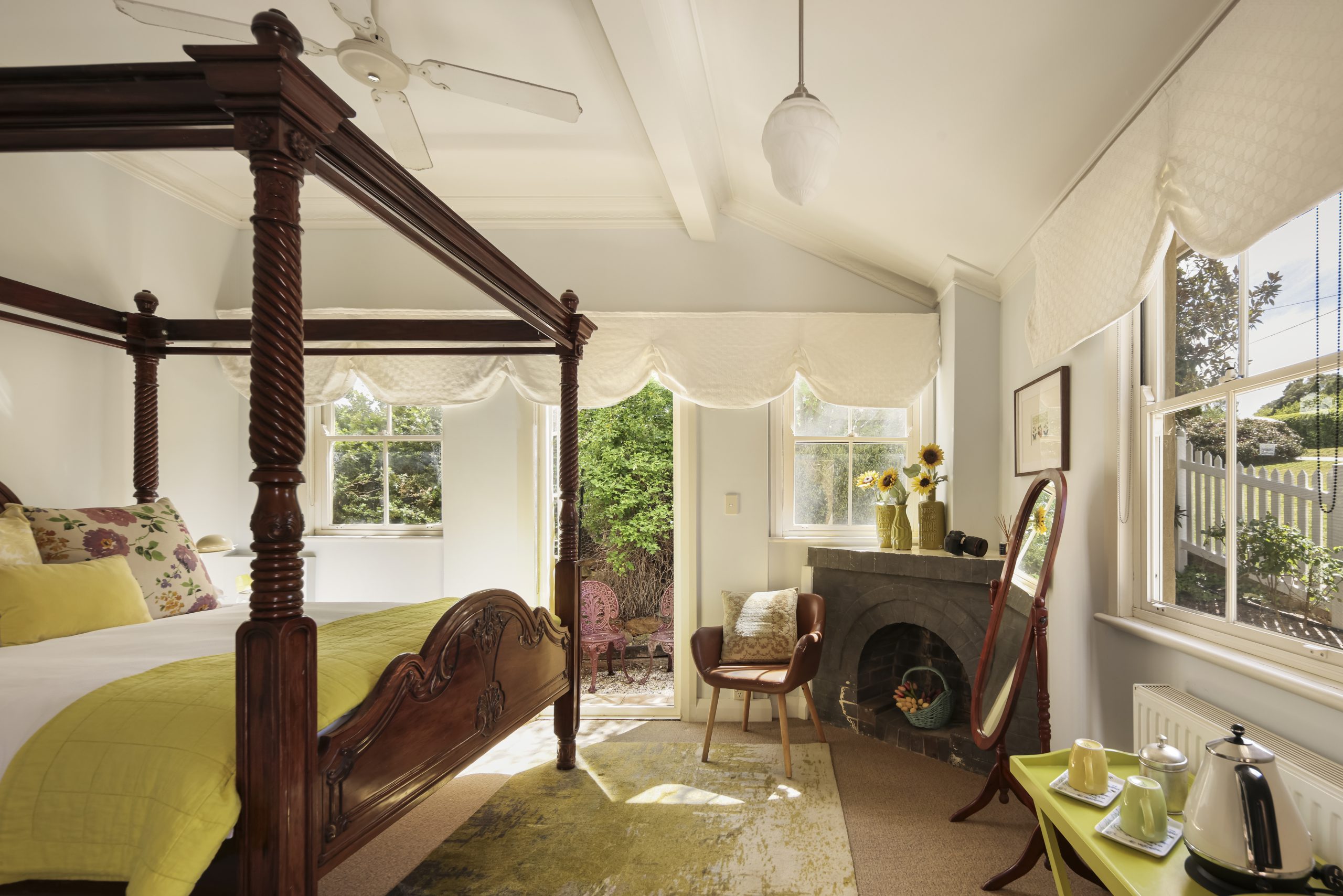
The private setting features tall established trees, heritage stables, a gazebo, a fire pit, and a lockup garage with a workshop. In addition to the two-bedroom main residence, the guest cottage has en-suites to all three bedrooms.
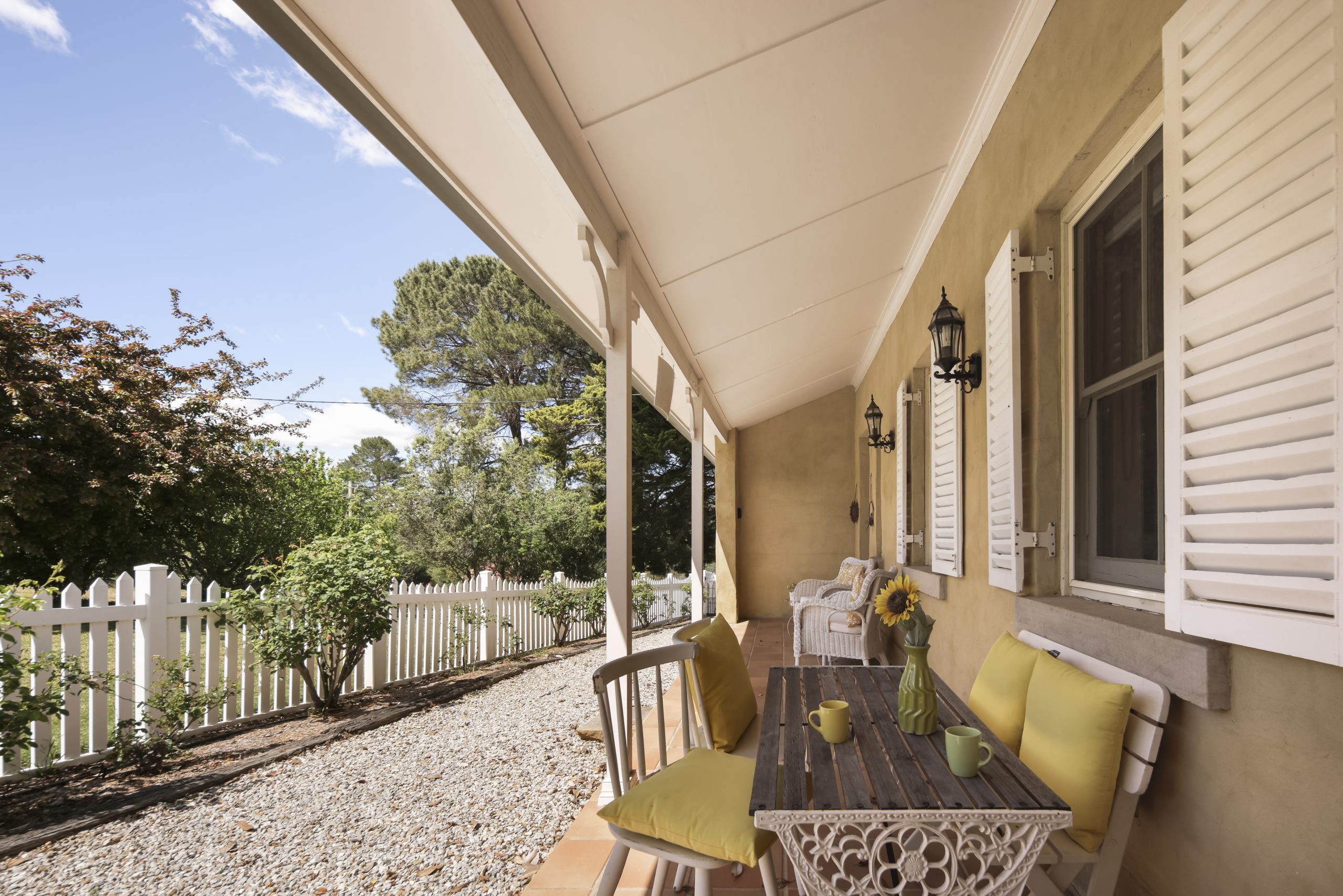
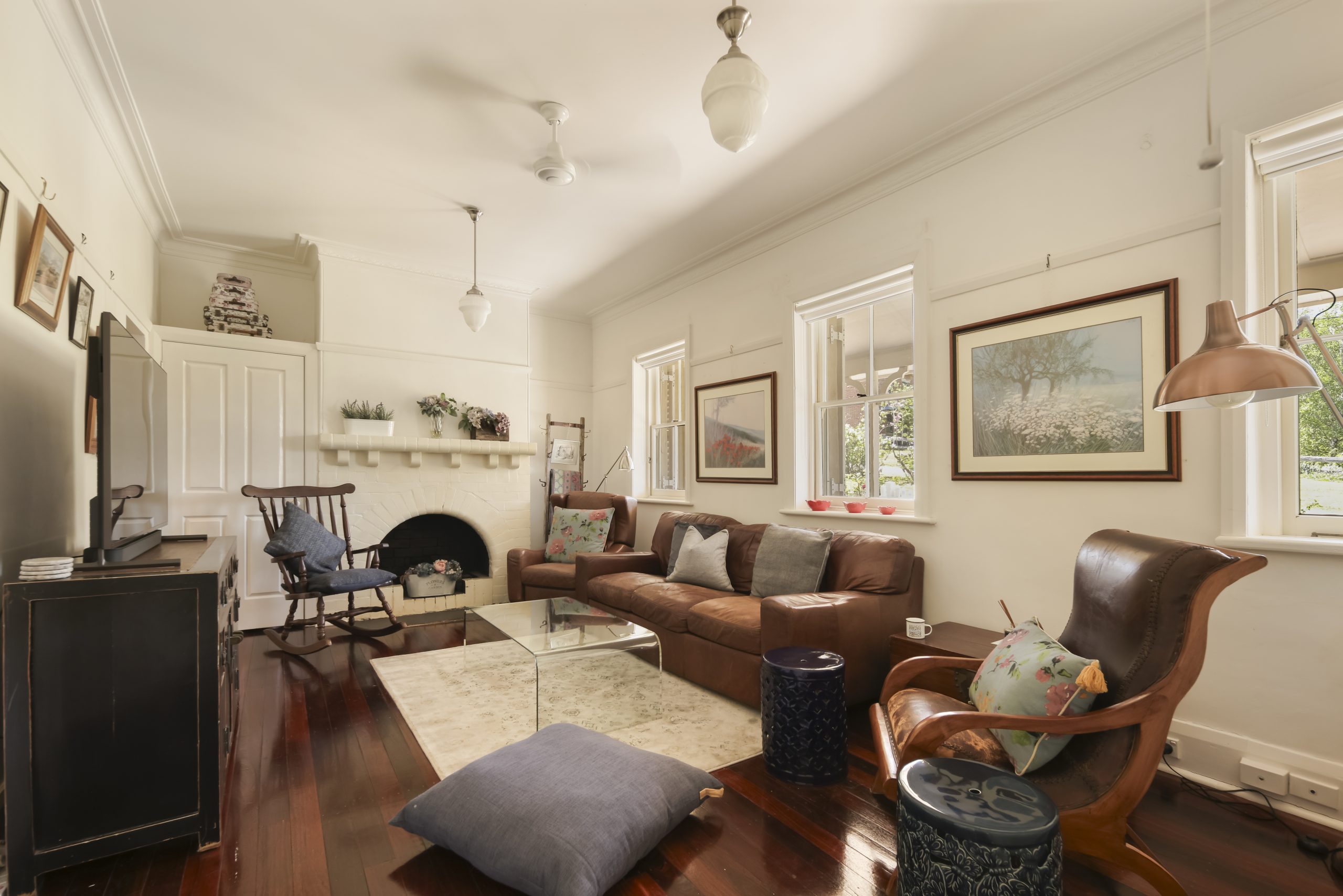
A classic country house that is as rich in character as it is grand in scale, Hillside has rustic exposed brick interior walls, timber floors, and multiple French doors spilling out to the lush landscaped grounds.
“The beautiful wraparound veranda overlooks almost a full-size grass tennis court,” Hall added.
“Then there are the incredibly mature pine trees giving it privacy, even though it’s so close to the village.”
The vast level lawn is also an idyllic spot for a game of croquet, cricket, or a good old-fashioned English tea party.
As well as the selection of casual and formal living and dining areas, there is a cosy library, a wine cellar, and a modern kitchen with sophisticated sage green cabinetry, stainless steel appliances, a Hastings Turner ceramic double sink, a central island bench, and designer pendant lighting.
Added extras include air conditioning, hydronic heating, four original fireplaces, and the original well has been integrated into the entryway as a period feature.

Porsche’s Cayenne Turbo Electric produces up to 1,156PS and reaches 100km/h in a claimed 2.5 seconds.

BNW Developments has established a Sydney presence, joining Arada and Sobha Realty among the growing number of UAE developers pursuing Australian buyers and development opportunities.

Rising Australian bond yields are putting pressure on listed property and the cost of capital. Here’s why A-REITs can signal changes in property valuations before the direct market moves.
4 min
Most property investors spend considerably more time watching interest rates than bond markets.
That makes sense. The Reserve Bank cash rate has an obvious relationship with mortgage repayments, borrowing capacity and investor sentiment, while government bonds can seem far removed from what someone will pay for an apartment in Sydney or an office building in Melbourne.
But the bond market can provide one of the earliest indications that the price investors are willing to pay for property is changing.
That became evident last Thursday, when Australian shares suffered their worst trading session in months. The S&P/ASX 200 fell almost two per cent, with property among the rate-sensitive sectors caught in the sell-off as government bond yields moved sharply higher.
Australia’s 10-year government bond yield pushed to around 5.4 per cent, close to its highest level in 15 years, against a backdrop of rising global yields and renewed concern about inflation and the direction of interest rates.
For property investors, that matters because the government bond yield is effectively one of the reference prices for money.
An investor buying an Australian government bond is receiving a return while taking comparatively little credit risk. Property comes with tenants, vacancies, maintenance, leasing costs, illiquidity and the possibility that the underlying asset falls in value, so investors generally expect to be compensated for accepting those additional risks.
A property yielding five per cent therefore looks considerably more attractive when a 10-year government bond yields three per cent than when that same bond is yielding more than five per cent.
That does not mean property values automatically fall every time bond yields increase. Rental growth, scarcity, lease structures and the quality of an asset can all outweigh movements in rates, but it changes the return investors require and therefore what they may be prepared to pay.
SG Hiscock & Company made that point in an ASX Investor Update, arguing that real, or inflation-adjusted, bond yields can be particularly relevant to property because real estate is fundamentally a long-duration investment whose value is derived from future income.
The first place investors can often see that repricing is the sharemarket.
A house or commercial building does not have a price that changes every few seconds. An Australian real estate investment trust does.
A-REITs can own billions of dollars of shopping centres, offices, warehouses and other property, but their securities trade continuously on the ASX. When expectations around interest rates and bond yields change, investors can immediately alter what they are willing to pay for those property earnings.
That can create a situation where the value attributed to a portfolio on the sharemarket falls even though the underlying buildings have not changed hands and their independent valuations remain unchanged.
The two markets simply move at different speeds.
Mark Ferguson, Head of Charter Hall Maxim Property Securities, has previously described direct property valuations as lagging the listed market. Writing for Charter Hall during an earlier period of rising interest rates and bond yields, Ferguson noted that listed property was already pricing increases in capitalisation rates and falls in underlying property values before those adjustments had fully emerged in direct-market valuations.
The effect can be substantial.
Consider a commercial property producing $1 million a year in net operating income. At a five per cent capitalisation rate, that income implies a value of $20 million.
If investors subsequently require a 5.5 per cent return while the property’s income remains unchanged, the implied value falls to around $18.18 million. At six per cent, it falls again to roughly $16.67 million.
Nothing necessarily happened to the building. It could have the same tenant paying the same rent under the same lease. What changed was the return required by the person buying it.
That is also why income growth becomes so important.
A well-located property with constrained supply and strong rental growth can increase its earnings quickly enough to absorb some of the pressure from higher required returns. An ageing office building facing vacancies, refurbishment costs and an approaching debt refinancing could instead be hit from several directions at once.
Debt adds another dimension because property is one of the economy’s most capital-intensive asset classes.
Higher market rates can increase the cost of financing an acquisition or refinancing existing debt while simultaneously increasing the return investors expect from the property itself. For developers, the consequences can be even more pronounced because higher construction finance costs can coincide with lower anticipated end values.
If that happens, a project can be squeezed from both directions: it becomes more expensive to deliver at precisely the time investors become less willing to pay yesterday’s price for the finished asset.
The direct property market generally takes longer to reveal that adjustment.
An A-REIT can lose five per cent of its market value in a trading session. An office building may not transact for another year. Owners can reject lower offers, transactions can be withdrawn and valuers must wait for comparable sales to establish new evidence.
That lag is one reason listed property can be useful even for investors who have no intention of buying a REIT.
The same principle eventually extends to residential property, although houses and apartments are generally valued using comparable sales rather than capitalisation rates.
Residential property is particularly sensitive to credit. Higher bond and swap rates can influence bank funding and fixed mortgage pricing, while higher borrowing costs reduce the amount households can service.
If prospective buyers can borrow less, the number of people capable of paying yesterday’s price can shrink. Vendors may initially resist that adjustment, resulting in fewer transactions rather than immediate price falls, before motivated sales eventually establish new comparable values.
For investors, rental growth can provide an important buffer. Rising rents can help offset higher financing costs, just as increasing commercial rents can compensate for some expansion in capitalisation rates. Investors relying primarily on capital growth while accepting a low rental yield have considerably less protection when the cost of money rises.
That is why movements in listed property and bond markets deserve attention beyond the trading floor.
They provide a constantly updating view of how investors are pricing interest rates, debt, future income and property risk, often months before those changes become obvious in direct transactions.
For an A-REIT investor, that means looking at gearing, debt maturity, hedging, interest cover and the discount or premium to net tangible assets rather than simply chasing the highest distribution yield.
For a commercial property investor, it means testing what happens to valuations if capitalisation rates move 25, 50 or 100 basis points higher.
For residential investors, it means understanding mortgage costs, borrowing capacity, realistic rental income and how much of the investment case relies on future capital growth.
The cash rate will continue to attract most of the attention in Australian property. But investors looking for an earlier indication of how the market is repricing risk should also be watching the bond market.
Property prices might take months to respond to a changing financial environment. The price of money moves considerably faster.

A survey of people with at least $1 million in investable assets found women in their 30s and 40s look nothing like older generations in terms of assets and priorities

Barnet, in North London, lays claim to two of the country’s most expensive roads to own a home.