INSIDE ZENITH’S MOST TRANSPARENT CHRONOGRAPH YET
Luxury Swiss watchmaker Zenith has unveiled the Chronomaster Sport Skeleton, a striking new timepiece that showcases the legendary El Primero movement through an open-worked design.
 2 min
2 min
For collectors, the appeal of a great watch often lies in what cannot be seen.
The intricate movement, the engineering precision and the craftsmanship hidden beneath the dial are what separate fine watchmaking from mere timekeeping.
Now, luxury Swiss watchmaker Zenith is bringing those elements into full view.
The brand has unveiled the Chronomaster Sport Skeleton, a new interpretation of one of its most recognisable collections, combining contemporary design with the technical heritage that has defined Zenith for more than 160 years.
At the centre of the story is the legendary El Primero calibre, the movement that helped establish Zenith as one of the most respected names in Swiss watchmaking.
When Zenith introduced El Primero in 1969, it was recognised as the world’s first automatic integrated high-frequency chronograph.
Operating at 5Hz, or 36,000 vibrations per hour, the movement could measure time to one-tenth of a second, setting a new benchmark for precision.
More than five decades later, that same pursuit of accuracy remains central to the brand’s identity.
The Chronomaster Sport Skeleton takes that legacy and presents it through an open-worked architecture that allows wearers to appreciate the complexity of the movement beneath. Rather than concealing the mechanics, Zenith has chosen to celebrate them.
The result is a watch that offers a rare glimpse into the intricate world of Swiss horology while retaining the sporting character that has made the Chronomaster collection a favourite among enthusiasts.

Beyond the visual drama of the skeletonised design, the watch also incorporates a new folding clasp and ergonomic refinements that reflect Zenith’s focus on wearability alongside performance.
Powering the watch is the El Primero 3600 movement, a modern evolution of the original calibre.
The high-frequency architecture allows the central chronograph hand to complete a full rotation every 10 seconds, enabling the direct measurement of one-tenth of a second against the graduated bezel.
It is a technical solution that remains distinctive in contemporary watchmaking and a reminder of Zenith’s longstanding commitment to innovation.
For collectors, the Zenith Chronomaster Sport Skeleton represents more than a new release.
It is an opportunity to own a piece of a watchmaking story that stretches back more than 160 years while embracing a modern aesthetic that showcases the artistry normally hidden from view.
In a luxury market increasingly drawn to authenticity and craftsmanship, the Chronomaster Sport Skeleton offers both.
It is a watch that celebrates not only the passing of time but also the engineering mastery behind it.
The Chronomaster Sport Skeleton collection is available in stainless steel from AUD$26,100, with the rose gold model priced at AUD$49,000.
To discover more about Zenith and the Chronomaster Sport Skeleton collection, visit the Zenith website here.

From making unpopular decisions to learning when to listen, leaders from five businesses reveal what nobody prepared them for — and how running a company has challenged their expectations.

Technology and semiconductor shares fell sharply as investors questioned the debt financing the AI infrastructure boom and confronted higher rates and Chinese competition.
From candy corn and licensed costumes to pop-up Halloween shops and haunted houses, some of October’s most iconic traditions began as simple ideas from entrepreneurs and small businesses before evolving into major commercial phenomena. In 2025, Halloween grew into a $13.1 billion consumer business, driven in part by these innovations.
6 min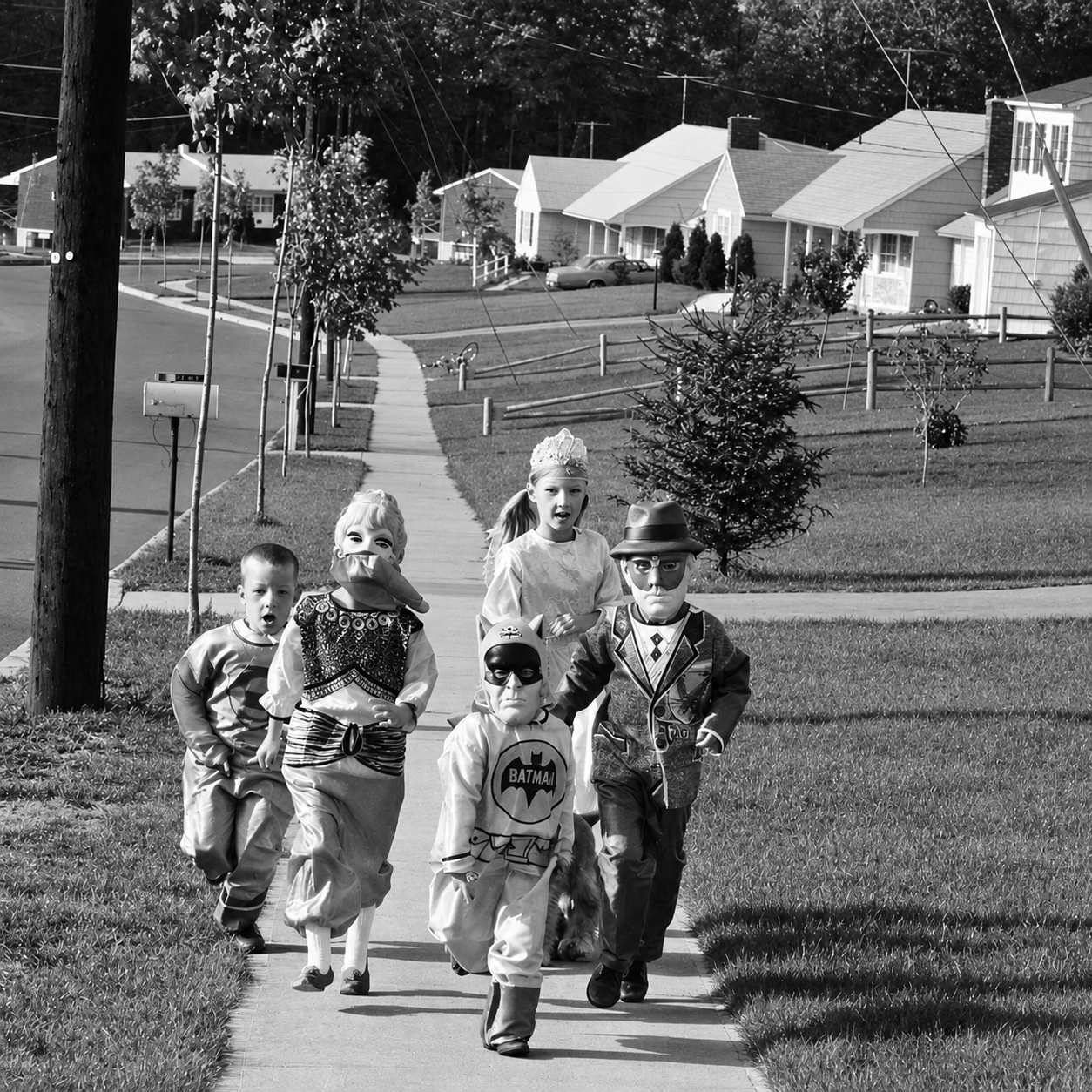
Candy Corn. Haunted houses. Seasonal spectacles that now seem inseparable from October.
Many of Halloween’s biggest mainstays started much more modestly—as ideas from entrepreneurs and small businesses that caught on, spread and eventually became traditions. Along the way, they helped turn Halloween into a $13.1 billion consumer business in 2025.
Here is a look at four of the most popular creations, and how they got their start.
Candy Corn
One of the most inescapable Halloween treats—Candy Corn—wasn’t marketed as a Halloween goody at first. In fact, it was marketed as a whimsical candy version of chicken feed.
It was created back in the 1880s in Philadelphia, which was then a candy-making hub. One popular trend among candy companies was nature: treats inspired by the agricultural world, like pumpkins, leaves and chestnuts.
Among those businesses was Wunderle Candy, owned by a family of German immigrants. (Milton Hershey worked there before he founded his chocolate business.) One Wunderle employee, George Renninger, came up with the idea of a candy shaped like corn kernels—but also took the innovative step of applying different layers of colors to the treats.
The process involved pouring layers of hot liquid sugar into tiny molds by hand. “It was laborious,” says Beth Kimmerle, founder and chief executive of Attribute Analytics and author of three books about candy.
The unusual color scheme gave the candy instant appeal. And, yes, it was marketed as faux chicken feed at the start: “an agricultural-themed novelty and penny candy that appeared throughout the year,” Kimmerle says.
How did the corn get associated with Halloween? At the turn of the last century, another candy company, Goelitz Confectionery, also began selling the treat. Kimmerle says it isn’t clear what kind of arrangement—if any—the two companies had about the rights to the candy. But, in the end, Goelitz usually gets the credit for scaling the candy and branding it as a Halloween product.
As for Wunderle, Kimmerle says, the business wound down in the 1980s, while Goelitz was eventually renamed Jelly Belly in 2001, and acquired by Ferrara Candy in 2023. (Another Ferrara brand, Brach’s, has also been selling candy-corn treats since the 1920s; Ferrara says that it doesn’t have information showing a licensing agreement between the companies.)
Candy Corn has not only become immensely popular in itself, but also has lent its colors and flavors to countless other products. This year, Brach’s launched a limited-edition fragrance, Ode to Candy Corn, which “smells exactly like how candy corn tastes,” according to the company.
Licensed costumes
Dressing up as your favorite fictional figure is a Halloween tradition. Entrepreneur Ben Cooper made it a lot easier for people to get into character—by making licensed costumes a big business.
In the 1930s, Cooper sold costumes for vaudeville, says Rob Caprilozzi, founder of the Horror News Network website, who recently made a documentary about Cooper. In 1937, the entrepreneur—whose company was simply called Ben Cooper Inc.—bought another company, A.S. Fishbach, which had the license to manufacture costumes of Disney characters.
Cooper added more costumes as new Disney movies came out, as well as updating the old ones, Caprilozzi says. In the 1960s, he expanded his line to superheroes—including Spider-Man and Batman—and then turned to “Sesame Street” and “Star Wars” characters in the 1970s.
“At its height, the company controlled 80% of the licensed custom characters,” says Caprilozzi.
And it wasn’t just fictional heroes, either: Cooper had a line of costumes based on U.S. presidents. (The company destroyed its JFK inventory after the assassination, says Caprilozzi.)
One of the selling points of Cooper’s costumes was simplicity. The costumes were just plastic masks and tarps costing a few dollars apiece, and you could toss them out after the big night—no need to hang onto them year-round.
The company lasted until 1992, when it filed for bankruptcy and was then acquired by competitor Rubie’s Costume. (The company, now known as Rubies, didn’t respond to requests for comment.)
Halloween pop-up shops
Joseph Marver didn’t change what we wear for Halloween, the candy we eat or the type of decorations we put up. But he revolutionized where we buy all that stuff.
Marver was running an apparel store called Spirit Women’s Discount Apparel in Castro Valley, Calif. October sales were historically slow, but he noticed sales booming at a costume shop across the street. According to media accounts, the other store changed locations, and Marver in 1983 decided to get into the Halloween business himself. He put his usual wares into storage and turned his store into an emporium for Halloween merchandise.
“I went to a trade show in Chicago, picked up everything I could that had to do with Halloween, and put it in my store, and it was amazing,” Marver told San Francisco Bay Area radio station KQED in July 2024. (He died in 2025.)
“His sales went through the roof,” says Lisa Morton, author of “Trick or Treat: A History of Halloween” and “The Halloween Encyclopedia.”
Marver doubled down on the gambit the following year—renting out a temporary space in a local mall to sell all types of Halloween products for eight to 10 weeks, from costumes to decorations to face paint. At the time, retail leases typically lasted a decade, and it was difficult for newcomers to land a lease, let alone a temporary one, says Barbara Kahn, a professor at the University of Pennsylvania’s Wharton School.
In the interview with KQED, Marver described his initial difficulties. “Some of the people in the strip centers wanted to have the big boxes come in, but then, some of them realized it [was] not going to happen,” he said. So the malls agreed to take on the pop-ups, figuring, “‘Let’s do Halloween. Let’s get something going. Maybe it’ll bring business to the other tenants.’”
Over the next 16 years, Marver grew his business to 60 temporary retail outlets and changed its name to Spirit Halloween. His company spent the rest of the year preparing for the season, handling jobs like sourcing costumes and identifying potential real estate.
In 1999, Spencer Gifts bought the company; Marver stayed on as a consultant, then opened a hotel. Today, Spirit Halloween operates about 1,500 seasonal stores across the U.S. and Canada.
“I didn’t invent temporary sales,” Marver told the Seattle Times in October 2022, “but I feel like I invented temporary Halloween.”
Haunted houses
Walter Knott became famous as the founder of amusement park Knott’s Berry Farm, which has been in operation for about 80 years. But he and his marketing team also invented the large-scale, commercial haunted house.
People had been putting up private, informal haunted houses for years. Charitable organizations also set up the houses to raise funds, says Benjamin Gagne, president of the Haunted Attraction Association and owner of the Thirteenth Hour haunted attraction in Indianapolis.
But Knott’s Scary Farm Halloween event in 1973 was a first, a large-scale commercial setup designed to boost ticket sales during an otherwise slow season, says M. Stang, Ainsworth Visiting Scholar of American Culture at Randolph College in Lynchburg, Va.
Full-page advertisements flooded Orange County and Los Angeles County newspapers, promising entry to the “spookiest, ghouliest place in Southern California” for just $4. The print ads promised “bizarre, spooky antics,” a “fun-tingling plunge through Satan’s sawmill,” and “LIVE MONSTERS,” Stang wrote in a paper about the attraction.
The park also distinguished itself by having people in costumes provide the scares, says Gagne. Previously, amusement parks, including Disney, had what Gagne calls “dark carny rides,” where patrons rode around in carts, and mirrors and lighting created the mood.
The Scary Farm turned into an annual tradition. Knott’s is still running the Halloween attraction—which is open for 26 nights this season.

As the season turns, Handpicked Wines’ latest Pinot Noir and Chardonnay releases reveal how subtle shifts in place shape what ends up in the glass.

Australian shares fell on Thursday as Wall Street weakness, rising oil and persistent rate concerns weighed on most of the market. The S&P/ASX 200 declined 0.72 per cent to 8,702. The All Ordinaries lost 0.66 per cent to finish at 8,897. Mining stocks were hit particularly hard, while real estate also dragged on the index. …
Continue reading “ASX falls 0.7 per cent as miners and property stocks retreat”