Melbourne Office Market Turns a Corner as Tenant Demand Strengthens and Future Supply Dries Up
Tenant enquiry has hit its strongest levels in years, just as Melbourne’s development pipeline begins to thin dramatically, according to Knight Frank’s latest research.
 2 min
2 min
Melbourne’s CBD office market is showing early signs of a turning point, with Knight Frank recording 83 tenant representation briefs in Q2 2026, following 81 in Q1; the strongest start to a year since 2022.
At the same time, after three office projects scheduled for completion by the end of 2026, no new office construction is currently anticipated.
Knight Frank Partner and Head of Research and Consulting, Victoria, Dr Tony McGough, said the market’s fundamentals are improving despite ongoing challenges on the investment side.
“What we’re seeing is a growing disconnect between current market sentiment and the medium-term supply outlook,” he said.
“Tenant demand has strengthened significantly, rents continue to rise and, once the current development pipeline is completed, there is very little new stock coming behind it.”
Melbourne CBD prime face rents have increased by 5.2% over the past year, McGough noted, despite vacancy rates hovering around 19% and expected to rise further through 2026.
He said the lack of future construction activity is setting up tighter market dynamics ahead, as demand continues to recover.
Prime net face rents rose to an average of $773 per square metre across the CBD, up 5.2% year-on-year and 0.8% over the quarter, while incentives edged up marginally in Q2 to average 48.1%.
Rental growth remains concentrated in the better locations and better buildings.
Knight Frank Partner and Joint Head of Office Leasing, Victoria, Simon Hale, said occupiers were becoming more active as business confidence improved.
“The leasing market has become noticeably busier over the first half of 2026,” he said.
“We’re seeing a growing number of occupiers testing the market and taking advantage of favourable leasing conditions, particularly for high-quality space in premium and A-grade buildings.”
Hale added that despite incentives remaining elevated, quality buildings continue to outperform, and tenants with major requirements are increasingly recognising the benefit of securing accommodation well ahead of their lease expiries.
Investment activity, however, remains subdued.
Only $286 million in Melbourne CBD office transactions have been recorded year-to-date, while prime yields softened by a further 13 basis points over the quarter to average 7.02%; their highest level since 2013.
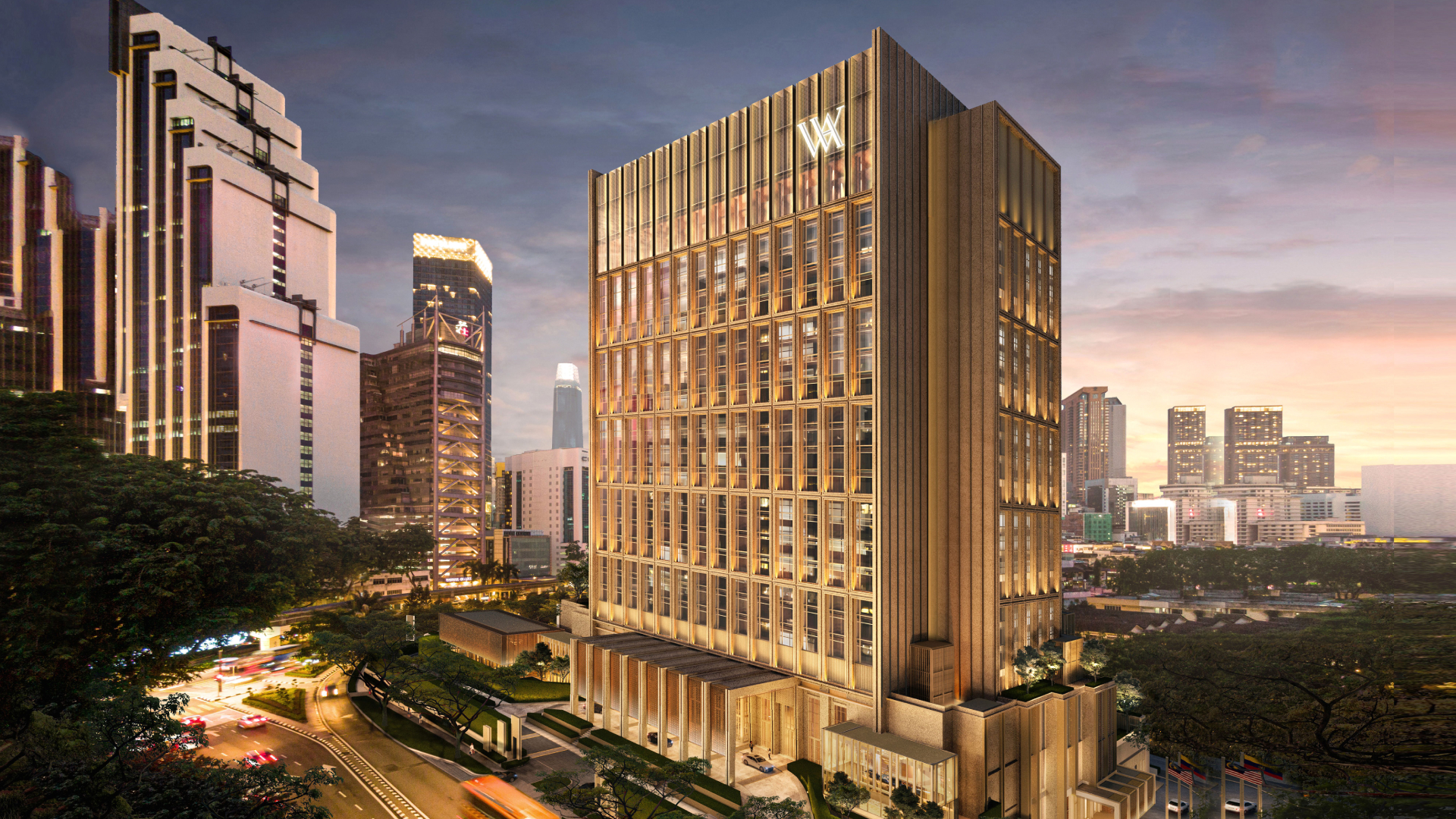
Waldorf Astoria Kuala Lumpur is scheduled to open on 30 October, introducing the Hilton luxury brand to Malaysia with an all-suite hotel in the city’s Golden Triangle.
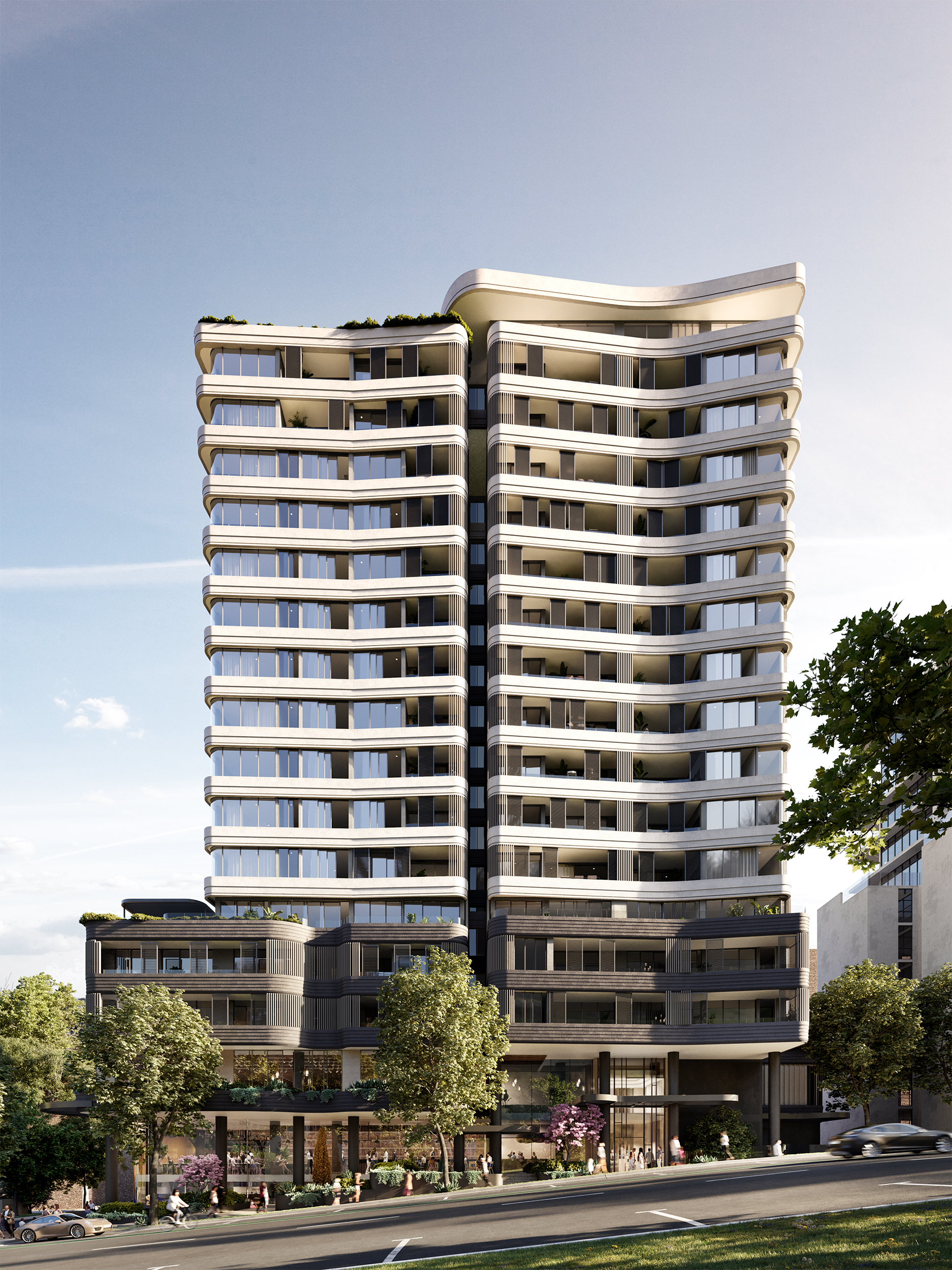
Located steps from Crows Nest Metro, the near-complete development brings luxury living to Sydney’s Lower North Shore.
3 min
Buyers of Aston Martin’s 1,079PS Valhalla can commission one of two bespoke Breitling Super Chronomat watches, with colours and personalised details inspired by their individual car.
The relationship between cars and watches has produced countless branded chronographs, racing editions and logo-bearing collaborations. Breitling and Aston Martin are taking a more personal route with a new watch program reserved exclusively for owners of the Valhalla supercar.
Rather than offering every customer the same limited-edition watch, Breitling is opening part of its Super Chronomat design process to Valhalla owners. A dedicated configurator will allow each buyer to commission a timepiece inspired by the specification of their car and their individual tastes.

Two Super Chronomat models are available: a technically ambitious 44mm perpetual-calendar chronograph and a more compact 38mm automatic watch.
The flagship is the Super Chronomat B19 44 Perpetual Calendar Chronograph. Presented in a 44mm titanium case with Breitling’s distinctive Rouleaux bracelet, it combines a carbon-fibre dial with one of mechanical watchmaking’s most sophisticated complications.
Its automatic perpetual calendar accounts for months of different lengths, leap years and the phases of the moon. Provided it continues running, the calendar will not require manual correction until 2100—the next centurial year that will not be recognised as a leap year.
The B19 movement also provides a 96-hour power reserve, allowing the watch to be left unworn for four days without stopping. A display caseback exposes the movement and black rotor.
Valhalla owners can customise the colour of the inner bezel, seconds hand and chronograph counter hands. The rotor can also be engraved, creating a more permanent connection between the watch and its owner.

The second option, the Super Chronomat Automatic 38, offers a less complicated and more restrained interpretation.
Its 38mm stainless-steel case is paired with a textured carbon-fibre dial, a titanium crown and a diamond-set bezel. The automatic three-hand display incorporates a date window at six o’clock, while customisation extends to the colours used for the inner bezel and hands, together with a personalised caseback engraving.
The combination of carbon fibre and diamonds might appear contradictory, but it captures the dual character of the Valhalla: a car built around highly technical performance that remains unmistakably positioned as a luxury object.
The watch program draws directly from Aston Martin’s first series-production, mid-engined plug-in hybrid supercar.
Valhalla combines a 4.0-litre twin-turbocharged V8 with three electric motors to produce 1,079PS. Aston Martin claims it can accelerate from zero to 62mph—approximately 100km/h—in 2.5 seconds and reach 217mph, or about 349km/h.

Production is limited to 999 examples worldwide.
Formula One-derived technology and aerodynamic development have played central roles in the car’s engineering, but customisation is equally important to its ownership proposition. Breitling’s configurator extends that process from the Aston Martin specification studio to the wrist.
Each car will be produced at Aston Martin’s headquarters in Gaydon, England, while the watches will be made at Breitling’s Chronometrie in La Chaux-de-Fonds, Switzerland.
The program also reflects a broader change in the luxury market. Exclusivity is increasingly being defined by access rather than the simple production of another numbered edition. These watches cannot be purchased merely by joining a waiting list or paying a premium on the secondary market; the commission begins with ownership of the corresponding car.
That restriction gives the project greater authenticity than a conventional co-branded release. The strongest configurations should be those that use colour and engraving to create a subtle relationship with a particular Valhalla, rather than attempting to reproduce the car too literally.
For Valhalla buyers, the choice ultimately comes down to two very different expressions of the same idea. The 44mm B19 is the serious collector’s proposition, built around a rare combination of perpetual calendar and chronograph. The Automatic 38 is simpler, smaller and likely more versatile as an everyday watch.
Both turn the usual automotive-watch collaboration into something more individual: a timepiece configured alongside one of Aston Martin’s most significant new cars.
Watch summary
Program: Bespoke Breitling Super Chronomat watches for Aston Martin Valhalla owners
Available models: Super Chronomat B19 44 Perpetual Calendar Chronograph and Super Chronomat Automatic 38
B19 case: 44mm titanium
B19 power reserve: Approximately 96 hours
B19 complication: Automatic perpetual calendar chronograph
Automatic 38 case: 38mm stainless steel
Shared design element: Textured carbon-fibre dial
Customisation: Selected colours and personalised engraving
Availability: Exclusively for Aston Martin Valhalla owners
Valhalla production: Limited to 999 cars worldwide
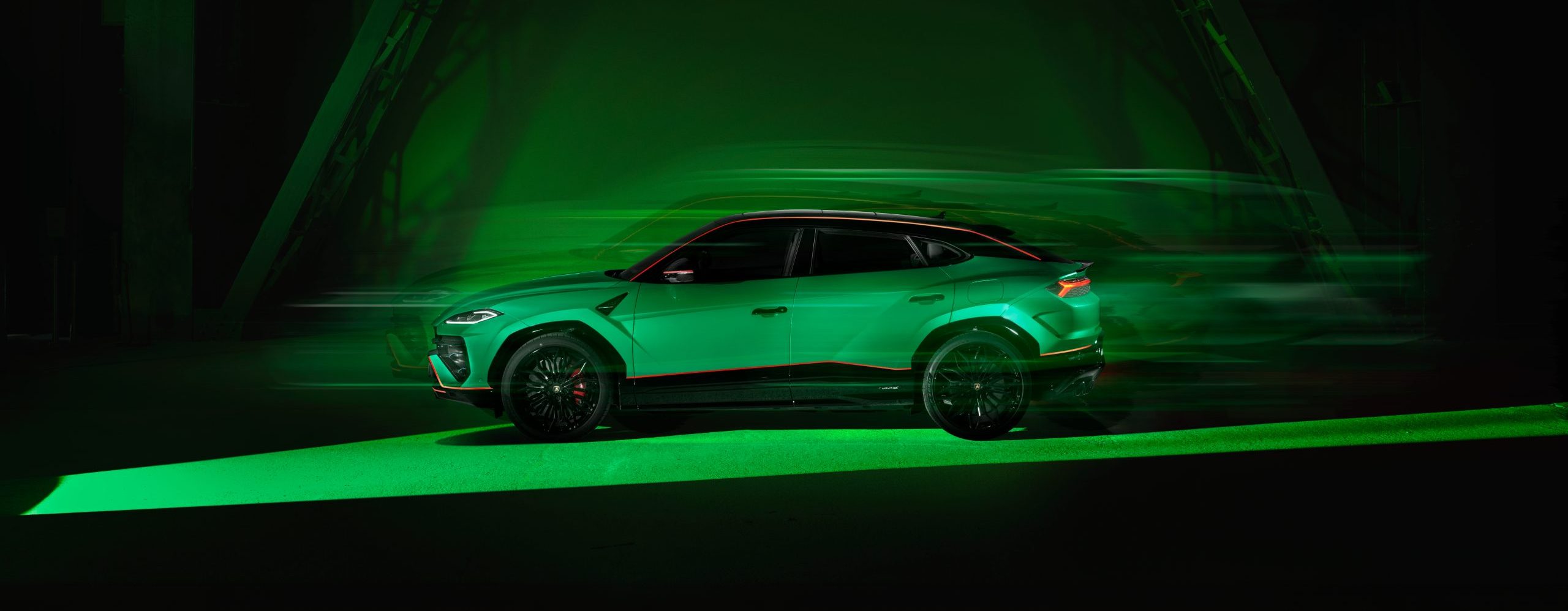
Limited to 630 units, Lamborghini’s latest Urus Capsule pushes personalisation further than ever, blending hybrid performance with over 70 bespoke design combinations.

Exclusive eco-conscious lodges are attracting wealthy travellers seeking immersive experiences that prioritise conservation, community and restraint over excess.