Housing downturn deepens as RBA rate reversal hits buyers
 5 min
5 min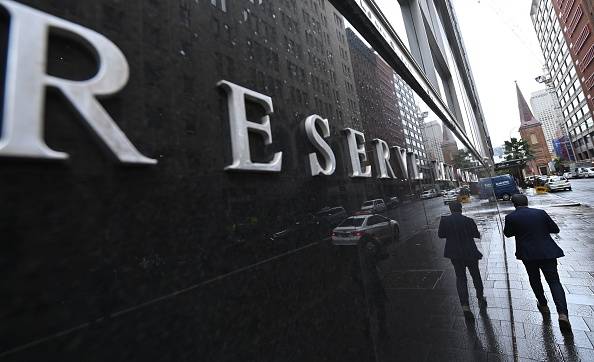
Australia’s housing market has weakened more sharply than the Reserve Bank anticipated, with higher interest rates, deteriorating sentiment and changing tax settings pushing the national market into reverse.
Reserve Bank governor Michele Bullock acknowledged the extent of the slowdown in a speech to the Anika Foundation Fundraising Lunch in Sydney on July 28.
Housing conditions had “eased by more than we had anticipated in May”, she said, after the Bank expected its interest-rate increases to take some heat out of the market.
Bullock attributed the larger-than-forecast slowdown to several forces, including recent housing policy developments and a broader deterioration in market sentiment.
The latest Cotality Home Value Index illustrates the change. National dwelling values fell 0.4% in June, the largest monthly decline since December 2022, taking values 0.7% lower over the June quarter.
The combined capital-city index fell more heavily, declining 0.6% in June and 1.3% over the quarter. Regional values continued to outperform, rising 0.3% for the month and 1.1% over the three months to June.
Sydney and Melbourne lead the falls
The downturn remains concentrated in the country’s two largest housing markets.
Sydney dwelling values fell 1.2% in June and 3.2% over the quarter. By the end of the month, values were 3.7% below their January 2026 peak.
Melbourne values declined 1% in June and 2.6% over the quarter, leaving the market 4% below its March 2022 peak. Melbourne was also the only capital to record an annual decline, with values down 0.9% over the year to June.
Canberra fell 0.6% for the month and 1.3% over the quarter, taking values 2.9% below their May 2022 high. Hobart, despite rising 0.6% in June, remained 0.7% below its March 2022 peak.
Conditions were markedly different elsewhere.
Brisbane values rose 0.3% in June, Adelaide was unchanged, Perth gained 0.7% and Darwin climbed 1.4%. All four remained at record highs at the end of June.
| Capital | June change | June-quarter change | Change from peak |
|---|---|---|---|
| Sydney | -1.2% | -3.2% | -3.7% |
| Melbourne | -1.0% | -2.6% | -4.0% |
| Brisbane | +0.3% | +1.3% | At peak |
| Adelaide | 0.0% | +1.3% | At peak |
| Perth | +0.7% | +2.0% | At peak |
| Hobart | +0.6% | +1.4% | -0.7% |
| Darwin | +1.4% | +5.0% | At peak |
| Canberra | -0.6% | -1.3% | -2.9% |
The figures reveal a divided national market rather than a uniform correction. Sydney and Melbourne are falling comparatively quickly, but strong annual gains remain intact in Brisbane, Perth, Darwin and Adelaide.
Perth values were still 23.9% higher over the year to June, while Darwin was up 19.8%, Brisbane 17.4% and Adelaide 11.6%.
Even Sydney remained 0.3% higher over the year despite its recent decline.
Bullock consequently characterised the pullback in established home prices as “modest” following a period of strong growth. She noted that Sydney and Melbourne values remained around the levels recorded before the RBA began raising rates again in February.
Buyers regain leverage
The weakness extends beyond headline prices.
Cotality estimated that capital-city sales over the three months to June were 16.2% lower than a year earlier and 14.5% below the five-year average for that time of year.
Advertised supply across the capitals was almost 11% higher than a year ago, while the combined capital-city auction clearance rate had remained below 50% since late May before falling into the low-40% range from late June.
Cotality research director Tim Lawless said the accumulation of available homes was primarily a symptom of weaker demand rather than a surge in new listings. Buyers had more properties to choose from, less urgency and greater negotiating power.
Affordability was already constraining demand before the latest interest-rate increases. Higher mortgage costs, cost-of-living pressures, pessimistic consumer sentiment and proposed federal changes affecting property investment have since added to the slowdown.
The result is likely to be a gradual decline rather than a severe national correction. Population growth, tight rental markets and limited new housing supply continue to support values, but they are increasingly being offset by weaker confidence and reduced borrowing capacity.
The RBA has erased all three of last year’s cuts
The speed of the housing slowdown becomes clearer when placed against the sharp reversal in monetary policy.
The RBA cut the cash rate three times in 2025:
- From 4.35% to 4.10% in February
- To 3.85% in May
- To 3.60% in August
Those reductions delivered 75 basis points of easing as inflation appeared to be returning sustainably to the Bank’s 2–3% target range.
The direction changed abruptly in 2026 after inflation accelerated and the economy was judged to be operating with greater capacity pressure than previously thought.
The RBA increased the cash rate by 25 basis points in February, March and May, lifting it from 3.60% to 4.35%. Those three increases have exactly reversed the 75 basis points of relief delivered last year.
The Board left the rate unchanged at its June 16 meeting, meaning the cash rate has been at 4.35% since May 5.
Higher mortgage rates and tighter lending assessments have reduced the amount many households can borrow, while also increasing repayments for existing variable-rate borrowers. The effect has been particularly visible in Sydney and Melbourne, where values are high and buyers are more sensitive to changes in borrowing capacity.
Bullock said the housing slowdown had gone further than the RBA forecast in May, but borrower distress remained contained. Fewer than 1% of borrowers were in negative equity, she said, and only a small proportion of that group was estimated to be experiencing severe repayment difficulty.
The labour market has also softened more than expected, with unemployment rising further than the Bank forecast. That creates a more complicated decision for the Board: inflation remains too high, but the effects of its previous tightening are becoming clearer across employment, household confidence and housing.
Bullock nevertheless reiterated that the Board was prepared to increase the cash rate again if required to meet its mandate.
The Big Four are divided over what comes next
The major banks agree that meaningful rate relief is unlikely in the immediate future, but they differ sharply over whether the RBA has finished raising rates.
Commonwealth Bank expects the cash rate to remain at 4.35% for the rest of 2026. Its economists have pencilled in the first cut for May 2027, followed by another in August, which would reduce the rate to 3.85%.
NAB also believes the next move is likely to be down, although it has expressed less confidence about the timing. Its forecast has the cash rate ending 2027 at 3.60%, implying three quarter-point cuts over the year.
ANZ’s July base case is for the RBA to remain at 4.35% until the second half of 2027. Its economists have not ruled out another increase in November if inflationary pressure intensifies. ANZ’s previously published central forecast included two cuts during 2027, taking the rate to 3.85%.
Westpac remains the outlier. Its July outlook anticipates two further rate increases during 2026, which would lift the cash rate to 4.85%, before an easing cycle begins later. This more hawkish view reflects concern that persistent inflation and energy-related cost pressures could require the RBA to tighten policy again.
| Bank | Expected 2026 direction | Expected easing |
| CBA | Hold at 4.35% | First cut forecast for May 2027; second in August |
| NAB | Hold; next move expected to be down | Cash rate forecast to end 2027 at 3.60% |
| ANZ | Hold at 4.35%, with a November hike risk | Base case has easing beginning in the second half of 2027 |
| Westpac | Two further hikes, potentially reaching 4.85% | Easing expected only after the additional tightening cycle |
These forecasts are highly conditional. Inflation, employment, household spending and the international energy outlook could all materially alter the timing.
The June-quarter Consumer Price Index, due on July 29, will be central to the RBA’s updated economic forecasts ahead of its August 11 meeting.
A softer inflation result, combined with weakening employment and housing, would support the case for an extended pause. A stronger result—particularly in underlying inflation—would keep another increase in play.
For the housing market, even an extended hold would mean borrowers receive no early relief from the 2026 increases. Cotality expects momentum to weaken further, with expensive markets, investor-heavy areas and locations carrying elevated advertised stock among those most exposed.
Australia is not yet experiencing a broad housing collapse. Prices remain at record highs in half of the capitals, negative equity is rare and national values are still 7.3% higher than a year ago.
But the direction has changed. The RBA has removed all of last year’s rate relief, buyers have regained leverage and the country’s largest housing markets are now leading a downturn that has already proved deeper than the central bank expected.

From making unpopular decisions to learning when to listen, leaders from five businesses reveal what nobody prepared them for — and how running a company has challenged their expectations.

Technology and semiconductor shares fell sharply as investors questioned the debt financing the AI infrastructure boom and confronted higher rates and Chinese competition.
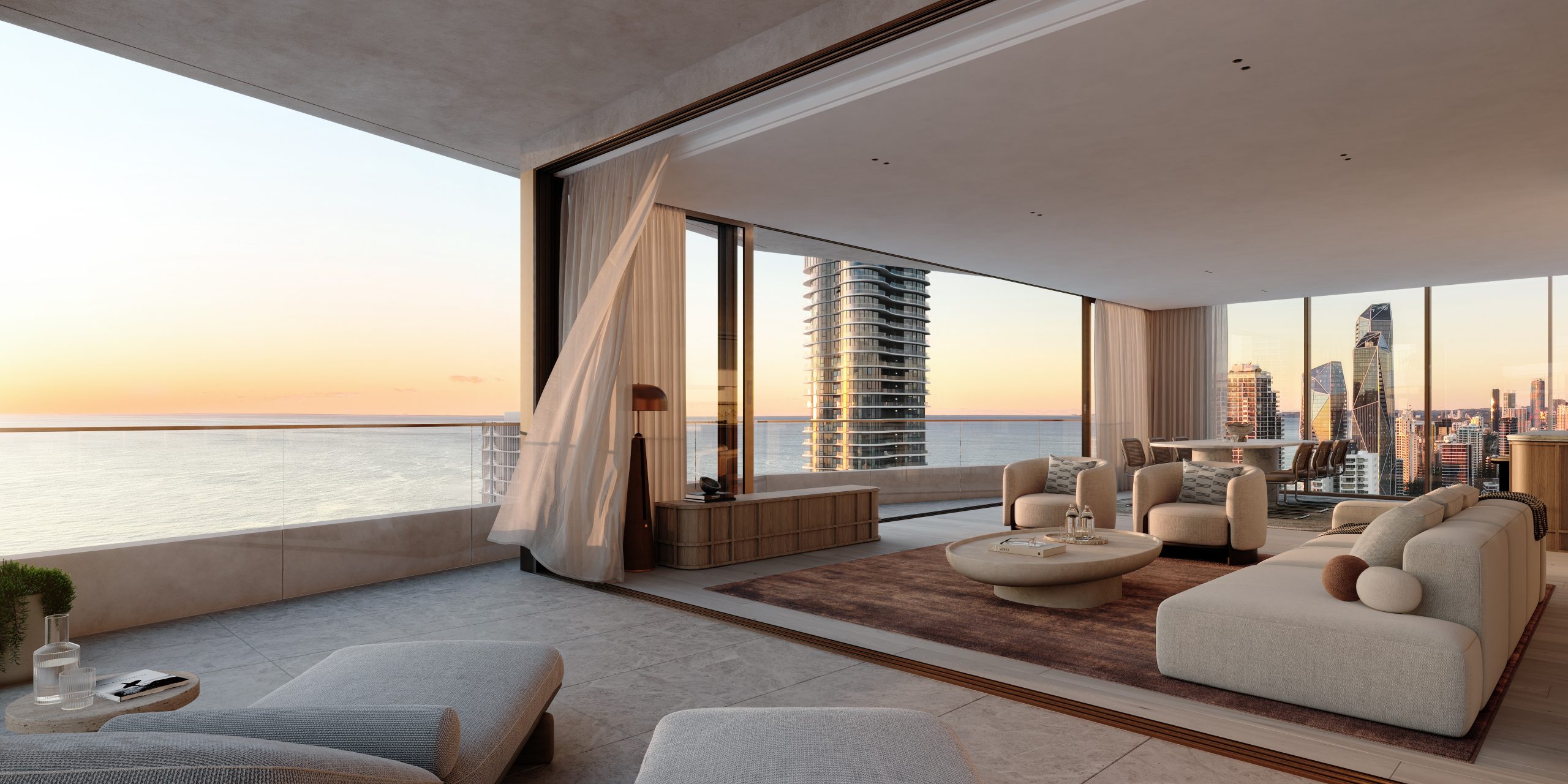
Mirvac’s 45-level Trielle has topped out at Yarra’s Edge, pairing riverfront apartments with wellness facilities, private dining and resident services.
3 min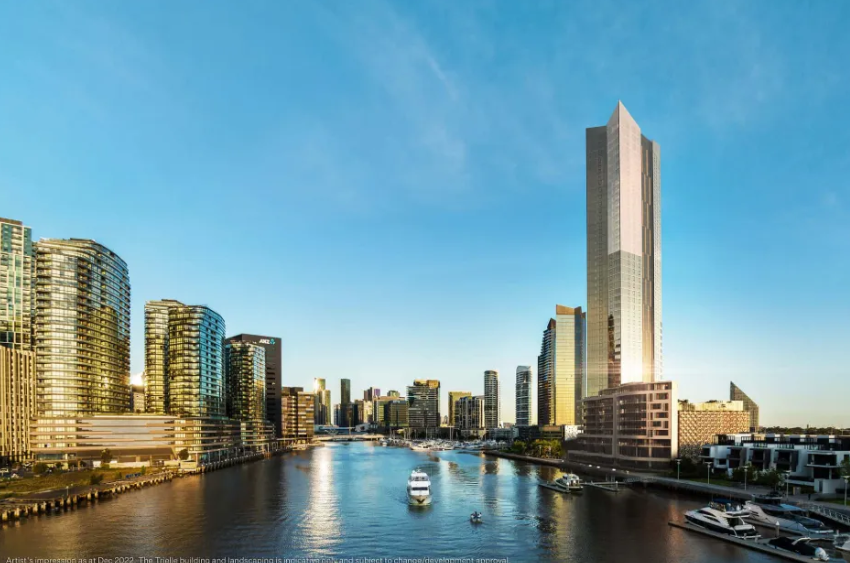
Mirvac has topped out Trielle at Melbourne’s Yarra’s Edge, with more than 70 per cent of the riverfront development sold and approximately 80 per cent of purchasers intending to make their apartment a home.
The figures, released on September 22, point to an owner-occupier audience for one of the precinct’s final residential towers. Mirvac began developing Yarra’s Edge in 2003, and its latest addition occupies one of the remaining absolute riverfront sites.
Mirvac CEO of Development Stuart Penklis said existing residents were among those moving up within the neighbourhood.
“Many purchasers already have a connection to Yarra’s Edge,” Mr Penklis said, describing buyers whose changing needs were encouraging an upgrade within the precinct.
“As one of the final residential towers within Yarra’s Edge, Trielle represents the culmination of more than two decades of creating one of Melbourne’s most established and sought-after waterfront communities,” Penklis said.
“Positioned on the Collins Street axis with absolute river frontage, Trielle offers residents a rare opportunity to enjoy sweeping views across the Yarra River, Melbourne skyline and Port Phillip Bay, while remaining seamlessly connected to the CBD. With Trielle now more than 70 per cent sold, we’re continuing to see strong demand from buyers seeking quality homes in established locations.”
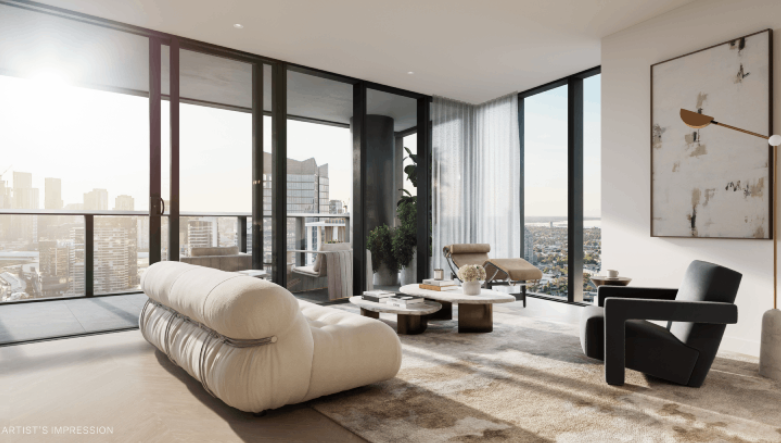
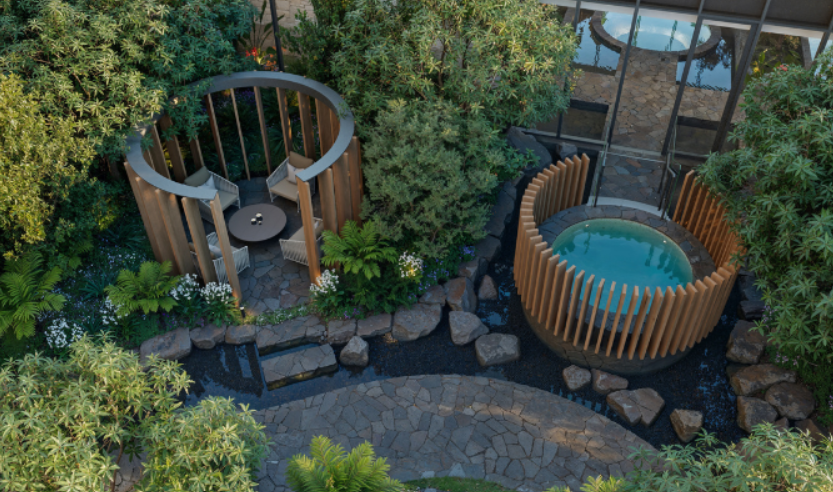
The developer also flagged a penthouse and sub-penthouse collection with larger layouts, premium finishes and broad outlooks. The planned wellness centrepiece, The Oasis, encompasses a 900-square-metre elevated urban rainforest.
Mirvac General Manager Residential Development Victoria Elysa Anderson said Trielle had resonated strongly with buyers seeking a rare lifestyle offering in Melbourne.
“Opportunities to secure a new luxury residence on a riverfront site of this calibre are incredibly rare, particularly within a community like Yarra’s Edge,” Anderson said.
“What makes Trielle unique is the combination of exceptional views, world-class residential facilities and the lifestyle that already exists around it. Residents are buying into a mature waterfront community with parks, promenades, dining, wellness and strong community connections already in place.”
The 45-level tower brings a substantial new presence to that waterfront. Its residential offering spans one-, two-, three- and four-bedroom apartments, with Signature, Prestige and Sub-Penthouse collections accommodating different household sizes. The north-facing position connects the apartments visually to the river and city beyond.
Seven storeys above the promenade, the planned Oasis combines planting and a running stream with a Scandinavian-inspired wellness club developed with spa specialist Naomi Gregory. Facilities include a 25-metre lap pool, hot magnesium pool, sauna, hydrotherapy, a gym, yoga and Pilates room, and treatment spaces.
The amenity extends beyond exercise. Residents will have access to The Biblioteca library and workspaces, ground-floor work pods, and The Salone piano lounge. A private Chef’s Table dining room offers a setting for larger gatherings, while a cinema, games room and sports lounge broaden the entertaining options. Concierge services and a dog-wash area support everyday routines.
Trielle comprises a collection of one, two, three and four-bedroom residences. Reflecting strong demand from owner occupiers, approximately 80 per cent of purchasers to date intend to live in their homes, highlighting the project’s appeal to those seeking a long-term waterfront lifestyle.
Mirvac has recently delivered The Albertine, a premium apartment development on the edge of Melbourne’s CBD, and is nearing completion of Prince & Parade in Brunswick, further strengthening its portfolio of thoughtfully designed apartment communities in some of Melbourne’s most sought-after urban locations.

In the lead-up to the country’s biggest dog show, a third-generation handler prepares a gaggle of premier canines vying for the top prize.

Formula 1 may be the world’s most glamorous sport, but for Oscar Piastri, it’s also one of the most lucrative. At just 24, Australia’s highest-paid athlete is earning more than US$40 million a year.