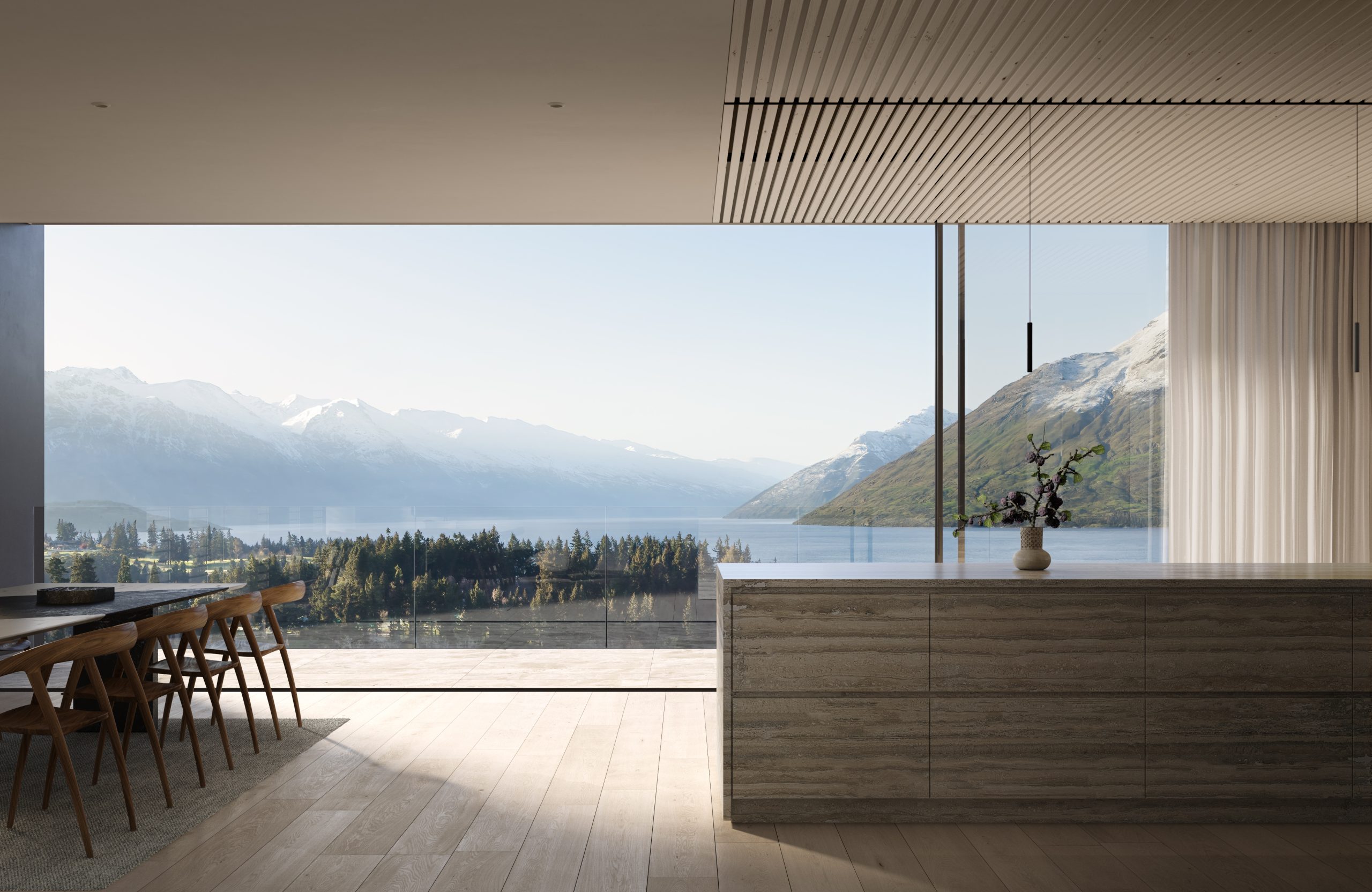
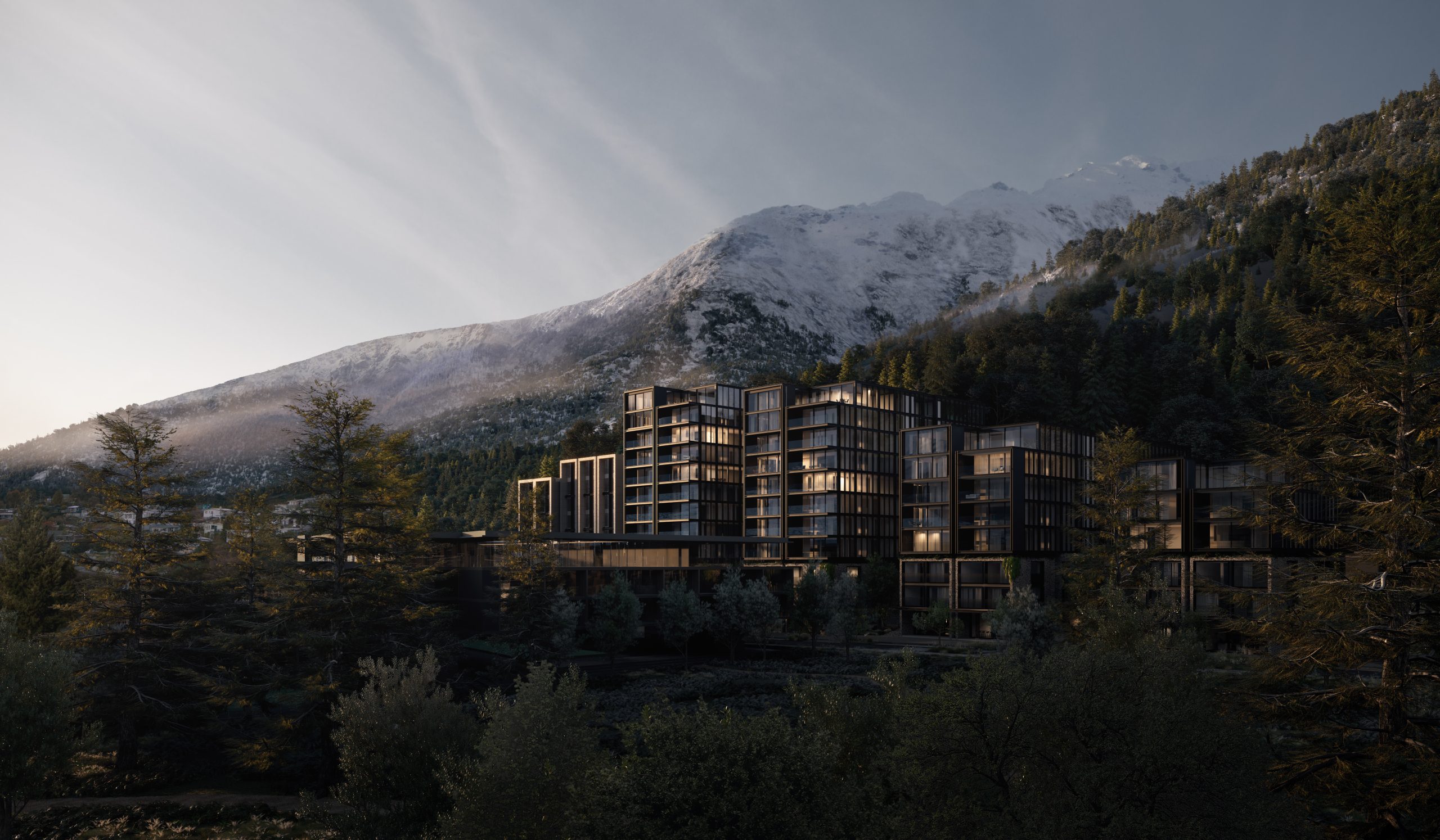
A surge in Australian buyers following the recent Federal Budget has driven NZ$37 million in luxury apartment sales in just the past month at Queenstown’s landmark Lakeview Te Taumata development, with investors increasingly looking across the Tasman for premium property opportunities.
Five residences worth a combined NZ$37 million have sold in the past four weeks alone, including four apartments at approximately NZ$8 million each and another at NZ$5 million. The buyers came from Brisbane, the Gold Coast and Victoria, underscoring growing demand from affluent Australians seeking to diversify their property holdings.
The latest sales have pushed total pre-sales at the project towards NZ$200 million ahead of construction commencing on the first stage of the NZ$2 billion-plus development, which is scheduled for completion in 2028.
Australian enquiries have increased by 50 per cent since the Federal Budget, while Australian purchasers now account for approximately 80 per cent of all recent sales, reflecting growing demand from investors reassessing their property portfolios.
The renewed momentum comes as Australian investors respond to changes announced in the recent Federal Budget and increasingly look to New Zealand’s luxury property market, attracted by its premium lifestyle offering and tax settings, including the absence of a broad-based capital gains tax in New Zealand.
Urban Activation Director of Sales Matt George said buyer behaviour had shifted noticeably in recent weeks.
“In the past month alone we’ve secured NZ$37 million in sales to Australian buyers These are sophisticated buyers who are actively looking to diversify their investments while securing exceptional lifestyle assets in internationally recognised destinations.
“Queenstown has always appealed to Australian buyers, but we’re seeing a new level of urgency. The combination of a tightly held luxury market, New Zealand’s tax settings and Queenstown’s global reputation is proving to be a compelling proposition.
“Approaching NZ$200 million in pre-sales before construction commences is a significant milestone. It demonstrates the depth of demand for premium product and provides tremendous confidence as we move into the construction phase.”

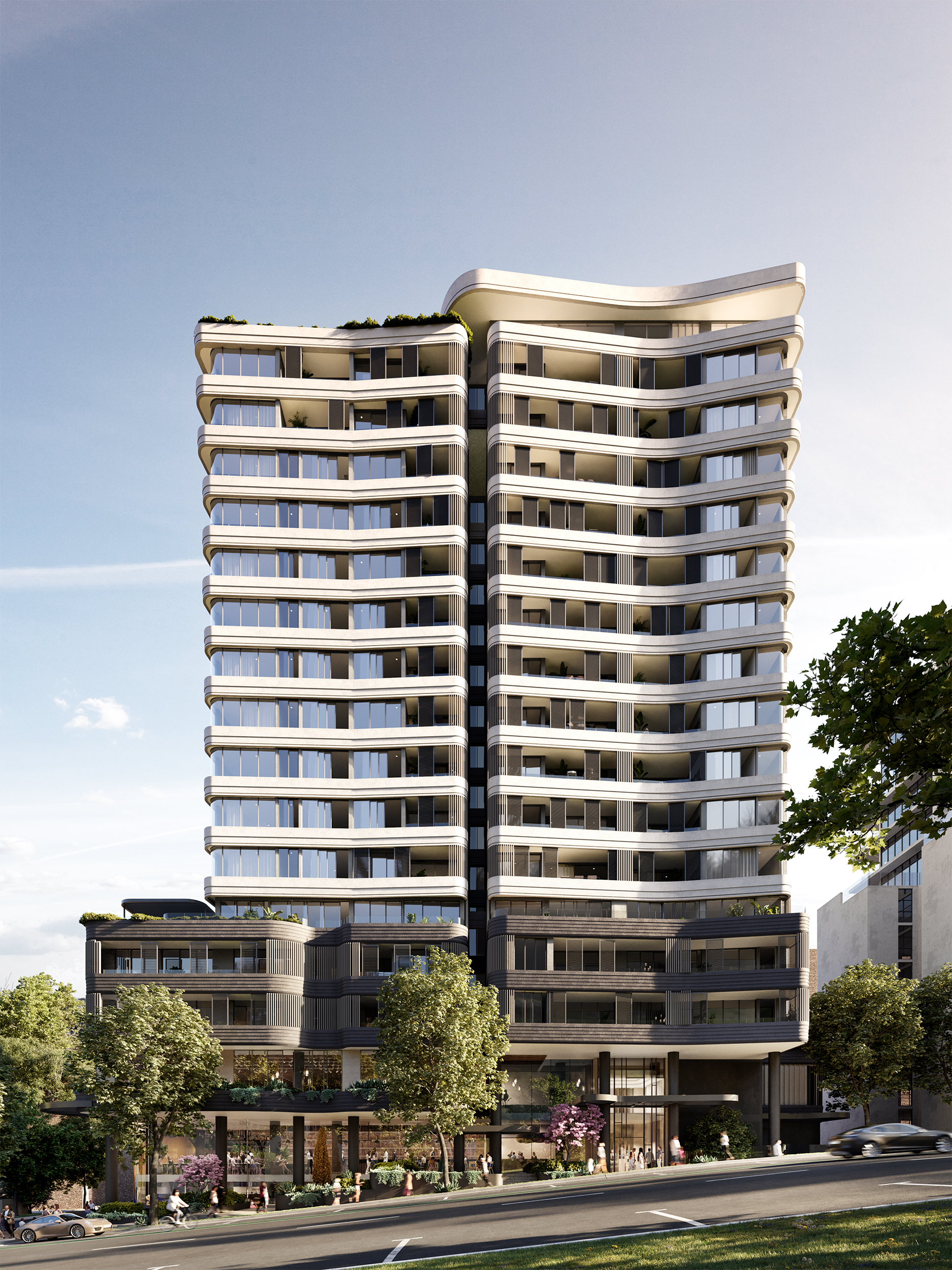
Construction of Stage One has commenced with CMP Construction appointed to deliver Building A, comprising a 77 room Alpine Lodge, together with Buildings B and C, delivering 94 luxury apartments. Completion is anticipated in 2028.
Current pricing includes:
- Two-bedroom apartments from NZ$2 million
- Dual-key residences (one-bedroom plus studio) from NZ$2.55 million
- Three-bedroom apartments from NZ$6 million
- Four-bedroom apartments from NZ$9 million
- Six-bedroom penthouse from NZ$25.5 million
Designed around wellness, luxury hospitality and world-class alpine living, Lakeview Te Taumata will ultimately comprise luxury residences, internationally branded hotels, restaurants, retail, wellness facilities and public spaces, creating a vibrant extension of the Queenstown town centre.
The NZ$2 billion-plus masterplanned precinct is being delivered by Melbourne-based 94 Feet and is expected to become one of the Southern Hemisphere’s premier lifestyle destinations.
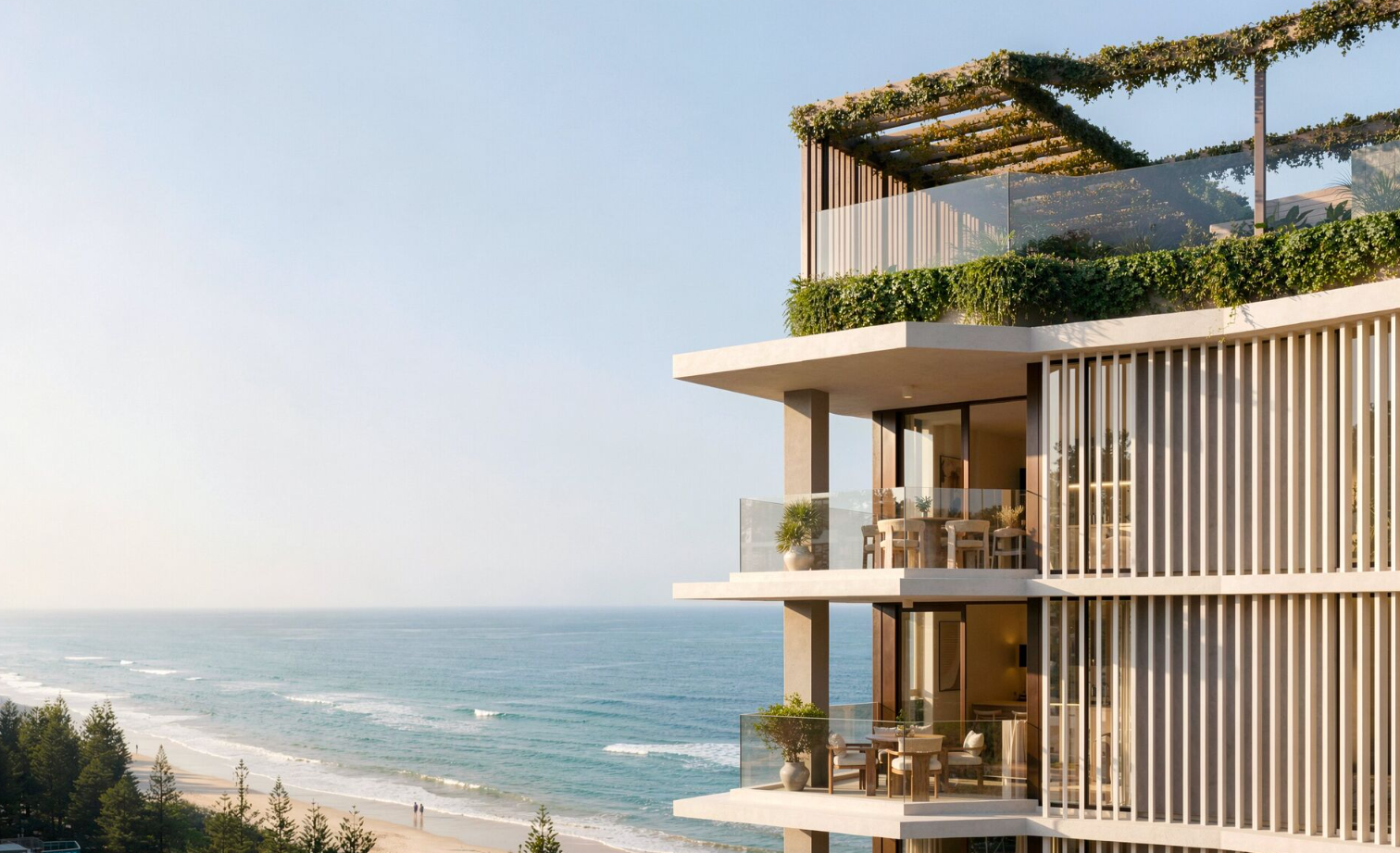
For Central Element, the start of work at Pearl represents another step in the company’s growing eastern suburbs pipeline.
All three vehicles will form part of a broader charitable initiative benefiting Big Brothers Big Sisters of America, the American Red Cross and Starlight Children’s Foundation
Jack Freeman believes the most compelling interiors are not decorated, but collected. The FREEMAN & CO founder creates layered, personal spaces shaped by art, travel and craftsmanship.
For Jack Freeman, a compelling interior should not look as though it was completed in a single shopping trip.
The founder and designer behind FREEMAN & CO prefers rooms that develop through art, travel, commissioned furniture and objects collected over time. It is an approach that treats the home less as a decorative project and more as an evolving portrait of its owner.
“I am a true believer in collecting versus decorating,” Freeman says.
That distinction underpins the international practice he has built across private residences, hotels, property developments, yachts and private aviation. Its projects stretch from Point Piper, Vaucluse, Circular Quay and Toorak to Mayfair, Bel Air and the Caribbean.
Although the locations and architecture vary considerably, the work is connected by a restrained design language. Natural stone, warm timbers and sculptural furniture establish the foundation, while art, bespoke lighting and individual objects give each interior its identity.
The objective is not to overwhelm a room with obvious symbols of expense. It is to create an environment that feels calm, layered and particular to the people living within it.
“The greatest luxury isn’t about excess,” Freeman says. “It’s about creating an oasis where you come home and feel immediately grounded — effortlessly chic and deeply personal.”
Collecting instead of decorating
Decorating can imply the completion of a room: selecting the required furniture, filling the available walls and producing a coherent finished image.
Collecting is less conclusive.
A collected interior has room to change as its owners travel, discover artists, inherit pieces or reassess how they use their home. Its character comes from the relationship between objects rather than adherence to a single brand or season.
That does not mean placing unrelated pieces together without discipline. The designer must understand scale, proportion, material and provenance well enough to create a dialogue between them.
A contemporary artwork might sit beside a historic piece of furniture. A precisely detailed new interior may be interrupted by an irregular object made by hand. Smooth stone can be balanced by timber, textiles or a patinated metal surface that becomes richer with age.
The tension between those elements is part of the appeal.
For Freeman, art is not an accessory to be added once the furniture plan is complete. It forms part of the architecture and atmosphere of the room from the beginning.
Lighting is considered in the same way. Beyond its practical purpose, a bespoke fitting can operate as a suspended sculpture, changing both the room’s composition and the way its materials are experienced after dark.

A design perspective shaped by travel
International travel plays a significant role in Freeman’s creative process.
Design fairs such as PAD Paris and Salone del Mobile in Milan provide opportunities to encounter emerging designers, established galleries, new materials and collectible furniture away from the filter of social media.
More spontaneous discoveries can prove equally important.
“Sometimes it’s the simple things,” Freeman says. “That piece found on a shopping trip with a client in Paris, stumbling across an artisan’s workshop, or a special memory that forms the narrative of the story.”
Objects selected during travel bring more than visual interest into a home. They carry an association with a place, maker or experience, giving the client a connection that cannot be reproduced by ordering an entire interior from a catalogue.
Freeman’s influences are international, but his projects are not conceived as replicas of Parisian, Milanese or Californian style. Each commission responds to its architecture, setting, natural light and the daily lives of its occupants.
A waterfront Sydney residence demands a different treatment from a Mayfair townhouse. A Caribbean estate shaped by brutalist architecture and reflecting pools calls for another response again.
The designer’s role is to absorb those references without allowing them to overwhelm the individual qualities of the property.
Designing the complete experience
FREEMAN & CO extends beyond conventional interior decoration.
The practice’s stated services include interior design and architecture, project management, property acquisition, development advice, concept design, documentation, furniture and lighting design, procurement and art curation.
That breadth allows the team to become involved before a room’s dimensions and finishes are fixed.
Early participation can be important at the top end of the residential market, where architecture, landscape, interiors, technology and art must operate as one environment. Decisions about ceiling heights, wall dimensions, sightlines and lighting can directly affect where art is installed or how custom furniture is proportioned.
The practice can then carry those decisions through to procurement and final installation, maintaining the design narrative as a project moves between architects, builders, specialist craftspeople, dealers and suppliers.
Its residential portfolio includes a South Coast retreat conceived as an escape from urban life, a Caribbean estate with reflecting pools, an East Coast-inspired Palm Beach residence and a Mayfair townhouse organised around an expressive drawing room.
The studio also says it has worked on highly tailored Sydney residences with values exceeding $100 million, although the private nature of such commissions means individual addresses and clients are not always disclosed.

A home that can keep changing
The risk in creating a perfectly resolved interior is that it can become too static — a composition that looks exceptional in photographs but leaves little room for life.
Freeman sees the home as something that should evolve with its owners.
“I love the evolution of design,” he says. “We are talking about people’s lives, and as they evolve, so too should their private sanctuaries.”
That evolution might involve adding art, reupholstering a significant piece, adapting rooms as a family changes or making space for objects gathered through future travels.
The original design needs to be strong enough to accommodate those layers.
This may be the clearest expression of Freeman’s approach to luxury. It is not simply access to rare stone, collectible furniture or commissioned craftsmanship. It is the creation of a personal environment whose meaning deepens rather than diminishes with time.
Fact box
- Designer: Jack Freeman
- Role: Founder and managing director
- Practice: FREEMAN & CO
- Base: Australia, with international projects
- Project locations named by the practice: Point Piper, Vaucluse, Circular Quay, Toorak, Palm Beach, the NSW South Coast, Mayfair, Bel Air and the Caribbean
- Sectors: Private residences, hotels, residential developments, private aviation and superyachts
- Services: Interior design and architecture, property development, project management, property acquisition, documentation, furniture and lighting design, FF&E procurement, interior dressing and art curation
- Design philosophy: Collected, personal interiors shaped by art, craftsmanship, travel and enduring materials
- Website: free-man.co
In the remote waters of Indonesia’s Anambas Islands, Bawah Reserve is redefining what it means to blend barefoot luxury with environmental stewardship.
Australia’s housing market rebounded sharply in 2025, with lower-value suburbs and resource regions driving growth as rate cuts, tight supply and renewed competition reshaped the year.