Stay With Us, Please? My Quest to Design a Better Guest Room Than the In-Laws
Determined to persuade her married daughters to visit—and lacking her rivals’ in-ground pool—our columnist decided to up her guest-room game. Here, her tips.

 4 min
4 min
I SUSPECT that most people’s so-called guest bedrooms are, like mine, giant closets. Once upon a time they were my daughters’ bedrooms. But after my kids grew up, their childhood rooms were almost immediately pressed into service as warehouse space.
My husband’s guitar amps? Store them in a spare room. Amazon packages to be returned? Guest room. These rooms also collect castoffs I’m not emotionally ready to part with, including 10-foot drapery panels with a songbird pattern I made with a sewing machine my husband magnanimously gave me on our 10th anniversary. I think I used the machine once, and if I ever need it, it’s in a corner of the guest room.
This situation is counterproductive for someone like me, hoping to lure home “guests” like my three adult children and their husbands and partners. So I recently resolved to fix the guest-room issue—and immediately realised this was a job for a professional.
“My problem is that now that my children are paired-off they have other options—in-laws with better guest rooms—who they could visit instead,” I said to Grey Joyner, an interior designer in Wilson, N.C. These rival accommodations include an enviable guest suite (I’ve slept there comfortably myself), with extremely high-thread-count sheets, a private bathroom and terrace access to a landscaped garden with an in-ground swimming pool. “Of course, I’m not trying to compete head-to-head against the in-laws,” I hedged.
“Of course you are competing with the in-laws—as you should!” Joyner said. “If you were my client, this is when I would tell you: Every room needs to tell a story.”
“‘High-end hotel’ is a nice story for a room,” I said. “Should I toss everything and start from scratch?”
“No!” Joyner said. “This is not a hotel, it’s your home, and it has to feel personal. I would create a story around things you collect or already have.”
I considered what our story might be. “A thriller about a hoarder with a songbird-drapes fetish?” I asked.
She ignored this.
Obviously, accessories designed to lure each of my daughters would be nice to have, including a luggage rack for the “heavy packer” in the family (Joyner likes the $225 foldable, faux-bamboo versions from One of a Find in Charleston, S.C.); wall-mounted reading sconces for my “low-brow-murder-mystery addict” middle child (my go-to is the bendable-arm gooseneck wall sconces from Etsy sellerDLIGHT); and perhaps a Sonos speaker for the family’s “promising-new-artists scout.”
“Maybe it’s the Southerner in me, but I have a ton of silver pieces,” Joyner said. “I might put a tray on a dresser for jewellery, and one in the bathroom as a soap dish. Guests say, ‘I love that dish,’ and I say, ‘That was my grandmother’s.’ Now it has a story.”
A plan took shape: First, I spent a few days painting a Louis-XVI-style caned bed with three coats of a rich, deep brown colour—Farrow & Ball’s Mahogany—so it would have a strong visual presence to anchor the room. Second, I painted the walls, to cover the pale Benjamin Moore Ballet White with Farrow & Ball Smoked Trout, a hue whose name got a rise out of my husband. “Wow, $150 a gallon for paint?” he said. “Is it made with real trout?”
The colour created a woodsy-tan backdrop against which a castoff pair of cloudy-mirror-top night tables suddenly looked glamorous.
What next? Window coverings, perhaps in a joyous songbird pattern? Or maybe not.
“You need blackout shades or drapes because you want your guests to get a good night’s sleep,” said Kelly Simpson, senior director of design and innovation at Budget Blinds, an Irvine, Calif., company with 900 franchises nationwide. “For your situation, personally I’d do a layered look, blackout shade with drapery panels on the sides. Adding draperies softens a room.”
Stephanie Moffitt, design director of the Mokum collection at James Dunlop Textiles in Australia, concurred, suggesting patterned fabrics on shades and drapes. “You can take more risk with bolder palettes” than in a main bedroom where you have to sleep (and look at the curtains) every night for years, she said.
Luring adult children to come home could get expensive. Does it need to?
I turned to psychologist Joshua Coleman’s “Rules of Estrangement: Why Adult Children Cut Ties and How to Heal the Conflict” (Harmony, 2021) for answers. But after skimming the free-on-Amazon excerpt of the book, I still had questions—so I phoned the author.
“I’m actually trying to prevent estrangement with adult children before it happens,” I told him. “The first pages of your book point out that they—and by extension, their spouses—aren’t obligated to spend more time than they want with their parents,” I said. “Can I convey that I respect that through how I decorate a guest room?”
“Probably not—and keep in mind there’s a risk that they don’t want you to update their rooms and will feel displaced by it,” Coleman said.
“But their spouses don’t want to look at their old prom photos,” I said.
“You said you have daughters?” he asked.
Three, I confirmed.
“Daughters tend to be more powerful arbiters of time spent with parents than sons, so I would be more conscious of displeasing them. Husbands will fall in line.”
Really? It was the reactions of the spouses and partners I’d been fearing—all three of my daughters had given a thumbs-up to more-comfortable décor and had in fact unanimously suggested a mattress upgrade (the old one dated to 1985).
“So no expensive furnishings are necessary?” I asked.
He could hear my disappointment. “Look, if you want to justify it to your husband, you can say you talked to a national expert and he said you absolutely need to buy nice furniture,” he said.
That faux bamboo luggage rack will soon be mine.
 Copyright 2020, Dow Jones & Company, Inc. All Rights Reserved Worldwide. LEARN MORE





From making unpopular decisions to learning when to listen, leaders from five businesses reveal what nobody prepared them for — and how running a company has challenged their expectations.

Technology and semiconductor shares fell sharply as investors questioned the debt financing the AI infrastructure boom and confronted higher rates and Chinese competition.
Mirvac’s 45-level Trielle has topped out at Yarra’s Edge, pairing riverfront apartments with wellness facilities, private dining and resident services.
3 min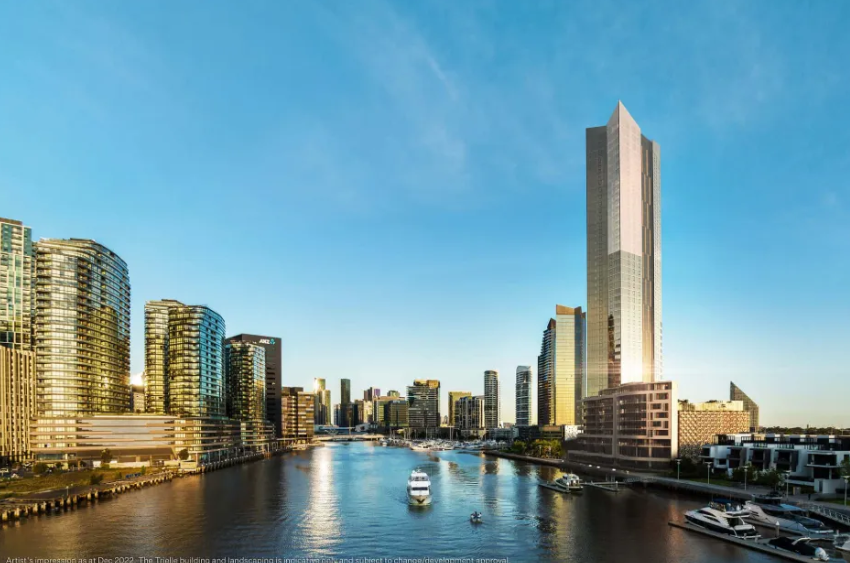
Mirvac has topped out Trielle at Melbourne’s Yarra’s Edge, with more than 70 per cent of the riverfront development sold and approximately 80 per cent of purchasers intending to make their apartment a home.
The figures, released on September 22, point to an owner-occupier audience for one of the precinct’s final residential towers. Mirvac began developing Yarra’s Edge in 2003, and its latest addition occupies one of the remaining absolute riverfront sites.
Mirvac CEO of Development Stuart Penklis said existing residents were among those moving up within the neighbourhood.
“Many purchasers already have a connection to Yarra’s Edge,” Mr Penklis said, describing buyers whose changing needs were encouraging an upgrade within the precinct.
“As one of the final residential towers within Yarra’s Edge, Trielle represents the culmination of more than two decades of creating one of Melbourne’s most established and sought-after waterfront communities,” Penklis said.
“Positioned on the Collins Street axis with absolute river frontage, Trielle offers residents a rare opportunity to enjoy sweeping views across the Yarra River, Melbourne skyline and Port Phillip Bay, while remaining seamlessly connected to the CBD. With Trielle now more than 70 per cent sold, we’re continuing to see strong demand from buyers seeking quality homes in established locations.”
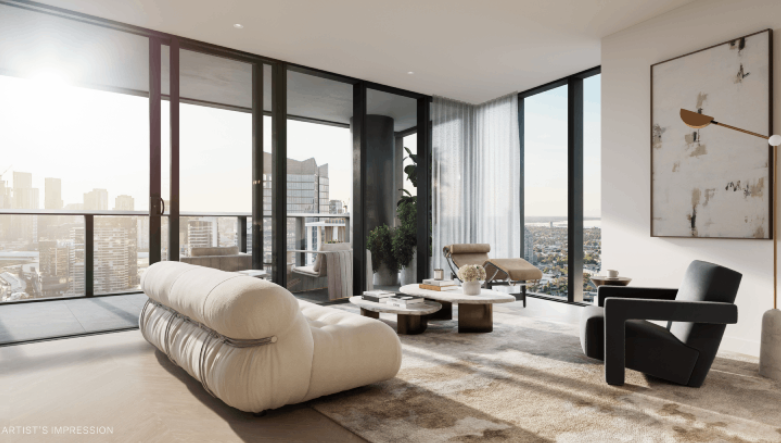
The developer also flagged a penthouse and sub-penthouse collection with larger layouts, premium finishes and broad outlooks. The planned wellness centrepiece, The Oasis, encompasses a 900-square-metre elevated urban rainforest.
Mirvac General Manager Residential Development Victoria Elysa Anderson said Trielle had resonated strongly with buyers seeking a rare lifestyle offering in Melbourne.
“Opportunities to secure a new luxury residence on a riverfront site of this calibre are incredibly rare, particularly within a community like Yarra’s Edge,” Anderson said.
“What makes Trielle unique is the combination of exceptional views, world-class residential facilities and the lifestyle that already exists around it. Residents are buying into a mature waterfront community with parks, promenades, dining, wellness and strong community connections already in place.”
The 45-level tower brings a substantial new presence to that waterfront. Its residential offering spans one-, two-, three- and four-bedroom apartments, with Signature, Prestige and Sub-Penthouse collections accommodating different household sizes. The north-facing position connects the apartments visually to the river and city beyond.
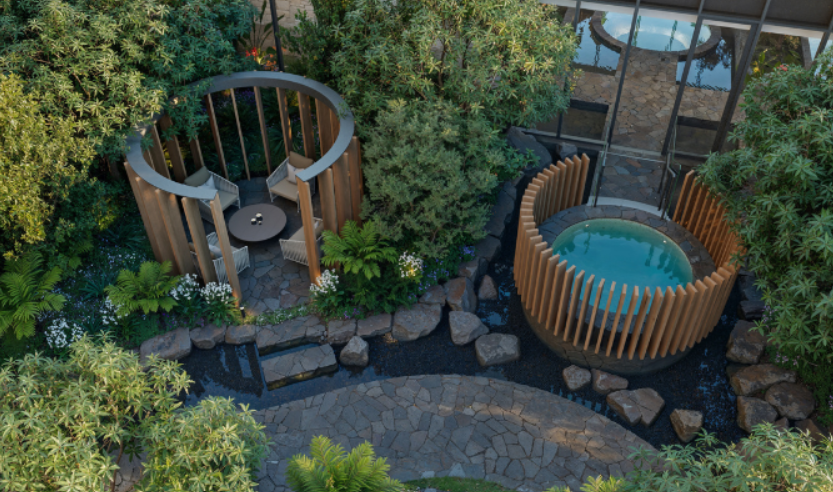
Seven storeys above the promenade, the planned Oasis combines planting and a running stream with a Scandinavian-inspired wellness club developed with spa specialist Naomi Gregory. Facilities include a 25-metre lap pool, hot magnesium pool, sauna, hydrotherapy, a gym, yoga and Pilates room, and treatment spaces.
The amenity extends beyond exercise. Residents will have access to The Biblioteca library and workspaces, ground-floor work pods, and The Salone piano lounge. A private Chef’s Table dining room offers a setting for larger gatherings, while a cinema, games room and sports lounge broaden the entertaining options. Concierge services and a dog-wash area support everyday routines.
Trielle comprises a collection of one, two, three and four-bedroom residences. Reflecting strong demand from owner occupiers, approximately 80 per cent of purchasers to date intend to live in their homes, highlighting the project’s appeal to those seeking a long-term waterfront lifestyle.
Mirvac has recently delivered The Albertine, a premium apartment development on the edge of Melbourne’s CBD, and is nearing completion of Prince & Parade in Brunswick, further strengthening its portfolio of thoughtfully designed apartment communities in some of Melbourne’s most sought-after urban locations.
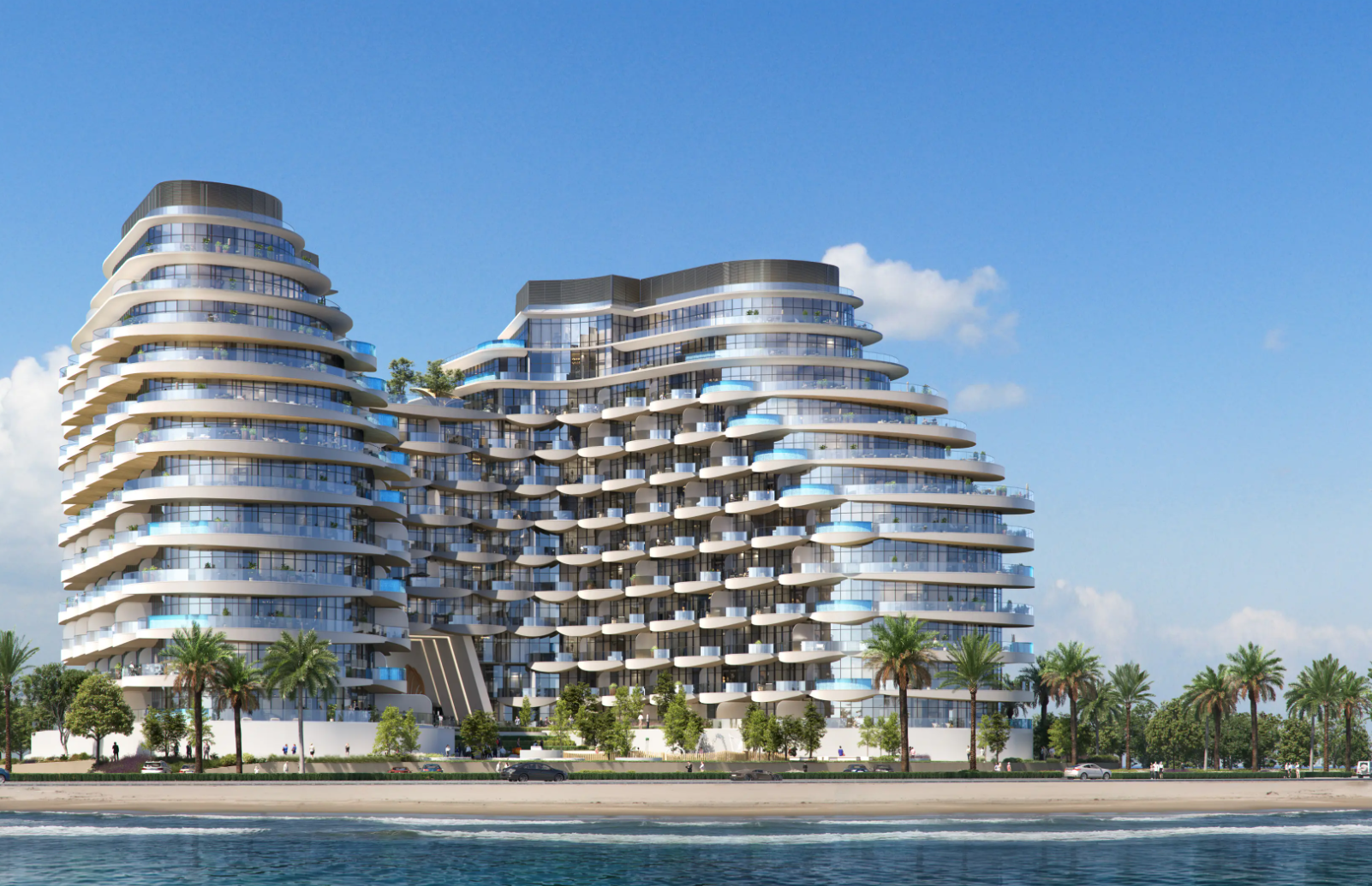
BNW Developments has established a Sydney presence, joining Arada and Sobha Realty among the growing number of UAE developers pursuing Australian buyers and development opportunities.

Sydney Children’s Hospitals Foundation CEO Kristina Keneally says Australia’s culture of large-scale philanthropy is becoming more sophisticated as Gold Dinner raises $75.5 million for children’s health, research and innovation.