The Hell of Living in a Home With Any Celebrity Connection
Move over, Graceland. Thanks to social media and Google maps, even mildly famous houses now get tons of visitors—some owners get a kick out of it.

 4 min
4 min
NEW YORK—It’s a Tuesday evening on Cornelia Street, a side street in Manhattan’s West Village. A little after 6 p.m., 17-year-old Lily Posner and her grandmother stroll down the street and come to a stop about half way down the block. There, they start snapping photos of a brick house.
Posner, clad in a grey hoodie and carrying a shopping bag, explains she is a “very big fan” of Taylor Swift, who rented the house around 2016 and immortalised it in her song “Cornelia Street.” A Vermont resident, Posner spent the day shopping and sightseeing before stopping by to get a glimpse of Swift’s former abode.
Though the singer never owned the house and only lived there for a brief time, Posner’s enthusiasm is undimmed; she calls the Cornelia Street visit a highlight of their trip. “I love the song,” she says. “It’s iconic.” As she speaks, another pair of fans arrive at the house to take photos.
A few blocks away, a similar scene is unfolding in front of 66 Perry Street, a brownstone that appeared as the home of Carrie Bradshaw in the TV series “Sex and the City.” Never mind that the series ended in 2004: Every few minutes, another group meanders down the tree-lined street to snap photos of the house. A chain strung across the stoop bears a “Private Property: No Trespassing” sign as well as instructions to keep voices down and stay off the steps.
Step aside, Graceland. These days, a home doesn’t have to be especially famous to get a steady stream of curious—and sometimes pushy—visitors. Thanks to social media and Google maps, homes that are even moderately well-known can now be inundated with people eager to take selfies or relive on-screen moments. This can come as a surprise to the homeowners, who find themselves fielding requests for tours or overhearing impromptu singalongs.
“Now because everything is online, anybody who has a passing interest can find out exactly where it is in about five minutes,” says Erika de Santis, who owns the Redding, Conn., house where Mark Twain died. She says the number of so-called Twainiacs stopping by to see her home has steadily increased in recent years.
In Albuquerque, N.M., owners of the house that served as the home of Walter White in “Breaking Bad” erected a fence around the property after fans kept throwing pizzas on the roof, in homage to a pivotal scene in the show. When Compass real-estate agent Larissa Petrovic recently showed Swift’s former Cornelia Street home to potential buyers, she says they were shocked by the number of people photographing it. They didn’t make an offer.
Real-estate agent Danny Brown of Compass has the listing for the Los Angeles house that served as the exterior of the home on “The Brady Bunch.” His client, HGTV, renovated the interiors to match the sitcom’s set, and put it on the market in May for $5.5 million. “It’s been bonkers, with nonstop showing requests,” Brown says. Most aren’t from serious buyers, but people simply trying to get a look inside. Recently, potential buyers came dressed in “full ‘70s retro-wear,” Brown says. While they were touring the home, two women stood outside for 20 minutes singing the show’s theme song. The potential buyers headed outside to join the serenade. “It was a whole chorus of five or six people singing the theme song,” Brown says. “That’s the sort of crazy stuff that happens in front of this house.”
The house is now in contract and set to close in a few weeks, he says.
In 2017, John and Katie Tashjian bought the South Carolina house where the ‘80s movie “The Big Chill” was filmed. When they bought the circa-1850s house, it was in disrepair and still had two sets in it from the filming of the movie, says John Tashjian, a real-estate developer. The couple embarked on a three-year renovation before moving in full-time.
The home is a local landmark. Still, they were taken aback by the number and persistence of visitors. Every weekday some 25 to 50 people stop by and twice that many on weekends, John Tashjian says. In addition to snapping photos, many belt out songs from “The Big Chill,” especially “Joy to the World” by Three Dog Night.
“I can’t tell you how many times I’ve heard people singing ‘Jeremiah Was a Bullfrog’ like it’s some kind of old-time revival,” he says.
When they first moved in, they left the property’s gates open. So many people ventured into their yard, however, that they ended up putting in gates that close automatically. “There were people sitting in our yard, taking videos,” says John Tashjian. Others brought picnics or re-created scenes from the movie. Some knocked on the door to ask for a tour. Sometimes he obliged, depending on “what kind of mood I was in.”
These days, visitors are welcome to take photos from outside the gates, he says. He does get irritated when looky-loos drive on the grass, or knock over the steel bollards that edge the property. Still, he realises attention comes with the territory. “If you’re going to own this house, you can’t be surprised by the reception,” he says. “It’s like living next to an airport and complaining about airplanes.”
One reason for the growing attention to these homes is that streaming services make older TV and movies instantly available.
In 2012, real-estate agent Adele Curtis represented the buyers of the Winnetka, Ill., house where the 1990 movie “Home Alone” was filmed. “At that point, it was kind of ho-hum, it’s the ‘Home Alone’ house,” she says. While at the brick Georgian, she never noticed passersby taking pictures.
Nowadays, fans can be spotted outside the house snapping photos “at any time of the day or night,” she says. “It’s become more popular than it ever was.”
James C. Barry, whose parents were longtime owners of the house that served as the home of Blanche, Dorothy, Rose and Sophia on “The Golden Girls,” says the show had a surge in popularity before the family sold it in 2020. Once, a man knocked on the door and said his girlfriend was a huge fan of the show, and asked if he could propose to her in the home’s driveway. Barry’s mother agreed, and after he popped the question, “she came out with some champagne to toast them.” The couple sent Christmas cards every year expressing their appreciation.
Mallory Crichton and her husband live next door to what is known in Los Angeles as the Black Dahlia murder house, where an unsolved 1947 murder is believed to have taken place. Both homes are gated and set back from the street, so the many true-crime fans who stop by each week often get confused and take pictures of Crichton’s “pretty normal” three-bedroom rental instead.
She points them in the right direction if she happens to be home, but she’s not always around so many likely return home with photos of her abode instead. “But good for them,” she says. “Ignorance is bliss. They and their friends probably don’t know that it’s not actually the Black Dahlia murder house.”
 Copyright 2020, Dow Jones & Company, Inc. All Rights Reserved Worldwide. LEARN MORE





From making unpopular decisions to learning when to listen, leaders from five businesses reveal what nobody prepared them for — and how running a company has challenged their expectations.

Technology and semiconductor shares fell sharply as investors questioned the debt financing the AI infrastructure boom and confronted higher rates and Chinese competition.

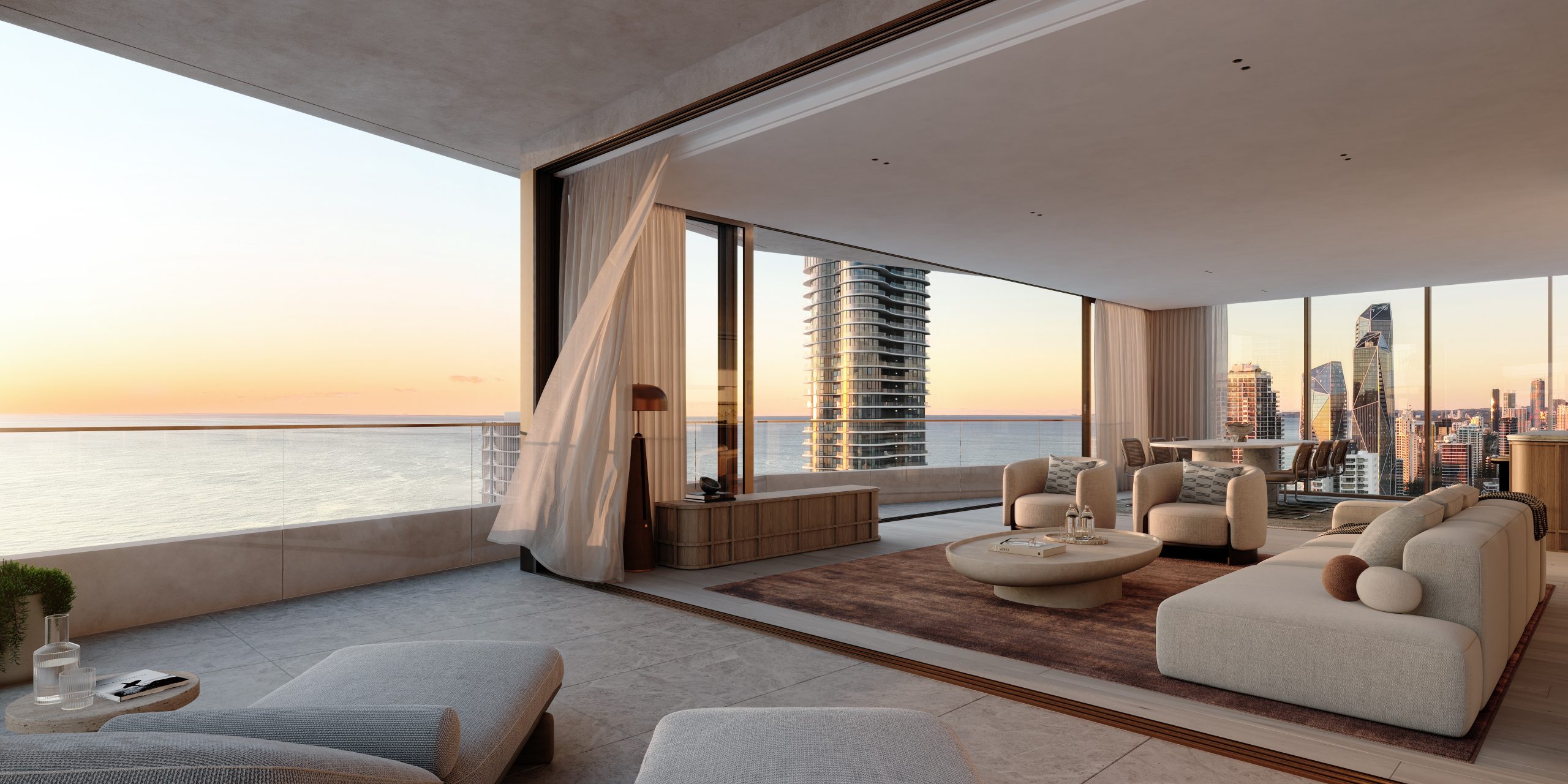
Mirvac’s 45-level Trielle has topped out at Yarra’s Edge, pairing riverfront apartments with wellness facilities, private dining and resident services.
3 min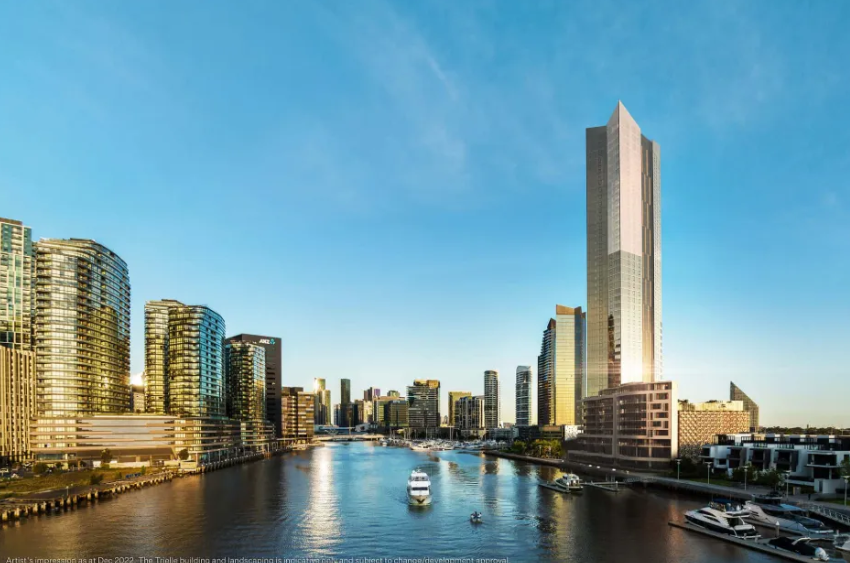
Mirvac has topped out Trielle at Melbourne’s Yarra’s Edge, with more than 70 per cent of the riverfront development sold and approximately 80 per cent of purchasers intending to make their apartment a home.
The figures, released on September 22, point to an owner-occupier audience for one of the precinct’s final residential towers. Mirvac began developing Yarra’s Edge in 2003, and its latest addition occupies one of the remaining absolute riverfront sites.
Mirvac CEO of Development Stuart Penklis said existing residents were among those moving up within the neighbourhood.
“Many purchasers already have a connection to Yarra’s Edge,” Mr Penklis said, describing buyers whose changing needs were encouraging an upgrade within the precinct.
“As one of the final residential towers within Yarra’s Edge, Trielle represents the culmination of more than two decades of creating one of Melbourne’s most established and sought-after waterfront communities,” Penklis said.
“Positioned on the Collins Street axis with absolute river frontage, Trielle offers residents a rare opportunity to enjoy sweeping views across the Yarra River, Melbourne skyline and Port Phillip Bay, while remaining seamlessly connected to the CBD. With Trielle now more than 70 per cent sold, we’re continuing to see strong demand from buyers seeking quality homes in established locations.”
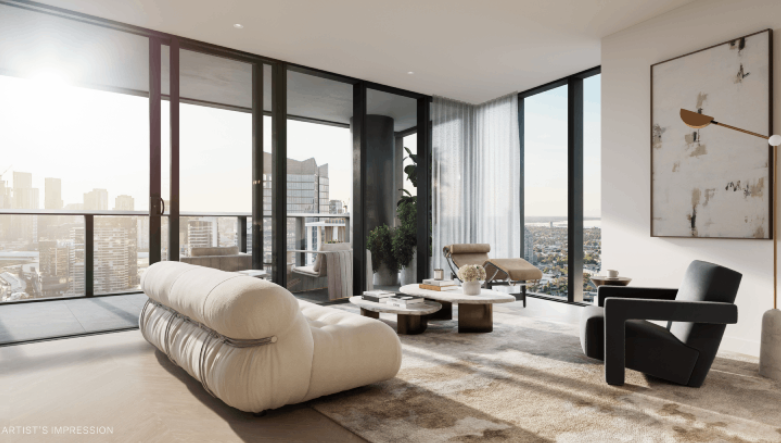
The developer also flagged a penthouse and sub-penthouse collection with larger layouts, premium finishes and broad outlooks. The planned wellness centrepiece, The Oasis, encompasses a 900-square-metre elevated urban rainforest.
Mirvac General Manager Residential Development Victoria Elysa Anderson said Trielle had resonated strongly with buyers seeking a rare lifestyle offering in Melbourne.
“Opportunities to secure a new luxury residence on a riverfront site of this calibre are incredibly rare, particularly within a community like Yarra’s Edge,” Anderson said.
“What makes Trielle unique is the combination of exceptional views, world-class residential facilities and the lifestyle that already exists around it. Residents are buying into a mature waterfront community with parks, promenades, dining, wellness and strong community connections already in place.”
The 45-level tower brings a substantial new presence to that waterfront. Its residential offering spans one-, two-, three- and four-bedroom apartments, with Signature, Prestige and Sub-Penthouse collections accommodating different household sizes. The north-facing position connects the apartments visually to the river and city beyond.
Seven storeys above the promenade, the planned Oasis combines planting and a running stream with a Scandinavian-inspired wellness club developed with spa specialist Naomi Gregory. Facilities include a 25-metre lap pool, hot magnesium pool, sauna, hydrotherapy, a gym, yoga and Pilates room, and treatment spaces.
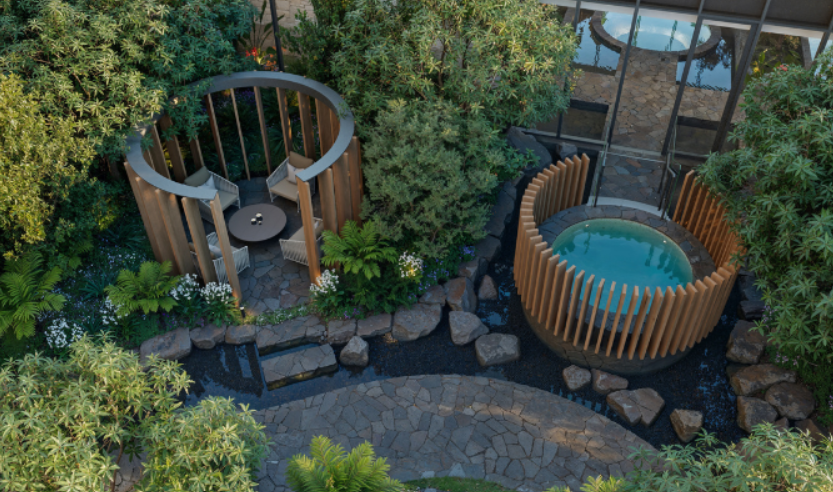
The amenity extends beyond exercise. Residents will have access to The Biblioteca library and workspaces, ground-floor work pods, and The Salone piano lounge. A private Chef’s Table dining room offers a setting for larger gatherings, while a cinema, games room and sports lounge broaden the entertaining options. Concierge services and a dog-wash area support everyday routines.
Trielle comprises a collection of one, two, three and four-bedroom residences. Reflecting strong demand from owner occupiers, approximately 80 per cent of purchasers to date intend to live in their homes, highlighting the project’s appeal to those seeking a long-term waterfront lifestyle.
Mirvac has recently delivered The Albertine, a premium apartment development on the edge of Melbourne’s CBD, and is nearing completion of Prince & Parade in Brunswick, further strengthening its portfolio of thoughtfully designed apartment communities in some of Melbourne’s most sought-after urban locations.

All three vehicles will form part of a broader charitable initiative benefiting Big Brothers Big Sisters of America, the American Red Cross and Starlight Children’s Foundation

Australian shares finished higher on Tuesday, September 22, as a technology rally and lower oil prices outweighed weakness in energy companies and continued anxiety about domestic interest rates. The S&P/ASX 200 closed 25.9 points, or 0.30 per cent, higher at 8,757.8. The All Ordinaries gained 0.36 per cent to 8,951.0, while the All Technology index …
Continue reading “ASX Wrap: Technology lifts the ASX as falling oil relieves inflation pressure”