This High-Powered Real-Estate Fund Is Run by College Students
A student-run real estate investment fund is proving that hands-on experience can deliver real results. Managing $12 million in equity, the undergraduate team recently achieved a 65% gross return on its first property sale, highlighting the growing role of experiential learning in preparing the next generation of real estate professionals.

 5 min
5 min
On a recent summer Sunday afternoon, Brooks Hiller was hunkered over his laptop at his apartment in Chicago, dialing in to hour three of a marathon series of conference calls on real-estate deals.
The 21-year-old isn’t a professional, and he doesn’t make a dime from this work. He is a rising senior at Indiana University’s Kelley School of Business, where he leads a team of 20 undergraduates who manage about $12 million in equity.
Those students operate their own real-estate investment business, called Sample Gates Management, named for the Gothic-style limestone arches that are the gateway to the Bloomington campus.
Unlike the many student investment clubs that deploy university money or rely on donations, the Indiana group raises funds from third parties and invests in properties across the country, such as apartment developments and industrial parks.
As a high schooler, Hiller was so enamored with the program—by most accounts, the undergraduate-run real-estate investment group that manages the most capital—that he chose to attend Indiana with hopes of being a part of it.
“Students get the experience, the school gets a better education for their students, and the investors are making their money back and get to be a part of the program again,” Hiller said. “I really wanted to be part of that.”
The group’s success is emblematic of changes transforming both higher education and the real-estate industry.
An industry that once revolved around information shared at private clubs or events has become a highly digitized landscape. It’s now flooded with standardized public-market data, so much so that undergraduates can readily peer inside and participate on nearly equal footing.
Meanwhile, colleges in recent decades have championed what is called “experiential learning,” encouraging students to do the hands-on work that will teach them the practical job skills they can’t learn in traditional classroom settings. Plus, dozens of universities now offer real-estate degrees, minors or concentrations for undergraduates.
“At its core, this program wouldn’t have existed 30 years ago,” said Harvard University real-estate professor Avis Devine.
This summer, Sample Gates Management sold its first investment, an industrial warehouse development in Indianapolis. In about 16 months, the fund earned a 65% gross profit on that property.
“That’s a really fantastic return in this environment,” one that would be “good for sort of any professional firm, not just students,” said Tim Morris, a member of the board responsible for approving the students’ investments, who is a founder and co-managing partner of the real-estate firm Proprium Capital Partners.
That property was an “easy yes” investment, Tom Peck, the students’ faculty adviser, recalled. It would diversify the group’s investment portfolio, and a reliable tenant was committed to leasing the building once it was finished, Peck said.
Most of the fund remains tied up in investments, making it difficult to gauge exactly how well it is performing overall.
A decade ago, there were only a few student-managed real-estate funds in the country. Today, there are at least 18, and two more are set to launch this school year, according to Mariya Letdin, a real-estate professor at Florida State University who has researched student-managed investment funds and advises one herself.
And yet, although a program like Sample Gates is an attractive resume line that provides unique experience among undergraduates, it isn’t necessarily a launching pad to help students secure jobs. Because of Wall Street’s summer-internship pipelines and early recruiting timelines, many of the 20 seniors in the group have already secured full-time jobs at global giants before they even touch Sample Gates funds.
In fact, the students’ professional experience—some of them participate in internships all three summers of college—is often a boon for Sample Gates. Students’ stints at institutional shops have left them with a “networking mindset” that “snowballs very quickly into a really, really good Rolodex,” Morris said.
At the Kelley School, where currently 278 students are majoring in real estate, faculty picked only 20 to manage the private-equity fund. The rising seniors were selected from Kelley’s already competitive roughly 60-student commercial real-estate workshop, in which students analyze deals and pitch them to mock committees.
In 2022, for the group’s first round of fundraising, Sample Gates raised $4.2 million from 46 investors, 40% more than their goal of $3 million. Last year’s cohort raised $7.8 million from 74 investors in the second round of fundraising, with one investor forking over $700,000. Some investors put money into both funds.
Many of the investors are Indiana alumni now working in the real-estate industry themselves. They expect the students to return a profit, but they are also enthusiastic about fostering the young program and meeting standout students.
The student managers screen between three and eight deals each week, which could mean they evaluate up to 400 potential investments a year. However, between 2023 and 2025, they selected only 12 investments, ranging in location from Indiana to Arizona.
Once a potential investment passes an initial screening, a team builds financial models and meets with prospective partners to pressure-test the viability of a deal.
For students to move forward with an investment, they must present it to their investment committee, a board of 10 seasoned real-estate executives. The committee has to sign off on all deals, and they reject roughly a third of the ones the undergraduates bring to the table.
And if the students think they can pitch an investment without getting their eyes on the physical property—regardless of where it is located— they would best think again.
Some observers predict that students might be disappointed when they start their full-time jobs because of the shift from doing the highest-level work of managing a fund to being a lowly analyst at a large firm.
“To have all of these skill sets in a short period of time and then to go be an associate for Blackstone would be mentally defeating,” said Rhett Trees, an investor in Sample Gates and Indiana alum who is the chief executive of a Denver-based real-estate private-equity firm.
 Copyright 2020, Dow Jones & Company, Inc. All Rights Reserved Worldwide. LEARN MORE





From making unpopular decisions to learning when to listen, leaders from five businesses reveal what nobody prepared them for — and how running a company has challenged their expectations.

Technology and semiconductor shares fell sharply as investors questioned the debt financing the AI infrastructure boom and confronted higher rates and Chinese competition.


Mirvac’s 45-level Trielle has topped out at Yarra’s Edge, pairing riverfront apartments with wellness facilities, private dining and resident services.
3 min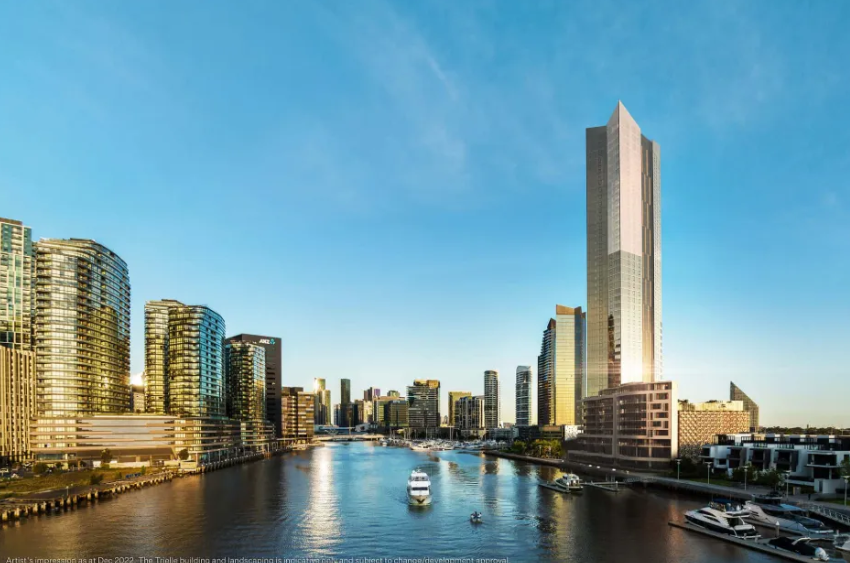
Mirvac has topped out Trielle at Melbourne’s Yarra’s Edge, with more than 70 per cent of the riverfront development sold and approximately 80 per cent of purchasers intending to make their apartment a home.
The figures, released on September 22, point to an owner-occupier audience for one of the precinct’s final residential towers. Mirvac began developing Yarra’s Edge in 2003, and its latest addition occupies one of the remaining absolute riverfront sites.
Mirvac CEO of Development Stuart Penklis said existing residents were among those moving up within the neighbourhood.
“Many purchasers already have a connection to Yarra’s Edge,” Mr Penklis said, describing buyers whose changing needs were encouraging an upgrade within the precinct.
“As one of the final residential towers within Yarra’s Edge, Trielle represents the culmination of more than two decades of creating one of Melbourne’s most established and sought-after waterfront communities,” Penklis said.
“Positioned on the Collins Street axis with absolute river frontage, Trielle offers residents a rare opportunity to enjoy sweeping views across the Yarra River, Melbourne skyline and Port Phillip Bay, while remaining seamlessly connected to the CBD. With Trielle now more than 70 per cent sold, we’re continuing to see strong demand from buyers seeking quality homes in established locations.”

The developer also flagged a penthouse and sub-penthouse collection with larger layouts, premium finishes and broad outlooks. The planned wellness centrepiece, The Oasis, encompasses a 900-square-metre elevated urban rainforest.
Mirvac General Manager Residential Development Victoria Elysa Anderson said Trielle had resonated strongly with buyers seeking a rare lifestyle offering in Melbourne.
“Opportunities to secure a new luxury residence on a riverfront site of this calibre are incredibly rare, particularly within a community like Yarra’s Edge,” Anderson said.
“What makes Trielle unique is the combination of exceptional views, world-class residential facilities and the lifestyle that already exists around it. Residents are buying into a mature waterfront community with parks, promenades, dining, wellness and strong community connections already in place.”
The 45-level tower brings a substantial new presence to that waterfront. Its residential offering spans one-, two-, three- and four-bedroom apartments, with Signature, Prestige and Sub-Penthouse collections accommodating different household sizes. The north-facing position connects the apartments visually to the river and city beyond.
Seven storeys above the promenade, the planned Oasis combines planting and a running stream with a Scandinavian-inspired wellness club developed with spa specialist Naomi Gregory. Facilities include a 25-metre lap pool, hot magnesium pool, sauna, hydrotherapy, a gym, yoga and Pilates room, and treatment spaces.

The amenity extends beyond exercise. Residents will have access to The Biblioteca library and workspaces, ground-floor work pods, and The Salone piano lounge. A private Chef’s Table dining room offers a setting for larger gatherings, while a cinema, games room and sports lounge broaden the entertaining options. Concierge services and a dog-wash area support everyday routines.
Trielle comprises a collection of one, two, three and four-bedroom residences. Reflecting strong demand from owner occupiers, approximately 80 per cent of purchasers to date intend to live in their homes, highlighting the project’s appeal to those seeking a long-term waterfront lifestyle.
Mirvac has recently delivered The Albertine, a premium apartment development on the edge of Melbourne’s CBD, and is nearing completion of Prince & Parade in Brunswick, further strengthening its portfolio of thoughtfully designed apartment communities in some of Melbourne’s most sought-after urban locations.

Studio apartments have almost disappeared from new Australian developments. Lura is bringing them back to Burleigh Heads from $495,000.

From gorilla encounters in Uganda to a reimagined Okavango retreat, Abercrombie & Kent elevates its African journeys with two spectacular lodge transformations.