The neighbourhoods where being cool pays off
They’re nowhere near the beach and don’t boast water views but these suburbs are attracting residents and buyers in droves
 5 min
5 min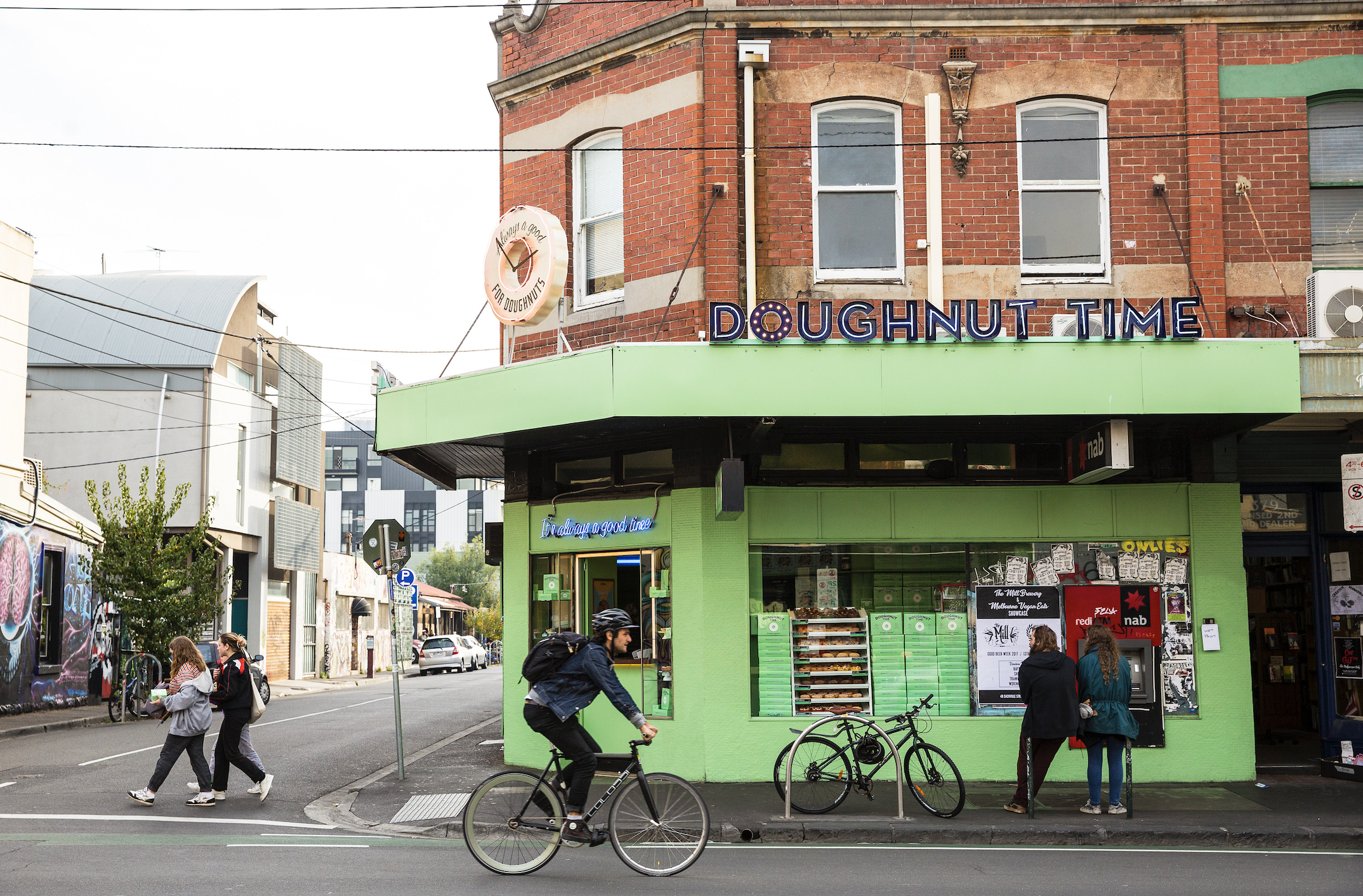
Anyone who thinks real estate is just a numbers game didn’t get the memo. There’s one serious X-factor when it comes to property values that’s less about stats and more about status. A cool neighbourhood is worth its weight in gold.
Time Out’s annual Coolest Neighbourhoods in the World list quite literally puts a collection of hip locations on the map each year. Coolness is judged on an area’s eateries, watering holes, public green spaces, its diversity and sense of community — a combination of factors that feed buyer demand.
Melbourne suburbs such as Brunswick East and Fitzroy have graced these lists in recent years, with Enmore and Marrickville representing for Sydney. Wherever the location, however, cool neighbourhoods all have similar ingredients.
For more stories like like, order your copy of the Autumn 2024 issue of Kanebridge Quarterly magazine.
What makes a neighbourhood cool
The coolest suburbs are usually the most inclusive places where anyone can freely eat, drink and socialise without the sense of being an “outsider”.
Social demographer Mark McCrindle of McCrindle Research said diversity is a catalyst to cool.
“Australia likes a village atmosphere with a bit of a buzz,” McCrindle says. “That doesn’t come from a single age group, social or a monocultural group of residents. When there’s vibrancy and diversity of young people and couples, but also young families and retirees, it makes a neighbourhood more dynamic.
“It also needs to have a gathering place for people to get out and about. Some developments end up becoming “dormitory suburbs”.”
Even good architecture and design are not always enough to create the right ambience, he says.
“Without those essential gathering points people are simply just commuting in and out.”
While “walkable” suburbs have long been in demand, “talkable” suburbs are the new wave.
“It comes down to whether people can share it,” McCrindle says. “Great little food outlets, pubs or other hot spots can generate their own momentum accelerated by social media.
“But like anything on social media, trends can spike and then fade quickly. For an area to maintain its cool factor there needs to be a combination of things keeping locals committed so they’ll maintain the buzz.”
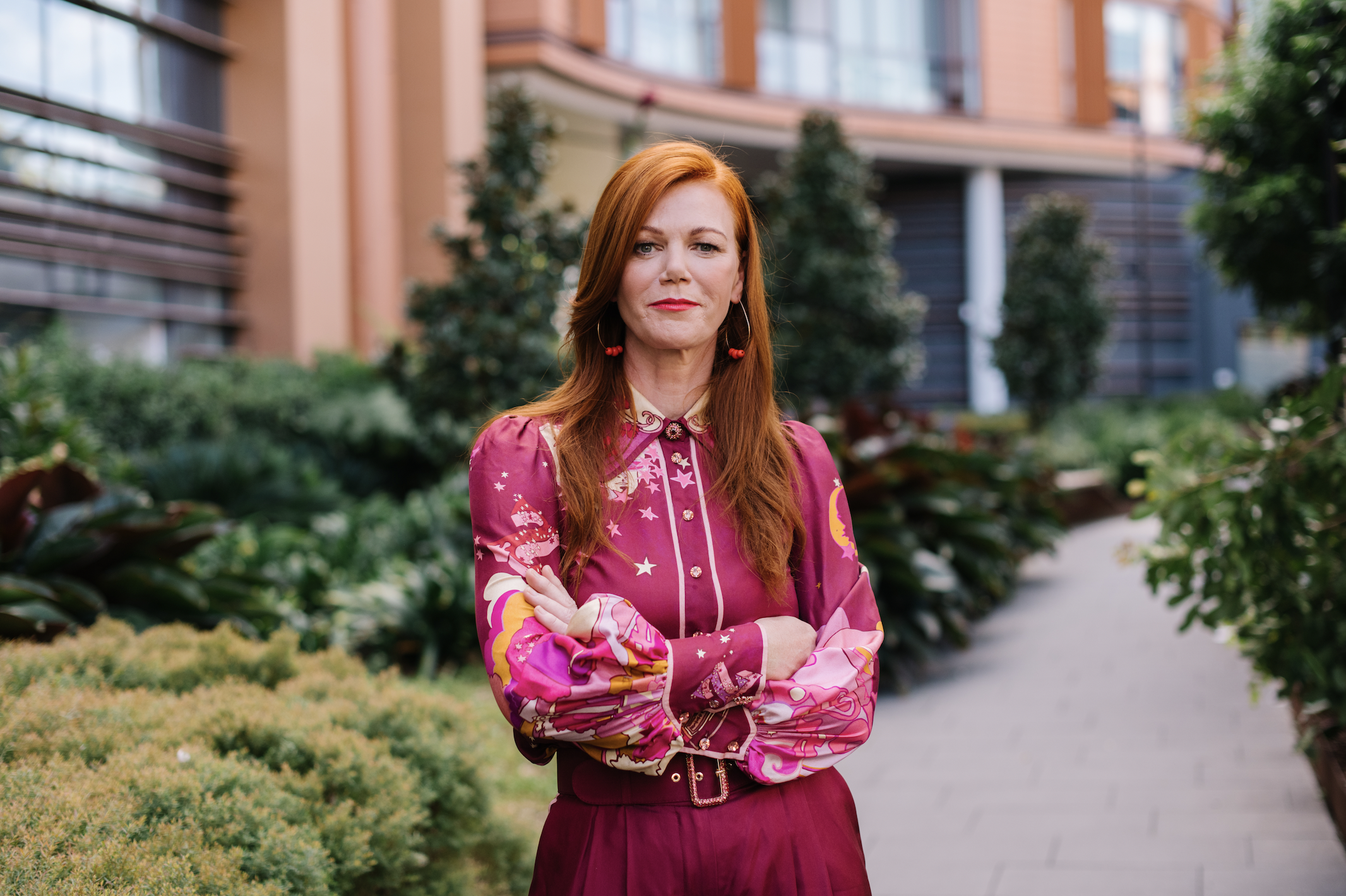
Although coolness adds value, affordability still needs to play its part. Sydney-based buyer’s agent Michelle May said it’s a delicate balance between cool and costly.
“The death of a cool suburb is when it becomes too affluent.
“One sign of that homogenisation is when the big brands move in and push out those smaller local businesses who can’t afford to pay the high rents anymore,” she says.
McCrindle agrees property values can reach a tipping point.
“Ultimately, a neighbourhood can price itself out of cool.”
The value of a vibe
Australia’s priciest property is typically found by beaches, riverbanks and harbours — attributes rarely shared with the gritty urban nature of suburbs ranking high on the cool charts. Instead, these areas have other lifestyle features.
Melbourne and Sydney’s “cool” suburbs are far from water, but still record strong property values. There is, however, some price diversity in different housing types.
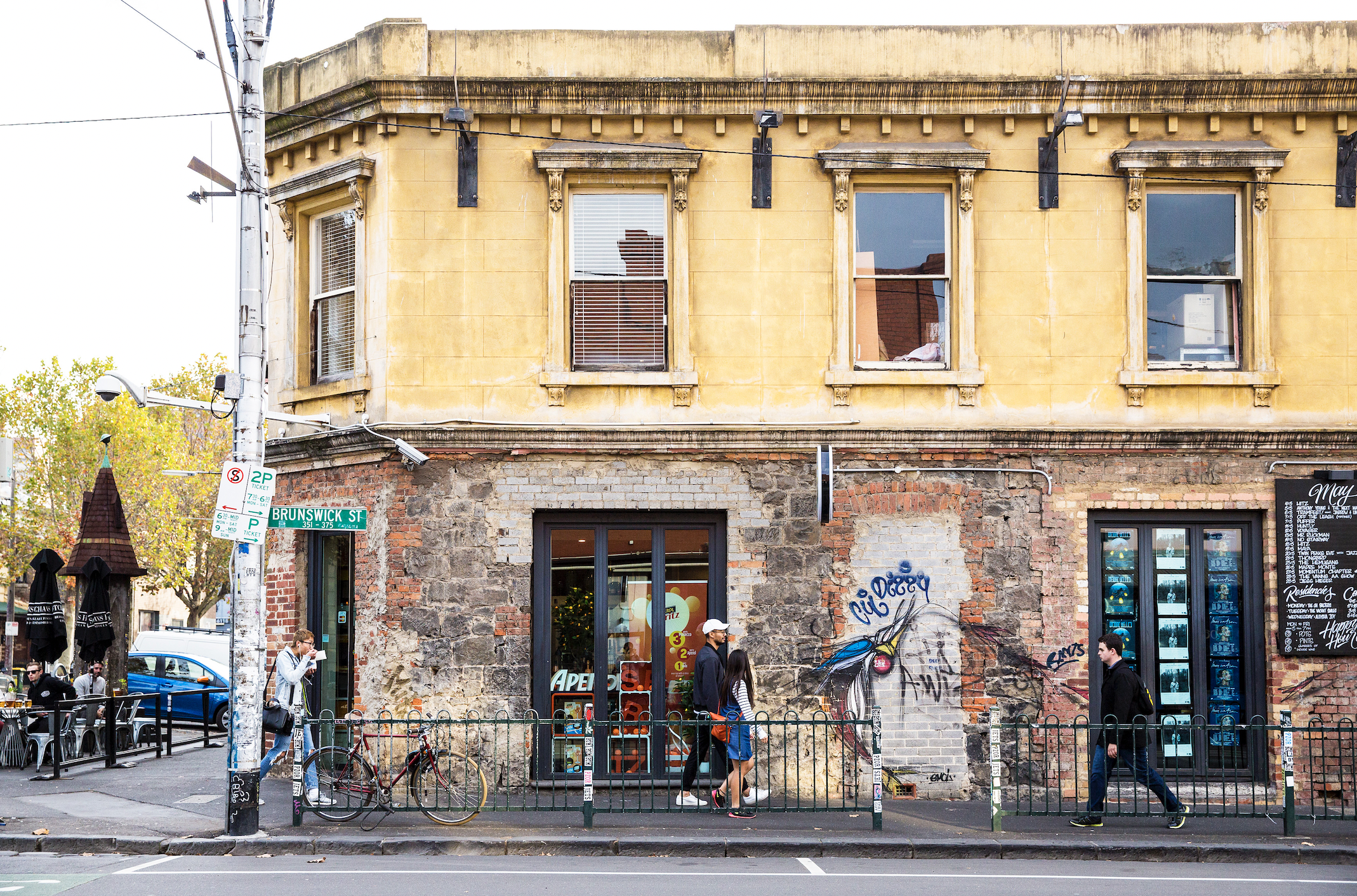
Houses in Brunswick East have a 12-month median of $1.248 million according to CoreLogic, rising 11.5 percent over the past three years. Local apartments are cheaper at $515,000, experiencing a -13.4 percent drop over the same period. In Fitzroy the house median is $1.54 million after a three-year increase of 10 percent while units are $760,000, a -1.3 percent fall.
Cate Bakos, Melbourne buyer’s agent, has bought clients numerous homes and investments in both suburbs and their surrounds. She said in addition to the trendy eateries and vibrant atmosphere, it’s the ‘rough around the edges’ vibe of these areas that sets them apart.
“One thing in common in these neighbourhoods is they’re often former industrial areas close to city centres with a blend of eclectic housing,” Bakos says. “Former warehouses and factories are always popular — everyone loves a cool conversion.”
In Enmore, house medians are $1.88 million after rising 33.4 percent over three years. Median unit values are harder to pinpoint but ranged from $395,000 to $958,000 in 2023. Marrickville’s houses are $1.9 million after a 31.3 percent leap, while apartments are $814,000, having gone up 3.4 percent. May says despite Enmore and Marrickville’s rising prices, the suburbs had been undervalued for decades and still hold onto many of the traits keeping them “cool”.
“Enmore Road is the street of the Inner West with really cool restaurants and bars, which are propped up by Enmore Theatre. Marrickville has its popular pubs — known locally as the Ale Trail — with plenty of microbreweries and frequent underground gigs.”
She says these suburbs’ multiculturalism, mix of housing types, range of price points and easy transport options tick all the boxes giving them street cred.
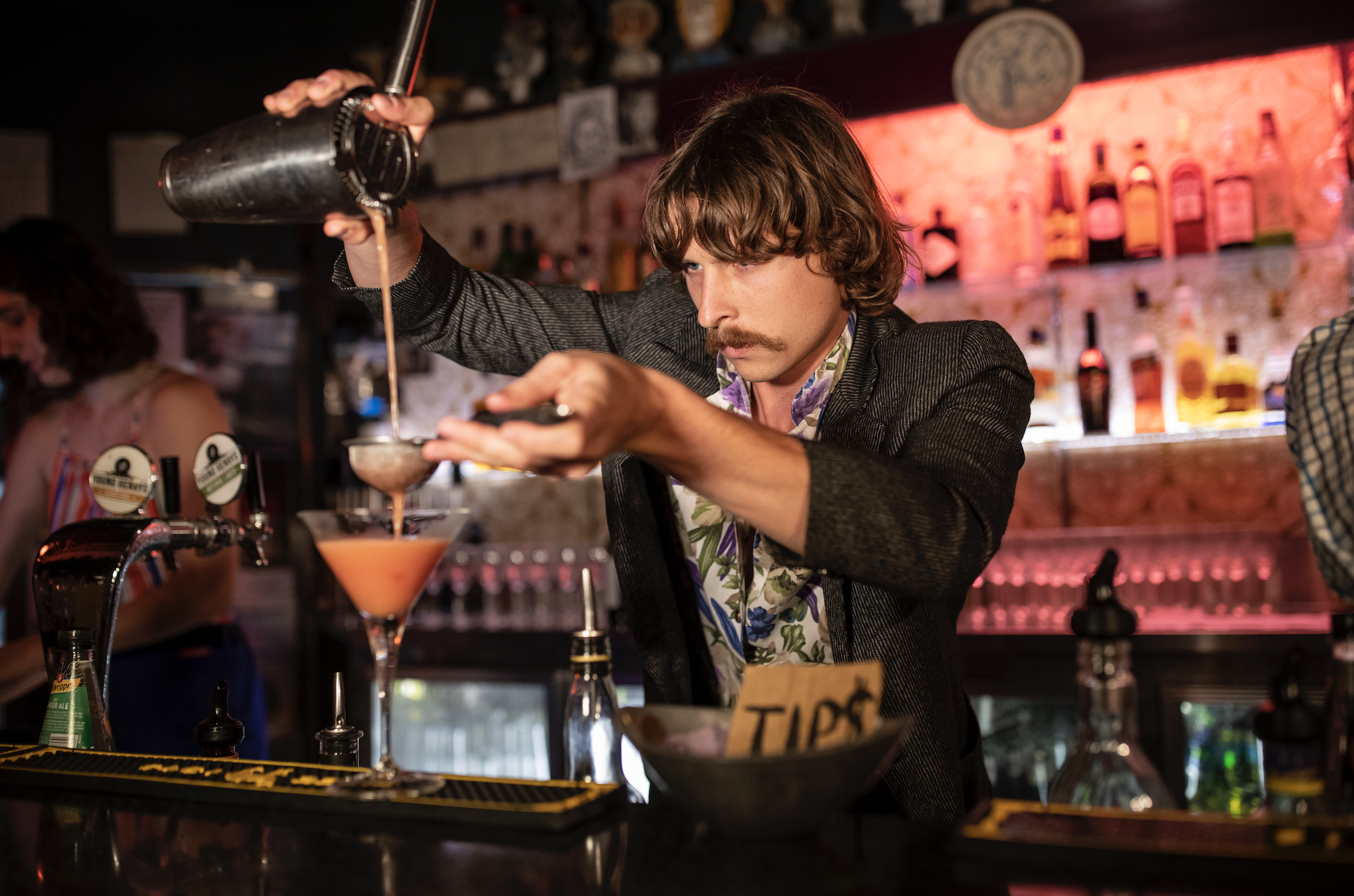
“Singles are out having fun, there are hens’ parties, couples on dates and Boomers out for a nice dinner. There’s something for everyone,” May says. “The problem is when it gets too popular, too homogenised in terms of who’s buying in the suburb, that’s when it starts to lose its cool. But I don’t think we’re there yet for Enmore or Marrickville.”
The next cool place
Getting ahead of the property pack can be a wise real estate move, but forecasting cool isn’t black and white. Bakos says anyone trying to anticipate the next big thing should do their homework, because it’s not as easy as just looking next door.
“You’ll want to be looking for areas that have lower price points than their neighbours and lower land value per square metre while still having some of those activities and drawcards of the more popular neighbourhoods,” Bakos says.
“What these suburbs also have in common are buildings that have been converted and repurposed. Simply cast your eyes to neighbouring suburbs with those attributes. I’m tipping places like Collingwood and Abbotsford (in Melbourne).
“If you’re going for something that’s gentrifying, you’ve got to recognise it hasn’t fully gentrified yet. That’s why you’re getting a discount, because it’s not yet a 10 out of 10. Perhaps there’s a higher crime rate, or challenging neighbours. You’ve got to be prepared to roll with that.”
Physically getting out and pounding the pavement to research local high streets can give the best insights according to May.
“Just cast your eye a few stops down the railway line and see what’s there. Look for good connectivity to the city, a mixture of residential as well as commercial resident properties,” she says.
“Talk to the locals. Is the popular barista about to open their own cafe nearby? Are there signs of an eat street on its way? I’ve always thought Ashfield and Hurlstone Park (in Sydney) are still under the radar and pretty undervalued so there’s potential there.”
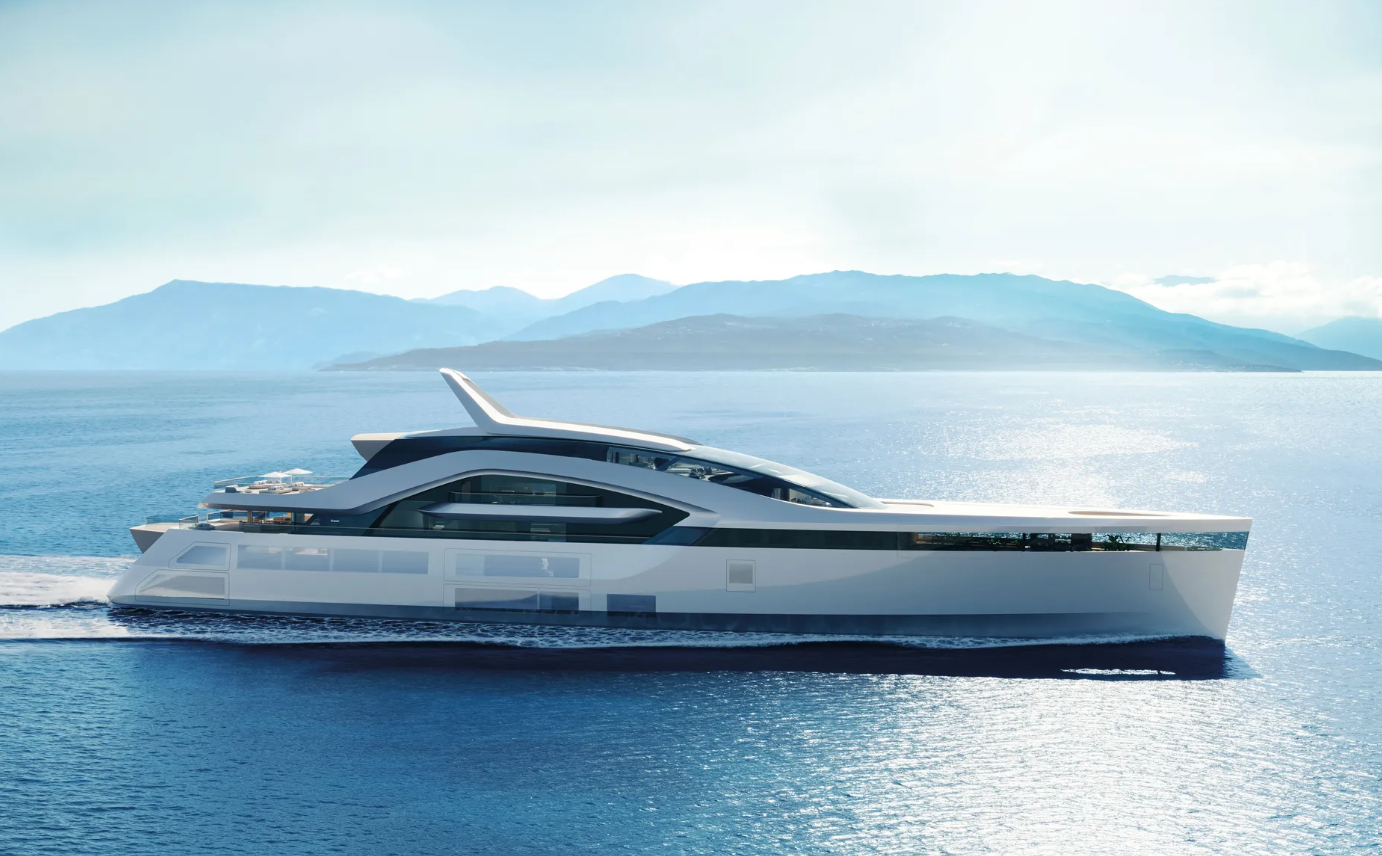
On the owner’s deck, a 20-metre swimming pool incorporates Feadship’s patented ContraWave technology and extends indoors as a suspended, glass-bottomed infinity pool.
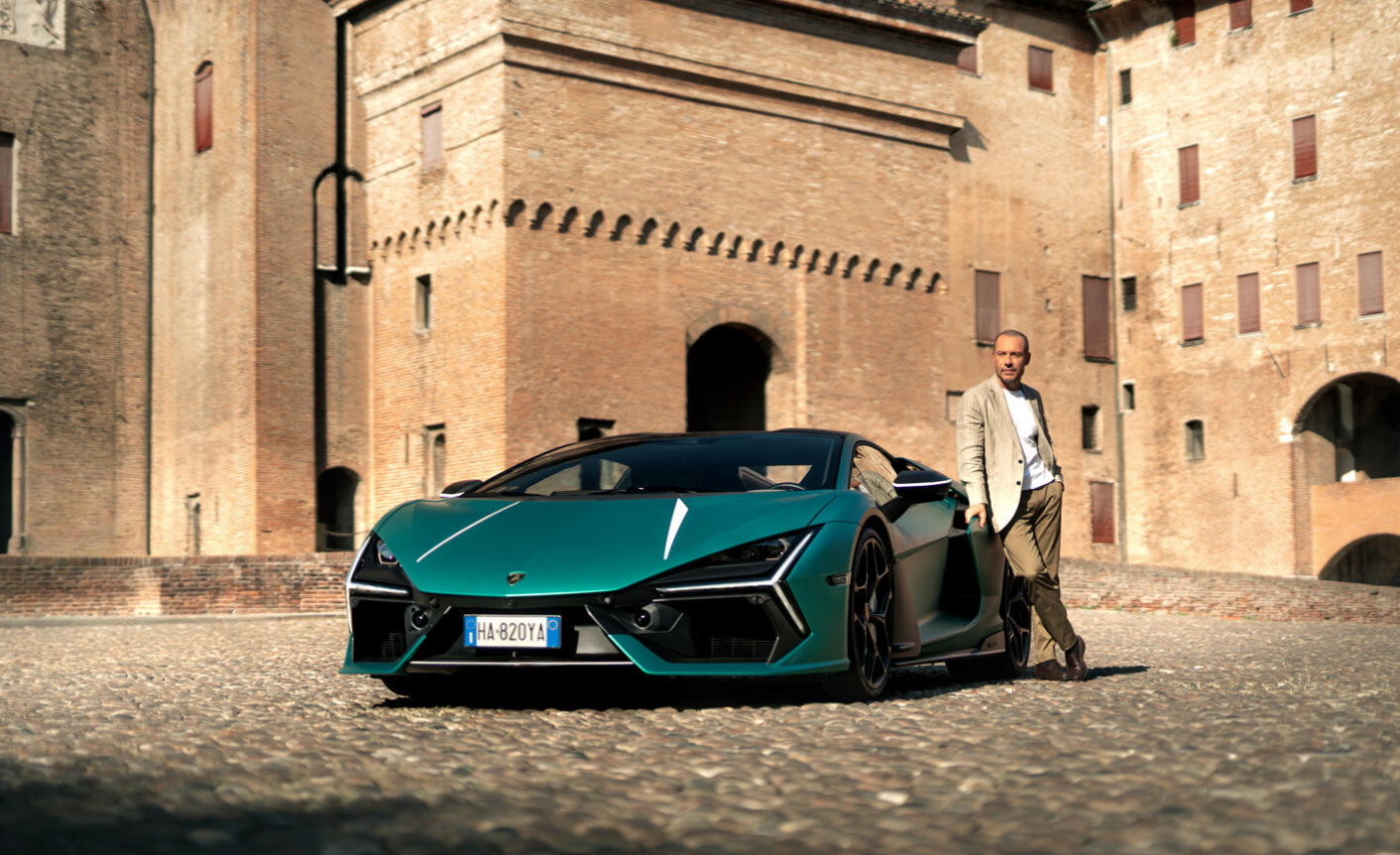
Automobili Lamborghini is turning its attention to something considerably more difficult to define: what makes Italian excellence uniquely Italian?
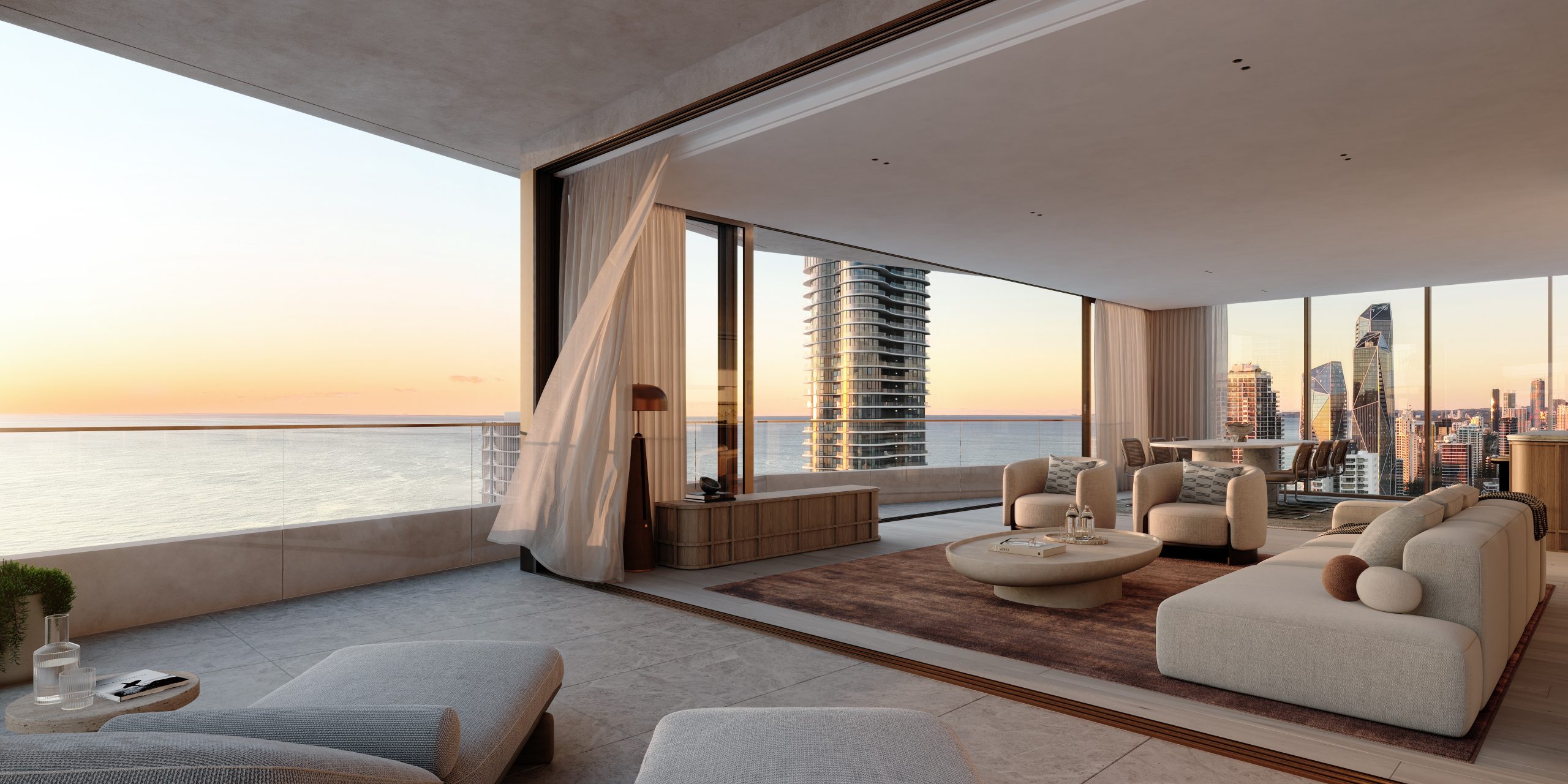
Mirvac’s 45-level Trielle has topped out at Yarra’s Edge, pairing riverfront apartments with wellness facilities, private dining and resident services.
3 min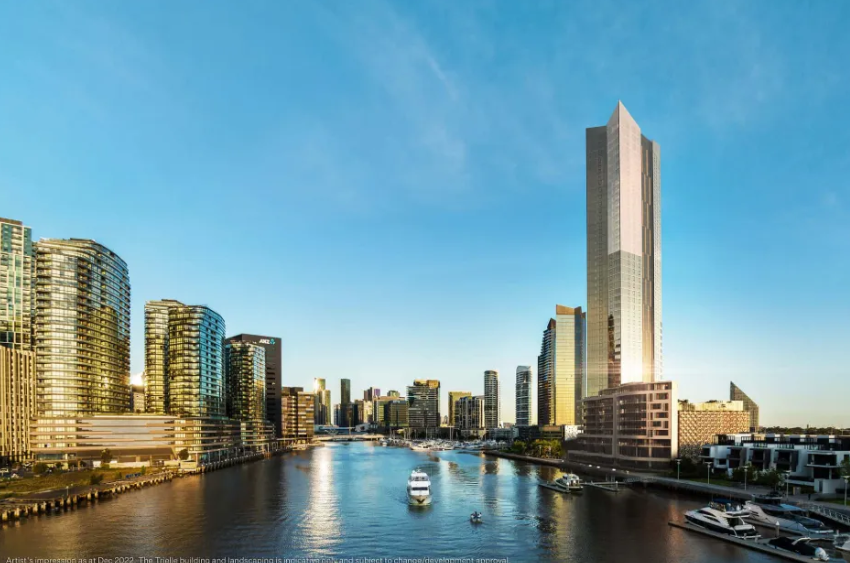
Mirvac has topped out Trielle at Melbourne’s Yarra’s Edge, with more than 70 per cent of the riverfront development sold and approximately 80 per cent of purchasers intending to make their apartment a home.
The figures, released on September 22, point to an owner-occupier audience for one of the precinct’s final residential towers. Mirvac began developing Yarra’s Edge in 2003, and its latest addition occupies one of the remaining absolute riverfront sites.
Mirvac CEO of Development Stuart Penklis said existing residents were among those moving up within the neighbourhood.
“Many purchasers already have a connection to Yarra’s Edge,” Mr Penklis said, describing buyers whose changing needs were encouraging an upgrade within the precinct.
“As one of the final residential towers within Yarra’s Edge, Trielle represents the culmination of more than two decades of creating one of Melbourne’s most established and sought-after waterfront communities,” Penklis said.
“Positioned on the Collins Street axis with absolute river frontage, Trielle offers residents a rare opportunity to enjoy sweeping views across the Yarra River, Melbourne skyline and Port Phillip Bay, while remaining seamlessly connected to the CBD. With Trielle now more than 70 per cent sold, we’re continuing to see strong demand from buyers seeking quality homes in established locations.”
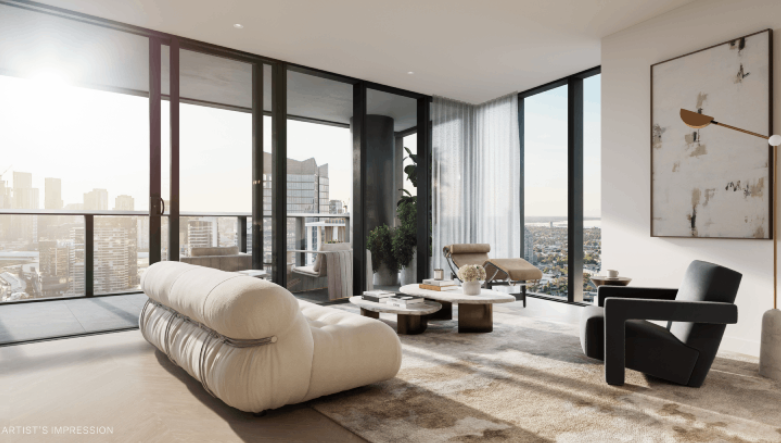
The developer also flagged a penthouse and sub-penthouse collection with larger layouts, premium finishes and broad outlooks. The planned wellness centrepiece, The Oasis, encompasses a 900-square-metre elevated urban rainforest.
Mirvac General Manager Residential Development Victoria Elysa Anderson said Trielle had resonated strongly with buyers seeking a rare lifestyle offering in Melbourne.
“Opportunities to secure a new luxury residence on a riverfront site of this calibre are incredibly rare, particularly within a community like Yarra’s Edge,” Anderson said.
“What makes Trielle unique is the combination of exceptional views, world-class residential facilities and the lifestyle that already exists around it. Residents are buying into a mature waterfront community with parks, promenades, dining, wellness and strong community connections already in place.”
The 45-level tower brings a substantial new presence to that waterfront. Its residential offering spans one-, two-, three- and four-bedroom apartments, with Signature, Prestige and Sub-Penthouse collections accommodating different household sizes. The north-facing position connects the apartments visually to the river and city beyond.
Seven storeys above the promenade, the planned Oasis combines planting and a running stream with a Scandinavian-inspired wellness club developed with spa specialist Naomi Gregory. Facilities include a 25-metre lap pool, hot magnesium pool, sauna, hydrotherapy, a gym, yoga and Pilates room, and treatment spaces.
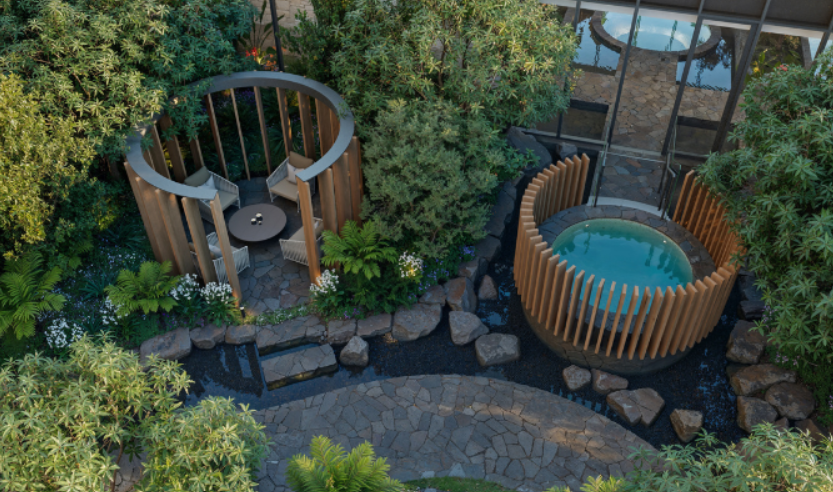
The amenity extends beyond exercise. Residents will have access to The Biblioteca library and workspaces, ground-floor work pods, and The Salone piano lounge. A private Chef’s Table dining room offers a setting for larger gatherings, while a cinema, games room and sports lounge broaden the entertaining options. Concierge services and a dog-wash area support everyday routines.
Trielle comprises a collection of one, two, three and four-bedroom residences. Reflecting strong demand from owner occupiers, approximately 80 per cent of purchasers to date intend to live in their homes, highlighting the project’s appeal to those seeking a long-term waterfront lifestyle.
Mirvac has recently delivered The Albertine, a premium apartment development on the edge of Melbourne’s CBD, and is nearing completion of Prince & Parade in Brunswick, further strengthening its portfolio of thoughtfully designed apartment communities in some of Melbourne’s most sought-after urban locations.

The pandemic-fuelled love affair with casual footwear is fading, with Bank of America warning the downturn shows no sign of easing.
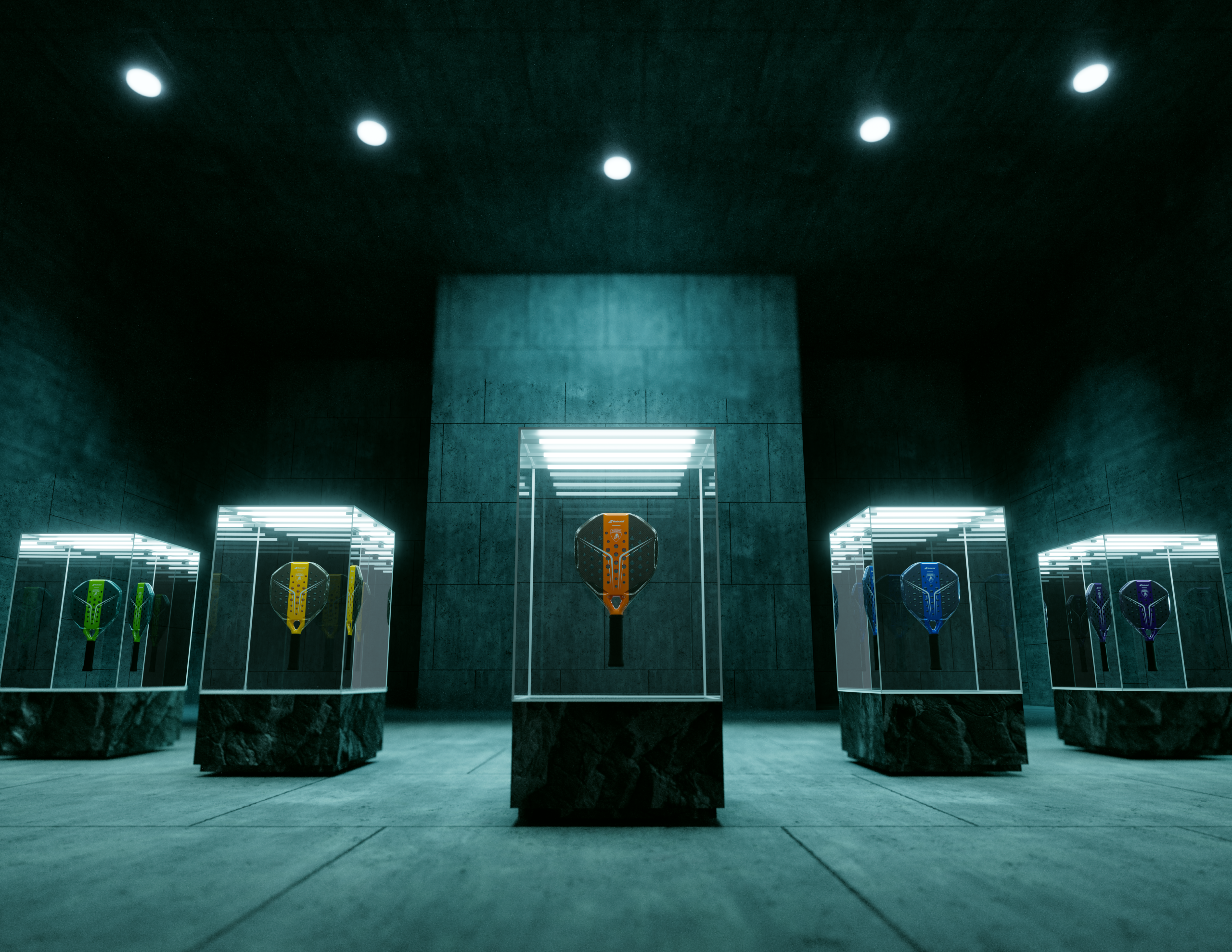
Automobili Lamborghini and Babolat have expanded their collaboration with five new colourways for the ultra-exclusive BL.001 racket, limited to just 50 pieces worldwide.