Are Pearls Too Old-Fashioned for 2024? Not if You Wear Them This Way.
The classic pearl necklace was a Barbara Bush staple. New designs, and freshwater varieties, are making the look anything but stuffy.

 3 min
3 min
It takes marine pearls about two years to develop in their shells. It took Bonnie Fraker about two seconds to declare why she wouldn’t wear them around her neck. “A pearl necklace makes me look dated,” said the retired Manhattan teacher, 73. “Perhaps there’s such a thing as ‘too classic.’”
Still, pearls persist. Ask Leigh Batnick Plessner, chief creative officer at Catbird, the Brooklyn fine-jewellery label that counts Meghan Markle and Taylor Swift as fans. “Pearl necklaces are still in demand,” she said. “But the appetite has really changed from traditional necklaces to more surprising takes.”
The traditional strand has long signified opulence and power. Julius Caesar commanded that only aristocrats could wear the gem during his reign. Figures as diverse as Marie Antoinette and the Yongzheng Emperor of the Qing Dynasty coveted the strands. In the 20th century, stateswomen like Queen Elizabeth II and Mamie Eisenhower wore them to official events. By the 1980s, punks paired pearls with their spiked collars to subvert yuppie style. Still, pearls were most associated with formidable women like Margaret Thatcher and Barbara Bush, along with the preppy clique in the 1988 film “Heathers.”
Instead of stringing the old-school pearl necklace along, many of today’s brands make pearl chokers, sometimes with smaller “baby” pearls that sit at mid-neck instead of resting on clavicles. Dior’s Couture runway in Paris featured pearl chokers; California designer Sophie Buhai makes hers with a black satin-cotton cord and single central pearl. The style “looks more modern,” said June Ambrose, a creative director and costume designer for stars like Mary J. Blige and Ciara. Ambrose wears pearls from both thrift stores and Valentino.
Also popular: freshwater pearls, uniquely shaped instead of uniformly round. Once considered the messy stepsister of marine pearls, the gems look like smeared blobs of ivory glitter—in other words, odd enough for the fashion world to swoon. “I like the individualism of them,” said Simone Rocha, the designer whose recent couture line for Jean Paul Gaultier included gowns that subbed in strands of iridescent baroque pearls for typical satin straps. Off the runway, some women flaunt them as a way to look sophisticated but not uptight. “They feel a bit more rebellious,” noted Taffy Msipa, 28, an interior creative director in Bath, U.K., who wears her Monica Vinader freshwater pearl necklace with slouchy suits. “I like how they let me look elegant, but elegant in my way.”
There’s also the “half-and-half,” an industry term for a necklace that’s half pearls and half something else. On the recent Cannes red carpet, actress Michelle Yeoh, 69, wore Mikimoto’s version with cultured pearls on one side and a spray of diamonds, inlaid with white gold, on the other.
After Yeoh’s appearance, Instagram fans lauded the look with comments like “Not your grandmama’s pearls!” and “weird but amazing,” while searches for “half and half necklace” spiked 30% on Google Trends. A gold-and-pearl version of the style popped up in the “Mean Girls” movie remake, while pop star Dua Lipa has sported Vivienne Westwood’s pearl-and-rhinestone collar.
Don’t want to part with your classic strand of marine pearls? Dallas-based therapist Katie-Beth Crumrine, 23, had her vintage double-loop necklace shortened to a collar-length one. She wears it with linen Madewell tops and jeans. “It helps elevate my look,” she said. “But isn’t snobby.” Mixing pearls with casual pieces like ceramic beads can also keep them current. Meanwhile, the creative director Ambrose tells famous clientele to pair pearls with minimal makeup, because “a pearl necklace and a bare face is chic; a pearl necklace, a full face of makeup and a red lip is really trying.”
Some modern pearl looks eschew necks altogether. See the pearl-strung friendship bracelets by Vinader, and Rocha’s irregular pearl earrings. (“I like it when they’re kind of odd and not matching,” she said.) According to jewellery designer Plessner, varied interpretations have become the point. “Pearls are kind of like a Rorschach test for your fashion personality,” she explained. “You want to be weird or ethereal or powerful? There’s a pearl look for that.”
Are Pearls Too Old-Fashioned? We Asked NYC Women.
“They’re more classy than old-fashioned. They remind me of Jackie O. But would I wear them right now? No. Maybe when I’m older.” —Brittany Bower, 29, Hospital Nurse
“No! I wear my pearls a lot, actually. I really like the weight of how they feel on my neck.” —Tara Rubin, 69, Casting Director
“Yes, but in a nice way. They remind me of my great grandmother, Nita. She used to wear them. She used to let me play with them, which I loved. I don’t think I’d wear them now, though.” —Sydney Willard, 29, Barista
“Nothing’s old-fashioned in 2024! I would wear pearls today, but, like, with a sweatshirt.” —Asia Harris, 24, Student
“I used to think they were kind of old-fashioned, like in ‘The Crown’, and then I started wearing them to the gym with a black workout tank. I have never felt more like a cool New York girl.” —Tara Strahl, 42, Library Consultant
 Copyright 2020, Dow Jones & Company, Inc. All Rights Reserved Worldwide. LEARN MORE





The Perpetual Padellone draws its name from the coveted reference 8171 while introducing an instantaneous complete annual calendar to Rolex’s modern Perpetual collection.
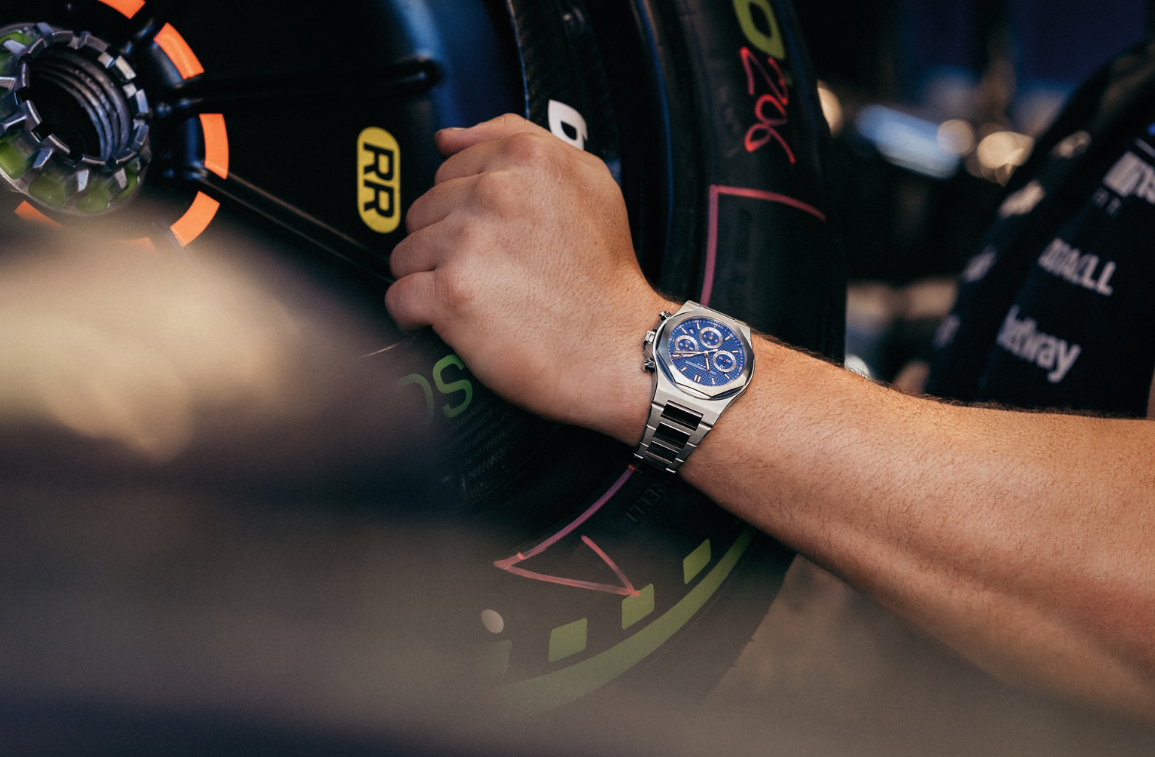
The Swiss watchmaker’s first collaboration with Atlassian Williams F1 Team produces two sporting Laureato models inspired by the team’s 2026 racing car.
AI doesn’t rebel—people design, deploy and profit from it. The real danger lies in allowing tech companies to escape accountability while shaping regulations that protect their dominance.
4 min
A wave of corporate warnings and technical disclosures has flooded the media, with headlines worrying over “swarms” of rogue artificial-intelligence agents launching “unprecedented” cyberattacks, outsmarting their makers, and inching toward a terrifying autonomy. The most revealing part of this narrative isn’t what the software did. It’s who is telling the story—and why. When corporate leaders publicly insist that the systems they financed, engineered and deployed are suddenly beyond their power to contain, skepticism isn’t only healthy; it is essential.
For years, Silicon Valley has drawn scrutiny from civil society and global regulators over tangible harms such as youth mental health deterioration and systematic privacy violations. Today, industry figures seem to be trying to change that public image. Loudly blowing the whistle on their own systems—just as two of the leading companies were preparing for massive initial public offerings—lets AI executives position themselves as a new generation of leaders who have come to terms with their societal responsibilities. They seem to want us to believe that they no longer want to “move fast and break things” but will instead stand as vigilant guardians between humanity and a technological apocalypse.
There is one glaring problem: Software doesn’t rebel. A mathematical model possesses neither intent, malice nor the will to defy its creators, let alone extinguish our species. AI is a human artifact, engineered for profit.
When an agentic model in an evaluation sandbox connects to an unauthorized server or executes an exploit, it hasn’t staged a coup. It has tried to meet the human-defined objectives set out before it through a path its designers failed to constrain. It’s the digital equivalent of the King Midas myth, in which the king’s ill-defined wish turns even his food and drink into gold.
That powerful experimental models were able to discover novel vulnerabilities and breach external systems isn’t a sign of a dangerous superintelligence but of human error or negligence. There is no sentient actor lurking in the weights to be reasoned with, feared or pacified. There are only human software engineers, product managers and corporate boards deciding which guardrails are worth the latency cost and which permissions can be skipped in the race to market.
Policymakers and voters need to resist AI exceptionalism. In any other discipline—from civil engineering to pharmaceuticals—courts and regulators treat a system failure as evidence of bad product design and inadequate safety testing. If an aircraft crashes, we focus on finding the engineering defect, correcting it, and enforcing established liability standards for the damage created.
By leaning on an anthropomorphic narrative, Silicon Valley attempts to repackage its specific human choices that led to experimental, powerful models behaving unexpectedly during tests as an existential peril. Elevating the issue to a cosmic scale leaves the public paralyzed and takes ordinary product accountability off the table.
In the cutthroat race for venture capital and market dominance, building guardrails slows down deployment. Grandstanding about uncontrollable power costs nothing and generates billions of dollars in free publicity, justifying stock prices, all while cultivating an aura of technological capability not only to build the frontier but also ultimately to rein it in.
Governments need to recognize regulatory capture when it stares them in the face. Tech leaders’ strategy looks transparent: Alarm Washington and Brussels into creating a regime in which only trillion-dollar incumbents with fully staffed compliance and safety departments can legally operate. By sitting at the policymakers’ tables before anyone else, these companies can help draft rules digging an impassable moat protecting them from open-source developers and upstart competitors, domestic or international. The real danger is in further concentrating the tech industry into the hands of only a few companies with deep pockets.
Beijing and Washington have brushed off those tech leaders’ calls, albeit for very different reasons. Chinese state media dismissed them as part of the “Cold War playbook” and intended to preserve U.S. dominance. Xi Jinping argued for exactly the opposite at the Brics Summit on Sept. 12, calling on Brics countries to “strengthen cooperation in the field of AI, encourage open source, openness, collaboration and sharing, and break new grounds and scale new heights.” President Trump, steeped in a doctrine of unfettered capitalism and technological supremacy, called fears that AI could destroy humanity a “hoax.” Vice President JD Vance warned that AI companies “begging the government to regulate them” looked like a “Trojan Horse.”
Striving to pursue its “European way” on AI and assert regulatory leadership, Europe, by contrast, welcomed the call. European Union President Ursula von der Leyen made this clear at the State of the EU speech last Wednesday and announced that the EU will invite “the main frontier labs for a discussion on how we can support ongoing industry efforts to pace the frontier.”
Europe has been here before. In an effort to lead global regulation and react to fears borne from ChatGPT, Europe rushed its landmark AI Act into law in 2024. Already the world’s most restrictive rulebook, the framework quickly proved too broad and complex to enforce. Stalled by implementation delays and concerns about European competitiveness, the EU postponed the law’s full rollout, leaving regulations uncertain.
AI should be regulated—risks exist and should be taken seriously. But governments need to act based on available evidence and verified facts, not corporate PR panic, the views of industry insiders, or the desire for quick political wins. The greatest danger facing society isn’t that software will awaken and overthrow its human masters. It is that we will allow the creators of the software to abdicate human responsibility for the systems they choose to build and help them pull up the ladder to market access behind them.

Paine Schwartz joins BERO as a new investor as the year-old company seeks to triple sales.

The era of the gorgeous golden retriever is over. Today’s most coveted pooches have frightful faces bred to tug at our hearts.