How to Pack Like a Pro: The top 8 packing tips for seasoned travellers
As the European summer beckons, here’s our quick study of the best packing tips for a stress-free break
 6 min
6 min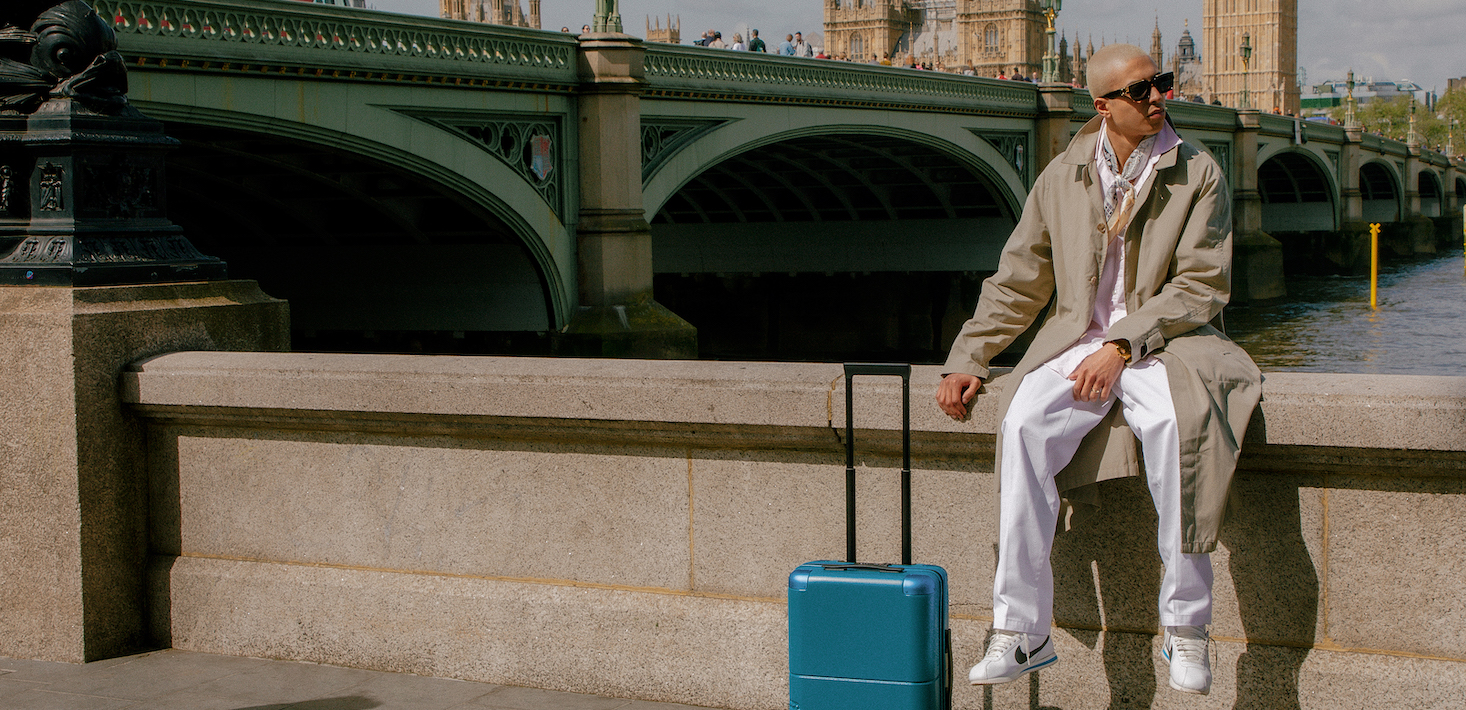
We’re half way through 2024, and it is about that time where people start feeling the itch to book a spontaneous trip abroad. Perhaps you have your heart set on Rome, the eternal city, to take in the sights. Or maybe it’s a trip to the French Riviera to soak up the sun and stroll the promenade in Nice. Wherever you’re wanderlust beckons, it’s clear that Australia’s aviation sector has well and truly recovered from the COVID-19 pandemic, with travel across the board returning to pre-pandemic levels, according to the ACCC’s latest report.
So, if travelling is on your agenda—be it domestic or long-haul—for the remainder of 2024, there’s one underrated, unspoken skill you’ll want to have covered before jetting off: how to pack like a pro.
We’ve taken the liberty of speaking to professionals in the travel sector to unpack all there is to know about being organised ahead of your next big trip, and in the process, deciphering the age-old nuisance that is correctly packing for a holiday.

—
1. Make a list
Whether you’re the organised type or not, curating a holiday “packing list” will not only save you time when it comes down to packing your suitcase, but the stress that comes with doing so.
“Always write a list before you start packing,” said Sarah Built, Etihad Airways Vice President of Sales, Australasia.
“Trust me, it’ll save you the headache of wondering if you’ve missed something, or worse, realising you have at your destination. It also helps to avoid overpacking, too!”
However, be sure to be ruthless when editing your packing list; you can’t bring everything with you, after all.

2. Pack for the season
It’s always wise to pack for the season. If you’re heading into warmer climates, don’t forget to pack breathable clothing. That could include sweat-wicking athleisure, as well as clothing made of natural fibres like cotton and linen. But consider how the temperature swings come early morning, or late at night. The same goes for the winter season – you’d be surprised how many people forget to pack thermals.
“Before you start packing, check the weather forecast for your destination, as this will help you pack smart,” says July founder, Athan Didaskalou. “And if the weather has some hot and cold moments, opt for natural fibres like merino wool – they’re excellent for layering and don’t get smelly as quickly. Choose versatile footwear and pack a cap for sun protection, warmth and bad hair days.”
The last thing you want to do is have to make an unplanned trip to the shops to buy clothing (possibly at inflated “tourist” pricing) that you may not have room for.

3. Capsule clothing can save space
Off the back of tip number two, packing for the right climate, incorporating capsule clothing is a great way to save space in your luggage — and ensure you get the most out of the clothes you take with you. The notion of a capsule wardrobe relies on having classic pieces that are interchangeable to create different looks without the need to take everything with you.
Think about staple clothing items that can be dressed up or down; for men heading to a warmer climate, double down on polo shirts that can pair over swim shorts, but look equally appropriate teamed with chino pants for the evening. For women, you can never go wrong with a classic wrap dress that can be adjusted to the occasion with well chosen accessories like scarves or costume jewellery that pack light and save on space.
You can also apply the 5-4-3-2-1 method, including five tops, four bottoms, three accessories, two shoes (a practical pair and a dressier pair), and one swimming costume.
“I’d also recommend packing clothing with universal colours,” said Ms Built. “That way, you can mix and match your outfits to last longer.”
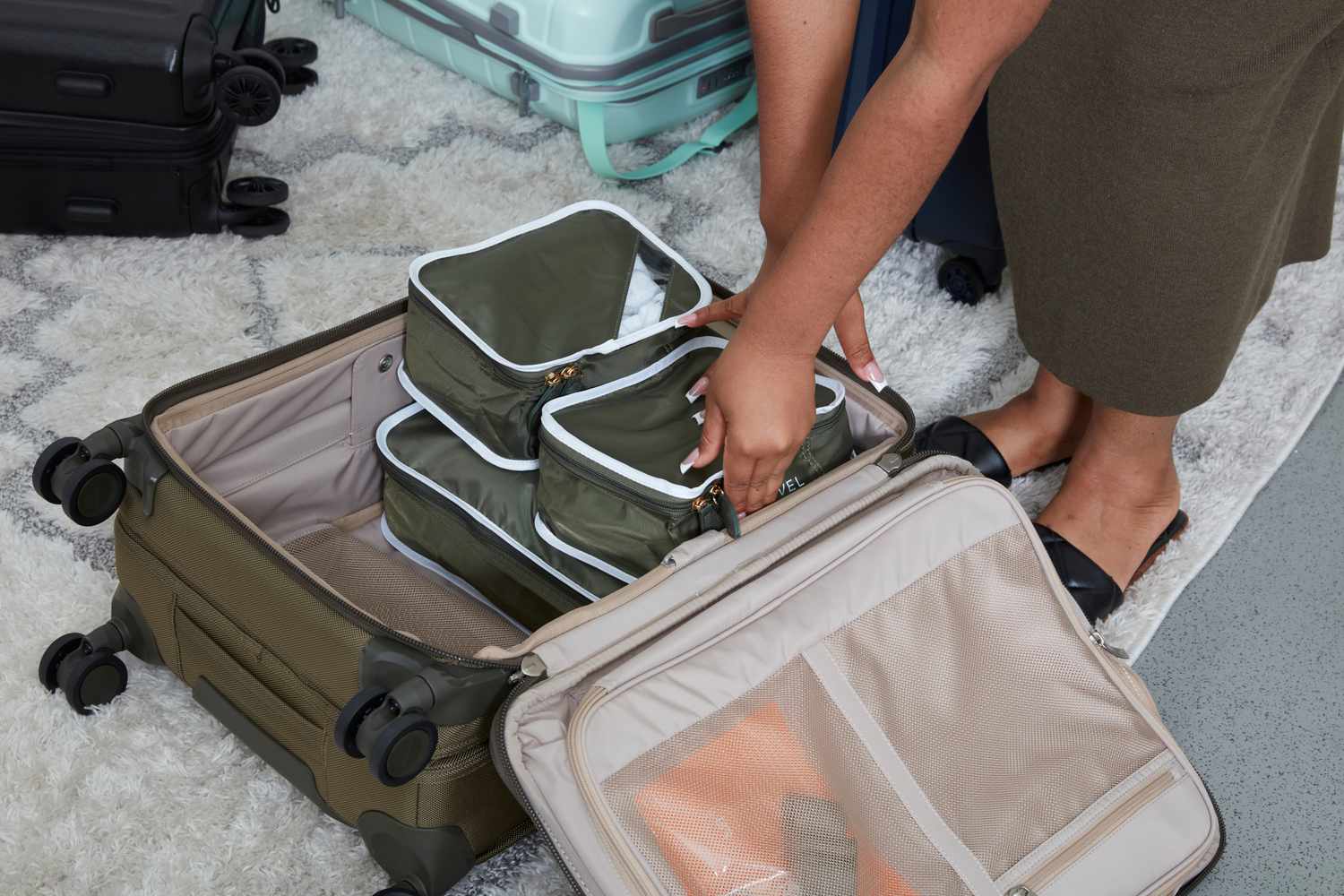
4. Packing cubes will come in handy
Last summer, I witnessed my partner—who is otherwise a messy, free spirited traveller—become a master of packing seemingly overnight; it’s as if she became the Marie Kondo of suitcase packing. I soon discovered her secret: packing cubes.
“Packing cubes can be a lifesaver in ensuring your suitcase stays organised and repacking is easy,” said Mr Didaskalou.
Packing cubes are now available to buy everywhere from Big W to Antler, and not only save space in your suitcase, but will ensure a seamless, organised experience when travelling.
“Packing cubes are your best friend to save space, particularly for a long trip,” added Ms. Built. “I also find them useful to plan my outfits and keep everything together — it saves me rummaging through my suitcase later.”
5. Bulk up
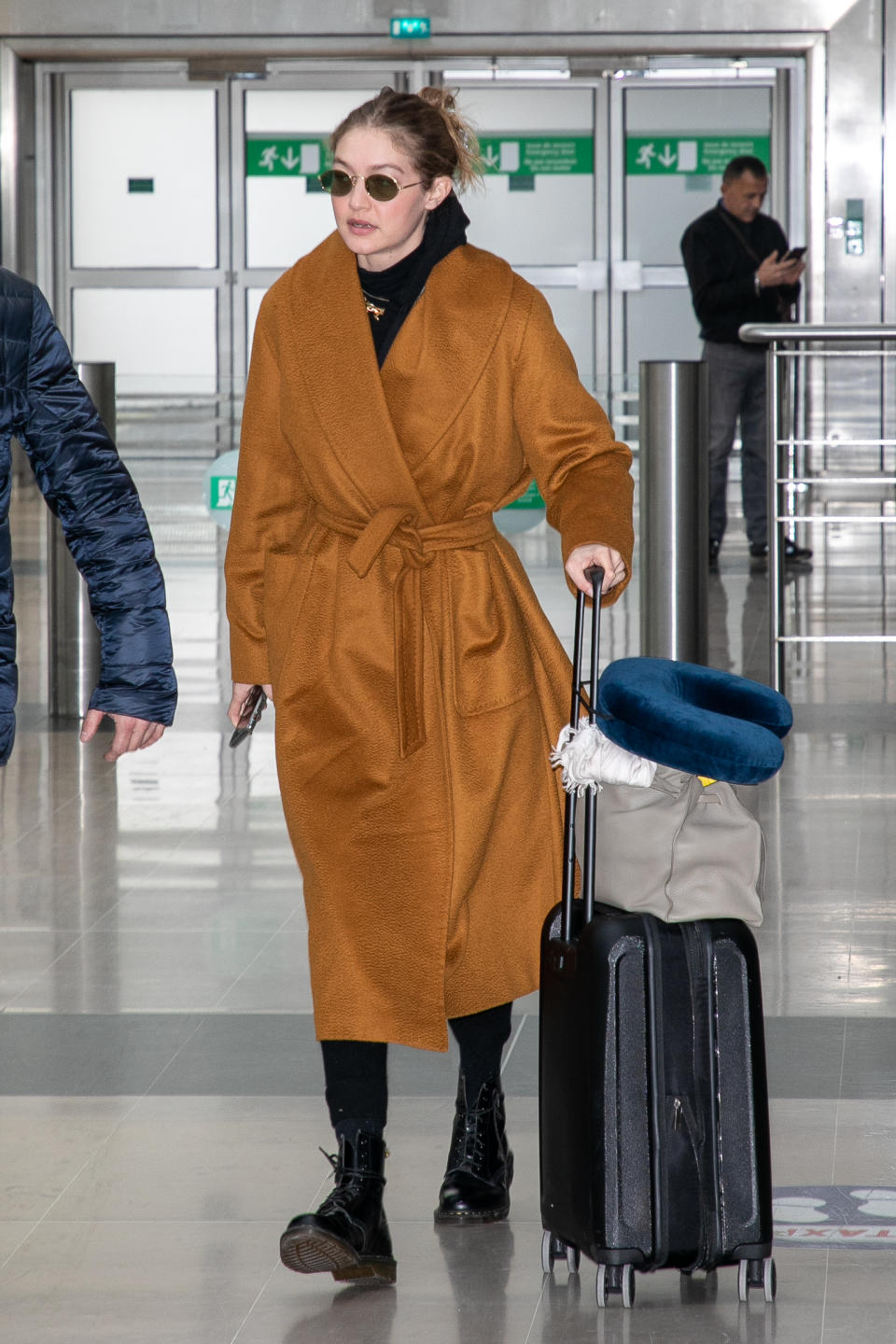
If you’re not one of the lucky few that managed to snag a first or business class ticket, space—and the weight—of your suitcase should become a priority. To negate going over your weight limit and paying unnecessary add ons for luggage, consider wearing or carrying your bulkiest items with you, such as cumbersome shoes or a large coat. Keep in mind this could slow down your progress through airport security, so opt for zippers over laces for shoes and tied belts over buttons for coats where possible.
6. Keep your liquids and laptops at the top
This is a no brainer, but to save you a world of hassle upon arrival at your lovely destination, keep all electronics like a laptop and your toiletries separate, and near the top of your bag or luggage. Not only will this negate any unwanted damage should your cologne or toothpaste wreak havoc, but if you’re called upon to remove such items during security screening, you don’t want to be that person fishing around and wasting everybody’s time.
“I always recommend decanting toiletries into smaller containers,” said Mr Didaskalou. “It not only saves space, but also helps you comply with airline regulations.”
Check with your carrier as well as the destination airport what the requirements are before you leave.
7. Minimise your footwear inclusions
Sneaker-head or not, you really don’t need to bring both the adidas Sambas and a pair of Air Jordans. Be ruthless when it comes to packing footwear for your next holiday, and opt for shoes that are multi-functional. This will be a key factor in saving space—and weight—in your luggage.
“When it comes to shoes, I always pack a universal heel, a luxe sneaker, and a dressy pair of flats,” said Ms Built. “That way you’re covered for every occasion while still looking photo-ready on holiday.”

8. Above all, choose the right luggage
While all seven tips before you are practical in theory, they won’t come at all in handy should you not have the right type of luggage for travelling. It’s 2024; it’s time to bin your canvas two-wheel suitcase from high school and opt for modern day luggage that will have you saving on space, weight, and above all else, will ensure a smooth transit to your holiday destination that awaits.
“If you’re someone who loves to shop, opt for an expandable suitcase,” said Mr Didaskalou. “This will help you not pack too much on the way over, but give you that extra space to expand when you need it.”

—
The Swiss watchmaker’s first collaboration with Atlassian Williams F1 Team produces two sporting Laureato models inspired by the team’s 2026 racing car.

Victorian auction buyers will soon receive a piece of information that has traditionally been withheld until bidding reaches it: the vendor’s reserve price. Under new property-sale and underquoting laws, agents must publish the agreed reserve at least seven days before an auction or fixed-date sale. Most changes begin on 1 October 2026 and apply to …
Continue reading “Victoria’s New Auction Rules Will Force Reserve Prices Into the Open”
AI doesn’t rebel—people design, deploy and profit from it. The real danger lies in allowing tech companies to escape accountability while shaping regulations that protect their dominance.
4 min
A wave of corporate warnings and technical disclosures has flooded the media, with headlines worrying over “swarms” of rogue artificial-intelligence agents launching “unprecedented” cyberattacks, outsmarting their makers, and inching toward a terrifying autonomy. The most revealing part of this narrative isn’t what the software did. It’s who is telling the story—and why. When corporate leaders publicly insist that the systems they financed, engineered and deployed are suddenly beyond their power to contain, skepticism isn’t only healthy; it is essential.
For years, Silicon Valley has drawn scrutiny from civil society and global regulators over tangible harms such as youth mental health deterioration and systematic privacy violations. Today, industry figures seem to be trying to change that public image. Loudly blowing the whistle on their own systems—just as two of the leading companies were preparing for massive initial public offerings—lets AI executives position themselves as a new generation of leaders who have come to terms with their societal responsibilities. They seem to want us to believe that they no longer want to “move fast and break things” but will instead stand as vigilant guardians between humanity and a technological apocalypse.
There is one glaring problem: Software doesn’t rebel. A mathematical model possesses neither intent, malice nor the will to defy its creators, let alone extinguish our species. AI is a human artifact, engineered for profit.
When an agentic model in an evaluation sandbox connects to an unauthorized server or executes an exploit, it hasn’t staged a coup. It has tried to meet the human-defined objectives set out before it through a path its designers failed to constrain. It’s the digital equivalent of the King Midas myth, in which the king’s ill-defined wish turns even his food and drink into gold.
That powerful experimental models were able to discover novel vulnerabilities and breach external systems isn’t a sign of a dangerous superintelligence but of human error or negligence. There is no sentient actor lurking in the weights to be reasoned with, feared or pacified. There are only human software engineers, product managers and corporate boards deciding which guardrails are worth the latency cost and which permissions can be skipped in the race to market.
Policymakers and voters need to resist AI exceptionalism. In any other discipline—from civil engineering to pharmaceuticals—courts and regulators treat a system failure as evidence of bad product design and inadequate safety testing. If an aircraft crashes, we focus on finding the engineering defect, correcting it, and enforcing established liability standards for the damage created.
By leaning on an anthropomorphic narrative, Silicon Valley attempts to repackage its specific human choices that led to experimental, powerful models behaving unexpectedly during tests as an existential peril. Elevating the issue to a cosmic scale leaves the public paralyzed and takes ordinary product accountability off the table.
In the cutthroat race for venture capital and market dominance, building guardrails slows down deployment. Grandstanding about uncontrollable power costs nothing and generates billions of dollars in free publicity, justifying stock prices, all while cultivating an aura of technological capability not only to build the frontier but also ultimately to rein it in.
Governments need to recognize regulatory capture when it stares them in the face. Tech leaders’ strategy looks transparent: Alarm Washington and Brussels into creating a regime in which only trillion-dollar incumbents with fully staffed compliance and safety departments can legally operate. By sitting at the policymakers’ tables before anyone else, these companies can help draft rules digging an impassable moat protecting them from open-source developers and upstart competitors, domestic or international. The real danger is in further concentrating the tech industry into the hands of only a few companies with deep pockets.
Beijing and Washington have brushed off those tech leaders’ calls, albeit for very different reasons. Chinese state media dismissed them as part of the “Cold War playbook” and intended to preserve U.S. dominance. Xi Jinping argued for exactly the opposite at the Brics Summit on Sept. 12, calling on Brics countries to “strengthen cooperation in the field of AI, encourage open source, openness, collaboration and sharing, and break new grounds and scale new heights.” President Trump, steeped in a doctrine of unfettered capitalism and technological supremacy, called fears that AI could destroy humanity a “hoax.” Vice President JD Vance warned that AI companies “begging the government to regulate them” looked like a “Trojan Horse.”
Striving to pursue its “European way” on AI and assert regulatory leadership, Europe, by contrast, welcomed the call. European Union President Ursula von der Leyen made this clear at the State of the EU speech last Wednesday and announced that the EU will invite “the main frontier labs for a discussion on how we can support ongoing industry efforts to pace the frontier.”
Europe has been here before. In an effort to lead global regulation and react to fears borne from ChatGPT, Europe rushed its landmark AI Act into law in 2024. Already the world’s most restrictive rulebook, the framework quickly proved too broad and complex to enforce. Stalled by implementation delays and concerns about European competitiveness, the EU postponed the law’s full rollout, leaving regulations uncertain.
AI should be regulated—risks exist and should be taken seriously. But governments need to act based on available evidence and verified facts, not corporate PR panic, the views of industry insiders, or the desire for quick political wins. The greatest danger facing society isn’t that software will awaken and overthrow its human masters. It is that we will allow the creators of the software to abdicate human responsibility for the systems they choose to build and help them pull up the ladder to market access behind them.

From warmer neutrals to tactile finishes, Australian homes are moving away from stark minimalism and towards spaces that feel more human.

Rugged coastal drives and fireside drams define a slow, indulgent journey through Scotland’s far north.