The Tesla of Italy, Aehra’s Sexy EVs Now Have Names

 3 min
3 min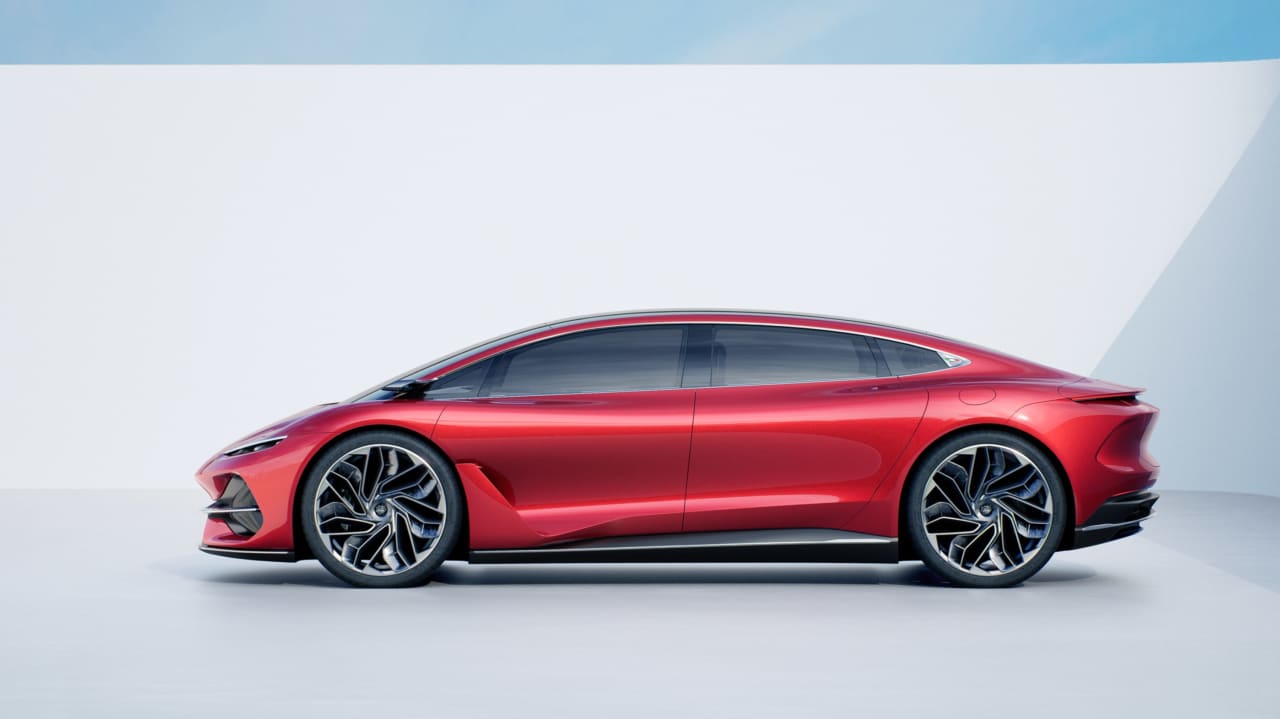
ByAehra, the company that calls itself “Italy’s first pure EV brand,” has two uncommonly attractive vehicles in the works, the Impeto SUV and the Estasi sedan. The designs were first shown in 2022 and 2023 , then unnamed. Pricing for both vehicles is expected to be in the vicinity of US$170,000.
Aehra has some private resources, but is also awaiting government funding. It has submitted a €1.2 billion (US$1.3 billion) development plan to Italy’s Ministry of Industry (controller of the country’s Automotive Fund) to underwrite construction of a 200,000-square-metre plant, which it plans to build at Mosciano Sant’Angelo, in the Abruzzo region of eastern Italy. Aehra says it will create 540 jobs in the region, and 110 more at its headquarters in Milan.
Courtesy of Aehra
Hazim Nada, Aehra’s U.S.-born but Italy-raised CEO and founder, tells Penta he expects the Automotive Fund to be capitalised with €2.5 billion next year.
“The government is quite enthusiastic about this project, and we don’t see anyone else with significant production plans,” he says, adding that automotive start-ups are thin on the ground “in Europe, not just in Italy.”
Nada says the company had originally planned to build its cars via an existing contract manufacturer such as Magna Steyr in Austria, but he says finding a plant that could handle the special carbon-fibre process Aehra plans to use proved difficult. “It’s been a busy year, focusing on the location for our assembly line,” he says. “I hope to move soon to working on consolidating our dealer network and sales process.”
The company likes Abruzzo because it’s not only the centre of Italy’s lightweight carbon-fibre industry, but also a hive of EV expertise at the University of L’Aquila. As its plans changed, Aehra has had to push back its start date. Nada says the company aims to be through the building-permit process by the end of the year or early 2025, then start construction of the plant—a 1.5- to two-year process.
Courtesy of Aehra
Cars should start issuing from the plant in 2027, Nada says. The plan is to eventually scale up to 50,000 vehicles annually. He says Aehra does not intend to produce anything but battery EVs.
“Our focus is to build cars you can’t create with a thermal engine,” he says. “That’s our core. We couldn’t achieve the same results with hybrids.”
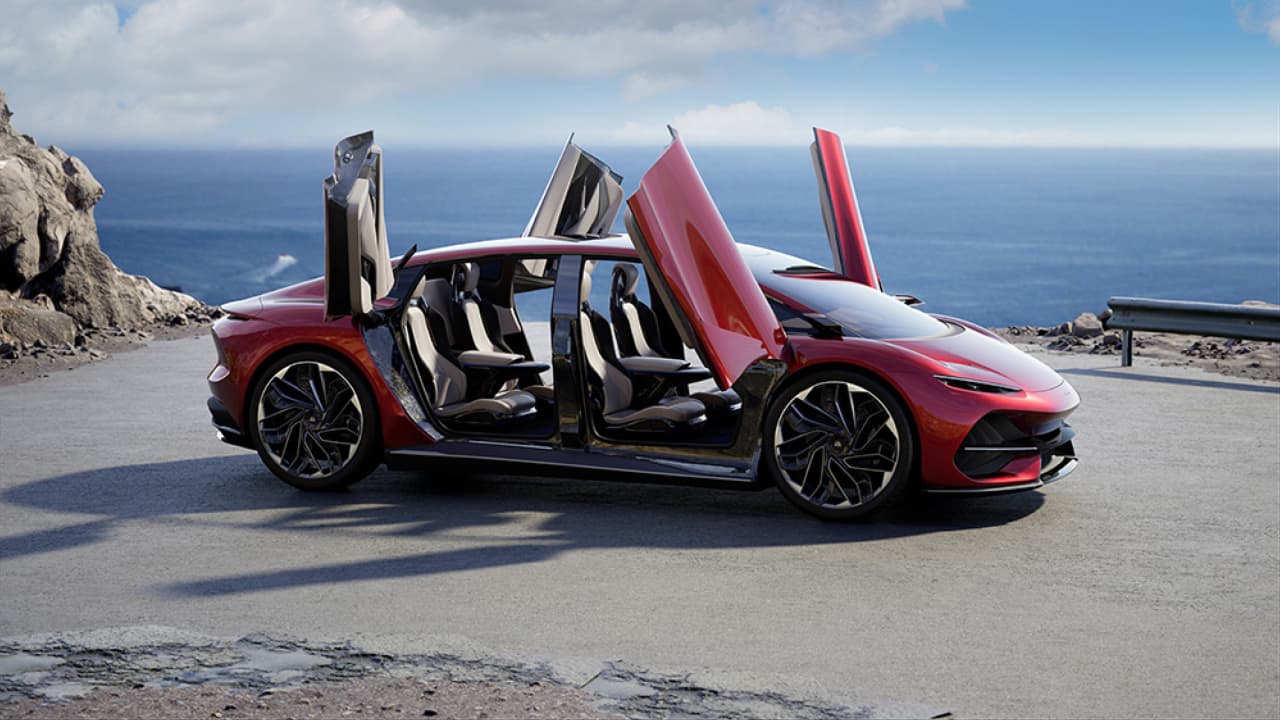
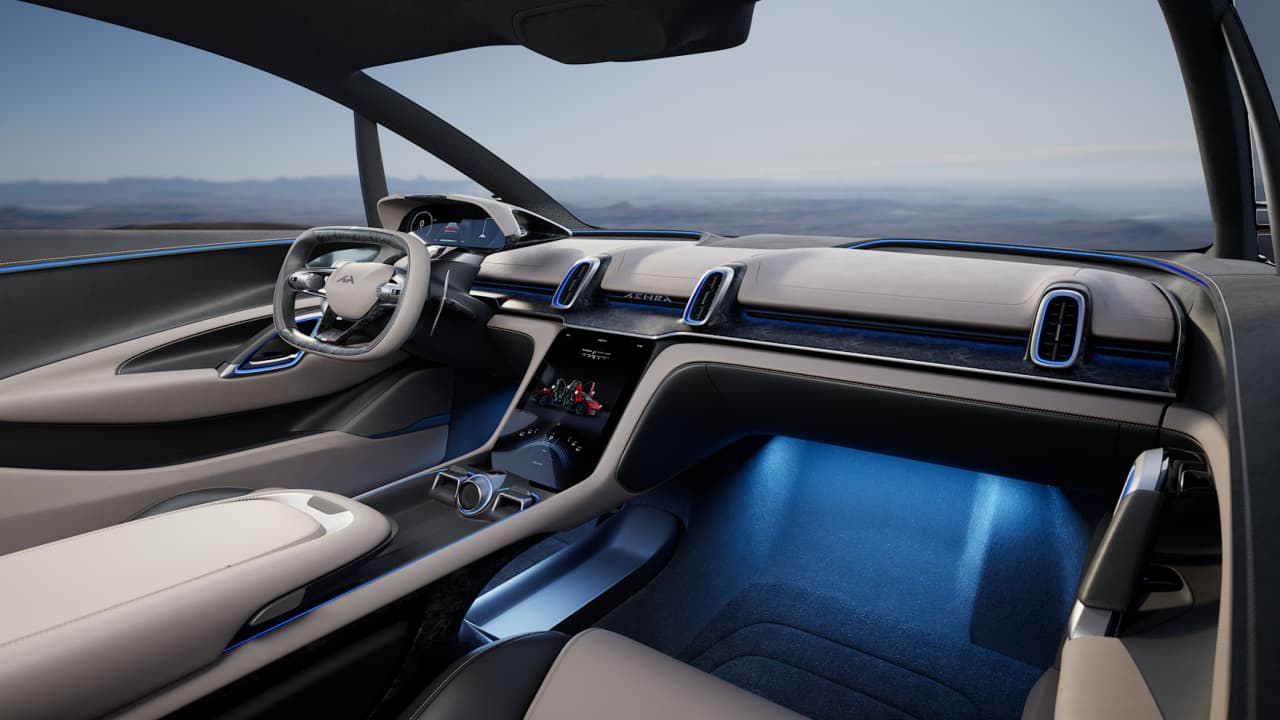
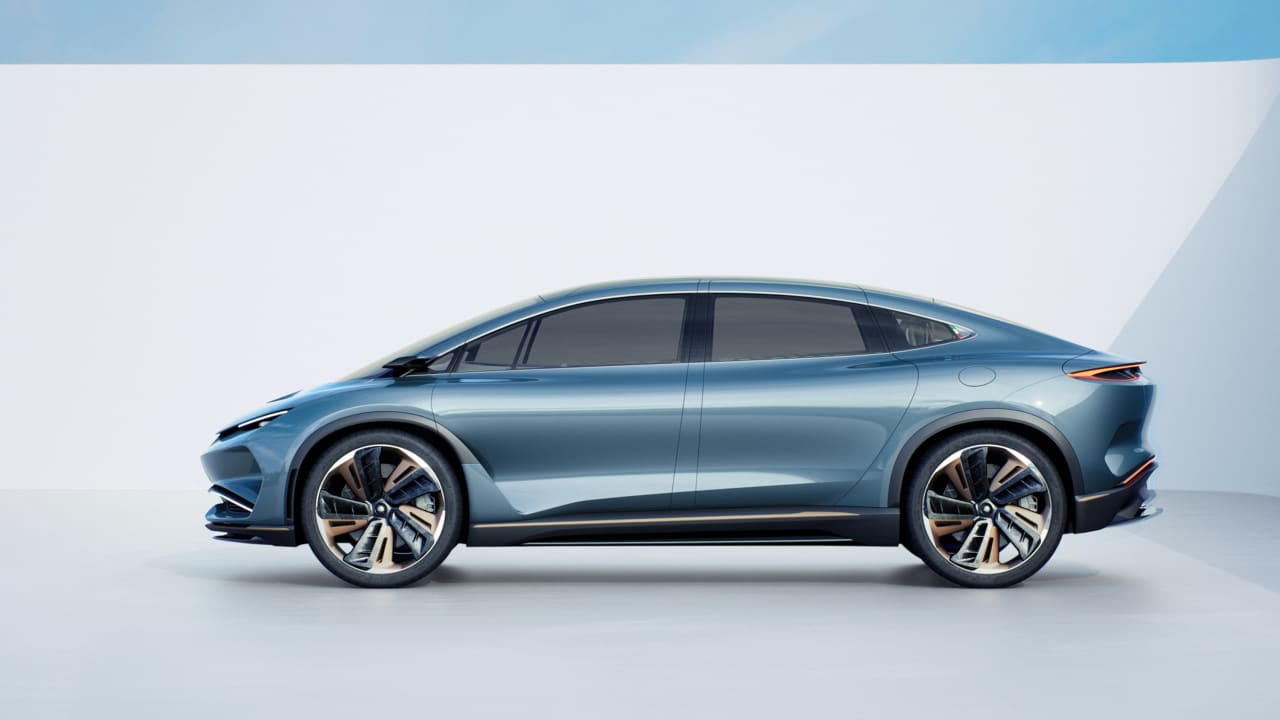
The designer of the cars was Filippo Perini, a veteran of Audi and Lamborghini. The cars are certainly beautiful, and closely related in their very streamlined designs. Nada says “the platforms are identical below the beltline.” The vehicles have frameless upward-opening doors (the company calls them Dihedral Facing Doors) that leave a large opening and ease entry and exit. The target is for them to have a very low coefficient of drag, 0.21, which means they should slip easily through the air.
Courtesy of Aehra.
The announced statistics are impressive, with a 500-mile range (close to certain versions of the Lucid Air) via 120-kilowatt-hour Miba Battery Systems packs and a top speed of around 165 miles per hour from the 800-horsepower powertrain. Zero to 62 miles per hour should take less than three seconds in the Estasi sedan, aided by a target curb weight of around 4,850 pounds (low for an EV with that size battery pack). A 10% to 80% fast charge should take 15 minutes.
Like the aforementioned Lucid, the Aehras are intended to be roomy inside. The SUV “will effortlessly accommodate four full-size National Basketball Association players while leaving room for a 6-foot adult in the middle of the rear-seat row,” the company says.
Aehra is targeting North America, Europe, and the Gulf States as markets for its cars. Nada thinks the Impeto SUV might have a sales edge.
“The SUV is easiest in the current market, but we expect to see some surprises with the sedan,” he says.
 Copyright 2020, Dow Jones & Company, Inc. All Rights Reserved Worldwide. LEARN MORE





From making unpopular decisions to learning when to listen, leaders from five businesses reveal what nobody prepared them for — and how running a company has challenged their expectations.

Technology and semiconductor shares fell sharply as investors questioned the debt financing the AI infrastructure boom and confronted higher rates and Chinese competition.

Elon Musk is exploring a potential merger between Tesla and SpaceX, a deal that could reshape the future of AI, robotics, autonomous vehicles and space technology. With a combined valuation potentially reaching $3.5 trillion, the move could bring Musk’s vision of an interconnected technology ecosystem closer to reality, although a deal remains uncertain.
5 min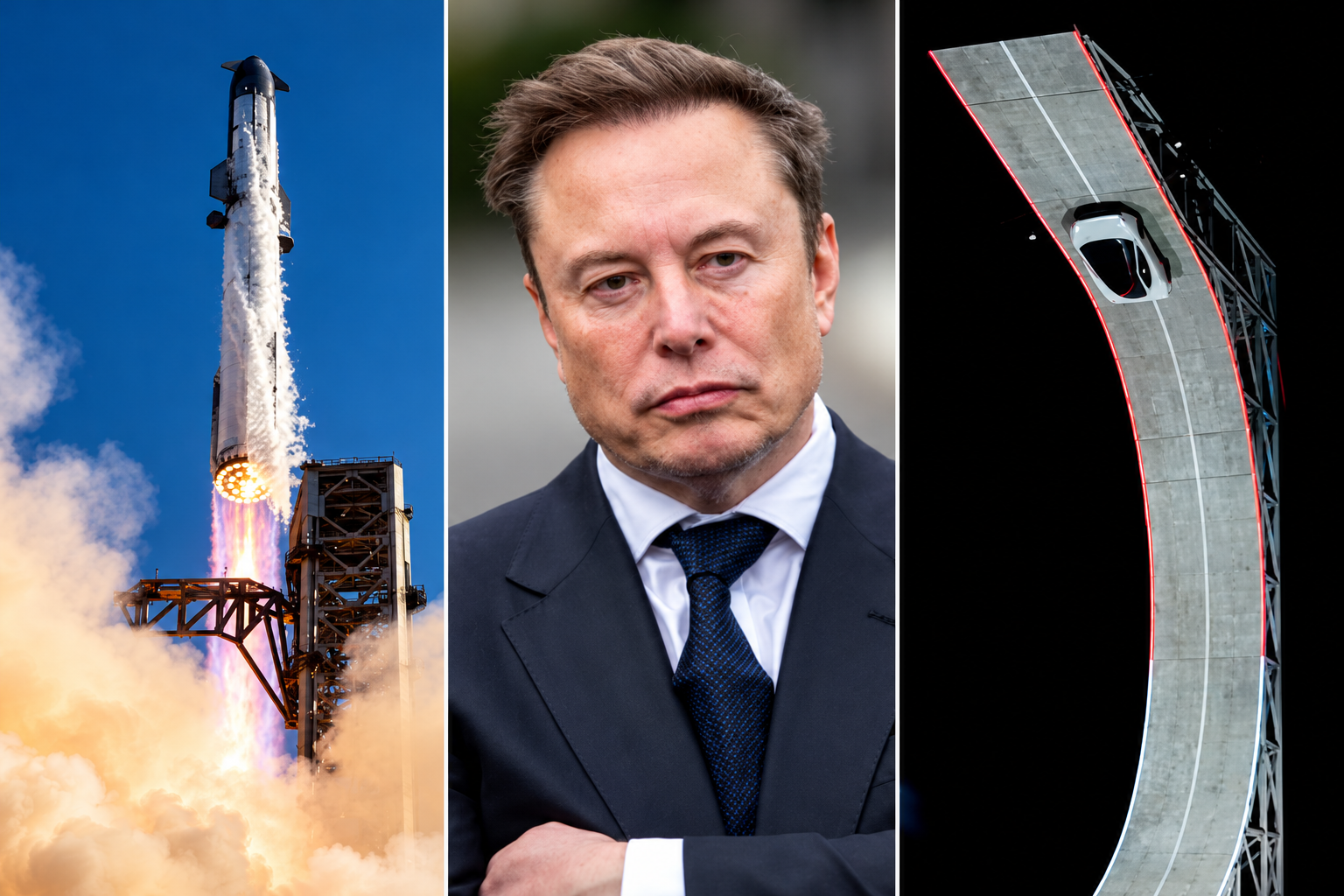
Elon Musk has engineered ties between Tesla TSLA 3.41%increase; up pointing triangle and SpaceX SPCX 7.79%increase; up pointing triangle that are hard to break, and now he wants to fuse them together permanently.
Musk has run both Tesla and SpaceX concurrently over the past two decades, using a schedule that dictated which days he spent focused on each business.
The companies have often shared resources and personnel, signaling their close ties. Last year, SpaceX looked into creating a spacesuit for Tesla’s humanoid robot Optimus, a person familiar with the matter said. Tesla last week showed off its new Roadster, a vehicle featuring SpaceX rocket thrusters that it hopes to soon bring to market.
And in recent months, Musk has repositioned both companies by expanding beyond their core operations toward a shared mission centered on artificial intelligence.
The world’s richest man on Tuesday signaled his interest in tying up SpaceX and Tesla, marking what would be the biggest corporate merger of all time. Because he serves as chief executive of SpaceX and Tesla, Musk said committees of independent directors at both companies are evaluating a possible deal, adding that a transaction might not come to fruition.
The committees will likely evaluate, with lawyers and bankers, how each company would fare in a potential deal and how a deal might best be structured. They then present their conclusions to their respective boards, who typically vote on whether to proceed.
“It’s an odd Kabuki dance where two groups of people are talking and I can’t be in the conversation,” Musk told SpaceX investors on Tuesday in response to an analyst’s question about a potential deal.
For Musk, the merger supports his vision of a world full of autonomous cars, humanoid robots and weekly rocket launches, as well as the data centers and satellites required to keep the whole thing running.
Some investors and analysts said they expect a transaction would be structured as an all-stock deal, with SpaceX potentially paying a modest premium for Tesla shares.
SpaceX, which has a market value of about $2 trillion, said it is seeing sharp growth in revenue across its businesses, which include operating data centers, launching rockets and operating satellite networks such as the internet service Starlink. Tesla is valued at about $1.5 trillion and is expanding its operations beyond its automotive and energy business. Shares in both companies traded higher following the news Tuesday.
Musk’s substantial ownership stakes in both companies, along with voting control at SpaceX, has enabled him to set the deal in motion. Analysts and investors said the deal will probably face regulatory scrutiny internationally, though some see Musk’s close relationship with the Trump administration as an asset to getting approval.
Blurred lines
The companies haven’t said which directors are on the special committees evaluating a potential deal. Several SpaceX and Tesla board members have either personal or business ties to Musk. And like Musk, venture capitalist Ira Ehrenpreis sits on both boards.
In a filing this week, Tesla outlined millions of dollars in business agreements with SpaceX and its subsidiaries last year, including $143 million in car sales to SpaceX, $3.3 million in advertising that it bought on the social-media platform X and $430 million in revenue from the sale of Megapack batteries for SpaceX’s data centers.
The companies also split the cost of resources including the use of Musk’s SpaceX jet and the bill for his personal security, which he runs through a private company.
Employees at both companies routinely move between companies to work on special projects, and some executives have dual roles, including Charles Kuehmann, vice president of materials engineering at both SpaceX and Tesla, and Ashok Elluswamy, the vice president of AI software at Tesla who runs a joint venture with SpaceX called Digital Optimus.
Over the years, Musk has launched new startups within his empire, including brain-implant company Neuralink, underground-tunnel developer the Boring Company and xAI, the AI startup that merged with SpaceX in February.
It is that AI business that Musk thinks can serve a market worth tens of trillions of dollars, justifying the need for a merger.
The business case goes like this: Tesla is developing robotaxis and robots, which it calls “physical AI.” SpaceX is working on the back end of physical AI: the data-center capacity and internet connection required for those robotaxis and robots to operate continuously.
“I don’t see what the value of Tesla is if it’s not merged with SpaceX,” said investment adviser Ross Gerber, a former Tesla bull turned critic invested in both companies. “If they don’t merge, the brains of everything that runs Tesla is owned by another company.”
On top of it all, both companies face constraints on the supply chains they need to make this world a reality, particularly when it comes to chips. To address this, Musk earlier this year announced a joint venture between Tesla, SpaceX and Intel to design and manufacture chips in Texas. “The most epic chip-building exercise by far,” he has said.
Musk at the wheel
For Musk, a merger would also solve two problems: demands on his attention and his lack of control at Tesla.
Tesla for years was Musk’s only public company, a status that came with greater scrutiny. There, Musk reports to a public board, as well as individual investors who make up around 30% of Tesla’s voting power, according to FactSet.
The question of Musk’s attention became a particular focus for investors and the board in recent years after he acquired Twitter in 2022 and launched xAI in 2023, and again in 2025 as he spent time in Washington, D.C., running the Department of Government Efficiency in the early months of President Trump’s second term.
As Tesla’s car business suffered in 2025, Musk threatened to take his AI ambitions outside the company if he wasn’t granted 25% voting control. Last November, Tesla shareholders approved a new pay package for Musk, which created a path for him to vastly expand his stake.
As of Sept. 30, Musk owned a roughly 20% stake in Tesla, according to the company’s proxy filing.
The SpaceX IPO gave Musk a different path. When SpaceX went public in June, the deal’s structure enabled him to have more than 80% voting power at the company—so much that he can’t be fired and decisions can’t be made without his support.
If SpaceX acquires Tesla, he will likely stay in control.
As interest rates, inflation and market sentiment fluctuate, investors are being urged to focus on data, not panic.
Limited to 630 units, Lamborghini’s latest Urus Capsule pushes personalisation further than ever, blending hybrid performance with over 70 bespoke design combinations.