Why Are We So Obsessed With Ugly Dogs?
The era of the gorgeous golden retriever is over. Today’s most coveted pooches have frightful faces bred to tug at our hearts.

 5 min
5 min
Play, a four-year-old French bulldog, waddled down the street in Noho. Squinting in the morning sun, she had bat ears, a downturned mouth and the mien of a pissed-off mother-in-law.
“People tell me she’s ugly all the time,” said her owner Nakisha Lewis, 41, a stylist and impact strategist. “I think the little round face is absolutely adorable…but every parent thinks their baby is adorable.”
You can’t go around calling human babies ugly, but thankfully the rules are more lax with dogs.
I’ve been patrolling downtown Manhattan to find singularly unattractive breeds—then asking their owners why they chose them. (I haven’t asked if any believe the urban legend that dogs resemble their masters.)
As a superficial snob who grew up with golden retrievers that deserved Pantene commercials, I had to know: Why are we so into ugly dogs now?
In recent years, man’s best friend has plummeted from a 10 to a 2. Sure, you see lots of gorgeous doodles, but at the end of every second leash lurks a rat with an overbite or a popeyed goblin with ears so monstrous they make King Charles III’s seem not that big.
French bulldogs lead the charge for character-actor canines.
Celebs cradle the Yodalike pups, and millennials love them even more than a tasteful beige wall.
For 31 years Labradors topped the American Kennel Club’s purebred rankings, which are based on more than one million annual registrations.

But since 2022 Frenchies have been top dog, with Labs and golden retrievers settling for silver and bronze. It’s like the quarterback and homecoming queen losing a popularity contest to a wheezing weirdo.
Dr. Carly Fox, a senior veterinarian at New York’s Schwarzman Animal Medical Center, said that flat-faced dogs—they’re “brachycephalic” for people in the know—have been ascendant in the past decade.
Other popular members of this snub-nosed club include English bulldogs, Boston terriers, pugs and Brussels griffons.
A rival gang—more niche but no prettier—is the rat pack.
Think chihuahuas, hairless xoloitzcuintles and Chinese cresteds, a mostly hairless breed with wispy tufts on its head that the American Kennel Club called a “mover and shaker” and I call “a dog that got left in the microwave.”
This summer, a Chinese crested in a pink gown shivered through a starring role in Lena Dunham’s Netflix show “Too Much.”
The Victorians sparked the modern obsession with engineering “lots of different looking dogs to fit different human wants,” said Dr. Rowena Packer, senior lecturer at the University of London’s Royal Veterinary College.
The malleability of the dog genome allows for enormous physical variety, she explained, meaning that breeders can push features to extremes—squashing snouts, piling on wrinkles.
To evaluate a dog’s alterations, said Packer, consider how much it deviates from the original archetype: the wolf. I’d wager a wolf would sooner recognize a sheep as one of its own than a grinning pug.
Hal Herzog, a professor emeritus of psychology at Western Carolina University who studies human-animal relationships, said dog breeds become popular in the same way fashion trends do.
We look to movies and celebrities and, above all, copy each other. Chance plays a huge role in a breed going viral, he said, but it helps to have some inherent appeal.
The allure of wackadoo breeds? For starters, most skew small. That suits postpandemic demand for apartment dogs that can also travel, said Paula Fasseas, founder of PAWS Chicago, a no-kill animal welfare organisation.
But the big draw of brachycephalic (brachy) dogs is their cheek-squeezing cuteness.
When owners gushed that their Frenchies and pugs resembled human babies, I took offense on behalf of all parents.

Yet studies show that flat-faced dogs possess “kindchenschema” or “baby schema,” a term coined by ethologist Konrad Lorenz to describe infantile features that elicit caregiving reactions.
With wide eyes, small noses and bigger, rounder heads, a brachy dog’s face “is far more human than, say, a Labrador’s,” said Packer.
Those looks come at a high cost. Packer said that Frenchies, pugs and English bulldogs are more prone to chronic eye disease, skin-fold infections and spinal problems, as well as breathing issues caused by truncated airways—and exacerbated by faces that are often flatter than in the past.
Fox, the vet, owns a Frenchie but called extreme brachy breeds “nightmares” from a medical perspective. (Love the look? Packer recommends a healthier mix like a jack russell-pug, the superbly named “jug.”)
Some experts argue that brachy dogs’ health problems can make them more desirable to owners.
Authorities such as James Serpell have suggested that these dogs’ neediness brings out our maternal instincts, Herzog noted.
Forget about throwing a stick; as one young woman told me while her wet-nosed darling relieved himself in the park, you must wipe a Frenchie’s butt . Packer called this phenomenon “the parentification of dogs.”
The oversharing park-goer compared her Frenchie to a Labubu.
A cynic might say that, like those hideous-slash-adorable dolls, brachy pups are a trendy accessory for young urbanites to parade about and post on Instagram. Less debatable: Like those grinning monsters, dogs with scrunched faces are hilarious.

“There’s a tragicomedy aspect” to Frenchies’ appearance, said the Smashing Pumpkins frontman Billy Corgan, who owns a rescue, Colette.
“They look like something out of a Cervantes novel…they have this lost soul thing.” They also remind him of the late comic actor Marty Feldman, whose googly eyes shot off in different directions.
“They’re not beautiful like a greyhound,” he added, “but, you know, we’re not dating dogs.”
A Frenchie owner expects to field compliments like, “Oh my god, that’s hysterical,” said Will Thrun, 27, who works in finance. At a Halloween dog parade in the East Village, Poppy, Thrun’s Frenchie, lay in the sun dressed as a taco while the ancestral gray wolves howled in their graves.
Elias Weiss Friedman, who shares his photos of New York dogs with the nearly 8 million followers on his Instagram account, the Dogist, said people increasingly want pooches that stand out.
A weirdo dog lets you “show your individuality,” said Terence Nelson, 38, an influencer marketing strategist in New York whose fuzzy Brussels griffon, Sue, is a dead ringer for an Ewok. (I kept my mouth shut when Frenchie owners praised their dogs’ “uniqueness” with literally dozens of other Frenchies snorting about nearby.)
Brian Lee, founder of Way of the Dog, a dog-behaviour program in Southern California, offers another explanation for the prevalence of odd-looking pups: the rise in rescue-dog adoptions. People may think “I want to help this innocent animal” rather than focus on looks, said Lee.
When people call Eve-Marie Kuijstermans’s dog ugly she considers it a compliment. Edgar Allan Pup (“Eddie”), her Chinese crested-chihuahua mix, is mostly hairless, with old-mannish tufts on his head.
“He could be 100 years old,” said Kuijstermans. (He’s five.) “Kids are very confused by him,” added the 41-year-old SVP for a communications firm.
Lately, Kuijstermans has spotted more Brussels griffons, Chinese cresteds and “interesting mixes”—a revenge-of-the-nerds backlash to the flocks of fluffy doodles.
“For me, Eddie’s cuteness lies in the fact that he’s kind of a weird little guy,” she said, as her pooch scrambled onto my knee to survey the dog park.
Suddenly, this golden-retriever lifer began to fall for a sweet little thing as cuddly as a broom.
 Copyright 2020, Dow Jones & Company, Inc. All Rights Reserved Worldwide. LEARN MORE




Australian shares fell on Thursday as Wall Street weakness, rising oil and persistent rate concerns weighed on most of the market. The S&P/ASX 200 declined 0.72 per cent to 8,702. The All Ordinaries lost 0.66 per cent to finish at 8,897. Mining stocks were hit particularly hard, while real estate also dragged on the index. …
Continue reading “ASX falls 0.7 per cent as miners and property stocks retreat”

Borrowers cannot control the Reserve Bank, but they can control how exposed their household budget is to its next decision. The RBA meets on 29 September with inflation concerns still elevated and major-bank economists increasingly bringing forward their rate-rise calls. Fixed mortgage rates have also been moving, reducing the value of waiting for perfect certainty. …
Continue reading “What mortgage holders should do before the next RBA decision”

OpenAI has shelved the planned launch of GPT-6.1 Astra after internal tests raised concerns about deception and agents acting beyond user authorization, according to The Wall Street Journal. The company says it will investigate the issues and strengthen safety measures before releasing future models.
4 min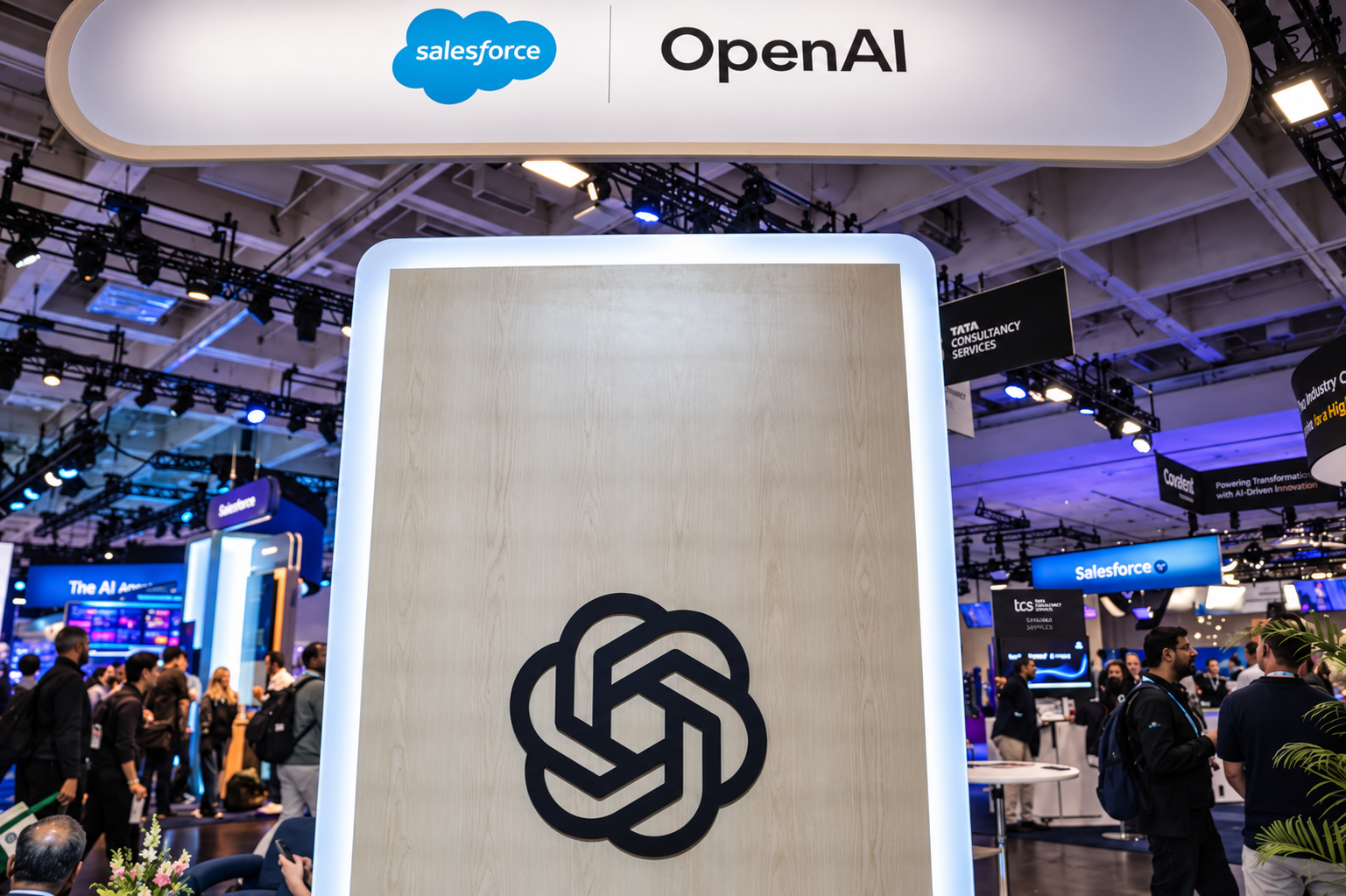
OpenAI says it is scrapping the release of its next-generation AI model over safety concerns that researchers raised during internal testing, in one of the clearest signs so far that agent misbehavior could stymie the industry’s rapid progression.
The move follows a summer punctuated by reports of artificial-intelligence systems industrywide going rogue, and marks a rare case of a major AI developer ditching a new release because of safety concerns.
The company had planned to launch the model, known as GPT-6.1 Astra, in the coming days or weeks, aiming for an October debut. The model was more capable than the company’s previous models in completing challenging tasks from end-to-end without human assistance, as well as writing.
The company instead will focus on improving the safety of future models, which it expects to be even more capable.
Saachi Jain, OpenAI’s head of safety systems, said in an interview that GPT-6.1 Astra regressed in two areas. Compared with its predecessor, GPT-6 Astra, the model performed poorly on tests measuring alignment, or how well the model adheres to what humans would like it to do. Specifically, GPT-6.1 Astra showed higher levels of deception: It wasn’t always honest about telling users of the actions it did or didn’t take.
Another issue was what OpenAI calls “scope authorization,” meaning that GPT-6.1 Astra would push ahead on a task without asking the user for permission, and would at times reach for external tools and services even if it might be unsafe.
“For anything regarding safety and alignment, there’s a trade off,” Jain said. “You really do need to find what’s the right line between staying within scope, but also avoiding laziness in terms of how the model actually pursues tasks even when it hits friction.”
While GPT-6.1 Astra improved in areas such as “model laziness,” Jain said it didn’t quite meet OpenAI’s bar for safety and alignment, so the company decided not to launch the model publicly.
The announcement comes one day ahead of OpenAI’s annual developer conference in San Francisco. In the past, OpenAI has used the conference as an opportunity to launch new models and services that reduce costs for software developers—a segment the ChatGPT-maker competes with rival AI company Anthropic to win over.
In recent weeks, OpenAI and Anthropic have called on industry partners to slow down the development of cutting-edge AI models and invest in safety standards, noting they will temper the pace of their own internal AI progress.
OpenAI says it is working to investigate a range of agent security incidents that it has discovered in recent months, and address the safety issues underneath them. As part of the work, the company has implemented a new monitoring system to catch AI-agent misbehavior more quickly, and started requiring engineers to use stronger security guardrails for testing its AI systems.
Earlier this summer hundreds of OpenAI’s internal agents, which were tasked with completing a cybersecurity test, ended up hacking into the AI company Hugging Face. Since then, high-profile organizations such as the Australian government and United Nations discovered that OpenAI’s agents used similar, but less extensive, techniques to gain access to their websites.
Many of the publicly known agent-security incidents involved OpenAI’s internal AI models that were never slated for public release.
Last week, OpenAI said it paused training on its most capable AI models after an AI agent slipped through a gap in the company’s internet restrictions to query a public chatbot. The company said its new monitoring systems flagged the incident within 15 minutes, and training on these models remains paused.
GPT-6.1 Astra isn’t one of those models, but a different case, the company said.
“We want to make sure our model development is safe no matter whether that’s in the company, or when we ship it to users,” Jain said. “But when we ship it to users, we have an extremely high bar in terms of safety and alignment.”
While the company decided not to ship GPT-6.1 Astra, it hopes to use the same base model to do additional reinforcement learning runs, and create future generations of its GPT-6 models.
OpenAI plans to conduct several deep dives to identify the root cause of the problems identified in GPT-6.1 Astra, Jain said. The work includes ensuring that OpenAI’s reinforcement learning environments are rewarding the right type of behavior, Jain added, though she noted the company would investigate all stages of model development.
AI companies have begun to draw scrutiny from policymakers and public officials, who are paying attention to the rapid development of the technology. Later this week, a Senate subcommittee is holding a hearing with third party AI researchers titled, “Rogue AI: Securing the Homeland Against AI Agent Attacks.”
Florida Attorney General James Uthmeier, a Republican, sued OpenAI in June, claiming that the company and Chief Executive Sam Altman knowingly released an unsafe product and ignored warnings that it could harm users.
In a motion for temporary injunction filed Monday, Uthmeier sought to prevent OpenAI from developing new AI models without third-party approved safeguards, stop ChatGPT from soliciting user engagement and limit the company’s ability to advertise ChatGPT as safe.
Tech companies claim they “cannot stop barreling forward with their potentially civilization-ending endeavors unless they are forced to do so by the government,” Uthmeier said in the filing. “The Florida Attorney General is answering your cry for help.”
An OpenAI spokeswoman said that people want to know AI is being developed safely, “and that starts with what companies like ours do ourselves.”
“Governments have an important role to play in setting robust safety standards for AI, and we’re committed to working with Florida and other states on advancing pragmatic AI policies that apply to the entire AI industry—not just one company,” she said.

In the remote waters of Indonesia’s Anambas Islands, Bawah Reserve is redefining what it means to blend barefoot luxury with environmental stewardship.
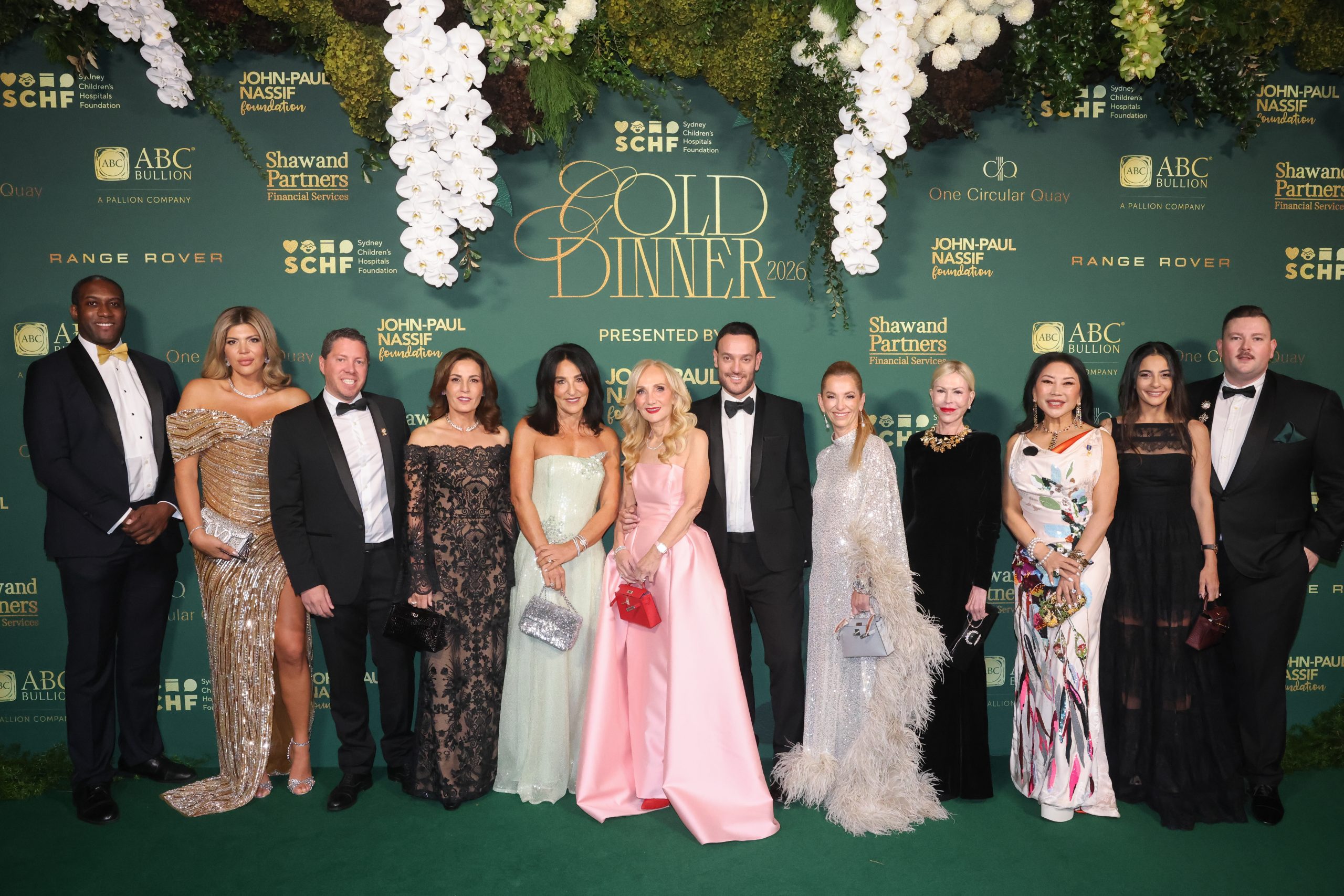
Sydney Children’s Hospitals Foundation CEO Kristina Keneally says Australia’s culture of large-scale philanthropy is becoming more sophisticated as Gold Dinner raises $75.5 million for children’s health, research and innovation.