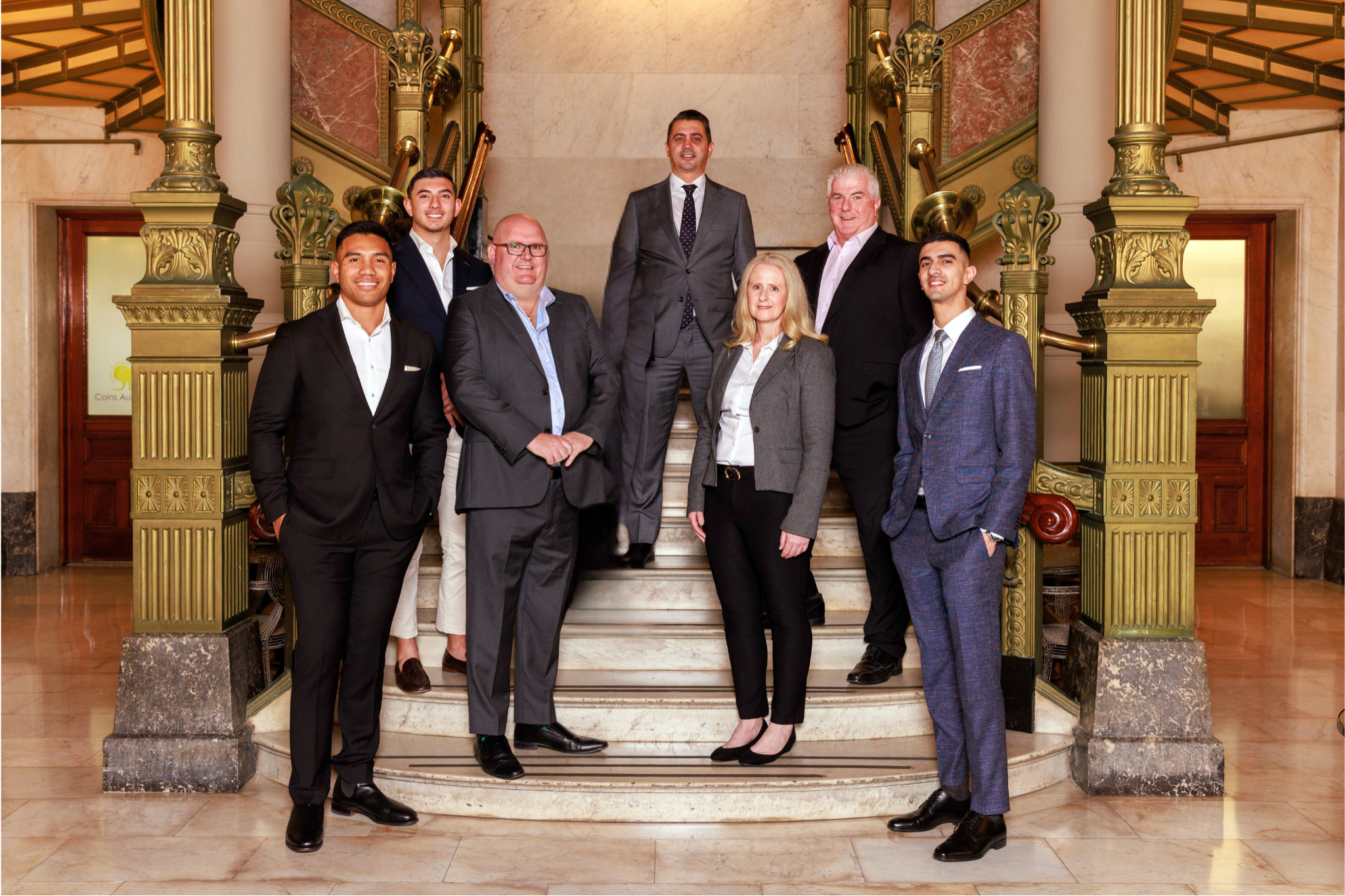
A Radical New Engine Shows Why Internal Combustion Still Matters
The rotary engine makes a comeback for cars and drones as gasoline gains popularity as a complement to electric motors.

 4 min
4 min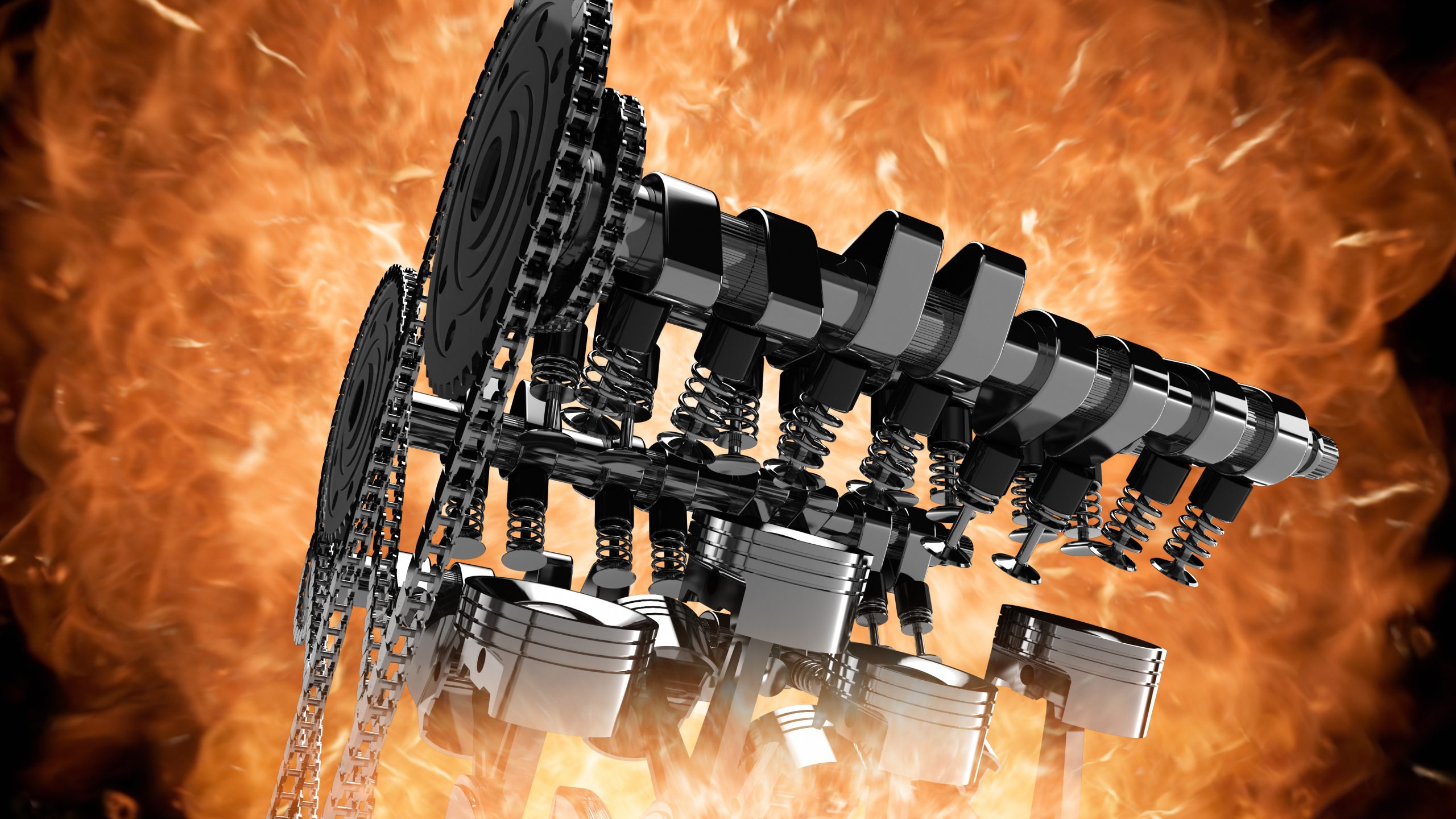
Reports of the death of the internal combustion engine have been exaggerated.
Electric vehicles were once poised to diminish the ubiquity of traditional engines, but automakers are booking huge losses and killing off one new model after another.
Sales of new electric vehicles in the US this past quarter were only half what they were at their peak in the third quarter of 2025, according to industry service provider Cox Automotive.
While there’s still an overall trend toward electrification of the world’s light-duty vehicles, gas power is now likely to remain the choice of most consumers for a while—especially in the US where gasoline remains cheaper than in the rest of the world. In defence and aviation, experts say, full electrification may never be an option.
That’s prompted more companies to take a fresh look at old combustion tech, including the rotary engine. They’re also figuring out new ways for gas power and battery power to work together.
A century-old engine, reinvented
Alexander Shkolnik is founder of LiquidPiston, a company attempting a nearly impossible feat: developing a liquid-fuel-powered alternative to the traditional piston engine.
He says his company has cracked the problem, at least for limited applications.
The key is the rotary engine. Unlike a traditional gasoline or diesel engine, it has no pistons.
Instead, it has an oddly shaped chunk of metal at its heart, spinning inside an oblong chamber in which the usual cycle of compression, combustion and exhaust takes place.
LiquidPiston’s engine can run on everything from diesel to jet fuel, while being a fraction of the size of a comparable diesel engine, and up to 30% more efficient than a comparable gasoline one.
Shkolnik and his team didn’t invent this. The first rotary engines were pioneered in the late 1800s by French and American inventors, and made their way into early motorcycles and airplanes. In the 1950s, German engineer Felix Wankel updated the concept to include the spinning triangular rotor. LiquidPiston calls its engine an “inside-out Wankel” to acknowledge the commonalities.
The U.S. Army and Air Force are both watching. Over the past decade, the Defense Department, including its cutting-edge research-funding body Darpa, has pumped tens of millions of dollars into the company.
Whether LiquidPiston’s engine is up to snuff as a portable power station for front-line troops will become evident by sometime next year.
That’s when the Army should have results from tests of the latest prototype, says Matthew Willis, director of Fuze, the Army’s new venture-capital-style funding body.
LiquidPiston’s rotary engine is also suited to powering long-range hybrid drones, says Shkolnik.
The company built and flew a prototype of one such drone, in which batteries power the vertical takeoff and the rotary engine takes over for long-range horizontal flight.
The company is now working on a second, updated version for the Air Force. The hope is that eventually such a drone could fly farther and run quieter than one powered by a piston engine.
The automaker that won’t give up
Wankel’s engine is legendary among engineers and gearheads, on account of its simplicity and elegance: It has far fewer parts than a typical piston engine.
While General Motors spent years working fruitlessly to develop rotary engines, Mazda’s efforts made it to the showroom floor.
In 1967 the company released the Cosmo Sport 110S, a car legendary for its styling if not its reliability. Others, including France’s Citroën, dabbled in rotary.
The rotary engine’s last U.S. appearance was in the 2012 Mazda RX-8 sports car. The vehicle was beloved for the sound of its race-car-like engine, but its dirty emissions ultimately doomed it—a chronic Wankel problem.
Mazda never gave up completely. In 2024, the company reconstituted its rotary engine research group.
In 2025, the company unveiled a truly odd duck: the 510-horsepower plug-in hybrid Vision X-Coupe concept car with 100 miles of electric-only range, and up to 500 miles total with the car’s rotary gas engine engaged.
In the X-Coupe, the vehicle’s shaft is directly driven by a Wankel. “This direct propulsion delivers an evolved ‘joy of driving’ with significant range,” says a company spokeswoman.
Translation: This is no Prius, but part of a new breed of plug-in hybrid supercars. (See also: Ferrari)
A strange new hybrid
A new kind of hybrid could be a bridge technology to EVs, says James Turner, a professor of mechanical engineering at King Abdullah University of Science and Technology in Saudi Arabia.
Instead of battery-powered electric motors working to support the gas powertrain, as in many contemporary hybrids, the gas motor serves as a generator to charge the electric powertrain’s battery.
That’s why they’re called extended-range electric vehicles, aka EREVs. Nissan has said it would release an EREV version of its bestselling Rogue next year.
LiquidPiston’s Shkolnik says that someday, his company’s novel rotary engine could be ideal for providing range extension.
For the foreseeable future, the right answer will be the current style of hybrid with a traditional engine, says James Heywood, who literally wrote the textbook on modern internal combustion engines.
If every new car was a hybrid, the U.S. could increase gas vehicle efficiency by 30% while raising the sticker price by a single digit percentage, he says.
Hybrid, plug-in hybrid and EREV tech works regardless of the engine style, and regardless of whether that vehicle drives, flies or swims.
The entire world’s personal-vehicle fleet will eventually be almost entirely electric, says Turner.
But on the way there, the gas-powered combustion engines will play an invaluable, if supporting, role.
 Copyright 2020, Dow Jones & Company, Inc. All Rights Reserved Worldwide. LEARN MORE





From making unpopular decisions to learning when to listen, leaders from five businesses reveal what nobody prepared them for — and how running a company has challenged their expectations.

Technology and semiconductor shares fell sharply as investors questioned the debt financing the AI infrastructure boom and confronted higher rates and Chinese competition.
Tesla’s new Roadster used suction technology and SpaceX-derived thrusters to jump and flip—but production, price and road legality remain unresolved.
3 min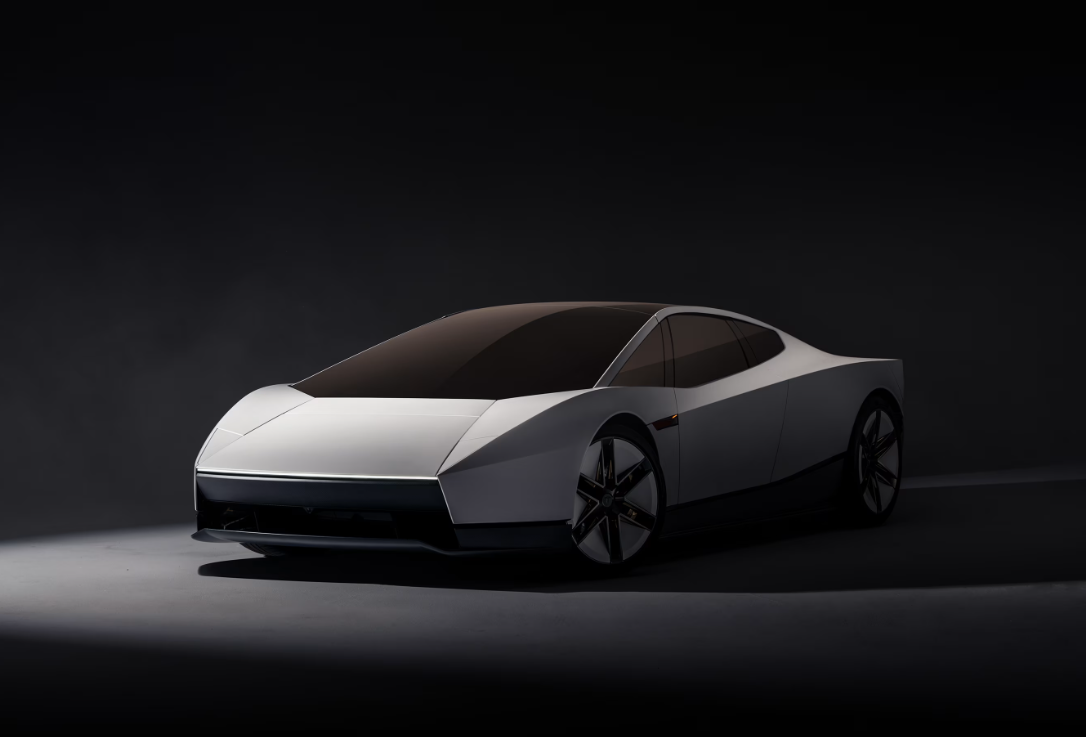
Tesla has finally revealed its radically redesigned Roadster—and delivered the airborne spectacle Elon Musk has been promising for years.
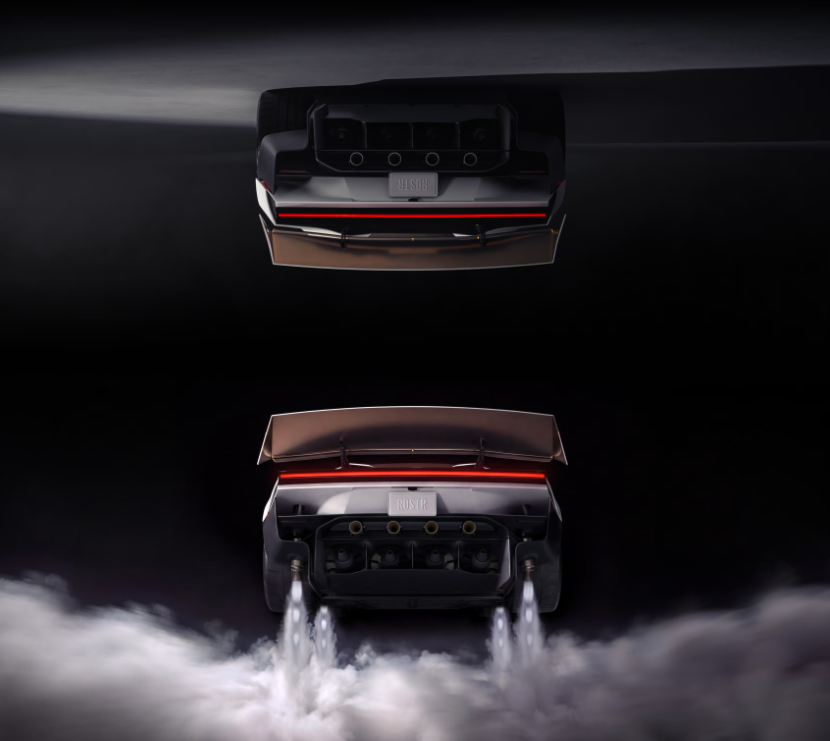
Unveiled at a SpaceX testing facility near Waco, Texas, the new electric supercar drove onto a steeply curved ramp, used a suction system to cling to its underside and launched into the air. Cold-gas thrusters stabilised the vehicle as it rotated and returned to the ground.
In another demonstration, the Roadster cleared a line of Tesla vehicles that included a Semi, Cybertruck, Cybercab, Model Y and Model 3.
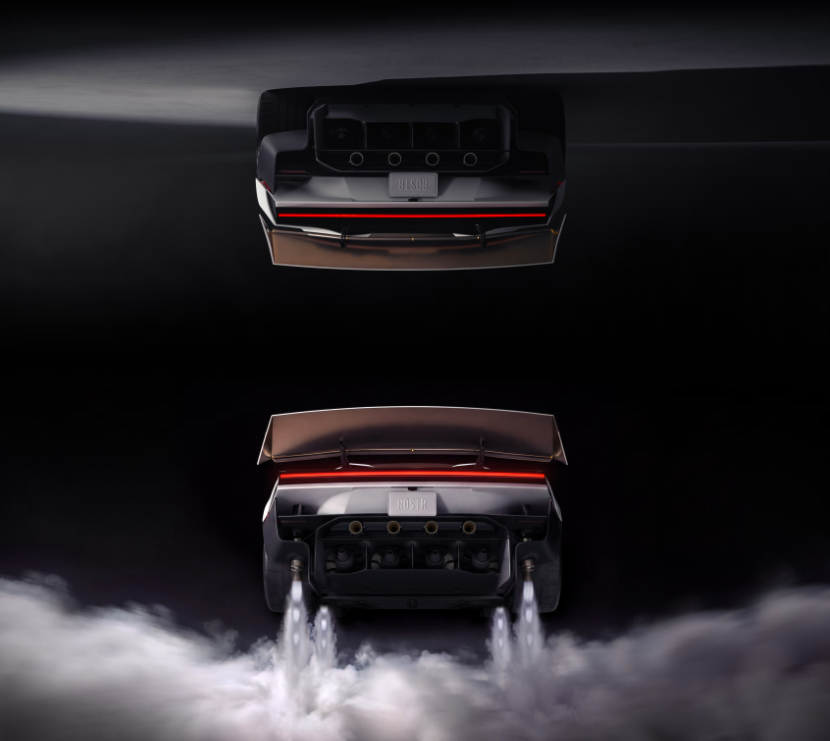
It was an extraordinary stunt. Whether it proved Tesla has created a genuine flying car is another matter.
The vehicle did not demonstrate sustained, controlled flight of the kind associated with an aircraft or electric vertical take-off and landing vehicle. Its thrusters instead produced brief powered leaps, rotation and landing control.
“We’re not talking about sustained flight,” Smithsonian National Air and Space Museum curator Roger Connor told CNN. “We are literally talking about hopping.”
How does it work?
Tesla has outlined three intended Roadster configurations.
The two-seat Performance model is the comparatively conventional version, although little about it sounds ordinary. It uses active aerodynamics and what Tesla calls a multi-mode suction system to increase downforce and allow the car to adhere to steep or inverted surfaces.
The two-seat Thrust adds rear-mounted cold-gas thrusters, designed to deliver acceleration from zero to 60mph—approximately 97km/h—in less than one second.
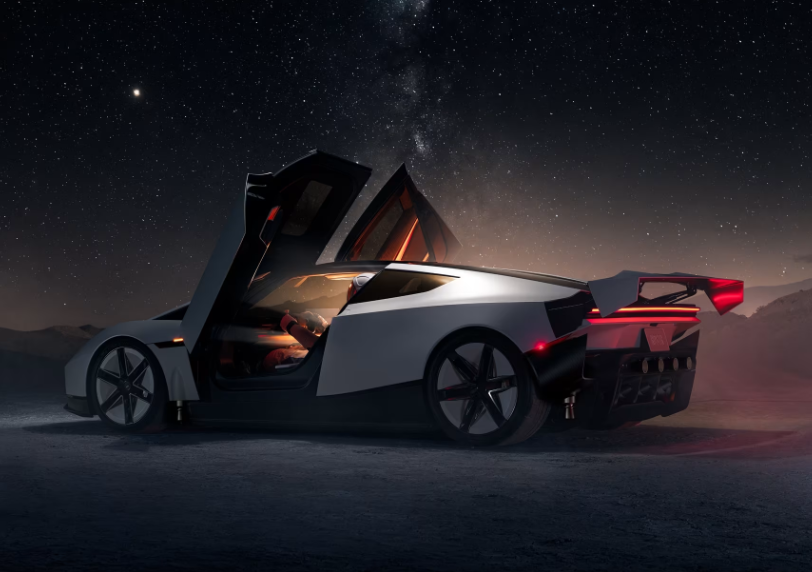
At the top is the single-seat Rocket, equipped with 10 thrusters positioned around the vehicle. This is the version intended to perform the airborne manoeuvres demonstrated in Texas.
Tesla engineering vice-president Lars Moravy said the system uses approximately 600 litres of compressed air. Carbon-fibre-wrapped pressure vessels occupy available spaces throughout the car, supplying the thrusters used for acceleration, lift and directional control.
The technology is more closely related to a rocket reaction-control system than a conventional flying-car powertrain. Rather than producing continuous lift through wings or propellers, it releases highly pressurised gas to generate short bursts of thrust.
Tesla says all three versions will offer approximately 300 miles—or 483 kilometres—of driving range and a top speed exceeding 230mph, equivalent to about 370km/h.
These remain company claims rather than independently verified production specifications.
Can buyers order one?
Reservations have reopened in selected markets. According to reporting from the launch, Tesla is seeking US$50,000 to reserve the Performance variant and US$250,000 for the Thrust. Access to the Rocket is described as invitation-only.
No final purchase price was announced, and Tesla has not confirmed Australian pricing, delivery timing or regulatory approval.
Musk said production would begin in 2028. That should be treated as an ambition rather than a settled delivery date.
The second-generation Roadster was originally unveiled in 2017 and was expected to reach customers within several years. The program was subsequently delayed in 2020, 2021, 2023 and 2024. Some customers have consequently held substantial reservations for close to a decade.
There are also formidable regulatory questions. A road-registered vehicle capable of deliberately leaving the ground, rotating and landing among other traffic does not fit neatly within existing vehicle standards. Its compressed-air system, pressure vessels and unconventional manoeuvres would require extensive safety assessment.
The more plausible outcome is that Tesla produces the Performance and perhaps Thrust versions for road and track use, while tightly restricting the Rocket’s airborne functions—or reserving them for controlled environments.
Tesla has produced a genuine moving prototype capable of remarkable stunts. It has not yet demonstrated that customers will be permitted to repeat them on public roads.
For now, the Roadster is real enough to jump. Whether it becomes a car people can buy, register and use as demonstrated remains the more consequential test.
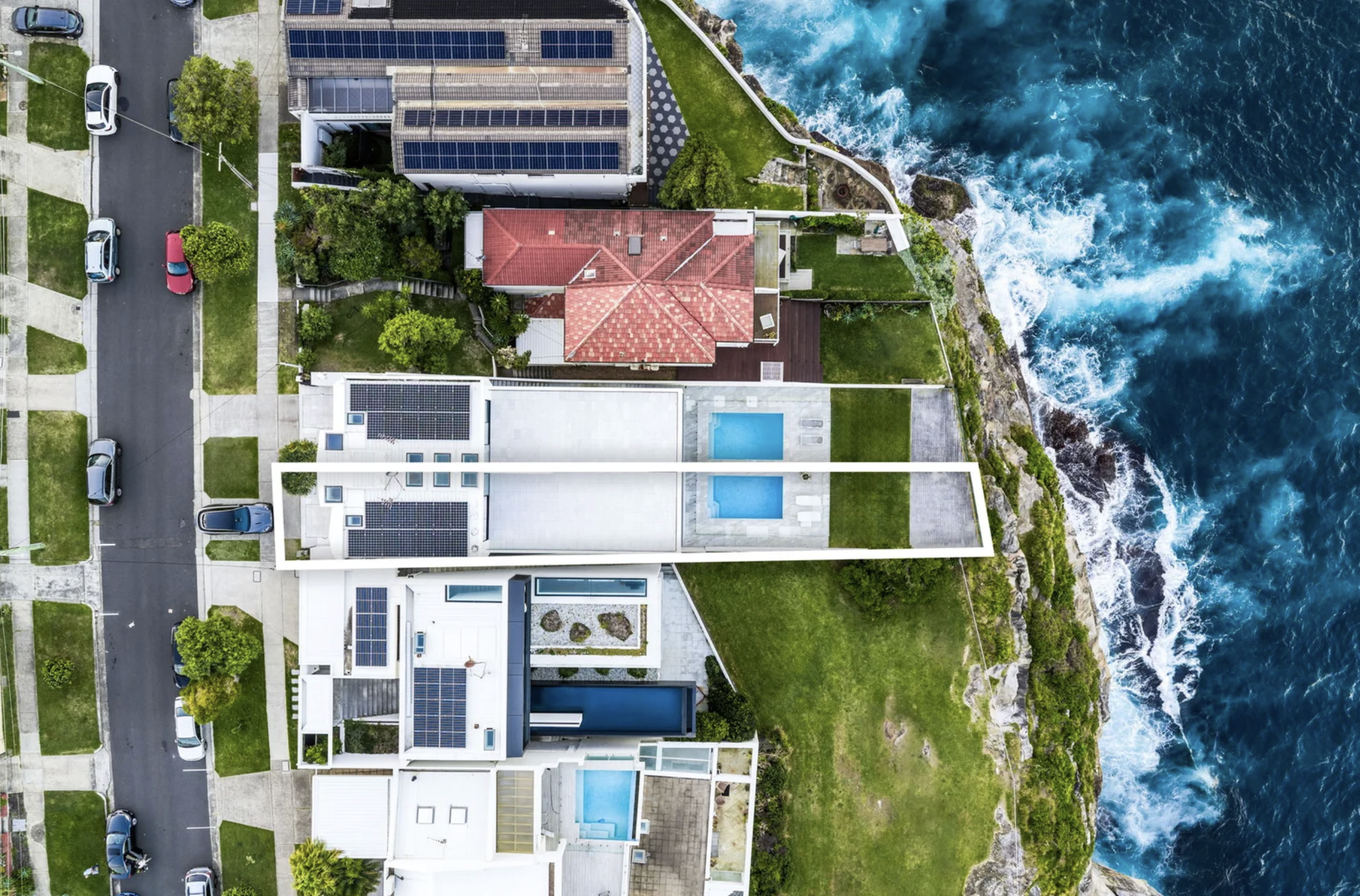
A Vaucluse masterpiece by MHNDU with interiors by Poco Designs brings architectural ambition and breathtaking ocean outlook to the auction block.
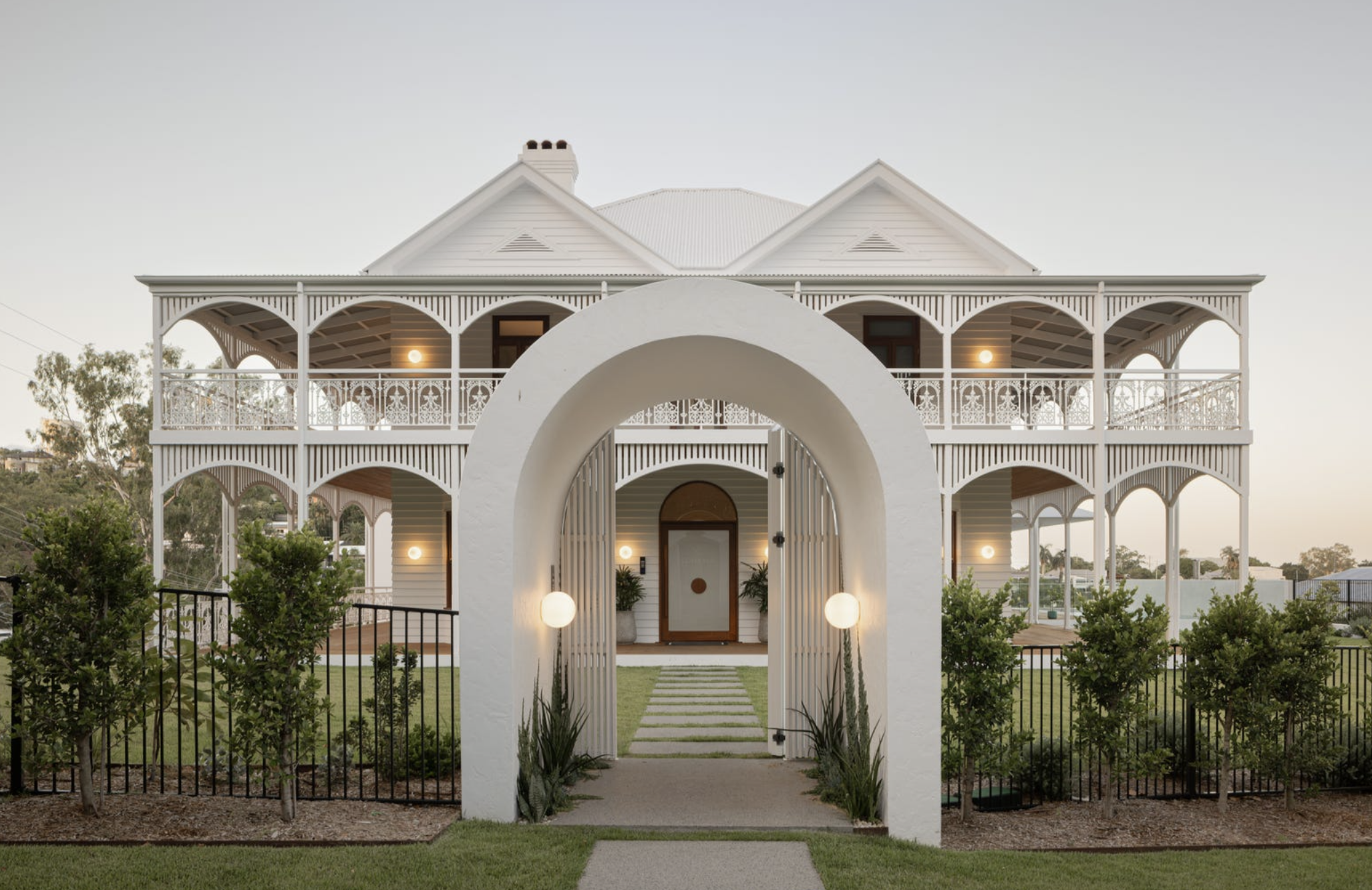
A restored 1860s Brisbane residence transformed by GRAYA has smashed Paddington’s house price record, selling for more than $12 million.